A saute pan that scorches a ring in the middle while the outer edge stays pale is the failure almost nobody shops for. You pick one for its looks or its heft, set it over medium heat, and the food near the center browns a full two minutes before anything at the rim catches up. That uneven result is the whole problem, and this saute pan buying guide starts where most shopping advice quietly stops: with the path heat takes once the metal meets the burner.
A heavier pan is not automatically a better one, and holding onto that single idea will save you both money and a lot of ruined dinners. What matters is how heat spreads from the flame across the base and part-way up the walls. Brand, shine, and price all sit downstream of that.
Key Takeaways
- Even heat beats raw weight. A pan that spreads heat across the entire base browns food uniformly; a dense pan with a poor conductive layer just holds hot spots longer.
- Match the material to the heat behavior you want. Aluminum-cored stainless reacts fast and evenly, cast iron stores heat and releases it slowly, and coated pans trade high-temperature range for easy release.
- A true saute pan has straight, tall walls and a wide flat base. That shape gives you the liquid capacity for braising and the surface area for searing, which a sloped skillet cannot match.
What Actually Separates a Saute Pan From a Skillet
The word saute means to jump, and the classic technique tosses food across a hot surface. Confusingly, the pan named after that move is usually the wrong shape for it. A frying pan or skillet has flared, sloping sides built for flipping and quick evaporation, while a saute pan has straight vertical walls, typically around 2 inches tall, and a broad flat floor.
Those tall walls are the point. They give you the depth to shallow-braise chicken thighs in stock, to build a pan sauce without it sloshing over, and to hold a couple of quarts of liquid while still presenting a wide searing surface. Most home cooks are best served by a pan in the 3 to 4 quart range with a matching lid.
If you already own a good skillet and want to understand how the two differ in daily use, the reasoning in our breakdown of All-Clad frying pans and how to choose one carries over cleanly, because the construction questions are nearly identical even though the shapes are not.
Why Heat Distribution Comes Before Everything Else
Pick up two pans of the same weight and you can learn almost nothing about how they cook. Weight tells you how much metal is present, not how well that metal moves heat sideways. A thick stainless disc with no aluminum inside will sit over one burner flame and glow hottest directly above it, leaving a cooler ring around the edge.
Aluminum is the reason good pans cook evenly. It conducts heat roughly three to four times faster than stainless steel, so a layer of it sandwiched inside the pan pulls heat away from the flame and pushes it out toward the rim before food has a chance to burn in the center. Copper conducts even faster, which is why professional lines still use it, though it costs far more and needs upkeep.
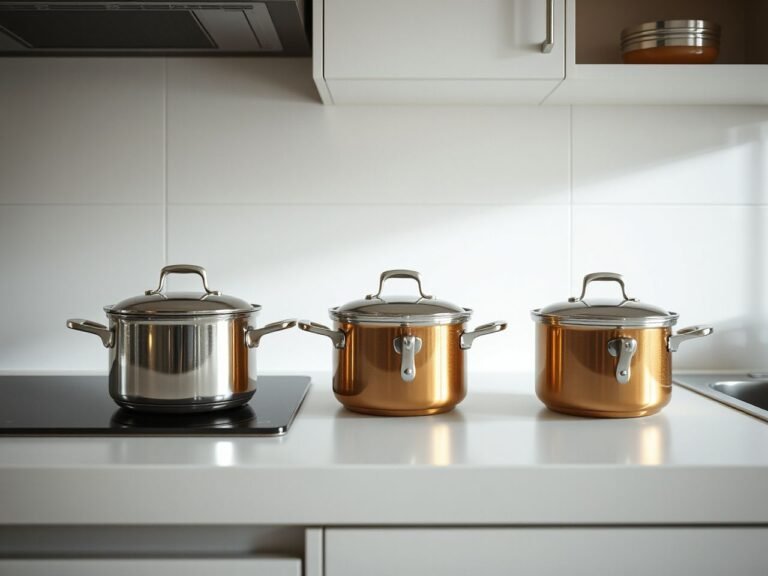
There are two common ways manufacturers add that conductive layer. Fully clad pans bond aluminum (or copper) across the entire base and up the sides, so the walls heat too. Disc-bottom or impact-bonded pans attach a slug of aluminum only to the base, which handles the floor well but leaves the walls dependent on slower stainless.
Matching Material to the Heat You Want
No single material wins outright. Each one behaves differently when heat hits it, and the right choice depends on what you cook most. Here is how the three main families actually respond on the stove.
Clad Stainless Steel
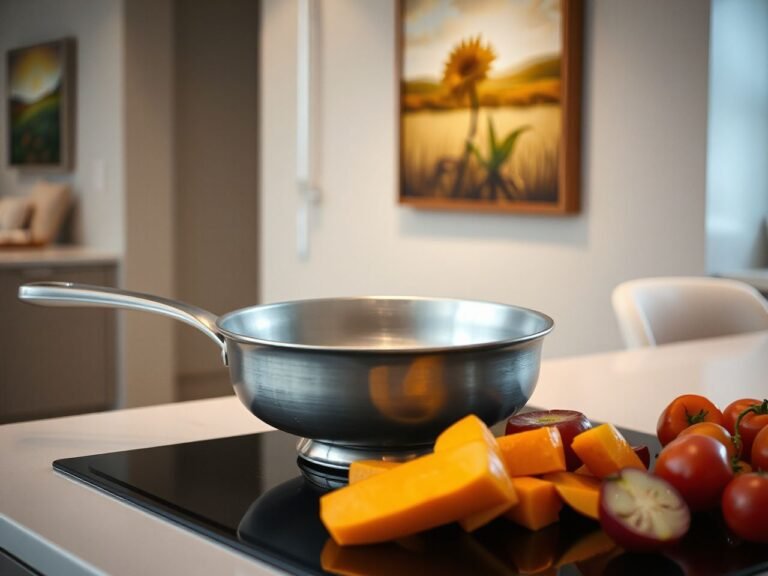
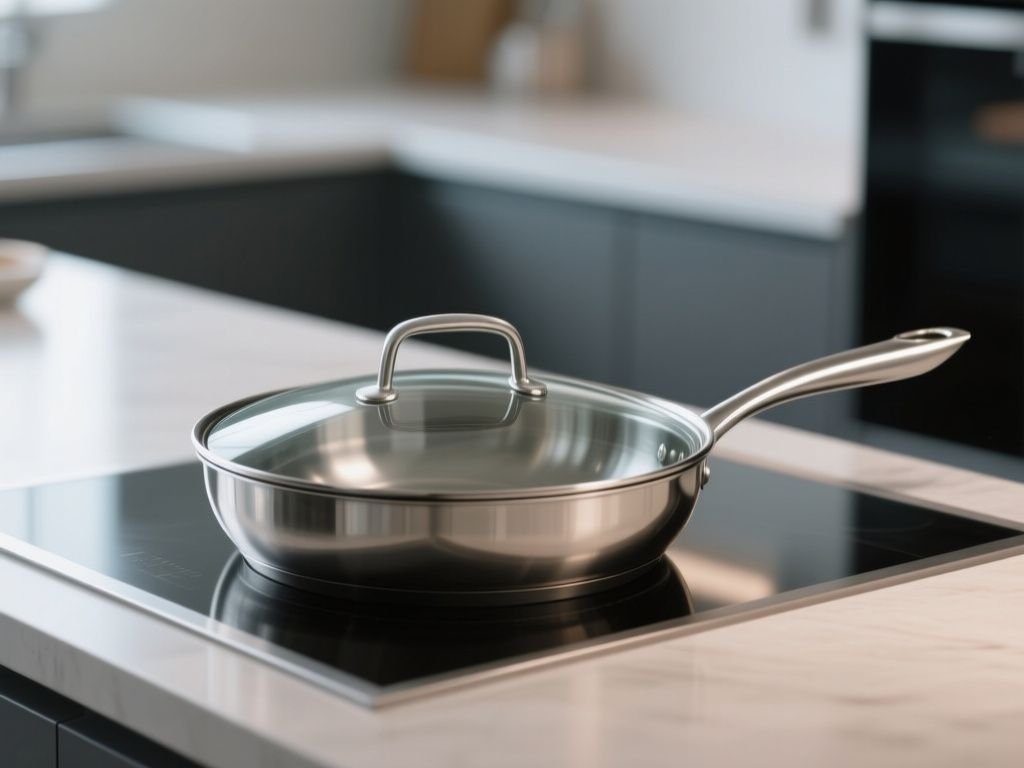
Fully clad stainless is the most versatile saute pan material for a general kitchen. The cooking surface is stainless, which is hard, non-reactive with acidic foods like tomato and wine, and safe to scrub. The aluminum core does the thermal work, giving you fast, even response that you can actually feel when you turn the burner down.
Stainless is prized partly because it does not leach into food or hold onto flavors. Cookware sold in the US that contacts food is expected to meet food-contact safety standards, and independent verification through a body like NSF, which certifies food-contact materials and commercial kitchen equipment, is a reasonable thing to look for on premium lines. The tradeoff is that bare stainless is a sticky surface until you heat it correctly and add fat.
Construction quality varies enormously inside this category. The differences in core thickness and layer count between brands are exactly what our guide to choosing a Made In pan digs into, and those same construction points decide whether a clad saute pan heats evenly or just looks the part.
Cast Iron and Enameled Cast Iron
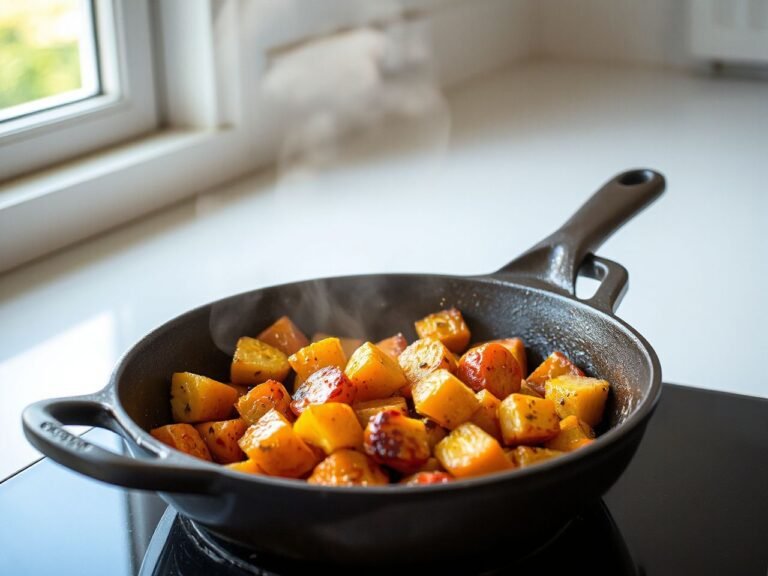
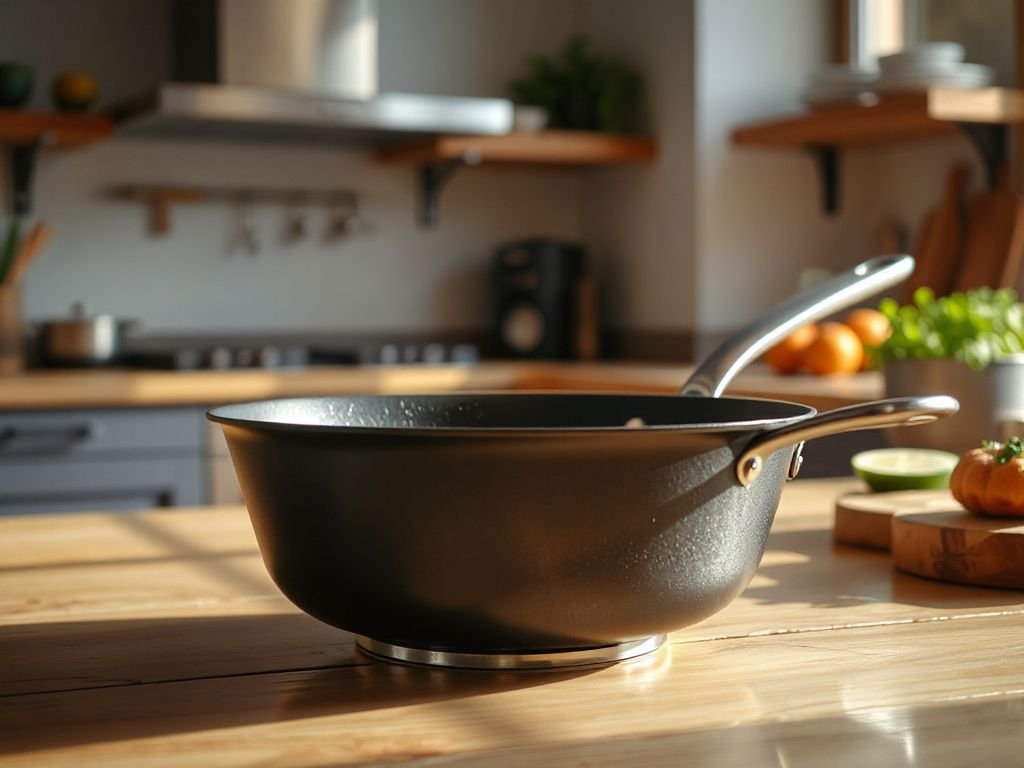
Cast iron plays by different thermal rules. It conducts heat slowly and unevenly, which sounds like a flaw, but it stores a huge amount of energy once fully preheated. That thermal mass is why a well-heated cast iron saute pan holds its temperature when you drop in cold food, giving a deep, steady sear.
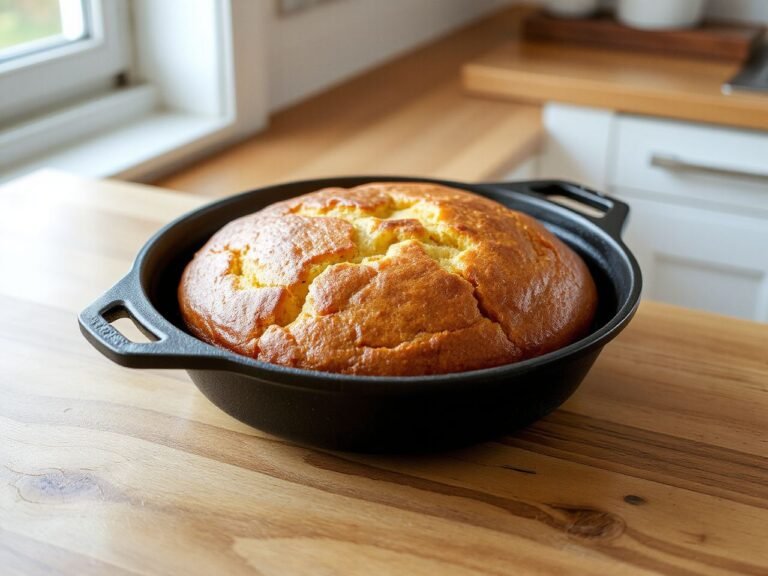
The catch is patience and weight. A cast iron pan needs several minutes of preheating and rewards you for moving it around the burner while it heats, since it will not even itself out quickly on its own. Enameled versions add a glass coating that removes the seasoning chore and lets you cook acidic foods, at the cost of some searing bite and a higher price.
Nonstick and Hard-Anodized
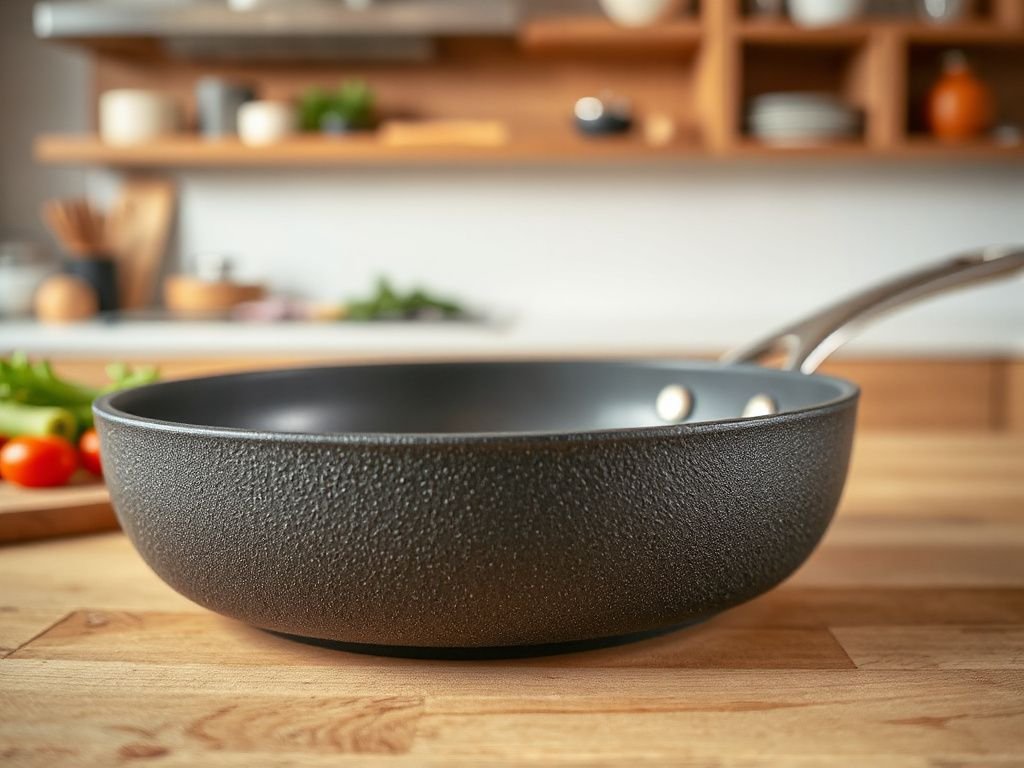
Coated pans exist to solve one problem: release. A PTFE nonstick surface lets eggs and delicate fish slide free with almost no fat, which no bare metal can match. The limitation is heat tolerance, because PTFE coatings begin to break down at high temperatures and are generally not meant for aggressive searing or empty preheating.
Modern coatings made since manufacturers phased out PFOA are considered safe under normal cooking use, and the FDA, which regulates food-contact materials and coatings, oversees the substances allowed to touch food. A nonstick saute pan is a specialist tool for eggs, crepes, and fish, not a do-everything pan. If a low-maintenance ceramic-style nonstick is what you are after, the surface differences are worth understanding first, and our look at how Scanpan approaches nonstick durability lays out what those coatings can and cannot survive.
Size, Depth, and Weight That Fit Real Cooking
Diameter and depth decide what a pan can do. A 10-inch saute pan suits one or two servings and pan sauces, while a 12-inch pan handles a full family meal, browns four to six chicken thighs without crowding, and doubles as a shallow braiser. Crowding is the enemy of browning, since food packed too tightly steams in its own moisture instead of searing.
Depth of about 2 inches with a lid turns the pan into a small braising vessel. That is the feature that makes a saute pan more useful than a skillet for weeknight cooking: you can sear, then add liquid, cover, and finish in the same pan without transferring anything.
Weight deserves a second look here. A heavier pan can be a sign of a thick core, but it can just as easily be thick stainless with poor conduction, so weight alone proves nothing. Balance matters more day to day, because a 12-inch pan full of braising liquid can pass 6 to 8 pounds, and a poorly balanced handle turns lifting it into a wrist strain.
Handles, Lids, and Oven Limits
The handle is where a lot of otherwise good pans fall down. Stainless handles stay usable but grow hot near the pan body, so look for a shape that keeps your grip well back from the metal. A stay-cool hollow handle or a cast handle with a broad thumb rest makes the difference between confident lifting and a fumbled pour.
A helper handle on the opposite rim matters more than buyers expect. Once a 12-inch saute pan is loaded, that second grip is what lets you move it from stovetop to oven safely with two hands. A tight-fitting lid, ideally stainless or oven-safe glass, seals in moisture for braising and is not optional if you plan to simmer covered.
Oven safety comes down to the weakest component, usually the handle material or the lid knob. Bare metal pans often tolerate high oven heat, while any pan with a phenolic handle or a plastic lid knob carries a lower ceiling. Cookware performance and material claims are testable against published methods from bodies like ASTM, which maintains material and performance test standards, and reputable makers will state a specific oven-safe temperature rather than a vague reassurance.
What a Saute Pan Buying Guide Should Prioritize
Strip away the marketing and the decision comes down to a short, honest order of operations. Judge the heat behavior first, then the material’s fit for your cooking, then the physical details that affect handling.
- Confirm the conductive layer. Look for fully clad aluminum or copper if you want even walls, or accept a disc bottom if you mostly cook on the floor of the pan.
- Choose material by heat behavior. Clad stainless for versatility, cast iron for stored searing heat, coated pans for delicate release.
- Size for how you actually cook. A 12-inch, 3 to 4 quart pan with a lid covers the widest range of home tasks.
- Check the handle and balance. A stay-cool main handle plus a helper handle makes a heavy loaded pan manageable.
- Verify the oven ceiling and food-safety claims. A stated temperature and a recognized certification beat vague promises.
Buy against that list and you sidestep the two most expensive mistakes: paying for weight that does nothing, and paying for a name while ignoring how the metal moves heat. A modest fully clad pan that browns evenly will outcook a heavy, badly constructed one every single time.
Frequently Asked Questions
What is the most important thing to check in a saute pan buying guide?
Check how heat spreads across the base, not how much the pan weighs. Run the flour test: heat a dry pan over medium and watch where the flour browns. A pan with a fully clad aluminum or copper core darkens in a wide, even circle, while a poorly built one browns a tight bullseye over the burner. Even conduction is what produces uniform searing and reliable pan sauces.
What size saute pan should most home cooks buy?
A 12-inch pan holding 3 to 4 quarts with a lid handles the widest range of everyday cooking. It browns four to six chicken thighs without crowding, holds enough liquid for a shallow braise, and still fits a standard burner. A 10-inch pan works for one or two servings and pan sauces, but many cooks find it too small once they start cooking for a family.
Is stainless steel or nonstick better for a saute pan?
They solve different problems. Clad stainless gives you high-heat searing, non-reactive surfaces for acidic sauces, and long life, but food sticks unless the pan is properly heated with fat. Nonstick offers easy release for eggs and fish, yet its coating degrades under high heat and aggressive searing. For a single versatile saute pan, clad stainless is the stronger all-round choice, with nonstick kept as a specialist.
Does a heavier saute pan always cook better?
No, and this is the costliest myth in cookware shopping. Weight only tells you how much metal is present, not how well that metal conducts heat sideways. A dense stainless pan with no aluminum core just holds its hot spots longer over the burner. A lighter fully clad pan with a real conductive layer will brown far more evenly, so judge conduction and balance rather than raw heft.