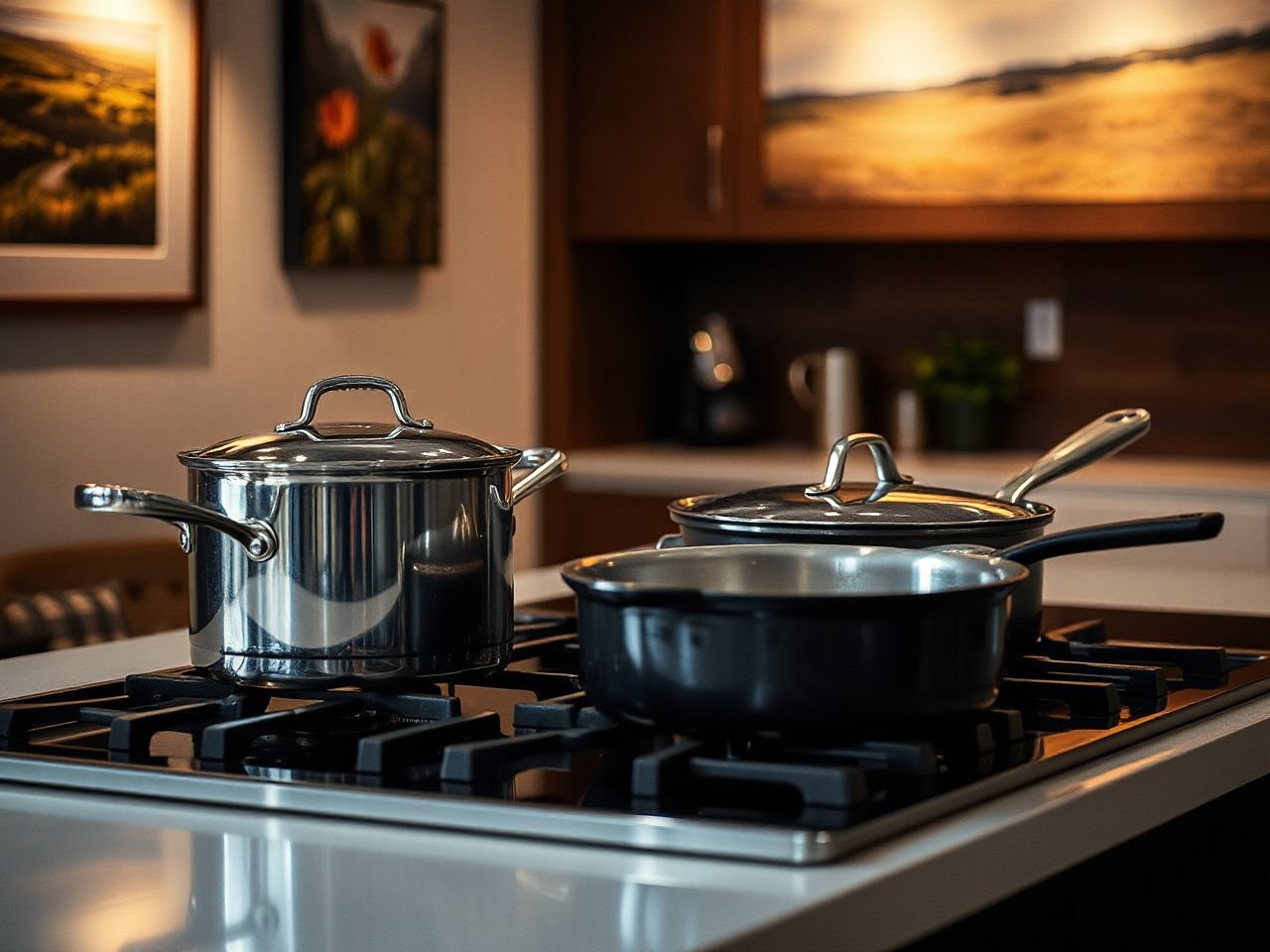
A poor pan can scorch food, resist release, or fail at the handle before the recipe has a chance. Cookware, explained properly, means separating the material from the way the vessel is constructed: thickness, layered bases, surface coatings, shape, and handle attachment can change performance as much as the named metal. Heat responsiveness also differs from heat retention, so a pan that changes temperature quickly is not automatically the right pan for steady browning or long cooking. Measure the opening first.
Key Takeaways
- Cookware material affects heat movement, reactivity, care, and compatibility.
- Construction details can matter as much as stainless steel, cast iron, aluminum, or copper.
- Bare cast iron and carbon steel need complete drying and seasoning to limit rust.
- Check coatings, handles, lids, and cooktop compatibility before trusting a pan.
What Does Cookware, Explained Clearly, Mean?
Cookware is a cooking vessel whose material, construction, surface, shape, and fittings determine how heat and food interact. A pan should therefore be judged as a complete object rather than by its metal name alone. Check the warranty length.
The same material can behave differently depending on whether the base is thick, layered, coated, or shaped for a particular burner. A thin vessel may respond quickly to heat changes, while a heavier one can hold heat more steadily. Neither trait is always better. The best choice depends on if the food needs fast adjustments, steady heat, easy release, or regular seasoning.
Start with the pan before blaming the recipe. A recipe cannot correct a loose handle, a damaged coating, a reactive cooking surface, or a vessel that does not suit the cooktop. Check the warranty length.
Material is only the first check
Stainless steel, cast iron, carbon steel, aluminum, and copper describe the main material, but they do not fully describe the cooking surface. A stainless-steel pan may have a different base from another stainless-steel pan. Cast iron may be bare or covered with enamel. Aluminum and copper may have a lining that changes how food contacts the metal.
Construction also includes the shape of the cooking area, the slope of the sides, the lid, and the handle attachment. Riveted handles can remain mechanically attached while still becoming loose, so the fasteners deserve inspection. Tempered glass lids allow the cooking area to be viewed, but glass and enamel still need protection from rapid temperature changes.
A pan’s construction determines how evenly heat reaches the food and how safely the vessel can be handled. That is why a material label alone cannot answer every cookware question.
Heat responsiveness and heat retention are different
Heat responsiveness describes how quickly a pan changes after the heat setting changes. Heat retention describes how well the pan continues holding heat during cooking. A responsive vessel can be useful for delicate adjustments, while a heat-retaining vessel can support steady cooking after food enters the pan.
These properties influence practical decisions. A pan that reacts quickly might cool noticeably when cold ingredients are added. Heavier pans tend to stay more stable but can take longer to respond to a lower heat setting. Instead of trusting the material name alone, you can assess the design by examining the base, thickness, and overall construction.
For a broader introduction to pan shapes and materials, Types of Cookware Explained: A Practical Buying Guide provides a useful companion reference.
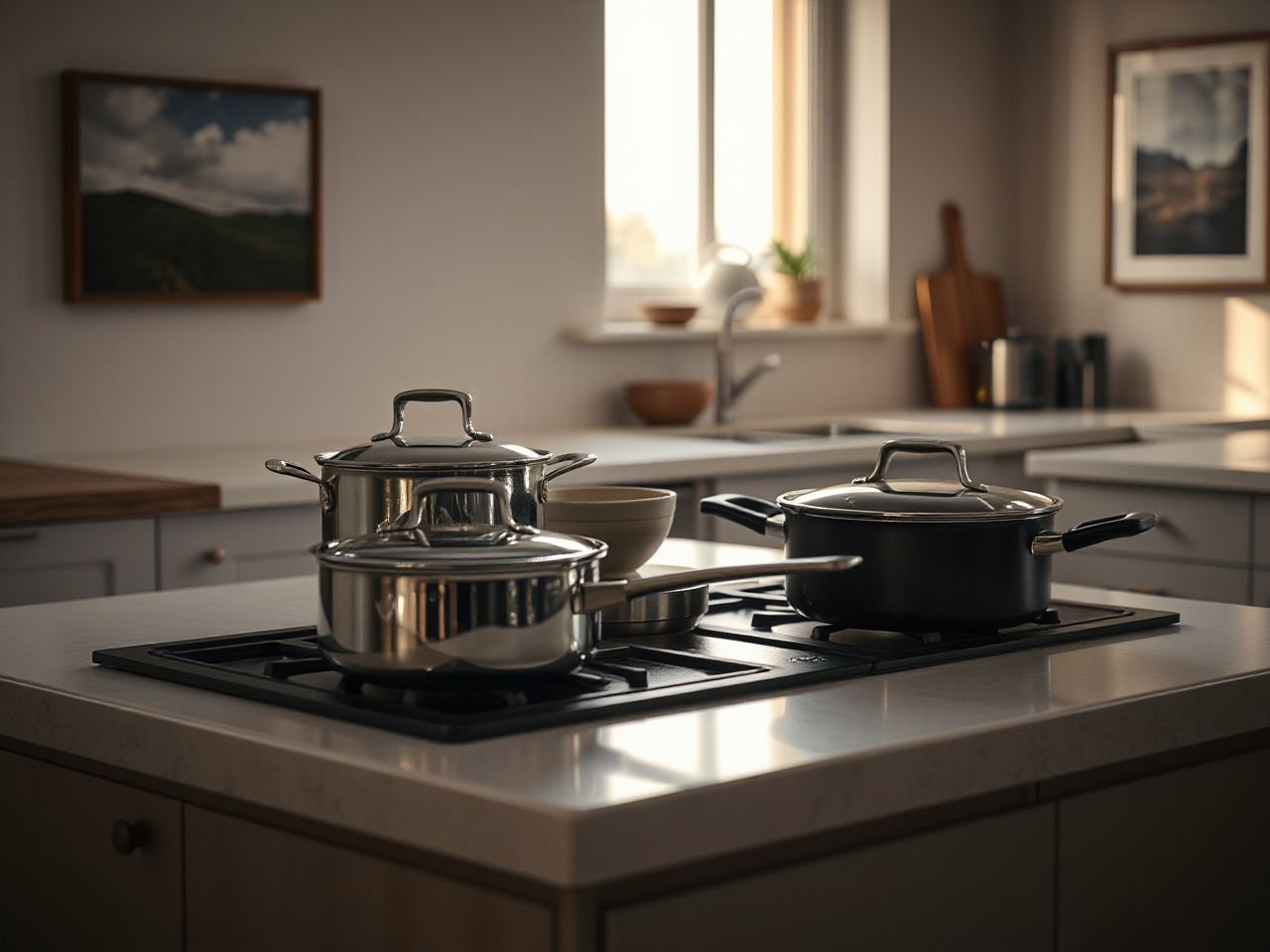
How Should You Choose Cookware Material for the Food You Cook?
The right cookware material depends on the food’s acidity, the desired heat response, the need for release, the cooktop, and the care you will consistently provide.
Stainless steel
Stainless steel is a durable surface for those who want a metal cookware that doesn’t require seasoning like cast iron or carbon steel. Its performance still depends on how it’s made, especially the base and any layers below the surface. Check the underside rather than assuming all stainless-steel pans heat evenly.
Food can stick to stainless steel if the pan, food, and fat aren’t used in the right order. A clean surface, controlled heat, and enough cooking fat can help prevent sticking. But the right settings depend on the food and the pan. Scraping aggressively to fix sticking can damage the surface or leave residue that affects future cooking.
Stainless steel cookware does not require seasoning to create a low-tack surface, but stainless steel cookware still needs suitable heat and cleaning.
Cast iron
Cast iron retains heat strongly and is good for cooking that benefits from a stable, heavy vessel. Bare cast iron reacts with high-acid foods, which can affect its seasoning. A thin layer of oxidized fat forms the seasoning barrier that helps protect the iron from rust.
Bare cast iron needs to be dried after washing and requires regular attention to its seasoned surface. Oil or fat used in seasoning is heated to create a protective, low-tack layer. Acidic foods can weaken that layer, which is why enameled cast iron is better for acidic cooking since the enamel is less reactive.
Cast iron cookware should be treated as a complete system: the cooking surface, underside, rim, handle, and lid all need checking. A crack, damaged enamel, or loose handle are functional concerns, not just aesthetic issues.
Carbon steel
Carbon steel is bare iron that depends on seasoning for a lower-tack cooking surface and protection from rust. Proper seasoning coats the cooking surface with oil or fat and heats the pan so the oils undergo polymerization. The resulting surface is intended to release food more readily than untreated metal.
After cleaning, carbon steel needs to be dried completely. If you don’t season it or remove all moisture, it can rust. Acidic foods can also affect the seasoning, so the cooking plan should consider the surface’s condition and the ingredients used.
Aluminum
Aluminum heats up quickly when the temperature changes. But uncoated aluminum can react with acidic or alkaline foods. A proper lining changes what the food touches, so the lining’s presence and condition matter more than just the word aluminum.
Check for discoloration, scratches, exposed areas, and a base that no longer sits evenly. A pan that has warped may heat unevenly across its surface. Don’t ignore a damaged lining when food contacts that area, as it can affect cooking.
Copper
Copper reacts fast to temperature changes, but uncoated copper can also react with acidic or alkaline foods. A suitable lining is important for the cooking surface. Inspect the lining for wear and follow the maker’s care instructions, instead of just assuming the exterior copper shows how the pan interacts with food.
Copper highlights why material and construction should be considered separately. The outer layer might be copper, while the food-contact surface is made of another material. Heat behavior, care, and food compatibility depend on the whole layered vessel.
Enameled cast iron and ceramic nonstick coating
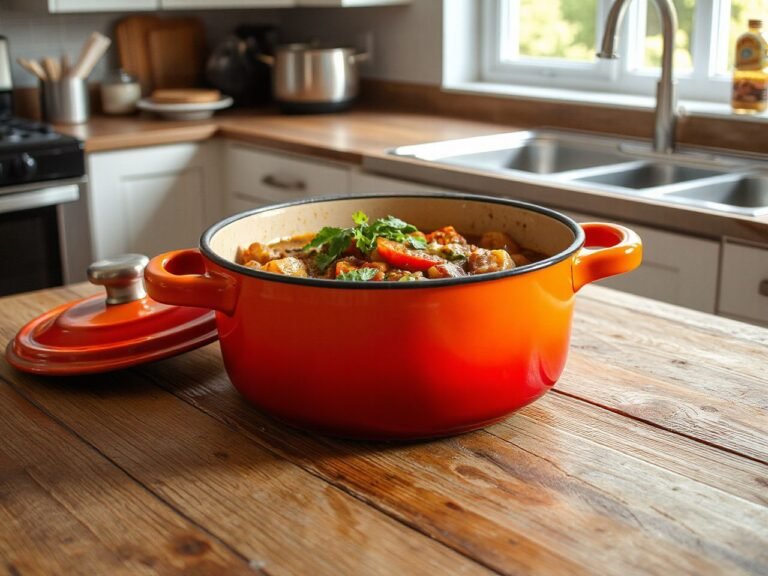
Enameled cast iron combines a cast-iron body with an enamel coating that minimizes reactivity. That makes it better for cooking acidic foods than bare cast iron. Still, enamel can be damaged by thermal shock, impact, or improper handling.
Ceramic nonstick coatings depend on their condition and following the instructions for heat, utensils, cleaning, and storage. Damaged nonstick surfaces shouldn’t just be seen as normal wear. Scratched, peeling, or degraded coatings change how the pan should be evaluated.
Readers comparing coating care can also review the basic questions surrounding ceramic nonstick cookware before using a coated pan.
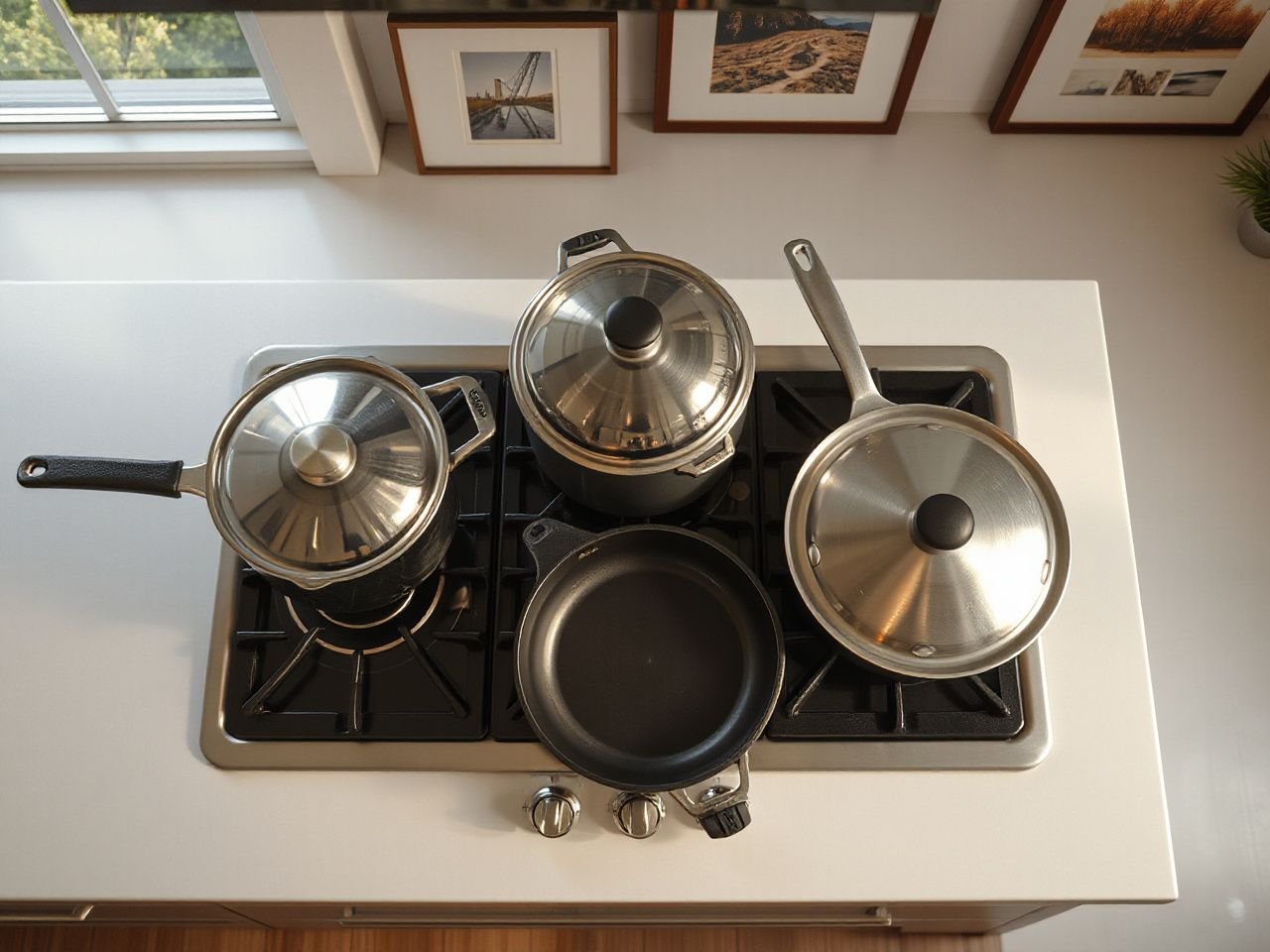
Which Cookware Works on Induction, Gas, Electric, and Glass-Ceramic Cooktops?
Cooktop compatibility depends on the base and the heating method, so material alone does not reveal whether a pan will work on every cooktop.
Induction cooktops
Induction cooking needs cookware with a magnetic base. A label of copper, aluminum, or stainless steel alone doesn’t confirm compatibility because the base may contain different materials or construction from the visible surface.
Check the cookware markings and the manufacturer’s instructions before using a pan on induction. A pan that doesn’t have the required magnetic base won’t work just by placing it on the cooking area. Make sure the base is compatible.
Induction compatibility is determined by the cookware base, not simply by the metal named on the label.
Gas and electric cooktops
Gas and electric cooktops transfer heat differently, but the basic checks are the same. The base should sit securely, the cookware should match the size of the burner, and the handle should stay away from the heat source.
A warped base can rock or contact the surface unevenly. That can affect control and create a handling hazard. Stop using cookware with a base that no longer sits securely.
Glass-ceramic cooktops
Glass-ceramic cooktops need cookware with a clean, stable base that can make good contact without dragging or striking the surface. Lift cookware instead of sliding it if the manufacturer’s instructions say so. Check the underside for rough areas or debris before placing the pan.
Rapid temperature changes can damage glass, ceramic, enamel, and some layered cookware through thermal shock. Do not move a very hot vessel directly onto a cold or wet surface unless the care instructions specifically permit it.
Why Does Food Stick to Some Pans, and How Can You Prevent It?
Food sticks when the pan’s surface, heat level, moisture, cooking fat, and food contact aren’t matched well, or when a coating or seasoning layer has worn out.
Uncoated metal surfaces
Stainless steel, cast iron, carbon steel, aluminum, and copper don’t behave exactly the same at the cooking surface. Stainless steel has no seasoning layer, while bare cast iron and carbon steel rely on seasoning to create a lower-tack surface. Aluminum and copper need attention if the surface is lined.
Use the surface condition as a guide. A clean stainless-steel pan might need controlled heat and some cooking fat. Bare cast iron or carbon steel may need seasoning maintenance. A lined aluminum or copper pan needs the lining protected.
Food moisture also matters. Wet food can cool the pan and cause more sticking than a properly prepared surface. Pat ingredients dry when the recipe allows, avoid crowding, and let food release naturally instead of forcing it loose immediately.
Seasoning cast iron and carbon steel
Seasoning cast iron forms a thin oxidized fat layer that acts as a barrier against corrosion. Seasoning carbon steel uses oil or fat heated on the surface, with polymerization creating a lower-tack layer.
- Clean away food residue without leaving the pan wet.
- Dry the entire vessel, including the rim, underside, and handle area.
- Apply a thin layer of oil or fat to the cooking surface.
- Heat the pan according to the care instructions so the seasoning can develop.
- Store the vessel dry, with airflow around the surface rather than trapped moisture.
Acidic foods can affect seasoning on bare cast iron and carbon steel. Enameled cast iron has minimal reactivity, so its surface is more suitable for acidic cooking, although enamel still needs protection from sudden temperature changes and impact.
Protecting nonstick coatings
Nonstick coatings require the care specified for each pan. Avoid treating scratches, peeling, or flaking as minor appearance issues. Use appropriate utensils, avoid harsh cleaning methods if instructions prohibit them, and store coated vessels so hard edges don’t scrape the cooking surface.
Nonstick cookware with visible coating damage should be taken out of regular use and checked against the manufacturer’s care and replacement guidance. A damaged coating is different from normal food residue.
What Makes a Pot, Pan, Lid, or Handle Safe and Practical?
A practical vessel has an intact cooking surface, a stable base, secure handles, a suitable lid, and clear instructions for cooktop, oven, dishwasher, and broiler use.
Handles and attachments
Riveted handles can become loose, and a loose handle can make a hot pan hard to control. Always check the attachment points before lifting the vessel, especially if it has liquids or heavy food. Stop using cookware that shifts, twists, or separates at the handle.
Handle material and how it’s attached also determine if a pan is oven or broiler safe. A pan safe on a cooktop may not be suitable in the oven or under a broiler. Always read the manufacturer’s instructions rather than assuming oven safety from the metal body.
Lids and thermal shock
Tempered glass lids make it easier to see food without lifting them, but glass can still be damaged by heat changes and impacts. Keep a hot lid away from cold water and hard surfaces unless the instructions say it’s okay.
Glass, ceramic, enamel, and layered cookware can all suffer damage from thermal shock. Check for cracks or chips before using the vessel again, especially if the damaged area touches food or heat.
Oven, dishwasher, and broiler use
Oven, dishwasher, and broiler use depends on the whole construction, like the coating, handle, lid, and attachment method. A pan might be okay for one setting but not for another.
- Check the manufacturer’s instructions before placing cookware in an oven.
- Confirm that the handle and lid are included in the stated oven guidance.
- Do not assume that oven-safe cookware is automatically broiler-safe.
- Use the care instructions to decide whether dishwasher cleaning is permitted.
- Keep coated, enameled, glass, and layered surfaces away from rapid temperature changes.
The U.S. Consumer Product Safety Commission provides consumer safety information through its official website, including guidance relevant to household products and injury prevention. Food-contact questions belong with the U.S. Food and Drug Administration, whose official information is available at FDA.gov.
How Do Pans Warp, Discolor, Crack, or Develop Loose Handles?
Cookware can fail when heat, moisture, impact, chemical exposure, or mechanical stress exceeds what the vessel and its construction can tolerate.
Warping
Warping affects how the base contacts the cooktop and can make a pan unstable. Rapid heating, sudden cooling, or uneven construction may cause a shape change, but the key sign is if the pan rocks, spins, or no longer sits flat.
A warped pan should not be treated as a minor inconvenience. Uneven contact can make heat control less predictable and can increase the chance of a spill.
Discoloration and residue
Discoloration can come from heat exposure, food residue, seasoning changes, or a reaction between food and an unlined metal surface. Clean according to the material and coating instructions, instead of using the same abrasive method on every pan.
Uncoated aluminum and copper may react with acidic or alkaline foods. Stainless steel, enamel, or a lining can change how the food contacts the surface, but a damaged lining needs separate attention.
Cracks, chips, and loose attachments
Cracked glass, chipped enamel, damaged coatings, and loose handles each represent a different failure. A crack can spread, a chip can expose an underlying layer, and a loose handle can affect control. Do not group these problems under cosmetic wear.
Inspect cookware before use, after cleaning, and before storage. Replace or remove from service any vessel whose condition no longer matches the manufacturer’s instructions.
How Much Care Does Each Cookware Type Need?
Ongoing care varies by material, and the lowest-maintenance surface is the one whose instructions match the cleaning and storage habits you can sustain.
- Stainless steel: Clean residue without assuming that aggressive abrasion is suitable, and inspect the base and handle attachments.
- Bare cast iron: Dry fully, maintain the seasoning layer, and limit prolonged contact with high-acid foods.
- Carbon steel: Season with oil or fat, dry completely after washing, and watch for rust.
- Aluminum: Check whether the cooking surface is lined and protect that lining from damage.
- Copper: Confirm the condition and care requirements of the lining before cooking acidic or alkaline food.
- Enameled cast iron: Protect the enamel from impact and rapid temperature changes.
- Ceramic nonstick: Follow the stated coating, utensil, cleaning, and storage instructions.
Replacement cost depends on the vessel’s type, size, condition, and local prices. Always consider how much care the pan needs and if damage can be fixed safely. A loose handle, failed lining, cracked enamel, or damaged coating can make it unsafe to keep using, regardless of what you paid at first.
For readers assessing several pieces together, the cookware set guide on common mistakes can help separate useful coverage from duplicate or unsuitable vessels.
The Bottom Line
Cookware works best when material, construction, surface, cooktop, food, and care are all compatible. Start by inspecting the base, coating, handle, lid, and instructions. Then, think about how quickly it heats and how well it holds that heat. Bare cast iron and carbon steel need drying and seasoning, while acidic ingredients can cause reactivity issues if the lining isn’t suitable.
Frequently Asked Questions
What does cookware, explained simply, include beyond the material?
Cookware includes the metal or ceramic surface, base construction, thickness, coatings, shape, handle attachment, lid, and instructions for use. Two stainless-steel pans can cook differently if their bases and layers aren’t alike. Always check the whole vessel, not just the material name. Heat responsiveness and heat retention are different, so match both to your food and cooking method.
Can acidic food go in cast iron, carbon steel, copper, or aluminum cookware?
High-acid foods can react with bare cast iron and disturb its seasoning. Acidic ingredients may also affect carbon-steel seasoning. Uncoated copper and aluminum can react with acidic or alkaline foods, so a lining is important. Enameled cast iron is less reactive and better for acidic dishes, but the enamel still needs protection from impacts and quick temperature changes.
How do I know if a pan is safe for induction, the oven, or the broiler?
Induction cooking needs a magnetic base, but the visible material alone isn’t enough to tell. Oven and broiler use depend on the entire construction, including handle, lid, coating, and attachments. Always check the manufacturer’s instructions for each setting. If the base is warped, the coating is damaged, the glass cracked, or the handle loose, stop using the cookware.