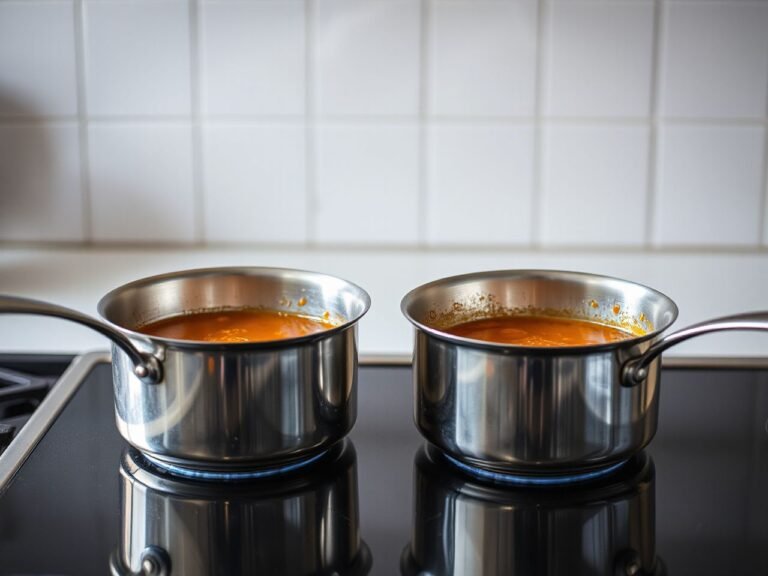
Scorched milk welded to the bottom of a pan is not a cleaning problem — it is a diagnosis. The base heats unevenly, the walls run too thin, or both, and no amount of stirring rescues a sauce once a hot spot has caught it. Most of the trouble cooks blame on their own technique traces straight back to the pan, which is why an honest saucepan buying guide has to talk about heat before it says a word about shine or brand.
Saucepan selection is driven less by the pan itself and more by what gets cooked in it. Dairy, starches, and reductions punish uneven bases and thin walls, so heat distribution and wall height matter more than the surface material for most cooks.
The practical fork is simple. A tall, narrow saucepan handles boiling and simmering liquids, while a wider, lower saucier is built for stirring and reducing — and matching that shape to the task prevents most kitchen frustration. Match the base to your cooktop first, because a beautifully clad pan is useless on induction if its base is not ferromagnetic.
Key Takeaways
- Base construction beats surface material. A thin, single-layer pan creates hot spots that scorch dairy and delicate sauces no matter what it cost.
- A 2 to 3-quart saucepan covers most cooking for one or two people — big enough for rice, small sauces, and reheating, without wasting energy heating empty metal.
- Induction needs a magnetic base. A fridge magnet that sticks to the bottom is the whole test, and it takes five seconds.
- Oven and broiler safety live in the handle and lid knob, not the pan body — check those ratings before you slide anything under a broiler.
Why Milk and Sauce Scorch: Heat Distribution Is the Whole Game
A saucepan’s base construction decides whether heat arrives evenly or in patches, and that one factor determines whether milk, custard, and roux survive. Scorching is almost never a heat-level problem. It is a hot-spot problem.
When a burner concentrates heat under one part of a thin base, the metal there runs far hotter than the metal an inch away. Proteins and sugars sitting on that spot cross into browning and then burning while the rest of the pan is still gently warm.
Fully clad versus disc-bottom construction
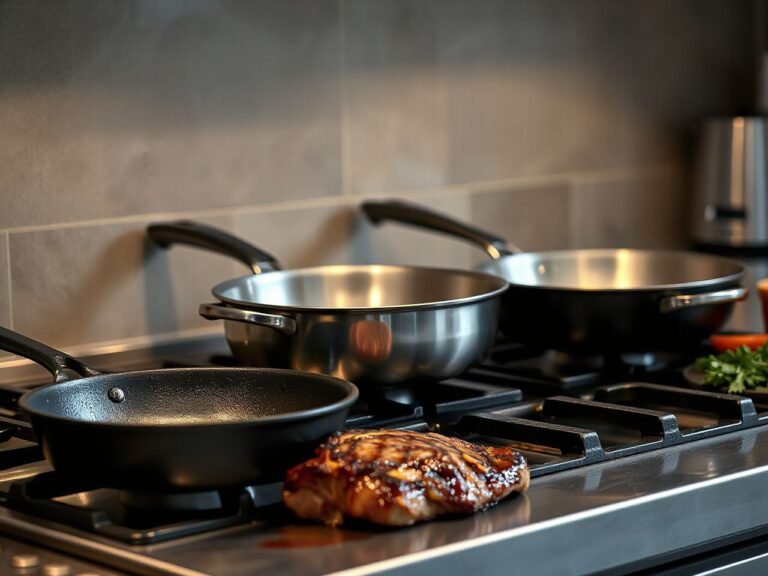
Two builds dominate quality saucepans. Tri-ply, or fully clad, bonds a layer of aluminum between two layers of stainless steel across the entire pan — base and walls. The All-Clad D3 line is the reference example of this method, and the aluminum core spreads heat up the sides as well as across the bottom.
The other approach is an encapsulated aluminum disc base, where a slug of aluminum is sandwiched into the bottom only, with plain stainless walls above it. Disc-bottom pans heat evenly across the floor but leave the walls to rely on the liquid to move heat around.
For a saucepan, where most of the action happens on the bottom and the liquid does the circulating, a good disc base performs closer to fully clad than the price gap suggests. The clad advantage shows up more in wide, shallow pans than in tall, narrow ones.
Hard-anodized aluminum is a third path. It conducts heat quickly and evenly and resists warping, though it is not induction-compatible on its own unless the maker adds a magnetic plate to the base.
Dairy and starch performance
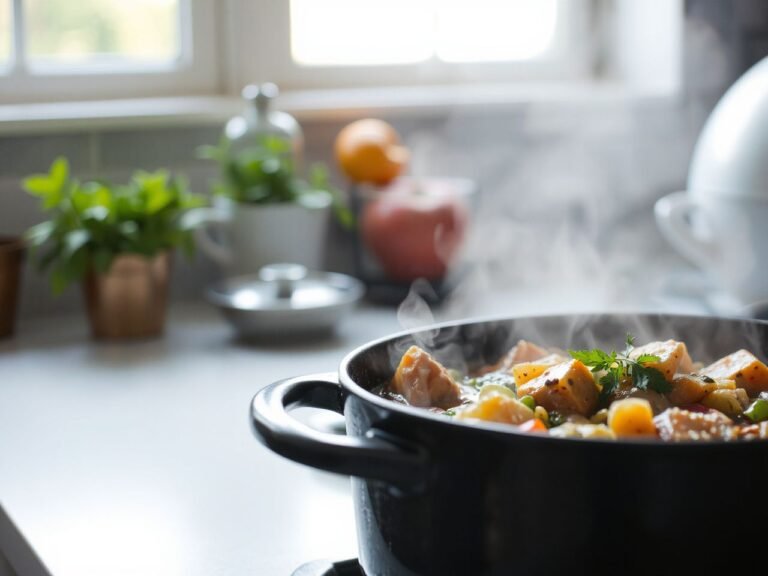
Milk, cream, and starchy liquids are the honest test of a saucepan because they settle, stick, and burn faster than water ever will. A pan that boils water fine can still ruin a pastry cream. If you cook a lot of simmered dishes — the kind of low, patient work a one-pot chicken dumpling soup depends on — an even base pays for itself in fewer ruined batches.
The observable rule holds across brands: the heavier and more evenly built the base, the more forgiving the pan is with anything containing dairy or flour. Thin pans demand constant attention; heavy ones give you a margin for error.
Shape and Size: Saucepan, Saucier, or Sauté Pan?
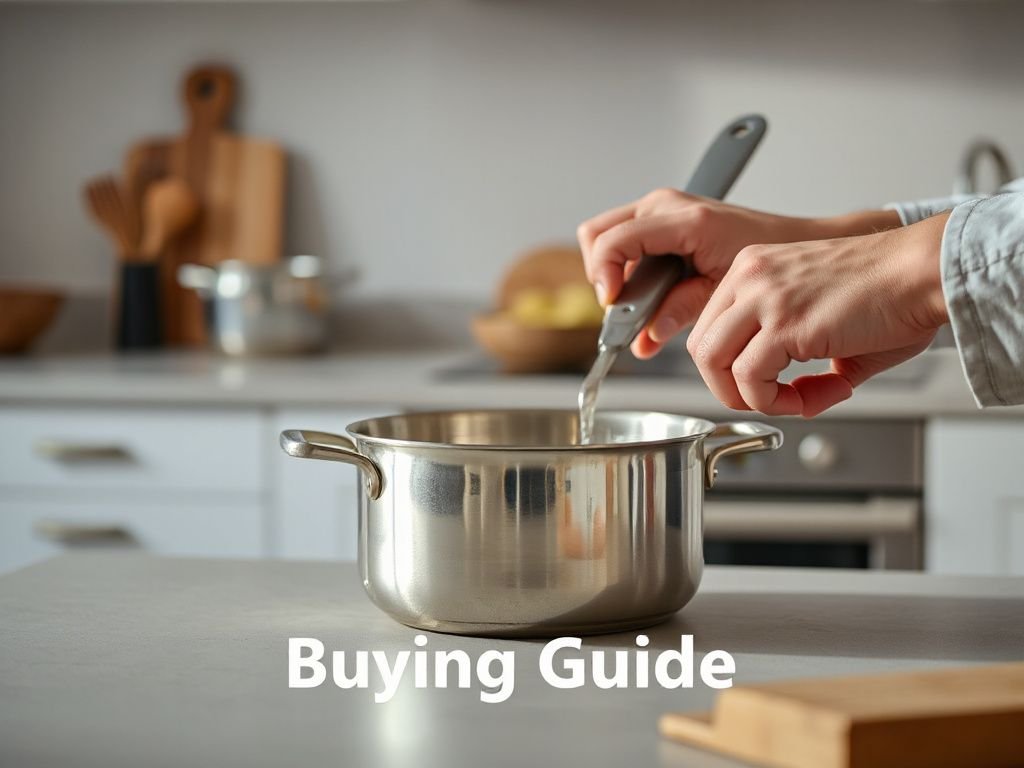
These three names get used loosely, and the confusion leads people to buy the wrong tool for the job. Each shape is built around a different physics problem.
- Saucepan: tall and narrow with straight sides, built to hold depth of liquid with a small surface area. This shape slows evaporation, which is exactly what you want for boiling, blanching, cooking grains, and simmering stock.
- Saucier: wider and lower with sloped, rounded sides that meet the base in a curve. There are no sharp corners for a whisk to miss, so it excels at reductions, risotto, and any sauce that needs constant stirring. The rounded bowl is the whole point.
- Sauté pan: wide, flat, and low with straight sides and a large surface area, made for searing and cooking food in a single layer, not for holding depth of liquid.
A saucier is a genuinely different tool from a saucepan, not a fancier version of one. If you make pan sauces, custards, and risotto often, the sloped sides do work the straight walls cannot.
What size should you actually buy?
For one or two people, a 2-quart or 3-quart saucepan covers the widest range of jobs — rice for two, a small batch of soup, reheating, and blanching vegetables. A 1.5-quart is handy for melting butter and warming single portions but too cramped to be your only pan.
Buying too large wastes energy and worsens performance, because heating a mostly empty 4-quart pan concentrates a small amount of food against a large hot surface. Most home cooks are better served by a 2-quart plus a 3-quart than by one oversized pan pretending to do everything.
The pouring lip is a small feature worth checking. A pan with a shaped spout on the rim pours stock or reduced sauce cleanly, while a flat rim dribbles it down the side and onto the counter.
Surface Material: Stainless, Nonstick, or Enameled?
Surface material matters less than base construction, but it decides how you cook and how long the pan lasts. Each has a job it does best and a failure mode you should expect.
Stainless steel
18/10 stainless steel — the numbers mean 18% chromium and 10% nickel — is the default interior for a reason. It handles high heat, tolerates metal utensils, builds flavorful fond for pan sauces, and lasts decades. Its one demand is technique, since food sticks to a cold or under-oiled stainless surface.
The fix is physics, not luck. Heat the empty pan over medium until a drop of water skitters across it in a bead instead of spreading and evaporating, then add fat, then add food. That beading point signals the surface is hot enough that proteins release cleanly instead of bonding to the metal.
Nonstick
Nonstick coatings — most commonly PTFE, the material long known by the Teflon brand — release food with almost no fat and clean up fast. Modern coatings are made PFOA-free; the U.S. Food and Drug Administration regulates the food-contact materials used in cookware coatings, and PFOA has been phased out of manufacturing. The catch is lifespan.
A nonstick coating has a finite life. High heat breaks it down, metal utensils scratch it, and once it wears, the pan cannot be resurfaced — it gets replaced. A stainless or enameled saucepan is a long-term purchase; a nonstick one is a consumable.
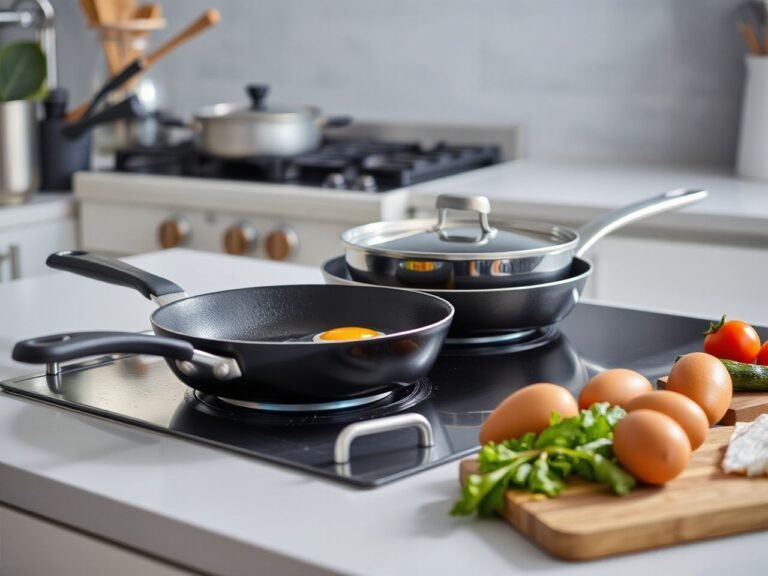
For a saucepan specifically, nonstick is less compelling than it is for a skillet, because you rarely need release for boiling water or simmering soup. The place it earns its keep is scrambled eggs, delicate custards, and oatmeal that would otherwise cement itself to steel.
Enameled cast iron
Enameled cast iron, the category Le Creuset made famous, wraps a heavy iron body in a glass enamel coating. It holds heat like nothing else, which makes it superb for slow simmers and braises that benefit from steady, gentle warmth. The tradeoff is weight and slow response — it takes a while to heat up and a while to cool down, so it is poor for anything that needs quick temperature changes.
Matching the Pan to Your Cooktop
Cooktop type dictates pan choice more than most buyers realize, and getting this wrong is the single most common expensive mistake. Gas, electric coil, and glass-ceradmic radiant cooktops heat almost any flat-bottomed pan. Induction does not.
The induction magnet test
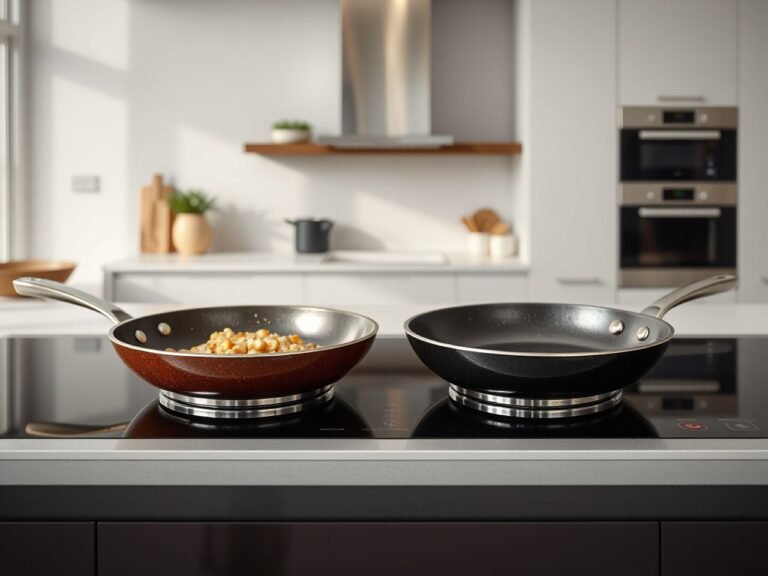
An induction cooktop generates heat directly in the pan through a magnetic field, so the base must be ferromagnetic — plain aluminum and some stainless grades will not respond at all. The induction-compatible ferromagnetic base is the non-negotiable spec if you cook on induction.
The real-world test costs nothing: press a fridge magnet against the bottom of the pan. If it grabs firmly, the pan works on induction; if it slides off or holds weakly, it will not heat reliably. Many buyers skip this step and learn the hard way when a new pan sits cold on the burner.
A pan flat across its base also matters on smooth glass and induction surfaces, because a warped or convex bottom wobbles and heats poorly. This is exactly where cheap, thin pans betray you — they warp with thermal shock and never sit flat again.
Handles, Lids, and Oven Safety
The parts people ignore in the store are the parts they curse in the kitchen. Handle behavior, attachment method, and lid rating decide how the pan actually feels to use.
Why your handle gets hot — and how to avoid it
A solid stainless steel handle conducts heat, and on a gas burner the flame can lick up the sides and warm the handle enough to need a towel. Hollow stainless handles and resin or phenolic handles stay noticeably cooler because they conduct heat far more slowly.
Handle attachment is a durability question. Riveted handles bolt through the pan wall and hold up for decades, though the interior rivet heads catch a little food. Welded handles leave a smooth, easy-to-clean interior but depend entirely on the quality of the weld — a bad one loosens over years of heat cycling.
Lids and oven safety
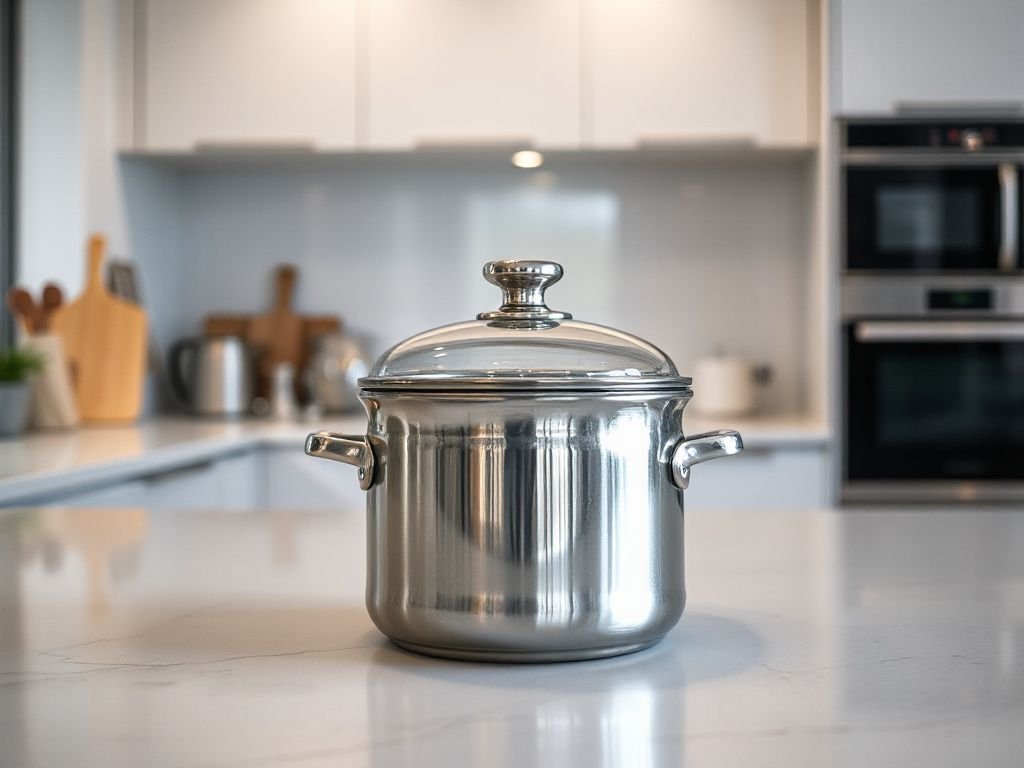
You want a lid, and the material choice is a genuine tradeoff. Glass lets you watch a simmer without lifting it and losing steam, but glass lids usually carry a lower oven temperature rating and can crack under a broiler. Metal lids handle any oven or broiler heat the pan itself can take.
Oven and broiler safety depends on the handle material and the lid knob rating, not the pan body. A fully stainless pan with a riveted metal handle may be broiler-safe, while the same pan with a plastic handle or a phenolic lid knob is capped at a much lower temperature. Look up the maker’s stated oven rating rather than guessing — food-equipment and material standards bodies like NSF International certify commercial cookware to defined heat and food-safety criteria, and manufacturer spec pages list the domestic oven ceiling for exactly this reason.
Buying a piece versus a set
A saucepan is one of the pieces most worth buying on its own rather than inside a matched set. Sets bundle pans you may rarely use to hit a headline price, and the saucepan inside a budget set is often the thinnest, most warp-prone piece in the box. Buying the sizes you actually cook with, one at a time, usually gets you better metal for the money.
How much to spend
Spending more buys even heating, flat durable bases, and secure handles — up to a point. Past mid-range, you are largely paying for finish, brand, and a lifetime warranty rather than better cooking. A well-built disc-bottom or tri-ply saucepan in the middle of the price range will cook dairy and sauces as cleanly as a premium one; the premium mostly buys longevity and looks. A soup like a quick rotisserie chicken and mushroom soup turns out identically in a good mid-priced pan and an expensive one, because the base does the work, not the badge.
Frequently Asked Questions
What size saucepan should I buy if I only cook for one or two people?
A 2-quart or 3-quart saucepan is the sweet spot for one or two people. It handles rice, small batches of soup, sauces, and reheating without forcing you to heat a mostly empty pan, which wastes energy and worsens performance. A tiny 1.5-quart is useful as a second pan for melting butter or warming single servings, but too small to be your only saucepan.
How do I know if a saucepan will work on my induction cooktop?
Hold a fridge magnet against the bottom of the pan. If it sticks firmly, the base is ferromagnetic and will work on induction; if it slides off, the pan will not heat. Plain aluminum and some stainless grades are not magnetic, so a listing must specifically state induction compatibility. The magnet test takes five seconds and settles it with total certainty.
Is a nonstick saucepan worth it, or should I stick with stainless steel?
For most saucepan jobs — boiling, simmering, and sauces — stainless steel is the better long-term choice because it tolerates high heat and metal utensils and lasts decades. Nonstick earns its place only for sticky foods like oatmeal, custards, and eggs, and it wears out within a few years since PTFE coatings cannot be resurfaced. Many cooks keep stainless as the workhorse and one small nonstick pan for delicate work.
How do I stop food from sticking and burning in a stainless steel saucepan?
Heat the empty pan over medium first, then test it: a drop of water should form a skittering bead rather than spreading flat. Add fat once it beads, then add food. Cold pans and rushed high heat cause sticking and scorching. For anything with dairy or starch — the base of many soups, including a 25-minute chicken tortilla soup — keep the heat moderate and stir, because an even base plus patience beats a high flame every time.