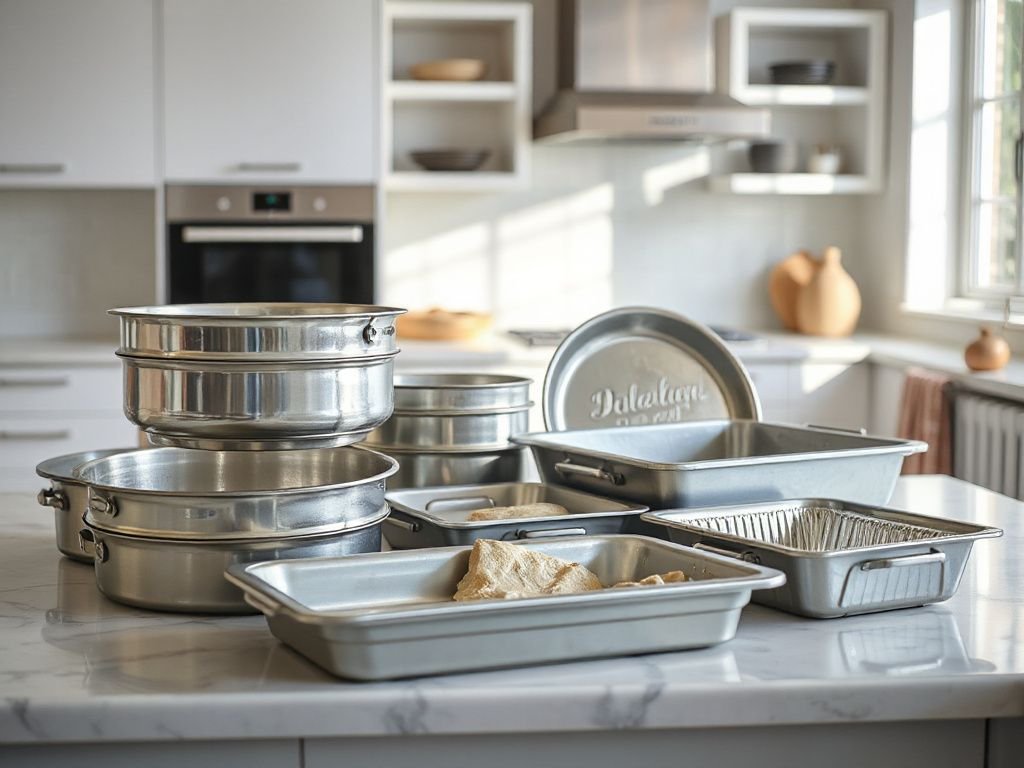
I’ve stripped and rebuilt more cast iron than I’ll admit, but the same obsession applies to sheet pans. Sourcing and testing hundreds of baking sheets in home and commercial kitchens taught me that fabrication is everything. A pan stamped from thin aluminum will warp and bake unevenly, while a pan with a rolled wire edge or heavy-gauge steel resists distortion and heats uniformly. This baking pan buying guide cuts through marketing nonsense and focuses on gauge thickness and edge construction over brand names or price tags.
Key Takeaways
- Gauge and edge construction matter more than brand. Thin aluminum warps; rolled edges and heavy-gauge steel keep pans flat.
- A rimmed half-sheet pan (18×13 inches) fits most home ovens and handles cookies, roasting, and sheet cakes.
- Nonstick coatings fail above 500°F (260°C). Use uncoated aluminum or steel for broiling and high-heat roasting.
- Season raw steel with a thin oil layer after every wash to prevent rust and build a natural nonstick surface.
Beginner Basics: Read the Specs Before You Shop
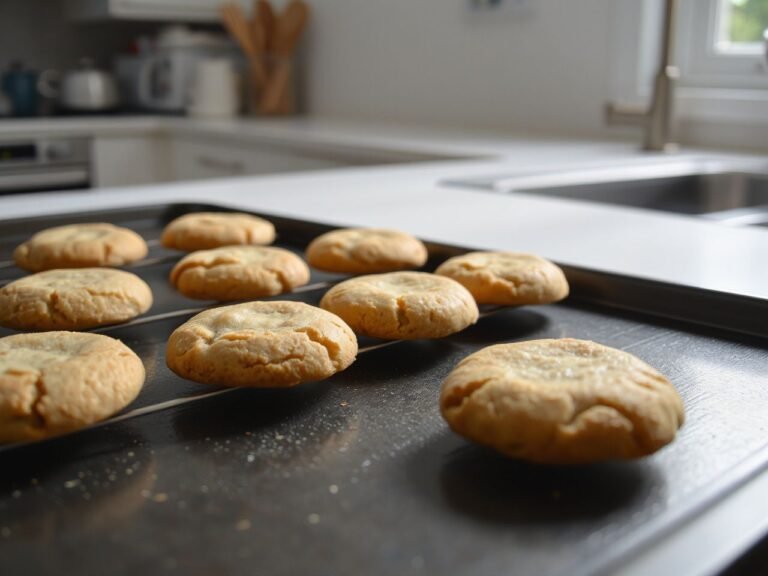
Most people buy a baking pan based on what’s cheapest at the big box store. Ten years later they wonder why every batch of cookies comes out with burnt edges and raw centers. The answer is almost always in the fabrication, not the recipe. If you’re baking cookies at home and want even results, start with the pan itself. For a great recipe to test on a proper pan, try our easy brownie mix cookies — they’ll show you immediately whether your pan heats evenly.
Rimmed Baking Sheet vs. Rimless Cookie Sheet
A rimmed baking sheet has four raised edges, usually about one inch tall. A rimless cookie sheet has zero or one low edge, designed for sliding cookies off with a spatula. The rimmed version is far more versatile because it holds juices from roasted vegetables or meat, and it prevents thin batters from spilling. A rimless sheet only makes sense if you exclusively bake dry cookies and want a completely flat surface for sliding them off.
When I say “rimmed baking sheet,” I mean the workhorse half-sheet pan measuring 18×13 inches. That size fits standard home ovens with about an inch of clearance on all sides, which allows proper air circulation. Smaller quarter-sheet pans (13×9) are fine for toaster ovens, but a half-sheet is the starting point for serious home baking.
Jelly Roll Pan vs. Cookie Sheet
A jelly roll pan is simply a rimmed baking sheet with shorter edges, typically one inch, specifically designed for thin sponge cakes that get rolled. Those low edges let the cake bake evenly and then release easily for rolling. A cookie sheet may be rimless or have one or two low edges for gripping. If you plan to make a jelly roll or any rolled cake, buy a dedicated jelly roll pan; the rim size matters for the cake’s shape and release.
What Does Gauge Thickness Actually Mean for Baking?
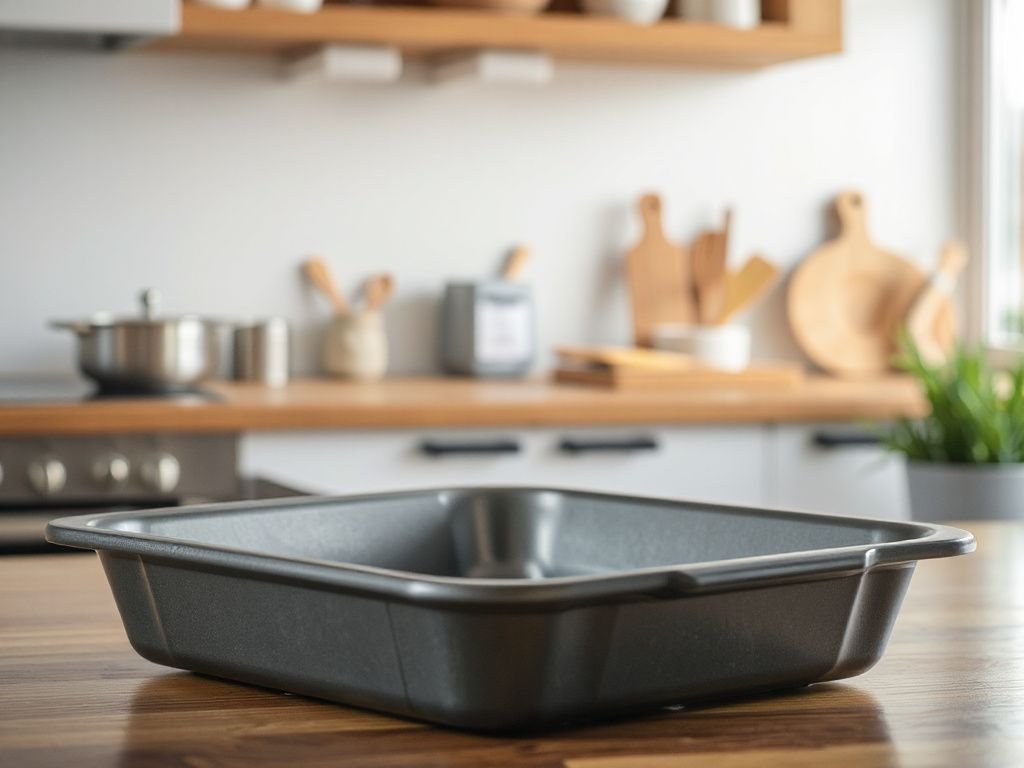
Gauge refers to the thickness of the metal. Lower gauge numbers mean thicker metal. An 18-gauge aluminum sheet pan is roughly 0.040 inches thick, which resists warping under normal oven temperatures. Many cheap pans are 20-gauge or thinner, around 0.032 inches, and they will bow upward with a loud bang the first time they hit a 450°F oven. Thicker metal also holds heat more steadily, which prevents hot spots and ensures even browning across the entire surface.
Aluminized steel is a different beast. It’s steel coated with an aluminum-silicon alloy, giving you the heat conductivity of aluminum with the strength of steel. USA Pan and Chicago Metallic both use aluminized steel for commercial-grade bakeware, and that material resists warping far better than plain aluminum of the same gauge. The trade-off is price, but a good aluminized steel half-sheet will outlast five cheap aluminum pans.
Intermediate: Materials, Gauges, and Why Pans Warp
You’ve got the basics down. Now let’s talk about material science, because the wrong material can ruin a tomato tart or release fumes into your kitchen. Three families dominate baking sheets: aluminum, steel, and nonstick-coated. Each has a role, and none is perfect for everything.
Aluminum vs. Steel vs. Nonstick
Aluminum is the best heat conductor of the three. It heats quickly and evenly, which makes it ideal for cookies, biscuits, and anything that needs a crisp bottom. The downside is softness; thin aluminum scratches and warps easily. Steel, especially aluminized steel, is much sturdier and resists warping at high temperatures, but it takes slightly longer to heat up. Nonstick pans feature a coating, usually PTFE or ceramic, that releases food easily but degrades above 500°F and scratches with metal utensils.
For general home baking, an uncoated heavy-gauge aluminum half-sheet with a rolled edge covers 80% of needs. Buy a second half-sheet of aluminized steel for roasting and high-heat work. Skip nonstick baking sheets entirely unless you make delicate items like meringues or tuiles every week, and even then a sheet of parchment paper does the same job without the maintenance.
Why Do Sheet Pans Warp in the Oven?
Warping happens because metal expands unevenly when heated. Thin stamped aluminum heats up from the bottom first, so the center expands faster than the edges, causing the pan to bow upward with a metallic pop. The fix is simple: use a heavier gauge, a rolled wire edge, or both. A pan with a rolled edge has a steel wire inside the rim that acts like a tension ring, holding the metal flat as it expands and contracts.
Sudden temperature changes also cause warping. Never run a hot sheet pan under cold water straight out of the oven. Let it cool on the stovetop or a trivet for ten minutes before washing. Commercial kitchens follow this rule religiously, and their half-sheets last decades. Your home pan will too.
Acidic Foods and Aluminum: A Chemical Reaction You Need to Know
Raw aluminum reacts with acidic foods like tomatoes, citrus, and vinegar. The acid pulls small amounts of aluminum into the food, which can cause a metallic taste and gray discoloration on the pan’s surface. This isn’t toxic at the levels involved, but it ruins the flavor of a roasted tomato tart. If you cook acidic dishes on a sheet pan, line it with parchment paper or use a steel or nonstick pan. NSF International sets standards for food equipment materials, and their guidelines recommend avoiding direct contact between aluminum and highly acidic foods for prolonged cooking.
What Size Baking Sheet Should You Buy for a Standard Home Oven?
Most home ovens have an interior width of about 24 inches and a depth of 18–20 inches. A half-sheet pan (18×13 inches) leaves roughly 2–3 inches on each side, which allows hot air to circulate around the pan and prevents the edges from scorching. A full-sheet pan (26×18 inches) does not fit in a standard home oven at all — those are for commercial convection ovens. If you have a smaller apartment oven, measure the interior before buying; a 15×10 inch jelly roll pan may be your maximum.
Advanced: Care, Seasoning, and High-Heat Limits
This is where the seasoning purist in me takes over. A baking sheet is a tool, and like any tool it needs maintenance. Raw steel and cast iron develop a natural nonstick patina through seasoning; aluminum and nonstick require gentler handling. Ignore these rules and you’ll be scrubbing rust and carbon off your pans every Sunday.
How to Season a Raw Carbon Steel Sheet Pan to Keep It Rust-Free
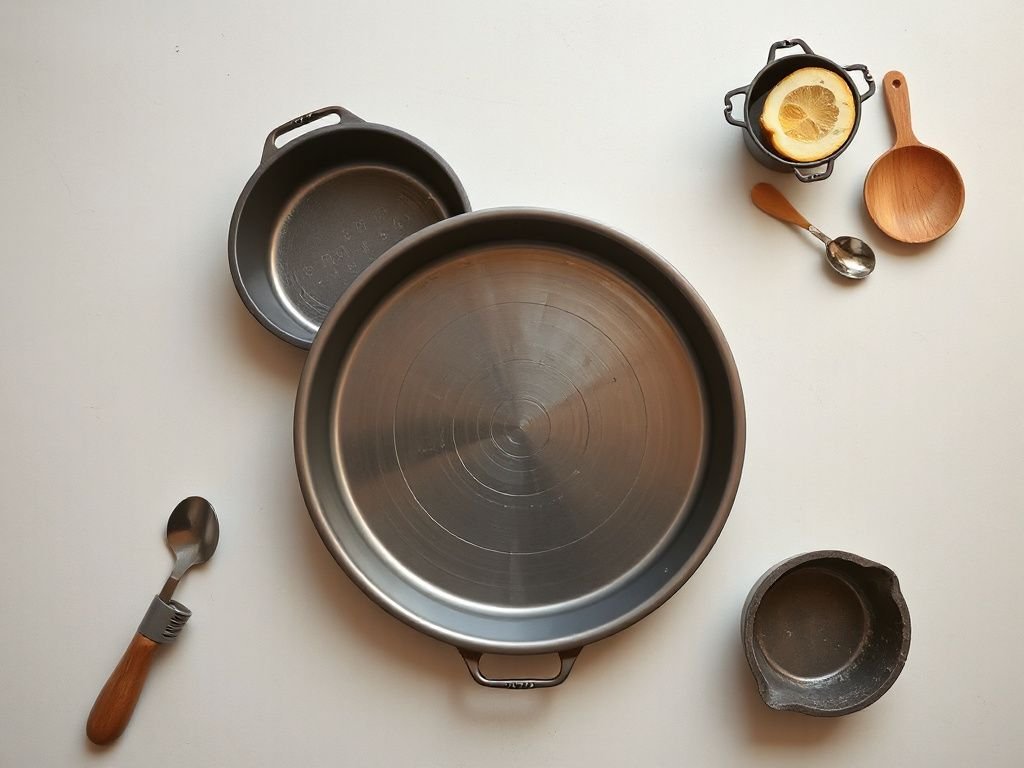
Carbon steel baking sheets are rare but beloved by pastry chefs. They’re used for high-heat roasting and even pizza. Like a cast iron skillet, raw carbon steel rusts instantly if left wet, so you must season it. The process: wash off the factory oil with hot water and a mild soap, dry thoroughly, then rub a very thin layer of neutral oil (grapeseed, canola, or flaxseed) over the entire surface. Bake upside down at 400°F for one hour, let it cool in the oven, and repeat two or three times. After each use, wash with hot water only, dry completely over a low burner, and rub on a few drops of oil before storing. A properly seasoned carbon steel sheet pan releases cookies as well as any nonstick coating and lasts generations.
For cast iron baking pans, the same rule applies: oil after every wash. If you’ve stripped and rebuilt a skillet, you know the drill. The oil polymerizes into a hard, slick surface that resists rust and improves with use.
Removing Baked-On Grease and Burnt Residue Without Damaging the Pan
Baked-on grease is carbonized oil, and it does not come off with dish soap alone. The safest method for aluminum and uncoated steel: sprinkle the pan with a generous layer of baking soda, add a few drops of dish soap, and scrub with a damp sponge or nylon brush. The baking soda acts as a mild abrasive that lifts carbon without scratching the metal. For stubborn spots, make a paste of baking soda and hydrogen peroxide, spread it over the residue, and let it sit for 30 minutes before scrubbing.
Never use steel wool on aluminum pans — it gouges the surface and creates grooves where food sticks even worse. For nonstick pans, avoid abrasives entirely; soak in warm soapy water and use a soft sponge. If the nonstick coating is flaking or peeling, the pan is done. Retire it.
Can You Put a Baking Sheet in the Dishwasher?
Aluminum pans should never go in the dishwasher. The high heat and alkaline detergents cause aluminum to oxidize, turning it dull gray or black and leaving a chalky residue. That oxidation also roughens the surface so food sticks more readily. Uncoated steel rusts in the dishwasher if the seasoning has worn off. Nonstick coatings degrade faster from dishwasher detergents, and the coating can peel around the edges. Only fully stainless steel baking sheets are dishwasher safe, though they are rare and expensive. Hand wash your pans; it takes 30 seconds and preserves the surface.
What If My Sheet Pan Rusted After Washing — Is It Still Usable?
Surface rust on steel or carbon steel is not a death sentence. Scrub the rust off with a bit of fine steel wool or a rust eraser, then rinse and dry immediately. Season the bare spot with oil and heat as described above. If the rust has caused deep pitting, the pan may never release food evenly again, but light surface rust is fully recoverable. Aluminum does not rust, but it does corrode into a white powdery film; that is cosmetic and can be scrubbed off with a paste of cream of tartar and water.
Broiler and Convection Oven Use: Read the Fine Print
Broilers reach temperatures well above 550°F, which destroys nonstick coatings and can warp thin aluminum even with a rolled edge. For broiling, use a heavy-gauge uncoated steel or cast iron pan. Convection ovens circulate hot air, which browns food about 25°F faster than conventional ovens. You can use any baking sheet in a convection oven, but reduce the recipe temperature by 25°F or check doneness five minutes early. Also, convection airflow can cause thin parchment paper to fly around; tuck it under the pan’s edges or use silicone baking mats.
Some baking sheets have plastic or silicone handles or rivets that are not oven-safe. Always check the manufacturer’s temperature rating. A handle that melts at 400°F will ruin a 450°F roast and possibly your oven. Vollrath, Nordic Ware, and USA Pan all publish clear temperature limits on their websites; Vollrath states their commercial aluminum sheet pans are oven-safe to 450°F, which is sufficient for most baking but not for broiling.
Why Does My Dough Spread Unevenly Even on a Thick Pan?
Thick gauge prevents warping but does not fix oven hot spots. Most home ovens have uneven heat distribution, with a hotter back and a cooler front. Even a perfectly flat, heavy pan will bake cookies unevenly if the oven cycles on and off and has dead zones. The solution is to rotate the pan 180 degrees halfway through baking, and if you have two pans on separate racks, swap their positions. Also, parchment paper or a silicone mat can insulate the bottom and reduce burning, but the oven itself may need calibration. A simple oven thermometer tells you whether the dial matches reality; a 25°F discrepancy is common and explains why recipes fail randomly.
Frequently Asked Questions
What is the best material for a baking sheet — aluminum, steel, or nonstick?
For most home baking, heavy-gauge aluminum with a rolled edge is the best all-rounder. It heats evenly and resists warping if you buy 18-gauge or thicker. Aluminized steel is stronger and better for roasting and high-heat work. Skip nonstick unless you bake delicate items frequently; a sheet of parchment does the same job without needing replacement every few years.
Can I put my baking sheet under the broiler?
Only if the pan is uncoated aluminum or steel, and the manufacturer lists a broiler-safe temperature. Nonstick coatings degrade above 500°F (260°C), releasing fumes and ruining the coating. Even some aluminum pans warp under direct broiler heat, so position the rack at least six inches from the element and watch it closely.
Why does a sheet pan warp in a hot oven?
Thin metal expands unevenly; the center heats faster than the edges, causing the pan to bow. Buy a pan with a rolled wire edge or heavier gauge (18-gauge aluminum or aluminized steel). Also avoid sudden temperature swings — never put a cold pan into a fully preheated 500°F oven; let it come to temperature gradually or add it when the oven is 300°F and let it heat with the oven.
How do I clean baked-on black residue from a baking sheet without scratching it?
Sprinkle the pan generously with baking soda, add a few drops of dish soap, and scrub with a damp nylon brush or non-abrasive sponge. For stubborn carbon, make a paste of baking soda and hydrogen peroxide, spread it over the residue, let it sit 30 minutes, then scrub and rinse. Never use steel wool on aluminum. For nonstick pans, soak in warm soapy water and use a soft sponge only.
Is it safe to use a rusted baking sheet after cleaning it?
Light surface rust on steel or carbon steel is safe to remove and reseason. Scrub the rust off with fine steel wool, dry immediately, then rub with a thin layer of oil and heat the pan at 400°F for one hour to rebuild the seasoning. Deep pitting from severe rust may cause uneven baking, but the pan is still usable if you line it with parchment. Aluminum does not rust; white corrosion from dishwashing is cosmetic and can be scrubbed off.