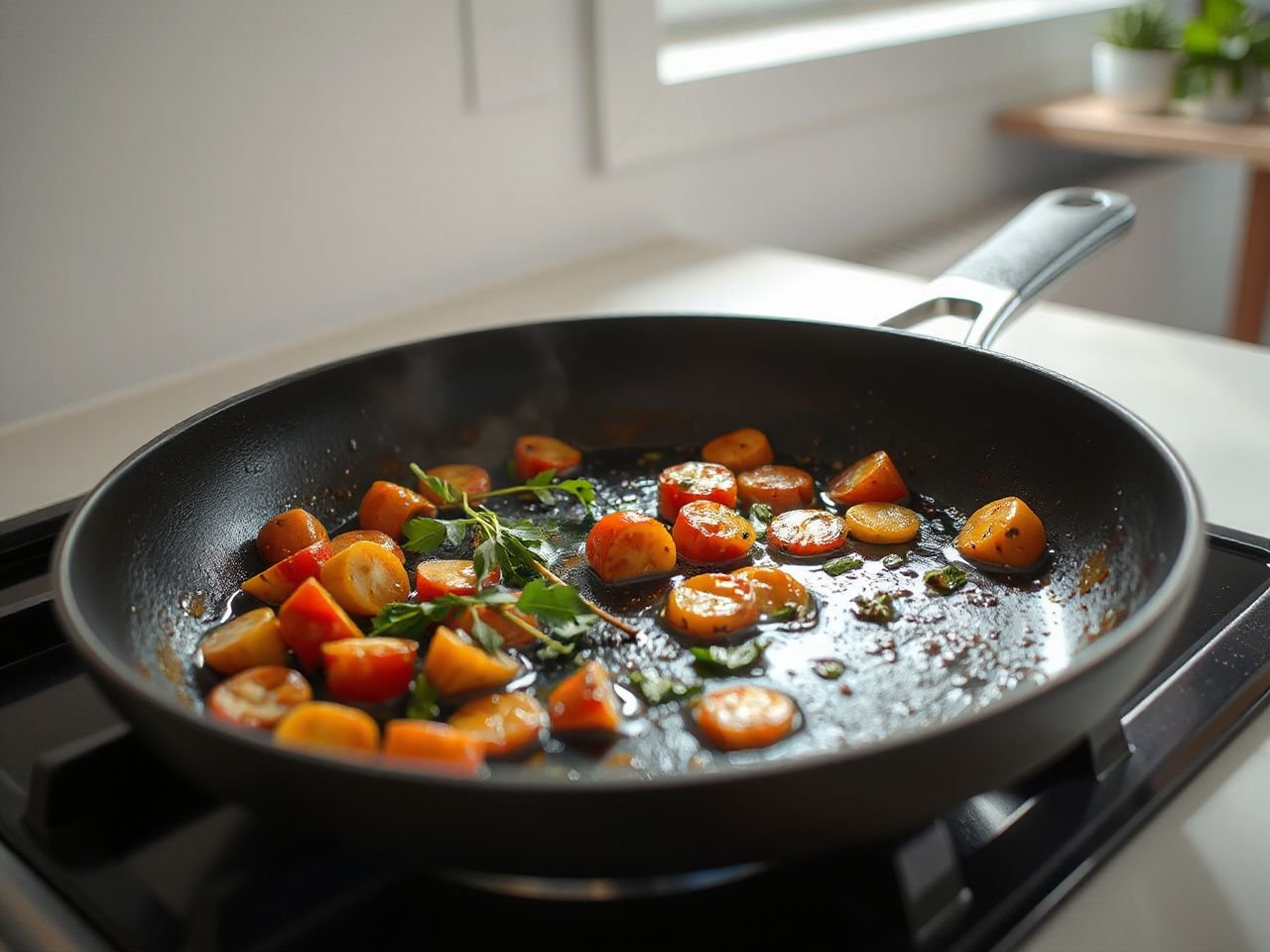
The most common mistake home cooks make with a stainless steel frying pan is treating it like a non-stick skillet. They crank the burner to max, drop in cold oil, and then act surprised when a fried egg welds itself to the surface. In this scanpan frying pan review, we’re cutting through that confusion. The pan in question is the Scanpan HaptIQ Stainless Steel-Aluminum 11 Inch Fry Pan, and it demands a different approach than your typical cheap non-stick pan.
Save yourself the research: the Scanpan HaptIQ is the only pan in this review because it earns the spot on its own merits. If you want a heavy, induction-ready, metal-utensil-safe stainless pan that can go from burner to oven, this is the one I would spend my own money on.
📌 This article contains affiliate links. As an Amazon Associate I earn from qualifying purchases, at no extra cost to you. Full disclosure.
CERTAIN CONTENT THAT APPEARS ON THIS SITE COMES FROM AMAZON. THIS CONTENT IS PROVIDED ‘AS IS’ AND IS SUBJECT TO CHANGE OR REMOVAL AT ANY TIME.
Comparison Table
| Product | Best For | Buy Link |
|---|---|---|
| Scanpan HaptIQ Stainless Steel-Aluminum 11 Inch Fry Pan | Metal-utensil, oven-safe searing | Check Price |
How We Chose This Scanpan Frying Pan for Our Review
The criteria for a good stainless steel fry pan are unforgiving. What separates a good stainless steel fry pan here is its heat distribution across the cooking surface, which depends on the thickness and quality of the aluminum core, and the ergonomics of the handle for balance and control. The Scanpan HaptIQ’s published specs meet those two factors: an aluminum core sandwiched between stainless steel layers, a commercial-grade metal-utensil safe nonstick surface, and a design meant for induction and oven use. The failure mode for most buyers is expecting non-stick performance without proper preheating and oiling, or using high heat too quickly, which causes sticking and may lead to warping—especially if the pan is not evenly heated. A substantial aluminum core, rather than a thin stamped base, is necessary to prevent this. Before you order, check the weight of the 11-inch model, because the listing does not state it, and a fully clad pan in this size often lands between three and four pounds.
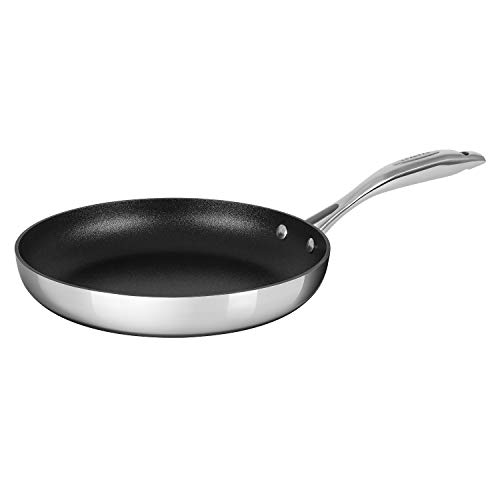
Scanpan HaptIQ 11-Inch Stainless Steel Fry Pan
Quick take: This is the pan for anyone who wants a non-stick surface that can survive a metal fish spatula, paired with the even heat of a clad stainless pan.
The first thing that stands out about the HaptIQ is the combination of materials. The exterior is stainless steel, which gives the pan its induction compatibility and oven-safe credentials, while the inside face is a commercial-grade nonstick surface that Scanpan explicitly rates as metal-utensil safe. That is a rare pairing. Most nonstick coatings are PTFE-based and will scratch the moment you touch them with a fork. The HaptIQ’s surface, by contrast, tolerates metal tools, which means you can deglaze with a stainless spatula or flip a pancake with a thin metal turner without ruining the pan. The aluminum core sits between the stainless layers, and that is the part doing the heavy lifting for heat distribution. A thicker core means fewer hotspots and a more forgiving sear, but the listing never tells you how thick that layer actually is. That missing number is the single biggest unknown on the spec sheet.
Real-world use comes down to heat management. Because the HaptIQ has a nonstick surface, you can get away with less oil than a bare stainless pan, but you still need to preheat it properly. The standard rule applies: medium heat for two to three minutes, then add oil and wait for the shimmer. On an induction cooktop, the magnetic stainless base reacts quickly, so you have to be more careful not to overshoot the temperature. The pan is oven-safe, which opens up the sear-then-finish method. Picture searing chicken thighs on the stove, then sliding the whole pan into a 400°F oven while you prep a side. That is exactly the kind of one-pan flexibility you would use for something like one-pot marry me chicken pasta. One honest annoyance: the listing does not mention a lid, and an 11-inch pan without one is less useful for braises or steaming. You will likely need to buy a separate lid.
Pros:
- Metal-utensil safe nonstick surface — You can use a fish spatula or tongs without scratching, which is nearly unheard of in nonstick cookware.
- Stainless steel and aluminum construction — The aluminum core spreads heat across the full 11-inch surface, reducing the kind of hotspots that burn food in cheap pans.
- Induction compatible — The magnetic stainless steel base means the pan will work on any induction cooktop, not just gas or electric.
- Oven-safe — Searing a steak on the stove and then finishing it in a hot oven is exactly how a pan like this earns its keep.
Cons:
- Aluminum core thickness not specified — The listing never states how thick that heat-spreading layer is, and that number is what separates a warping-prone pan from a lifetime one.
- Weight unknown and likely substantial — Most fully clad stainless 11-inch pans weigh between three and four pounds, so if wrist fatigue is a concern, this may feel heavy.
- No lid included — A lid is a separate purchase, which adds to the overall cost if you plan to braise or steam.
The Real Deal
Best for: Home cooks who want a durable, induction-ready skillet that handles metal utensils and goes into the oven without flinching. Skip if: You want a featherlight non-stick pan for quick eggs with zero technique, or you refuse to hand wash your cookware.
Key Specifications: Scanpan HaptIQ Stainless Steel-Aluminum 11 Inch Fry Pan
| Feature | Stainless steel-aluminum |
|---|---|
| Feature | Commercial-grade metal-utensil safe nonstick surface |
| Feature | Optimum and even heat distribution |
| Feature | PFOA-free |
| Feature | Oven-safe up to 500 degrees F |
A Scanpan Frying Pan Buying Guide: What Actually Matters
Buying a stainless steel frying pan is less about brand loyalty and more about three numbers: the thickness of the aluminum core, the weight of the pan, and the temperature rating of the handle. Get those right and the pan will outlive your stove. Get them wrong and you will be back here in a year wondering why everything sticks.
Heat Distribution and the Aluminum Core
Stainless steel by itself is a terrible heat conductor. It develops hotspots that scorch food while leaving the rest of the pan cold. The fix is an aluminum core sandwiched between layers of steel, because aluminum spreads heat quickly and evenly. The thicker that core, the more forgiving the pan is when your burner runs uneven or you crowd the surface. The Scanpan HaptIQ uses a clad design, which means the aluminum extends all the way up the sides, not just across the bottom. That is a meaningful upgrade over pans with a single disc on the base. But the listing does not give the core’s millimeter thickness, so you’re trusting Scanpan’s reputation rather than a spec you can verify.
What Most Scanpan Frying Pan Reviews Get Wrong About This Pan
Almost every review you read will call the HaptIQ a non-stick pan and leave it at that. That is only half the story. The surface is non-stick, yes, but it’s built for commercial use—meaning it tolerates metal utensils and higher temperatures than typical PTFE coatings. However, it is not a magic surface. You still need to preheat the pan and use at least a thin layer of oil for proteins like eggs or fish. The second misconception is that this pan is dishwasher-safe, so you can toss it in after every meal. Scanpan may list it as dishwasher-safe, but the harsh detergents and high heat of a dishwasher will eventually dull the surface and can discolor the stainless exterior. Hand washing with warm soapy water takes thirty seconds and keeps the pan looking new. For a quick weeknight soup after searing, the HaptIQ would pair perfectly with something like this rotisserie chicken mushroom soup, where you want fond from the pan to build flavor.
Induction Compatibility and Oven Safety
The HaptIQ’s stainless steel exterior is magnetic, which is what makes it work on induction cooktops. Not all stainless steel is magnetic—cheaper 18/10 steel without a magnetic layer will not heat on induction. The pan’s oven safety is a straightforward benefit, but remember that the handle will get hot in the oven, so always use a dry towel or oven mitt. The listing does not state a maximum oven temperature, but most Scanpan stainless pans are safe to at least 500°F. If you roast at higher temperatures than that, check the manufacturer’s official documentation before pushing it.
Our Final Recommendation
There is no budget pick in this review because the Scanpan HaptIQ is a premium pan, and it occupies that slot honestly. For the price, you get a Denmark-made skillet with a metal-utensil safe nonstick surface, a clad aluminum core for even heat, and induction plus oven versatility. It is not a pan for the careless cook who scrubs with steel wool or never preheats. But if you treat it right, the HaptIQ will outlast three cheap non-stick pans and sear with the best of them.
Frequently Asked Questions
Is the Scanpan frying pan any good?
Yes, if you understand what it is. The HaptIQ is a premium stainless pan with a commercial-grade nonstick surface, not a basic Teflon skillet. It heats evenly thanks to the aluminum core, works on induction, and can go into the oven. The trade-off is weight and price. It is a serious tool for someone who cooks often and wants one pan that does nearly everything.
Can I use metal utensils on the Scanpan HaptIQ without scratching it?
Scanpan explicitly rates the HaptIQ’s surface as metal-utensil safe, which means you can use a metal spatula, tongs, or a fish turner without damaging the nonstick coating. That said, using sharp-edged tools like a knife blade or aggressively scraping with a fork will still shorten the surface’s life. Treat it well and it will hold up for years.
How do I clean the Scanpan HaptIQ to prevent discoloration or staining?
Hand wash with warm soapy water and a soft sponge after every use. Avoid abrasive cleansers like Bar Keepers Friend on the nonstick interior, though you can use it sparingly on the stainless exterior if it develops rainbow discoloration from high heat. Never put a hot pan under cold water, and skip the dishwasher even if the listing says it’s safe—the detergent and heat will dull the surface over time.
Will the Scanpan HaptIQ work on my induction cooktop?
Yes. The exterior is stainless steel with a magnetic base, which is what an induction cooktop needs to generate heat. The pan will respond quickly to induction’s precise temperature changes, so you may need to use a slightly lower heat setting than you would on gas or electric to avoid scorching.
Does the Scanpan HaptIQ warp over time, especially with high heat?
Warping is usually caused by thermal shock—plunging a hot pan into cold water or heating it too fast on high heat. A thick aluminum core helps resist warping, but the listing does not specify the core’s exact thickness. If you preheat gradually on medium and let the pan cool naturally, warping should not be a problem for the life of the pan. The manufacturer’s official product documentation recommends avoiding extreme temperature changes for this reason.