
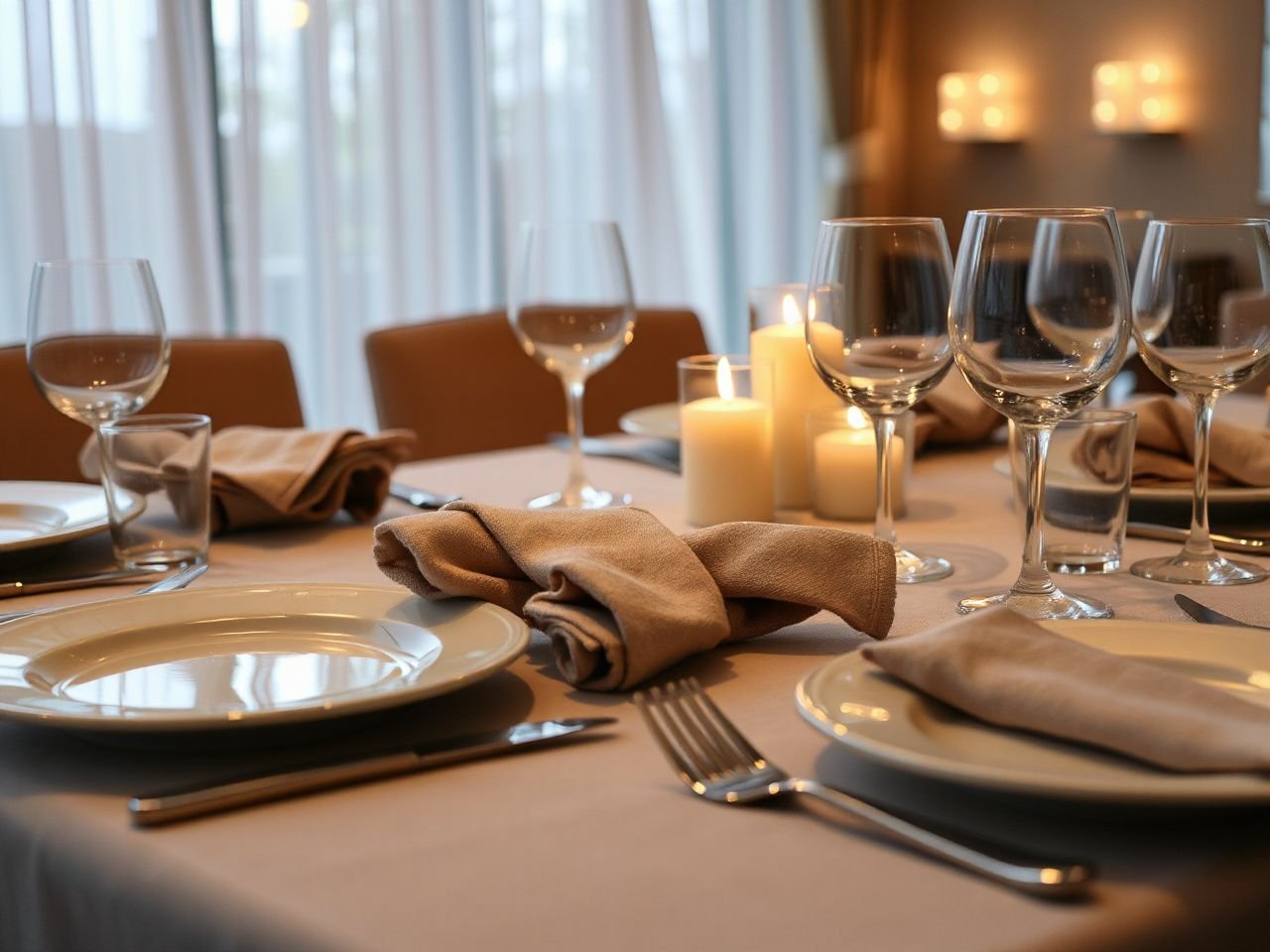
A beautiful table can still be badly set. The useful place settings for dinner are not the ones with the most pieces; they are the ones that match the menu, leave diners room to move, and keep each utensil easy to identify. A useful place setting is not a fixed inventory of plates and utensils: it is a course-by-course arrangement shaped by the menu, service style, and available table space. The practical distinction beginners often miss is that formal conventions add sequencing and visual structure, while an everyday setting should include only what the meal requires and what diners can use comfortably.
Key Takeaways
- Build each setting around the menu, beginning with the dinner plate as the anchor.
- Keep forks to the left, knives and spoons to the right, and the drinking glass above the knife.
- Inspect ceramic rims, glass edges, flatware, and linens before guests sit down.
Place Settings for Dinner Start With the Menu
A basic setting needs a dinner plate, a dinner fork, a dinner knife, a drinking glass, and a napkin. Add a salad plate, salad fork, soup spoon, or bread-and-butter plate only when the meal or service style calls for that piece.
The dinner plate is the anchor of the table. Forks generally sit to its left, knives and spoons sit to its right, and the drinking glass belongs above the knife; exact placement can vary by dining convention. This simple layout works because the plate establishes the center, while the flatware follows the order in which diners normally reach for it.
What belongs in an everyday setting
- Dinner plate: Place it in front of each chair, leaving enough room for the diner to sit squarely at the table.
- Fork: Set the dinner fork to the left of the plate. For an informal meal with salad, put the salad fork outside the dinner fork.
- Knife: Position the dinner knife on the right side of the plate, with the cutting edge facing toward the plate.
- Soup spoon: Add it to the right of the knife when soup is part of the meal.
- Napkin: A folded napkin can sit to the left of the plate, with the dinner fork placed on top of it in a basic arrangement.
- Drinking glass: Set the water glass above the knife.
A napkin does not need an elaborate fold to look considered. Linen works well for a formal table, while a simple folded cloth or paper napkin suits many everyday meals. The important point is that the napkin should be reachable without forcing a diner to cross over another person’s plate.
A basic dinner setting uses only the dinnerware, flatware, glassware, and napkin needed for the meal. Extra utensils create uncertainty when diners cannot tell which course they serve.
How the menu changes the arrangement
For soup, salad, and a main course, begin with the dinner plate in the center. Place the salad fork to the left of the dinner fork, with the salad fork farther from the plate, and put the soup spoon to the right of the dinner knife. The order gives the diner a visual sequence: work from the outside toward the plate as courses arrive.
A salad plate can sit directly to the left of the forks in an informal or formal arrangement, but it should not crowd the person seated beside it. If the salad is served before the main course and the plate will be cleared, placing it at the table before guests sit down can make sense. If the salad is served from a buffet or brought separately, keeping the salad plate off the table until needed may leave more usable space.
The bread-and-butter plate belongs above the forks in a formal arrangement, accompanied by a small butter knife. For a casual meal, the bread plate can be omitted when bread is not part of the menu. Every piece should have a job.
How to Arrange an American Place Setting
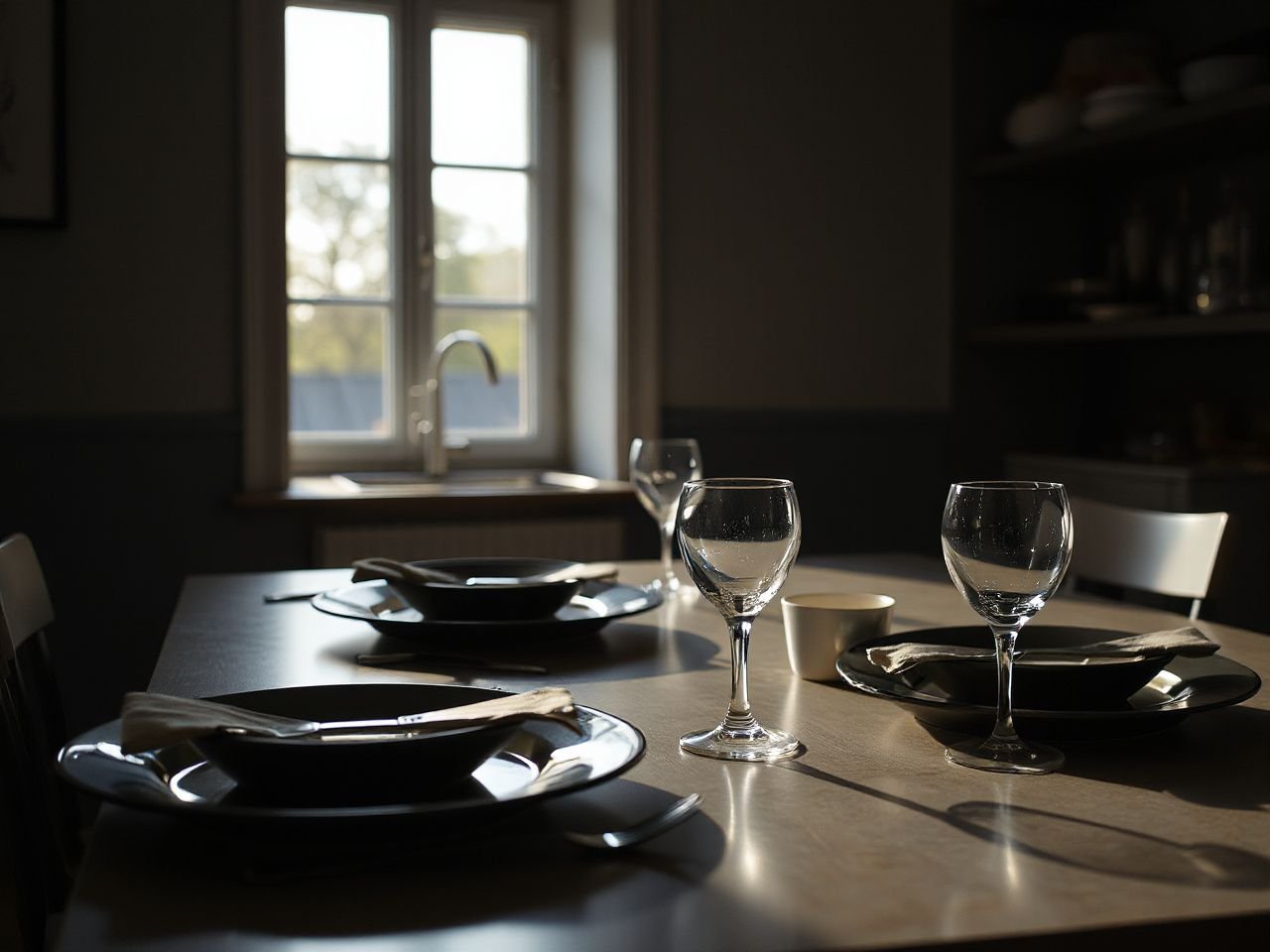
An American place setting is generally practical and course-led. The dinner plate sits in the center, the forks remain on the left, the knife and spoon remain on the right, and the glass sits above the knife. The arrangement can be informal enough for a family-style dinner while still giving each diner a clear starting point.
Basic and informal service
For a simple dinner, set the plate, fork, knife, napkin, and water glass. The napkin may sit to the left of the plate, and the fork may rest on top of it. This approach keeps the table easy to reset and prevents unused pieces from taking up seating space.
Informal service adds pieces for courses that are actually being served. A salad fork goes outside the dinner fork, and a soup spoon goes to the right of the knife. The arrangement should reflect the order of the meal rather than an imagined menu.
Family-style service needs particular restraint because serving bowls and platters also occupy the table. If the table already holds the food, a separate salad plate may make the setting cramped. A table with fewer pieces can provide more useful space for shared dishes and still look complete.
American place settings are defined by practical placement around the dinner plate rather than by displaying every available utensil. The table should support the service style instead of competing with it.
Formal place setting
A formal place setting adds sequencing and visual structure. A typical formal arrangement may include a dinner plate, salad plate, bread-and-butter plate, salad fork, dinner fork, dinner knife, soup spoon when soup is served, napkin, and drinking glass. The salad plate sits directly to the left of the forks, while the bread plate and small butter knife sit above the forks.
A formal tablecloth or table runner should hang down approximately one foot, reaching lap height. Unscented candles are strongly advised for a formal table because fragrance can interfere with the aroma of the food. Decorative choices should remain subordinate to diners’ ability to see, reach, and converse.
Formal does not mean every plate must remain in front of the diner from the first course. Some pieces can be brought out with a course, particularly when table space is limited. Service style determines the final arrangement.
Five-course and buffet arrangements
A five-course setting should be built in stages, not copied as a permanent display. Put out only the pieces required for the courses that will be served at the table, and bring additional pieces with later courses if the table would otherwise become crowded.
A buffet setting has a different priority. Diners usually collect food away from the seated place, so the table setting can remain simple: dinner plate, basic flatware, napkin, and glass. Extra plates may be stacked at the buffet rather than placed at every chair. That keeps seating areas open and prevents unused dinnerware from becoming part of the traffic around the serving area.
For a formal dinner, sequence matters. For a buffet, access matters. Both are valid ways to arrange a table.
Choose Dinnerware That Fits the Table and Survives Service
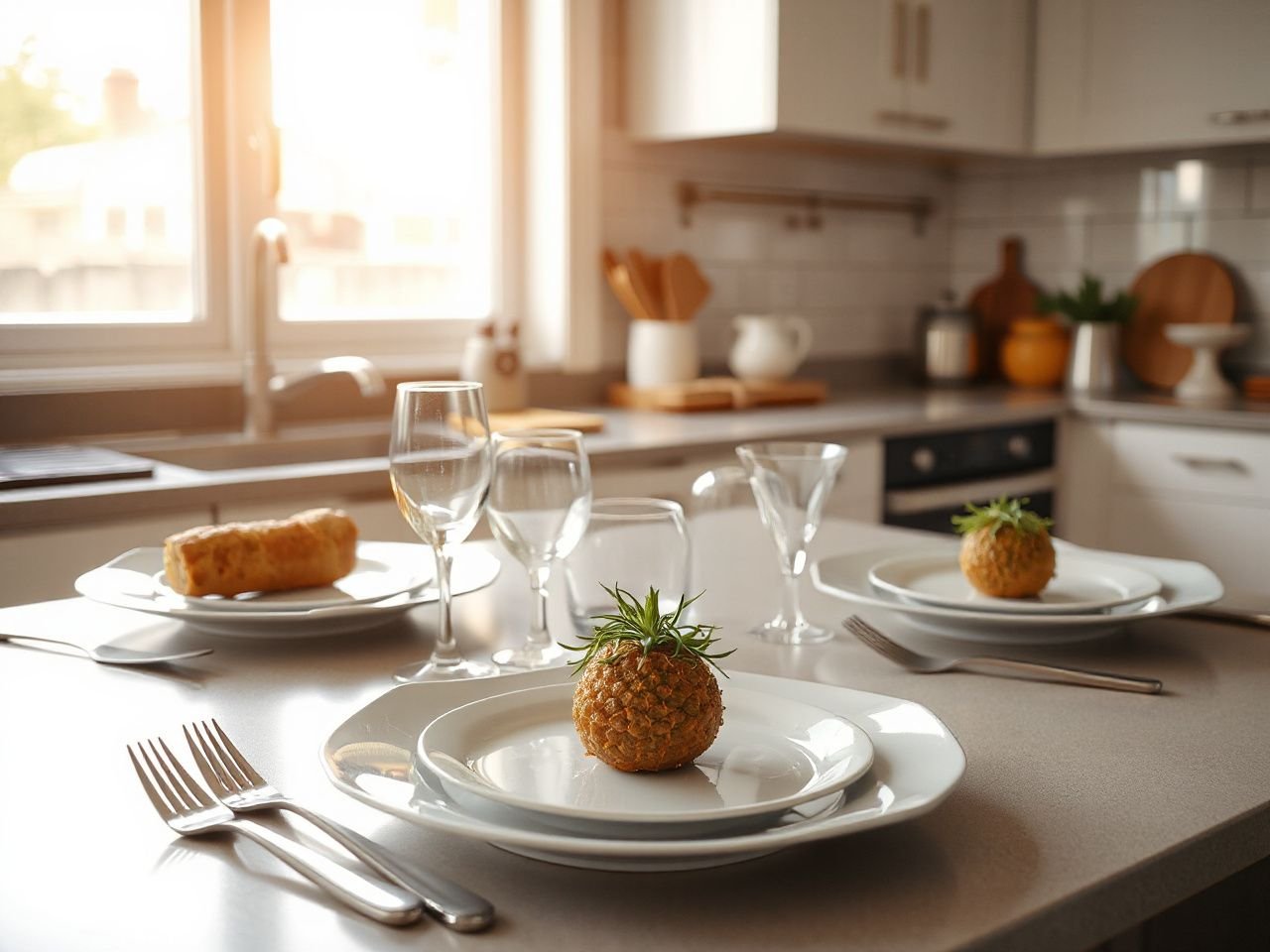
Material affects appearance, maintenance, and how carefully a setting must be handled. Porcelain can give a formal table a refined appearance, while stoneware often suits an everyday table with a more substantial visual presence. Tempered glass is another dinnerware material used for table service. The listing or manufacturer’s care instructions should determine how each piece is washed, heated, and stored.
Inspecting the rim before the pattern
A rim deserves close attention because it is exposed during stacking, washing, and handling. Look for chips, hairline cracks, rough sections, or glaze damage before placing a plate at a guest’s seat. A cracked or chipped ceramic or glass piece should not remain in service because the damaged edge can cut a diner and the crack can retain residue.
The same rule applies to serving pieces. A chip near the lip of a bowl or platter is easy to overlook when the pattern is attractive, yet that is precisely the area that receives repeated contact. Remove damaged pieces from the active setting rather than hiding the defect beneath food or a napkin.
Chipped and cracked dinnerware should be removed from service instead of being placed at the least visible seat. Damage is a function problem, not a decoration problem.
Knives, forks, and spoons should be checked for bent tines, sharp burrs, discoloration, and residue before they reach the table.
Tarnished flatware should be cleaned according to the maker’s instructions before service. If a piece remains rough, corroded, or visibly damaged after cleaning, it should be taken out of circulation. The goal is a safe, comfortable utensil, not merely a coordinated finish.
Dishwasher, microwave, and oven care
Dishwasher, microwave, and oven suitability depends on the material and the manufacturer’s instructions. Metallic trim, delicate porcelain, decorative finishes, and some flatware require particular care; a dinnerware set should not be treated as microwave- or oven-safe unless its care information says so.
Metallic decoration should be kept out of the microwave unless the manufacturer specifically allows that use. Oven suitability is also separate from microwave suitability, so one approved use does not automatically establish the other. If the listing does not state the care limits, the safest practical choice is to avoid assuming compatibility.
Food-contact materials are addressed by the U.S. Food and Drug Administration, whose official site provides current food-contact guidance. Product-specific care instructions still matter because a general material category does not describe every glaze, finish, handle, or decorative treatment.
For damaged glass or ceramic pieces, the U.S. Consumer Product Safety Commission is the government body that publishes consumer safety information. A damaged piece should be removed from service before a standards question becomes a table accident.
Keeping the table from overcrowding
Table spacing and seating capacity should guide the arrangement before decoration does. Each diner needs room to sit and use a fork, knife, and spoon without striking a neighboring place setting. A smaller table often works better with plates added course by course than with a formal display that leaves no room for serving dishes.
The best test is practical: place the dinner plate, required flatware, napkin, and glass at one position, then add only the next necessary piece. If a salad plate touches the neighboring fork or a serving bowl blocks the glass, revise the layout before guests arrive.
Our guide to baking sheets for sheet pan dinners can help with the cooking side of a meal whose serving plan needs to remain simple. A sheet-pan menu often reduces the number of serving vessels competing for table space.
Set, Check, and Reset the Table
Step 1: Identify the service sequence
Write down the courses in the order they will reach the diner: soup, salad, main course, or another sequence. Decide which dishes will be placed before guests sit down and which will arrive later. This single decision prevents most excess flatware.
For soup, salad, and a main course, place the dinner plate first. Add the salad fork outside the dinner fork, then place the soup spoon to the right of the knife. Put the salad plate to the left of the forks only if there is enough room, and use the bread-and-butter plate above the forks for a formal setting that includes bread.
Step 2: Set the anchor pieces
Position the dinner plates evenly in front of the chairs. Place the napkin to the left of each plate, or use the chosen house convention consistently. Set the fork on the left, the knife on the right, and the glass above the knife.
Keep every place setting aligned with the chair rather than with the table edge alone. Guests should not need to twist their bodies to reach the center of their own setting.
The dinner plate establishes the position of every other piece in a basic table setting. Aligning the plate first makes the rest of the layout easier to keep consistent.
Step 3: Add course-specific pieces
Add the salad fork, soup spoon, salad plate, or bread plate only after confirming that the course needs it. In formal service, the order of the flatware should provide a visual cue for the meal. In everyday service, remove any piece that diners will not use.
If the table is narrow, serve salad from the kitchen or bring the salad plate with the course. A place setting is successful when it supports the meal without forcing guests to balance dishes around unused equipment.
Step 4: Perform the rim and care check
Inspect the rim of every plate and bowl. Check glass edges, flatware surfaces, napkin cleanliness, and the care status of decorative pieces. Stained cloth napkins should be laundered before service, and a napkin with a persistent stain should be reserved for less formal use or removed from the active linen supply.
Look for metallic trim before placing anything near a microwave or oven, and read the manufacturer’s instructions for dishwasher use. A table can be correctly arranged and still be poorly maintained if damaged or unsuitable pieces remain in circulation.
Step 5: Reset without overbuilding
After a course is cleared, bring forward the next needed piece rather than rebuilding the entire table. This keeps the visual field calm and gives diners more working room. The same principle applies to family-style meals: clear empty dishes before adding another serving vessel.
Simple settings are usually easier to maintain because they involve fewer pieces to wash, inspect, store, and replace. A formal setting can remain manageable when its extra components are used selectively rather than placed automatically at every meal.
Frequently Asked Questions
What pieces belong in a basic everyday place setting for dinner?
A basic everyday setting includes a dinner plate, dinner fork, dinner knife, drinking glass, and napkin. The fork goes to the left of the plate, the knife goes to the right, and the glass sits above the knife. Add a soup spoon only when soup is served, and add a salad fork only when salad requires a separate course utensil.
How should I set the table for soup, salad, and a main course?
Start with the dinner plate in the center. Place the salad fork outside the dinner fork on the left, and put the soup spoon to the right of the dinner knife. A salad plate may sit directly to the left of the forks if space allows. The bread-and-butter plate belongs above the forks in a formal arrangement that includes bread.
What is the difference between an American place setting and a formal place setting?
An American place setting focuses on practical service around the dinner plate and usually includes only the pieces required for the meal. A formal place setting adds more visual structure and may include a salad plate, bread-and-butter plate, small butter knife, extra fork, and soup spoon. Formal service still should not display utensils for courses that are not being served.
Should the salad plate and bread plate be on the table before guests sit down?
They can be, provided the table has enough room and the service plan calls for them. In a formal arrangement, the salad plate sits directly to the left of the forks, while the bread-and-butter plate sits above the forks. For a smaller table or a meal served from a buffet, bringing either plate with the course can reduce crowding.
Can I put every piece of a place setting in the dishwasher or microwave?
No. Dishwasher, microwave, and oven suitability depends on the material and manufacturer’s care instructions. Metallic trim, delicate porcelain, decorative finishes, and some flatware need special handling. Chipped or cracked ceramic and glass should not remain in service, and stained cloth napkins should be cleaned before use. When care information is missing, do not assume appliance compatibility.
