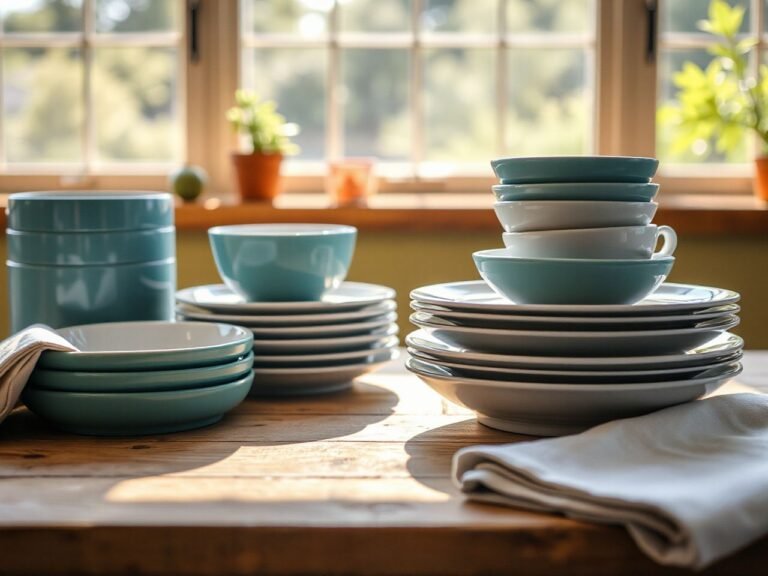
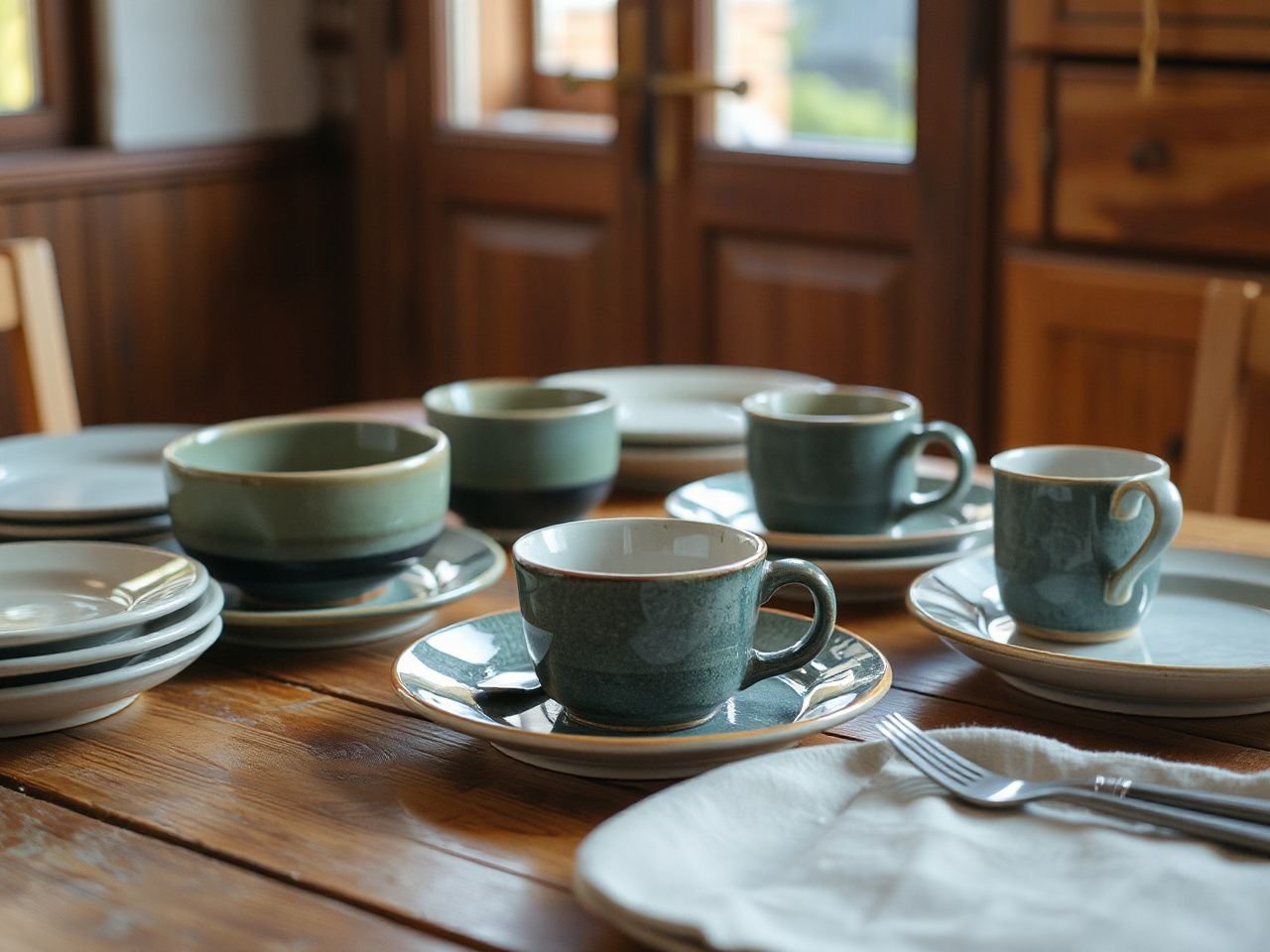
Stoneware is not automatically tough just because its name sounds like stone. The important distinction is between the stoneware body and its glaze: a dense body can still have a surface that scratches, crazes, stains, or reacts poorly to thermal shock. A useful guide therefore separates everyday handling and maintenance from claims about heat resistance, because the same dish may tolerate one appliance or cleaning method but not another. That distinction should sit at the centre of any stoneware dishes buying guide.
I have no patience for dinnerware that needs to be treated like a display piece. A good choice should suit ordinary meals, washing, stacking, and replacement without asking you to invent a ceremony for every plate.
Key Takeaways
- Judge the ceramic body and glaze separately; a dense body does not guarantee a durable surface.
- Use dishwasher, microwave, oven, and freezer settings only when the specific manufacturer guidance allows them.
- Inspect rims, bases, glaze lines, chips, and replacement availability before committing to a full dinnerware set.
Beginner: What Stoneware Is and What the Name Does Not Promise
Stoneware is fired ceramic, not natural stone
Stoneware is a fired ceramic material made from stoneware clay and transformed by kiln firing. It belongs to a broad category of ceramic goods heated at elevated temperatures until they become waterproof. The name describes the material family and its appearance, not a guarantee that every plate can handle every kind of heat.
Traditional stoneware is non-transparent and may show a stony or conchoidal fracture. Its colour can vary, so a pale plate, dark bowl, or variegated finish may all belong to the stoneware category. Appearance alone cannot establish quality.
Stoneware dishes are fired ceramic pieces whose performance depends on both the ceramic body and the glaze. The body provides the underlying structure, while the glaze forms the visible surface that meets food, utensils, water, and cleaning products.
How stoneware compares with other ceramics
Porcelain and bone china are also fired ceramics, but their appearance, translucency, feel, and manufacturing details can differ from stoneware. Earthenware and terracotta generally refer to other ceramic categories, so a familiar handmade look does not make one material interchangeable with another. Fired ceramics may reach a state of semi-vitrification or vitrification, but that broad fact does not make their appliance instructions identical.
- Stoneware: usually opaque, substantial-looking, and suited to a broad range of table settings, with the body and glaze needing separate assessment.
- Porcelain: often associated with a refined, lighter-looking surface, although the name alone cannot tell you how a particular piece should be heated or washed.
- Bone china: a distinct dinnerware category whose feel and appearance differ from ordinary stoneware.
- Earthenware and terracotta: ceramic categories with their own body and finish characteristics rather than substitutes for stoneware by default.
- Vitrified ceramic: a description of how a fired ceramic body has developed, not a universal permission slip for microwave or oven use.
Ceramics typically have high hardness, high melting temperature, low ductility, chemical resistance, poor conductivity, and a high modulus of elasticity. Those traits help explain why a ceramic plate can feel hard yet still break suddenly instead of bending when stressed.
Why glaze deserves equal attention
Glaze is a glass-like surface formed during firing. Ceramic glaze chemistry affects colour, sheen, texture, food contact, utensil marks, and the way a surface ages. A plate may have a sound body but a finish that shows scratches, develops fine lines, or holds stains more visibly than expected.
Decorative treatments need particular care. Metallic finishes and some surface treatments may not be compatible with microwave use and may require gentler cleaning. A maker’s care instructions are more useful than a general claim that all stoneware is microwave-safe.
For food-contact questions that the product instructions do not answer, the U.S. Food and Drug Administration provides government information on food safety and food-contact materials. That resource does not replace the manufacturer’s directions for a specific dish.
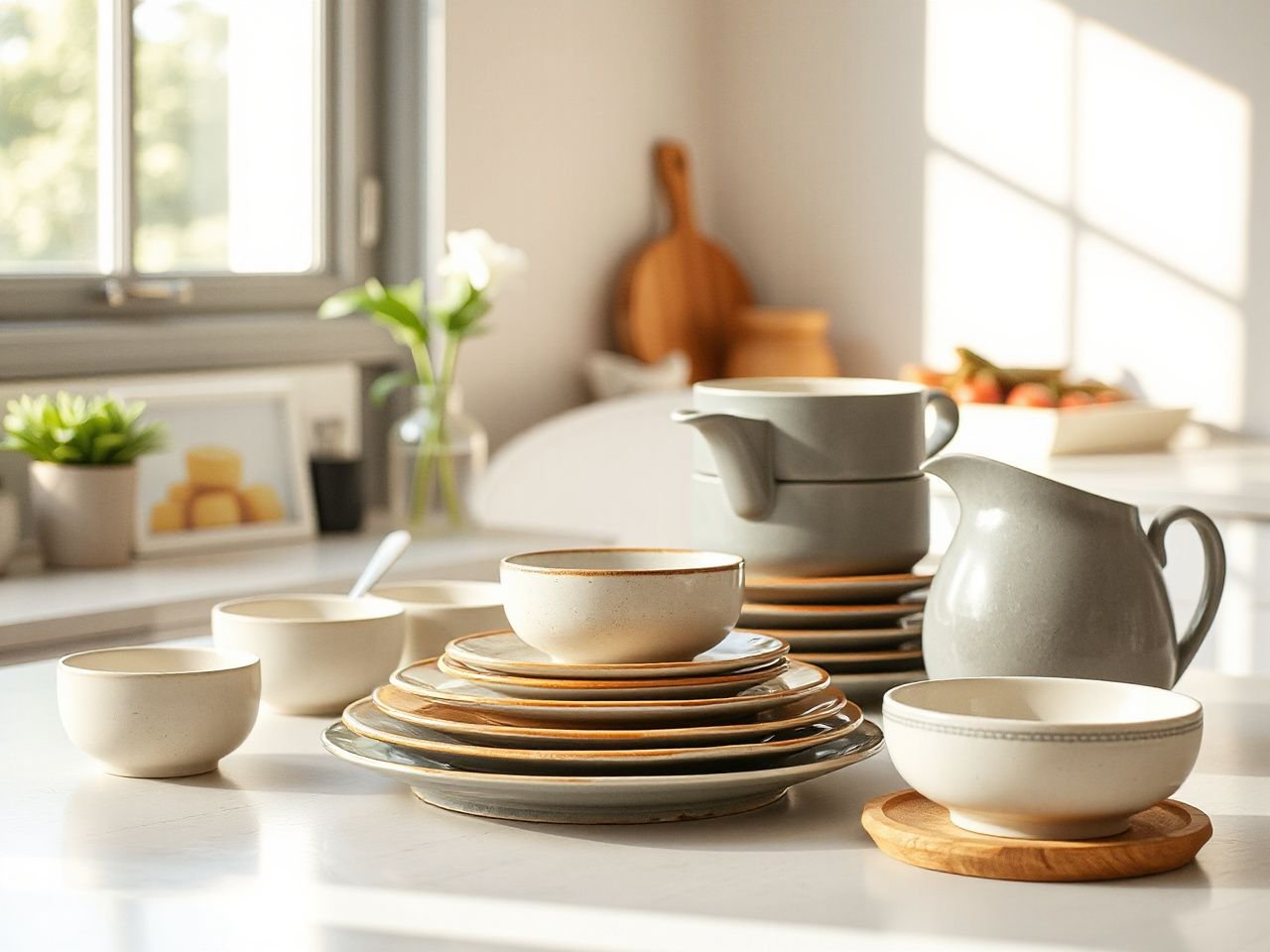
Beginner: How to Assess a Dish Before Buying
Start with the clay body and shape
Hold the dish by its rim and look across the surface rather than focusing only on the pattern. The body should look consistently formed, without an obvious warp that makes the piece rock on a flat surface. A plate that wobbles may be frustrating at the table and awkward to stack, especially if several shapes are mixed together.
Check the underside as carefully as the eating surface. A stable foot ring should sit evenly, and the base should not have rough projections likely to scratch a table or catch on another dish. A rough base is not automatically a failure, but it deserves a closer look before a set becomes part of daily service.
A plate that rocks on a flat surface is harder to stack and less pleasant to use every day. Shape matters because a beautiful irregularity can become a practical nuisance if bowls nest poorly or dinner plates occupy more storage space than the cabinet allows.
Inspect the rim and transitions
Rims take repeated contact with cutlery, hands, sinks, shelves, and neighbouring dishes. Run a clean finger around the edge and look for sharp spots, rough patches, pinholes, or uneven glaze coverage. A raised rim can help contain food, while a broad flat rim may offer a different table-setting appearance; neither shape proves that the dish is stronger.
Pay attention to transitions between the centre and rim. A sudden change in thickness or a visible distortion can create a stress point. The reader cannot identify every internal weakness by eye, but obvious unevenness is a sensible reason to put the piece back.
Read the finish instead of trusting adjectives
Glossy, matte, reactive, speckled, and hand-finished are descriptions of appearance. They do not independently establish dishwasher, microwave, oven, or freezer suitability. Look for care instructions on the base, packaging, product page, or maker’s documentation.
Dark or highly textured finishes may make utensil marks and food residue more noticeable. Light finishes may reveal stains sooner. That is a maintenance issue, not automatically a safety failure, but it should influence whether the surface suits the way the dish will be used.
Listen and look for obvious flaws
A reader may gently tap a clean ceramic piece and listen for an unusually dull or inconsistent response compared with another piece from the same group, but sound is only a screening clue, not a quality certification. Visual inspection remains essential. Look for hairline cracks, blisters, crawling glaze, exposed ceramic, and chips around handles or edges.
Retail photographs can hide defects, so inspect the actual piece when possible. For boxed sets, examine the pieces you can access and confirm the seller’s process for damaged or missing items before purchase.
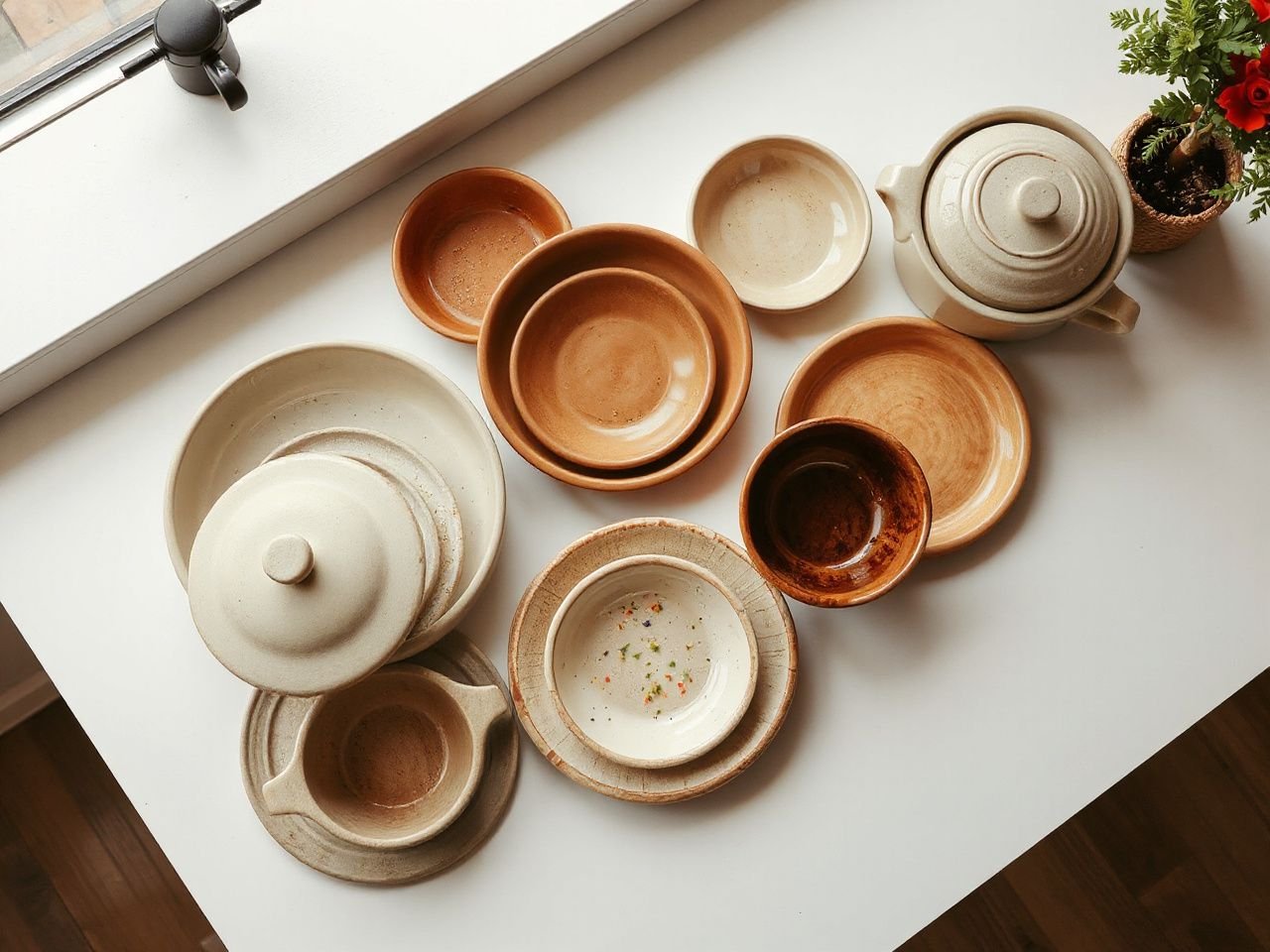
Intermediate: Heat, Appliances, and Thermal Shock
Why rapid temperature changes cause trouble
Thermal shock occurs when different parts of a dish change temperature quickly and unevenly. The body and glaze expand or contract in response, and the resulting stress can lead to cracking or breakage. Ceramic’s low ductility matters here: a rigid dish has little ability to flex as those stresses develop.
Rapid changes between hot and cold conditions can create thermal shock and cause ceramic dishes to crack or break. A hot plate placed on a cold, wet surface creates a different risk pattern from a plate warmed gradually, so the temperature path matters as much as the final setting.
Dishwasher use
Dishwasher suitability varies by the specific ceramic body, glaze, decoration, and manufacturer’s guidance. A dishwasher-safe label addresses the maker’s stated use for that product; it does not turn every stoneware dish into a universal dishwasher item.
Stack pieces so they are stable and not forced tightly together. Avoid placing a fragile or decorative item where another object can strike its rim during loading. Strong detergents, repeated washing, and contact with other dishes can change the appearance of some finishes even when the manufacturer permits dishwasher use.
Microwave use
Microwave suitability also varies by body, glaze, decoration, and instructions. Metallic decoration can be incompatible with microwave use, and a dish that feels cool after heating one food may still not be approved for the appliance.
Never treat an unmarked dish as microwave-safe merely because it is ceramic. Check the manufacturer’s guidance, especially for painted surfaces, metallic details, unusual textures, or visible damage.
Oven use
Oven suitability cannot be inferred from the word stoneware. Some pieces may be made for oven use, while others may be intended only for serving. The manufacturer should state whether oven use is allowed and identify any limits or handling instructions.
A dish removed from an oven needs a stable, dry place that does not create a sudden temperature change. Do not move directly between hot and cold environments unless the product instructions explicitly support that use.
Freezer use
Freezer suitability varies in the same way. A dish approved for freezer use may still require careful handling when transferred to a warmer environment. Frozen food placed into a hot dish, or a frozen dish placed into a hot appliance, creates a rapid temperature change that deserves caution.
For general product-safety information and consumer guidance, the U.S. Consumer Product Safety Commission is a government source. Appliance instructions and the dinnerware manufacturer’s directions remain the controlling information for a particular piece.
Intermediate: Cleaning, Stains, Crazing, and Storage
Clean according to the surface
Start with the maker’s care instructions. If those instructions are absent, use a gentle approach rather than assuming a rough scrubber will improve the result. A non-abrasive sponge, ordinary dish soap, and prompt rinsing are sensible tools for many everyday surfaces, but the manufacturer’s directions take priority.
Do not use a harsh method merely to remove a mark that is part of the glaze or decoration. A surface can become dull or scratched while the original stain remains. Decorative metallic finishes and some treatments may call for hand washing or other gentler handling.
Stoneware dishes should be dried fully before stacking when moisture could remain around rims or bases. Drying reduces the chance of trapped water, food residue, or detergent film remaining between pieces, and it makes inspection easier.
Understand stains and utensil marks
Staining can result from the relationship between food residue and the surface finish. A textured or matte glaze may show marks differently from a smooth glossy glaze. Utensil marks may look like scratches even when the underlying ceramic body is not deeply damaged, so inspect the surface in good light rather than judging by colour alone.
Persistent marks are a reason to review the care instructions, not a reason to reach immediately for an aggressive abrasive. If the surface feels rough, flakes, exposes the body, or continues to deteriorate, the dish deserves a more serious safety and hygiene assessment.
Recognise crazing
Crazing is a network of fine lines in the glaze. It can result from a mismatch between the glaze and ceramic body during firing or from changes as the piece is used. A single fine line should not be dismissed automatically, especially if it crosses the rim, reaches a chip, or appears with staining and roughness.
Assess crazed dishes for hygiene, safety, and continued use. A crazed surface can be harder to clean thoroughly, and visible damage may grow. Follow the maker’s instructions, and retire a piece if it has a chip, crack, exposed ceramic, flaking surface, or other damage that makes food contact questionable.
Stack and store without creating pressure points
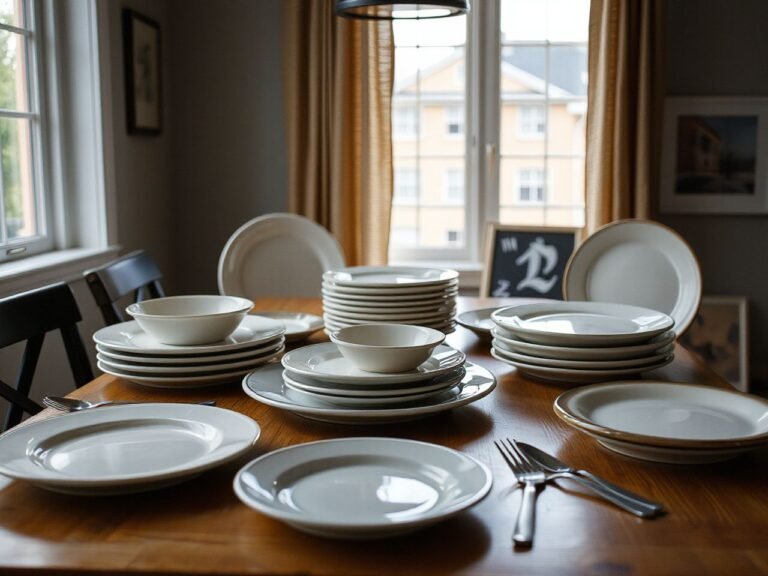
Store dinner plates on a stable, level shelf rather than forcing a tall stack into a tight cabinet. Side plates and bowls should nest only if their shapes allow it without scraping rims together. Place heavier pieces where removing them will not require pulling across lighter pieces.
Separate unusual shapes instead of making every item share one stack. A bowl with a wide rim may press against the centre of a plate, while a deep bowl may trap moisture underneath another piece. Good storage is quiet, stable, and easy to use.
Advanced: Long-Term Value and Everyday Fit
Compare weight with the way the table operates
Heavier stoneware can feel grounded and substantial, but weight affects carrying, washing, cabinet storage, and serving. Lighter dinnerware may be easier to handle, while a thinner feel may change the impression at the table. Neither choice is automatically superior.
Choose a shape that matches the work of the household. A broad dinner plate may suit meals with several components, while a smaller side plate can make serving and clearing easier. Bowls should sit securely and leave enough room for the foods they are meant to hold without forcing awkward stacking.
Dish weight affects handling, storage, and washing as well as the appearance of a table setting. That is why a heavy ceramic body should be judged by daily use rather than by a vague impression of quality.
Think about replacement before buying a set
Long-term cost is shaped by more than the initial purchase price. Pieces can be chipped, cracked, stained, or lost, and a pattern that cannot be replenished may force a full replacement when only one dinner plate is missing. Ask whether individual pieces are sold, whether the collection has stable naming, and whether the maker publishes care information.
Replacement planning also affects sustainable dinnerware choices. Keeping usable pieces in service is generally more practical than discarding an entire set because one shape is unavailable, although damaged pieces should not remain in food service simply to avoid waste.
For a wider look at how dinnerware pieces fit together before selecting a material or pattern, read this Dinnerware Set Buying Guide: Before You Start Shopping. If the choice is part of a larger tableware setup, a separate practical guide to cookware types can help keep cookware decisions distinct from dinnerware decisions.
Separate use claims from maintenance claims
A dish may be easy to clean but unsuitable for an oven. Another may tolerate an appliance yet show glaze wear quickly. These are separate performance questions, and a clear decision treats them separately.
- Body: look for an even form, stable base, and no obvious cracks or exposed areas.
- Glaze: inspect coverage, texture, decoration, fine lines, and signs of wear.
- Shape: check stacking, nesting, rim comfort, and cabinet fit.
- Care: confirm each appliance category independently.
- Future use: consider replacement pieces, storage, handling, and the likely appearance after ordinary cleaning.
Those checks are more useful than a brand name by itself. They also keep the decision grounded in what the reader can actually inspect.
Frequently Asked Questions
Are stoneware dishes safe for the dishwasher, microwave, oven, and freezer?
Suitability varies by the specific ceramic body, glaze, decoration, and manufacturer guidance. A dishwasher-safe label does not automatically approve microwave, oven, or freezer use. Metallic decoration and some surface treatments may not be microwave-compatible. Check each appliance category separately and avoid rapid hot-to-cold or cold-to-hot changes that can create thermal shock.
How can I tell whether stoneware dishes are well made without relying on a brand?
Inspect the actual piece. Look for an even body, a stable base, a smooth and consistent rim, complete glaze coverage, and the absence of chips, cracks, exposed ceramic, or suspicious hairline lines. Set the plate on a flat surface to check for rocking, and examine how bowls and plates stack. Care instructions and replacement availability also matter.
Why do some stoneware dishes chip, crack, or develop fine glaze lines?
Ceramics are hard but have low ductility, so they do not flex freely under stress. Impacts at rims can cause chips, while rapid temperature changes can create thermal shock and cracking. Fine glaze lines are called crazing. Assess crazed, chipped, or exposed surfaces for hygiene and continued use, and follow the maker’s guidance before returning a damaged dish to service.
Is stoneware safer or stronger than porcelain and earthenware?
No broad material label settles every safety or durability question. Stoneware, porcelain, earthenware, and bone china differ in body, finish, shape, and firing results. The glaze can wear or craze even when the body is dense. Compare the specific care instructions, surface condition, intended appliances, handling needs, and replacement options rather than assuming one category always wins.
How should stoneware dishes be cleaned and stored?
Follow the manufacturer’s instructions, especially for matte, reactive, metallic, or textured finishes. Use a suitable sponge and avoid aggressive abrasion unless the maker permits it. Rinse away residue, dry pieces before stacking, and store them on a stable shelf without forcing mismatched shapes together. Remove pieces from food service if chips, cracks, exposed ceramic, flaking, or serious surface wear develops.