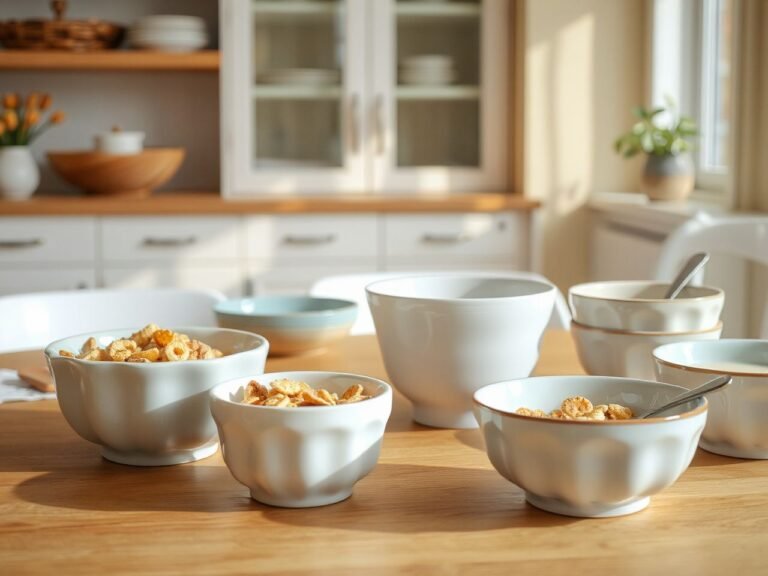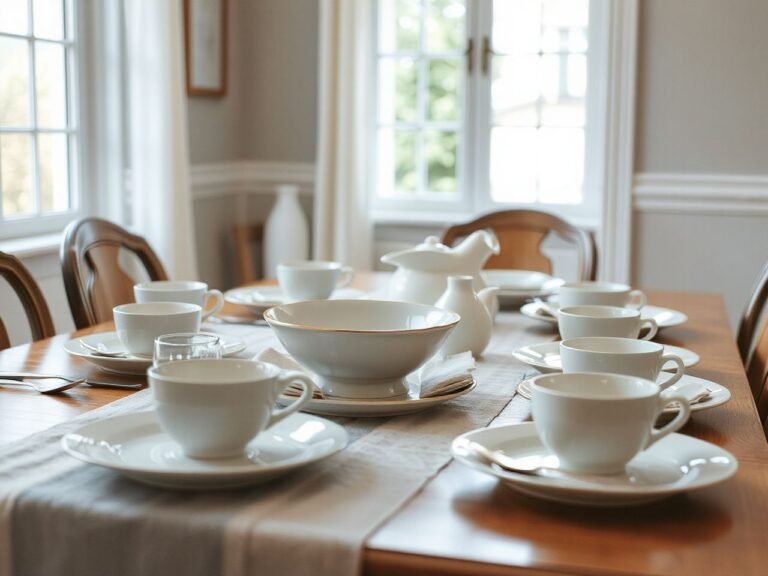
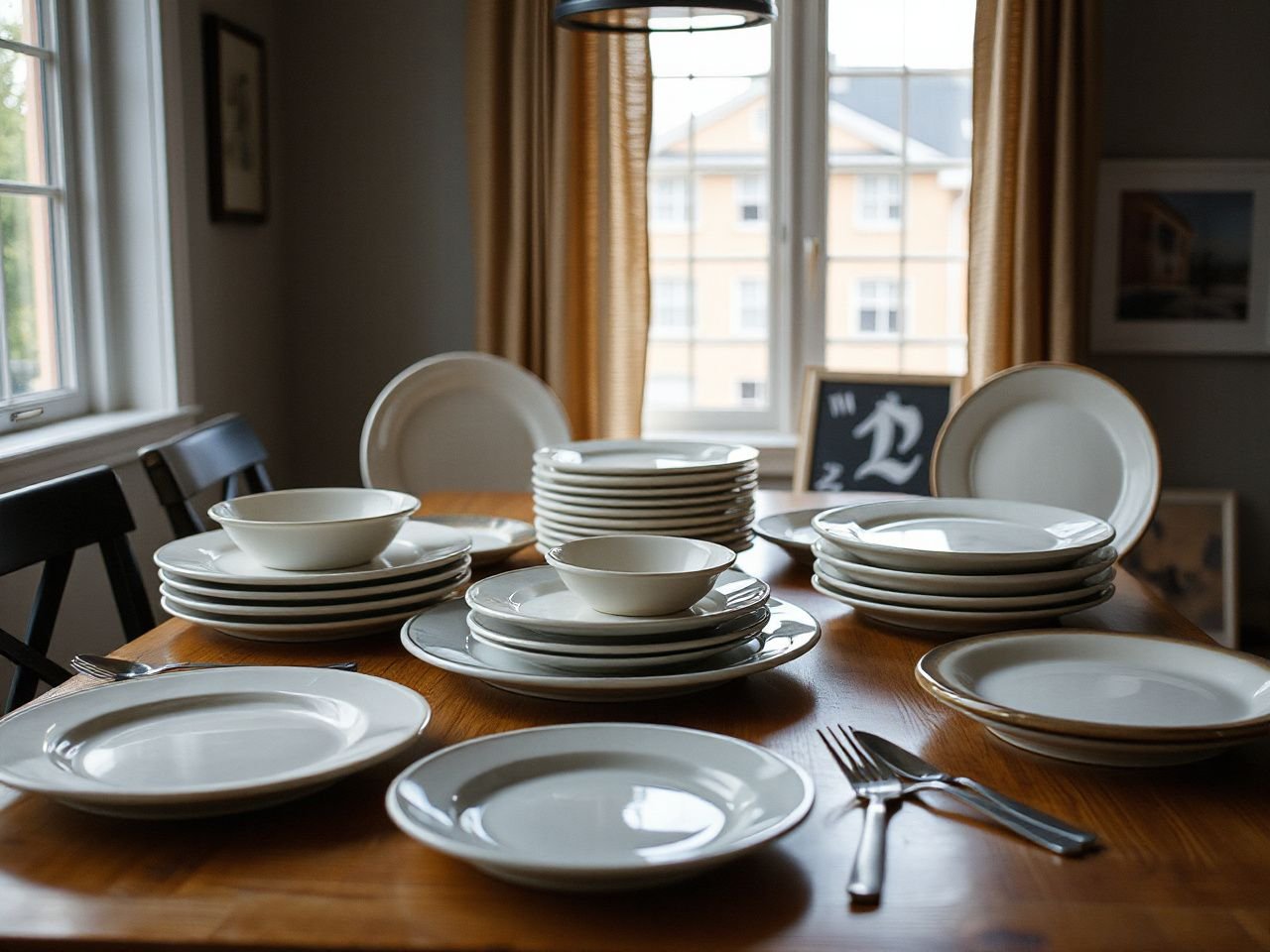
Dinnerware has shifted toward pieces that serve more than one role: plates need to look presentable at the table, stack sensibly, tolerate ordinary washing, and suit the food and appliances used at home. A useful comparison separates the plate body from its glaze, rim, and foot ring: the named material alone does not determine chip resistance, scratch behavior, thermal-shock tolerance, or ease of stacking. The guide should also distinguish breakage resistance from surface wear, because a plate that survives drops better may still show utensil marks or lose its finish under unsuitable care.
This dinner plates buying guide focuses on that distinction. Start with the finish and care instructions rather than assuming that a heavier plate or familiar material will answer every practical question.
Key Takeaways
- Compare the plate body, glaze, rim, shape, and foot ring separately.
- Dishwasher and microwave claims belong to the manufacturer’s care instructions.
- Thermal shock, crazing, utensil marks, and metallic decoration can affect daily use.
- Consider stacking, replacement matching, breakage, and finish fading over time.
Beginner: Start with the plate body and finish
Stoneware, porcelain, bone china, and earthenware
Stoneware, porcelain, bone china, and earthenware are ceramic categories, but their names do not tell the whole story about a finished plate. The body is the material beneath the surface; the ceramic glaze is the glassy layer that supplies colour, sheen, and protection. Two plates made from different bodies can have similar finishes, while two plates made from the same broad category can behave differently because their shapes, glaze formulas, rims, and manufacturing quality differ.
Stoneware is commonly associated with a substantial feel and an informal table setting. That feel may appeal to someone who wants a plate that stays visually grounded beside bowls and serving platters. Weight alone, however, does not establish resistance to cracking or chipping. A heavier plate can still suffer a damaged rim if it strikes a hard surface.
Porcelain is usually associated with a refined appearance and a relatively smooth, dense-looking body. Bone china is also associated with a fine, light appearance. Earthenware tends to communicate a more rustic character. These descriptions help with style and handling expectations, but the manufacturer’s stated care instructions remain more useful than the material label alone.
Ceramic materials commonly have high hardness, high melting temperature, high modulus of elasticity, low ductility, chemical resistance, and poor conductivity. In plain terms, ceramic plates can feel hard and resist some chemical exposure, but they do not bend much before damage occurs. A hard surface is not the same thing as an unbreakable surface.
A ceramic plate can resist surface wear while remaining vulnerable to impact and sudden temperature change. That is why the body, glaze, and edge deserve separate attention in a dinnerware comparison.
Tempered glass and melamine
Tempered glass brings a different visual and handling character from ceramic. Its surface is not a ceramic glaze, so ceramic-specific assumptions should not be transferred automatically. Glass plates can crack from thermal shock when they move suddenly between very hot and cold conditions, so a plate’s stated use and care instructions matter more than its clear or coloured appearance.
Melamine is another separate category. Melamine plates are generally not suitable for microwave use, and hot-food use should follow the manufacturer’s instructions. A melamine plate may be useful in settings where reduced breakage is important, but that does not make it suitable for every food, appliance, or serving temperature.
Disposable plates have single-use applications as their intended purpose. They belong in a different decision category from reusable dinner plates because washing, stacking, finish wear, and long-term matching are not evaluated in the same way.
Look at the glaze, not only the colour
A glossy, matte, speckled, or painted finish can change how marks show. Flatware can scratch some glazed surfaces, and a dark or highly polished finish may make utensil marks easier to notice than a softly textured surface. That does not mean one finish is universally stronger. It means visible wear and structural damage are separate issues.
I would also ask whether the finish is known to fade, cloud, or change after repeated dishwasher cycles. A manufacturer may identify a plate as dishwasher safe without promising that every decoration will look unchanged indefinitely. Printed patterns, coloured borders, and special surface effects deserve particular attention in the care section of the product information.
Intermediate: Judge the parts you handle and stack
The plate rim affects daily handling
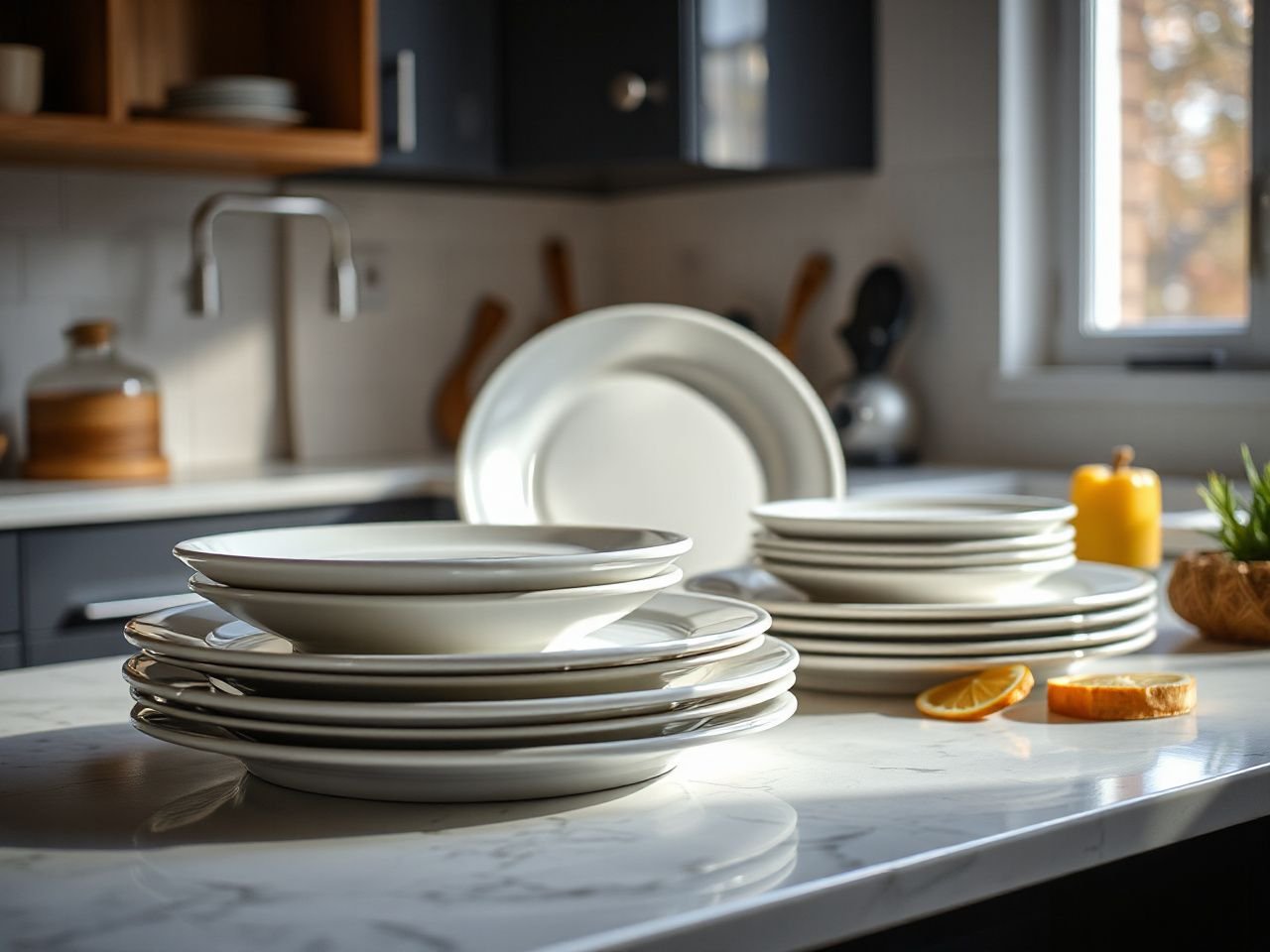
The rim is the part most likely to meet another plate, a cupboard shelf, a sink, or flatware. A broad rim can provide a clear grip and a visual frame for food, while a narrow rim can leave more room for the serving surface. Neither shape is automatically safer. The important checks are whether the rim feels easy to hold, whether its edge appears even, and whether plates sit securely together.
Inspect the rim for a sharp edge, uneven glaze, pinholes, exposed body, or decoration that reaches the area most likely to receive knocks. A plate with a delicate-looking edge may need more careful stacking than one with a rounded profile. The reader can check these features by turning the plate in the hand and looking at the edge in ordinary light.
A plate rim is a high-contact area, so edge design matters for handling, stacking, and visible chip damage. The rim also affects serving: raised edges can help keep food contained, while a broad flat surface changes how portions appear.
Shape, diameter, and place-setting space
A standard dinner plate is measured at a diameter of 10.5 inches. That reference point helps explain why shape still matters even when two plates share a similar stated diameter. A square or oval plate may occupy space differently from a round plate, and a wide rim can reduce the usable centre.
Check the plate against the space available in cupboards, shelves, and the dishwasher rack. A plate that fits the table beautifully may be awkward to store if its corners or raised rim prevent a stable stack. Table settings also connect plate size with portion presentation and the room available for flatware, bowls, and side plates.
Serving platters make these issues more obvious because larger formats place greater emphasis on weight, rim strength, and storage. The same questions still apply to a dinner plate: where will the piece rest, how will it stack, and can the household handle it without bumping nearby dishes?
The foot ring and the base
The foot ring is the raised contact area on the underside of many plates. It can affect stability, stacking, and the way the plate sits on a table. A foot ring also creates a point that may rub against the surface of another plate, so its shape and finish deserve inspection.
Turn the plate over before making a decision. Check whether the foot ring feels smooth, whether the base rocks on a flat surface, and whether the underside carries care information. The base may also reveal the manufacturer’s material description or compatibility markings, but a missing symbol should lead to a manual or manufacturer page rather than a guess.
A foot ring affects how a plate sits, stacks, and contacts other surfaces. That small underside feature can matter as much as the visible pattern in a crowded cupboard.
Does heavier mean harder to break?
Weight can change handling, but it does not provide a reliable single answer about breakage. A heavy plate may feel substantial and may stay steady on a table, yet an impact at the rim or a sudden temperature change can still damage it. A lighter plate may be easier to lift and stack, but lightness alone does not prove weakness.
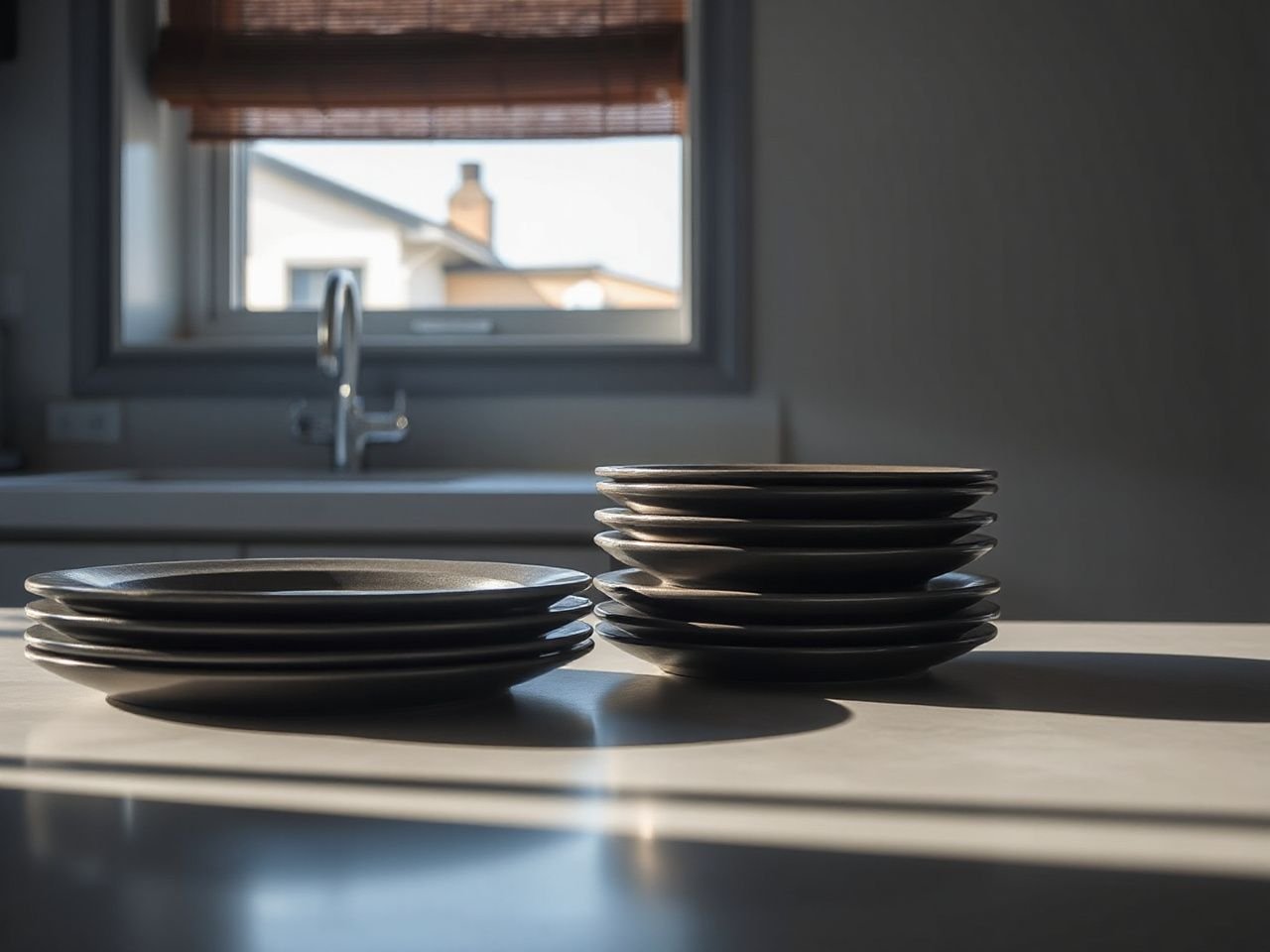
Separate three questions: how the plate feels in the hand, how it responds to an impact, and how its surface looks after repeated use. A plate that survives a drop better may still show scratches, clouding, fading, or glaze wear. A light plate may be a better fit for a household that values easy handling, while a more substantial plate may suit a table setting that calls for visual weight. Those are use decisions, not guarantees of performance.
Advanced: Match care instructions to real kitchen conditions
Dishwasher suitability and finish wear
Dishwasher compatibility should be confirmed through the manufacturer’s instructions, not inferred from the plate’s material name. Look for clear wording about dishwasher use, decoration, drying, and any restrictions. If the plate has metallic decoration, assume microwave use is unsuitable unless the manufacturer explicitly says otherwise; metallic decoration can be incompatible with microwave use.
The dishwasher question also includes appearance. Repeated cycles expose surfaces to water, detergent, heat, movement, and contact with other items. The reader should check whether the manufacturer warns about fading, clouding, scratching, or changes to a printed or painted finish. A plate can remain usable while its original appearance changes.
Do not let plates knock together in a crowded rack. Give each piece a stable position, keep sharp utensils from rubbing across the eating surface, and follow the loading guidance supplied with the dishwasher and dinnerware. Flatware affects how plate finishes perform because repeated contact can leave marks even when the body remains intact.
Microwave compatibility
Microwave suitability depends on the plate material, decoration, and manufacturer’s instructions. Metallic decoration can be incompatible with microwave use, and some plate materials are not intended for the appliance. Melamine is generally not suitable for microwave use, while hot-food handling should follow the manufacturer’s directions.
Do not assume that a plain-looking plate is microwave safe. Look for the manufacturer’s marking or instructions on the base, packaging, or official product information. If the information is missing, use another clearly identified dish rather than treating silence as permission.
Microwave compatibility belongs to the specific plate and its stated care instructions, not to appearance alone. The same caution applies to handmade, vintage, or imported ceramic plates because glaze composition and food-contact suitability can vary.
Thermal shock: hot and cold changes
Ceramic and glass plates can crack from thermal shock, so sudden changes between very hot and cold conditions matter. Moving a cold plate directly into contact with very hot food, placing a hot plate on a cold or wet surface, or transferring a heated plate into cold water can create a rapid temperature change across the material.
The visible warning may be a crack, a sharp sound, a new line in the glaze, or a plate that no longer sits securely. A crack is a structural concern, while crazing is a network of fine cracks in the glaze. Crazing is a surface condition that can affect cleaning and should not be treated as ordinary wear without checking the plate’s intended food use.
Allow plates to move through temperature changes gradually. Follow the appliance and dinnerware instructions, and do not use a plate for hot food if the manufacturer excludes that use. The same principle applies to tempered glass: its glass composition does not cancel the need for careful temperature transitions.
Chips, cracks, crazing, and scratches
Chips usually begin at exposed edges or impact points. Cracks can follow an impact, a manufacturing weakness, or thermal stress. Crazing affects the glaze as a network of fine lines, while scratches are surface marks often associated with contact from flatware or other hard objects.
These conditions should not be grouped together as simple wear. A scratch may be cosmetic, but a crack can compromise the plate’s safe use, and crazing can change how easily the surface can be cleaned. Stop using a plate for food if the condition creates a sharp edge, separates the surface, or conflicts with the manufacturer’s food-use instructions.
Handmade, vintage, and imported ceramic plates deserve extra caution. Their glaze composition and food-contact suitability may vary, so a decorative appearance cannot substitute for clear information about intended use.
Cleaning and storage
Use the least aggressive care method permitted by the manufacturer. Keep plates from striking one another, avoid stacking pieces that rock, and separate items with unusual rims or raised decoration when the stack does not sit securely.
Store plates where the stack is stable and easy to lift. A tall, leaning pile places more pressure on rims and makes accidental knocks more likely. If the cabinet cannot accommodate the shape comfortably, the plate’s design is creating a storage problem even if the table setting looks right.
Stable storage reduces contact between plate edges and lowers the chance of accidental knocks. That simple check can protect both the body and the glaze without relying on a product’s marketing language.
Preventive decisions: Think beyond the first purchase
Replacement and discontinued patterns
Dinnerware costs continue after the original purchase because plates may break, finishes may become unacceptable, or a household may need extra place settings. Matching a discontinued pattern can be difficult, especially when a collection depends on a particular rim colour, glaze effect, or shape.
Before choosing a distinctive pattern, record the manufacturer, collection name, material, care instructions, and any identifying information printed on the base. Keep the original care information with the household records. These details do not prevent damage, but they make replacement research more practical if a plate is chipped or lost.
A restrained design may be easier to combine with bowls and side plates from another collection, while a distinctive shape may require closer matching. Neither approach is automatically right. The sensible choice depends on how much visual consistency matters and how much storage space is available.
Compare the whole place setting
A dinner plate does not work alone. Bowls and side plates show whether the collection’s materials, rims, and finishes coordinate across a place setting. Flatware contact can reveal surface wear that is not obvious on a display shelf, while serving platters test storage and handling in a larger format.
Consider how the plate fits beside cookware as well. Readers comparing dinnerware with cooking pieces may find useful context in this practical explanation of cookware types, especially when thinking about which serving and cooking materials belong in the same kitchen routine.
Questions to ask before choosing
- What is the plate body, and what is the glaze or surface finish?
- Does the rim feel smooth, stable, and suitable for the way the plate will be handled?
- Does the foot ring allow secure stacking without rocking?
- Are dishwasher and microwave instructions stated clearly?
- Does the decoration include metallic elements or a finish that may fade or cloud?
- Will the plate fit the available cabinet and dishwasher space?
- Can the pattern or shape be matched if a replacement is needed?
- Are handmade, vintage, or imported pieces supported by clear food-use information?
For readers also assessing cookware storage and handling, a Dutch oven buying guide with attention to material and care can provide a useful comparison point. The same habit applies: separate the material from the finish, then read the instructions for the complete object.
Use reliable safety information
For food-contact safety information, consult the U.S. Food and Drug Administration rather than relying on an unexplained marketplace claim. Certification and safety marks should also be checked against the organisation named on the product; the NSF provides information about its certification work and should be consulted directly when a product makes an NSF-related claim.
Those resources do not replace the manufacturer’s care instructions. They help separate a general safety question from a plate-specific instruction about microwaves, dishwashers, decoration, or intended food use.
Frequently Asked Questions
Are stoneware, porcelain, bone china, and earthenware interchangeable for everyday dinner plates?
No. They are different ceramic categories with different visual and handling characteristics, and the finished glaze, rim, and shape also affect daily use. Stoneware often gives a substantial informal impression, porcelain and bone china are associated with finer presentation, and earthenware can have a more rustic character. Compare the complete plate and its care instructions rather than choosing from the material name alone.
Can dinner plates go in both the dishwasher and microwave?
Only if the manufacturer identifies both uses as suitable. Dishwasher permission does not automatically establish microwave compatibility, and metallic decoration can be incompatible with microwave use. Melamine is generally not suitable for microwave use, while hot-food use should follow the manufacturer’s instructions. Check the base, packaging, manual, or official product information before relying on either appliance.
What should I do if a ceramic plate develops fine lines in the glaze?
Fine lines may be crazing, which is a network of cracks in the glaze rather than an ordinary scratch. Crazing can affect cleaning and should not be treated as harmless wear without checking the plate’s intended food use. Stop using the plate if the surface becomes sharp, unstable, or inconsistent with the manufacturer’s instructions. Handmade, vintage, and imported ceramics deserve extra caution because glaze and food-contact information can vary.