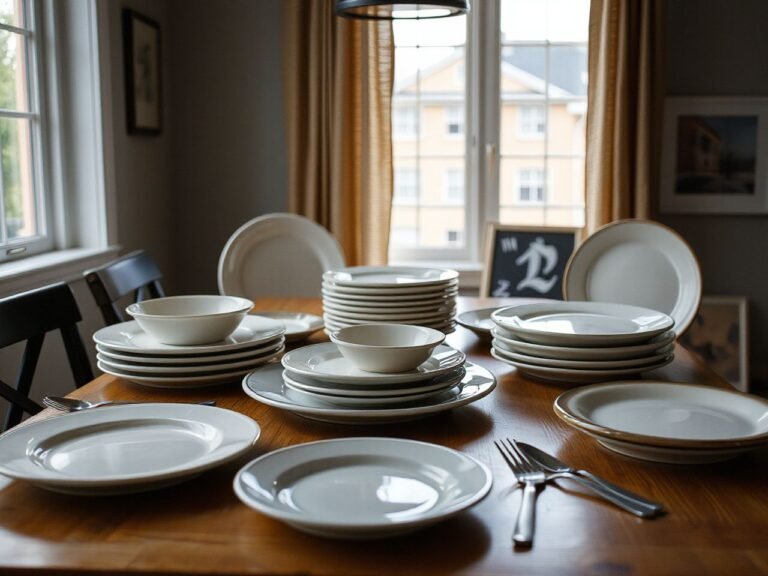
Start with the rim, not the pattern.
The key distinction in a dinnerware guide is between material, finish, and intended use: the same surface appearance can conceal very different handling, appliance, and maintenance requirements. Assessment should therefore connect each piece’s shape and construction to real place settings, storage, cleaning, replacement, and the kinds of meals it must support, rather than treating appearance as evidence of suitability.
This dinnerware set buying guide follows that order. Look at the rim first, then the body, glaze, decoration, appliance markings, stackability, and replacement plan. A coordinated table is useful only when the pieces work in the routines that will use them.
Key Takeaways
- Judge the rim, foot, glaze, and shape before choosing a pattern.
- Match porcelain, stoneware, earthenware, bone china, tempered glass, or melamine to the way the table is used.
- Confirm microwave, dishwasher, oven, and freezer guidance from the manufacturer rather than from appearance.
- Check stacking, storage space, replacement availability, and damaged finishes before committing to a set.
Beginner: Start With the Place Setting and the Rim
A dinnerware set should be assessed as a group of working pieces, not as a collection of attractive surfaces. The rim affects how food sits on a plate, how pieces touch during stacking, and how easily a chip or crack can begin at an exposed edge.
Step 1: Define the meals the set must support
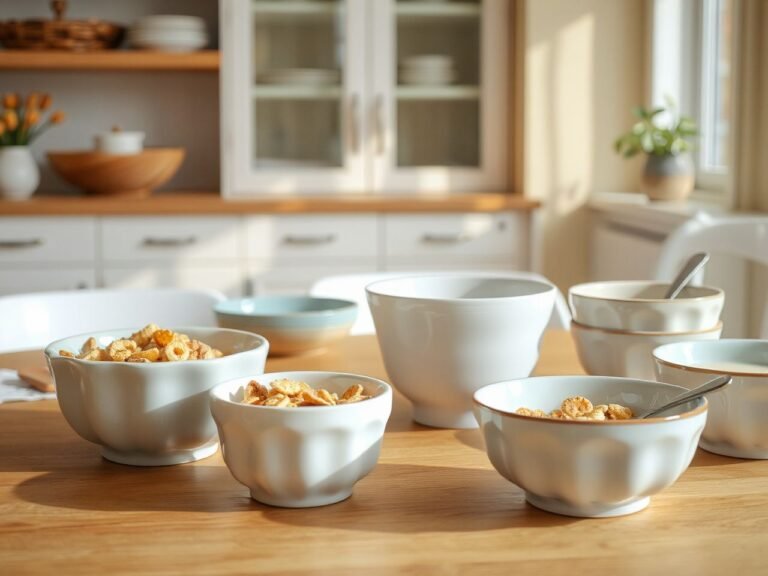
Begin with the meals that appear regularly at the table. A dinner plate may need room for a main course and its sides, while a bowl may serve soup, cereal, pasta, or a composed dish. Side plates can support bread, snacks, or smaller portions. Cups and saucers may be central to a formal setting but unnecessary for a table that uses mugs.
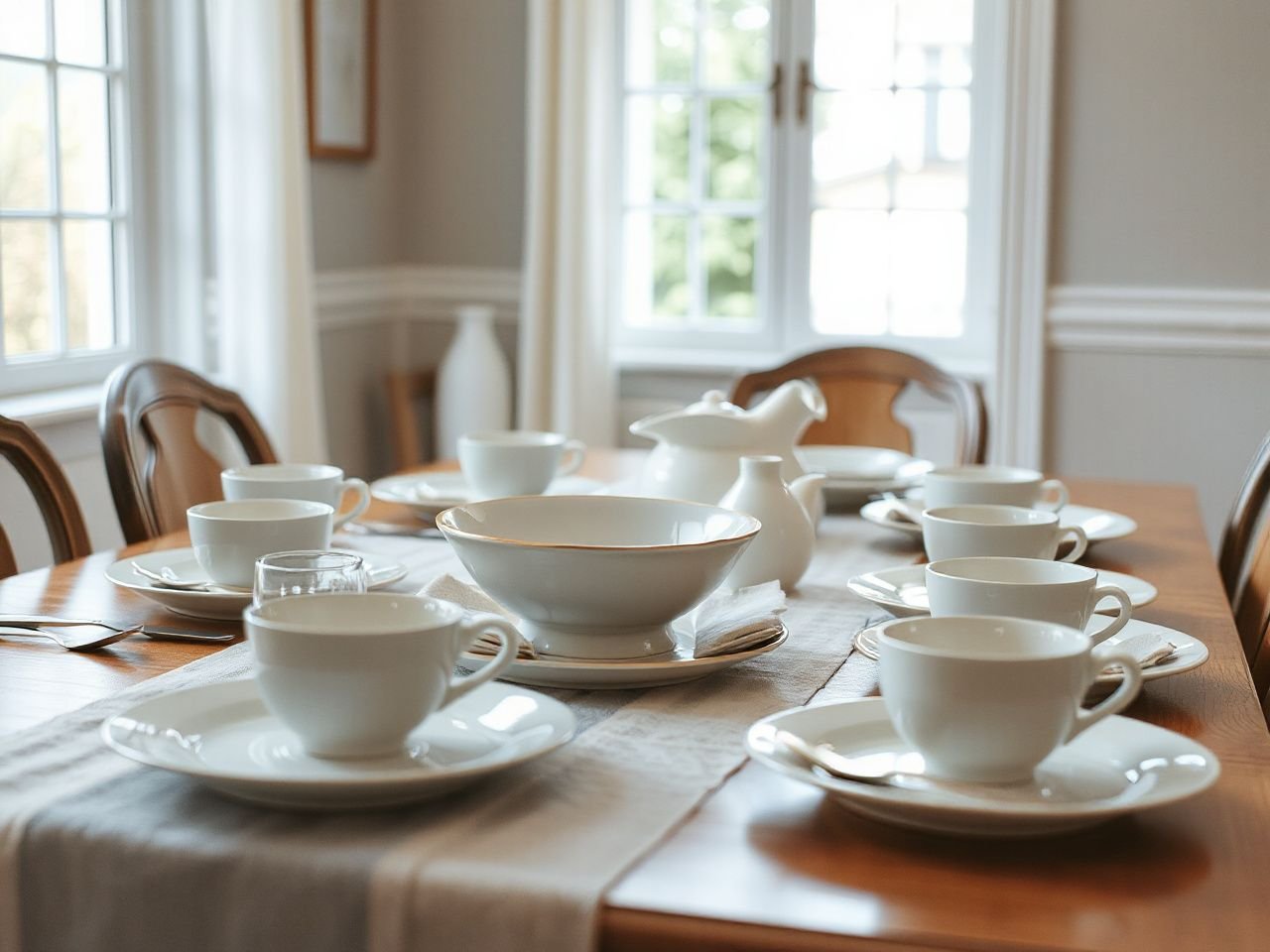
Formal serving usually needs more visual structure and may include chargers, dessert plates, salad plates, serving platters, or serving bowls. Everyday use places greater pressure on easy cleaning, secure stacking, replacement, and appliance compatibility. A set can serve both roles if its pieces are practical enough for daily handling and composed enough to coordinate with glassware and flatware.
A place setting is only complete when the pieces fit the meal and the table. A standard plate series consists of a charger at 12 inches, a dinner plate at 10.5 inches, a dessert plate at 8.5 inches, a salad plate at 7.5 inches, and a side or tea plate at 6.75 inches.
Those dimensions describe a series, not a requirement for every home. Measure the table, cabinet, dishwasher racks, and shelf height before assuming that a full plate series will fit. A wide rim can also make the eating surface smaller than the overall plate suggests.
Step 2: Inspect the rim before the pattern
Run your eyes around the rim and look for an even profile. A sharply raised edge can help contain sauces, but it may also reduce the usable center or make close stacking less stable. A narrow, low rim can give a cleaner appearance while offering less protection to the food from sliding toward the edge.
Check whether the rim feels smooth, rounded, thin, thick, raised, or irregular. Handmade pieces can show variation in shape and finish, while molded and pressed pieces are generally made to repeat a form more consistently. Variation is not automatically a defect, but it matters if you expect every place setting to align closely.
The rim is the first part of a plate to reveal how shape, handling, and storage will interact. A decorative edge can demand more careful stacking than a plain, rounded edge.
Step 3: Check the pieces that are included
Separate essential pieces from optional ones. Dinner plates, side plates, and bowls usually support everyday meals. Cups and saucers, dessert plates, chargers, and serving pieces may be useful for a particular style of table but can occupy storage space without earning regular use.
- Dinner plates: Assess the eating area, rim height, balance, and fit in your cabinets.
- Side plates: Check whether their size suits bread, small servings, or informal meals.
- Bowls: Look at depth, foot shape, rim comfort, and how securely bowls nest.
- Cups and saucers: Inspect handles, saucer stability, and whether the set matches the drinks you serve.
- Chargers and serving pieces: Treat these as table-setting or hosting pieces rather than automatic essentials.
Do not count a piece as useful merely because it completes a photographed place setting. The most practical set is the one whose pieces have a clear role and a reliable storage place.
Intermediate: Compare Material, Finish, and Intended Use
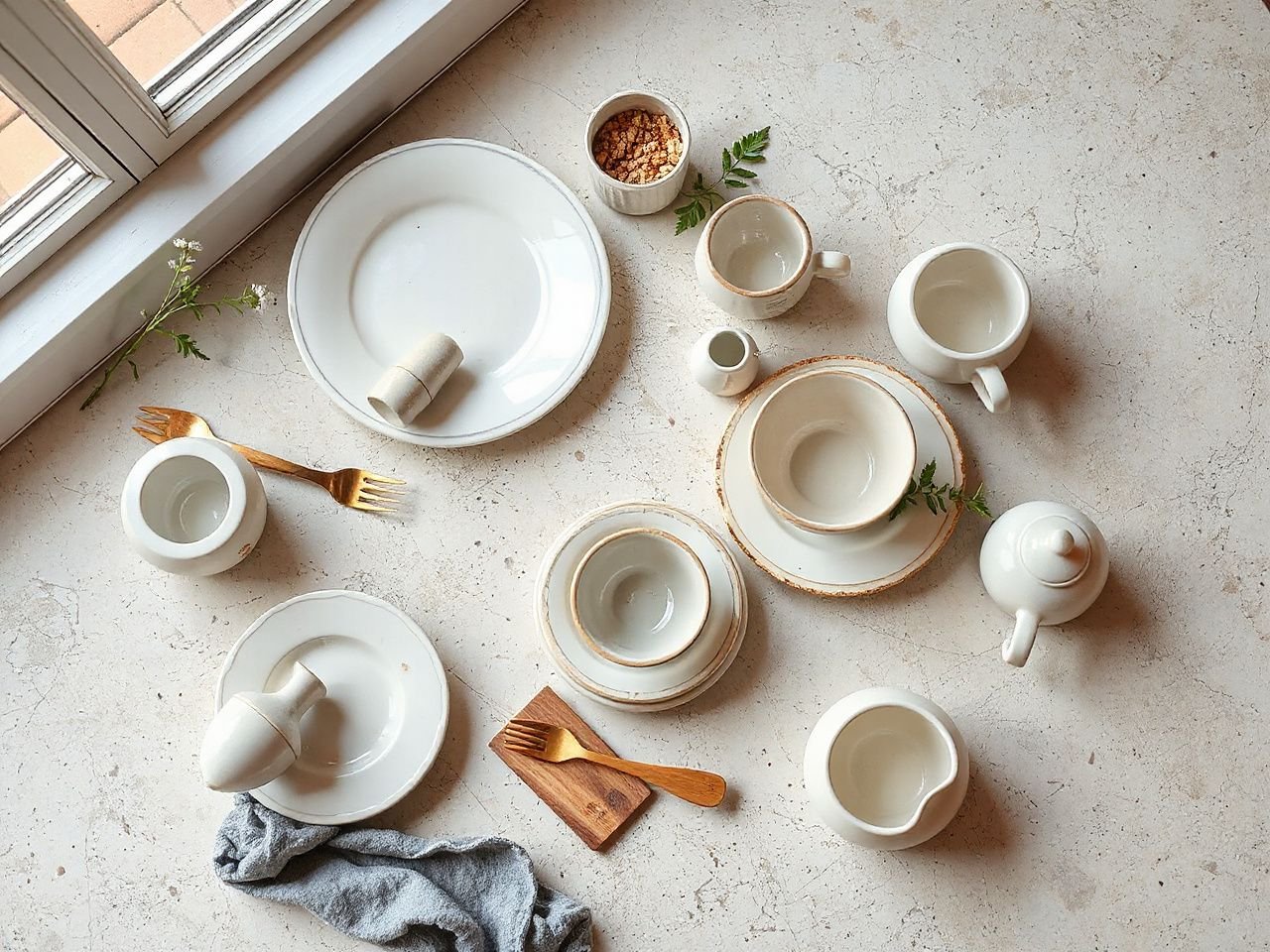
Material changes the way dinnerware looks, feels, handles heat, and responds to daily care. Ceramics are generally characterized by high hardness, high melting temperature, high moduli of elasticity, low ductility, chemical resistance, and poor conductivity. In practical terms, ceramic pieces can feel rigid and resist some chemical interaction, but their low ductility means a sharp impact may produce a chip or crack rather than a visible bend.
Porcelain and bone china
Porcelain often has a refined, relatively light-looking appearance and a smooth, hard surface. Its visual clarity can suit formal tables, but appearance alone does not establish microwave, dishwasher, oven, or freezer suitability. The glaze, decoration, handle construction, and manufacturer instructions still control the decision.
Bone china is often associated with a delicate appearance and a lighter visual presence. That impression should not replace an inspection of the rim, foot, handle, and care instructions. A thin-looking piece may be graceful at the table but less forgiving if it is stored where rims contact one another.
Porcelain and bone china should be judged by their specific construction and finish, not by broad material labels alone. The manufacturer’s care guidance is the controlling reference for appliance use.
Stoneware and earthenware
Stoneware commonly presents a substantial, relaxed look that suits everyday meals and informal serving. Its body and glaze can vary, so inspect the underside, rim, and any unglazed areas. A heavier-feeling piece may require more shelf room and more deliberate handling, even when its appearance is simple.
Earthenware can have a warmer, more handcrafted appearance and may be associated with thicker forms or visibly expressive glaze work. Unglazed areas may feel more porous than glazed areas and can require closer attention to the maker’s cleaning and food-contact guidance. The surface should be inspected for pinholes, rough patches, cracks, or irregular glaze coverage.
Glazed dinnerware has a fused surface layer that changes the feel and appearance of the body beneath it. Unglazed dinnerware leaves more of the body exposed, so the texture, color, and care requirements can differ across one piece. A glaze can be glossy, satin-like, transparent, opaque, plain, or decorative; those visual terms do not establish appliance safety.
Tempered glass and melamine
Tempered glass offers a non-ceramic alternative with a clean, often simple appearance. Inspect edges and corners carefully, because the condition of the piece matters as much as the material label. Tempered glass should still be used according to the manufacturer’s instructions for appliances and cleaning.
Melamine is useful when reducing breakage is a priority, including some outdoor meals. Melamine is not intended for microwave use, and damaged or heavily worn melamine should not be treated like conventional ceramic dinnerware. Inspect the surface and edges regularly, and follow the manufacturer’s food-contact and cleaning directions.
Disposable tableware can reduce washing and storage demands for a particular event, but it does not provide the same repeated-use role as a durable set. Melamine sits between those choices for some routines: it can reduce breakage, yet it still needs condition checks and appropriate care.
Decoration and finish
Metallic rims and metallic decoration can be unsuitable for microwave use and may wear with aggressive cleaning. Painted finishes can also require special care, especially where decoration sits on a rim that contacts hands, utensils, or stacking surfaces.
Look at the relationship between decoration and use. A pattern placed away from the food area may behave differently from a painted rim that receives repeated contact. The manufacturer’s instructions should state appliance and cleaning limits; do not infer them from a finish that merely looks durable.
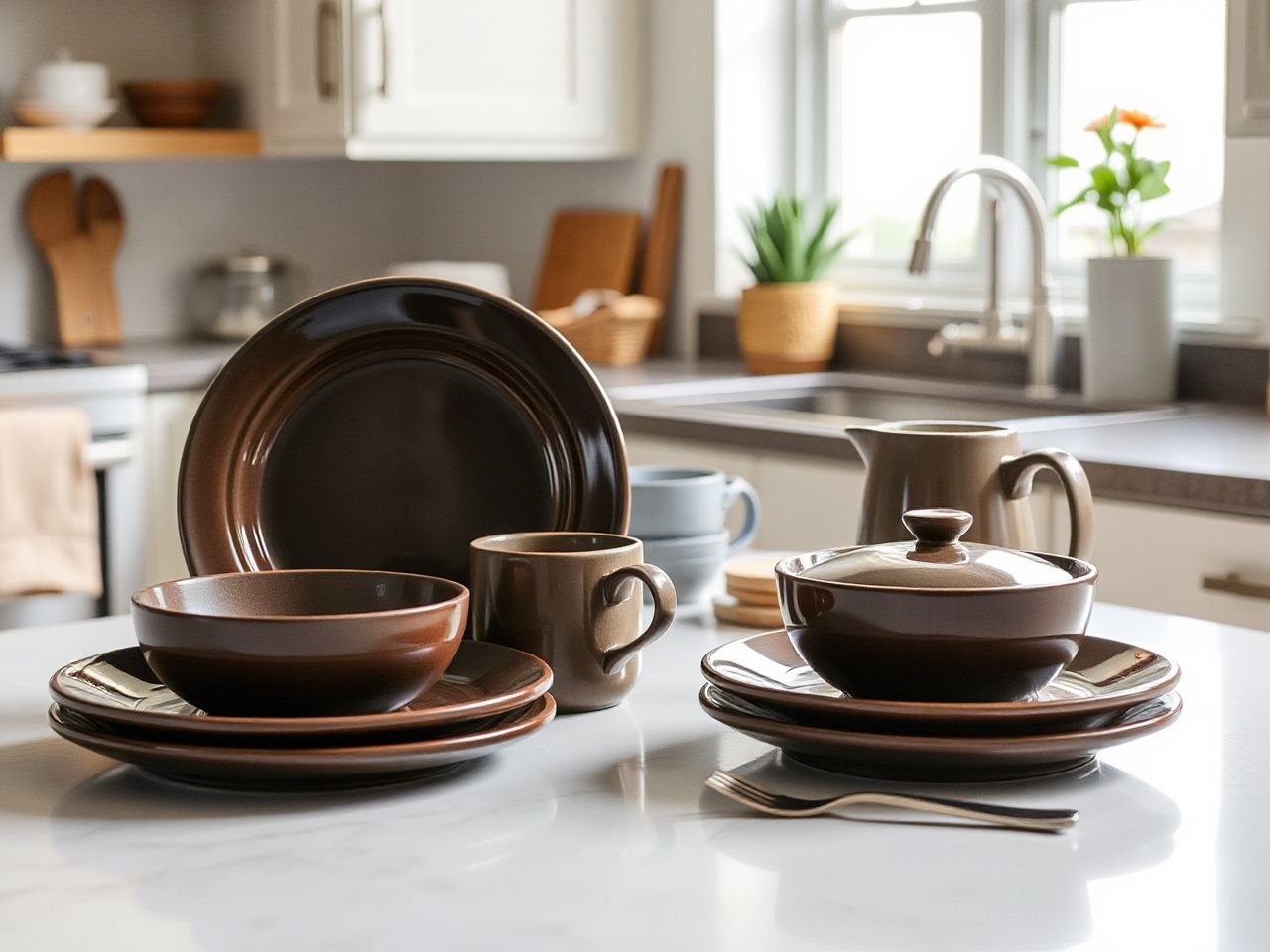
Intermediate: Check Safety, Damage, and Daily Care
Compatibility depends on more than the body material. Microwave, dishwasher, oven, and freezer suitability depends on the material, glaze, decoration, handle construction, and manufacturer instructions rather than appearance alone.
Step 4: Read the markings and instructions
Look on the underside, packaging, care leaflet, or manufacturer’s product page for clear guidance. If an instruction is absent, do not fill the gap with a guess. A dinner plate that is suitable for dishwasher cleaning may not be suitable for oven use, and a cup that handles routine washing may have a different limit because of its handle or decoration.
Food-contact claims and appliance instructions should be treated as separate questions. The U.S. Food and Drug Administration provides federal food-safety information, while the manufacturer remains the source for the specific construction and care limits of a dinnerware set.
For general product safety information, the U.S. Consumer Product Safety Commission is a government source. A mark or claim should be read in context; an independent safety mark does not replace the product’s own instructions for use and care.
Step 5: Understand chips, cracks, crazing, and stains
Chips often begin at exposed edges, especially where pieces contact one another or meet a hard surface. Cracks can follow impact or stress, while crazing appears as a network of fine lines in a glaze. Stains may become more noticeable on rough, porous, or damaged surfaces.
Crazing, chips, cracks, and damaged glazes can make cleaning harder and may signal that a piece should be removed from food service. A damaged rim is especially important because it receives direct contact during eating and handling.
Scratches can develop when dinnerware meets abrasive cleaners, rough utensils, or other hard surfaces. Aggressive cleaning can also wear decorative finishes. Use the care method named by the manufacturer, and separate pieces that have rough edges or visible damage rather than allowing them to rub against sound pieces.
A chipped or cracked plate should be removed from food service when the damage creates a rough edge, exposed body, unstable structure, or cleaning concern. The visible defect is enough to trigger a careful decision; a pattern can hide damage without correcting it.
Step 6: Clean and store with the rim in mind
Follow the stated dishwasher guidance instead of assuming that a dishwasher-safe claim covers decoration or every piece in the set. Hand-wash items with metallic decoration or delicate handles when the instructions require it, and use a non-abrasive method where the finish calls for one.
Storage should prevent rims from striking one another. Keep stacks level, avoid forcing a larger plate into a narrow shelf, and leave enough clearance for bowls and cups to be lifted without scraping neighboring pieces. Cup handles should not carry the weight of stacked cups unless the design and instructions clearly support that arrangement.
Cabinet organization is part of dinnerware selection. A set that fits the table but not the kitchen becomes difficult to use, and a set that stacks poorly creates repeated handling at every meal.
Advanced: Plan for Storage, Replacement, and Long-Term Use
Step 7: Test the shape before committing
Shape affects more than style. A coupe plate may stack differently from a plate with a raised rim. A deep bowl may occupy more vertical space than its footprint suggests. A wide cup handle can prevent close shelf placement even when the cup itself looks compact.
Check the stack from several angles. Look for rocking, rim pressure, uneven feet, and pieces that can slide when lifted. A set can be visually coordinated while still being impractical if its pieces do not stack securely, fit available storage, or remain available for replacement.
Measure the available cabinet space rather than relying on a photograph or a general size label. Account for shelf height, door clearance, the dishwasher rack, and the space needed to remove the lowest plate without shifting the whole stack.
Step 8: Assess handmade, molded, and pressed construction
Handmade pieces can show differences in profile, glaze flow, color, and balance. Those differences may be part of the intended character, but they can make replacement or close matching more difficult. Inspect whether the variation affects flatness, rim comfort, stacking, or stability.
Molded pieces are shaped around a form and may offer a more repeatable silhouette. Pressed pieces are also made through a forming process that can produce consistent outlines, though the finish and decoration still need separate inspection. Construction method does not by itself establish strength or appliance compatibility.
Consistency matters most when a table needs matching place settings. Character matters more when slight variation is acceptable. Decide that preference before judging a set, because neither handmade variation nor factory-like uniformity is automatically the right answer for every table.
Step 9: Make replacement part of the first decision
Find out whether individual dinner plates, side plates, bowls, cups, and saucers can be purchased separately. Check whether the pattern, shape, finish, and color are identified clearly enough to match later. A set that can be expanded only by replacing every piece creates an ongoing cost through breakage and unnecessary duplication.
Replacement planning is especially important for pieces used daily. Ask whether the maker lists separate components, whether the collection has a stable name, and whether the same rim and glaze appear across the pieces. Do not assume that a visually similar plate belongs to the same series.
Ongoing costs can also come from special cleaning, unsuitable appliances, unstable stacking, and pieces that chip easily during ordinary storage. The purchase decision includes those future handling demands, not just the initial appearance.
Step 10: Coordinate the table without forcing a match
Dinnerware should work with glassware and flatware in scale and visual weight. A strongly patterned plate may need quieter serving pieces, while a plain set can provide a calm base for colorful food and textiles. Table-setting etiquette can guide the placement of plates, bowls, cups, and saucers, but everyday use should still determine which pieces earn cabinet space.
Serving platters and serving bowls should be checked separately from place-setting pieces. Their footprints may be larger, their rims may be shaped for carrying, and their storage needs may exceed what a dinnerware cabinet can support.
For readers assessing the wider kitchen setup, the Cookware Set Buying Guide: Common Mistakes to Avoid offers a useful parallel: storage, compatibility, and replacement deserve attention before appearance.
Flatware has the same practical relationship with storage and handling. A coordinated table works better when the plate rim leaves enough room for utensils and the serving pieces can be lifted without crowding the place settings.
Advanced: Use a Final Inspection Before Purchase
Material and finish checklist
- Identify the body material and distinguish it from the glaze or decorative finish.
- Inspect the rim for smoothness, evenness, exposed body, and signs of weakness.
- Look underneath for an even foot, stable contact, and clear care information.
- Check whether metallic decoration or painted areas limit cleaning or microwave use.
- Confirm how handmade, molded, or pressed construction affects matching and stacking.
Use and appliance checklist
- Match the dinnerware to everyday meals, formal serving, outdoor use, or a combination.
- Confirm microwave, dishwasher, oven, and freezer suitability from the instructions.
- Keep melamine out of the microwave and remove damaged or heavily worn pieces from ordinary service.
- Separate chipped, cracked, crazed, or damaged pieces from sound dinnerware.
- Choose cleaning methods that do not attack the glaze or decoration.
Storage and replacement checklist
- Place the actual pieces in the intended cabinet or measure the space before purchase.
- Check whether plates and bowls nest without rocking or rim pressure.
- Make sure cups can be lifted without stressing their handles.
- Confirm that individual pieces can be replaced or added later.
- Consider the cost of breakage, special care, difficult stacking, and discontinued patterns.
A dinnerware set earns its place through repeated ordinary use. The rim should feel considered, the pieces should stack without strain, the finish should suit the cleaning routine, and the instructions should answer appliance questions clearly.
For adjacent kitchen decisions, the kitchen knife set buying guide for 2026 uses the same broader principle: inspect the working details before judging the visual package. Dinnerware deserves that level of attention because every meal involves its edges, surfaces, storage, and care.
Frequently Asked Questions
How do I compare porcelain, stoneware, earthenware, bone china, tempered glass, and melamine?
Compare appearance, feel, rim construction, glaze, storage behavior, and intended use rather than choosing by material name alone. Porcelain and bone china can present a refined appearance; stoneware and earthenware often support more informal visual styles; tempered glass offers a non-ceramic option; and melamine can reduce breakage. Appliance and care suitability still depend on the specific piece and instructions.
Can dinnerware with a metallic rim go in the microwave or dishwasher?
Do not assume that it can. Metallic rims and metallic decoration can be unsuitable for microwave use, and aggressive cleaning may wear decorative finishes. Read the manufacturer’s instructions for the exact piece. If the guidance is unclear, keep metallic decoration out of the microwave and use the gentlest care method consistent with the stated instructions.
What should I do with crazed, chipped, or cracked dinnerware?
Inspect the damaged area for roughness, exposed body, instability, or a surface that is difficult to clean. Crazing, chips, cracks, and damaged glazes can make cleaning harder and may signal that a piece should be removed from food service. Do not hide the defect with a place mat or use a damaged rim as a daily eating surface.
How can I tell if a dinnerware set will remain useful after pieces break?
Check whether the maker identifies individual dinner plates, side plates, bowls, cups, and saucers separately. Compare the rim, foot, glaze, decoration, and shape rather than relying only on a collection name. A set that stacks securely and fits available storage is easier to keep in service. Replacement planning also limits ongoing costs caused by breakage and discontinued patterns.