
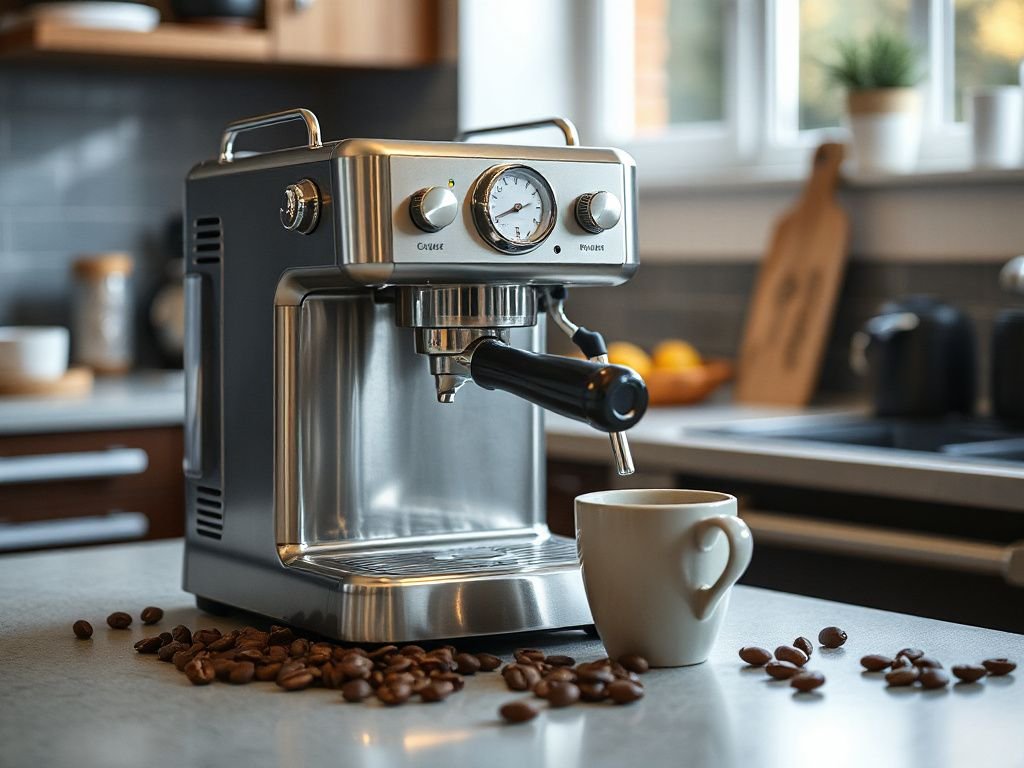
Are you choosing an espresso machine by its maximum pump pressure while ignoring the grinder, water, and heating system that actually shape the drink? The useful distinction is between a machine’s architecture and its headline specifications: boiler or thermoblock design, temperature control, hydraulic behavior, and steam capacity determine workflow more meaningfully than maximum pump pressure alone. This espresso machine buying guide treats the machine, grinder, water, and maintenance routine as one extraction system, because an espresso machine cannot compensate for unsuitable grind preparation or scale buildup.
When choosing kitchen appliances, it is important to look beyond glossy claims and consider how the machine handles stiff dough-like puck resistance, repeated drinks, and heavy milk-steaming demands. A specification sheet can reveal a great deal, but only if you read the architecture behind the headline.
Key Takeaways
- Choose the heating architecture and workflow before comparing pump numbers.
- A capable grinder, fresh coffee, suitable water, and puck preparation strongly affect espresso quality.
- Check voltage, clearance, water configuration, safety certification, cleaning needs, and replacement parts before purchase.
Beginner: Start With the Espresso Machine Buying Guide Basics
Choose the workflow before the machine
Manual, semi-automatic, automatic, and super-automatic machines serve different levels of control. A manual machine requires the user to manage the brewing process directly, so dose, grind, distribution, tamping, and stopping the shot remain part of the routine. A semi-automatic machine uses a pump and user-controlled brewing, while an automatic machine adds programmed control over the brew cycle. A super-automatic machine usually combines grinding, dosing, brewing, and dispensing within one system.
The more automation a machine provides, the fewer preparation decisions remain in your hands. That can simplify a morning routine, but it also limits how directly you can adjust puck preparation and extraction. Manual or semi-automatic operation suits someone who wants to learn espresso variables, while automatic or super-automatic operation makes more sense for a household that values repeatable buttons over hands-on preparation.
A semi-automatic machine leaves the grinder and coffee preparation visible, which makes faults easier to diagnose. A super-automatic machine hides more of the process, so an incorrect grind setting, stale coffee, dirty brew path, or unsuitable water can be harder to identify.
Understand the four heating architectures
A single-boiler architecture uses one boiler for brewing and steaming. The machine must manage those two jobs through the same heating system, so the workflow can involve switching between brew and steam functions. That arrangement suits a user who prepares espresso first and steams milk as a separate step, rather than someone who needs a rapid sequence of milk drinks.
A thermoblock heating system heats water as it passes through the machine instead of holding all brew water in one large boiler. The listing may describe quick heating, but the more useful questions are how brewing and steaming are separated, how temperature is controlled, and how the machine recovers between tasks. A thermoblock can support a compact footprint, yet compactness alone does not tell you how much steam capacity the design provides.
A heat-exchanger boiler keeps brewing water and steam service in one boiler system while routing water through separate paths. That design is intended to permit brewing and steaming within the same broader workflow, but the hydraulic layout and temperature management still matter. A heat exchanger is not automatically easier to use than a single boiler.
A dual-boiler machine uses separate boiler systems for brewing and steaming. That separation can make simultaneous work more practical, especially for repeated drinks, though the listing must still disclose useful details about boiler capacity, control, electrical requirements, and recovery. The manufacturer does not always provide enough information to predict the complete workflow from the product name alone.
Heating architecture determines whether brewing and steaming compete for the same thermal resources. That is the central buying distinction, and it matters more to daily use than a large maximum-pressure number.
Decide how much milk work the machine must handle
Steam capacity is separate from brew pressure. A machine may produce acceptable espresso yet feel poorly matched to a household that prepares several milk drinks in succession. Examine whether the listing names a single boiler, heat exchanger, dual boiler, or thermoblock, then look for information about steam control and recovery rather than assuming that a powerful-looking pump also means strong steaming.
Steam wands produce very hot steam and can burn skin. Hot water outlets, portafilters, and the surfaces around a heated group head also require careful handling. Use the manufacturer’s instructions, keep hands clear of steam discharge, and do not treat a pressurized portafilter as harmless simply because it is small.
Intermediate: Read Pressure, Temperature, and Portafilter Specifications
What 9-bar brew pressure actually means
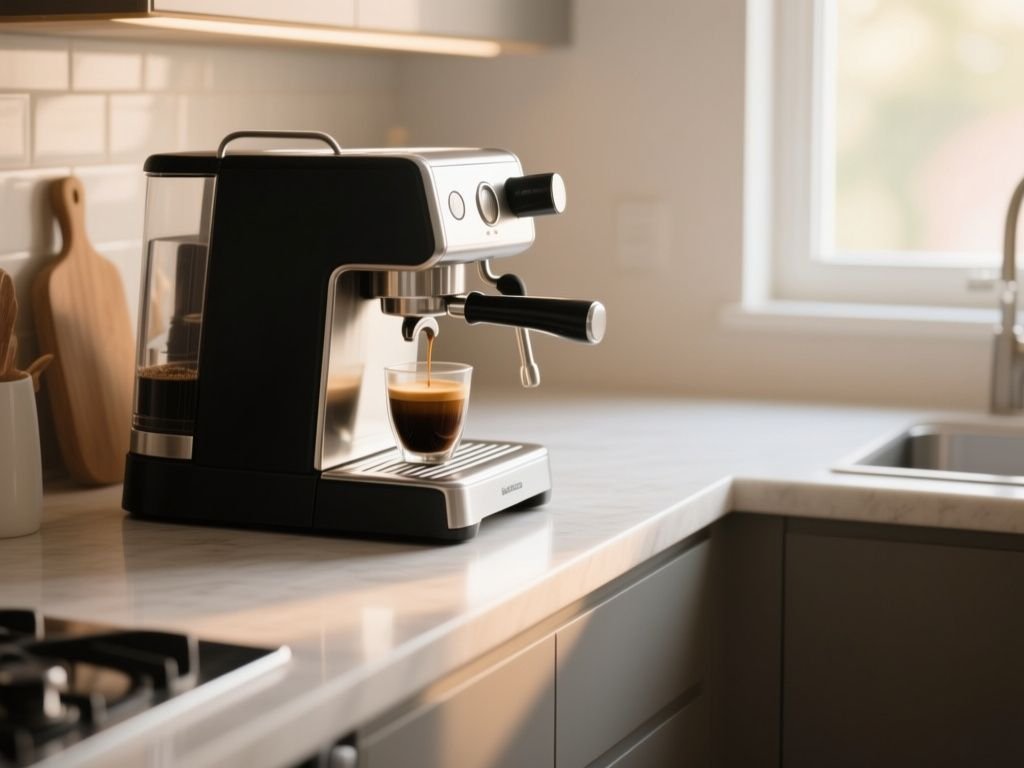
Authentic espresso preparation typically requires 9 bars of pressure at the coffee bed. The pump’s advertised maximum pressure is not the same as pressure at the coffee puck. Brew pressure depends on the pump, restrictors or over-pressure regulation, resistance from the coffee bed, and the machine’s hydraulic design.
This distinction matters because a pump can be advertised with a high maximum while the brew circuit operates at a different pressure. The coffee puck supplies resistance, and the machine’s regulation determines how pressure behaves during brewing. A number printed on a box therefore cannot predict extraction by itself.
Pressure also cannot rescue poor grind preparation. If the grinder produces an uneven particle distribution, the puck can offer pathways that allow water to move through some areas more quickly than others. The resulting espresso may taste weak or watery even though the machine reaches the pressure claimed in its listing.
Temperature control and PID
Espresso brewing is best performed within a temperature window of 90–96°C. A PID temperature controller can regulate temperature more precisely than a basic uncontrolled heating cycle, but its presence does not make every other part of the system suitable. The group head, boiler or thermoblock, water path, software settings, and user workflow still affect the result.
PID control is most useful when the machine gives the user meaningful control over brew temperature or maintains a stable target during the shot. Ask whether the listing states what the PID controls, rather than treating the acronym as a complete performance claim. A display that shows temperature is not automatically the same thing as a well-explained temperature-control system.
A PID temperature controller can improve temperature management, but a PID label cannot compensate for stale coffee, an unsuitable grind, poor water, or a dirty brew path. Those variables remain part of the extraction system.
Does a 58 mm portafilter matter?
A 58 mm portafilter is a common format for espresso preparation, and a 58 mm calibrated tamper matches that standard size. The practical advantage is compatibility with accessories made for that diameter, including suitable tampers and basket styles. The diameter alone does not tell you whether a basket is single-wall, pressurized, single-dose, or designed for a particular dose.
A 58 mm basket is included with the Miicoffee Apex V2, but that fact should not be generalized to every machine with a similar-looking portafilter. Check the listing for the supplied basket type, portafilter diameter, and compatibility before assuming that an accessory will fit. Basket depth and shape can also matter, so diameter is the starting point rather than the entire answer.
Single-wall baskets expose the quality of grind and puck preparation more directly. Pressurized portafilters create additional resistance within the basket system and can be more forgiving of pre-ground coffee, but they do not turn unsuitable coffee into carefully prepared espresso. The right basket depends on the grinder and the level of control you want.
Group-head design and the E61 question
An E61 group head is a named group-head design, not a guarantee of perfect temperature or pressure behavior. Group-head construction influences how brew water reaches the portafilter and how heat is managed around the brewing area. The boiler, pump regulation, water path, and control system still need to be assessed alongside the group head.
Look for a clear description of the group head, portafilter diameter, basket type, and temperature controls.
Intermediate: Match the Machine to the Grinder, Water, and Coffee
The grinder usually controls more of the result than beginners expect
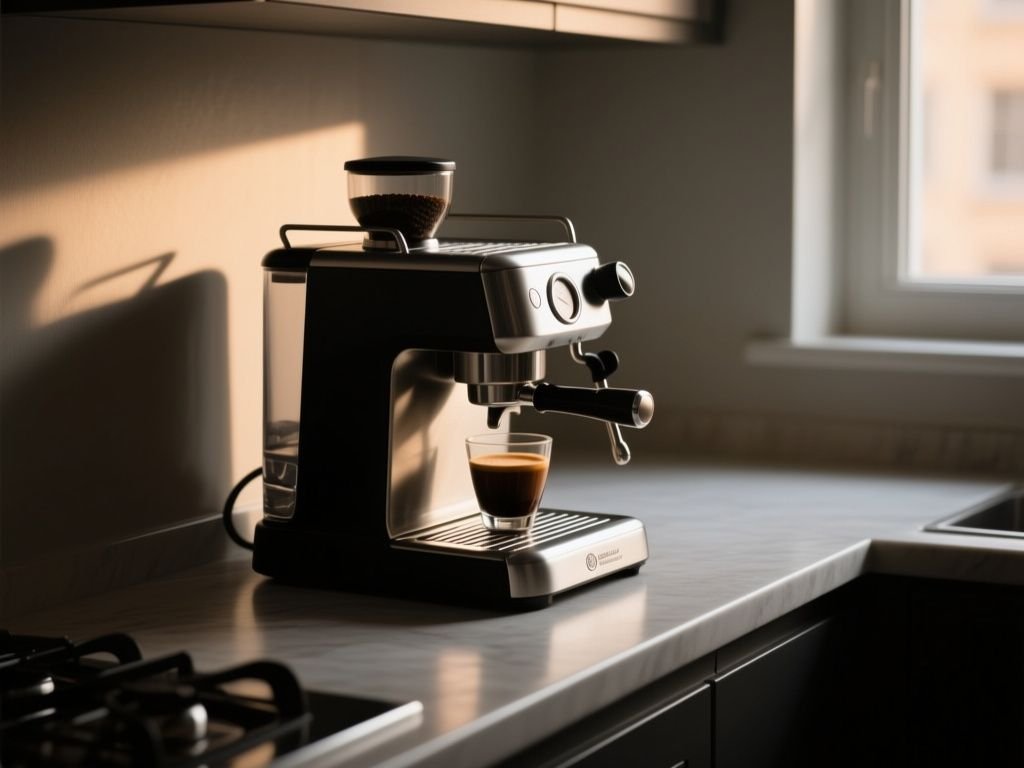
The grinder affects particle size, distribution, and the ability to adjust the coffee bed for a particular bean and roast. Coffee freshness, dose, grind size, yield, and extraction time also shape the cup. A technically capable espresso machine cannot correct a grind that is too coarse, too fine, uneven, or unsuitable for the basket.
A good buying rule: a machine and grinder should be planned as one purchase, even if they are bought at different times. A semi-automatic machine with a capable espresso grinder gives the user more useful control than an impressive machine paired with a grinder that cannot make the needed adjustment.
Grinding too coarse can allow water to pass quickly through the puck, producing weak or watery espresso. Grinding too fine can restrict flow and produce bitter or harsh flavors. Sour espresso can reflect insufficient extraction, while bitterness can reflect excessive extraction or overheating, but taste diagnosis also requires attention to coffee freshness, dose, water, distribution, and tamping.
Espresso cup quality depends on the grinder, coffee, water, puck preparation, and machine together. Machine specifications alone cannot predict the quality of the finished drink.
Water hardness, minerals, and filtration
Water hardness and mineral content affect scale, taste, and maintenance requirements. Mineral deposits can build inside the water path and heating system, while unsuitable water can change the flavor of the coffee. Filtration or descaling should follow the machine manufacturer’s guidance rather than a universal schedule.
Check whether the machine uses a reservoir or a plumb-in configuration. A reservoir needs convenient filling and cleaning access, while a plumb-in setup requires compatible plumbing, a suitable installation position, and attention to water treatment. The listing may not state a water-hardness limit, so that missing information should prompt a question to the manufacturer rather than a guess.
A water filter is not a substitute for every cleaning task. Filtration can address part of the water-treatment routine, but the machine may still require cleaning of the brew path, group screen, steam wand, reservoir, and seals. Follow the supplied maintenance instructions.
Freshness and puck preparation
Fresh coffee is only a starting point. Dose the basket consistently, distribute the grounds evenly, and tamp with a level surface. A 58 mm basket works best with a tamper that matches the basket diameter, but the correct tamper cannot correct a mound of coffee that was never distributed across the basket.
Use the machine’s supplied basket as the reference point. A pressurized basket may suit pre-ground coffee or a grinder with limited adjustment, while a single-wall basket demands more from grind preparation. The machine should be judged alongside the tools that make its chosen basket practical.
For readers comparing espresso equipment with the rest of a kitchen setup, the same attention to material and heat behavior applies to cookware. Our discussion of frying-pan construction and everyday kitchen use provides useful context for assessing how a specification translates into routine work.
Advanced: Compare Workflow, Space, Safety, and Ownership
Heat-up behavior and recovery
Do not compare machines by heat-up language alone. Ask what must heat: a thermoblock, a single boiler, a heat-exchanger boiler, or separate brew and steam boilers. Then ask whether the machine can brew and steam in the same workflow, how the controls signal readiness, and what the listing says about recovery.
Repeated heavy batches place different demands on a machine than occasional espresso. A single boiler may be entirely sensible for one drink at a time, while a household preparing several milk drinks needs clearer information about steam capacity. If the manufacturer does not list a capacity or recovery detail, record that omission instead of converting it into an unsupported performance claim.
Steam capacity and recovery determine how smoothly a machine handles repeated milk drinks. Maximum pump pressure says little about that part of the workflow.
Counter space and water configuration
Measure the intended counter area before choosing a machine. Leave the clearance required by the manufacturer around the machine, especially where steam vents, hot surfaces, a water reservoir, or a hinged lid need access. The listing may give dimensions, but dimensions without access space can still produce an awkward installation.
Reservoir machines need a refill path and a way to remove the tank for washing. Plumb-in machines need suitable plumbing and a water-treatment plan. Portafilter clearance matters too: a wide handle, a cup beneath the group head, and room to remove the portafilter should all fit the intended station.
Voltage is a non-negotiable compatibility check. Match the machine’s voltage requirement to the household supply, use correct grounding, keep electrical connections away from water, and follow the manufacturer’s installation instructions. A plug adapter does not automatically resolve an incompatible voltage or grounding arrangement.
Electrical and product-safety checks
Espresso machines combine electricity, heated water, pressure, and steam.
Food-service equipment may also reference NSF/ANSI 4, a standard associated with commercial cooking, reheating, and powered food-handling equipment. The NSF main site is the correct place to verify what a certification mark means rather than assuming that a familiar logo covers every machine or every configuration.
Certification is not the same as a promise that a machine suits your counter. Confirm voltage, grounding, cord condition, clearance, water connection, and access for cleaning. Never operate a damaged electrical machine near standing water.
Maintenance and replacement parts
Routine cleaning should include the portafilter, basket, group area, and steam wand according to the manufacturer’s instructions. Backflushing applies to machines designed for that procedure; it uses the brew circuit to clean internal coffee residue and should not be performed blindly on a machine whose instructions do not support it.
Descaling addresses mineral buildup, but the correct chemical, method, and interval depend on the machine and the water used. Water filtration can reduce some mineral loading, yet it does not remove the need to inspect the machine’s cleaning instructions. Steam-wand residue should be cleaned promptly because dried milk becomes harder to remove and can obstruct the wand.
Gaskets, screens, baskets, filters, valves, and other service parts eventually require attention. The listing should identify replacement-part availability or provide a clear service route. A lower purchase price loses some appeal if basic wear parts are difficult to obtain.
Ongoing costs include coffee, water treatment, cleaning supplies, replacement parts, and electricity. The exact cost depends on usage and local prices, so a trustworthy comparison should name the categories rather than invent a total. Maintenance is part of ownership, not an optional extra.
Use the listing as a risk document
Missing information is useful information. If the manufacturer does not list motor or pump details, boiler capacity, water-hardness guidance, voltage, basket type, or replacement-part support, mark the gap before making a decision.
Marketing language often gives more attention to pressure, polished metal, displays, or named group heads than to access panels and service procedures. Give greater weight to a clear manual, compatible parts, water guidance, and a sensible cleaning path, because those details determine whether the machine remains usable after the novelty fades.
For broader kitchen planning, readers can also review our guide to choosing cooling racks for practical counter workflow. The category is different, but the method is the same: check dimensions, materials, access, and the job the appliance must perform.
Preventive Measures: Set Up the Machine Without Creating New Problems
Step 1: Confirm compatibility
Check voltage, grounding, reservoir or plumb-in requirements, counter clearance, portafilter diameter, basket style, and access to the water tank. Confirm that the supplied accessories match the machine rather than assuming that a 58 mm tamper or basket will fit every 58 mm-looking component.
Step 2: Prepare the water and grinder
Use the water treatment method specified by the manufacturer and identify the hardness guidance before filling the machine. Set up the grinder for espresso adjustment, then use fresh coffee and make one controlled change at a time when correcting sour, bitter, weak, or watery results.
Step 3: Learn the brew and steam sequence
Read the instructions for warming the machine, locking the portafilter, starting and stopping brewing, switching to steam, purging the wand, and returning to brew mode. A single-boiler machine may require a different sequence from a thermoblock, heat exchanger, or dual-boiler design.
Step 4: Build cleaning into the routine
Rinse the basket and portafilter after use, wipe and purge the steam wand as directed, and keep the reservoir clean. Use backflushing and descaling only in the manner specified for the machine. Replace gaskets or filters when the manufacturer’s service guidance calls for them.
Step 5: Judge the machine after the complete system is ready
Only compare espresso results after the grinder, basket, water, and cleaning state are suitable. If the machine is working normally but the espresso tastes wrong, inspect grind size, dose, yield, coffee freshness, distribution, tamping, and water before blaming the pump or temperature controller.
The same discipline applies to accessories. A well-matched tamper, suitable basket, clean cloth, correct water filter, and reliable grinder can matter more than a decorative exterior feature. For readers building a wider cooking station, our Milo Dutch oven buying analysis shows the same specification-first approach without treating a product page as proof of performance.
Frequently Asked Questions
How do I choose between a single-boiler, thermoblock, heat-exchanger, and dual-boiler machine?
Choose according to the brew-and-steam workflow. A single boiler separates those tasks in sequence, while a thermoblock heats water through a compact heating system. A heat exchanger routes brewing and steam service through separate paths, and a dual boiler separates the two functions with dedicated boiler systems. Repeated milk drinks require closer attention to steam capacity and recovery than occasional espresso does.
Is a pump’s maximum pressure the same as 9-bar brew pressure?
No. Authentic espresso preparation typically uses 9 bars at the coffee puck, while the pump’s advertised maximum is a separate figure. Brew pressure depends on the pump, hydraulic resistance, restrictors or over-pressure regulation, and the coffee bed. Check for information about regulated brew pressure rather than selecting a machine because its maximum pump number is larger.
Do I need a PID temperature controller for consistent espresso?
A PID can improve temperature management, especially when the machine explains what temperature the controller regulates. Espresso brewing is best performed within 90–96°C, but temperature control cannot correct stale coffee, poor grind distribution, unsuitable water, or scale buildup. Treat PID as one part of the thermal design, alongside the boiler or thermoblock and group-head system.
Does a 58 mm portafilter make a practical difference?
A 58 mm portafilter supports compatibility with 58 mm tampers and suitable baskets, including a 58 mm calibrated tamper. The basket style still matters: single-wall baskets demand better grind preparation, while pressurized designs provide a different resistance arrangement. Confirm the exact diameter, basket type, depth, and included accessories in the listing before ordering replacements.
Why can espresso taste sour, bitter, weak, or watery when the machine works normally?
Sour espresso can reflect insufficient extraction, while bitter espresso can reflect excessive extraction or excessive heat. Weak or watery coffee may result from grind size, dose, distribution, coffee freshness, water, or a basket mismatch. Adjust one variable at a time and clean the machine before diagnosing a mechanical fault. A grinder problem often appears to be a machine problem.
How much cleaning and descaling does an espresso machine require?
Clean the basket, portafilter, group area, steam wand, and reservoir according to the instructions. Backflush only if the machine is designed for it, and descale according to the manufacturer’s water guidance rather than a universal calendar. Hard water can increase scale and maintenance needs, while filtration may reduce mineral loading without replacing routine cleaning.
What should I check before installing an espresso machine at home?
Confirm household voltage, grounding, counter clearance, water access, reservoir removal space, and whether the machine is reservoir-fed or designed for plumbing. Check the portafilter and basket format, cleaning access, certification information, and replacement-part availability. Steam, hot water, heated surfaces, pressure, and electricity all require careful handling around the intended station.


