A larger burr does not automatically make a better grinder. A useful grinder guide separates burr type from the variables that matter more in practice: burr alignment, adjustment resolution, retention, particle distribution, and repeatability at the intended brew range. It also treats grinder performance as a system involving the coffee, dose, feeding behavior, and cleaning routine, rather than assuming that a larger burr or more grind settings automatically produces better cups.
This coffee grinder buying guide takes a motor-noise sceptic’s view. A grinder should cope with the coffee and batch size you actually prepare, and unusual noise, stalling, drift, or a clogged chute deserves more attention than a long feature list.
Key Takeaways
- Burr geometry, alignment, calibration, and adjustment design matter more than a setting count by itself.
- Choose grind behavior for your brew method, dose, roast level, and espresso machine compatibility.
- Noise, retention, static, cleaning access, and electrical safety shape ownership as much as cup quality.
Beginner: Build the Coffee Grinder Buying Guide Around Your Brew Method
Start with the coffee you prepare most often
The correct grinder begins with the brewing method, not the burr label. Espresso needs sufficiently fine adjustment and stable calibration. Pour-over needs controlled movement through a medium range. AeroPress can use more than one grind approach, while French press exposes problems with excessive fines, large boulders, retention, and uneven feeding.
A numbered setting has no universal meaning. The same number on two grinders can produce different grounds because the burr geometry, adjustment mechanism, calibration, and spacing are different. The useful question is whether the grinder can make repeatable changes within the range your recipe requires.
Grind settings are reference points inside one grinder, not a universal coffee language. A grinder with many positions may still be frustrating if each change is too large for the coffee you are brewing or if the burrs drift away from the selected position.
Match grind size to the brewing method
- Espresso: Look for sufficiently fine adjustment, stable calibration, and a mechanism that allows small changes. Espresso responds strongly to grind changes because the coffee bed must provide controlled resistance to pressurised water. The grinder should also suit the dose and workflow of the espresso machine.
- Pour-over: Prioritise repeatability, clean adjustment, and a particle distribution that does not produce an excess of fines. Coffee freshness, roast level, filter shape, water temperature, and water chemistry also affect extraction, so a grinder setting cannot be judged in isolation.
- AeroPress: A grinder with a flexible adjustment range is useful because AeroPress recipes vary. The method can accommodate different grind sizes, but repeatable dosing and a clear adjustment reference make recipe changes easier to control.
- French press: Coarser grounds are usually the starting point, but coarse does not mean careless. Large boulders can extract weakly while fines can make the cup muddy or bitter. Chute retention and feeding consistency matter because old particles can appear in a later dose.
Readers choosing a brewer alongside a grinder can use the Chemex Coffee Maker Review: Top Picks and Buying Guide to examine how the filter and brewer shape fit into the wider coffee setup.
Burr grinder versus blade grinder
A blade grinder relies on a spinning metal blade to cut coffee beans into pieces. The user generally controls the result through timing, so the adjustment options are restricted. Longer operation does not create a precisely selected grind size; it changes the amount of cutting and can leave a mixed batch of small fragments and larger pieces.
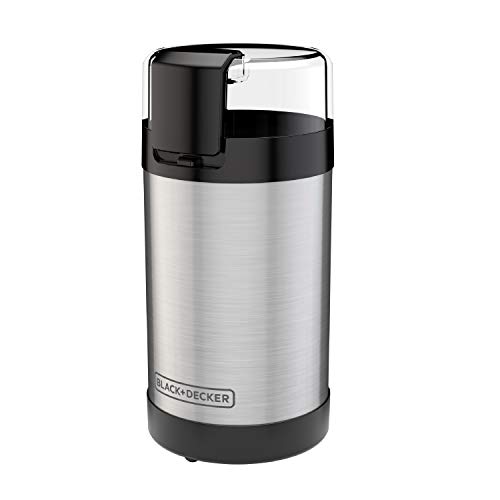
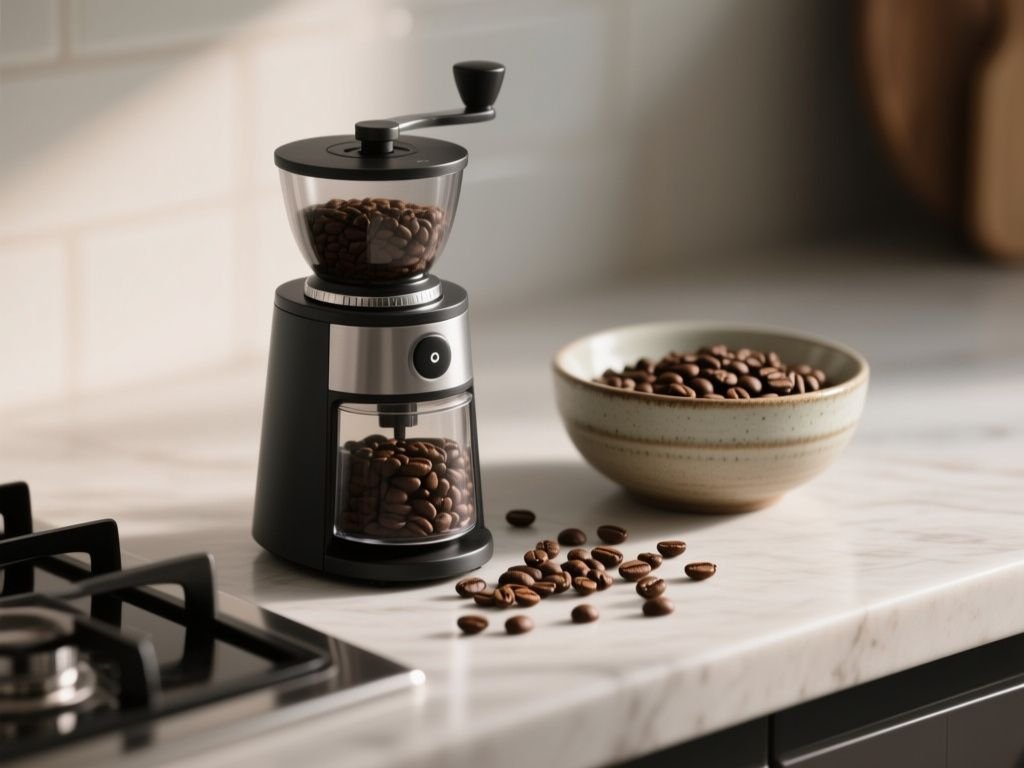
Burr grinders use two abrasive surfaces to pulverise the beans. Burr grinders generally provide more repeatable particle size than blade grinders, but burrs alone do not guarantee uniform grounds. Burr geometry, alignment, calibration, adjustment resolution, feeding behavior, and cleaning condition all affect the result.
A burr grinder normally gives the user more control over particle size than a blade grinder. That control matters because coffee extraction depends on how quickly water reaches soluble material in particles of different sizes.
Manual or electric preparation
Manual grinders can make sense for people preparing smaller doses who value a quiet preparation routine and do not mind turning a handle. Electric grinders suit users who prepare repeated doses, work with heavier batches, or want the process to be less physical. The listing should make clear how the grinder is powered and how its adjustment works.
The practical view: a manual grinder should not be treated as automatically gentle, and an electric grinder should not be treated as automatically capable. Dense coffee, a large dose, or a coarse setting can expose weaknesses in the drive system or feeding path. The manufacturer does not always list motor wattage, torque, duty limits, or stall protection, so those omissions belong in the buying decision.

Intermediate: Read Burr Design, Adjustment, and Particle Distribution
Conical burrs and flat burrs
Conical burrs and flat burrs can both produce useful coffee grounds. The shape is only one part of the system. Burr alignment determines whether the opposing surfaces maintain the intended relationship, while calibration determines whether the adjustment reference corresponds to the actual burr gap.
Flat burrs use opposing flat cutting surfaces. Conical burrs use a cone-shaped burr working inside a matching outer burr. Neither description, by itself, proves that one grinder will produce more consistent coffee for every brew method.
Burr alignment affects particle consistency regardless of whether a grinder uses conical burrs or flat burrs. A careful specification review should therefore look for information about adjustment stability and calibration instead of treating burr shape as a final verdict.
Ceramic burrs and stainless steel burrs
Ceramic burrs and stainless steel burrs each involve trade-offs. Ceramic burrs can be damaged if a small stone enters the mechanism, with cracking a specific risk. Stainless steel burrs are generally more affordable than ceramic alternatives, but the material alone does not reveal the burr geometry, alignment quality, or service access.
Do not infer the whole grinder from the burr material. A ceramic set with poor adjustment control can be less useful than a steel set with a stable mechanism, while a steel set still needs sensible cleaning and protection from foreign objects.
What micron-scale adjustment tells you
Micron-scale grind adjustment describes very small changes in burr spacing. That language can be useful for espresso, where a narrow change may alter the flow and extraction balance. It does not guarantee that the grinder holds calibration, that the markings are accurate, or that grounds leave the burr chamber consistently.
Adjustment range matters as well. A grinder may offer fine movement but lack enough coarse travel for a preferred French press recipe, or offer a wide range with large jumps that make espresso dialing difficult. The useful combination is appropriate range, small enough steps, stable calibration, and a clear way to return to a repeatable position.
RPM and motor noise
RPM means revolutions per minute, but a listed RPM figure does not describe the entire noise experience. Motor speed, burr load, bean feeding, housing resonance, and the condition of the burr chamber all contribute to what reaches your ears. A high-speed claim may sound impressive while revealing little about how the machine behaves with a dense dose.
Noise matters for kitchens with open-plan living areas, early-morning brewing, or shared workspaces. Vague quietness claims deserve the most scepticism. The listing should distinguish motor sound from grinding sound, although many listings do not provide that detail.
Unusual noise is a maintenance signal until the manufacturer identifies another cause. A stone or other foreign object can strike the burrs, old grounds can obstruct the chute, and a shifted component can create rubbing or vibration. Stop operation, disconnect power, and follow the manufacturer’s inspection instructions rather than repeatedly restarting the grinder.
Advanced: Diagnose Static, Clumping, Stalls, and Retention
Why grounds cling or form clumps
Static can make grounds cling to the chute, container, lid, and nearby counter. Clumping can also arise from the interaction of particle size, coffee oils, roast level, humidity, and the grinder’s exit path. The result is a dose that may not leave the grinder in one clean stream.
Retention describes grounds that remain in the burr chamber or chute after grinding. Old particles can then enter a later dose, changing the amount and age of the coffee in the catch container. The listing may mention low retention, but that phrase does not tell you how retention changes across grind sizes, doses, or coffees.
Retention makes a grinder’s displayed dose different from the coffee that reaches the brewing basket. Weighing the beans before grinding and the grounds after grinding gives a clearer picture of the routine, especially for espresso where dose control matters.
Why fine particles appear
Every grind distribution contains particles of different sizes, but the balance matters. Excess fines can slow water movement through a coffee bed and may contribute to bitter or uneven extraction. Large particles can remain under-extracted while smaller particles extract more quickly.
Burr geometry, alignment, calibration, bean hardness, roast level, and feeding behavior all influence distribution. A grinder that is fed unevenly may produce a less repeatable result than the same mechanism receiving a steady dose. That is why a burr diameter or setting count should not be used as a substitute for a full specification review.
Stalling and clogging
A grinder can stall when the motor cannot keep the burrs moving under the load presented by the beans, a packed chamber, or a blocked exit path. The manufacturer does not always list the motor’s power, torque, thermal protection, or recommended batch limit. For heavy batches, those missing details create uncertainty.
Clogging often relates to accumulated grounds and oils in the burr chamber or chute. Very fine adjustment can also leave less space for particles to pass, especially if the cleaning routine is neglected. Never force beans through a stalled mechanism, and do not poke into the burrs while the grinder is connected to power.
Drift and calibration changes
Calibration drift means the chosen reference no longer produces the same burr relationship or grind result. Cleaning, reassembly, wear, or an adjustment ring that is not fully seated can change the reference. A setting number remains a label; it is not proof that the burr gap has stayed identical.
For espresso, calibration stability deserves special attention because the usable adjustment window is narrow. For French press and other coarse methods, a small calibration change may be less visible in the dial but can still alter fines and boulders enough to change extraction.
Advanced: Cleaning, Electrical Safety, and Long-Term Ownership
Clean the parts that hold old coffee
Coffee oils and old grounds can accumulate in the burr chamber and exit chute. Cleaning should follow the grinder manufacturer’s disassembly and electrical-safety instructions. A brush or tool should only be used where the manufacturer permits it, and the motor housing should stay dry.
- Burr chamber: Remove accessible grounds according to the manual, paying attention to the burr carrier and surrounding ledges.
- Exit chute: Clear compacted coffee because a restricted path can increase retention and contribute to clumping.
- Hopper: Empty stale beans and clean the hopper using the method the manufacturer specifies.
- Grounds container: Remove accumulated oils and residue so old coffee does not mix with a fresh dose.
A cleaning schedule depends on roast level, dose volume, and how much oil the coffee leaves behind. The safe rule is to inspect the chamber and chute when the grinder’s output changes, the smell turns stale, or the motor sound becomes unusual, rather than waiting for a fixed interval that may not fit your routine.
Water must never enter a grinder’s motor housing. Wipe removable, manufacturer-approved parts only as instructed, and allow them to dry fully before reassembly.
Check voltage, plug, grounding, and certification
Before operating an electric grinder, verify the voltage, plug compatibility, and grounding requirements shown by the manufacturer. A product carrying UL electrical safety certification has been assessed under the applicable certification scheme, but the mark does not remove the need to confirm that the appliance matches the electrical supply where it will be used.
Electrical product safety information is overseen in the United States by the U.S. Consumer Product Safety Commission, which provides consumer guidance on appliance hazards and recalls. Keep the cord away from water, disconnect the grinder before cleaning, and stop using it if the cord, plug, or housing shows damage.
Understand wear and ownership cost
Burr edges, adjustment threads, bearings, switches, cords, containers, and hopper components can wear or become damaged. The exact service life is not available from a general product listing, so avoid treating a warranty length or a replaceable burr as proof of total durability.
Long-term cost includes replacement burr availability, access to compatible parts, cleaning tools, service instructions, and the time required to remove retained coffee. A grinder with a complicated cleaning process may cost more in attention even if its purchase price is not listed here.
Service access deserves the same attention as burr material. If a manufacturer does not explain how the burrs are removed, how calibration is restored, or which parts can be replaced, the spec sheet leaves a meaningful ownership question unanswered.
Use the whole coffee system
Grind quality interacts with bean freshness, roast level, dose, brew ratio, water temperature, water chemistry, filter, and agitation. A grinder cannot correct stale beans or an unsuitable recipe. Weighing beans and grounds helps separate grinder behavior from dosing error.
Manual versus electric preparation also changes feeding behavior. A hand grinder may receive beans in a slower, more controlled stream, while an electric hopper may feed unevenly as the supply level falls. Neither approach is automatically superior; the important factor is repeatability in the routine you will actually maintain.
Readers comparing brewer shapes may find the Hario Coffee Maker Review: Top Picks & Buying Guide useful when filter design and preparation style are part of the same decision.
Practical Selection Checklist for Different Skill Levels
Beginner checklist
- Write down whether your regular brew is espresso, pour-over, AeroPress, French press, or a mixture.
- Choose burr construction over a blade mechanism if repeatable particle size is a priority.
- Confirm that the adjustment range covers your method instead of assuming every numbered dial is comparable.
- Check voltage, plug compatibility, grounding, and electrical certification before connecting an electric grinder.
- Look for cleaning instructions that explain access to the burr chamber, chute, hopper, and grounds container.
Intermediate checklist
- Assess adjustment resolution and calibration stability, especially for espresso.
- Look for information about retention and consider how stale grounds could affect your dose.
- Read the noise claim sceptically and check whether the listing gives motor, burr, or operating details.
- Consider how roast level, dose size, and bean feeding may change the grinder’s behavior.
- Check whether replacement burrs and service information are available.
Advanced checklist
- Separate burr shape from alignment, particle distribution, and adjustment design.
- Consider how a fine espresso adjustment and a coarse French press setting expose different weaknesses.
- Review the manufacturer’s procedure for calibration, disassembly, blockage removal, and electrical isolation.
- Account for heavy batches and dense dough-like motor loads in your kitchen routine, even though coffee grinders are not dough machines.
- Use measured dose and brew results to judge repeatability rather than relying on marketing terms.
The same disciplined reading applies across kitchen equipment: specifications, maintenance access, and safe use matter more than a polished feature list. For a different appliance category, the Cast Iron Griddle Buying Guide: Mistakes to Avoid follows a similar approach to materials and care.
Frequently Asked Questions
How should I choose a grinder for espresso, pour-over, AeroPress, or French press?
Start with the brew method you use most. Espresso needs fine adjustment and stable calibration, while pour-over rewards repeatable movement through its intended range. AeroPress allows varied recipes, and French press makes excessive fines, boulders, and retention easier to notice. A setting number is not standard across brands, so judge the range and adjustment resolution within the individual grinder.
Are conical burrs or flat burrs better for consistent coffee grounds?
Neither burr shape guarantees consistency by itself. Conical burrs and flat burrs can both work well when alignment, calibration, geometry, feeding, and adjustment design are appropriate for the brew method. Burr grinders generally offer more repeatable particle size than blade grinders, but the burr label alone cannot reveal how evenly the mechanism maintains its selected spacing.
Why does my grinder make static, clumps, fines, or unusual noises?
Static and clumping can result from the coffee, roast level, humidity, particle distribution, and exit path. Fines and boulders reflect the wider grinding system, including alignment and feeding. Unusual noise may indicate a foreign object, compacted grounds, or a shifted component. Stop the grinder, disconnect power, and follow the manufacturer’s cleaning and inspection instructions.