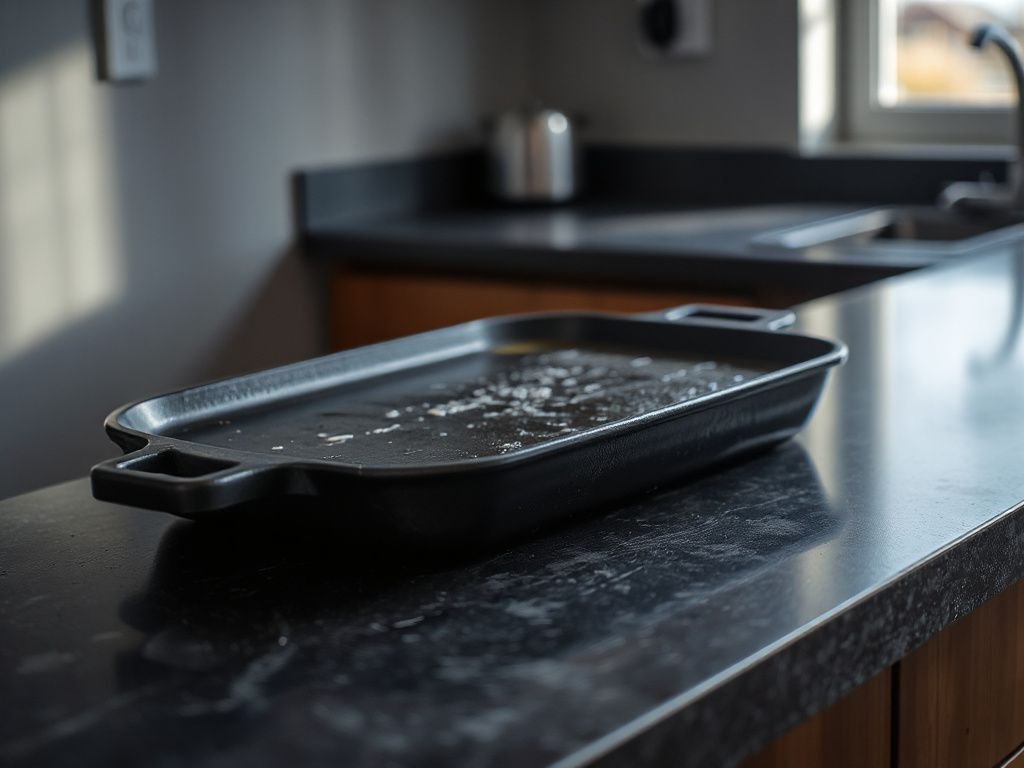
A warped cast iron griddle is a $40 paperweight. It happens the same way every time—someone cranks the burner to high, slaps a cold 20-inch slab on the coils, and ten minutes later the center is pushing 500°F while the edges are barely warm enough to melt butter. Iron that is expanding hard in the middle while the rim has barely moved has to relieve that stress somewhere, and it does so by taking a permanent set. That pan never sits flat again. This cast iron griddle buying guide is designed to keep that from being your story, and it starts with the lesson that costs the most to learn the hard way.
Across gas, electric, and induction stovetops the biggest rookie mistake is the same one: buying a double-burner griddle that wobbles or hangs over the cooktop, which leaves whole sections of the surface heated only by conduction crawling out from the middle. The real deciding factor isn’t brand or price—it’s matching the griddle’s base footprint to your burner layout and thickness to your stove’s heat output. Induction is the least forgiving of the three, because the field only heats the iron sitting directly above the coil and anything past that ring stays cold. Get the footprint wrong there and a perfectly good reversible griddle cooks in a stripe.
Key Takeaways
- A cast iron griddle needs a completely flat base that matches your burner layout, or you’ll get hot and cold spots.
- Thickness matters more than brand. A 1/4-inch slab warps less than an 1/8-inch one and holds heat better.
- Bare cast iron needs seasoning and gradual heating. Enameled cast iron needs gentle cleaning and no metal utensils.
- Never drop a cast iron griddle on a hard floor. Iron is brittle and a 12-pound slab will crack, not dent.
Cast Iron Griddle Basics: What You’re Actually Buying
Cast Iron vs. Skillet: Why Flat Matters
A cast iron griddle has no high side walls, which means steam escapes quickly and you get better browning on pancakes, burgers, and tortillas. Skillets trap moisture around food because of their 2-inch walls; griddles let it dissipate the instant it forms. That’s the whole reason to own one. If all you want is deep frying or stewing, a skillet works fine. But for smash burgers with that crispy lacy edge, you need a flat surface with no walls to steam the meat.
Brands like Lodge and Victoria have been pouring cast iron griddles for decades. Le Creuset makes enameled versions that cost four times as much but skip the seasoning ritual. The material itself is basically the same: molten iron poured into a sand mold, then machined flat on the cooking surface. A griddle is just a skillet without the walls, and that simple change alters how you cook, how you clean, and how you store it.
The Seasoning Question: Bare vs. Enameled
Bare cast iron needs to be seasoned—a thin layer of polymerized oil baked onto the surface—to become nonstick. Enameled cast iron griddles like those from Le Creuset have a glass-like coating that resists acidic foods like tomatoes, but that coating will chip if you scrape it with a metal spatula. Le Creuset’s official care guidelines specifically warn against metal utensils on enameled surfaces. Bare cast iron laughs at metal spatulas and actually benefits from a good scrape now and then.
Acidic foods are the enemy of bare seasoning. Simmer a tomato sauce on a bare cast iron griddle for twenty minutes and you’ll watch the black patina dissolve into your food. That’s fine if you’re ready to reseason, but it’s a rookie blunder. Enameled cast iron doesn’t care about tomatoes, vinegar, or citrus. But enameled surfaces cannot handle high heat the way bare iron can. Past 500°F, the glass coating can craze or even crack off. For a griddle that will see 600°F searing temperatures, bare cast iron is the safer choice.
What You Can Cook on a Griddle
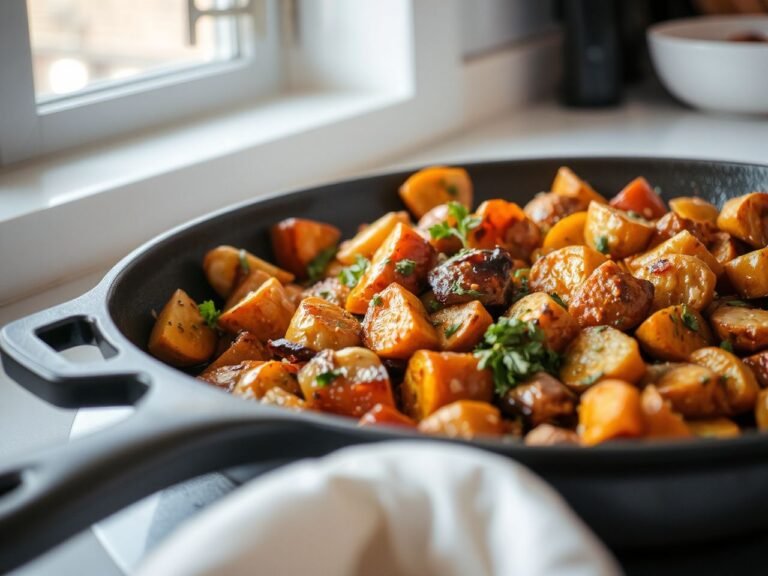
Pancakes, French toast, grilled cheese, quesadillas, smash burgers, fried eggs, bacon strips, tortillas, hash browns, and even small flatbreads all cook better on a griddle than in a skillet. The lack of walls lets you slide a spatula underneath food at a shallow angle, which matters for delicate items like over-easy eggs. If you make breakfast for more than two people on weekends, a griddle is the single most useful pan you can own. Carbon steel griddles—thinner and a third lighter than cast iron—are a reasonable alternative for anyone with wrist problems, though they hold less heat and need more frequent seasoning touch-ups.
Sizing a Cast Iron Griddle for Your Stove
This is the section that separates a great purchase from a garage-sale regret. Measure before you buy. Measure twice. I cannot stress this enough.
Measure Your Burners Before You Spend a Dime
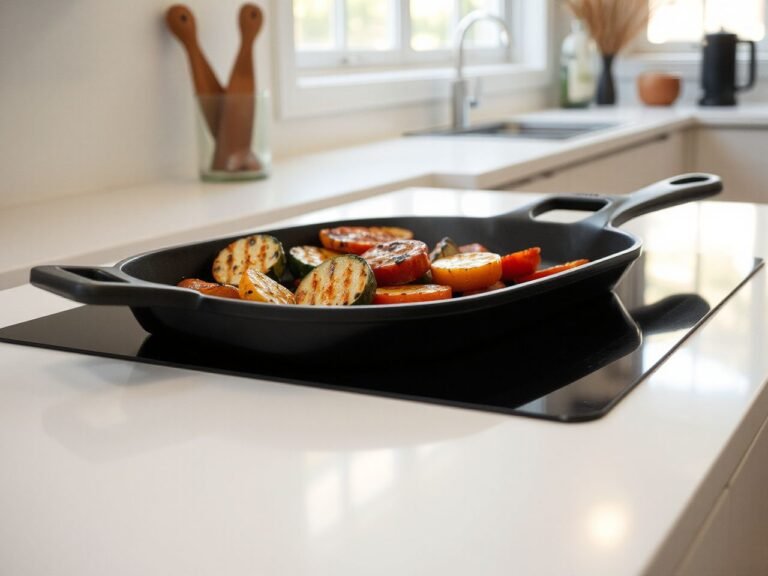
Get out a tape measure and write down three numbers: the diameter of your largest burner, the distance from center to center of two adjacent burners, and the total width of your cooktop surface. Then check whether your stove has a center bridge burner or a continuous grate system. A griddle that overhangs the burner might not heat evenly, creating hot and cold spots. If you have a smooth glass-top electric or induction range, the griddle base must sit completely flat on the surface. Any slight warp—even a millimeter—creates an air gap that destroys heat transfer.
On my own induction range, a double-burner griddle that claimed to fit actually had a base that bowed upward in the middle by about 2mm. The center never got hot, the edges scorched, and I had to return it. Lesson learned: induction requires a perfectly flat bottom. Gas ranges are more forgiving because flames wrap around slight irregularities, but you still need the base to match the burner ring size.
Single vs. Double Burner Griddles
A single-burner griddle that matches your largest burner diameter will give you more even heat than any double-burner model that bridges two coils. That’s a hard truth. Double-burner griddles sound great because they cover a huge area, but each half is heated by a separate burner. The center seam between them gets no direct heat at all. On an electric coil stove, that seam is a dead zone where pancakes go to die. On a gas stove with a center bridge burner, you can bridge the gap, but most home ranges don’t have one.
If you cook for a crowd and need the extra surface area, a double-burner griddle can work—provided your burners are close together and roughly the same size. Check the center-to-center distance. If your burners are more than 8 inches apart, the griddle will have a cold band down the middle. A single-burner round griddle of 10.5 inches is the sweet spot for 90% of home cooks. It fits on most large burners, heats evenly, and weighs about 6 to 8 pounds—heavy but manageable. For smaller families, an 8-inch square griddle works on a small burner but won’t hold enough pancakes at once.
Thickness, Weight, and Thermal Mass
Most budget cast iron griddles are between 1/8 and 1/4 inch thick, and anything under 1/4 inch is more likely to warp on a high-output gas burner. Thicker iron holds more heat, so when you lay a cold steak on a 550°F griddle, the temperature drops less and recovers faster. That’s what gives you a proper sear. Thin griddles cool down the moment food hits them, and your burger steams instead of crusting. Look for a griddle that’s at least 3/8 inch thick if you plan to sear. Pancake makers can get away with 1/4 inch, but even then, gradual heating is mandatory.
Weight is the tradeoff. A 20-inch double-burner griddle can weigh over 12 pounds, and if it slips from your hands onto a tile floor, the impact is often enough to crack the iron along a casting flaw. That’s not an exaggeration—cast iron is brittle. It shatters rather than bends. If you have a bad back or weak wrists, consider a carbon steel griddle instead. It seasons the same way, weighs about 60% as much, but holds far less heat and can warp if overheated on a small burner.
If you’re comparing flat metal surfaces, our baking sheet buying guide explains why thinner metal warps faster, and that same physics applies to griddles. A 1/8-inch sheet of iron will expand and buckle under high direct heat. A 3/8-inch slab will survive decades of abuse.
Reversible or Single-Sided?
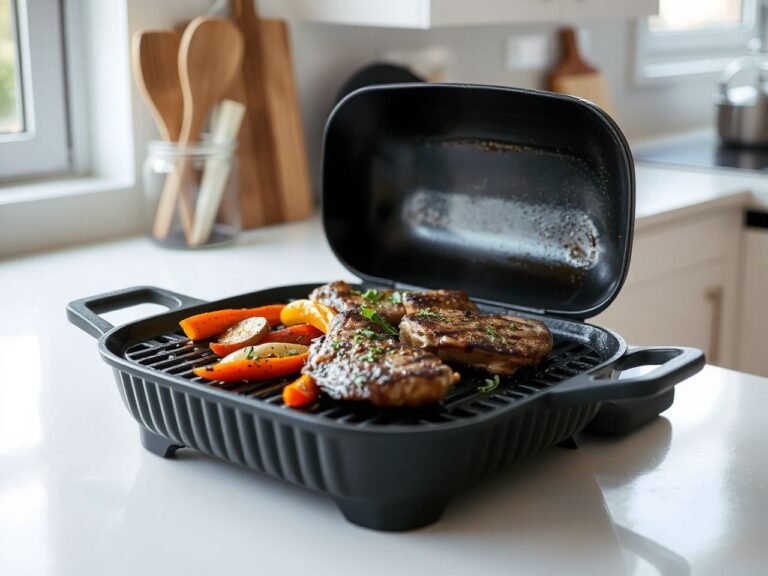
A reversible griddle gives you a smooth flat side and a ridged grill side. The grill ridges create pretty sear marks and let fat drain away from bacon or burgers. The downside is that ridges double the cleaning effort—all that burned-on grease gets stuck in the grooves. And when you flip the griddle to use the flat side, the ridge side sits directly on the burner. That means the flat cooking surface is actually the bottom of the pan, which is not machined as smooth. It also means the entire pan is thicker and heavier, often exceeding 12 pounds.
For most home cooks, a single-sided flat griddle is the better buy. You get a machined smooth cooking surface, less weight, easier cleaning, and no ridge grooves to scrape. If you want grill marks, buy a separate grill pan. If you already own a cast iron skillet with ridges, skip the reversible griddle entirely.
Seasoning, Cleaning, and Keeping Your Griddle Nonstick
How to Season a Griddle from Scratch
If you buy bare cast iron from Lodge or Victoria, it comes preseasoned with soybean oil. That seasoning is decent but not great. It is common to strip it off and start fresh with a flaxseed or grapeseed oil regimen. Here’s a method to use after stripping any new or thrift-store griddle down to bare metal:
- Wash the griddle with hot water and a small amount of dish soap. Dry it completely with a towel, then place it on a low burner for 3–5 minutes to evaporate any remaining moisture.
- Apply a very thin layer of flaxseed oil, grapeseed oil, or plain vegetable oil to the entire surface—top, bottom, and handle. Wipe it off with a clean paper towel until the pan looks dry. Too much oil creates a sticky, gummy finish.
- Place the griddle upside down in a cold oven. Set the oven to 450°F and let it come to temperature with the griddle inside. Bake for 1 hour, then turn off the oven and let the griddle cool completely inside.
- Repeat the oiling and baking cycle 3 to 4 times, letting the griddle cool completely between each round. This builds a hard, glossy polymer layer that resists sticking.
Never season an enameled cast iron griddle. The glass coating doesn’t need oil and heating it dry can crack the enamel. Just wash and use.
Why Food Still Sticks (and How to Fix It)
The most common reason food sticks to a well-seasoned griddle is that you added food before the pan was fully preheated. Cast iron is a poor conductor of heat, so it takes a full 5 to 7 minutes on medium heat to reach an even 350°F. Add an egg to a cold spot and it glues itself down. Other culprits: too much oil pooling on the surface, acidic ingredients like lemon juice or tomato sauce, and using soap every time you wash.
Daily Cleaning Without Ruining Seasoning
After cooking, let the griddle cool until it’s warm but not hot. Scrape off any stuck bits with a flat metal spatula or a chainmail scrubber. If food is really welded on, add a tablespoon of coarse kosher salt and a splash of water, then scrub with a paper towel or a stiff brush. The salt acts as a mild abrasive that removes debris without stripping the polymer layer. Rinse with hot water, dry immediately with a towel, then place on a warm burner for 2 minutes to drive off every last drop of moisture. Finally, rub on a tiny amount of neutral oil—just enough to shine—and wipe away the excess. Store the griddle in a dry place, never in a closed cabinet with a damp pot lid nearby.
Never soak a bare cast iron griddle in water overnight. It will rust in hours. If you accidentally leave it wet, don’t panic. Scrub off the rust with steel wool, rinse, dry immediately, and reseason from scratch. The pan is not ruined. Cast iron is nearly indestructible except for cracking.
Storage and Rust Prevention
Cast iron rusts when metal, oxygen, and water meet. Keep the griddle dry and coated with a whisper of oil. If you stack pans, place a paper towel or a silicone trivet between the griddle and other cookware. A heavy skillet sitting on a griddle can trap moisture and leave a rust ring. Never store a griddle in the oven drawer below your range if you use the oven often—the heat cycling can cause condensation. A hanging rack or a dedicated cabinet shelf is best.
The same principle of even heat distribution that prevents your cookies from spreading unevenly applies to pancakes and smash burgers on a griddle. Gradual preheating matters for both.
Beyond the Basics: Stove Compatibility, Grills, and Advanced Troubleshooting
Can You Use a Cast Iron Griddle on an Induction Stove?
Yes, if the griddle is made of bare cast iron and has a completely flat bottom. Induction stoves work by creating a magnetic field that heats only the pan’s base in direct contact with the glass. If there’s an air gap, that spot won’t heat. Always check the griddle with the paper towel test I described earlier. Also, induction heats cast iron very quickly. Start on the lowest setting and let the pan warm gradually for 3–4 minutes before cranking it to medium. A sudden jolt of high induction power can cause thermal shock, which warps or cracks the iron.
Using Your Griddle on a Gas Grill or Campfire
A bare cast iron griddle works beautifully on a gas grill or over a campfire. Set the grill to medium and place the griddle on the grates. Let it preheat for 10 minutes with the lid closed before adding food. Over a campfire, set the griddle on a sturdy grill grate or a tripod, and avoid placing it directly in flames. Direct flame contact can create extreme hot spots that warp the metal. For camp cooking, a 10.5-inch round griddle is easier to pack than a 20-inch double-burner model.
The Weight Problem: Can a Cast Iron Griddle Break if Dropped?
Absolutely. Cast iron is unbelievably strong under compression but brittle under impact. A 20-inch double-burner griddle can weigh over 12 pounds, and if it slips from your hands onto a tile floor, the impact is often enough to crack the iron along a casting flaw. The crack might be hairline and invisible at first, but it will widen with every heat cycle. Never carry a hot griddle with one hand. Use two hands, set it down gently, and never plunge a hot griddle into cold water. Thermal shock from a sudden 400°F temperature swing can shatter a pan just as easily as a drop.
Carbon Steel: A Lighter Alternative Worth Knowing About
Carbon steel griddles are made from rolled sheets of steel, not cast iron. They weigh about 60% as much as cast iron, season exactly the same way, and heat up faster. The downside is that they don’t hold heat as well, so searing temperature drops more when you add food. They also warp more easily on small burners because the steel is thinner. If you cook mostly pancakes, eggs, and grilled cheese, carbon steel is a smart choice. If you want a screaming-hot surface for smash burgers, stick with thick cast iron.
For smaller baking projects where a griddle is overkill, our muffin pan buying guide covers similar material and thickness concerns. The same cast iron vs. carbon steel tradeoffs apply to bakeware.
Frequently Asked Questions
What size cast iron griddle do I need for my stove?
Measure your largest burner. A round griddle with a base diameter equal to or slightly smaller than that burner will heat most evenly. For double-burner griddles, your two burners should be no more than 8 inches apart center-to-center, and the griddle base must sit flat on the cooktop. A 10.5-inch round or 10-inch square griddle fits most standard ranges.
Is enameled cast iron worth the extra cost for a griddle?
Only if you cook acidic foods often and hate seasoning. Enameled cast iron griddles from Le Creuset require no seasoning and resist tomato sauce, lemon, and vinegar. But they cannot handle high heat above 500°F, and metal utensils will chip the enamel. For searing and high-temperature griddle work, bare cast iron is better value.
How do I season a cast iron griddle if it’s already preseasoned?
You can cook on a preseasoned griddle immediately. To improve it, wash and dry the griddle, apply a very thin layer of oil, bake upside down at 450°F for 1 hour, and let it cool in the oven. Repeat 2–3 times. Never apply a thick coat—the oil should look dry after wiping.
Why does my food stick even when my griddle is seasoned?
Almost always because the griddle wasn’t preheated long enough. Cast iron needs 5–7 minutes on medium heat to reach an even temperature. Adding food too early creates cold spots that grab. Also, too much oil, acidic ingredients, and washing with harsh soap strip the seasoning and cause sticking.
Can I use a cast iron griddle on a glass-top electric stove?
Yes, but only if the base is absolutely flat and matches the burner size. A warped or oversized griddle will scratch the glass and heat unevenly. Lift the griddle instead of sliding it. On induction, the same flatness rule applies even more strictly because the magnetic field only heats direct contact areas.