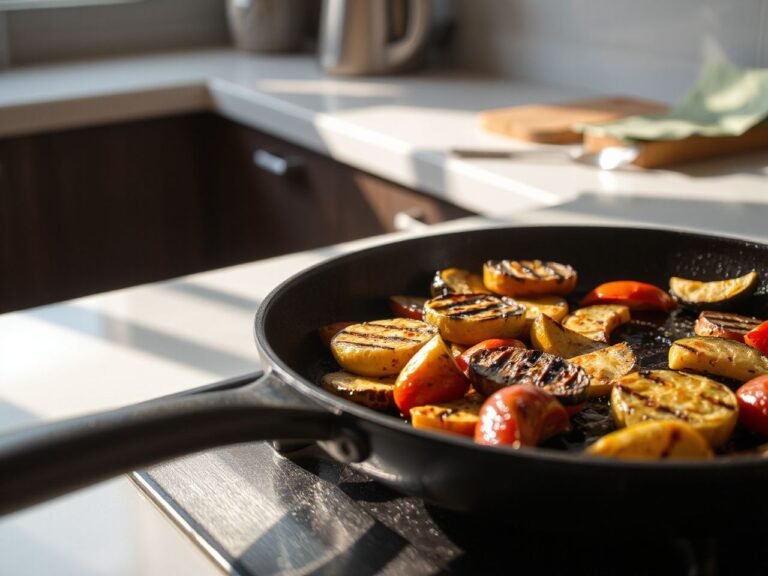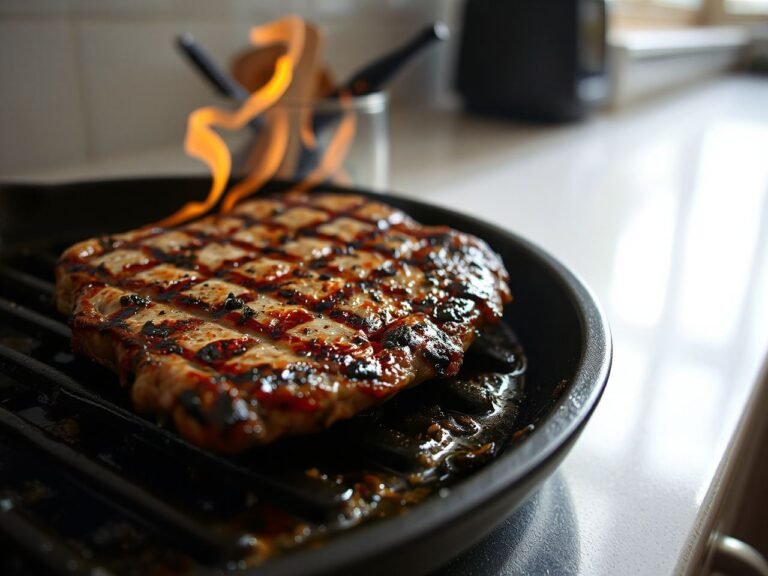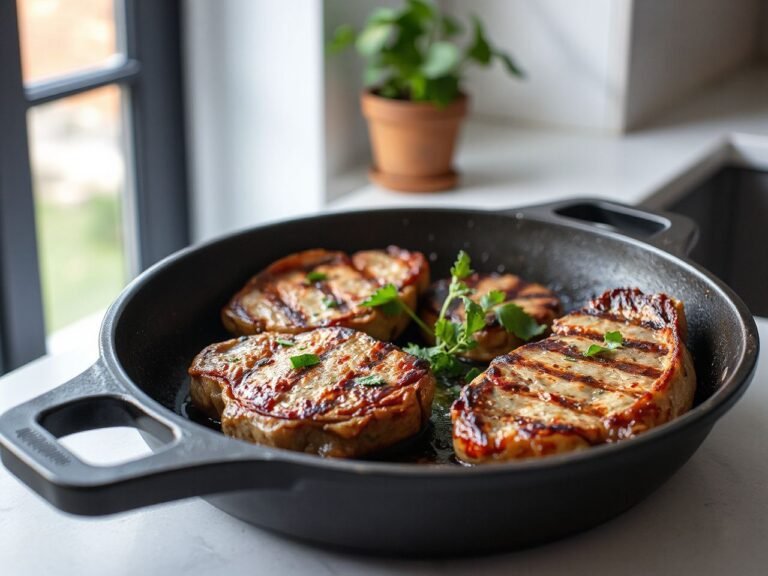
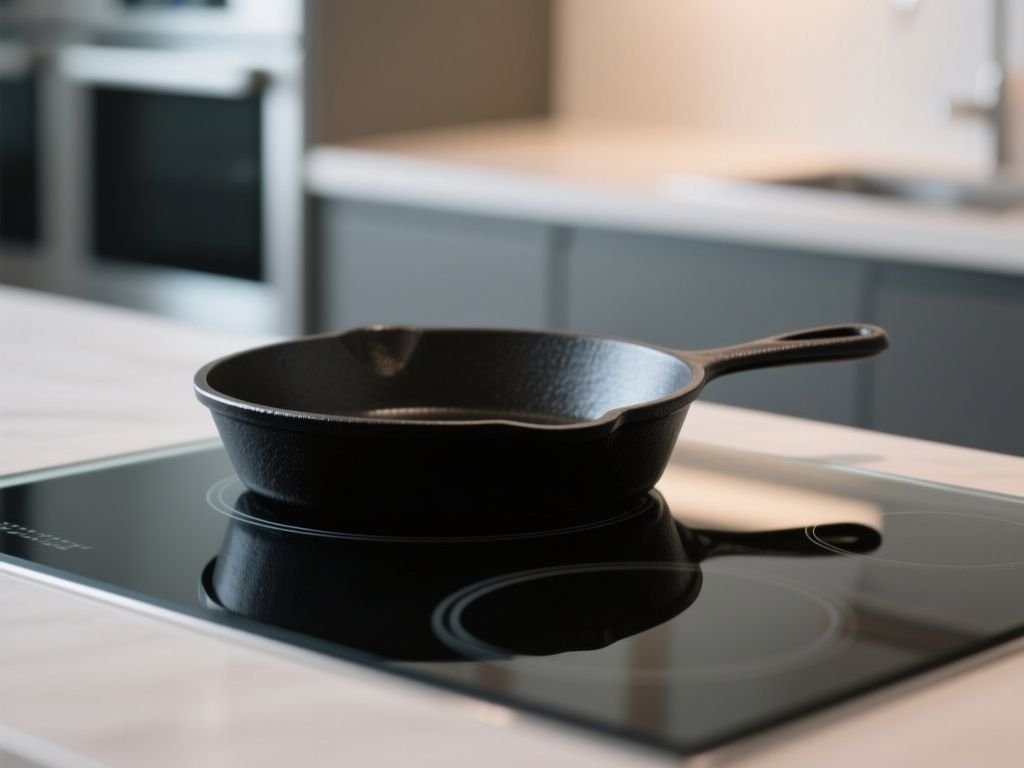
Glass-ceramic cooktops are marvels of thermal engineering. Schott Ceran, the surface used in the majority of glass stovetops worldwide, withstands direct contact with a radiant element glowing at 700°C without warping, and its hardness resists scratching from steel utensils. Yet the most common damage reported by appliance service technicians is not thermal failure—it’s abrasion from cookware bases dragged across the surface. So is cast iron safe for glass top stoves? Yes, with two non-negotiable habits: lift rather than slide, and control thermal shock.
Key Takeaways
- Cast iron is safe on glass-ceramic cooktops when you lift the pan instead of sliding it across the surface.
- The primary risks are scratches from rough pan bottoms and thermal shock from rapid temperature changes—not the pan’s weight.
- Enameled cast iron and smooth-bottomed skillets reduce scratching risk, but still require lifting and clean surfaces.
- Always check your cooktop’s user manual for weight limits and specific cookware recommendations before using heavy cast iron.
Understanding the Real Risks: Scratch vs. Thermal Shock
Two Separate Failure Modes
Glass-ceramic cooktops fail in two distinct ways. The first is surface scratching, which happens when a hard particle or a rough pan base is dragged across the glass. The second is thermal shock, which occurs when a sudden temperature gradient creates enough stress to crack the material. These are different mechanisms, and cast iron contributes to both only through user error.
According to Schott, the manufacturer of Ceran glass-ceramic, the material has a near-zero coefficient of thermal expansion. That property lets one area sit over a hot burner while an adjacent area stays cool without fracturing. Thermal shock, as defined by Britannica, happens when internal stresses from uneven expansion exceed the material’s strength. For a cooktop, placing a cold cast iron skillet on a burner already at high heat creates exactly that condition.
A 12-inch cast iron skillet weighs roughly 6 to 8 pounds, which is far below the static load rating of any modern glass-ceramic cooktop, but a dropped skillet concentrates that force on an area smaller than a pencil eraser.
Why Cast Iron Gets Blamed, and What Actually Matters
Cast iron’s reputation for scratching glass comes from two real properties: its base is often rougher than other cookware, and it retains heat long after cooking stops. But the roughness is not universal. Modern Lodge cast iron, for example, has a pebbled surface from its sand-casting process, while vintage pans and some premium brands have smoother machined bottoms. The heat retention is not a risk by itself; it only becomes one when a hot pan is placed on a cool surface or splashed with cold water.
Enameled cast iron, like Le Creuset or Staub, has a porcelain enamel exterior that is glass-smooth. That coating reduces the chance of scratching from the pan’s own texture, but it can still pick up grit from the counter and drag it across the cooktop. The real variable is cleanliness and lifting technique, not the material itself.
How to Use Cast Iron on a Glass Top Without Damage
Assess Your Pan’s Bottom: The Fingertip Test
Before placing any cast iron on a glass cooktop, run your fingertips over the entire bottom surface. A well-seasoned pan that has been used for years will feel smooth, almost slick. A new Lodge skillet, straight from the factory, often feels slightly pebbled or sandy. That texture will not instantly scratch glass on its own, but it acts like a file if you slide the pan. Over time, regular cooking with a metal spatula and proper seasoning wears down those peaks. For an accelerated fix, you can lightly sand the bottom with fine-grit sandpaper (220 grit or higher) and re-season, but that is optional and only for rough vintage pieces.
If you are in the market for a cast iron pan with a smoother factory finish, our Victoria cast iron skillet review breaks down how that brand’s polished cooking surface compares. The key spec to look for is “machined” or “polished” bottom, as opposed to “as-cast.”
Another quick test: rub the pan’s bottom on a piece of white printer paper. If it leaves gray streaks, the bottom has metal burrs or carbonized buildup that will transfer to your cooktop and act as an abrasive. A smooth, well-seasoned bottom should leave no visible mark.
Lift, Never Drag: A Non-Negotiable Rule
The single most effective way to keep glass-ceramic scratch-free is to lift the pan completely off the surface before moving it. Do not slide a cast iron skillet from one burner to another, even if it feels smooth. Glass cooktops accumulate microscopic dust, salt, and even metal filings from other utensils. Any of those particles, when trapped under 8 pounds of cast iron, acts like an abrasive. Lifting is not about strength; it’s about removing the shear force entirely.
This rule applies to all cookware on glass tops, but cast iron’s high mass makes sliding more damaging. A lightweight aluminum pan might weigh 2 pounds and exert less downward force on trapped grit; an 8-pound skillet multiplies that force. Always lift straight up, move horizontally, and set down gently.
Preheat and Cool Gradually: Start Low and Go Slow
Cast iron distributes heat unevenly if heated too fast, which is a separate issue from cooktop safety. But on a glass radiant burner, the element cycles on and off to maintain a set temperature. Placing a cold cast iron pan on a burner set to high forces the element to run continuously, creating a large temperature difference between the area under the pan and the surrounding glass. With Schott Ceran’s low expansion, this is usually safe, but the risk increases if the pan has a thick base that heats unevenly. The solution: place the pan on the burner while it is still cold, then set the heat to low or medium-low for 2 to 3 minutes before raising it. This lets the pan absorb heat slowly and prevents hot spots that can warp the pan itself—warped pans rock on glass and create point-contact scratches.
On an induction cooktop, the glass never gets hot from the element; only the pan heats. That eliminates one source of thermal shock, but you still must avoid sliding because the pan itself becomes the heat source pressed against the glass. On an induction cooktop, the glass surface stays below 150°F even when the cast iron pan reaches 400°F, because induction heats only the pan, not the glass. That self-contained statement clarifies why induction is often considered safer for heavy cookware.
Do You Need a Heat Diffuser?
No, a heat diffuser is not required for cast iron on a glass top. A diffuser can help distribute heat more evenly, especially on small burners, and it may reduce the chance of thermal shock by spreading heat over a larger area. However, it adds another layer that must be kept perfectly clean and smooth; a dirty diffuser is worse than no diffuser. Also, some glass cooktop manufacturers explicitly advise against diffusers because they trap heat against the glass and slow down temperature control. Check your manual.
Preventing Long-Term Damage: Micro-Cracks, Weight Limits, and Early Warning Signs
Do Repeated Heating Cycles Weaken the Glass?
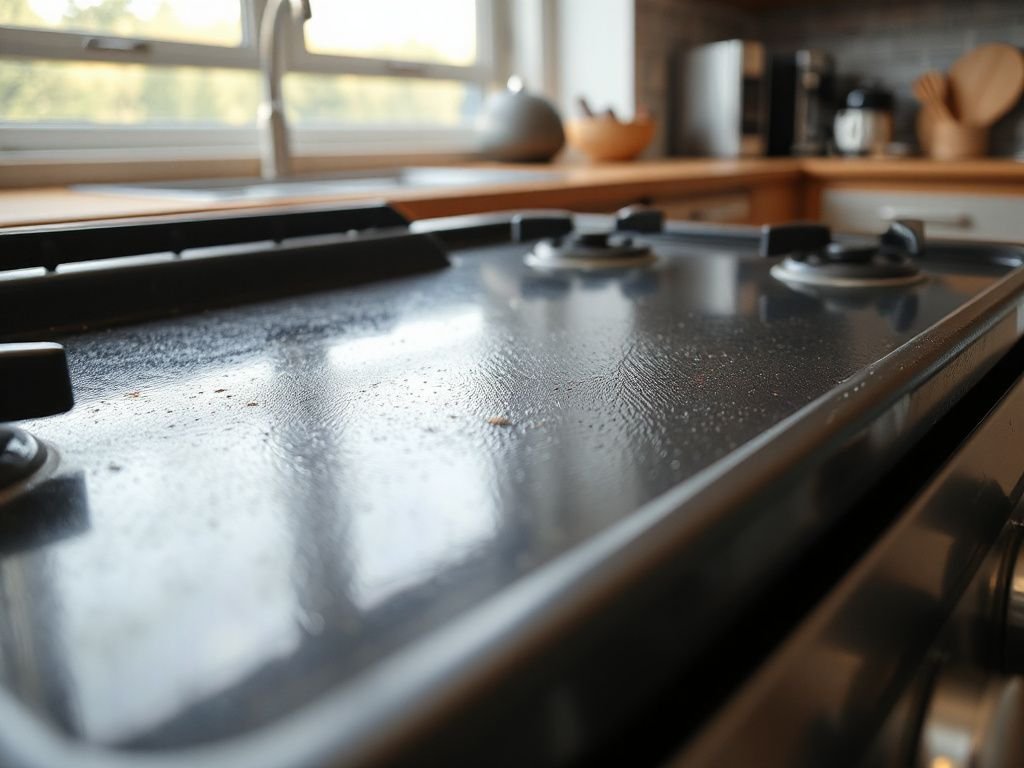
Glass-ceramic cooktops are designed to survive thousands of heating cycles. The material’s near-zero thermal expansion means it does not develop micro-cracks from normal use the way ordinary glass would. However, existing scratches or chips act as stress concentrators. Each time the surface under that defect is heated and cooled, the stress focuses at the scratch tip. Over years, a hairline crack can propagate. That is why preventing the first scratch matters more than avoiding cast iron altogether.
A visible scratch that reflects light at a different angle is not just cosmetic; it becomes a stress concentrator where a future crack is more likely to start.
Weight Limits: How Heavy Is Too Heavy?
Most glass-ceramic cooktops are rated to support a static load of 50 pounds or more, according to manufacturer test standards. A fully loaded 12-inch cast iron Dutch oven with a heavy stew might weigh 15 to 20 pounds—well under that limit. The danger is never static weight; it’s impact. Dropping a 7-pound skillet from even six inches concentrates the force on a tiny area and can crack the glass instantly. Always lift with both hands and set the pan down gently, especially when it is full of hot food.
The user manual for your specific stove always states the maximum recommended cookware weight and whether cast iron is approved. Some manufacturers note that cast iron with a rough bottom voids the surface warranty. Check before you cook.
Early Signs Your Glass Top Is Being Damaged
Look for these indicators:
- White or gray scratches that catch a fingernail.
- Cloudy areas that do not wipe off (micro-abrasion from repeated sliding).
- Hairline cracks radiating from a chip or edge.
- A burner zone that heats unevenly even with a flat-bottomed pan (could indicate a damaged element or surface stress marks).
- A small chip at the edge where a heavy pan was accidentally knocked.
If you see any of these, stop using that burner until you assess the damage. A cracked cooktop can fail catastrophically under heat.
Cleaning to Protect Both Pan and Cooktop
After every use, wipe the cooktop with a damp microfiber cloth and a dedicated glass-ceramic cleaner. Never use abrasive sponges. For the cast iron pan, keep the bottom dry and lightly oiled to prevent rust, but wipe off excess oil before setting it on the cooktop—a film of oil can polymerize onto the glass under high heat and create a brown stain that is tough to remove.
Black marks from cast iron on a glass top are usually metal transfer from a bare or rough spot on the pan. A quick pass with a razor scraper held at a 30-degree angle removes them without scratching, but prevention is better: season the bottom of your cast iron just like the inside, then wipe it down after each use.
Special Cases: Enameled Cast Iron, Induction, and Alternative Cookware
Enameled Cast Iron on Glass Tops
Enameled cast iron is generally safer for glass tops because the porcelain enamel coating is smoother than bare cast iron and less likely to have rough peaks. However, enamel can chip if the pan is dropped onto the cooktop, and a chip on the bottom creates a sharp edge that will scratch the glass instantly. Inspect the bottom of any enameled pan before each use; if you see a chip or crack in the enamel on the cooking surface or the bottom, retire the pan from glass top use.
Le Creuset and similar brands use a vitreous enamel that is harder than the glass-ceramic surface, so a loose enamel chip is a serious abrasive. Treat enameled cast iron with the same lift-don’t-slide rule, and never drag it even if it feels smooth.
Cast Iron on Induction vs. Radiant Glass Cooktops
All glass top stoves fall into two categories: radiant electric (with heating elements under the glass) and induction (with magnetic coils). Cast iron works on both. On radiant, the glass itself gets hot under the pan, so thermal shock from a cold pan is the primary concern. On induction, the glass stays relatively cool; the pan heats from within through magnetic induction. This makes induction inherently safer for heavy cast iron because the temperature gradient across the glass is much smaller. However, induction requires a perfectly flat pan bottom for even heating, and a warped cast iron skillet will rock, causing noisy vibration and uneven cooking. If your pan is warped, it can also scratch the glass when it shifts during cooking. Always test flatness by placing the pan on a known flat surface and checking for wobble.
Induction glass cooktops rarely exceed 150°F on the surface even when the cast iron pan reaches 500°F, reducing thermal shock risk compared to radiant elements that heat the glass directly.
When Cast Iron Might Not Be the Best Choice
If your primary concern is preserving a flawless glass surface and you rarely need high-heat searing, a heavy-bottomed stainless steel or anodized aluminum pan with a smooth base is a lower-maintenance option. But for even heat distribution and heat retention, nothing matches cast iron. The decision comes down to your willingness to lift instead of slide and to manage preheating. For many home cooks, the tradeoff is worth it. If you are comparing cast iron options beyond skillets, our Field Company cast iron skillet review examines one of the lightest smooth-bottomed pans on the market, and the cast iron griddle buying guide covers flat griddles that spread weight over two burners—both useful if you want to minimize contact pressure per square inch.
Frequently Asked Questions
Is cast iron safe for glass top stoves?
Yes, cast iron is safe on a glass top stove when you lift the pan instead of sliding it, avoid rapid temperature changes, and ensure the pan’s bottom is smooth. The main risks are scratching from abrasive particles and thermal shock from placing cold cast iron on a hot burner. With proper technique, cast iron performs excellently on glass-ceramic cooktops.
Will cast iron warp or crack a glass cooktop due to its weight?
No, the weight of a cast iron pan alone will not crack or warp a glass-ceramic cooktop. Most cooktops are rated for static loads over 50 pounds, and a full 12-inch skillet weighs about 8 pounds. Damage occurs from dropping the pan or sliding it across the surface, not from resting weight.
Do I need a heat diffuser when cooking with cast iron on glass?
No, a heat diffuser is optional and often unnecessary. It can help even out heat on small burners, but it adds another surface that must be kept perfectly clean. Some manufacturers advise against diffusers because they trap heat against the glass and reduce responsiveness. Check your cooktop manual for specific guidance.