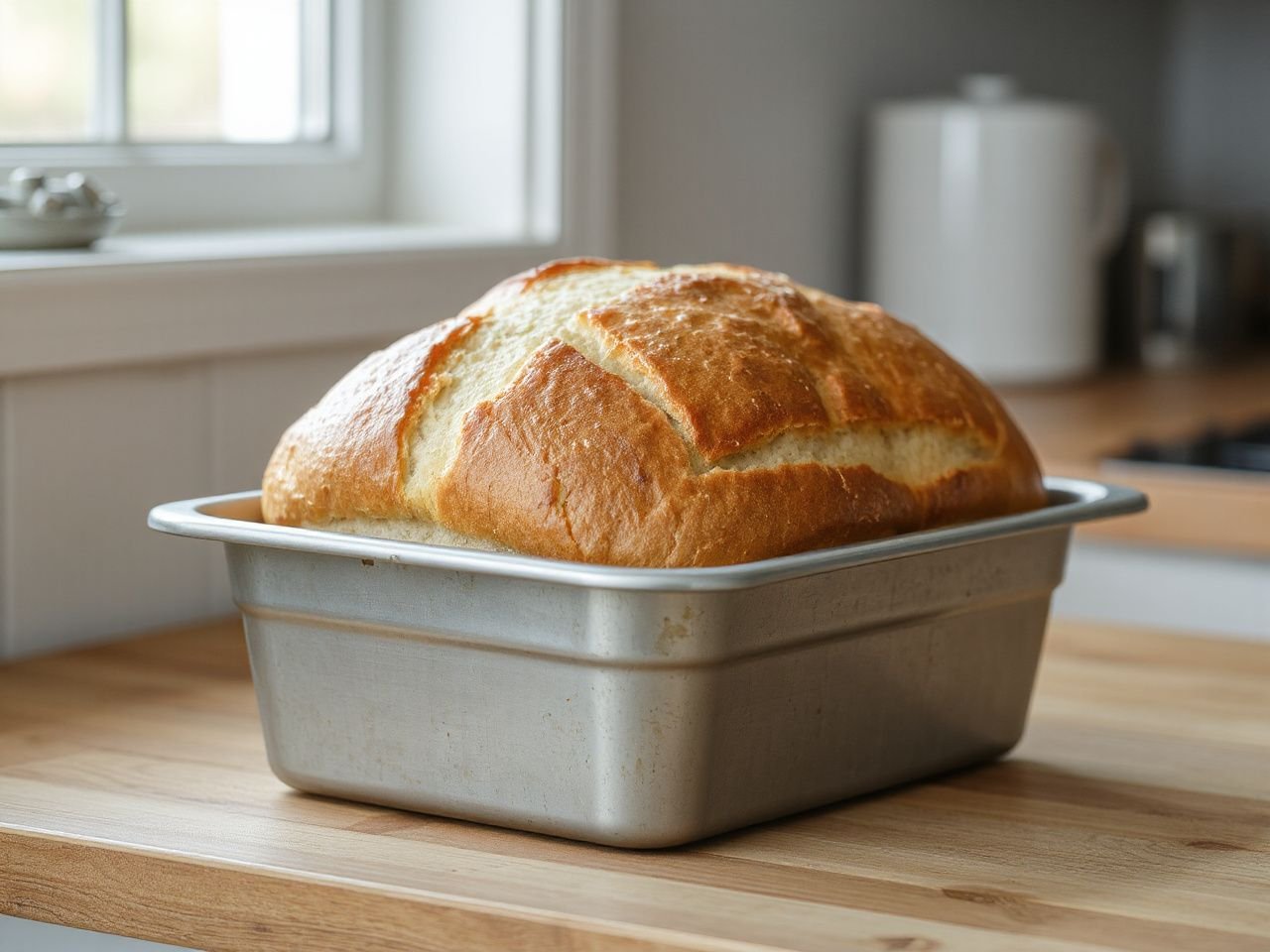
You pull a loaf out of the oven and the crust crackles as it cools. The sides are deep brown, the top didn’t collapse, and the crumb has those glossy, irregular holes you only get from proper steam. That is what a good sourdough loaf pan delivers, and it is the difference between bread that looks homemade and bread that looks bakery-made.
Finding the best loaf pans for sourdough means looking past the marketing and focusing on the metal, the lid, and how that pan holds heat. Cast iron dominates this category for a reason, but stainless steel has its place if you prioritize easy cleaning over a deep crust.
The Wildone Enameled Cast Iron Bread Loaf Pan with Lid features triple-layer enamel and thick cast iron walls that provide heat retention superior to stainless steel, making it ideal for a tall, evenly browned sourdough loaf.
📌 This article contains affiliate links. As an Amazon Associate I earn from qualifying purchases, at no extra cost to you. Full disclosure.
CERTAIN CONTENT THAT APPEARS ON THIS SITE COMES FROM AMAZON. THIS CONTENT IS PROVIDED ‘AS IS’ AND IS SUBJECT TO CHANGE OR REMOVAL AT ANY TIME.
| Product | Best For | Buy Link |
|---|---|---|
| Wildone Enameled Cast Iron Bread Loaf Pan with Lid | Premium crust and even baking | Check Price |
| Heysagix 9×5 in Cast Iron Loaf Pans with Lids | Pullman-style sandwich loaves | Check Price |
| Tosnail 9 x 5 Inches Cast Iron Bread Loaf Pan with Lid | Budget cast iron with lid | Check Price |
| Homikit 4 Pack Stainless Steel Loaf Pans | Batch baking and easy cleanup | Check Price |
| Articasting Cast Iron Loaf Pan with Lid | High-temp enameled baking | Check Price |
How We Chose These Sourdough Loaf Pans
Every pick here came from comparing published specifications, materials, and documented features against the factors that actually matter for sourdough: heat retention and even conduction. A pan that heats unevenly gives you a loaf with a pale bottom and a burnt top, and cast iron leads that race while stainless steel struggles to hold steady heat through an oven’s cycling. The lid is the second dealbreaker. A poorly sealed lid lets steam escape, and without trapped moisture you get a thick, dull crust instead of that thin, crackly shell. We also weighed the release and cleaning trade-off: non-stick coatings fail at high temps, while uncoated cast iron needs seasoning to avoid sticking and rust. Weight matters too, because a 9×5 cast iron pan with a lid can weigh over 7 pounds, which is awkward in a hot oven. Before you order, check the oven-safe temperature rating on any pan you consider. Sourdough often bakes at 450°F or higher, and some coatings degrade above 425°F. And if a listing doesn’t state the material thickness or lid fit, ask the seller before you buy. A frank read of the spec sheet beats any staged test.
Wildone Enameled Cast Iron Bread Loaf Pan with Lid (Triple-Layer Enamel Build)

Heysagix 9×5 in Cast Iron Loaf Pans with Lids (Pullman-Style Steam Seal)
Tosnail 9 x 5 Inches Cast Iron Bread Loaf Pan with Lid (Budget 2-in-1 Workhorse)

Wildone Enameled Cast Iron Bread Loaf Pan with Lid (Triple-Layer Enamel Build)
Quick take: This is the pan for home bakers who want a bakery-grade crust without messing with a Dutch oven.
The Wildone’s triple-layer enamel coating is the headline spec, and it means the cast iron underneath is sealed against rust and staining. That coating also makes the pan non-reactive, so a long, slow sourdough ferment with acidic starter won’t leach iron into your dough. The walls are thick, which is exactly what you want: heavy metal holds heat through the entire bake, and your loaf rises evenly instead of stalling on one side. The set includes two 9×5 pans and a pair of lids, so you can bake two loaves at once or use the lid to trap steam for a shinier crust.
One honest annoyance: the listing never gives a total weight, but any cast iron loaf pan with a lid is going to be heavy. If you have weak wrists or a deep oven, you’ll want to use two hands and a good pair of dry oven mitts. The enamel also means no dishwasher: hand washing is mandatory to keep the finish from dulling or chipping.
Pros:
- Triple-layer enamel — resists chipping and staining better than single-coat finishes, and it’s non-reactive with sourdough.
- Two pans with lids — bake a pair of loaves at once, or use the lid for a steam-sealed crust.
- Thick cast iron walls — hold heat far more evenly than thin steel, which means a consistent rise and deep browning.
Cons:
- Heavy by design — a full cast iron pan plus lid easily tops 7 pounds, and that weight is awkward when the oven is at 475°F.
- Enamel can chip — if you bang the pan against a rack or another pan, the coating can crack, and then the iron underneath will rust.
- Hand wash only — no dishwasher, and you’ll need to dry it immediately to prevent water spots on the enamel.
Final thoughts
Best for: Serious sourdough bakers who want even browning and don’t mind the extra weight or hand washing. Skip if: You need a lightweight, dishwasher-safe pan or you bake only occasionally and don’t want to care for enamel.
Heysagix 9×5 in Cast Iron Loaf Pans with Lids (Pullman-Style Steam Seal)
Here’s the deal: If you want square, sandwich-style sourdough loaves with a soft crust, this two-pack delivers the right shape and steam control at a fair price.
Heysagix built these pans around the idea of a pullman loaf, which means the lid sits flush to create a sealed chamber. That trapped steam gives you a thinner, softer crust and a perfectly square cross-section — the kind of loaf that makes clean, even slices for toast or sandwiches. The pans are cast iron, not enameled, so they arrive raw and need a round of seasoning before the first bake. The 9×5 cavity is standard, but the exterior dimensions aren’t listed, so measure your oven rack spacing if you plan to slide two pans side by side.
The honest annoyance is the lid fit. A true pullman pan has a sliding lid that locks onto the base; a loose-fitting lid on a cast iron loaf pan will still trap some steam, but it won’t create a perfect seal. If you’re counting on that squared-off top every time, check the lid’s tightness before you commit, because too much gap and your loaf will dome instead of square off.
Pros:
- Two pans with fitted lids — bake a pair of pullman-style loaves at once for sandwiches or gifts.
- Cast iron heat retention — the thick walls hold steady heat better than stainless, which helps your sourdough rise tall.
- Raw iron, no coatings — with proper seasoning, you get a natural non-stick surface that can handle very high temps without fear of chemical breakdown.
Cons:
- Needs seasoning before first use — a wet sourdough will stick to bare iron, and you’ll spend an afternoon polymerizing oil instead of baking.
- Lid seal is not guaranteed — unless the lid is precisely machined, steam escapes and you lose some of the pullman effect.
- Weight and handles — cast iron is inherently heavy, and the listing doesn’t mention helper handles, so lifting a hot pan with a lid on is a two-handed job.
Our take
Great match for: Bakers who want square sandwich loaves and are comfortable seasoning raw cast iron. Think twice if: You want a hands-off, dishwasher-safe pan or you need a guaranteed steam seal for a thick, crackly crust.
Tosnail 9 x 5 Inches Cast Iron Bread Loaf Pan with Lid (Budget 2-in-1 Workhorse)
Why it made our list: The Tosnail gives you a solid cast iron loaf pan and a lid for a price that doesn’t make you wince, and the stated dimensions make it easy to confirm oven fit.
The overall measurements are 12.4 inches long by 5 inches wide by 2.75 inches high, which means the pan will slide into any standard home oven, even with the lid on. That’s a detail many listings skip, and it matters when you’re juggling a baking stone or a second rack. The cast iron is uncoated, so like the Heysagix, it requires seasoning before your dough touches it. But the 2-in-1 design is clever: flip the lid over and you have a shallow baking pan for rolls or a flat griddle for stovetop use, assuming your burner is compatible.
One annoyance to flag: the inner dimensions are not given, only the exterior. A true 9×5 interior is critical for standard sourdough recipes, so if the walls are thick, the actual baking cavity might be smaller. Before you buy, contact the seller or measure carefully if you have a recipe that fills a 9×5 pan to the brim. And because the iron is bare, acidic sourdough can react slightly over long ferments, which might give a metallic note unless the seasoning is well established.
Pros:
- Exact exterior dimensions listed — 12.4 x 5 x 2.75 inches fits a standard oven rack with room to spare.
- 2-in-1 pan and lid — the lid doubles as a griddle or shallow pan, giving you more utility for the same storage space.
- Thick cast iron — resists warping and holds heat well, which is the foundation of an even bake.
Cons:
- Inner dimensions unknown — without that number, you can’t be certain the baking cavity is a full 9×5.
- Raw cast iron, no enamel — requires seasoning and is reactive to acidic doughs unless well protected.
- No helper handles — the smooth sides make a heavy, hot pan harder to grip safely with oven mitts.
In a nutshell
Perfect for: Someone who wants a no-frills cast iron pan with a lid and doesn’t mind seasoning raw iron. Not great if: You need a non-reactive, enameled surface or you bake in large batches and want a guaranteed interior size.
Homikit 4 Pack Stainless Steel Loaf Pans (Batch Baking Without Coatings)

What stood out: Four thick-gauge stainless steel pans for the price of one cast iron set — and they’re dishwasher-safe, which is rare in this category.
Homikit’s pans are pure stainless steel with no chemical coatings, which means no PTFE, no ceramic, and no enamel to chip. The reinforced rolled rims are a real plus: they stop the pan from warping at high heat and give you a safe edge to grab with a towel. Stainless steel conducts heat fast, so your oven spring happens quickly, but the trade-off is that stainless doesn’t hold heat the way cast iron does. Your crust will be thinner and paler, and the loaf may brown unevenly if your oven cycles on and off. For a sourdough baker chasing that deep, crackly crust, this is not the first choice. But if you value easy cleanup and want to bake four loaves at once — say, for a week of sandwiches or a bake sale — these pans get the job done without any seasoning ritual.
The honest annoyance is the lack of lids. Without a lid, you cannot trap steam, and that means no shiny, thin crust. You can compensate by placing a pan of hot water on the bottom rack or using a cloche, but that’s extra fuss. Also, the listing says “excellent heat conductivity,” but for sourdough specifically, fast conductivity without retention can lead to a loaf that browns on the outside before the inside finishes, especially if you bake at 450°F or higher.
Pros:
- Four pans in one box — bake a full batch of loaves, meatloaves, or quick breads at the same time.
- Dishwasher-safe — stainless steel can go straight into the dishwasher, no seasoning or hand washing required.
- Reinforced rolled rims — resist warping at high oven temperatures and provide a sturdy grip point.
Cons:
- No lids — you lose steam trapping, so the crust will be thicker and duller unless you add moisture separately.
- Stainless steel heat retention is mediocre — sourdough needs steady, even heat, and these pans can’t match cast iron on that front.
- Thinner walls than cast iron — while thick gauge for stainless, they will never hold heat as long as a 5-pound iron pan.
The real deal
Ideal for: Bakers who prioritize easy cleanup and batch baking over a perfect artisan crust, or who make quick breads more often than sourdough. Pass on this if: You’re chasing a deep brown, crackly sourdough crust and don’t want to fiddle with steam tricks.
Articasting Cast Iron Loaf Pan with Lid (High-Temp Enameled Versatility)
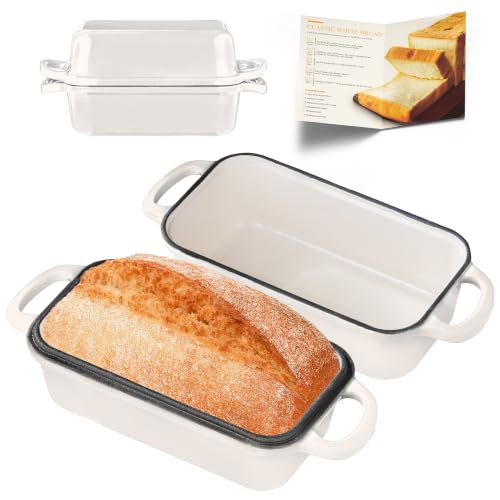
Quick take: If you want an enameled cast iron pan that can hit 500°F without worrying about the coating, this one earns a spot on your shortlist.
The Articasting’s headline spec is the temperature rating: it’s safe up to 500°F, which covers nearly every sourdough recipe you’ll find. The enameled finish means no seasoning, and it’s non-reactive, so a long, slow ferment won’t cause off-flavors. The 2-in-1 design lets you bake two loaves at once or use the lid as a shallow baker, and the lid creates a steam chamber for that glossy crust. The cast iron construction is heavy-duty, so expect it to hold heat extremely well, which is the main reason bread bakers reach for iron over steel.
One thing the listing doesn’t state is the actual weight or handle design. A cast iron loaf pan with a lid can weigh over 7 pounds, and if the handles are small or flush, you’ll struggle to lift it safely from a 475°F oven. I’d also want to know the interior dimensions: if the walls are thick, the baking cavity might be smaller than a true 9×5, which could throw off a recipe that fills the pan to the top. And while the enamel is durable, it will chip if you drop the pan or whack it against a hard surface, so storage needs care.
Pros:
- 500°F safe enamel — higher than most non-stick coatings and perfect for the high heat sourdough demands.
- No seasoning required — the enameled finish is ready to bake right out of the box, unlike raw cast iron.
- 2-in-1 lid design — trap steam for a crusty loaf or use the lid upside down for rolls and flatbreads.
Cons:
- Heavy, with unclear handles — without good grip points, a hot, 7-pound pan is a burn risk.
- Enamel still chips — it’s durable but not indestructible, and a sharp knock can expose the iron underneath.
- Interior dimensions not specified — you’re trusting that the cavity is a true 9×5, and if it’s not, your recipe may overflow.
Our verdict
Best for: Home bakers who want the ease of enamel without sacrificing high-temperature performance. Skip if: You’re on a tight budget, because enameled cast iron is almost always more expensive than raw iron or stainless steel, or if you need to know exact interior dimensions before buying.
Choosing the Right Loaf Pan for Sourdough
Sourdough is a different animal than yeasted sandwich bread. The dough is wetter, the fermentation is longer, and the bake needs high, steady heat to get that open crumb and deeply colored crust. Your pan choice is not just a vessel; it’s part of the baking equation.
Cast Iron vs. Stainless Steel: The Real Difference
Cast iron wins for sourdough because it stores heat and releases it slowly. That means the oven temperature stays more consistent inside the pan, even as your oven’s element cycles on and off. Stainless steel, on the other hand, conducts heat quickly but holds very little. The result is often a loaf that browns too fast on the outside while the center stays gummy. For the best bread pans for sourdough, cast iron is the default, and stainless is only a good choice if you prioritize dishwasher-safe convenience over crust quality. The Homikit 4-pack is the exception here: if you’re making multiple quick breads or don’t mind a paler crust, stainless works fine.
The Lid Matters More Than You Think
A lid on a loaf pan does two things: it traps steam, which keeps the crust thin and shiny, and it forces the dough to expand upward instead of outward, giving you a taller, more even loaf. That’s the pullman effect, and it’s why the Heysagix and Wildone sets include fitted lids. But a lid only works if it seals reasonably well. If the lid sits loosely, steam escapes and you lose the benefit. Before buying, look for listings that mention a “sealed” or “fitted” lid, and be skeptical of pans that just rest a flat piece of metal on top. A proper pullman lid slides or locks into place.
Release, Seasoning, and Care: The Honest Trade-off
Enameled cast iron (like the Wildone and Articasting) needs no seasoning and is non-reactive, but it can chip and must be hand washed. Raw cast iron (Heysagix and Tosnail) requires an initial seasoning and periodic re-oiling, and it reacts slightly with acidic doughs. Stainless steel (Homikit) is dishwasher-safe and nearly indestructible, but your bread may stick unless you grease it well or use parchment. If you hate the idea of seasoning a pan, go enameled. If you’re willing to spend an afternoon baking oil into iron, raw cast iron will eventually become nearly non-stick and can last a lifetime. And if you want the lowest-effort cleanup, stainless is your only dishwasher-safe option here.
Size, Weight, and Oven Safety
A standard 9×5 loaf pan holds about 1.5 to 2 pounds of dough, which is perfect for most sourdough recipes. But all of these cast iron pans are heavy, and the ones with lids are heavier still. Check your oven rack strength and your own lifting ability before committing. Also confirm the maximum oven temperature. The Articasting is rated to 500°F, but not every enameled pan can handle that. If you bake hot and fast, stay under the listed limit. And measure your oven: a pan with a lid on needs vertical clearance, especially if you use the top rack. Most home ovens can handle a 2.75-inch tall pan with a lid, but if your oven is small, opt for a pan with a lower profile or skip the lid.
Our Final Recommendation
For the ultimate crust and crumb, the Wildone Enameled Cast Iron Bread Loaf Pan with Lid is the premium pick, and its triple-layer enamel justifies the higher cost. If you want a budget-friendly cast iron option that still delivers steam retention, the Tosnail set is a solid workhorse, while the Heysagix is our recommended choice for pullman-style sandwich loaves. The Homikit 4-pack is the best value for anyone who bakes multiple loaves weekly and values dishwasher convenience over a perfect artisan crust. Overall, the Wildone wins because it combines the best of cast iron heat retention with the ease of enamel, and that’s exactly what sourdough demands.
Frequently Asked Questions
Are cast iron loaf pans better than stainless steel for sourdough?
For sourdough specifically, yes. Cast iron holds heat far more evenly than stainless steel, which prevents the hot and cold spots that cause uneven browning and a gummy center. Stainless steel conducts heat quickly but releases it fast, so your oven’s temperature swings will show up in the loaf. If you want a deep, crackly crust and an open crumb, cast iron is the better tool. Stainless is acceptable if you prioritize easy cleanup and don’t mind a paler, thicker crust.
Do I need a lid on my loaf pan for sourdough?
A lid isn’t mandatory, but it helps a lot. The lid traps steam during the first half of the bake, which keeps the crust thin and shiny and encourages a taller rise. Without a lid, your sourdough will still bake, but the crust will be thicker and duller, and the loaf may spread more. You can mimic a lid by placing a pan of hot water on the bottom oven rack or by baking under an inverted metal bowl, but a fitted lid is more convenient.
How do I season a cast iron loaf pan?
Wash the pan with warm, soapy water and dry it completely. Rub a very thin layer of neutral oil (like grapeseed or canola) over the entire surface, inside and out. Place the pan upside down in a 400°F oven with a sheet of foil on the rack below to catch drips, and bake for one hour. Turn off the oven and let the pan cool inside. Repeat this process two or three times for a good base layer, and after each use, wash with hot water only, dry immediately, and rub on a tiny bit of oil.
Can I use metal utensils like a serrated knife directly in these pans?
Do not slice bread while it’s still in a cast iron or enameled pan. A serrated knife will scratch the seasoning on raw cast iron and can chip the enamel on coated pans. Always remove the loaf to a cutting board before slicing. For stainless steel pans, metal utensils are safe, but you’ll still dull your knife if you cut against the metal. Use a bread knife with a wooden or plastic cutting board.
What oven temperature is safe for enameled cast iron loaf pans?
Most enameled cast iron is safe to at least 450°F, and the Articasting model specifically states up to 500°F. Always check the manufacturer’s rating on your specific pan, because some enamel formulations can crack or discolor above 425°F. Sourdough recipes often call for 450°F or 475°F, so if you bake hot, verify the limit. Never put an enameled pan under a broiler unless the listing says it’s broiler-safe, and avoid thermal shock by not putting a hot pan into cold water.