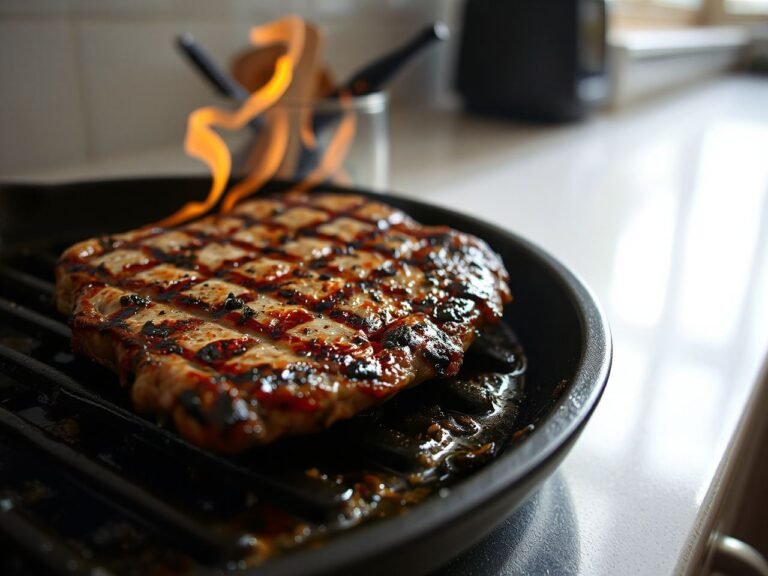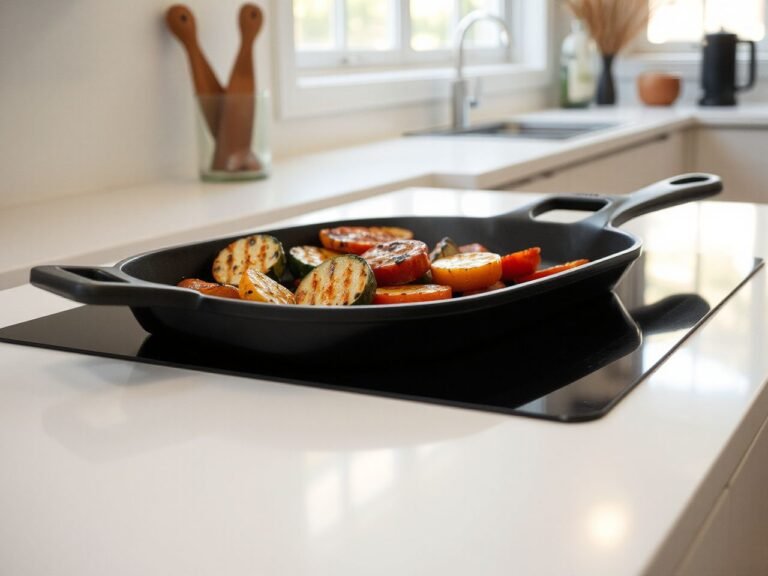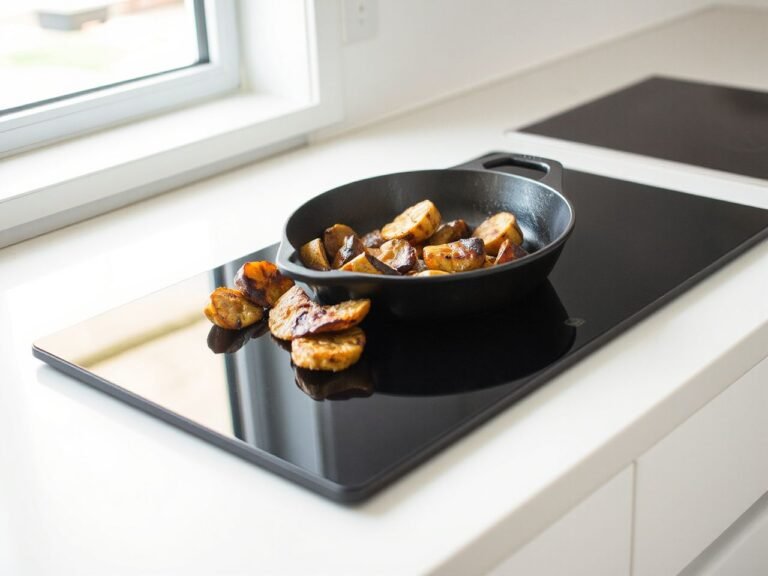
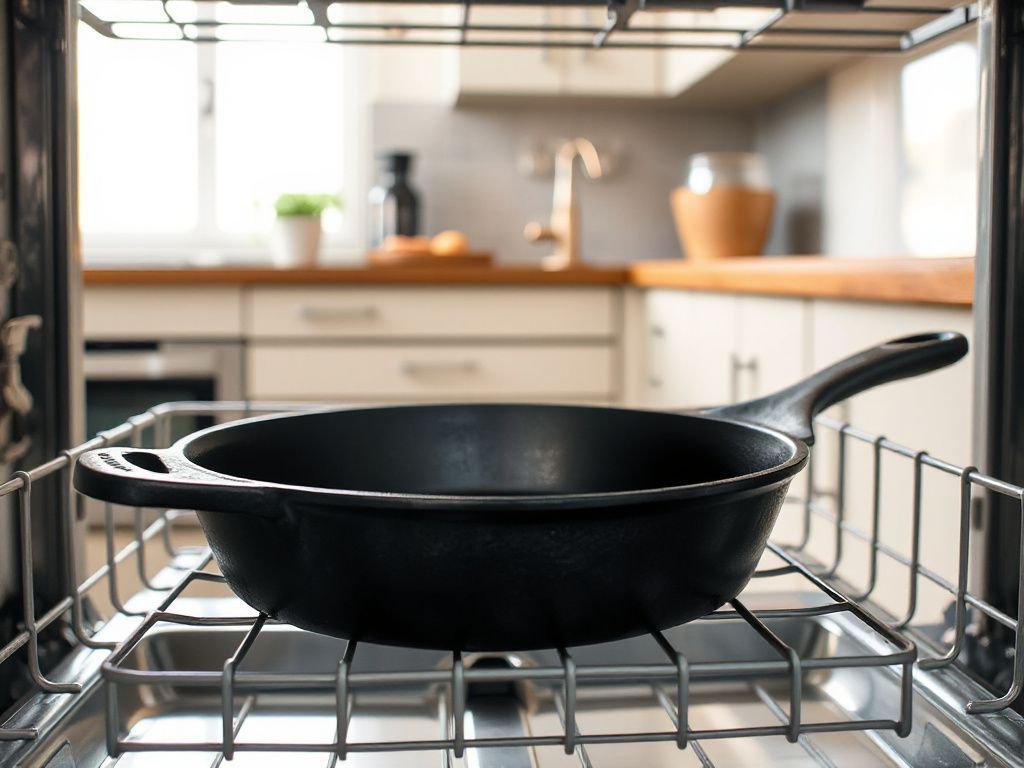
Most cast iron cannot survive a dishwasher. The question “can cast iron go in the dishwasher” deserves a two-part answer, because bare iron and enameled iron react completely differently to a wash cycle. The real distinction is not the brand or the age of the pan but whether the piece is bare or enameled, because the two are protected by completely different surfaces. Bare cast iron’s protective seasoning is oil-based and gets stripped by the alkaline detergents and high heat in a dishwasher, while enameled cast iron has a glass-like coating that can survive the wash cycle but still suffers from chipping or discoloration over time. So the answer is never a simple yes/no: it’s “bare iron, no; enameled iron, reluctantly yes, but you’ll shorten its life.”
Key Takeaways
- Bare cast iron should never go in a dishwasher. The seasoning strips quickly, and rust appears within hours.
- Enameled cast iron can technically survive a cycle, but chipping, dulling, and voided warranties make hand washing the only sensible choice.
- Dishwasher detergents contain alkaline compounds like sodium hydroxide that attack the polymerized oil coating on bare iron.
- If you’ve already made the mistake, you can save the pan with steel wool, thorough drying, and a complete reseasoning.
The Two Kinds of Cast Iron — Bare vs Enameled
Before answering “can cast iron go in the dishwasher,” you need to know exactly what kind of pan you own. Bare cast iron is the classic black skillet from Lodge or an antique pan passed down through generations. Its surface is raw iron covered with a thin layer of polymerized oil called seasoning. That seasoning is not permanent. It wears away with use, gets rebuilt with cooking, and dissolves when exposed to certain chemicals. I think of seasoning like a varnish on a wooden table. It protects the material underneath, but it’s organic and fragile compared to the metal itself.
Enameled cast iron, like pieces from Le Creuset or Staub, has a glass-based coating fused to the iron at temperatures above 1,400°F. The enamel forms a hard, non-porous shell that keeps water and oxygen away from the iron, so rust isn’t a concern. But that shell is not indestructible. Drop a heavy lid on it, and you’ll chip the edge. Run it through a dishwasher repeatedly, and the glossy finish dulls and micro-cracks start to appear. The iron underneath is still cast iron—tough but reactive to water once the coating is compromised.
Bare cast iron relies on a polymerized oil coating called seasoning, which is not a permanent finish but a layer that must be maintained after every use. Enameled cast iron has a glass-based coating fused to the iron at high temperatures, creating a non-porous surface that resists rust but chips under impact. That’s the fundamental fork in the road for every dishwasher question.

What Actually Happens to Bare Cast Iron in a Dishwasher
Dishwasher detergents are aggressive. They contain alkaline builders like sodium hydroxide—yes, the same chemical historically used to strip cast iron in restoration projects. The Lodge use and care guide explicitly warns against machine washing for this reason. When a bare cast iron skillet goes through a normal cycle, that alkaline solution attacks the seasoning’s polymer bonds. The oil-based coating doesn’t just soften; it breaks down and lifts off the metal.
The wash cycle adds two more problems. First, the water temperature inside a dishwasher typically reaches 140°F to 160°F. That heat accelerates chemical reactions, so the seasoning strips even faster. Second, the rinse and drying phases leave the iron wet and hot for long stretches. Bare iron with zero protection plus oxygen plus heat equals rust. Not a little surface rust, either. The kind that flakes off in orange sheets within a few hours.
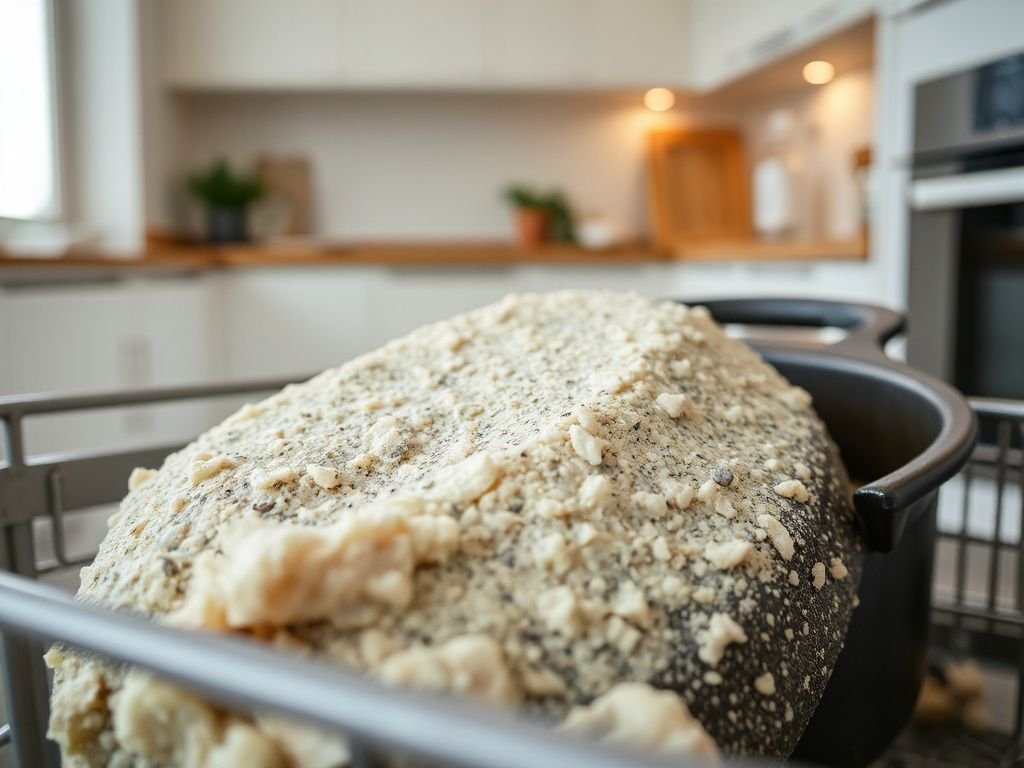
Rust forms on bare cast iron within minutes to hours after a dishwasher cycle because the high heat and moisture leave the iron completely unprotected and accelerate oxidation. You’ll see it first on the cooking surface and around the pour spouts, where water pools. The skillet will smell like damp metal and feel rough to the touch. If you’ve ever left a cast iron pan soaking in a sink overnight, you know that rusty, grayish sheen. The dishwasher does the same damage in one load that an overnight soak would do, just much faster.
What About Enameled Cast Iron?
Enameled cast iron occupies a gray area. Unlike bare iron, the glass coating does not need seasoning, so dishwasher detergents can’t strip a polymer layer that isn’t there. The iron core stays fully sealed as long as the enamel remains intact. Consequently, some people run their enameled Dutch ovens through the dishwasher and see no immediate damage. The pan comes out clean, dry, and rust-free.
The damage happens over time and often invisibly. Dishwasher cycles subject the enamel to rapid temperature changes and constant water pressure. The coating expands and contracts at a different rate than the iron underneath. Those micro-stresses cause hairline cracks that are too small to see but big enough to let moisture reach the metal. Once water gets under the enamel, rust starts forming silently, and the coating eventually pops off in small flakes. Meanwhile, the high-alkaline detergent dulls the glossy exterior finish, leaving a chalky look on colored pieces. Le Creuset’s official care page states that hand washing is recommended for all enameled cookware to preserve the finish and prevent chipping. I’ll link to Le Creuset’s main site because their care instructions are clear on this point.
Manufacturer warranties add another layer. Lodge, Le Creuset, and Staub all exclude damage from dishwasher use in their warranty terms. If your enameled pan develops rust along the rim after a few months of dishwasher cleaning, you won’t get a replacement. The manuals that come with these pans are unambiguous: hand wash only. Owners will argue that their enameled dutch oven survived five years of dishwasher cycles and still looks fine, and plenty of them do. The same model can also chip along the handle within three months. Enamel is glass fused to iron, and how long it holds depends on how thick that layer is at the edges and how hard the piece knocks against the rack. The risk isn’t worth the saved scrubbing time.
How to Fix Cast Iron After a Dishwasher Accident
If you or someone else in your household already made the mistake, don’t throw the pan away. Bare cast iron is nearly indestructible, and rust is just surface oxidation. You can completely restore a skillet from dishwasher damage in about an hour, not counting oven time. The process is the same one used for restoring flea-market cast iron, just without the lye bath.
Step 1: Remove the Rust and Remaining Seasoning
Take the skillet to the sink and scrub every surface with steel wool or a copper scouring pad. Use firm pressure. The goal is to remove all traces of rust and any flaking seasoning. You’ll see black residue washing away. Keep scrubbing until the metal looks uniform gray. This usually takes 5–10 minutes of elbow grease. If the rust is severe, soak the pan in a 50/50 solution of white vinegar and water for no more than 30 minutes, then scrub again. Vinegar dissolves rust, but prolonged soaking can pit the iron, so watch the clock.
Step 2: Wash and Dry Thoroughly
Rinse the pan with warm water and a tiny drop of mild dish soap. Yes, a little modern soap is fine for this one-time cleaning because you’re about to re-season from scratch. After rinsing, dry the pan immediately with paper towels or a clean cloth. Then place it on a stove burner over medium heat for 3–4 minutes to evaporate any remaining moisture. The pan should feel completely dry and slightly warm to the touch.
Step 3: Apply a Thin Coat of Oil
While the pan is still warm, pour about a teaspoon of flaxseed oil, grapeseed oil, or vegetable shortening onto the surface. Use a paper towel to rub it over every square inch—inside, outside, handle, bottom. Then take a fresh paper towel and wipe off as much oil as you can. You want a microscopic layer, not a visible sheen. Too much oil results in a sticky, gummy coating after baking.
Step 4: Bake to Polymerize the Oil
Place the oiled skillet upside down in a 450°F oven for one hour. Put a sheet of aluminum foil on the lower rack to catch any drips. After one hour, turn off the oven and leave the pan inside until it cools to room temperature. The heat breaks down the oil and repolymerizes it into a hard, non-stick seasoning layer. You’ll see the pan darken slightly. That’s good.
Step 5: Repeat If Necessary
For a badly stripped pan, one seasoning cycle might not be enough. Let the pan cool, then apply another thin oil layer and bake again. Two or three cycles usually restore a smooth, dark surface. After that, cook something fatty—bacon, a roux, fried potatoes—to build up the seasoning further. Avoid acidic foods like tomato sauce for the first few uses, because acid will eat through a young seasoning layer.
Better Ways to Clean Cast Iron
Now that you know the answer to “can cast iron go in the dishwasher” is usually no, the obvious follow-up is what to do instead. Cleaning bare cast iron properly takes less time than loading a dishwasher, once you learn the routine. Start with the simplest method: after cooking, while the pan is still warm, wipe it out with a paper towel. For stuck food, add a tablespoon of coarse kosher salt and scrub with a dry cloth or paper towel. The salt acts as an abrasive that lifts residue without damaging the seasoning. Dump the salt, rinse quickly with hot water, then dry the pan on the stove for a minute.
For more stubborn grime, use a chainmail scrubber—a small square of stainless steel rings designed specifically for cast iron. It scrapes off carbonized bits while leaving the seasoning intact. If something is truly baked on, boil a quarter inch of water in the pan for a few minutes, then scrape with a flat metal spatula. The steam and boiling action loosen the food. Never use steel wool during routine cleaning, because that will strip the seasoning you’ve worked to build.
Enameled cast iron needs even less effort. Warm water, mild dish soap, and a non-abrasive sponge handle most messes. For burnt-on stains, soak the pan in warm soapy water for 15 minutes, then scrub gently. Avoid steel wool, scouring powders, and any abrasive pad, because they scratch the glass coating. The same rule applies to both types: always dry the piece completely before storing. Moisture trapped in a cabinet is the fastest way to ruin cast iron, dishwasher or no dishwasher.
Frequently Asked Questions
Can cast iron go in the dishwasher if it’s enameled?
Technically yes, but only if the enamel is completely intact. Le Creuset and Staub both recommend hand washing because dishwasher heat and detergent dull the finish and can cause micro-cracks that lead to chipping. The convenience isn’t worth the shortened lifespan; inspect for chips before and after every cycle if you choose to risk it.
What happens if I accidentally put my bare cast iron skillet in the dishwasher?
The seasoning will break down from the alkaline detergent, leaving raw iron exposed. Within hours, the pan will flash rust—a brown-orange coating on the surface. The good news is this is fixable. Scrub with steel wool, dry thoroughly, and reseason in a 450°F oven with a thin layer of oil. You’ll have the pan back to normal in an hour of work.
Why does my cast iron rust immediately after a dishwasher cycle?
Bare cast iron has no protective coating once the oil-based seasoning is stripped. The dishwasher’s high heat and long moisture exposure accelerate oxidation, converting iron to iron oxide (rust) on contact. Even a few minutes of exposure to water after washing can start the process. That’s why you must dry and oil cast iron immediately after any hand washing.