Is the most stubborn myth in your kitchen the belief that a single drop of dish soap will destroy a cast iron skillet’s seasoning?
That panic is outdated. It is rooted in a confusion between the lye-based soaps of the past and modern detergents: old soap was strongly alkaline and would genuinely saponify the fat in a seasoning layer, while today’s dish liquid is a mild surfactant that lifts loose grease and leaves polymerized oil alone. A properly seasoned pan has a plastic-like polymer layer, which is not vulnerable to mild soap, but a flaking or incomplete seasoning can be lifted by harsh scrubbing with soap. The real skill is not avoiding soap—it’s adjusting your cleaning method to the condition of the seasoning and always finishing with a dry and oil step.
So, can you use soap on cast iron? Yes, you absolutely can. The question isn’t whether soap is safe; it’s whether your seasoning is solid and whether you dry the pan properly afterward.
Key Takeaways
- Modern dish soaps like Dawn are pH-neutral and contain no lye, so they will not strip a well-polymerized seasoning layer.
- Soap itself is rarely the culprit; abrasive scrubbing or soaking can damage seasoning far more than detergent.
- After using soap, cast iron must be dried immediately and lightly oiled to prevent rust.
- Enameled cast iron can always be washed with soap, but bare iron edges and rims need extra attention.
If you’ve ever wondered whether you need to grease a baking sheet, you’ll find the same principle applies: a properly prepared surface matters more than the cleaning agent. That’s why greasing a baking sheet correctly prevents sticking without relying on harsh scrubbing later—just like maintaining cast iron seasoning.
Why the Soap Rule Exists (and Why It’s Now Wrong)
I’ll be the first to admit that for years I blamed soap for every patch of dull seasoning. Then I started stripping and reseasoning pans and realized the enemy wasn’t detergent; it was ignorance about what seasoning actually is.
The Lye Problem of the Past
A century ago, most household soaps contained lye as the primary cleaning agent. Lye has a very high pH, around 13 to 14, which attacks the polymerized oil that makes up cast iron seasoning. If you used a lye-based soap and scrubbed hard, you could literally dissolve the seasoning down to bare iron. That collective memory got passed down as ‘never use soap’, but the chemistry changed while the advice didn’t.
According to Lodge’s cast iron care guidance, mild dish detergents are safe for everyday cleaning of seasoned cast iron. The company that has made cast iron since 1896 wouldn’t say that if it ruined pans.
What Modern Dish Soap Actually Contains
Dawn and similar liquid detergents are formulated with surfactants and a pH close to neutral, usually between 7 and 9. Surfactants lift food particles and grease film but do not break down cured polymer bonds. A well-polymerized seasoning layer is a cross-linked plastic, not an oil film, and it does not wash away with pH-neutral detergent. That’s the key sentence people miss.
How to Clean Cast Iron with Soap Without Damaging It
After baking a skillet cornbread or searing a steak, a method that takes about five minutes can leave the pan better than a soap-free rinse ever could.
Step 1: Let the Pan Cool for Two Minutes
Never run cold water over a ripping-hot cast iron pan. Thermal shock can warp the metal. Let it sit on the stovetop for a couple of minutes until it’s warm but not burning to the touch.
Step 2: Rinse with Warm Water and Scrape Loose Food
Run the pan under warm tap water. Use a wooden spatula or a stiff nylon brush to dislodge stuck food. This step removes 90% of the mess before soap even enters the picture.
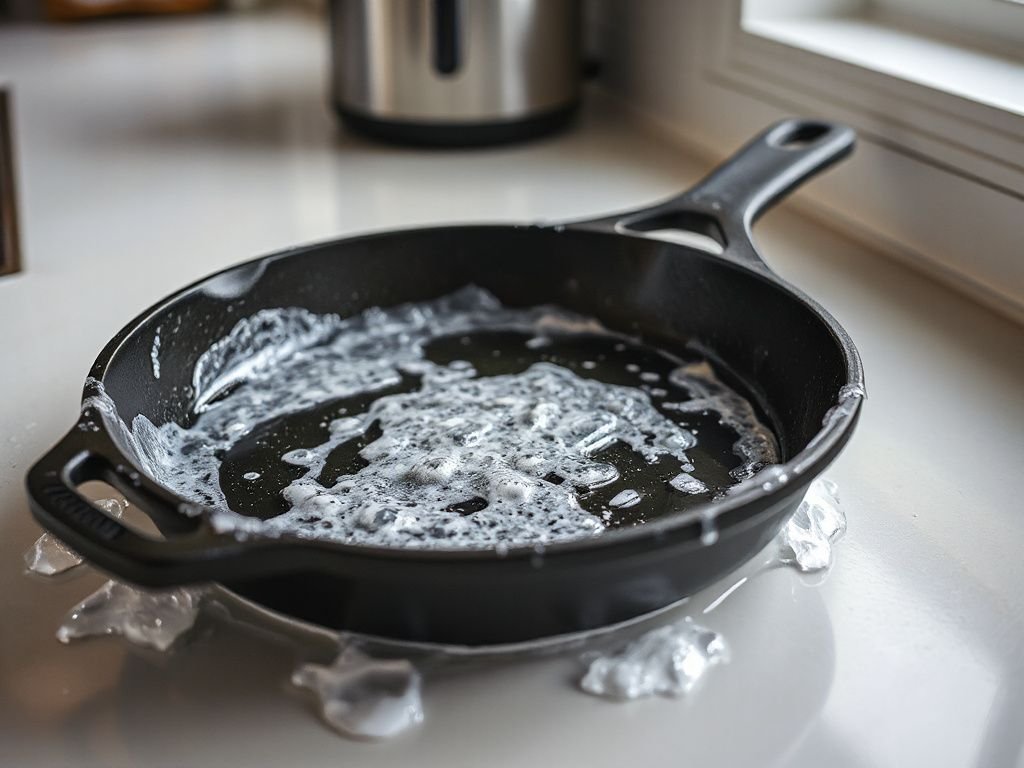
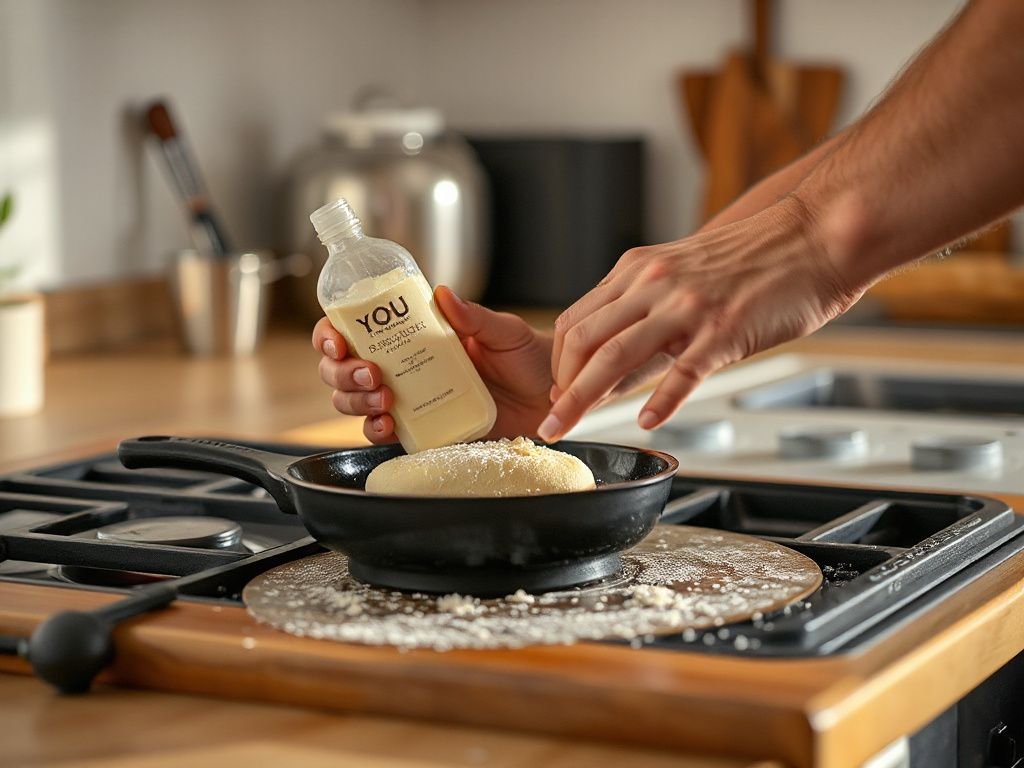
Step 3: Apply a Small Amount of Soap
Put a few drops of mild dish liquid—Dawn is a popular choice—directly onto the cooking surface or onto a sponge. You do not need a palmful. A dime-sized amount is more than enough.
Step 4: Scrub Gently with a Soft Sponge or Chainmail Scrubber
If the pan has a good seasoning layer, a regular cellulose sponge or a gentle scrub pad works fine. For stuck-on bits, a chainmail scrubber made of stainless steel rings is safe for seasoning because the rounded rings ride over the polymer layer without gouging it. Avoid steel wool or heavy-duty scouring pads—those are the real seasoning killers, not soap.
This is the same principle as prepping a baking sheet for non-stick success: use the right tool for the surface, not brute force.
Step 5: Rinse Thoroughly
Rinse under warm running water until no suds remain. Leftover soap film can leave a faint taste on your next dish, though it won’t ruin seasoning.
Step 6: Dry Immediately and Completely
Never let cast iron air dry. Wipe it with a clean cloth, then place it on a burner set to medium-low for two to three minutes until every last droplet evaporates. Moisture left in the pores is what causes rust, not the soap.
Step 7: Apply a Micro-Thin Layer of Oil
While the pan is still warm, rub a few drops of neutral oil—canola, grapeseed, or even flaxseed oil if you’re obsessive about polymer hardness—over the entire surface, inside and out. Wipe off any excess with a paper towel. The pan should look dry, not greasy. This step rebuilds any micro-wear from cleaning and seals the surface against moisture.
Soap on Different Types of Cast Iron and Similar Cookware
Not all cast iron is the same, and the soap question has different answers depending on what you’re holding.
Bare Cast Iron
This is the standard Lodge skillet. Soap is safe on a well-seasoned example, but you must dry and oil after every wash. If your seasoning is thin or patchy, use soap less often until you build up more layers.
Enameled Cast Iron
Brands like Le Creuset and Lodge enameled Dutch ovens have a glass-like enamel coating that is completely non-porous. Soap is not only safe—it’s recommended. You can soak enameled cast iron in soapy water overnight without any risk. One caveat: the rim of many enameled pots is bare iron where the lid sits, so dry that edge carefully to prevent rust. That bare rim is the number one spot people forget.
Brand New Unseasoned Cast Iron
If you’ve just bought a raw, unseasoned skillet, soap will not hurt it because there’s no seasoning to damage. However, you should wash it with soap once to remove factory residue, then immediately season it. Leaving bare iron wet for long will cause flash rust, so dry it fast and get oil on it within minutes.
Carbon Steel Comparison
Carbon steel pans develop a similar polymerized oil seasoning, just on a smoother surface. Soap is equally safe on carbon steel with the same drying and oiling routine. If you can use soap on carbon steel without ruining it, the myth about cast iron crumbles even faster.
Self-contained statement: A properly seasoned cast iron pan has a polymer layer that is chemically different from raw oil, which is why pH-neutral dish soap cannot strip it.
Preventive Care After Soap: Drying, Oiling, and Storage
The cleaning step is only half the battle. What you do immediately after determines whether rust shows up tomorrow or never.
The Stovetop Drying Method
Place the washed pan on a burner at medium-low for two to three minutes. You’ll see tiny wisps of steam as the last moisture evaporates. If you see smoke, the pan is too hot and you’re burning off oil—turn it down.
Oil Choice and Application
Any high-smoke-point neutral oil works. I use grapeseed oil because it’s thin and spreads evenly. Flaxseed oil creates a harder polymer but can flake if applied too thick, so use it sparingly. Rub on a few drops with a paper towel, then wipe off until the surface looks nearly dry. That micro-layer bonds to the existing seasoning at the next cooking session.
Storage That Prevents Rust
Never stack cast iron pans with moisture trapped between them. Place a paper towel or a dry cloth inside each pan before nesting. Store in a dry cabinet, not under the sink. Humidity is cast iron’s real enemy, not dish soap.
Frequently Asked Questions
Can you use soap on cast iron every day without damaging it?
Yes. If your seasoning is in good shape and you always dry and re-oil after washing, daily soap use is completely safe. A skillet washed with a detergent like Dawn every evening will hold its non-stick performance indefinitely, because the polymerized layer is a hardened solid bonded to the iron rather than a film of oil resting on top of it. The key is using a small amount and avoiding harsh scrubbers.
Will using soap ruin the seasoning on my cast iron pan?
No, not if the seasoning is fully polymerized. Modern dish soaps have a neutral pH and cannot dissolve cured oil polymer. If you notice flaking after using soap, the seasoning was already failing due to overheating, acidic foods, or abrasive cleaning—not the detergent itself.
Why do some people say you should never use soap on cast iron?
That advice dates back to when soap contained lye, which does strip seasoning. The rule got passed down unchanged for generations even as soap formulas changed. Today, the warning is based on outdated chemistry, not current reality.
What kind of soap should I use on cast iron?
Any mild, pH-neutral liquid dish soap works—Dawn, Palmolive, or store brands are all fine. Avoid harsh degreasers, dish soap with added bleach, and anything labeled ‘lye soap’ or ‘heavy-duty’. Dr. Bronner’s castile soap is also safe because it’s oil-based and mild, though it doesn’t cut grease as effectively as Dawn.
What should I do if my cast iron has rust spots after washing with soap?
Rust means moisture sat on the iron, not that soap caused it. Scrub the rust off with a chainmail scrubber or a paste of coarse salt and oil, then dry the pan thoroughly and reseason. Going forward, always dry on the stovetop and apply a thin oil layer after every wash.
Dean Whitaker is a Cookware and Bakeware Specialist who has restored over a hundred vintage cast iron skillets. He believes in blaming the pan before the recipe, but only after checking the seasoning.