Yes, brownies freeze very well. But warm brownies, loose wrapping or a rushed thaw will leave you with a gummy top, dry edges and a faint taste of whatever else shares the freezer. Here’s the method that works. Cool the slab fully, then cut it into squares. Flash-freeze those squares on a lined tray. Then wrap and pack them airtight, so single servings come out without thawing the whole batch.
Freezing is a decision made at the portioning stage, not an afterthought once the pan is half eaten. Fudgy, dense brownies handle the freezer better than cakey ones. Their moisture is bound up in fat and chocolate, so the real risks are surface moisture and air rather than the crumb. Thawing inside the wrapper matters as much as wrapping well. That’s where condensation either ruins the top crust or spares it.
Key Takeaways
- Cool completely, cut, then flash-freeze squares on a lined tray before wrapping, so each piece stays separate and portable.
- Airtight, layered wrapping is what prevents freezer burn and stops brownies picking up odors from other foods.
- Thaw in the wrapper so condensation collects on the wrap, not on the brownie’s top crust.
- Freezing preserves quality, not forever: label with the date and eat them while the texture is still good.
Can You Freeze Brownies and Still Get a Good Texture?
Brownies can be frozen and come out close to fresh. That holds provided they’re cooled first and protected from air and moisture. Their high proportion of fat and chocolate makes them one of the more forgiving baked goods to freeze. That’s why a batch baked ahead for a gathering is a standard use of the freezer.
What goes wrong is rarely the brownie itself. Trapped steam, a loose wrap and a hurried thaw cause nearly every complaint about frozen brownies.
Why Fudgy Brownies Freeze Better Than Cakey Ones
Fudgy brownies freeze better than cakey ones. Their moisture is held in melted chocolate and butter rather than in an airy, flour-based crumb. A dense crumb has fewer air pockets for ice crystals to form in. Fewer places remain for moisture to escape during storage.
Cakey brownies behave more like a sponge cake. Yes, they can still be frozen. But they dry out faster and need tighter wrapping and a shorter stay in the freezer. On storage in general, the same brownies also firm up or dry out at room temperature or in the fridge. So the freezer is the better choice for anything that won’t be eaten soon.
Does Freezing Change the Flavor?
Freezing changes flavor only when air or neighboring foods reach the brownies. Chocolate and butter absorb odors readily. So an unwrapped square next to a tub of something savory will taste like it. Good wrapping solves this. It’s the same principle that applies when freezing cookies, blondies and cake.
Step-by-Step: How to Freeze Brownies
The best sequence for freezing brownies is cool, cut, flash-freeze, wrap, pack and label. Skip any one of those steps and it shows up later as sogginess, sticking or freezer burn. Each step does a specific job.
Step 1: Cool the Brownies Completely
Brownies must be completely cooled before wrapping. Warm brownies release steam, and steam trapped under a wrap turns into condensation on the surface. That moisture freezes onto the crust, then melts into a gummy, soggy layer on thawing.
Leave the slab in the baking pan on a rack until the pan itself feels neutral to the touch, not just the top of the brownies. The center holds heat longest. So a top that feels cool can still be hiding a warm middle.
Step 2: Decide Whether to Freeze the Slab or the Squares
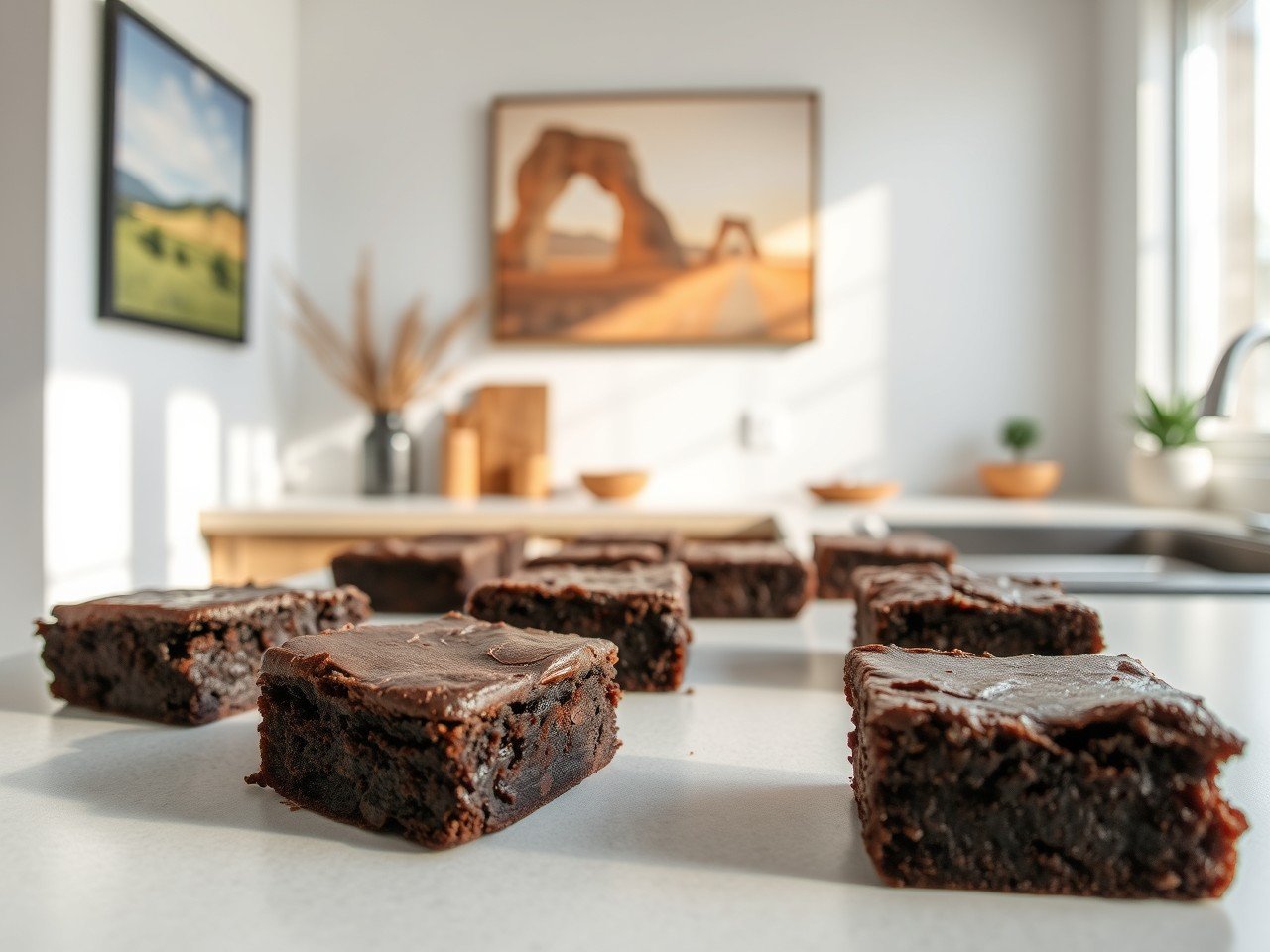
Cutting brownies into squares before freezing is the better choice for most households, since single servings can come out without thawing everything. A whole slab only makes sense when the whole batch gets served at once, as at a party.
Squares also freeze and thaw faster than a slab. A slab takes longer to come back to temperature, and its outer edges can turn dry while the middle is still cold.
- Freeze the slab when the entire pan will be served together, or when the brownies carry a topping that needs a flat, unbroken surface.
- Freeze squares when portions will be eaten one or two at a time, such as lunchboxes or a late-night treat.
Step 3: Cut Cleanly
Clean cuts matter because ragged edges expose more crumb to air. Exposed crumb is where freezer burn starts. Chilling the cooled slab briefly in the fridge firms it up, and a long, thin knife wiped clean between cuts gives sharp edges. Lifting the slab out of the pan by a parchment paper sling makes cutting easier. It keeps the pan free for the next bake.
Step 4: Flash-Freeze on a Lined Tray
Flash-freezing means freezing the cut squares unwrapped and spaced apart on a parchment-lined tray until they’re firm. That keeps them from sticking once packed. It’s the single step that lets you take out one brownie at a time.
The tray must fit the freezer with the door closed, so check the clearance first. A rimmed baking sheet that looks fine on the counter can hit the shelf above or the door seal in a crowded freezer. And a tray that tilts will leave squares sliding into each other.
Step 5: Wrap Each Square Airtight
Airtight, multi-layer wrapping is what prevents freezer burn. That’s because freezer burn is moisture leaving the surface of the food and settling as frost wherever air touches it. Plastic wrap (cling film) pressed directly against every face of the brownie removes the air gap.
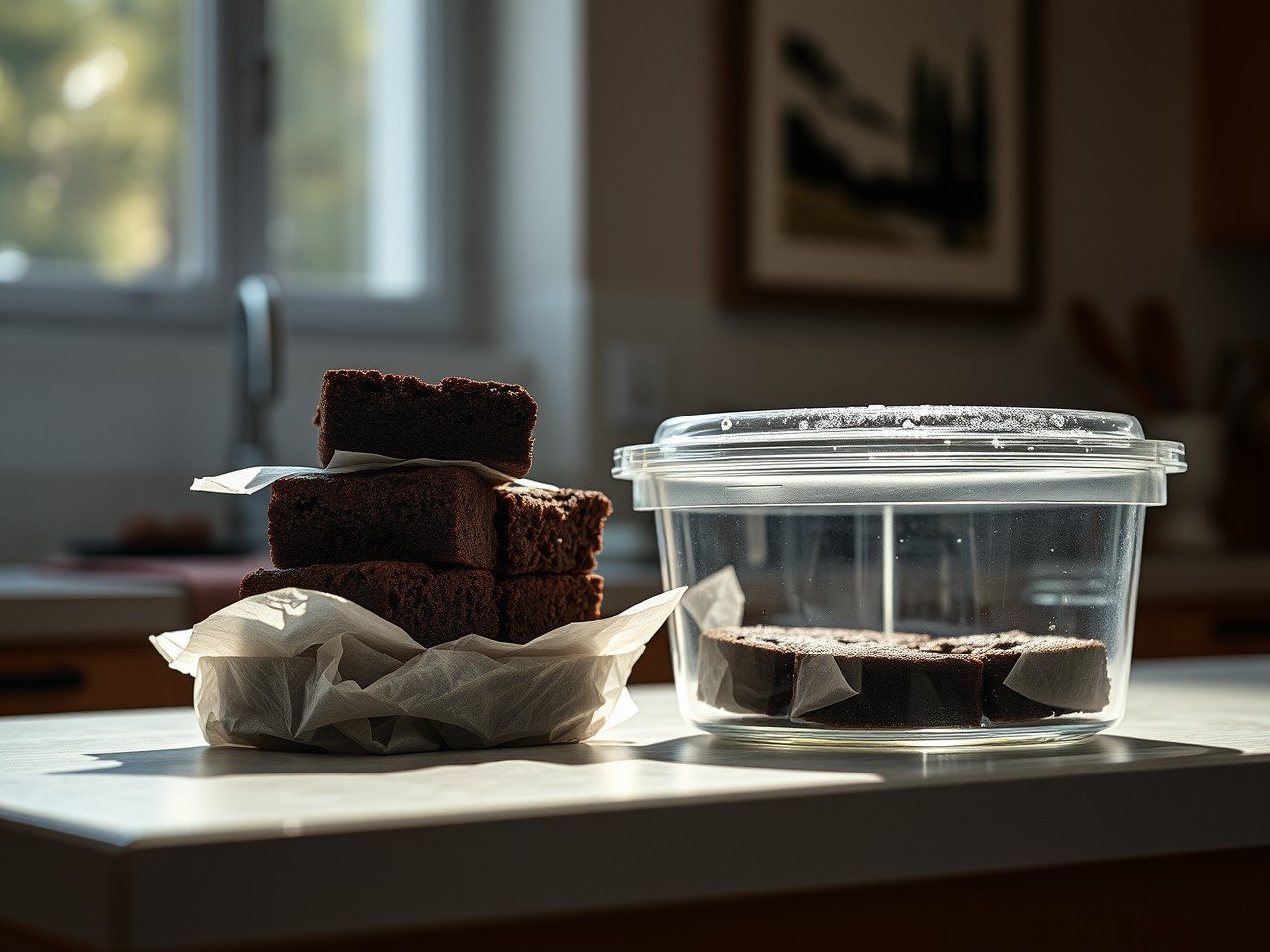
A second layer of aluminum foil over the plastic adds a barrier against odors. It also guards against the drying effect of cold, circulating freezer air. Parchment paper between squares is a gentler option. Use it when brownies are stacked inside a container rather than wrapped individually.
Step 6: Pack Into a Bag or Container
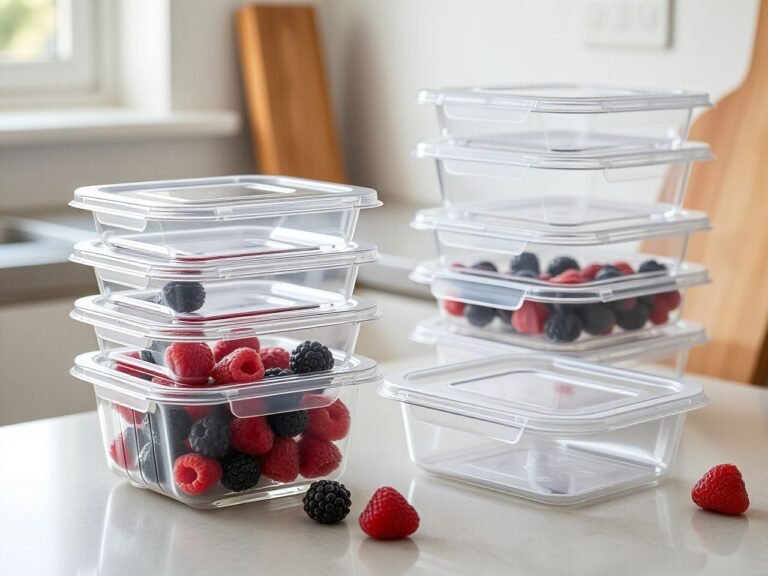
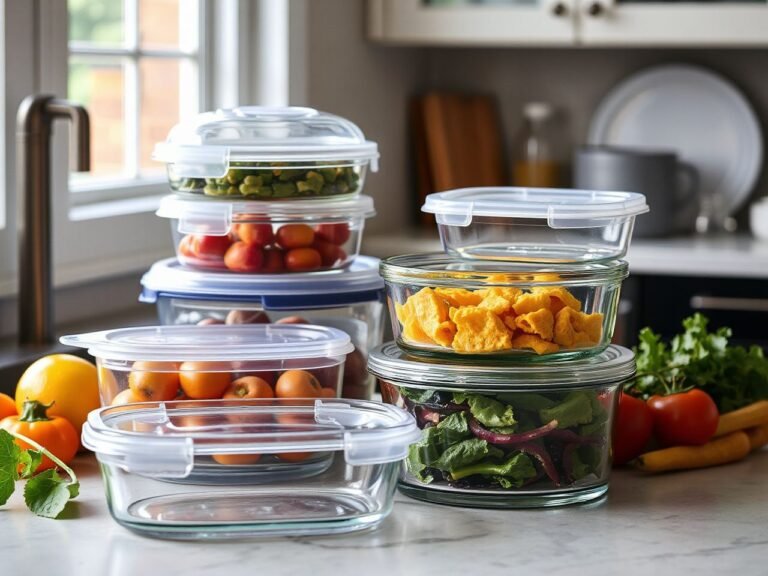
A freezer-safe zip-top bag or an airtight freezer container is the outer shell that keeps wrapped brownies protected and organized. In a bag, press out as much air as possible before sealing, because trapped air is where frost forms.
Containers guard against crushing, which matters because soft, fudgy brownies squash easily under heavier items. Bags can be laid flat to freeze. Then they’re stood on their edge like files, which saves shelf space.
Step 7: Label and Date
Labeling with the freeze date matters, because frozen brownies decline in quality gradually rather than failing on a particular day. A strip of masking tape and a marker on the bag tells you what’s inside and which package to use first. Without it, mystery foil bundles tend to sit at the back until they’re past their best.
Stack Height and Freezer Space: Planning the Pack
Stack height decides how easily you can get brownies out without disturbing everything around them. A tall, uneven pile of wrapped squares topples when the door opens. A flat, single-layer pack slides in beside other items.
Keep Packs Flat and Shallow
Flat packs are the better choice for brownies, since they freeze evenly, stack stably and don’t crush the squares at the bottom. Soft, fudgy brownies have little structural strength. So a tall column of squares presses the lowest layer into a dense, flattened shape.
A practical approach is to limit each container to a shallow stack, with parchment paper between layers. Rigid containers can then stack on top of each other, with the weight carried by the container walls, not by the brownies.
Mind the Door Clearance
Freezer door shelves are shallow and typically meant for small, light items. A tall container there can block the door from closing or press on the seal. A door that doesn’t close fully lets warm air in, which causes partial thawing and refreezing. That cycle encourages ice crystals and freezer burn.
Keep brownie packs on a main shelf where the temperature is steadier, rather than in the door where it swings every time the freezer opens. The same logic applies to other leftovers, and the principles are the same for a batch of chicken salad or a container of potato soup. Flat, labeled and well-sealed packs are far easier to manage than loose ones.
Group Like With Like
Keep desserts together on one shelf or in one bin. That keeps strong flavors away from brownies. A single labeled bin for baked goods makes it easy to see what’s on hand. It also keeps cookie dough, blondies and brownies away from savory items.
Freezing Brownies With Frosting, Ganache or a Cream Cheese Layer
Toppings change how brownies should be frozen. Plain and ganache-topped brownies freeze well, while delicate frostings and cream cheese layers need extra care. They’re often best frozen unfrosted. The topping is usually the weak point, not the brownie underneath.
Ganache and Glazes
Ganache freezes well because it’s made of chocolate and cream, so it behaves much like the brownie beneath it. Let it set fully first. Then flash-freeze the squares unwrapped so the surface hardens before any wrap touches it. A soft ganache that is wrapped too early will stick to the plastic and pull away from the brownie.
Buttercream and Other Delicate Frostings
Delicate frostings are often best added after thawing, since they can sweat, weep or crack as they freeze and thaw. If the frosting’s already on, flash-freeze the squares until the topping is rock hard. Then wrap gently so nothing presses into the surface. Freezing the brownies plain and frosting them just before serving gives the cleanest result.
Cream Cheese Layers and Swirls
Cream cheese layers and swirls need extra care, because their texture can turn grainy or watery after freezing and thawing. They’re also more sensitive to temperature changes. So thaw them in the refrigerator, still wrapped, rather than at room temperature. Treat these as the least reliable brownies to freeze and expect a slight change in texture.
Nuts, Caramel and Mix-Ins
Brownies with nuts, chocolate chunks or caramel can be frozen the same way as plain ones. Nuts stay firm in a good wrap. But caramel can turn very hard when cold and may soften unevenly on thawing. Wrapping tightly and thawing in the wrapper helps these mix-ins keep their shape.
Baked Brownies or Raw Batter: Which Should You Freeze?
Freezing baked brownies is the simpler, more predictable route. Unbaked brownie batter can also be frozen, but it takes more planning and a full bake afterward. The right choice depends on whether you want a ready-to-eat treat or the smell and texture of a fresh bake.
Baked Brownies
Baked brownies are ready as soon as they thaw. No oven time is needed, which makes them the better option for lunchboxes and quick desserts. Their flavor and texture are set by baking, so the freezer’s job is only to hold them in place.
Unbaked Brownie Batter
You can freeze unbaked brownie batter in a lined pan or in portions. Thaw it, then bake it later for a fresh-baked finish. The catch is time. Thawing and baking both take planning, and baking times may shift for a batter that starts cold. Batter that contains raw eggs shouldn’t be eaten raw. The U.S. Food and Drug Administration advises against eating raw batter and dough for that reason, so bake it fully before serving.
How Long Do Frozen Brownies Last?
Frozen brownies stay good for as long as their quality holds, which is a matter of texture and flavor rather than a hard expiry date. Freezing preserves quality rather than making brownies last forever, so they gradually dry out, lose chocolate aroma or pick up freezer taste.
Food-safety guidance from the U.S. Department of Agriculture separates safety from quality in frozen food. Food held continuously frozen is treated as safe, but its eating quality declines with time. The exact point at which brownies stop tasting their best isn’t fixed. So the date on the label is a guide to which package to open first.
- Use older packs first, and keep newer ones behind them.
- Check for frost or dry patches before thawing. Heavy frost on the wrap or a pale, dry surface signals that air got in.
- Smell before serving. Any sour or stale odor means the brownies should be discarded.
How to Thaw and Reheat Frozen Brownies
The best way to thaw frozen brownies is in their wrapping, at room temperature or in the fridge. That way condensation forms on the wrap rather than on the brownie surface. Unwrapping first lets moisture settle straight onto the crust, which turns it tacky.
Thawing on the Counter
Counter thawing is the fastest hands-off method for single squares. It’s a good choice when you plan ahead a little. Leave the wrapped brownie out until it feels soft all the way through, then unwrap it. Wipe off any moisture that gathered on the outside of the wrap, which keeps that water away from the brownie.
Thawing in the Refrigerator
Refrigerator thawing is slower and gentler. It suits brownies with cream cheese, dairy-based frostings or ganache, which prefer a cooler, steadier temperature. Keep them wrapped for the entire thaw. Fridge shelf space and door clearance matter here too. So lay the wrapped squares flat on a shelf rather than wedging them upright where they can be bumped.
Using the Microwave
A microwave can bring a frozen brownie to eating temperature quickly, but it has to be used in short bursts. Brownies heat unevenly. The edges can turn tough or hot while the middle is still cold. Unwrap the brownie, place it on a plate, and heat in brief intervals, checking between each one.
Eating Them Straight From the Freezer
You can eat brownies straight from the freezer. Many people like a dense, chewy, cold square, particularly one with a fudgy texture. Cakey brownies and anything with a frosting layer are usually better thawed first, because the cold firms them up too much.
Reheating for a Fresh-Baked Feel
A short stint in a warm oven brings back a fresh-baked feel, and it works the same way as reheating other baked desserts. Warm the thawed brownie just until soft. Aim to gently warm it rather than bake it again. Serving it slightly warm with a scoop of ice cream is a simple way to make a thawed brownie taste freshly made.
Why Did My Frozen Brownies Turn Out Dry or Soggy?
Frozen brownies turn out dry when air reaches them in storage. They turn out soggy when moisture forms on them during wrapping or thawing. Both problems are preventable, and figuring out which one happened points straight to the fix.
Dry Brownies
- Cause: a loose wrap, a leaky bag or a long stay in the freezer let moisture escape from the surface.
- Fix: press plastic wrap directly against the brownie, add a foil layer, and squeeze the air out of the bag before sealing.
- Rescue: warm the thawed brownie gently and serve with something moist, such as a spoonful of cream or a scoop of ice cream.
Soggy or Gummy Brownies
- Cause: brownies were wrapped while warm, or they were unwrapped before thawing, letting condensation soak into the crust.
- Fix: cool fully before wrapping, and thaw in the wrapper.
- Rescue: a short, gentle warm-up in the oven can dry the surface slightly.
Brownies That Stick Together
Brownies stick together when they go into a bag or container without a flash-freeze first, or without parchment paper between them. A flash-freeze on a lined tray hardens each square separately. That’s why they pour out of the bag one at a time.
Brownies That Taste Like the Freezer
An off flavor means the brownies absorbed odors from other foods, which happens when the wrap is thin or the container isn’t airtight. Layered wrapping and a sealed outer container prevent it. Keeping desserts away from strongly flavored foods helps further.
A Quick Checklist Before You Freeze
- Confirm the brownies are cool all the way through.
- Decide on slab or squares, and cut cleanly with a clean knife.
- Check that the tray fits the freezer before loading it.
- Flash-freeze the squares unwrapped on parchment paper until firm.
- Wrap each square in plastic wrap, then foil.
- Pack into a freezer-safe bag or airtight container, pressing out air.
- Label with the date and keep packs flat on a main shelf.
- Thaw in the wrapper before unwrapping and serving.
Cast-iron pans and other baking tools may also need cleaning after a big baking day, and a guide on using soap on cast iron covers the common mistakes there.
The Bottom Line
Brownies are among the easier baked goods to keep in the freezer, as long as they go in cool, cut, separated and sealed against air. Portioning first does most of the work. So does thawing in the wrapper, and keeping packs flat and labeled, since all of it protects the crust and crumb. Plan around the topping, though. Plain and ganache-covered squares hold up far better than anything with a delicate frosting or cream cheese layer.