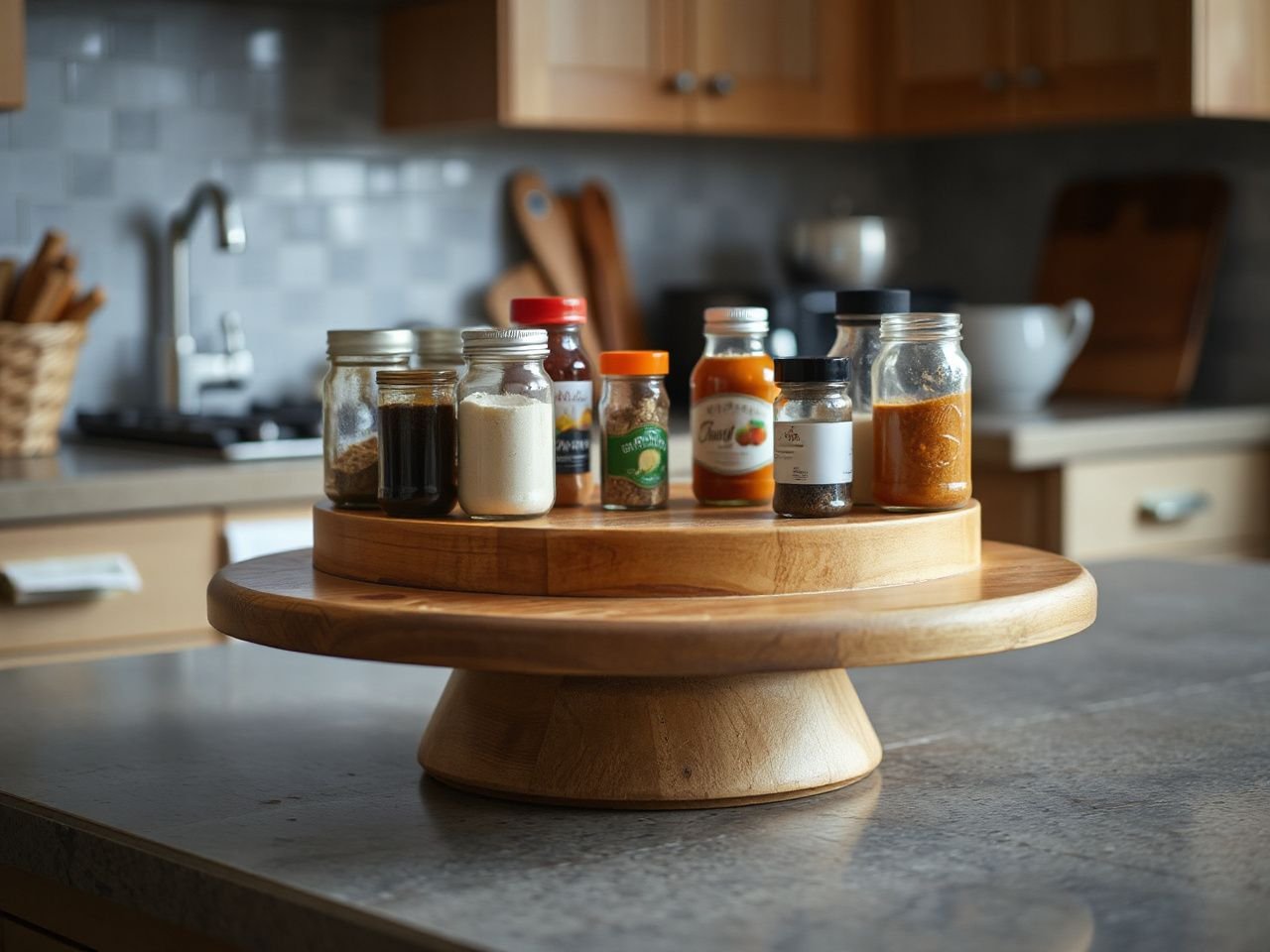
A Lazy Susan that fits the shelf can still be the wrong choice. Usable rotation matters more than nominal fit: a turntable may sit on a cabinet shelf yet remain impractical if its rim, contents, or surrounding clearance blocks full access. This lazy susan buying guide treats the bearing, surface grip, load distribution, and cleaning access as one connected system, because smooth movement depends on more than the platform itself.
Key Takeaways
- Measure usable clearance around the shelf, door, hinges, and neighboring items before choosing a shape.
- A level, strong shelf and even loading matter as much as the rotating base.
- Raised rims and non-slip surfaces contain ordinary pantry containers but cannot correct overloading or poor balance.
- Keep crumbs, spills, and sticky residue away from the rotating mechanism, and check the seal before storing a container on its side.
Lazy Susan Buying Guide: Start With Usable Rotation
The first decision is not plastic, wood, glass, or metal. It is whether the turntable can rotate through its useful working area without catching on the cabinet wall, door, hinge, shelf edge, or nearby container.
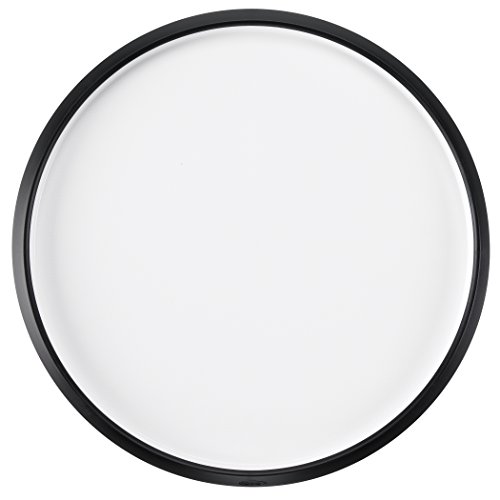
A lazy susan is a rotating circular tray or slab, commonly made from plastic, wood, or glass. The tray turns around a central rotating mechanism, allowing items at the back of a shelf to move toward the front. That basic idea works only if the surrounding space permits a complete, useful turn.
A cabinet shelf needs clear surrounding space for a Lazy Susan to rotate freely. A tray that stops after a small movement may technically spin, but it will not solve the access problem that led you to consider one.
Step 1: Map the actual shelf space
Open the cabinet fully and look at the shelf as a moving zone rather than an empty rectangle. Account for the back wall, side walls, door frame, hinges, shelf supports, and anything that remains in the cabinet beside the turntable.
- Check the shelf surface from front to back and side to side.
- Look above the shelf for low-hanging cabinet parts or another shelf.
- Notice whether the door swings through the space needed by the tray.
- Leave room for your hand to reach the edge and start the rotation.
- Check the tray’s raised rim, since the outer rim may need more room than the platform beneath it.
Measure the usable area, not the cabinet’s advertised interior size. A corner cabinet may have plenty of total volume while offering a narrow opening, awkward angles, or a hinge that interrupts the tray’s path.
Step 2: Match the shape to the cabinet
A round Lazy Susan suits an open shelf with reasonably even clearance around its edge. A divided or compartmented model can help separate pantry containers, while a flat surface gives more freedom for irregular items but provides less containment.
Three useful categories are easy to distinguish: a model with a tall lip, a model with compartments, and a model with a flat surface. The choice should follow the contents and the cabinet opening rather than a decorative preference.
- Tall-lip trays: A raised rim helps keep smaller containers from sliding outward during rotation.
- Compartmented trays: Divisions can separate food storage containers or pantry zones, but they also restrict the size and placement of items.
- Flat trays: A flat surface accommodates varied shapes, although containers need more careful placement to remain stable.
A deep shelf can work if the tray remains reachable and has room to turn. If the front opening is narrow, the back portion of the tray may rotate into a position that your hand cannot use comfortably, even though the tray itself moves.
Step 3: Check the shelf before loading it
The shelf must be level and strong enough for the combined weight of the rotating tray and its contents. A surface that slopes, flexes, or bows can make a turntable wobble or cause containers to drift toward the rim.
Remove loose shelf liner before checking the surface. A liner can protect the shelf and add grip, but folds, curled edges, or trapped crumbs can create an uneven base.
A level shelf supports steadier rotation because the turntable starts from an even surface. Place the empty turntable on the shelf and rotate it by hand through the available space before adding pantry containers.
How the Rotating Mechanism Affects Movement
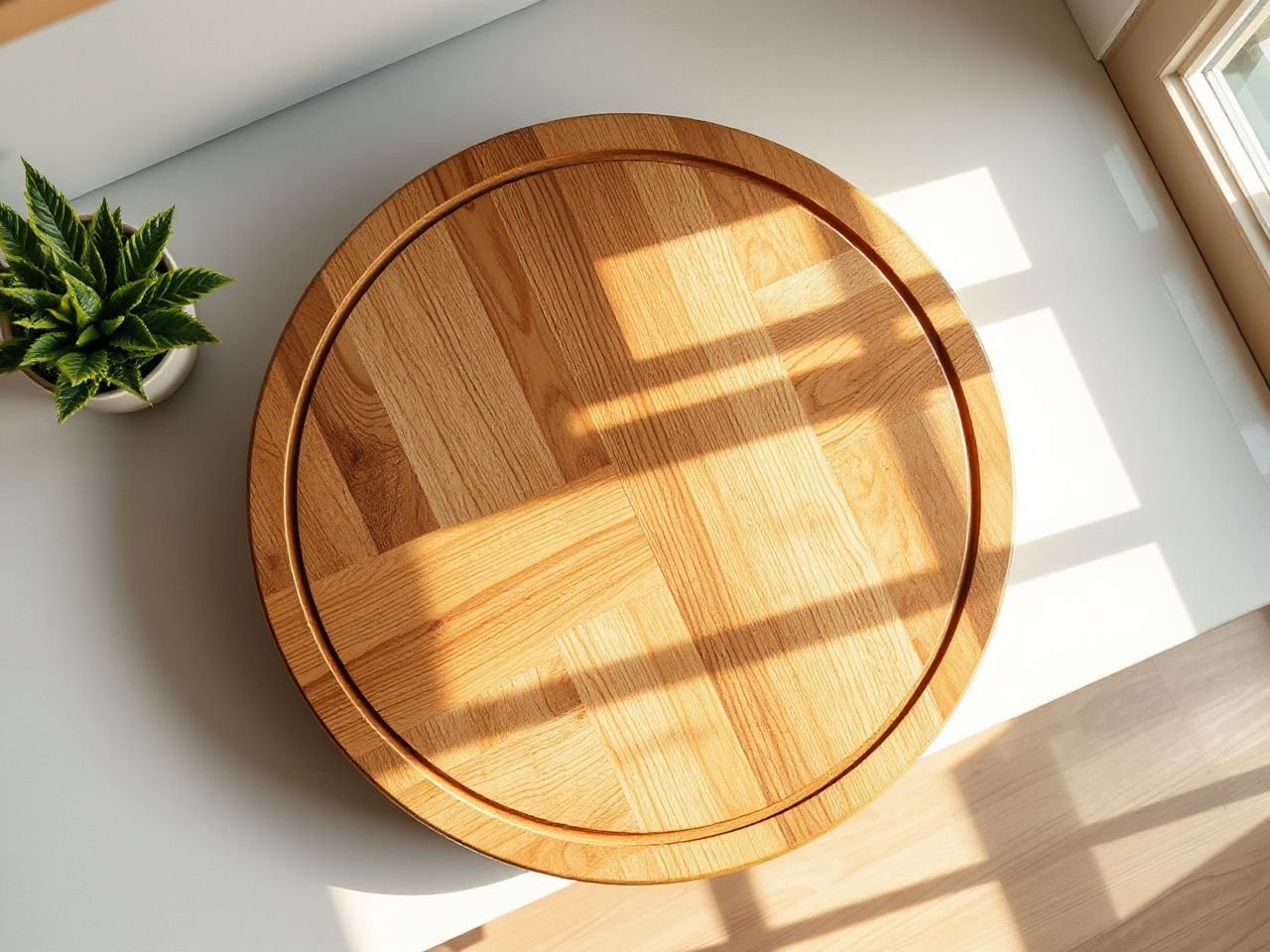
The platform turns around a rotating base or bearing assembly. Some designs use a ball-bearing mechanism, while simpler rotating bases rely on a less complex contact arrangement. The visible tray is only one part of the movement system.
A ball-bearing turntable can provide a distinct rolling action, while a simpler rotating base may depend more heavily on a clean, even contact surface. Neither design can compensate for a shelf that is uneven, an overloaded tray, or a container that presses against the cabinet wall.
A turntable bearing cannot correct uneven loading or an obstructed rotation path. That is why the mechanism should be assessed alongside the shelf, tray surface, rim, and intended contents.
Ball-bearing turntable versus simpler rotating base
The practical difference is how the rotating parts support movement. A ball-bearing mechanism contains small rolling elements between moving surfaces; a simpler base has fewer moving interfaces and may use direct contact between parts.
For pantry use, listen and feel rather than trusting the label alone. The empty tray should move without a pronounced catch, grinding sensation, or sudden change in resistance. A small amount of resistance can be normal, but a repeated stop at one point suggests contact, debris, or an alignment problem that needs attention.
- Rotate the empty tray slowly and notice whether the movement remains consistent.
- Look underneath for crumbs, dried spills, or sticky residue.
- Check whether the tray sits flat instead of rocking from one side to another.
- Load a few stable items and repeat the movement before filling the tray.
Why a Lazy Susan wobbles or sticks
Wobbling usually begins with the base, the shelf, or the load. A tilted shelf changes how the tray rests; unevenly placed containers shift the center of the load; a liner edge can lift one section; and debris can interrupt the moving parts.
Sticking has a similar range of causes. A raised rim may touch a wall or hinge, a tall container may press against the shelf above, or a spill may create tacky resistance around the mechanism.
Crumbs and sticky residue can cause a pantry turntable to bind and move unevenly. Cleaning the mechanism and clearing the rotation path should come before replacing the tray.
How to load the tray without creating instability
Put heavier pantry containers near the center and keep the load balanced around the tray. Place lighter items toward the outer area only if they remain stable and do not extend beyond the rim or interfere with the cabinet.
Top-heavy containers deserve extra care. A tall jar, a partly filled bottle, or a container with a narrow base can tip as the tray starts or stops, especially if the item is placed near the outside edge.
- Keep tall items where the shelf above gives them enough room.
- Do not stack unstable containers simply to use unused vertical space.
- Keep breakable containers away from the outer edge when possible.
- Do not treat the raised rim as permission to overload the tray.
- Turn the tray slowly after loading and watch for leaning, sliding, or contact.

Containing Pantry Containers and Checking Leaks
A non-slip mat, shelf liner, or textured tray surface can reduce sliding during rotation. A raised rim can also keep small containers from moving straight off the edge. These features help with ordinary movement, but they do not make an unstable arrangement safe.
A raised rim cannot prevent a top-heavy container from tipping. The rim is a boundary, not a replacement for balanced loading, a level shelf, or a properly closed lid.
Use surface grip with sensible placement
Cut or position a non-slip mat so it lies flat without buckling. A loose corner can catch on the rotating base or make the tray rock. Shelf liner under the turntable should also remain smooth and should not extend into the moving mechanism.
Grip is most useful for reducing small shifts as the tray turns. It cannot stop a leaking container, a badly seated lid, or a tall item that leans into the cabinet above.
Check the seal before side storage
A pantry container should not be stored on its side merely because the tray has room for it. First inspect the lid, gasket if present, locking tabs, and the rim of the container for food residue or damage.
Close the container according to the maker’s instructions, then handle it gently and look for signs of seepage around the lid. A container that leaks when tilted should remain upright, regardless of the turntable’s rim or grip.
A lid must form a complete, clean seal before a container can be trusted on its side overnight. This matters especially for liquids, sauces, oily foods, and anything that could spread into the rotating mechanism.
Keep leaking containers away from the bearing assembly. A spill can make surfaces sticky, attract crumbs, and create uneven movement. For broader food-storage questions, the U.S. Food and Drug Administration provides general consumer food-safety information, while container-specific sealing instructions belong to the container manufacturer.
Choose zones by access, not by label alone
Use a Lazy Susan for groups that benefit from turning into view: pantry containers, jars, packets, or frequently used ingredients that would otherwise disappear behind one another. A tray can support pantry zoning, but the zone should still match the tray’s shape and rim.
Keep breakable or tall containers in a position where your hand can lift them without brushing against other items. A turntable that brings an item forward is less useful if the item cannot be removed without disturbing the rest of the load.
For appliances and cookware, separate storage decisions may help more than adding another turntable. If a shelf needs airflow or a stable base for an appliance, a guide to choosing kitchen cooling racks addresses a different storage problem and should not be treated as a substitute for pantry organization.
Cleaning, Maintenance, and Replacement Parts
Cleaning access should be part of the selection process. A turntable with narrow gaps, enclosed moving parts, or a surface that is difficult to wipe may become harder to maintain after a spill.
A clean rotating mechanism is easier to inspect and less likely to bind from dried residue. Remove the tray from the cabinet when the design allows it, then clear crumbs and wipe spills from the tray, underside, shelf, and accessible moving areas.
A simple cleaning routine
- Remove every container and inspect each lid for residue or seepage.
- Lift out the non-slip mat or shelf liner if the design permits.
- Brush away dry crumbs before adding moisture.
- Wipe the tray and accessible base with a suitable damp cloth.
- Dry all cleaned surfaces before returning the tray to the shelf.
- Rotate the empty tray by hand and check for catching before reloading it.
Follow the care instructions supplied with the turntable, especially if the tray is made from wood or has a mechanism that should not be soaked. Do not force a stiff rotation, and do not pour cleaner directly into the bearing area unless the manufacturer says that method is suitable.
What may need replacement
Ongoing costs depend on the design and the part that wears or becomes damaged. A removable non-slip mat, shelf liner, or tray may be replaceable, while a sealed rotating base may require replacement of the whole unit if its movement becomes unreliable.
The manufacturer does not always list individual replacement parts or a capacity. Check the care sheet, packaging, or product label before assuming that a bearing, mat, rim, or tray can be purchased separately.
The U.S. Consumer Product Safety Commission publishes consumer product safety information and recall notices; checking that public information is sensible when a household storage item has a defect or creates a falling hazard. Avoid modifying the rotating base with improvised hardware, since an alteration can change how the tray sits and turns.
When a Lazy Susan Is Not the Right Storage Tool
A turntable is useful when rotation improves access without making the contents unstable. Shelf risers are often more suitable when items need to remain still but require different vertical levels. Pull-out cabinet shelves can be more practical when the entire shelf must move forward instead of rotating in a confined corner.
Shelf risers and pull-out shelves solve different access problems from a Lazy Susan. A riser organizes height, a pull-out shelf brings a broad surface forward, and a turntable changes which part of a circular surface faces the opening.
Use a turntable for circular access
Choose rotation when the cabinet has enough clearance around the tray and the contents are stable under movement. This is especially useful for grouped pantry containers that are difficult to reach at the back of a deep shelf.
Use a shelf riser for fixed layers
A shelf riser can separate short and tall containers without requiring the contents to move. That arrangement can be calmer for glass jars, tall bottles, or containers that should remain upright.
Use a pull-out shelf for deep cabinet access
A pull-out cabinet shelf may make more sense when side clearance is limited or when the cabinet opening blocks a circular turn. It also keeps the load facing forward rather than shifting around a central rotating point.
Corner cabinet decisions
Corner cabinet organization requires special attention to the opening and the inaccessible rear angles. A Lazy Susan can use a corner more effectively if the tray clears the cabinet walls and the door hardware, but a fixed shelf or pull-out solution may be easier if the turntable cannot complete a useful rotation.
Do not fill a corner tray to its furthest edge until you have confirmed that the edge does not strike the door or hinge. The turning path should be checked with the tray empty and again with the tallest intended container in place.
A Practical Selection Checklist
Use this checklist before bringing a turntable into the pantry. It focuses on observable conditions rather than marketing language.
- Clearance: Can the platform and raised rim turn without touching cabinet walls, doors, hinges, shelves, or neighboring items?
- Shape: Does a round, compartmented, flat, or tall-lip design suit the contents and opening?
- Base: Is the shelf level, firm, and able to support the combined load?
- Movement: Does the empty mechanism turn without repeated catches, grinding sensations, or rocking?
- Grip: Does the tray or mat help containers stay in place without buckling or interfering with the base?
- Containment: Will the raised rim keep ordinary items on the tray without encouraging overloading?
- Cleaning: Can crumbs and spills be reached and removed from the tray and mechanism?
- Container safety: Are tall, top-heavy, breakable, or liquid-filled containers stable and properly sealed?
- Maintenance: Does the manufacturer explain care and identify any replaceable parts?
Keep the checklist beside the measuring tape, not after the purchase. A tray that fits only after the cabinet is emptied may still fail once the door, shelf liner, and intended containers are back in place.
Frequently Asked Questions
What should I look for in a lazy susan buying guide for pantry use?
Look first for usable clearance, a level and strong shelf, and a rotating mechanism that stays accessible for cleaning. Then match the tray shape to the contents: a raised rim helps contain small items, compartments separate groups, and a flat surface handles varied shapes. Check the lid seals of liquid-filled containers before deciding how they will be placed.
How do I know what size and shape will fit my cabinet?
Measure the usable shelf area and account for cabinet walls, doors, hinges, shelf supports, and nearby items. The tray must rotate through that space without catching, and the raised rim may need additional clearance. Test the empty tray in its final position before loading it, especially inside a deep or corner cabinet.
What is the difference between a ball-bearing turntable and a simpler rotating base?
A ball-bearing turntable uses rolling elements between moving surfaces, while a simpler rotating base uses a less complex contact arrangement. The practical test is consistent movement without repeated catching, grinding, or rocking. A ball-bearing design still needs a level shelf, balanced loading, and protection from crumbs, spills, and sticky residue.
Why does my Lazy Susan wobble, stick, or stop turning smoothly?
Common causes include an uneven shelf, a buckled shelf liner, an overloaded or off-center load, debris around the rotating mechanism, or contact with a wall, hinge, door, or neighboring container. Empty the tray, clean accessible moving areas, check the shelf, and test the rotation inside the cabinet before adding items again.
Can I place a leaking or partly sealed container on its side?
No. A raised rim or non-slip surface cannot compensate for a lid that does not form a complete seal. Inspect the lid, gasket if present, locking tabs, and container rim; clean the sealing surfaces and follow the maker’s closing instructions. Keep liquid-filled containers upright until they remain secure when gently tilted.
Is a Lazy Susan better than shelf risers or pull-out cabinet shelves?
None is universally better. A Lazy Susan suits a shelf where circular access improves reach, shelf risers suit fixed vertical layers, and pull-out shelves suit deep spaces where bringing the whole surface forward is easier. Compare the cabinet opening, available clearance, container stability, and cleaning access before choosing the storage method.
What ongoing costs or replacement parts should I expect?
The manufacturer may offer replacement mats, liners, trays, or rotating bases, but availability depends on the design. Do not assume that a bearing is replaceable or that a damaged rim can be repaired. Check the care instructions and product label, and replace the complete unit if the mechanism remains unstable or unsafe after cleaning and correct loading.
A good lazy susan buying guide ends with a practical test: the tray should fit the shelf, turn through its working space, hold its intended containers without shifting, and remain cleanable after a spill. If the lid on a liquid container cannot be trusted, keep that container upright and choose organization around that fact.