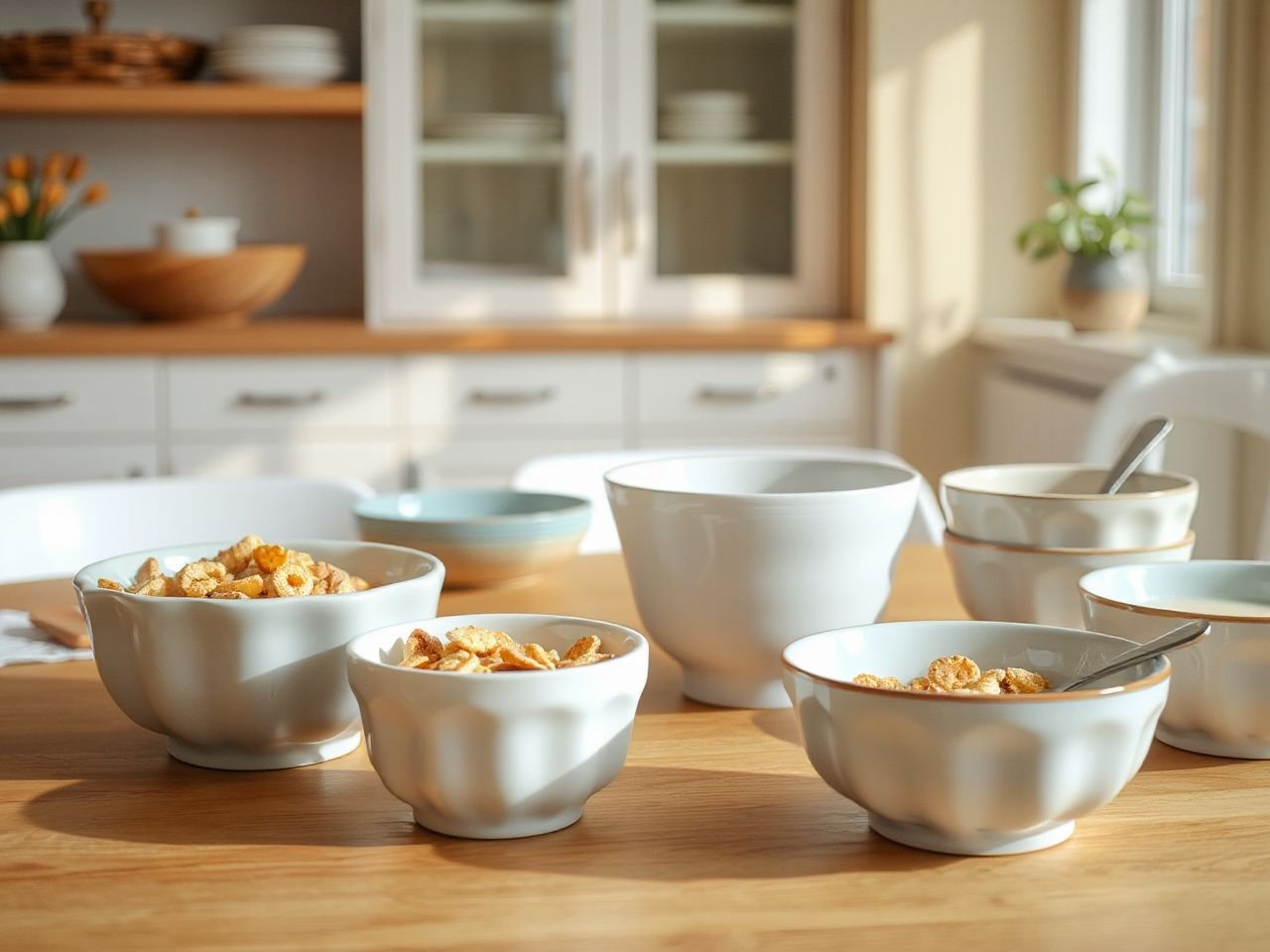
Milk sloshes over the edge, the spoon catches on a narrow rim, and a bowl that looked elegant in a photograph turns awkward in the hand. A cereal bowl has one simple job, yet poor geometry can make breakfast unnecessarily messy. This cereal bowl buying guide focuses on the details that decide whether a bowl earns daily use or sits untouched in a cabinet.
The useful distinction is between a bowl that merely holds cereal and one whose geometry manages the whole eating task: containing milk, leaving room for a spoon, resisting tipping, and remaining comfortable to lift. Material should then be judged alongside glaze, rim, foot ring, cleaning compatibility, and likely failure modes, because a visually attractive bowl can be inconvenient or costly to keep in service.
Key Takeaways
- Choose a broad interior with useful depth, a comfortable rim, and a stable foot ring rather than judging capacity alone.
- Compare stoneware, porcelain, earthenware, glass, melamine, and stainless steel by daily handling, cleaning, storage, and failure risks.
- Verify dishwasher and microwave suitability for the exact bowl, decoration, glaze, and any metallic detail before relying on those settings.
Beginner: Start With the Eating Task
Capacity is only the first filter
A capacity range of 16 to 24 oz is typical for the majority of cereal bowls. That figure helps narrow the field, but it does not describe the bowl’s usable interior. A broad, shallow form can feel crowded once cereal and milk are added, while a narrow, deep form may leave the spoon striking the sides.
Small bowls commonly fall in the 12–16 oz range, medium bowls in the 16–20 oz range, and large bowls in the 20–24 oz range. Those categories are useful starting points, not instructions to fill the bowl to its stated limit. Cereal needs room for the spoon to move, and milk needs space below the rim so carrying the bowl does not become a balancing exercise.
Bowl capacity does not determine eating comfort because interior shape and rim clearance control how cereal and milk move during use. Read the capacity beside the shape, not instead of it.
Shape and depth for cereal and milk
Look for an interior that transitions smoothly from the base toward the sides. A small flat area can help cereal settle, while gently sloped walls give a spoon a workable path. Very vertical sides can contain liquid, but they may force the hand into an awkward angle. Very shallow sides make pouring and carrying less forgiving.
For ordinary cereal, practical depth means the bowl contains milk without requiring a high fill level. The exact depth is not enough to judge from a product photograph, so inspect the side profile or hold a similar bowl in your hand. Check whether the spoon can reach the bottom without the handle rubbing the rim.
A cereal bowl with a softly rounded interior is easier to scrape clean than one with a sharp internal corner. The difference becomes more noticeable with dried cereal, milk residue, yogurt, honey, or sticky toppings. A smooth transition also supports the same bowl for porridge, fruit, or a small serving of soup without forcing it into a different breakfast-table role.
Rim design affects pouring and carrying
A narrow, sharp rim may look refined, yet it gives the fingers less room and can make a full bowl feel precarious. A gently rounded rim usually feels more forgiving against the lips and provides a clearer edge for controlled pouring. A broad rim can help with handling, but an oversized rim reduces the interior area available for food.
Run a finger around the rim and check for roughness, ridges, or abrupt changes. A rim should feel even rather than unfinished. If the bowl has a raised lip, inspect whether that feature collects residue or interrupts the spoon’s path.
A rounded, even rim gives a cereal bowl a more comfortable contact point and makes carrying milk less awkward. Appearance alone cannot reveal that quality.
Check stability before style
Place the empty bowl on a flat surface and look at the foot ring. The foot ring should sit evenly, without rocking or showing an uneven contact point. A stable base matters because a spoon applies sideways force to the bowl, especially when the cereal has softened and the spoon is scraping the bottom.
Use a simple hand check in a shop or at home: press lightly against the rim from different directions. The bowl should resist easy tipping and should not skate across the surface. A very heavy bowl may stay steady, but weight can make lifting harder for children or people with limited grip strength. A lighter bowl may be easier to handle, though an extremely light form can feel less planted.
Children’s bowls benefit from a stable base, a rim that is easy to hold, and a surface that does not punish ordinary knocks. For limited grip strength, look for a manageable weight, a rim with enough purchase for two hands, and a shape that does not require the fingers to wrap around a slick curve.

Intermediate: Compare Materials and Surface Finishes
Stoneware
Stoneware often has a substantial feel that suits people who prefer a bowl to stay planted during spoon use. Its visual appeal can come from a colored or reactive glaze, but the glaze deserves as much attention as the body. Inspect the eating surface for pinholes, rough patches, uneven coverage, and fine lines that appear to run through the finish.
Ceramic bowls can chip or crack when knocked against a sink, another bowl, or a hard counter. Repeated stress can also produce crazing, a network of fine lines in the glaze. Crazing is not a decorative feature to assume is harmless; a damaged or uncertain food-contact surface deserves caution, particularly when the bowl’s origin and labeling are unclear.
Porcelain
Porcelain generally presents a smooth, refined surface and can work well in a breakfast table setting that also includes formal dinnerware. The thin-looking profile may appeal to people who dislike bulky bowls, but visual delicacy is not a substitute for a comfortable rim or stable base.
Inspect the glaze and decoration rather than assuming porcelain is automatically suitable for every appliance. A manufacturer’s care instructions should identify whether the specific bowl is dishwasher-safe or microwave-compatible. Metallic decoration, handles, unusual finishes, or unclear labeling are reasons to check rather than guess.
Earthenware
Earthenware can have a warmer, more handmade appearance, often with a noticeable glaze and a less uniform visual character. That style can suit a relaxed breakfast table, but the bowl should be checked closely for surface damage, roughness, and signs of crazing.
Decorative or unknown ceramic glazes may raise food-contact concerns when the surface is damaged or the origin and labeling are unclear. The U.S. Food and Drug Administration provides food-contact guidance, so use its information alongside the manufacturer’s labeling when a ceramic bowl has an uncertain finish.
Tempered glass
Tempered glass offers a different visual and handling experience from ceramic. The surface is easy to inspect, and cereal residue is plainly visible rather than hidden by a dark glaze. Glass can still break if dropped or struck, so a clear appearance should not be confused with immunity from damage.
Check the base and packaging for care instructions. A glass bowl may be suitable for one appliance setting and unsuitable for another depending on its specific construction and labeling. Do not transfer the instructions from a glass baking dish to a cereal bowl simply because both are made from glass.
Melamine
Melamine is a plastic-like material often considered for children, outdoor meals, or situations where breakage is a serious concern. Its lighter handling can help some users, but the surface may scratch or stain over time. Sticky toppings and strongly colored foods make surface condition worth checking.
Microwave suitability must be confirmed for the exact bowl. Material names are not enough. Look for the manufacturer’s care marking, and stop using a bowl if the surface becomes deeply scratched, warped, or otherwise damaged.
Stainless steel
Stainless steel brings a different set of priorities: low visual fragility, light handling in some designs, and a surface that does not rely on a ceramic glaze. The trade-offs include a distinctly cool feel and a look that may not suit every breakfast table. A double-walled design can help food remain at its ideal temperature for longer durations, but construction details and care instructions still matter.
Check whether the bowl has a rolled rim, a non-slip base, or a foot ring. These features affect comfort and stability more than the material name alone. Stainless steel should not be placed in a microwave unless the manufacturer specifically provides an appropriate instruction, and the exact care information should control appliance use.
Every bowl material has a different failure pattern, so material selection should include breakage, staining, scratching, heat compatibility, and surface damage. A bowl that survives a drop may still become unpleasant if it scratches easily or cannot be cleaned as intended.
Decoration, glaze, and food contact
Decoration should not cover up a poor eating surface. Raised patterns inside the bowl can trap milk and make cleaning tiresome. Metallic details may affect microwave use, while an unknown glaze can create uncertainty about food contact.
The NSF publishes standards and certification information for products and materials used in food-related settings. Certification marks are not a reason to ignore the manufacturer’s care instructions, but clear labeling is preferable to an unmarked bowl with an uncertain decorative finish.
Advanced: Plan Cleaning, Storage, and Long-Term Ownership
Dishwasher and microwave checks
Dishwasher-safe dinnerware should be identified by the manufacturer for that specific bowl. Check the product page, packaging, base marking, or care sheet for the exact claim. A bowl can be made from a material commonly used in dishwashers and still have decoration, a glaze, a coating, or a construction detail that changes its care requirements.
Microwave-compatible tableware also requires an exact instruction. Do not assume that a bowl is suitable because it has no visible metal. A metallic edge, decorative detail, double wall, or unknown material can change how the bowl should be used. If the label is missing, choose a different piece for microwave use rather than relying on guesswork.
Dishwasher and microwave suitability must be confirmed for the specific bowl and its decoration, glaze, handles, or metallic details. That rule prevents many avoidable failures.
Cleaning dried cereal and sticky toppings
Rinse or soak dried cereal and milk residue before scrubbing. A soft sponge or dish brush can reach the curve of the bowl without needlessly marking the surface. Sticky toppings such as honey or syrup should be loosened before the bowl goes into a dishwasher, because a heavy residue can remain in sheltered areas.
Inspect the interior after washing. A smooth glaze, glass surface, stainless steel surface, or undamaged melamine should not feel gritty. If residue collects around a raised design, sharp inner corner, or rough patch, that feature will continue to cost cleaning time.
Stains deserve a separate check from dirt. A bowl may be clean while still showing discoloration, especially if the surface has become scratched or porous-looking. Scratches in melamine and crazing in ceramic are reasons to reassess continued use, not invitations to scrub harder.
Stacking and cabinet storage
Stacking shape affects both convenience and damage risk. A bowl with a broad, even foot ring may nest neatly with another bowl, while a sculpted base or irregular rim can leave pressure concentrated on a small area. That pressure can chip edges and make the stack unstable.
Test the stack in the cabinet where the bowls will live. Check whether the highest bowl can be lifted without dragging the others forward. A set that nests tightly may save space, but a stack that requires awkward pulling will become irritating in daily use.
Foot-ring design matters during storage as well as eating. The ring should separate the eating surface from the bowl below, yet it should not create a sharp contact point that presses against a fragile glaze or rim. Stackable kitchen storage is useful only when the stack remains easy to separate and does not encourage impact.
A stable foot ring supports comfortable eating and protects stacked bowls from uneven contact during storage. Cabinet space should be part of the buying decision before the bowl enters the house.
Cost beyond the shelf price
A low-priced bowl can become more expensive to own if it chips quickly, stains, scratches, develops crazing, or cannot be replaced easily. Replacement matters because one damaged bowl can leave an otherwise matching set incomplete. Check whether the shape, finish, and size appear likely to remain available, but do not treat a matching set as valuable if the pieces are too precious for daily use.
Durability is not the same as heaviness. A heavy bowl may resist movement but create strain for a small child or a person with limited grip strength. A lighter bowl may be more practical if its base remains stable and its rim is easy to control.
For a broader look at choosing vessels by shape, storage, and daily handling, the Mixing Bowls Buying Guide: The Basics for Every Kitchen offers a useful comparison point, even though mixing bowls serve a different task.
Use the bowl beyond cereal
A cereal bowl may also serve for fruit, oatmeal, desserts, small salads, or soup. Compare its form with soup and pasta bowl shapes before deciding that one profile can do everything. A broad, shallow bowl may suit pasta but send milk toward the rim, while a deeper cereal form may feel awkward for foods that need a wide serving surface.
The goal is not maximum versatility at any cost. A bowl that performs one daily task comfortably can be more useful than a multipurpose piece that performs several tasks poorly.
Preventive Measures: A Final Selection Process
Step 1: Define the user
Decide who will lift, carry, and wash the bowl. Children need easy handling and a stable base. People with limited grip strength may prefer a lighter body, a rounded rim, and enough room for two hands. Adults who eat quickly at a desk may value spill resistance and a shape that sits securely on the available surface.
Step 2: Inspect the geometry
- Confirm that the interior leaves spoon clearance around the food.
- Check that the depth contains milk without forcing a high fill level.
- Run a finger around the rim for rough spots or abrupt edges.
- Press gently against the rim to check for rocking or sliding.
- Look underneath for an even foot ring.
Step 3: Read the care information
Find the exact dishwasher and microwave instructions before buying. Check the decoration, glaze, metallic detail, handles, and any double-walled construction. If the manufacturer does not state the care instructions, treat that absence as useful information rather than filling the gap with an assumption.
Step 4: Examine likely failure points
Inspect ceramic rims for exposed edges, glass for damage, melamine for deep scratches, stainless steel for an uncomfortable rim, and every material for a base that rocks. Crazing or uncertain decorative glaze deserves particular caution. Food-contact surfaces should be clearly labeled and intact.
Step 5: Test storage logic
Consider how many bowls fit your cabinet and how each one will be removed. A bowl that nests well but cannot be lifted without disturbing the stack may be a poor daily choice. A bowl that takes more room but remains accessible can earn its place more readily.
Step 6: Reject preciousness without function
Decorative tableware has a place, but a cereal bowl should tolerate ordinary use. If the rim feels too delicate, the glaze demands special handling, the base wobbles, or the care instructions conflict with your routine, the appearance is not doing enough work.
A practical cereal bowl earns cabinet space by making eating, cleaning, carrying, and storage straightforward. That standard is more useful than choosing a bowl because it photographs well.
Frequently Asked Questions About Choosing Cereal Bowls
What capacity should a cereal bowl have?
Most cereal bowls fall within a 16 to 24 oz capacity range. Small bowls are commonly 12–16 oz, medium bowls are 16–20 oz, and large bowls are 20–24 oz. Capacity alone does not predict comfort. Check the interior width, usable depth, spoon clearance, rim shape, and stability before deciding that a bowl is suitably sized.
Are ceramic cereal bowls safe for food if the glaze is crazed?
Crazing means the glaze has developed fine lines, and a damaged or uncertain ceramic surface deserves caution. Decorative or unknown glazes may raise food-contact concerns when the origin and labeling are unclear. Review information from the U.S. Food and Drug Administration and follow the manufacturer’s guidance. Do not assume that an attractive finish remains suitable after visible damage.
How can I choose a bowl for a child or someone with limited grip strength?
Start with handling rather than decoration. Look for a stable foot ring, a rim that does not feel sharp, and a weight the user can lift comfortably with one or two hands. A lighter bowl can be easier to manage, while a heavier bowl may resist movement. The right balance depends on the user, so a gentle rim-press and lift check is more useful than appearance.
Can a cereal bowl go in the dishwasher and microwave?
Only the manufacturer’s instructions for the exact bowl can answer that reliably. Material alone is insufficient because decoration, glaze, handles, metallic details, and double-walled construction can change appliance compatibility. Check the base, packaging, product information, or care sheet. If the instructions are missing, avoid assuming dishwasher or microwave suitability.
Why do cereal bowls chip, crack, stain, or develop crazing?
Ceramic bowls can be damaged by impact against sinks, counters, other bowls, or hard utensils. Glaze may also develop fine lines, especially when the surface is stressed or already compromised. Glass can break, while melamine may scratch or stain. Stainless steel avoids ceramic chipping but still requires attention to rim comfort and surface condition. Inspect damage instead of treating every failure as a cleaning problem.
Does a heavier cereal bowl stay steadier?
Weight can help a bowl resist movement, but weight also affects lifting comfort. A lighter bowl may suit children or people with limited grip strength if the base remains stable. Test the foot ring and press the rim gently from more than one direction. Stability comes from the relationship between weight, base contact, shape, and the surface beneath the bowl.
How should I clean dried cereal and sticky toppings?
Loosen dried cereal and milk residue with water before scrubbing, then use a soft sponge or dish brush around the interior curve and rim. Sticky toppings should be removed before washing so residue does not remain around decorative ridges or corners. After cleaning, check for grit, staining, scratches, or residue trapped in the glaze or surface pattern.
What should I check before buying a stackable bowl set?
Check whether the bowls nest without placing pressure on fragile rims or decorative surfaces. Inspect the foot ring, stack height, cabinet clearance, and ease of removing the upper bowl. A stack that saves space but rocks, sticks, or requires force to separate will be inconvenient. Storage should protect the bowls rather than merely fit them into the cabinet.