A flimsy sheet pan can buckle in a hot oven, sending hot grease sloshing toward the door. The half sheet pan is the true workhorse—it’s the only pan recommended for even browning and structural integrity. The real issue most beginners miss is that the dimensions are standardized, but the weight and rim design vary wildly by brand, which directly affects how it heats and whether it warps. A good guideline is: if you can’t feel a slight give when you twist it, it’s too rigid; if it warps in a hot oven, it’s too thin—look for an 18-gauge aluminum pan with a rolled wire rim for everyday use.
Key Takeaways
- A standard half sheet pan measures 18 x 13 inches with a 1-inch rim, and that rim is what separates it from a flat cookie sheet.
- Heavy-gauge aluminum (around 18-gauge) resists warping at oven temperatures, while thin pans bend or twist during roasting.
- Uncoated aluminum half sheet pans can handle the dishwasher, but nonstick and dark finishes require hand washing and gentle use to avoid coating damage.
What Exactly Is a Half Sheet Pan?
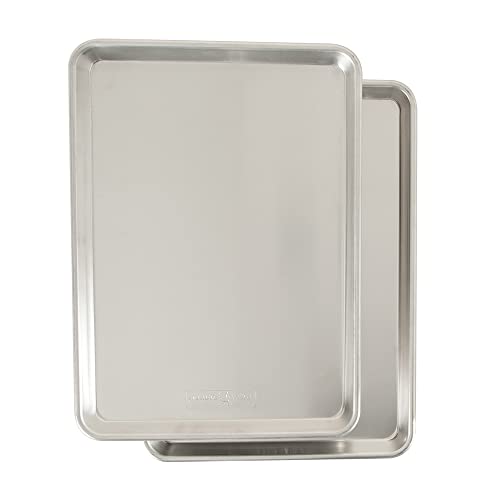
A half sheet pan is a rectangular baking pan with raised edges on all four sides, sized at 18 inches long, 13 inches wide, and 1 inch deep. That 18 x 13 inch dimension is not a suggestion—it is a commercial standard that references the full sheet pan used in restaurant kitchens. A full sheet pan measures 26 x 18 inches, which rarely fits in a home oven. Cut that in half and you get the half sheet. Cut it in half again and you get a quarter sheet pan at 13 x 9 inches, which many home cooks confuse with a standard cake pan.
The raised rim is the defining feature that separates a half sheet pan from a cookie sheet. A cookie sheet has no rim on at least one side, usually two, so cookies can slide off easily with a spatula. A sheet pan has a continuous 1-inch rim that catches drips, contains roasted vegetables, and gives you something to grip when moving a heavy load. If you try to roast chicken thighs on a rimless cookie sheet, rendered fat will pour off the edge and smoke up your oven. The rim turns a flat sheet into a contained cooking surface.
Most home ovens can fit a half sheet pan, but always measure your oven interior first because some ovens are narrower than the standard width. Many 24-inch and compact ovens have a rack that measures only 22 or 23 inches diagonally, which means an 18 x 13 pan will not slide straight in without angling. An 18-inch wide pan needs at least 18 inches of clearance between the oven walls, plus a little extra for the rim and air circulation. Do not trust the marketing copy that says “fits all standard ovens.” Grab a tape measure and check the actual rack depth and width before you buy a stack of pans.
Why Rim Design and Gauge Matter for Even Heat
As someone who has mapped hot spots in a dozen different ovens with a tray of white bread slices, I can tell you that the pan itself is not a passive container. A half sheet pan is a heat transfer surface, and its thickness—what the industry calls gauge—determines how that heat reaches your food. Aluminum is the dominant material because it conducts heat quickly and evenly without hot spots. Stainless steel half sheet pans exist but they distribute heat poorly on their own, often scorching food in the center while the edges stay pale. Nonstick coated aluminum pans add a convenience layer but change the browning characteristics and cannot take high heat without degrading.
The gauge number is counterintuitive: a lower gauge number means a thicker pan. An 18-gauge aluminum half sheet pan is about 0.040 inches thick and is the commercial standard. A 20-gauge pan is thinner, around 0.032 inches, and will warp much more easily when you move it from a hot oven to a cool counter or when you put a heavy roast on it. The warping is not a defect—it is physics. Aluminum expands when heated. A thick pan expands evenly and holds its shape. A thin pan expands unevenly and the corners or center can pop upward or downward with a loud bang. That sudden movement is why thin pans send grease flying and why your cookies can end up sliding into the rim during baking.
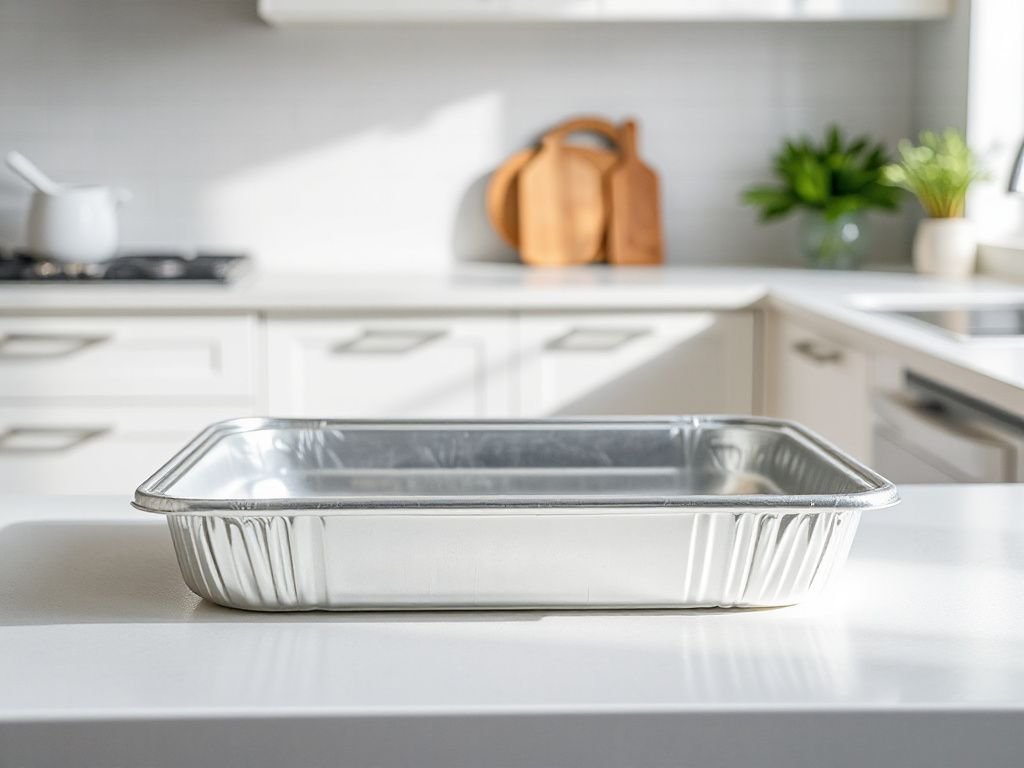
Brands like Nordic Ware, USA Pan, Fat Daddio’s, and Chicago Metallic all produce half sheet pans with different rim construction. Some use a wire-reinforced rim, where a steel wire is rolled into the edge of the aluminum to add rigidity without adding weight. Others use a simple folded rim that is cheaper but more prone to bending. The wire rim also gives you a comfortable grip when pulling the pan out of the oven, and it resists warping better than a plain fold. Pay attention to the rim when you inspect a pan, not just the flat surface.
How Heat Distribution Gets Messed Up
The most common cause of uneven browning on a half sheet pan is not the pan itself but the way it interacts with your oven’s hot spots. Many home ovens have a 30 to 50 degree Fahrenheit difference between the front and back of the rack. A thick aluminum pan evens that out by spreading the heat sideways. A thin stainless steel pan exaggerates the difference. If you notice cookies browning faster on one end, rotate the pan 180 degrees halfway through baking. Do not open the oven door more than necessary, because each opening drops the air temperature by 50 degrees or more and disrupts the browning cycle.
Another factor is the pan’s color. Dark nonstick finishes absorb more radiant heat and can over-brown the bottoms of cookies or vegetables before the tops are done. Uncoated aluminum reflects some of that radiant heat and produces a more moderate browning. For roasting vegetables where you want caramelization, a dark pan can work well. For delicate cookies or sheet cakes, uncoated aluminum gives you more control. That is not a rule about quality—it is a rule about knowing your tool.
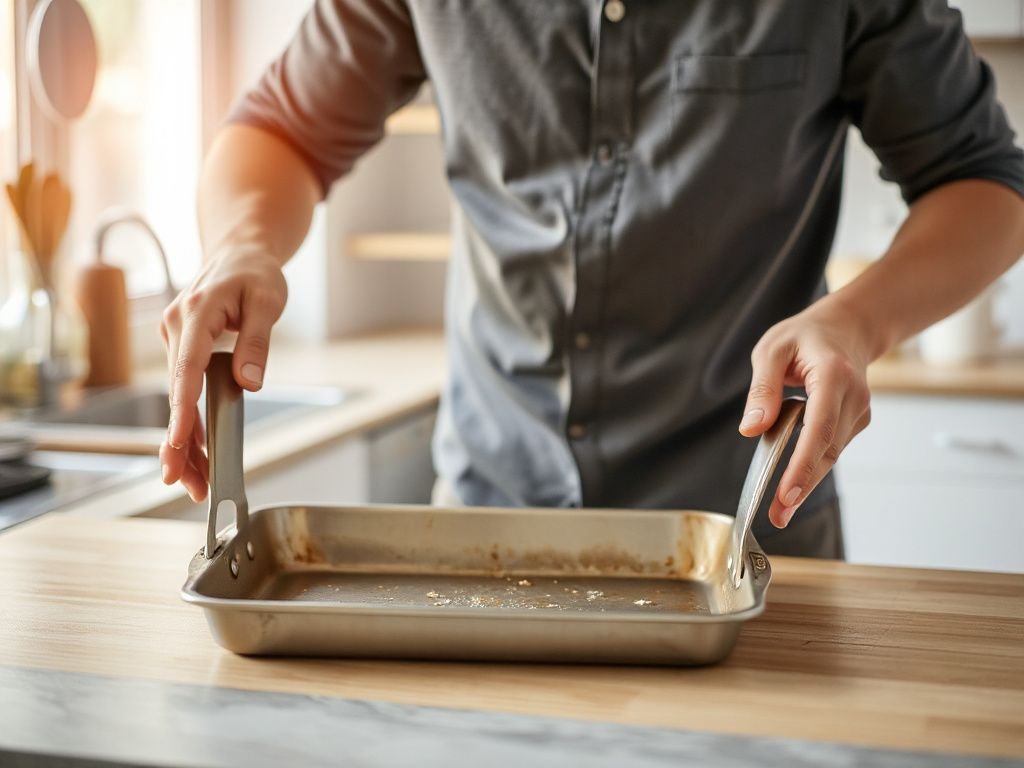
Cooking on a Half Sheet Pan: From Cookies to Roasted Vegetables
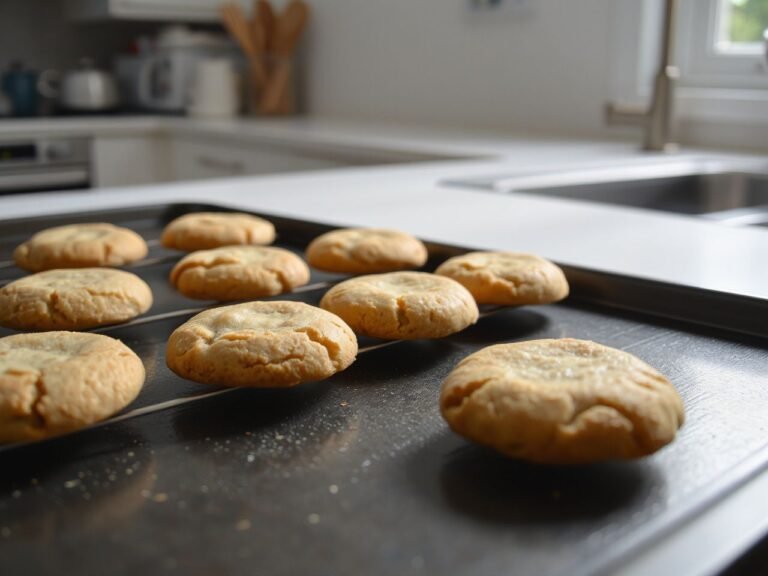
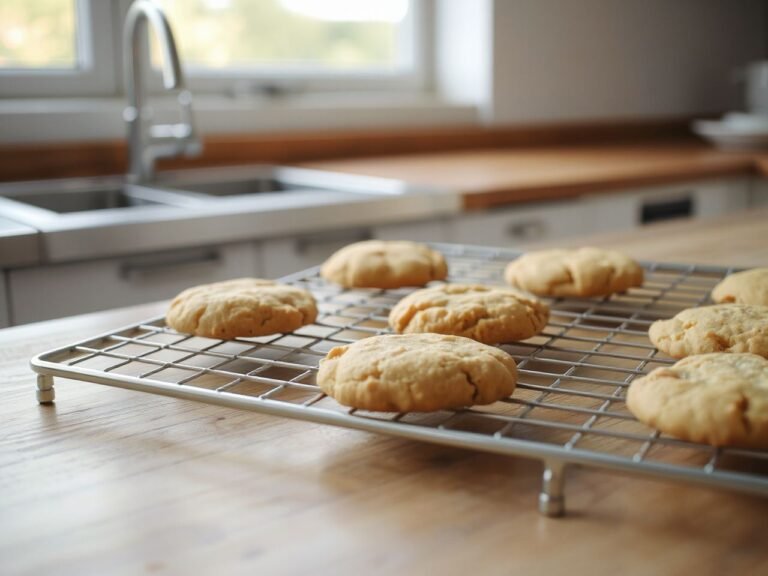
The half sheet pan is not just for cookies, though it excels at those too. Its large flat surface with a rim makes it ideal for roasting vegetables, baking bacon, toasting nuts, and building the now-ubiquitous sheet pan dinner. You can fit about 12 to 16 standard 3-inch cookies on a half sheet pan with proper spacing, depending on how much they spread. If you are making drop cookies that double in size, you might get only 8 or 9 on a pan without crowding. Overcrowding is the enemy of crisp edges, because the cookies trap steam between them and turn soft.
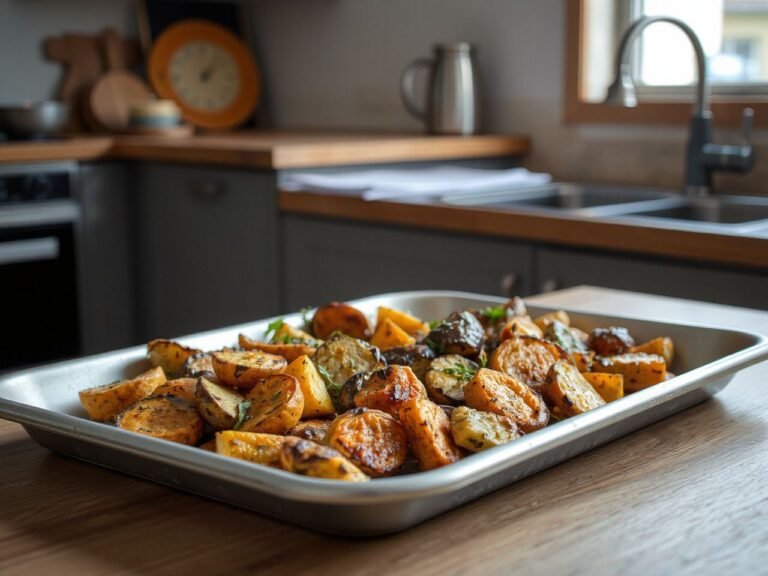
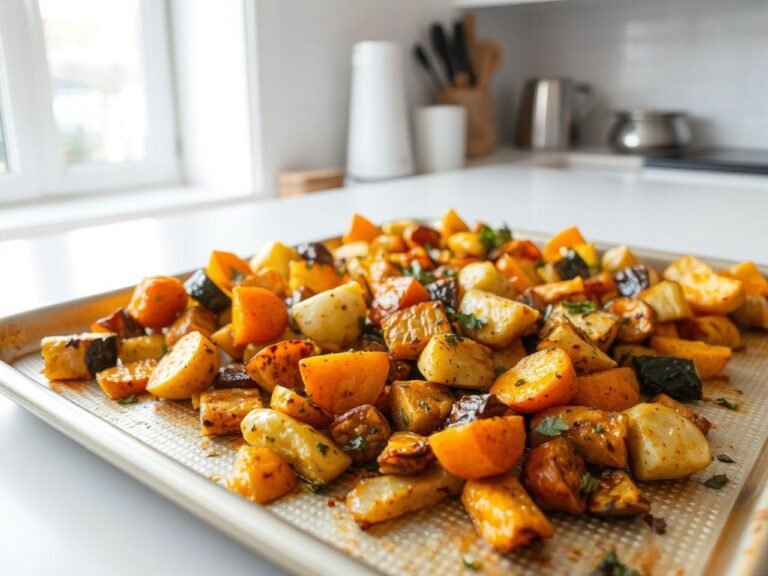
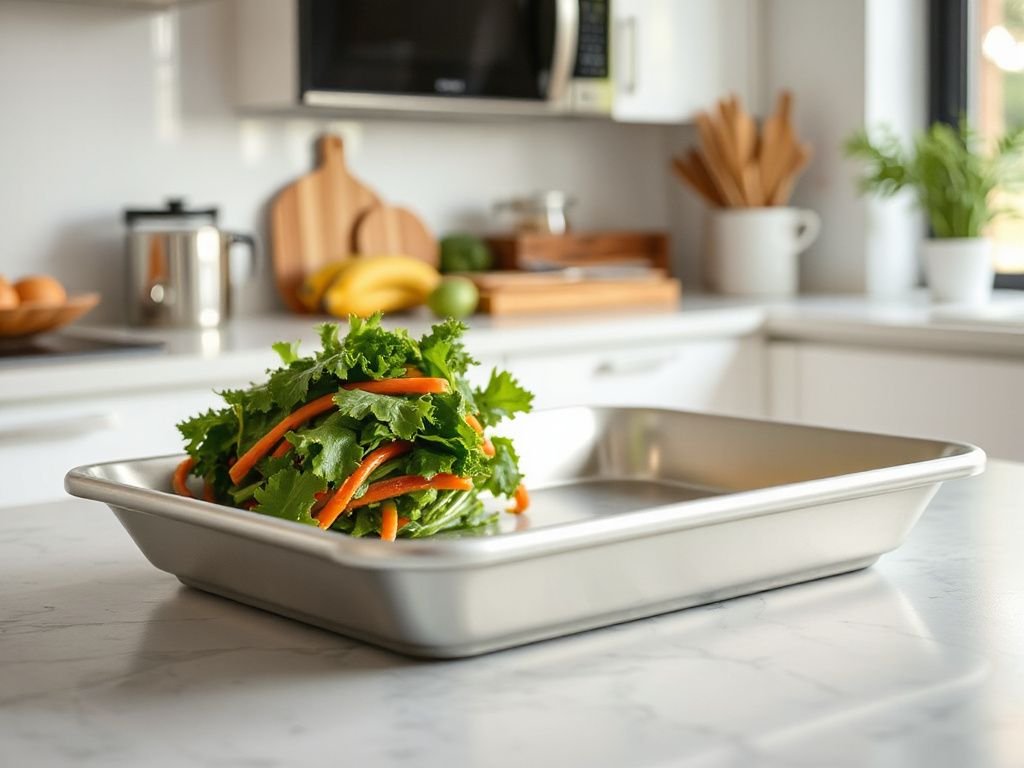
For roasted vegetables, spread them in a single layer with space between each piece. A crowded pan steams instead of roasts, leaving you with limp, pale vegetables instead of caramelized, browned ones. Use an uncoated aluminum half sheet pan and preheat the pan in the oven for 5 minutes before adding oiled vegetables. The hot pan sears the bottoms immediately, jump-starting the Maillard reaction. That is the browning that creates deep flavor, and it happens most reliably on a thick aluminum surface that has been preheated.
Sheet pan meals work best when you combine ingredients that cook at similar rates or when you stagger their addition. For example, root vegetables like potatoes and carrots take 25 to 30 minutes at 425°F, while green beans or asparagus need only 10 to 12 minutes. Add the faster-cooking items halfway through. If you are looking for a complete one-pan dinner, our Sheet Pan Chicken Pitas with Herby Ranch Slaw Recipe uses a half sheet pan to roast chicken and vegetables together, then piles everything into warm pitas. That is the kind of weeknight dinner where the pan’s rim prevents a messy spill and the flat surface gives you enough room for an entire meal.
You can absolutely use a half sheet pan for roasting raw meat, but be prepared for cleanup. Chicken thighs, sausages, or a whole spatchcocked bird will release fat that pools in the pan. That fat is flavor, and you can use it to baste vegetables around the meat, but do not let it spill over the rim. If you are roasting a very fatty cut like pork shoulder, line the pan with parchment or foil first. Parchment can handle temperatures up to about 425°F; beyond that it may brown but will not usually burn if it is in contact with food and not exposed to direct element heat. Foil is safer for high heat but can stick to roasted vegetables if not lightly oiled first.
Care, Dishwasher Safety, and Preventing Warp
Uncoated aluminum half sheet pans are technically dishwasher safe, but the dishwasher’s high heat and harsh detergents will slowly oxidize the surface, turning it dull gray. That oxidation is harmless and actually improves nonstick properties slightly, but it looks worn. If you do not mind the patina, run them through the dishwasher. If you want to keep that shiny aluminum look, hand wash with warm soapy water and a non-abrasive sponge. Never use steel wool on aluminum—it scratches the surface and creates grooves where food will stick.
Nonstick half sheet pans need more careful handling. The PTFE coating can scratch from metal utensils, degrade under broiler temperatures above 500°F, and peel over time. Hand wash nonstick pans with a soft sponge and mild dish soap. Do not stack them with unprotected metal pans, because the edges will scratch the coating. Inspect the coating regularly for chips or flaking, and retire the pan if you see bare aluminum showing through. A scratched nonstick pan releases coating particles into food, and that is not a risk worth taking.
To prevent warping, avoid extreme temperature shocks. Do not take a hot half sheet pan straight from a 450°F oven and run cold water over it. The sudden contraction can twist the metal permanently. Let the pan cool on the stovetop or a trivet for a few minutes before washing. Also avoid using a half sheet pan under the broiler unless it is a heavy-gauge uncoated aluminum pan. Broiler temperatures can exceed 550°F, which is beyond the safe limit for nonstick coatings and can cause thin pans to buckle. A thick 18-gauge aluminum pan with a wire rim will survive brief broiling, but keep it at least 6 inches from the heating element and watch it closely.
Storage matters too. If you stack half sheet pans, place a paper towel or a thin silicone mat between them to prevent the rims from scratching the cooking surface. Better yet, store them vertically in a cabinet slot or a dedicated sheet pan rack. Commercial kitchens use speed racks to hold dozens of full and half sheet pans upright, and the vertical position prevents warping from uneven stacking. At home, a simple vertical organizer in a lower cabinet works the same way.
One often-overlooked use for a half sheet pan is as a heat shield or drip catcher. Slide an empty half sheet pan onto the rack below a pie or casserole to catch bubbling spills. That prevents oven fires and makes cleanup a two-minute job instead of a deep clean. If you are making a soup like our Rotisserie Chicken Mushroom Soup, roast the chicken bones and vegetables on a half sheet pan first to build a deeper stock, then transfer everything to the pot. The pan handles the high heat roasting without warping, and the rim keeps the drippings contained for deglazing.
Quarter Sheet, Full Sheet, and Cookie Sheets: Know the Difference
A quarter sheet pan is exactly half the size of a half sheet, measuring 13 x 9 inches. That is the same footprint as a standard 9 x 13 baking dish, but with a lower 1-inch rim. Quarter sheet pans are great for small batches of roasted vegetables, toasting a handful of nuts, or baking a few cookies for two people. If you often cook for one or two, a quarter sheet might be more useful than a half sheet because it heats faster and takes up less counter space.
A full sheet pan is 26 x 18 inches, the commercial standard in restaurant kitchens. It requires a commercial oven, because home ovens are not wide enough to accommodate 26 inches side to side. Do not buy a full sheet pan unless you have a 30-inch or wider commercial range. Even then, check the oven interior carefully. Most home cooks will never need one.
A cookie sheet, as mentioned, has no rim on at least one side. That open design lets you slide cookies off with a spatula without lifting them, which preserves their shape. But it limits the pan to cookies and other flat items. You cannot roast vegetables or cook a sheet pan dinner on a cookie sheet because liquids and oil will run off. If you can only afford one pan, get a half sheet pan with a rim. A rimless cookie sheet is a specialty tool, not a workhorse.
For those who bake a lot of cookies, consider a half sheet pan with a lighter uncoated aluminum surface and a rolled rim. Heavy-gauge pans take longer to heat up, which can affect cookie spread. A 18-gauge uncoated aluminum half sheet pan heats quickly and evenly, producing crispy edges and chewy centers. If you are browning a large batch of vegetables, that same pan works perfectly. The versatility is why commercial kitchens standardize on the half sheet pan for almost every task.
Frequently Asked Questions
What is the exact size of a half sheet pan?
A half sheet pan measures 18 inches by 13 inches on the outside, with a 1-inch tall rim on all four sides. Interior dimensions are about 17.5 x 12.5 inches due to the rim. This is exactly half the size of a commercial full sheet pan, which is 26 x 18 inches. Always confirm your oven rack clearance is at least 18 inches wide before buying one.
Can I put a half sheet pan in the dishwasher?
Uncoated aluminum half sheet pans can go in the dishwasher, but the surface will oxidize and turn dull gray over time. That oxidation is harmless but changes the pan’s appearance. Nonstick half sheet pans should be hand washed only, because dishwasher detergents and high heat damage the PTFE coating and shorten its life. When in doubt, hand wash any pan you care about.
Why does my half sheet pan warp in the oven?
Warping happens when a thin-gauge pan expands unevenly under high heat and then is suddenly cooled or moved with a heavy load. An 18-gauge aluminum pan resists this because it is thick enough to hold its shape. Thin 20-gauge or lighter pans will bow or pop when you pull them out of a 450°F oven. To prevent warping, buy a heavy-gauge pan with a rolled wire rim and avoid thermal shock.
Is a half sheet pan safe under the broiler?
A heavy-gauge uncoated aluminum half sheet pan can tolerate brief broiling, but keep it 6 inches from the heating element and watch for warping. Nonstick pans should never go under the broiler because temperatures exceed the coating’s safe limit and can release fumes. If you need to broil often, use a dedicated uncoated aluminum half sheet pan for that purpose and keep it separate from your nonstick bakeware.
How many cookies fit on a half sheet pan?
You can fit 12 to 16 standard 3-inch cookies on a half sheet pan with proper spacing, depending on spread. Chilled dough that holds its shape allows for more cookies per pan, while a thin batter may spread and merge. Space cookies at least 2 inches apart to allow for air circulation and even browning. Overcrowding causes steam to build up and makes cookies soft instead of crisp.