Home bakers are buying commercial sheet pans in record numbers, but a confusing gap remains between what the box says and what actually fits in a standard residential oven. The biggest confusion always clears when you realize that sheet pan sizes are fractions of a commercial standard—not arbitrary measurements, but halves and quarters of the full sheet that bakery racks and ovens were built around. Beginners get tripped up by assuming a ‘half sheet’ is just a smaller pan; it’s actually a precise 13×18-inch footprint that fits most residential ovens, and knowing that unlocks why recipes call for one pan over another. If you’ve been hunting for sheet pan sizes explained in plain language, you’ve landed in the right kitchen. Ready to put that knowledge to work? Try this sheet pan chicken pitas with herby ranch slaw recipe once you’ve picked your pan.
Key Takeaways
- Standard commercial sheet pan sizes are fractions of the 18×26-inch full sheet: half (13×18), quarter (9×13), eighth (6.5×8.5).
- The ‘half sheet’ is the workhorse for home ovens, but always verify the actual outside rim dimensions because brands vary.
- A rimmed sheet pan and a flat cookie sheet serve different purposes; never use a flat sheet for roasting meats or saucy foods.
- Rapid temperature changes cause most warping; let a cold pan warm up gradually in the oven before intense heat.
The Commercial Standard Behind Sheet Pan Sizes
Full, Half, Quarter, and Eighth Sheet Dimensions
A full sheet pan measures 18 by 26 inches, which requires a commercial oven at least 20 inches deep; most home ovens max out at 17 to 18 inches of usable interior depth. The commercial kitchen standard for full sheet pans is 18×26 inches, a dimension recognized by the NSF International for equipment certification. From that base, every smaller size simply divides the original footprint.
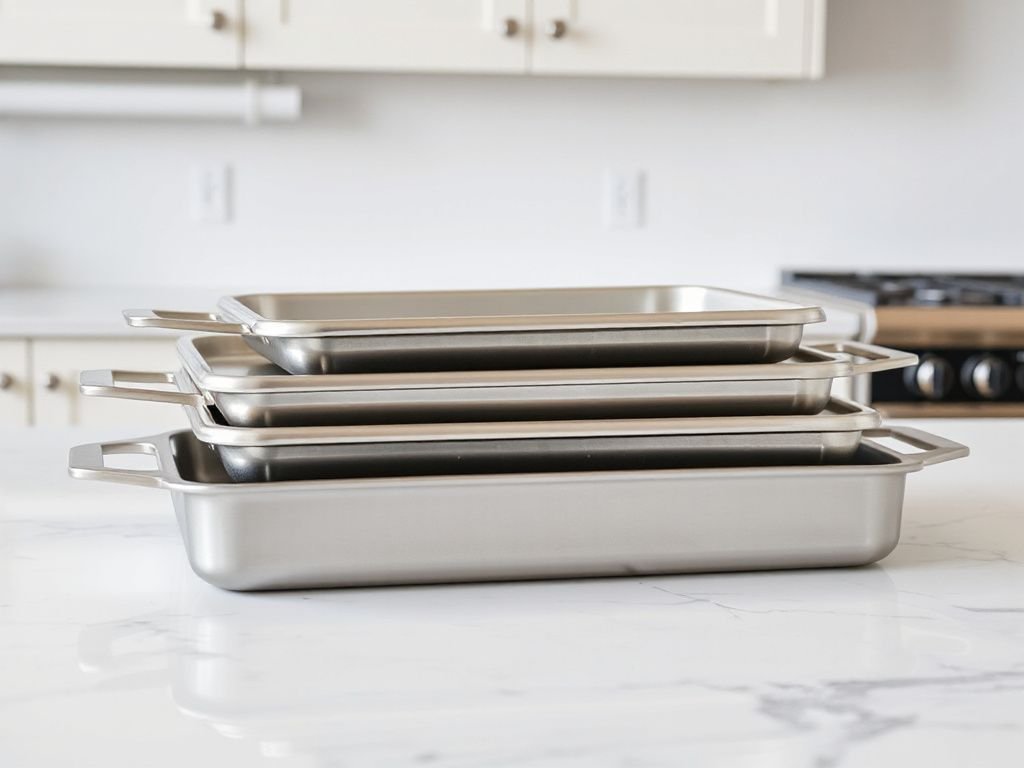
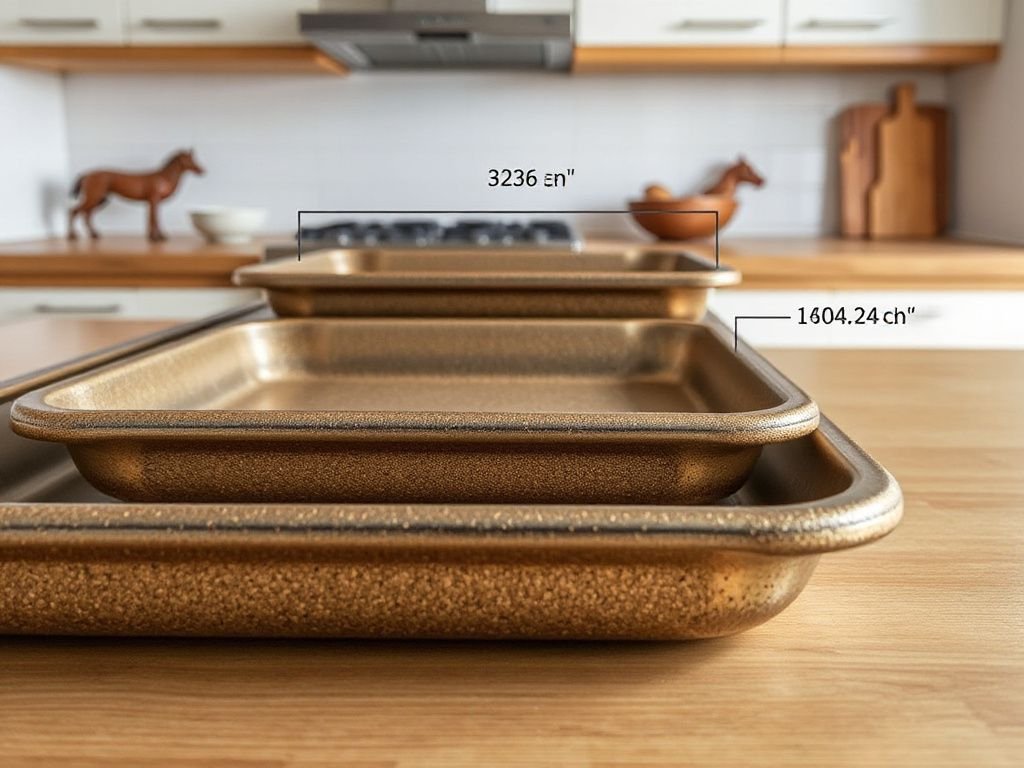
A half sheet pan is 13×18 inches. A quarter sheet pan is 9×13 inches. An eighth sheet pan is 6.5×8.5 inches. Those numbers are not arbitrary. They are exact mathematical fractions of the full sheet, which means your recipe capacity scales predictably when you switch pans.
Why the ‘Half Sheet’ Fits Your Home Oven
A half sheet pan’s 13×18-inch outside dimension is the largest standard size that fits most residential oven racks. The actual usable flat bottom is smaller by about 0.5 inch on each side due to the rolled rim, so you end up with roughly 12.5×17.5 inches of cooking surface. That extra clearance from the oven walls allows hot air to circulate around the pan, which prevents burnt edges.
Some manufacturers label a 12×17-inch pan as a half sheet. That is not the commercial standard, and it reduces your usable area by roughly 15 percent. Always check the printed dimensions on the packaging or the underside of the pan before you buy.
Jelly Roll Pans and Cookie Sheets: Where They Fit
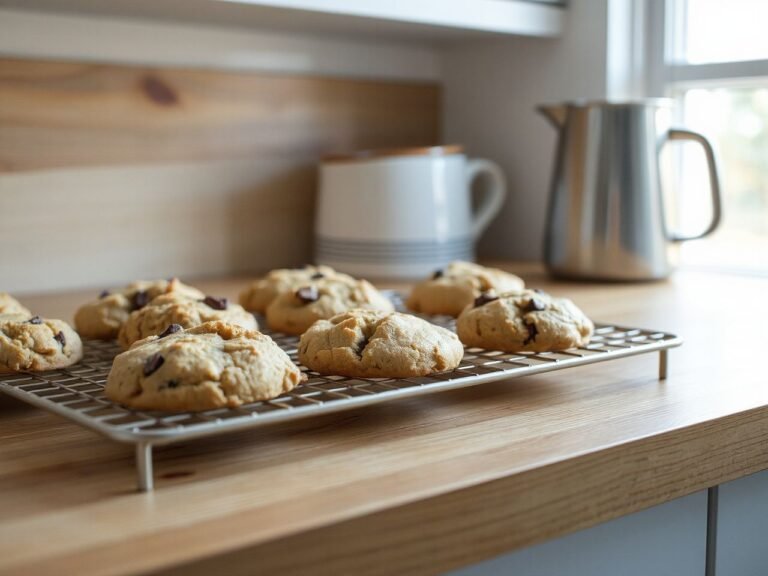
A jelly roll pan’s 10×15-inch footprint and shallow rim let you slide a delicate sponge cake out flat, while a cookie sheet’s lack of rims promotes even airflow around cookies for uniform browning. Jelly roll pans have a 1-inch rim and are designed specifically for thin batters that will be rolled while warm. Cookie sheets are completely flat, sometimes with one or two raised edges just for gripping. Because there is no rim, hot air moves over the edges without obstruction, which helps cookies brown more evenly and prevents steam from collecting under the dough.
Measuring and Choosing the Right Sheet Pan
How to Measure a Sheet Pan Correctly
Always measure from the outside edge of one rim to the outside edge of the opposite rim. Do not measure the flat bottom, because the rolled edge reduces the interior by at least 0.5 inch per side. Use a tape measure rather than a rigid ruler, since the slight curve of a warped or well-used pan can throw off a hard straight edge.
If a recipe calls for a half sheet and all you have is a 12×17-inch pan, the difference usually will not ruin cookies. But for capacity-sensitive recipes like sponge cake or macarons, an undersized pan means your batter is thicker than intended, which changes bake time and texture. When in doubt, use the next size up and watch your oven for the last few minutes.
Material Matters: Aluminum, Aluminized Steel, and Carbon Steel
Bare aluminum responds to temperature changes faster than aluminized steel, but it can leave gray marks on acidic foods like tomato sauce; aluminized steel resists that reaction while still distributing heat evenly. Bare aluminum is the classic commercial choice because it heats rapidly, cools quickly, and is inexpensive. The downside is that acidic ingredients can react with the surface, leaving dark stains and sometimes a metallic taste. Aluminized steel has a steel core with an aluminum coating, which makes it more durable and resistant to warping. Carbon steel is heavier, holds heat longer, and can be seasoned like cast iron, but it requires more maintenance to prevent rust. USA Pan uses a corrugated surface on many of its pans, which stiffens the metal and increases air circulation under baked goods.
Warping: The Physics of Sudden Temperature Change
Warping occurs when one part of the metal expands faster than another. Putting a cold pan into a hot oven causes the rim to heat and expand while the center stays stiffer, creating a sudden bow that can become permanent. The fix is simple: let the pan warm up gradually. Place a cold pan in a cold oven and set the temperature together, or rest the pan at room temperature for 15 minutes before sliding it onto a preheated rack.
Pouring cold liquids onto a hot sheet pan causes the same stress in reverse. Always bring roasting liquids to room temperature before adding them to a hot pan, or use a heavy gauge pan that resists warping under normal use.
Practical Answers to Common Sheet Pan Questions
Will a Half Sheet Pan Fit Your Oven?
Measure your oven rack from back to front interior depth. If that number is at least 15 inches, a half sheet pan will fit with about 1 inch of clearance on each side for airflow. Wall ovens and compact ranges sometimes have shallower racks, so a quarter sheet pan may be your only option. Never force a pan that touches the oven door, because that blocks heat circulation and can scorch the edge of your food.
Quarter Sheet vs. Half Sheet: Can You Swap?
A quarter sheet pan has exactly half the area of a half sheet pan, so a recipe written for a half sheet will overflow a single quarter sheet. But two quarter sheet pans placed side by side on the same oven rack cover the same footprint as one half sheet, with a small seam in the middle. If you only have quarter sheets and need a half sheet capacity, use two and rotate them halfway through baking.
Roasting a Whole Chicken: Minimum Pan Size
A half sheet pan with a 1-inch rim is the smallest practical size for roasting a whole chicken. A quarter sheet is too short and too narrow to hold a 4-pound bird plus vegetables without crowding. The rim catches rendered fat and juices, which you can use for gravy or a pan sauce later. For a completely different weeknight meal, try this easy chicken dumpling soup while your sheet pan roasts vegetables alongside the bird.
How Many Cookies Fit on a Half Sheet?
With 2-inch dough balls spaced 2 inches apart, a standard half sheet pan holds about 12 to 15 cookies. The usable flat area is roughly 218 square inches after accounting for the rim. For small drop cookies, you can fit up to 24, but overcrowding forces the cookies to spread into each other and prevents even browning.
Why Some Recipes Call for a Jelly Roll Pan
A jelly roll pan’s 10×15-inch size gives a thin cake batter enough surface area to bake to the right thickness for rolling. If you use a half sheet instead, the batter spreads too thin and overbakes; if you use a quarter sheet, it puffs up and cracks when rolled. The 1-inch rim also allows you to line the pan with parchment that overhangs on two sides, making it easy to lift the cake out and flip it onto a towel.
The Biggest Pan You Can Use in a Standard Oven
The largest safe pan for a standard residential oven is a half sheet pan (13×18 inches). Some ovens can fit a two-thirds sheet pan (16×22 inches), but that leaves almost no clearance for air movement, which creates hot spots and burnt corners. If you have a 30-inch range, measure the interior width before buying anything larger than a half sheet. For a hearty soup that doesn’t need a sheet pan at all, this rotisserie chicken mushroom soup comes together in 25 minutes.
Expert Tips for Better Baking with Sheet Pans
Preheating the Pan (or Not)
For high-heat roasting of vegetables, preheating the sheet pan in the oven gives you an immediate sear on the bottom of your food. The hot metal caramelizes the sugars in vegetables the moment they hit the surface, reducing the chance of steaming. For cookies, preheating is rarely necessary, but a hot pan can give you a crispier bottom crust. If you do preheat, use a heavy gauge pan and add your food quickly to minimize warping from the sudden contact with cold ingredients.
Lining with Parchment vs. Silicone Mats
Parchment paper allows more direct contact between the pan and your food, which promotes browning and crisp edges. Silicone baking mats insulate the food slightly, often producing softer bottoms and less spreading in cookies. Both prevent sticking, but only parchment can be cut to fit a jelly roll pan with overhangs for lifting. Silicone mats are reusable and easier to clean, but they should not be used under a broiler or above 450°F.
Cleaning and Storage
Storing sheet pans stacked directly on top of each other without a barrier can scratch nonstick coatings and trap moisture, leading to rust on carbon steel. For bare aluminum and aluminized steel, hand wash with warm soapy water and avoid abrasive scrubbers that remove the protective oxide layer. Nonstick pans should never go in the dishwasher, because the harsh detergent and high heat degrade the coating over time. Hang pans vertically or separate them with a paper towel if you must stack.
Frequently Asked Questions
What are the exact sheet pan sizes explained in simple terms?
The standard commercial sizes are full sheet 18×26 inches, half sheet 13×18, quarter sheet 9×13, and eighth sheet 6.5×8.5. A half sheet fits most home ovens, a quarter is good for small batches, and an eighth works for toaster ovens. Always verify dimensions because home brands sometimes label a 12×17 pan as a half sheet.
Can I use a cookie sheet instead of a rimmed sheet pan for roasting vegetables?
No. Cookie sheets lack rims, so any juices or oil will run off and burn on the oven floor. For roasting vegetables, use a rimmed half sheet pan with at least a 1-inch rim. The rim also makes it easier to toss ingredients without spilling.
How do I stop my sheet pans from warping in a hot oven?
Warping occurs when one part of the metal expands faster than another. Always let a cold pan warm up gradually by placing it in a cold oven and heating both together, or rest the pan at room temperature for 15 minutes before adding to a preheated oven. Avoid pouring cold liquids onto a hot pan, and invest in heavier gauge pans.