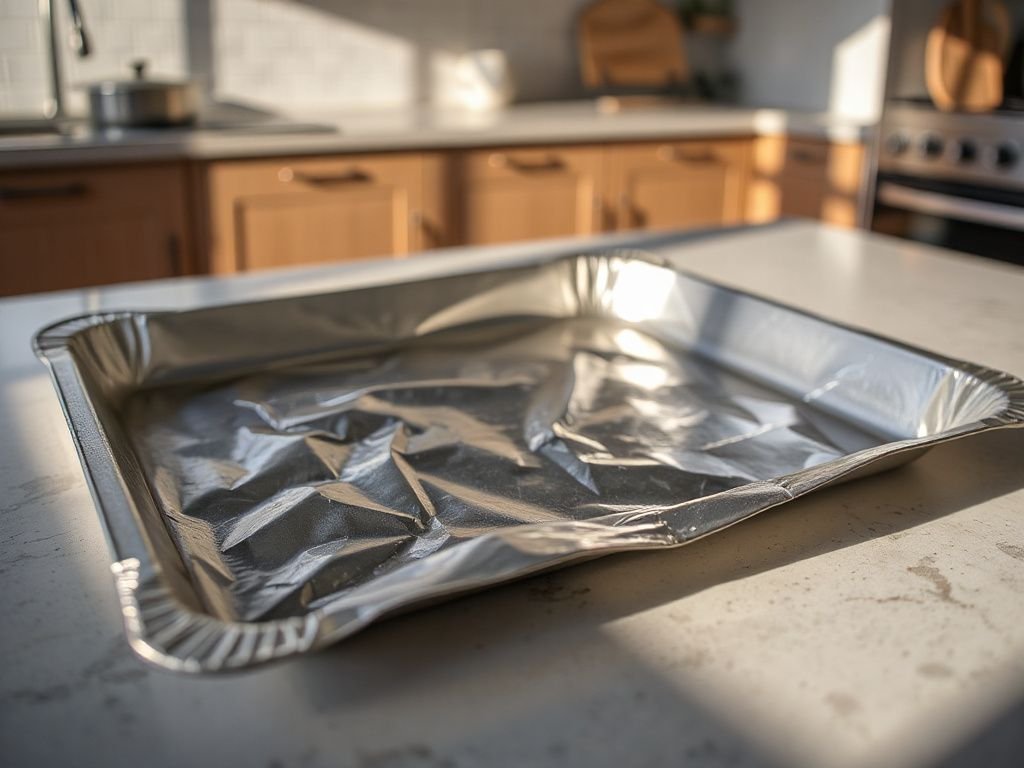
Scroll through any home baking forum right now and you’ll spot the same complaint again and again: a brand-new sheet pan twisted like a potato chip after one batch of roasted vegetables. Bakeware sales have surged as more people cook at home, yet the quality of the average sheet has dropped as manufacturers chase lower prices. That mismatch is producing a lot of bent metal in kitchens. The warping almost always comes down to thermal shock—especially when a thin pan goes straight from a cold counter into a roaring hot oven. The rim reaches oven temperature well before the middle of the sheet does, and metal expanding at two different rates in two places has to relieve that stress somewhere. Beginners point fingers at the brand, but the real test is the pan’s gauge and how the metal was processed; a thick, tempered steel sheet will hold its shape through a broiler cycle, while a flimsy aluminum one twists every time. If you have been asking yourself why baking sheets warp, the answer lives in a handful of physics lessons most manufacturers hope you never learn.
Key Takeaways
- Thermal shock from empty preheating is the #1 cause — cold metal hitting a hot oven expands unevenly and twists.
- Material matters: aluminum warps far more easily than carbon steel or thick stainless steel because it expands more and is softer.
- Thicker pans (lower gauge numbers) resist warping; 18-gauge steel or 12-gauge aluminum are good home choices.
- You can often straighten a warped pan gently, but prevention is simpler than repair.
The Physics of a Warped Baking Sheet
Metal expands when heated. That is not a flaw in your pan; it is a law of nature. The problem starts when different parts of the same sheet expand at different rates or at different times. A baking sheet sits flat because every square inch of metal is at roughly the same temperature and the same length. Throw a cold pan into a screaming 450°F oven, and the bottom surface heats almost instantly while the rim and corners lag behind. The bottom wants to get longer, the rim does not, and something has to give. That something is the metal’s flatness.
Now add the empty pan problem. Many home bakers preheat their sheets because a recipe told them to, or they assume a hot pan gives a better sear on roasted potatoes. But heating an empty baking sheet is the most common cause of warping because the metal expands unevenly. The bare center of the sheet heats fast while the cooler rim acts like a frame holding the edges rigid. The center bows upward or downward, and if the pan is thin enough, it stays that way permanently.
Thermal Shock: The Cold-to-Hot Problem
Thermal shock is the formal name for what happens when a material experiences a rapid, uneven temperature change. Cast iron skillets crack from thermal shock far more often than they warp, because a thick brittle casting cannot flex to absorb the stress, but thin bakeware bends instead of breaking. Aluminum and steel are ductile enough to twist rather than snap, so the stress reveals itself as a bow or a corner lift. A half sheet pan taken from a 68°F kitchen and placed on a 425°F oven rack can easily see a 350-degree temperature swing in under a minute.
The rim complicates things further. A standard half sheet pan has a rolled edge that acts as a structural rib, but that rib is also the last part to heat up. The flat center expands first and has nowhere to go. The result is a temporary dome. If the pan returns to ambient temperature before the rim catches up, the deformation can become permanent, especially in aluminum. A thick, tempered steel sheet will hold its shape through a broiler cycle, while a flimsy aluminum one twists every time.
Material Matters: Aluminum vs Steel vs Carbon Steel
Not all metals behave the same under heat. Aluminum has a thermal expansion coefficient roughly twice that of carbon steel. That means for the same temperature rise, an aluminum sheet gets longer by about twice as much as a steel sheet of the same length. The thermal expansion coefficients listed by HyperPhysics show aluminum at about 23 x 10⁻⁶ per degree Celsius, compared to 12 x 10⁻⁶ for steel. Double the expansion means double the internal stress when one part heats before another.
Aluminum is also softer. You can bend a standard 18-gauge aluminum sheet with your bare hands; you cannot do that with 18-gauge carbon steel. Soft metal deforms permanently under stress that a harder metal would shrug off. This is why commercial bakeries overwhelmingly use thick aluminum or carbon steel sheets that have been heavily tempered to resist bending. Anodized aluminum adds a hard oxide layer but does not change the base metal’s tendency to expand significantly. Tempered aluminum (T6) is stronger than plain aluminum, yet it still expands more than steel. Your choice of material directly controls how often you’ll see a warped pan.
Manufacturing and Tempering: Why Some Brands Twist and Others Don’t
Warping can occur during manufacturing if the pan is not properly tempered. Tempering is a heat treatment that relieves internal stresses in the metal after forming. A pan stamped from a flat sheet of aluminum has enormous internal tension locked into its rolled rim and bent corners. If the factory skips the tempering step or rushes it, that pan is already half-warped before you ever open the box. Some brands, including Nordic Ware and USA Pan, are known in commercial circles for processing their sheets correctly. Their pans come out of the oven flat because the metal was stress-relieved at the factory. Cheaper import pans often skip this step, which is why two sheets that look identical on a store shelf will behave completely differently after 20 minutes at 400°F.
Gauge also plays a role. The lower the gauge number, the thicker the metal. An 18-gauge steel sheet is about 0.048 inches thick, while a 12-gauge steel sheet is nearly 0.105 inches. A thicker sheet has more material to distribute the same thermal stress, so it bows less. Home bakers shopping for a half sheet pan often grab an 18-gauge aluminum one because it is cheap and light, then wonder why it twists on the first use. A 12-gauge aluminum or 16-gauge carbon steel sheet will resist warping far better, though it costs more and weighs more.
Oven Environment: Convection, Empty Preheating, and Uneven Racks
Do convection ovens make baking sheets warp more than regular ovens? Yes and no. A convection oven moves hot air rapidly across the pan, which can cause the sheet to heat up faster and more unevenly than in a still oven. The fan adds a forced-convection component that can exaggerate thermal gradients between the center and the rim. However, a well-built heavy pan will still stay flat in a convection oven. The variable that matters more is whether the rack itself is flat. A warped oven rack will not cause a sheet to warp on its own, but it prevents the pan from sitting flush, which concentrates weight and heat on high spots and can contribute to bowing over time.
Empty preheating deserves a second mention because so many recipes ask for it. A recipe that says “preheat your baking sheet” assumes the sheet is a heavy commercial pan that will not twist. Home bakers using a thin aluminum sheet should ignore that instruction or use a heavier pan. Heating an empty baking sheet is the single fastest way to ruin a cheap one.
What Warping Actually Looks Like and When It’s Dangerous
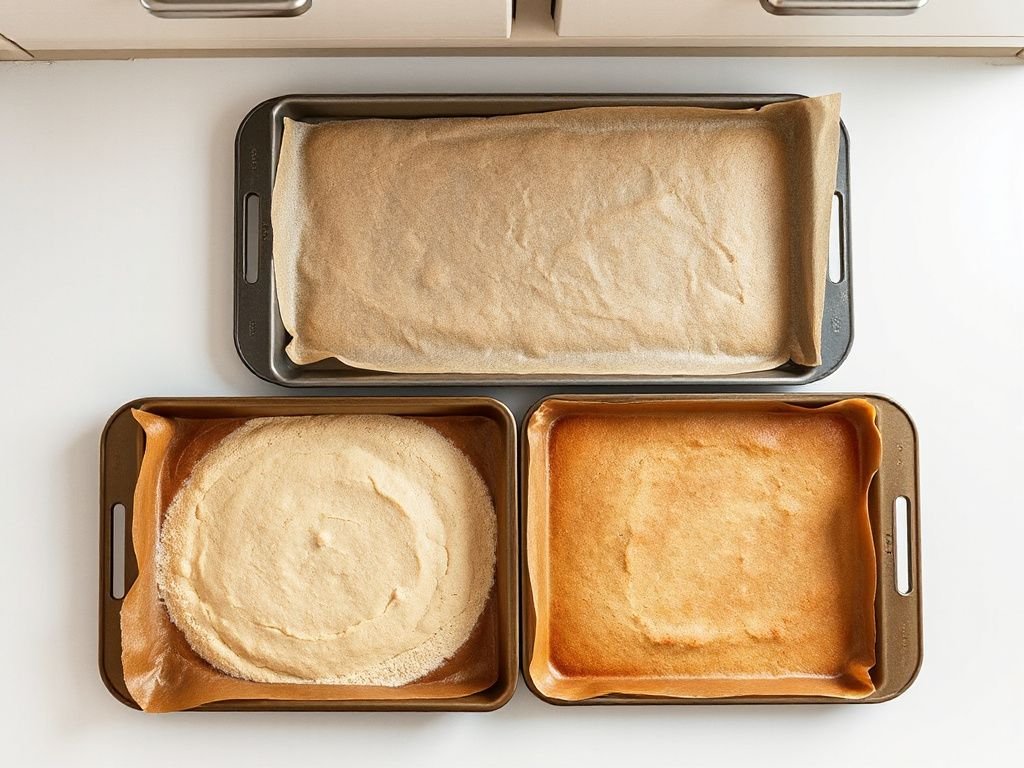
You probably know a warped pan when you see it, but there are degrees. A pan with a slight rock—where one corner lifts a millimeter off the counter—is still usable for most tasks. A pan with a pronounced dome in the center will spill oil or batter toward the edges and bake unevenly. A pan that has twisted along its diagonal axis so that two opposite corners lift is the most severe and hardest to fix.
How to Spot a Warped Pan Before It Fails
Place the cold sheet on a flat countertop and press down on opposite corners. If the pan rocks or you see daylight under one corner, it has a warp. You can also set a straightedge—a level, a ruler, or even a piece of uncooked spaghetti—across the surface and look for gaps. A half sheet pan should sit dead flat on a granite counter with zero rocking after being heated and cooled once.
Is a Warped Baking Sheet Safe to Use?
Generally yes, with caveats. A warped aluminum sheet will not leach anything into food beyond what a flat aluminum sheet would. The coating, if any, is still intact as long as the surface is not cracked or flaking. The real risk is practical: a severely warped pan can tip or slide on the oven rack, sending hot food or grease onto the oven floor. That is a fire hazard. If your pan rocks so much that you cannot place it flat on a rack without it wobbling, retire it or straighten it before using it again.
Another concern is uneven baking. Cookies on a warped sheet will brown unevenly because some dough sits higher in the oven cavity, closer to the top element. The same problem applies to roasted vegetables or any food you want to brown evenly. If you notice some cookies on the outer edges browning while the center ones stay pale, a warped sheet may be part of the problem—though oven hot spots are also a factor. If you are baking cookies from a mix, a flat sheet makes a bigger difference than you would think.
How to Prevent Your Baking Sheets from Warping
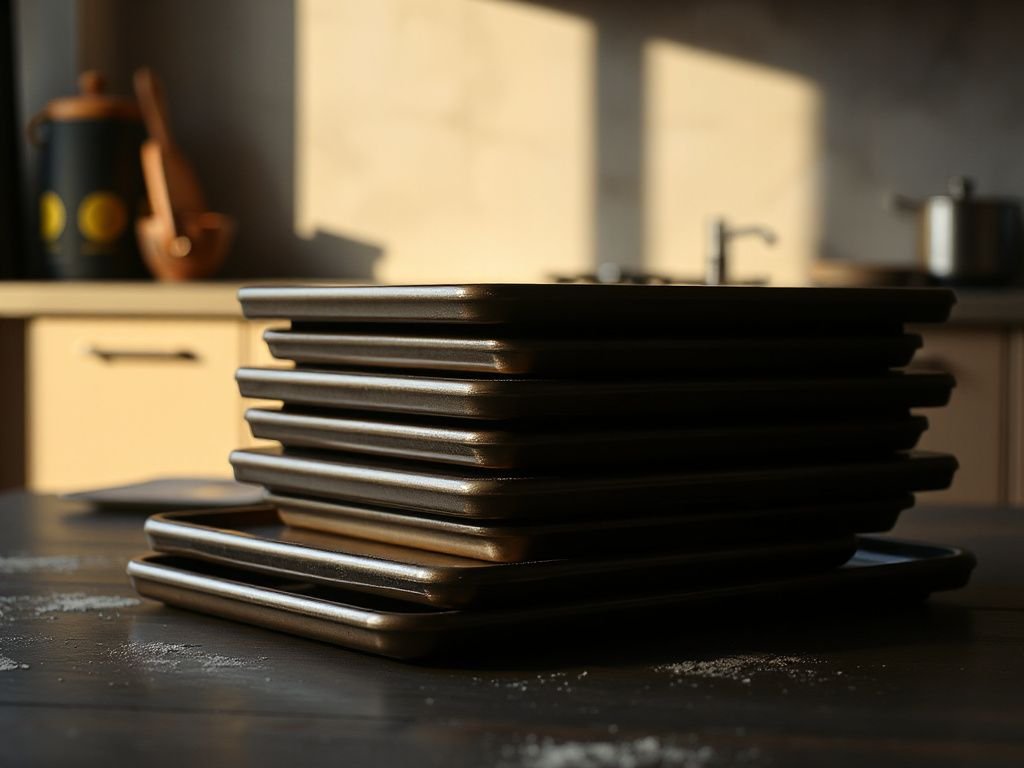
Prevention is easier than repair, and most of it costs nothing. The rules come down to three things: gradual temperature changes, choosing the right pan for your oven and habits, and loading the oven correctly.
Gradual Temperature Changes
Let the cold sheet sit on the counter for a minute or two while the oven finishes preheating. Then place the pan on the rack with the food already on it. The food absorbs heat and evens out the temperature distribution across the metal. Avoid putting a frozen sheet pan directly onto a hot rack. If a recipe calls for a blazing hot sheet, use a heavy pan and accept that some degree of temporary bowing is normal.
After baking, set the hot sheet on a trivet or a folded kitchen towel, not directly on a cold granite countertop. Sudden cold contact on one side can cause a warp just as easily as sudden hot contact. Let the pan cool for 10 minutes before washing. Then wash with warm water, not cold. If the pan has baked-on grease, soak it in warm soapy water instead of scrubbing under cold running water.
Choosing the Right Gauge and Material
What thickness or gauge of baking sheet is least likely to warp? For home use, 18-gauge carbon steel or 12-gauge aluminum is a solid floor. Thicker is better, but heavier and more expensive. Commercial bakery sheets are often 13-gauge aluminum or 14-gauge steel, and they are virtually immune to warping under normal oven loads. If you bake frequently and hate warped pans, buy the thickest sheet you can comfortably lift and store. The difference between a $8 thin aluminum sheet and a $30 heavy-gauge sheet is not cosmetic; it is the difference between a pan that lasts a year and one that lasts two decades.
Carbon steel is less prone to warping than aluminum for the same thickness, but it rusts if you do not dry it completely. Stainless steel is very warp-resistant but conducts heat poorly, so it is not ideal for baking except for certain tasks. Anodized aluminum splits the difference: it has the heat conductivity of aluminum with a harder surface, but it still expands more than steel. Tempered aluminum (T6) is stronger than plain aluminum but still softer than carbon steel. No material is perfect; the key is matching the pan to your baking style.
Proper Oven Loading and Placement
Do not place a cold sheet directly on the oven floor, where the heating element is closest. Use the middle rack for most baking. If you bake two sheets at once, rotate them top to bottom and front to back halfway through. Convection ovens should have the fan on only if the recipe calls for convection; otherwise the moving air can cause premature browning on the edges and add thermal stress. And never stack multiple empty sheets on one rack while waiting to bake—the bottom sheet gets hot from the rack while the top sheet stays cooler, and both can warp from the uneven heat.
Why do commercial bakery sheets not warp like home pans? The answer is a combination of thicker metal, proper tempering during manufacturing, and usage habits. Commercial bakers rarely preheat empty sheets. They load hundreds of grams of dough or vegetables per sheet, which stabilizes the temperature. And their ovens are often loaded and unloaded at a steady pace, so the pans experience smaller thermal swings. If you adopt those same habits, your home sheets will stay flat for years.
Can You Fix a Warped Baking Sheet?
Sometimes, yes. A warped sheet is not automatically garbage. But you need patience and a little force.
Gentle Straightening Techniques
The simplest method is to place the warped sheet upside down on a flat, sturdy surface like a concrete floor or a thick wooden cutting board. Lay a folded kitchen towel over the high spot to protect the metal, then press down firmly with both hands. Do not hammer the pan; use steady pressure and small bends. Work the high spot down gradually, checking flatness after each press. For a corner lift, place the pan flat with the lifted corner hanging off the edge of a counter, then press down on the lifted corner while holding the opposite corner firmly against the counter.
You can also use heat to help. Heat the warped pan in a 200°F oven for 5 minutes, then place it on a flat surface and press down with a towel. The warm metal is slightly more pliable and easier to bend without cracking. Do not heat it to baking temperature and then quench it—that will make the warp worse. Always let the pan cool slowly after straightening, with a heavy flat object like a cast iron skillet placed on top to hold it flat as it cools.
For aluminum sheets, you can often flex the pan back and forth gently by hand while it is warm to release the internal stress that caused the warp. But be careful not to over-flex and crack the rim. If the pan has a coating (nonstick, silicone, or ceramic), heating it to 200°F will not damage the coating, but aggressive bending can cause micro-cracks in the coating. Use a towel and gentle pressure.
When to Retire a Pan
If the warp is so severe that the pan no longer sits flush on a flat surface even after multiple straightening attempts, retire it. If the rim is cracked or the coating is peeling, retire it. If the pan has warped and re-warped several times, the metal has work-hardened and will only get worse. A half sheet pan that has twisted more than a quarter inch out of flat is not worth the fire risk of tipping in the oven.
Also retire a pan if you notice a metallic taste in food or visible aluminum dust on the surface after cleaning. That indicates the metal is degrading. A warped baking sheet is safe to use only if it sits flat enough to be stable on the rack and has no coating damage. If you are baking sandwich cookies or any delicate dough that spreads, a warped pan will ruin the shape even if it is technically safe.
Frequently Asked Questions
Why does my baking sheet warp in the oven?
Most often because you heated an empty sheet or moved a cold sheet into a very hot oven too quickly. The center of the pan heats faster than the rolled rim, causing uneven expansion. That internal stress bows the metal, and if the pan is thin aluminum, the bow becomes permanent. Always put food on the sheet before placing it in the oven, and let the pan come to room temperature first.
Are aluminum baking sheets more prone to warping than steel ones?
Yes. Aluminum expands about twice as much as steel for the same temperature change, and it is softer, so it deforms permanently under less stress. Carbon steel and thick stainless steel resist warping far better. If you want a lightweight sheet that stays flat, look for 12-gauge or thicker aluminum, which has enough material to resist bowing.
Why did my new baking sheet warp on the first use?
Manufacturing defects are common with inexpensive pans. If the metal was not properly tempered after stamping, internal stresses from forming can release on the first heating. The sheet may already have been slightly bowed in the box. Check flatness before using any new pan, and if it warps on first use despite following proper preheating and loading, the pan was defective—return it if possible.
Can I fix a warped baking sheet or do I have to throw it away?
You can often straighten a mildly warped sheet by warming it to about 200°F and pressing the high spots down against a flat surface using a folded towel for protection. Work slowly and check flatness after each press. Severe warps, cracked rims, or pans that re-warp after straightening should be retired. Never hammer a pan hard, as that can crack the metal or damage coatings.