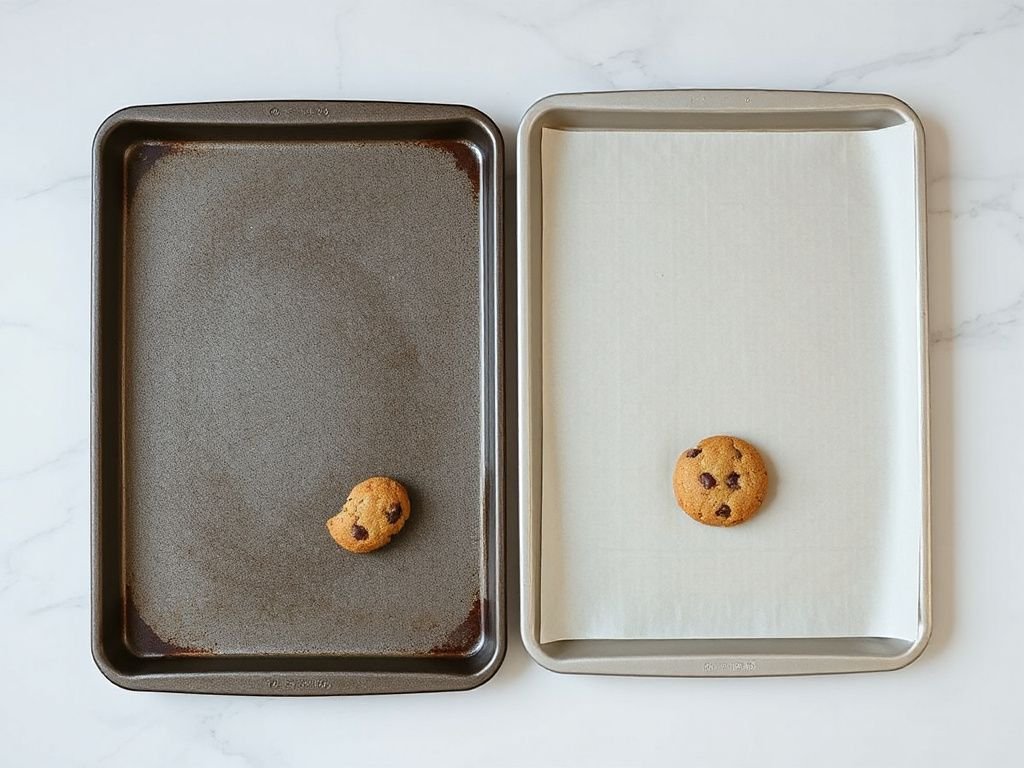
Roughly eighty percent of sheet pan problems come down to one variable often overlooked: the color of the metal. Are dark or light baking sheets better for your cookies, your roasted vegetables, or your sheet cakes? The answer is not a one-word verdict. It depends on what you bake, how hot your oven runs, and how willing you are to adjust a single dial on your stove.
The competing advice gets loud. Some bakers swear by heavy-gauge light aluminum. Others won’t part with their dark non-stick surfaces. The truth sits in the physics of heat transfer, not in brand loyalty.
Key Takeaways
- Dark sheets absorb more radiant heat, which browns bottoms faster and can shorten total bake time by several minutes.
- Light aluminum sheets reflect heat, producing slower, more even browning—ideal for delicate cookies, cakes, and pastries.
- Reduce oven temperature by 25°F (about 15°C) when using dark sheets to prevent over-browning without underbaking the center.
- Thickness and material matter as much as color; a thin, warped light sheet can underperform a heavy, well-made dark sheet.
Why Baking Sheet Color Changes How Food Browns
I’ve lost count of how many bakers have handed me a dark sheet and said, ‘This thing burns everything.’ Then I lift it. It weighs almost nothing. The real issue is not color alone, but how the sheet’s material and thickness affect heat absorption and distribution. Dark sheets absorb more radiant heat, but a thick, light-colored aluminum sheet can bake more evenly than a thin, dark non-stick sheet. The flimsy, warped sheet that isn’t conducting heat well is far more likely to blame than the dark finish.
So before you toss that dark pan, understand what actually happens in the oven.
How Dark Pans Pull In Extra Heat
Dark surfaces have higher thermal emissivity. That means they absorb radiant heat from the oven’s heating elements and walls much more efficiently than light surfaces. A dark sheet sitting in a 350°F oven can reach a surface temperature closer to 375°F. That extra heat hits the bottom of your food first, which is why cookies develop deep brown undersides while the tops still look pale.
Utah State University Extension notes that dark pans can raise the effective baking temperature by roughly 25°F compared to a light pan in the same oven. That number is not marginal. It explains why a recipe that works perfectly on a light sheet turns out burnt on a dark one.
A dark non-stick baking sheet can run 25°F hotter at the food surface than a light aluminum sheet placed in the same oven at the same time.
A matte dark finish absorbs even more than a glossy dark one, because the rough surface traps radiant energy instead of reflecting any of it. So two dark sheets can behave differently depending on the sheen.
Light Pans Reflect Heat and Bake More Slowly
Light-colored aluminum has a shiny surface that reflects a large portion of radiant heat away. The sheet itself still gets hot through conduction, but the food receives less direct infrared energy. That slower, more controlled heating gives doughs time to spread, set their structure, and brown evenly on top and bottom.
This is why bakeries and test kitchens rely on thick, light aluminum sheets for everything from sugar cookies to financiers. The predictable heat curve means fewer surprises.
The Overlooked Variable: Material and Thickness
Color is only part of the story. A heavy-gauge, light-colored aluminum sheet weighing over two pounds will bake more evenly than a thin, dark non-stick sheet that flexes when you lift it. Thin sheets warp under high heat, creating air gaps between the pan and the oven rack. Those gaps stop consistent heat transfer and cause hot spots.
Color has no direct effect on warping; thickness and metal type do. A thin dark sheet will warp just as readily as a thin light sheet. A thick dark sheet holds its shape far better than a thin light one.
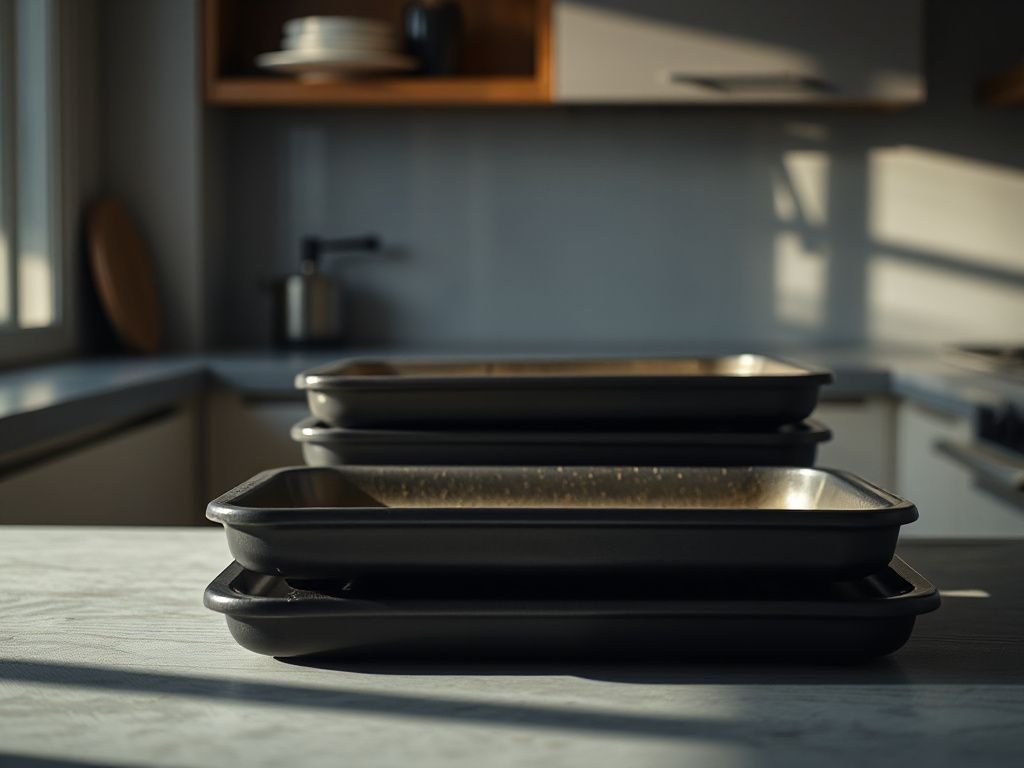
Carbon steel sheets fall somewhere between. They start light gray but darken with use. Stainless steel sheets are bright and poor heat conductors, often leading to underwhelming browning unless paired with a dark coating. Insulated sheets, with their double-layer air gap, reduce bottom heat dramatically and are best for delicate pastries, not for browning-heavy tasks.
Are Dark or Light Baking Sheets Better? Adjusting for Each Type
If you own both types, the skill is knowing how to compensate. The difference between a ruined tray of biscotti and a perfect one often comes down to a 25-degree twist of the oven dial.
The 25°F Rule for Dark Sheets
When a recipe calls for a standard light sheet and you substitute a dark one, lower the oven temperature by 25°F (about 15°C). For a 350°F cookie recipe, set your oven to 325°F. This simple adjustment brings the food surface back to the intended temperature range, letting the interior bake fully before the exterior over-browns.
You should also start checking for doneness 2 to 3 minutes before the recipe’s shortest recommended time. Dark sheets speed up browning but not necessarily the full bake; the center still needs time to set. Rely on visual cues: for cookies, edges should be set and centers no longer glossy. For roasted vegetables, a fork should slide in without resistance.
Here is a step-by-step adjustment when you switch from a light to a dark sheet:
- Reduce the oven temperature by 25°F (15°C).
- Set your timer for the recipe’s shortest recommended time minus 3 minutes.
- Check for doneness every 60 seconds after that timer goes off.
- Remove food when visual cues match, not when the original time elapses.
Lining Dark Sheets with Parchment or Silicone
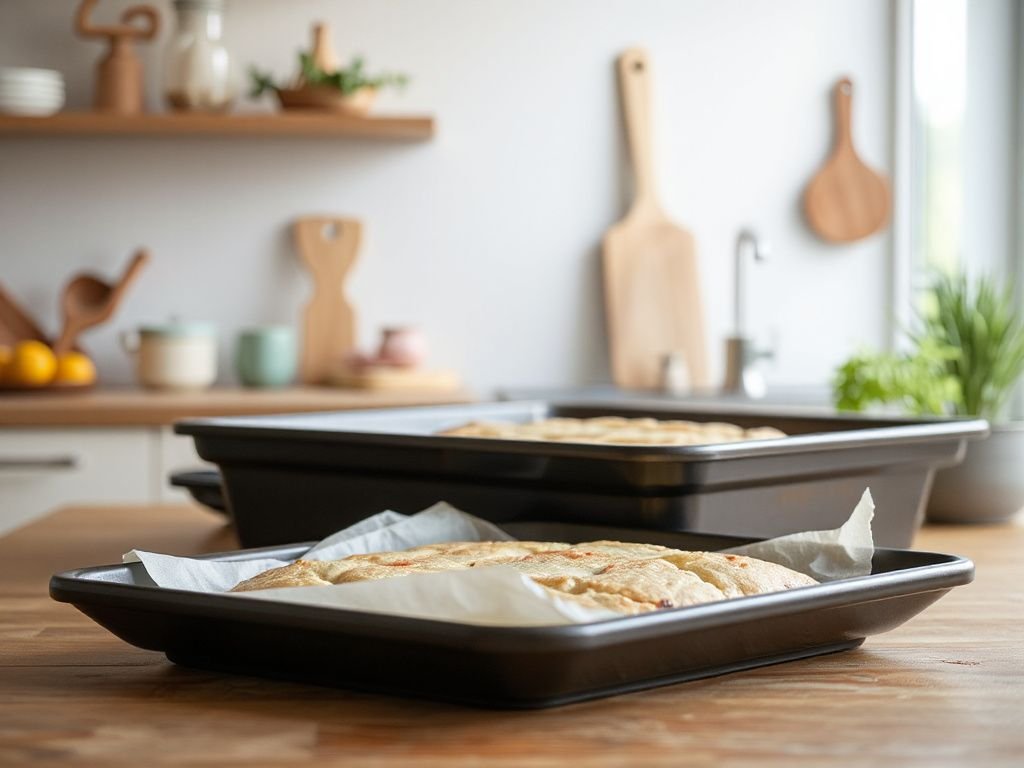
A sheet of parchment paper or a silicone baking mat acts as a thin insulation barrier between the metal and the food. On a dark sheet, this reduces direct bottom heat enough to prevent scorching while still allowing the food to cook through. For cookies, cakes, and even roasted vegetables that brown too aggressively, lining is the easiest fix.
On a dark sheet, a batch of easy brownie mix cookies is exactly the case where parchment should never be skipped. Chocolate-based doughs have a low tolerance for extra bottom heat, and the paper saves the edges from turning bitter.
Silicone mats work similarly but hold slightly more heat than paper, so they are better suited to lighter-colored doughs than to very delicate chocolate work.
When to Start Checking for Doneness
Dark sheets can finish a batch 2 to 4 minutes faster than a light sheet at the same oven setting. That gap widens for thin items like lace cookies or flatbreads. Set your timer for the shortest recommended time, then check every 60 seconds after that. A few extra minutes of attention beats a tray of burnt middles.
Matching the Sheet to the Bake
Different foods demand different heat profiles. While you can make almost anything work on almost any sheet with enough adjustment, some pairings are simply more forgiving.
Cookies: The Great Dark vs Light Debate
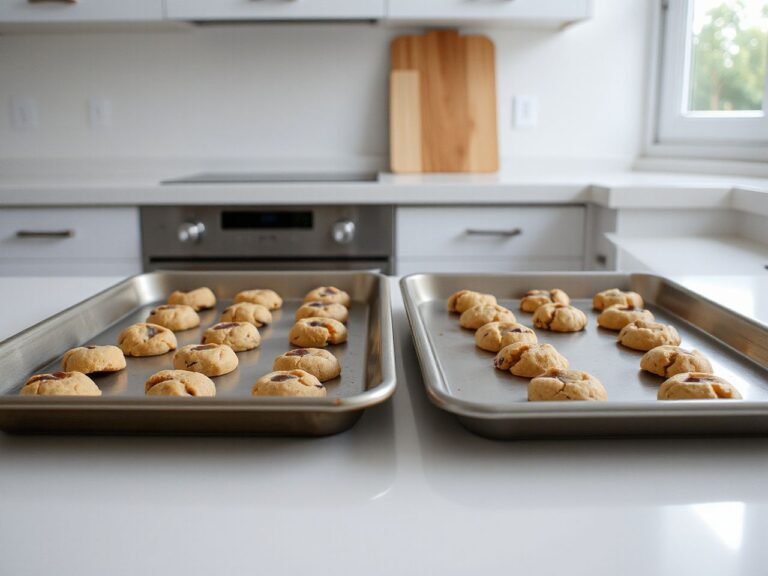
For thick, chewy cookies with soft centers, a light aluminum sheet is your best friend. The slower heat lets the dough spread gradually, giving even rise and a tender crumb. For thin, crispy cookies that snap when you break them, a dark sheet can deliver that deep golden bottom in less time—just remember the temperature drop.
If you’re planning to bake a batch of brownie cookie dough sandwich cookies, which have a brownie-like base, use a light sheet and watch them closely. The chocolate content makes them prone to bitter edges on dark metal.
Another option: for a no-bake friendly dough, try my edible cookie dough recipe—no sheet required, so color never enters the equation.
Roasting Vegetables: Why Dark Sheets Can Be a Problem
Roasting vegetables at 425°F to 450°F is where dark non-stick sheets fail. Most non-stick coatings begin to degrade above 425°F (220°C), releasing fumes and permanently damaging the surface. FDA guidance on food contact substances warns that overheating non-stick cookware accelerates coating breakdown. Avoid using a dark non-stick sheet for high-heat roasting entirely.
For roasted broccoli, cauliflower, or root vegetables, choose an uncoated light aluminum sheet or a seasoned carbon steel sheet. Carbon steel darkens naturally and has no synthetic coating, so it handles 500°F without issue. A bare dark carbon steel sheet can handle 500°F roasting without damage, but a dark non-stick sheet should stay below 425°F.
Cakes and Pastries: Light Aluminum Wins
Cake batters need gentle, even heat from below and above. A dark sheet can set the bottom crust too quickly, preventing the center from rising properly. You’ll end up with a dense, lopsided cake. Light aluminum conducts heat uniformly and reflects enough radiant energy to keep the bottom from over-browning.
For very thin pastries like puff pastry or Danish, an insulated sheet can help further. Its double-layer construction reduces bottom heat even more, mimicking the effect of a baking stone placed on a lower rack.
Advanced Strategies for Consistent Baking on Any Sheet
Once you know the basics, a few extra tricks make any sheet color work harder for you.
Oven Rack Position Matters More Than You Think
The oven’s heating element sits at the bottom in most conventional ovens. Placing a dark sheet on the lowest rack puts it closest to that direct heat source, intensifying bottom browning. Moving the rack to the middle position cuts that effect significantly. For light sheets, the opposite applies: if you want more bottom color on a pale tart, drop the rack one notch lower.
Placing a dark sheet on the lowest rack exposes it to the hottest part of the oven, so moving it to the middle rack can cut bottom browning by half.
If you also bake bread on a baking stone, remember that the stone absorbs and re-radiates heat slowly, so sheet color becomes less critical when the stone is on the rack below.
Seasoning Carbon Steel: A Different Kind of Dark Sheet
Carbon steel baking sheets start out light gray, but over time they darken as oil polymerizes on the surface. This forms a natural non-stick patina that behaves like a dark sheet—absorbing heat and browning food faster—but without any synthetic coating that could degrade at high temperatures. Seasoning a carbon steel sheet is simple: rub a thin layer of neutral oil over the surface, then bake it upside down at 400°F for one hour. Repeat two or three times, and the sheet turns deep bronze and slick.
Don’t confuse this with a factory dark non-stick coating. The seasoned patina can be scrubbed off and re-seasoned; a damaged non-stick coating cannot be repaired.
Cleaning and Care: Dark vs Light Sheets
Dark non-stick sheets require gentle handling. Use warm water, mild dish soap, and a soft sponge. Avoid steel wool, scouring pads, and even spray-on cooking oils, which leave a sticky residue that builds up and ruins the non-stick surface over time.
Light uncoated aluminum sheets can take more aggressive cleaning. They may develop a harmless gray oxide layer after dishwasher use, but that can be removed with a paste of baking soda and water. Carbon steel sheets need to be dried immediately after washing and lightly oiled to prevent rust.
Scrubbing a dark non-stick sheet with steel wool ruins the coating permanently, while a light aluminum sheet can handle aggressive cleaning without damage.
Frequently Asked Questions
Do dark baking sheets cook faster than light ones?
Yes. Dark surfaces absorb more radiant heat, raising the food surface temperature by roughly 25°F. That means cookies, vegetables, and pastries brown faster. Lower the oven temperature 25°F and start checking for doneness two to three minutes early.
Are dark or light baking sheets better for someone new to baking?
Light aluminum sheets are more forgiving because they bake slowly and evenly, giving you more time to notice doneness before burning. Dark sheets demand temperature adjustments and closer monitoring, which can frustrate a beginner. Start with light, then experiment with dark once you know your oven’s behavior.
Should I use parchment paper with dark sheets?
Yes, especially for cookies, cakes, and any baked good with a delicate bottom. Parchment adds a thin insulation layer that reduces direct heat transfer, preventing scorch marks. Silicone baking mats work similarly but hold slightly more heat than paper, so adjust accordingly.
How do I clean a dark non-stick baking sheet without damaging the coating?
Hand wash with warm water, a few drops of mild dish soap, and a non-abrasive sponge. Rinse thoroughly and dry with a soft towel. Never use steel wool, metal spatulas, or oven cleaner. Avoid non-stick cooking sprays, which leave a residue that degrades the coating over time.