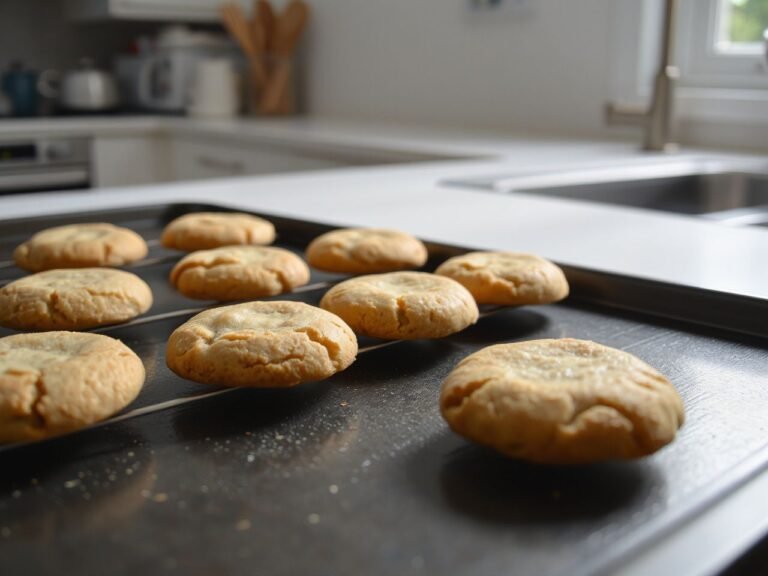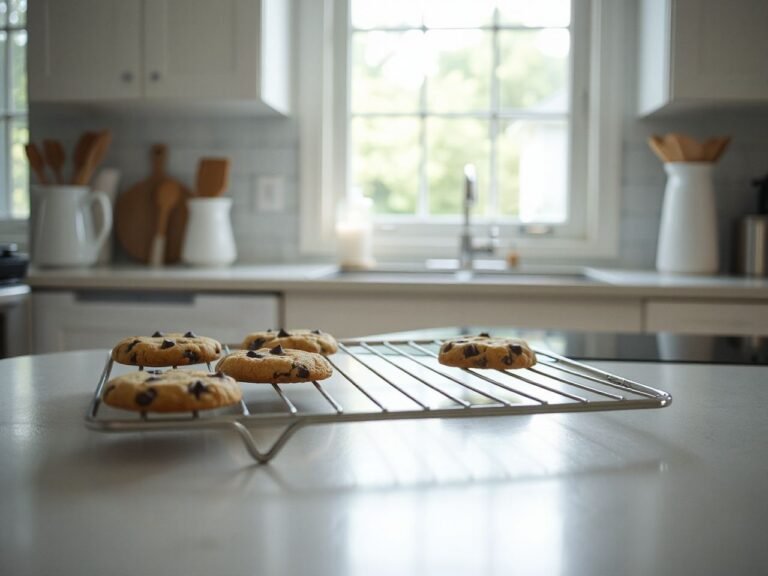
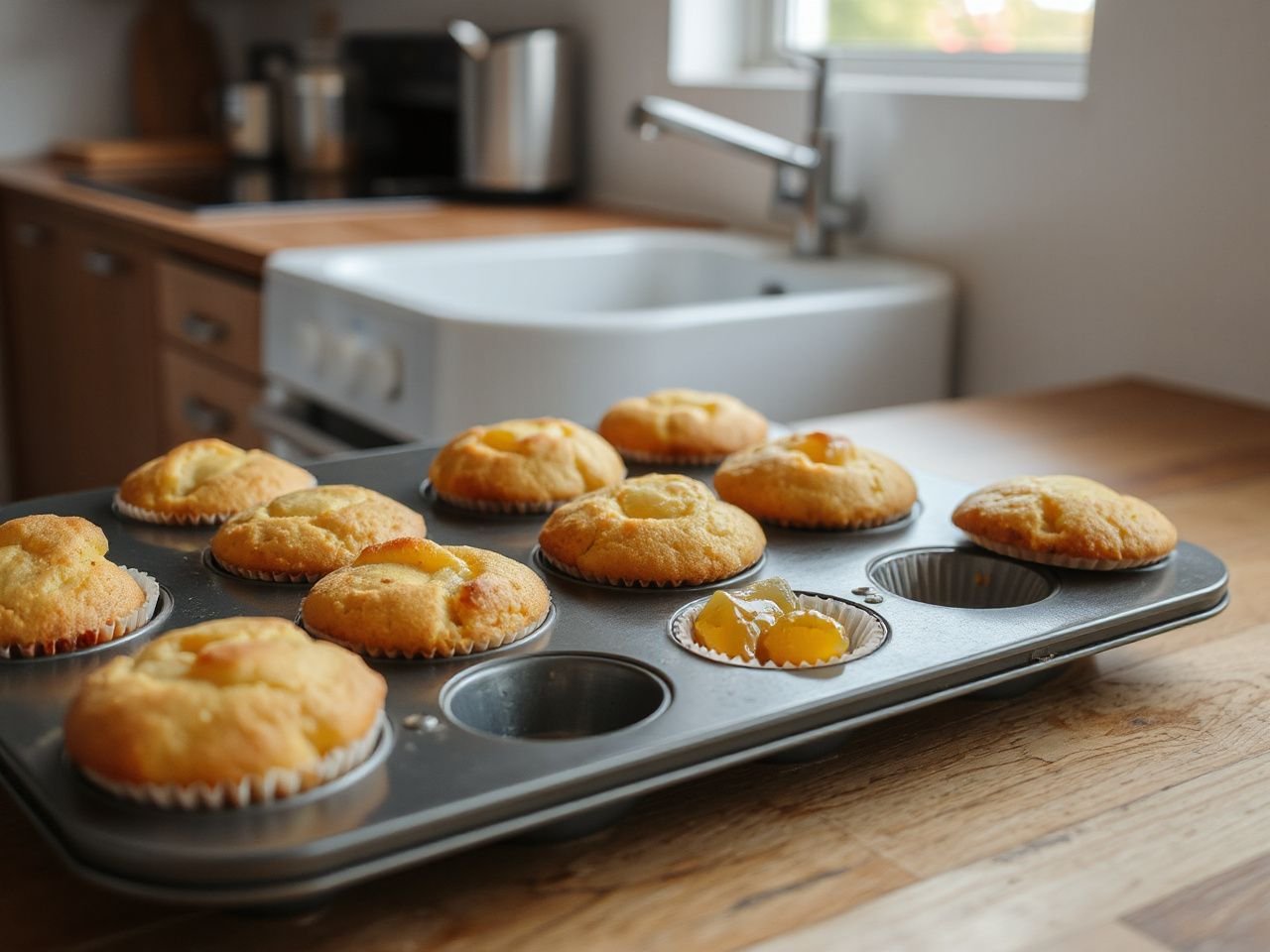
Batter sloshing over the rim as you carry a floppy pan across the kitchen. Cupcakes that scorch on one edge and stay pale in the middle. Paper liners that rattle around in cups a size too wide for them. Those three problems trace back to two things almost nobody checks before buying: the pan’s material and whether it holds its shape when loaded.
I read spec sheets in this category for a living, and most of what gets sold as a cupcake pan is either the wrong cup size or too weak-willed to sit flat under a full load of batter. So we sorted the noise from the pans that make sense.
Here’s the short answer: the Farberware Nonstick Muffin & Cupcake Pan. Here’s the long answer, keep reading. Its heavy-gauge, warp-resistant steel is the one material in this group that browns a standard cupcake evenly and stays put in a 450°F oven, and that is exactly what a metal pan should do.
Before we get into specs, a quick point that trips people up: a muffin pan and a cupcake pan are the same tool. The name changes with what you put in the cups, not the pan itself. What actually matters is cup diameter, cup depth, and the material under your batter. If you like baking projects that use these pans, our brownie cookie dough sandwich cookies recipe is a good excuse to put one to work.
📌 This article contains affiliate links. As an Amazon Associate I earn from qualifying purchases, at no extra cost to you. Full disclosure.
CERTAIN CONTENT THAT APPEARS ON THIS SITE COMES FROM AMAZON. THIS CONTENT IS PROVIDED ‘AS IS’ AND IS SUBJECT TO CHANGE OR REMOVAL AT ANY TIME.
| Product | Best For | Buy Link |
|---|---|---|
| CAKETIME Mini Muffin Pan | Mini bites, easy release | Check Price |
| Waytiffer 6-Cup Aluminum Pans (10-pack) | Bake sales, gifting | Check Price |
| 12 Cups Silicone Muffin Pan | Standard silicone baking | Check Price |
| AOTASO 12+24 Cups Silicone (Metal Frame) | Versatile silicone set | Check Price |
| Bake Choice Mini Muffin Pan + 200 Liners | Mini baking on a budget | Check Price |
| Farberware Nonstick Muffin & Cupcake Pan | Standard bakery-style cupcakes | Check Price |
| RICCLE Silicone Mini Muffin Pan (2-Pack, Metal Frame) | Mini cupcakes, egg bites | Check Price |
What Separates These Pans From the Rest
These picks come from comparing published specifications, materials and documented features against the things that actually decide a cupcake pan. Material and heat conduction relative to cup format is the core of it. Aluminized or heavy-gauge steel gives even browning and holds its shape under batter, while silicone releases easily but flexes and browns weakly unless it is backed by a rigid frame or a baking sheet. Structural stability and cup dimensions are most important, because a pan that spills when you lift it or bakes the wrong size cupcake is a frustration no coating can fix. Release reliability comes next, then whether the format matches real cupcakes rather than mini bites. One thing to check yourself before ordering any multi-cup pan: measure your oven rack width against the pan’s footprint. A 24-cup mini tray that runs almost 15 inches wide will not fit every oven, and the listing rarely warns you.

CAKETIME Mini Muffin Pan (Metal-Reinforced Silicone)
Quick take: A mini-format silicone pan for anyone who bakes two-bite cupcakes and hates prying them loose.
The trick here is the hidden stainless steel frame around the outer edge. Plain silicone sags in the middle when you carry it full; this one keeps its rim rigid, which is the single biggest usability upgrade a silicone pan can have. Each of the 24 cups measures 1.8 inches across the top and 0.9 inches deep, so you are firmly in mini territory here, not standard cupcakes.
Release is where flexible silicone earns its keep. You push from underneath and the mini cake pops out, no knife around the edge. The honest annoyance is browning: silicone is a poor heat conductor, so the tops and sides stay pale compared to a metal tin, and the frame stiffens the rim but not the cup floors.
Pros:
- Hidden stainless steel frame — keeps the rim rigid so a full pan doesn’t fold when you lift it
- 1.8-inch mini cups — ideal for party bites, brownie bites, and kid portions
- Flexible nonstick surface — releases with a push from below, easy to wipe clean
Cons:
- Weak browning — silicone conducts heat poorly, so tops and sides come out lighter than a metal pan’s
- Mini only — the 0.9-inch depth won’t make a standard bakery cupcake
- Frame stiffens the rim, not the base — cup floors still flex, so a baking sheet underneath helps
Who Should Buy This
Great match for: home bakers who want mini cupcakes and value effortless release over deep browning. Think twice if: you bake standard-size cupcakes or want crisp, golden edges — a metal tin does that better.
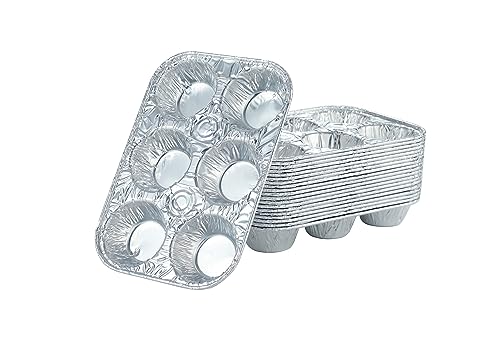
Waytiffer 6-Cup Aluminum Cupcake Pans (10-Pack)
Why it made our list: Disposable aluminum trays for when the cupcakes leave the house and the pan isn’t coming back.
Aluminum is a genuinely good heat conductor, which is why these thin foil trays bake a surprisingly even interior for something you throw away. The set gives you ten 6-cup trays, and they stack flat in a drawer until you need them. For bake sales, care packages, and holiday gifting, that convenience is the whole point.
Compared to the reusable pans here, the trade-off is obvious. Foil is thin, so a loaded tray needs a support underneath or it flexes when you carry it, and you are generating waste with every batch. There is also no nonstick coating worth counting on, so liners or a good greasing are non-negotiable.
Pros:
- Strong aluminum heat conduction — promotes even interior baking despite the thin gauge
- Ten stackable 6-cup trays — store flat, grab as many as a batch needs
- Send-and-forget convenience — no pan to wash or wait to get back from a party
Cons:
- Disposable waste — every batch throws away metal, which adds up fast
- Thin and flexible — a full tray needs a baking sheet under it or it bows
- No reliable nonstick — you’ll want liners or thorough greasing every time
Our Take
Perfect for: bake sales, gifting, and transport where you never want the pan back. Pass on this if: you bake weekly at home and would rather buy one good reusable tin than a stack of throwaways.
12 Cups Silicone Muffin Pan (Standard Size)
The real story: A standard-size silicone pan that nails release and struggles with structure.
This is the one full-size silicone option in the group, with cups 2.75 inches across the top and 1.1 inches deep — genuinely standard cupcake dimensions, so your regular paper liners actually fit. At 7.7 ounces, the whole pan weighs less than a single stick of clad steel, which tells you everything about how it behaves when full.
The heat range is wide, rated from -104°F to 446°F, so it moves from freezer to oven without complaint. The catch is the flex. With no metal frame, a pan this light folds in the middle when you lift 12 filled cups, so you must set it on a rigid baking sheet before you pour. Food-grade silicone is generally recognized as safe for food contact by the U.S. Food and Drug Administration, but safe and sturdy are two different things.
Pros:
- True standard cups (2.75 in top, 1.1 in deep) — fits normal paper liners and bakes full-size cupcakes
- Wide -104°F to 446°F range — freezer, fridge, microwave, and oven safe
- Effortless release — nonstick, flexible walls pop cupcakes out with a gentle push
Cons:
- No metal frame — at 7.7 oz it folds when full, so you need a baking sheet under it
- Pale browning — silicone won’t crisp or color edges the way steel does
- 446°F ceiling — lower than the metal pans here, so watch recipes that call for higher heat
Final Thoughts
Ideal for: bakers who want easy release at standard cupcake size and already own a sturdy baking sheet. Pass on this if: you hate juggling a floppy pan or you want golden, crisp cupcake edges.
AOTASO 12+24 Cups Silicone Muffin Pans (Metal Frame)

Here’s the deal: A two-pan silicone set that solves the flex problem with a built-in metal frame.
You get both a 12-cup standard pan and a 24-cup mini pan, each wrapped in a metal frame that keeps the whole tray rigid from counter to oven. That frame is the difference between silicone that spills and silicone you can actually trust with a full load. The material is 100% BPA-free food-grade silicone, odorless and non-toxic per the listing.
Having both formats covers standard cupcakes and mini bites out of one purchase, which is genuinely useful if you bake for mixed crowds. The honest gripe stays the same as every silicone pan: it releases beautifully but browns softly, so if deep color on your cupcake tops matters, no amount of framing changes the physics of the material.
Pros:
- Built-in metal frame on both pans — rigid enough to carry full without the classic silicone spill
- Standard + mini set (12 and 24 cups) — two formats from one box
- BPA-free food-grade silicone — odorless, easy nonstick cleanup
Cons:
- Soft browning — the frame fixes stability, not silicone’s weak heat conduction
- Bulky storage — two framed pans take more cabinet room than one metal tin
- Premium-priced for silicone — you pay for the frame and the bundle
Why It Stands Out
Perfect for: silicone fans who bake both sizes and are tired of floppy pans. Not great if: counter space is tight or you’re after crisp, well-browned cupcake edges.
Bake Choice Mini Muffin Pan (with 200 Liners)

In a nutshell: A mini metal tin bundled with enough liners to bake for months.
The pan itself measures 14.96 in D x 10.6 in W x 1.57 in H with 24 mini cups, and the bundle throws in 200 cupcake liners sized to fit. For anyone just starting out with mini baking, that removes the annoying step of hunting down liners that actually match the cups — a common mismatch when you buy pan and papers separately.
Being metal, it browns mini cakes better than the silicone pans above. Two things to weigh: that near-15-inch footprint is wide, so measure your oven rack before ordering, and the liners are mini-sized, meaning they’re useless in a standard 12-cup pan. Wash it with warm soapy water before first use and after each bake, as the maker advises.
Pros:
- 200 matched liners included — no guessing whether the papers fit the 24 mini cups
- Metal construction — browns mini cakes better than silicone of the same size
- Budget-friendly bundle — pan plus a long supply of liners in one buy
Cons:
- Wide 14.96-inch footprint — check it against your oven rack before buying
- Mini format only — the shallow cups won’t make standard cupcakes
- Listing skips the gauge — it never states the steel thickness, which is the number that predicts warping
The Bottom Line
Great match for: new bakers wanting mini cupcakes with liners sorted from day one. Skip if: you bake standard cupcakes or your oven is narrow.
Farberware Nonstick Muffin & Cupcake Pan (Heavy-Duty Steel)

Why it earned our top spot: The one pan here built to brown a standard cupcake evenly and hold its shape year after year.
This is heavy-duty, warp-resistant construction that heats evenly to brown beautifully, and that even browning is the whole reason a metal muffin tin exists. Farberware has been a fixture in home bakeware for decades, sitting alongside names like Nordic Ware, Wilton, and USA Pan’s aluminized steel in most kitchens for good reason.
It’s oven safe to 450°F, higher than any silicone pan in this roundup, and the coating is made without PFAS, PFOA, lead, or cadmium — a real point if you care what’s touching your food. One honest caution: dark nonstick metal browns faster than light aluminized steel, so cupcake bottoms can over-color if you don’t drop the temperature slightly or pull the pan a touch early. This pan suits everyday cupcakes well.
Pros:
- Warp-resistant heavy-duty steel — holds shape and heats evenly for consistent browning
- Oven safe to 450°F — handles high-heat recipes the silicone pans can’t
- No PFAS, PFOA, lead, or cadmium — a cleaner nonstick formulation than older coatings
Cons:
- Dark surface browns fast — watch the bottoms and adjust temperature or time to avoid over-coloring
- Nonstick needs care — metal utensils and abrasive scrubbing shorten the coating’s life
- No liners included — unlike some bundles here, you supply your own papers
The Real Deal
Best for: anyone baking standard bakery-style cupcakes who wants dependable, even browning. Skip if: you specifically want a flexible pan for freezer-to-oven use or effortless push-out release.
RICCLE Silicone Mini Muffin Pan (2-Pack, Metal Frame)

What stood out: A framed silicone mini pan that doubles as an egg-bite mold.
Each pan runs 15.3 x 9.2 inches with 24 mini cups at a 1.8-inch top diameter, and the metal-reinforced frame is what makes this stable enough to move full without folding. You get two of them, so a double batch of mini cupcakes or breakfast egg bites goes in at once. The silicone is 100% food-grade, BPA-free.
Versatility is the selling point — these cups handle mini cupcakes, brownie bites, and savory egg bites equally well, and release is the usual silicone strength. Same limitation as the rest of the flexible crowd, though: soft browning and mini-only cups. If crisp edges or standard-size cupcakes are your goal, this isn’t the tool.
Pros:
- Metal-reinforced frame — keeps each pan rigid so a full load doesn’t spill
- Two pans, 48 mini cups total — double batches or mixed sweet-and-savory in one bake
- Food-grade BPA-free silicone — flexible release, dishwasher-friendly cleanup
Cons:
- Mini cups only (1.8 in) — no standard cupcakes from this pan
- Gentle browning — silicone won’t color tops or crisp edges like steel
- Two framed pans store bulky — they eat more shelf space than a single tin
Our Verdict
Ideal for: batch bakers doing mini cupcakes and egg bites who want stable silicone. Pass on this if: you need standard cupcakes or want browned, crisp results.
How to Choose the Best Muffin Pans for Cupcakes
The choice really comes down to material, cup size, and how the pan behaves when it’s full. Get those three right and the rest is detail. Our full muffin pan buying guide with complete baking tips goes deeper, but here’s what matters most for cupcakes.
Metal or silicone: which one browns better?
Metal wins on browning, full stop. Heavy-gauge and aluminized steel conduct heat well, so cupcake edges and bottoms color and firm up. Carbon steel muffin tins do the same. Silicone insulates instead of conducting, so it releases cakes easily but leaves them pale. If golden, bakery-style cupcakes are the goal, a metal pan like the Farberware is the honest answer.
Are the best cupcake pans for cupcakes different from muffin pans?
Best cupcake pans for cupcakes and muffin pans are physically identical — the name only reflects what you bake in them. What you should compare is cup diameter and depth. Standard cups run around 2.75 inches across; mini cups sit near 1.8 inches. A recipe and its liners are built for one size, so a standard batter in a mini pan bakes too fast and overflows.
How many cups do you actually need?
A single 12-cup standard pan covers most home batches. If you bake for crowds or love two-bite portions, a 24-cup mini like the CAKETIME or RICCLE, or a bundle like the AOTASO, makes sense. Just measure the footprint — a 24-cup tray near 15 inches wide won’t fit every oven rack.
Does the silicone frame actually help?
Yes, and it’s the spec I’d insist on for any silicone pan. A plain silicone tray flexes and dumps batter when you lift it full; a built-in metal frame or a rigid baking sheet underneath fixes that. When you’re shopping bakeware more broadly, the same stability logic applies to flat pans, which is why we’re picky in our roundup of the best baking sheets for cookies. Food-grade silicone should meet FDA or European LFGB standards, and material safety bodies like ASTM International publish the test methods manufacturers reference for bakeware performance.
Our Final Recommendation
For most people baking standard cupcakes, the Farberware Nonstick Muffin & Cupcake Pan is the overall winner — warp-resistant steel, even browning, and a 450°F ceiling no silicone pan matches. On a budget or baking to give away, the Waytiffer 6-Cup Aluminum Pans deliver good heat conduction and send-and-forget convenience. If a premium, do-everything silicone set that won’t flop when full is wanted, the AOTASO 12+24 Cups pan with its metal frame is recommended. Match the cup size to your recipe first, then pick the material — that order saves the most grief.
Frequently Asked Questions
Do I still need paper liners if my muffin pan is nonstick or silicone?
Not strictly, but they help. A quality nonstick or silicone pan releases cupcakes on its own if you grease it, yet liners save cleanup and protect the coating from scraping. With bare aluminum trays like the Waytiffer, liners or thorough greasing are essentially required, since there’s no dependable nonstick surface to rely on.
Can these pans go in the dishwasher without ruining the coating?
Silicone pans like the CAKETIME and RICCLE are dishwasher safe. For nonstick metal such as the Farberware, handwashing with warm soapy water extends the coating’s life — dishwasher detergents are abrasive and high heat accelerates wear. Metal utensils and scouring pads do the most damage, so skip both regardless of what the pan is made of.
Why do the edges of my cupcakes bake faster than the centers?
That’s a heat-conduction issue. Thin or dark pans transfer heat aggressively at the cup walls, cooking edges before the center sets. Heavy-gauge or aluminized steel spreads heat more evenly, and an oven with hot spots makes it worse. Rotating the pan halfway through and using an oven thermometer to confirm your real temperature both help even things out.