Appearance is only the starting point.
A useful serving bowl is judged by how its shape, weight, surface, and material behave during serving, washing, storage, and contact with particular foods—not by appearance alone. The key distinction is between a bowl designed mainly to hold food on the table and a bowl designed for preparation: serving bowls need stable handling, practical access for utensils, and compatibility with the temperatures and cleaning methods they will encounter.
This guide to buying serving bowls focuses on that distinction. I also pay close attention to a finish that looks attractive in a showroom but may fade, scratch, or cloud after repeated dishwasher cycles.
Key Takeaways
- Choose the material according to the foods, temperatures, and cleaning methods the bowl will face.
- A broad base, comfortable rim, and manageable weight improve serving control.
- Rapid movement between cold and hot conditions can cause thermal shock in ceramic and glass.
- Ask how a decorative finish changes with dishwasher use before treating appearance as a long-term benefit.
Beginner: Start with the Serving Job
Identify what the bowl must hold
A serving bowl is usually selected for a task before it is selected for a color. A shallow, open shape suits food that needs frequent scooping, while a deeper profile gives soups and stews more room and helps retain heat. A bowl for salad needs enough surface area for serving utensils to move without compressing the leaves; a bowl for rice, pasta, or vegetables needs a rim that can be reached from several positions around the table.
A broad base helps a serving bowl resist tipping during use. A comfortable rim gives fingers and utensils a predictable place to work. Manageable weight matters because a bowl that is difficult to lift becomes awkward to pass, even if the bowl looks well balanced on a table.
A serving bowl needs a stable base and an accessible rim because both features affect safe, controlled serving.
Use size as a working range
Diameter gives a useful first filter, but capacity and shape still matter. A wide, shallow bowl can occupy more table space while holding less food than a narrow, deep bowl with a similar outside measurement. Check the maker’s stated capacity when the amount served matters; do not infer capacity from diameter alone.
- Small bowls: A diameter of 4 to 6 inches and a capacity of 4 to 12 ounces suit small portions, dips, toppings, condiments, and individual accompaniments.
- Medium bowls: Bowls from 8 to 10 inches in diameter may hold 12 to 112 ounces. That broad capacity range shows why shape and the maker’s listed volume deserve attention.
- Large bowls: A diameter of 12 to 14 inches corresponds to bowls capable of holding 86 to 228 ounces. These are suited to substantial shared dishes when the table has enough room.
- Extra-large bowls: Bowls measuring 15 inches or more can hold up to 12 quarts. Their footprint and filled weight require careful thought before they are placed on a crowded table.
Those ranges overlap because bowls do not share one universal depth. For a table setting, measure the open space where the bowl will sit and compare that space with the bowl’s diameter. For storage, inspect the base, rim, and nesting shape rather than assuming that two bowls with similar dimensions will stack neatly.
Separate serving from preparation
Mixing bowls are shaped around stirring, whisking, and scraping. Serving bowls are shaped around access from several sides, visual presentation, lifting, and passing. A preparation bowl may be perfectly useful at the counter yet feel too tall, too light, or too unstable on a dining table.
For preparation-focused needs, the Mixing Bowls Buying Guide: The Basics for Every Kitchen covers a different set of priorities. A serving bowl should be assessed as tableware first, even when the manufacturer says it can also be used for mixing.
Beginner: Match the Material to the Food
Stoneware and porcelain
Stoneware often gives a bowl a substantial feel, which can support stability on the table. Porcelain usually presents a smoother, lighter-looking surface and can coordinate easily with other dinnerware. Neither label alone answers every care question. Construction, glaze, and the maker’s instructions determine suitability for an oven, microwave, dishwasher, or freezer.
Both ceramic materials can chip at exposed edges, and ceramic can crack if a sudden temperature change places stress on the bowl. A cold bowl moved directly into contact with very hot food has less margin for error than a bowl brought gradually to the same use.
Ceramic serving bowls need care instructions that address their construction and glaze, not merely a material name on the label.
Tempered glass
Tempered glass can make food visible from different seats around the table and can suit a clean, simple table setting. Glass also deserves careful temperature handling. Rapid changes between cold and hot conditions can cause thermal shock, especially in glass bowls, so a bowl taken from a cold place should not automatically receive very hot food.
Inspect the rim and base for damage before use. A small chip changes how the bowl feels in the hand and may become more noticeable during washing or storage. Glass can also show cloudy deposits, scratches, or a dull surface, so the finish should be judged under the cleaning method the bowl will actually receive.
Stainless steel
Stainless steel is useful when a serving bowl needs a cleanable, practical surface and a lower concern about shattering. Its appearance is less forgiving of fingerprints, water marks, and scratches than a patterned ceramic surface. A brushed or polished finish may change visually with repeated handling, so ask the maker how the surface should be cleaned.
Metal can also alter the visual impression of a dish. That is not a safety conclusion; it is a table-setting consideration. A reflective bowl may suit salad or chilled food while competing with strongly patterned dinnerware.
Melamine
Melamine is useful for lightweight serving, especially where a heavy bowl would be awkward to pass. Melamine is not suitable for microwave use. Keep that limitation in mind before choosing one for food that will be heated or reheated in the bowl.
Melamine may be a practical choice for a serving table, but its lightness still needs to be balanced by a stable base. A bowl that slides when a utensil presses against the food is poorly suited to serving, regardless of how easy it is to lift.
Acacia wood
Acacia wood adds natural variation and warmth to a table setting. Wood can absorb moisture, odors, and stains if it is neglected, so the finish and care instructions matter more than the appearance of a new bowl. Ask whether the bowl should be hand-washed, how it should be dried, and which foods may leave marks.
Wooden serving bowls should not be treated like ceramic or glass. A dishwasher’s heat, water exposure, and detergent can conflict with the maker’s care directions, and a wooden bowl should not be placed in a microwave unless the maker expressly permits that use.
Intermediate: Judge Shape, Handling, and Finish
Choose a shape that supports the utensil
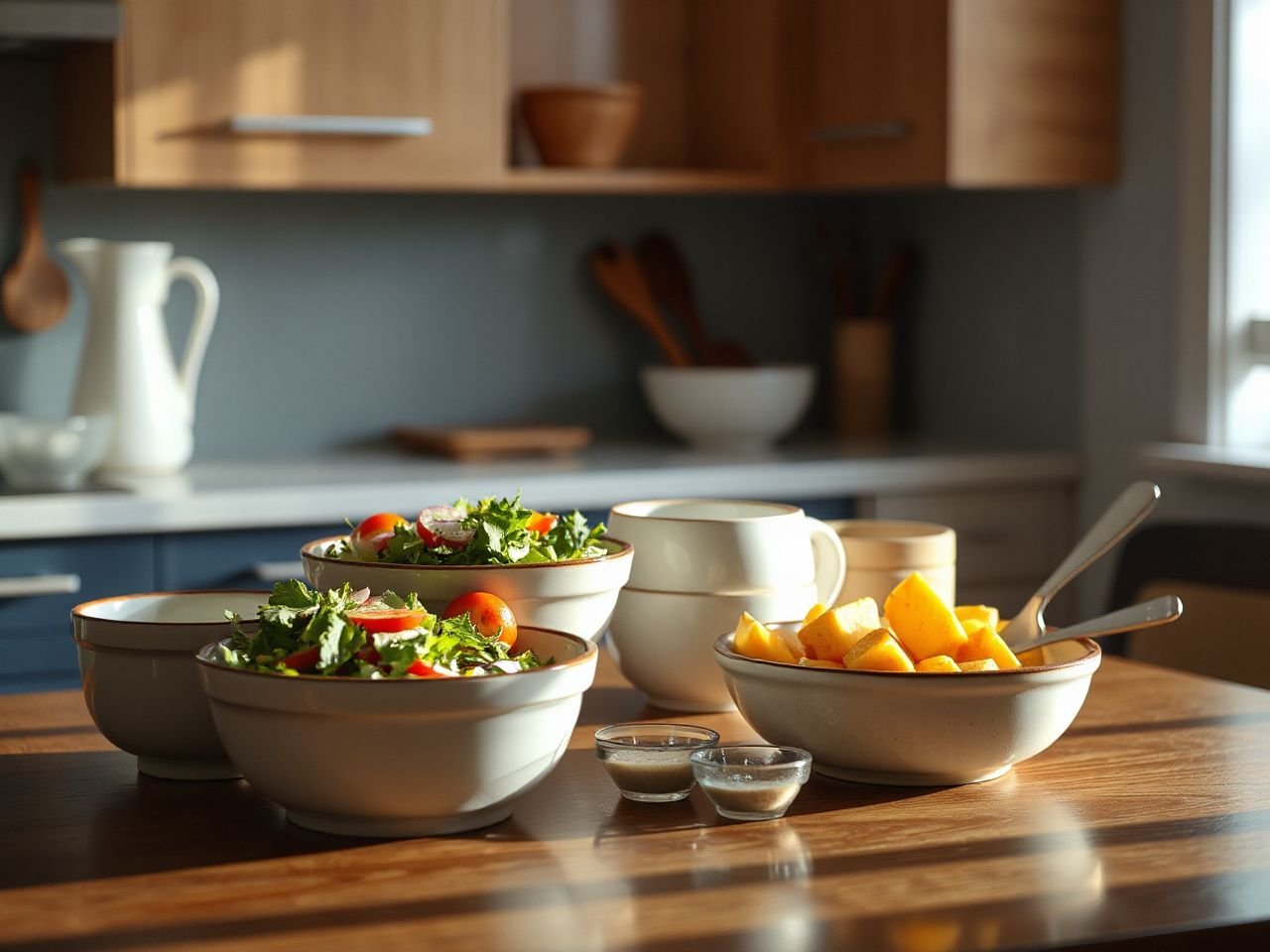
Serving control depends on the relationship between the bowl wall and the utensil. A sharply curved interior can make the last portion difficult to reach. A broad opening gives salad servers or a large spoon more room, while excessive depth can force the hand farther into the bowl.
- Open and shallow: Useful for foods that need broad access, such as salads, roasted vegetables, and dishes served with tongs.
- Deep and thick-walled: Soup or stew bowls are constructed with greater depth and typically feature thicker-walled designs to help retain heat.
- Straight-sided: These can give a defined visual profile, but check the rim for comfortable access from the table.
- Footed: A raised base can create a formal appearance, although the foot should sit securely and leave enough room for steady lifting.
Do not choose a bowl by its outer silhouette alone. Look at the inside curve, rim thickness, base contact, and the point where fingers naturally rest. If the bowl is intended for salad servers, test the available opening with the utensils you already use rather than relying on a photograph.
A comfortable rim improves serving control because the utensil can enter and leave the bowl without striking a steep wall.
Check stability before appearance
Set the empty bowl on a flat surface and look for a broad, even base. Press lightly near the rim from different sides. The bowl should not rock or walk across the surface. A non-slip silicone base can help, but the base must still be compatible with the maker’s cleaning instructions.
Weight deserves a practical test based on the food you plan to serve. A large bowl that is easy to lift empty may become difficult to pass when full. A small bowl that feels heavy may be stable but still awkward for a child or guest to handle. The right balance depends on the users, the food, and the distance the bowl will travel.
Examine decorative glaze and food-contact information
Decorative or handmade glazes may not be intended for food contact, particularly when their composition and care instructions are unknown. A bowl intended only for display should not be assumed suitable for direct contact with food. Look for the maker’s food-contact statement and instructions for use.
The phrase food-contact glaze is useful only when the maker clearly applies it to the bowl in question. A decorative surface can still require special washing or limited use. If the information is missing, choose a different piece for direct serving or use the bowl only as directed by its maker.
The U.S. Food and Drug Administration provides the federal food-safety framework for materials that contact food; consult its guidance when a claim about food-contact safety is unclear. The FDA’s involvement does not replace the maker’s care instructions for a particular bowl.
Ask how the finish ages
A finish can change through repeated washing even when the bowl remains structurally sound. Dishwasher cycles expose surfaces to water, detergent, heat, contact with other items, and drying conditions. The visible result may be fading, clouding, loss of gloss, or fine scratching.
Ask specific questions before buying:
- Is the decorative color under the glaze or applied above it?
- Does the maker permit dishwasher use for the exact finish?
- Are abrasive powders, scouring pads, or strong detergents excluded?
- Does the maker describe the bowl as suitable for hot food, cold food, or both?
- Are metallic accents, painted rims, or matte surfaces subject to special care?
A dishwasher-safe claim is not a promise that every visible finish will look unchanged forever. The claim should be read together with restrictions about stacking, detergent, temperature, and drying. If long-term appearance matters, favor clear care information over a vague symbol printed on packaging.
Intermediate: Manage Heat, Cold, and Cleaning
Read the care instructions by appliance
A bowl’s suitability for an oven, microwave, dishwasher, or freezer depends on its material, glaze, construction, and maker’s care instructions. One appliance symbol does not automatically approve the others. A bowl approved for dishwasher use may still be unsuitable for a microwave, and a bowl that handles cold storage may not tolerate sudden contact with hot food.
Use the appliance guidance as a set of separate decisions:
- Oven: Confirm that the maker permits oven use and follow any limits or handling instructions supplied with the bowl.
- Microwave: Check the microwave instruction specifically. Melamine is not suitable for microwave use, and decorative details may require additional restrictions.
- Dishwasher: Confirm the rack position, finish limitations, and detergent guidance if supplied.
- Freezer: Check that the bowl is approved for freezer use before storing food in it.
The same reasoning applies to bowls with lids. A lid may be intended for food storage containers rather than hot serving, and a tight fit does not establish microwave or freezer suitability.
Prevent thermal shock
Rapid changes between hot and cold conditions can cause thermal shock, especially in ceramic and glass bowls. The risk is connected to the bowl’s material and construction, not simply to whether the bowl looks thick or expensive.
Avoid moving a bowl directly from a cold place to a very hot dish. Let the bowl and food move toward the intended use condition gradually, and follow the maker’s instructions when they give a specific sequence. Do not use a bowl with a visible crack, chip, or damaged rim for hot food.
Thermal shock can crack ceramic and glass when a rapid temperature change places uneven stress through the bowl.
Clean without shortening the finish’s life
Begin by removing food residue with the least aggressive method allowed by the care instructions. Soaking may help with stuck food on suitable materials, but wood can absorb moisture and should be dried promptly rather than left submerged. Avoid assuming that a rough pad is harmless because the bowl has a hard surface.
For a dishwasher, place bowls so they do not strike one another or contact sharp utensils. If the finish is matte, painted, metallic, or unusually textured, hand-washing may better preserve its appearance when the maker allows or recommends it. The key question is not only whether the bowl comes out clean; it is also whether the surface remains clear, even, and free from new dull patches.
Odors often point to residue, absorbed moisture, or storage conditions. Wash food-contact surfaces thoroughly, dry them completely, and avoid sealing a wooden bowl away while damp. Stainless steel, glass, ceramic, melamine, and wood each need the care method stated for that particular piece.
Store bowls without chips and scratches
Storage problems usually begin at contact points. Stacking can place rims against bases, and sliding a bowl across another surface can create scratches or small chips. Separate pieces when the maker supplies protective material or when the shape makes contact unavoidable.
Heavy bowls should be stored where lifting does not require twisting or reaching over other tableware. Large and extra-large bowls also need enough clearance around the rim. A crowded cabinet can turn a stable bowl into a falling object during ordinary access.
Advanced: Think About Replacement and Long-Term Value
Compare the cost of care, not only the purchase price
A bowl’s long-term cost includes replacement, matching, care time, and the chance that a finish will stop looking right before the bowl becomes unusable. A low-maintenance material may justify its place through repeated use. A delicate handmade glaze may be appropriate for occasional serving if its care demands are understood.
Replacement becomes more complicated when a bowl belongs to a coordinated dinnerware collection. Before choosing a distinctive shape or finish, check whether the maker identifies the design clearly and provides care information that will remain useful. A bowl that cannot be matched after a chip may be less practical for a household that wants a consistent table setting.
Long-term value depends on how easily a bowl can be cared for, matched, and replaced after ordinary damage.
Coordinate without sacrificing function
Color and shape should support the meal rather than obstruct serving. A neutral bowl can work with changing table settings, while a strong pattern may become the central visual feature. Dinnerware coordination is easiest when the bowl’s rim, height, and base do not crowd plates, glasses, or serving utensils.
Consider the relationship between the bowl and the rest of the table:
- A wide bowl needs open space around its rim so utensils can rest without falling into neighboring dishes.
- A tall bowl can block sightlines across a small table.
- A highly reflective surface may show water marks and fingerprints more readily.
- A patterned glaze can hide food marks while making chips or fading easier to notice.
A cereal bowls buying guide can help separate individual place-setting bowls from shared serving pieces. The distinction matters because a bowl meant for one person may not offer the opening, base, or capacity needed for passing food around a table.
Use the material for the right foods
For hot soup or stew, begin with the maker’s heat guidance and favor a shape designed for depth and access. For salads, examine the opening and the way salad servers sit against the wall. For oily, strongly colored, or aromatic foods, give extra attention to cleaning instructions and the possibility of staining or odor absorption.
Wood can absorb moisture, odors, and stains if neglected. Glass can show clouding or scratches. Ceramic can chip or crack, and a decorative glaze may have care limits. Melamine is light but cannot go in a microwave. Stainless steel avoids some breakage concerns while making surface marks more visible.
Check independent safety information carefully
Product labels sometimes use safety language without explaining the test behind it. For a general understanding of voluntary consensus standards and how such standards are developed, the ASTM International site is a useful reference. A standards organization’s information does not turn an unspecified bowl into a certified product, so look for the exact claim and the organization named by the maker.
For commercial food-service equipment, the NSF site explains its certification role. A symbol should be checked against the product information rather than treated as a substitute for care instructions, food-contact information, or appliance guidance.
Make a final inspection before purchase
Use the following sequence in a shop or online listing:
- Confirm the bowl’s intended serving task and compare the inside shape with the utensil you will use.
- Check the listed diameter and capacity, remembering that shape affects usable space.
- Look for a broad base, an even rim, and a weight you can comfortably lift when the bowl is full.
- Read the separate instructions for hot food, oven, microwave, dishwasher, and freezer use.
- Inspect the finish for food-contact information and ask how color, gloss, or decoration behaves during dishwasher cleaning.
- Consider storage, matching pieces, and replacement before committing to an unusual shape or finish.
If a listing omits capacity, material details, food-contact information, or appliance care, treat that omission as a reason to ask questions rather than fill in the gap yourself. The bowl may still be attractive, but the missing information limits a responsible decision.
Frequently Asked Questions
How do I choose a serving bowl material for the foods I usually serve?
Start with temperature, moisture, staining, and cleaning. Stoneware and porcelain suit many table settings but need attention to glaze and thermal shock. Tempered glass shows the food clearly but still requires careful hot-to-cold handling. Melamine is lightweight but not microwave suitable. Acacia wood needs prompt drying because wood can absorb moisture, odors, and stains when neglected.
What bowl shape makes serving and scooping easier?
An open bowl with a comfortable rim usually gives utensils better access than a narrow opening or steep interior wall. A broad base improves stability, while excessive depth can make the last portion difficult to reach. Soup or stew bowls use greater depth and often thicker walls to help retain heat. Match the inside curve to your serving spoon, tongs, or salad servers.
How can I tell if a decorative glaze is suitable for food?
Look for a clear food-contact statement from the maker and read the care instructions for the exact bowl. Decorative or handmade glazes may not be intended for food contact when their composition and instructions are unknown. The phrase food-contact glaze is meaningful only when it applies to that specific piece. If the information is missing, do not assume display ware is serving ware.
Can a wooden or melamine serving bowl go in a dishwasher or microwave?
Follow the maker’s instructions for the specific bowl. Melamine is not suitable for microwave use. Wood can absorb moisture, odors, and stains, so dishwasher exposure may conflict with its care requirements; wood should not go in a microwave unless the maker expressly permits it. A dishwasher-safe claim does not automatically approve microwave, oven, or freezer use.
Why can a serving bowl crack when moved from a cold place to hot food?
Rapid temperature changes can create thermal shock, especially in ceramic and glass. Different parts of the bowl change temperature at different rates, placing stress through the material. Avoid transferring a cold ceramic or glass bowl directly to very hot food, and follow the maker’s instructions for warming, oven use, freezer storage, and serving.
For related tableware decisions, the guide to choosing drinking glasses for an everyday table covers similar questions about material, handling, and cleaning without treating every piece of serveware as interchangeable.