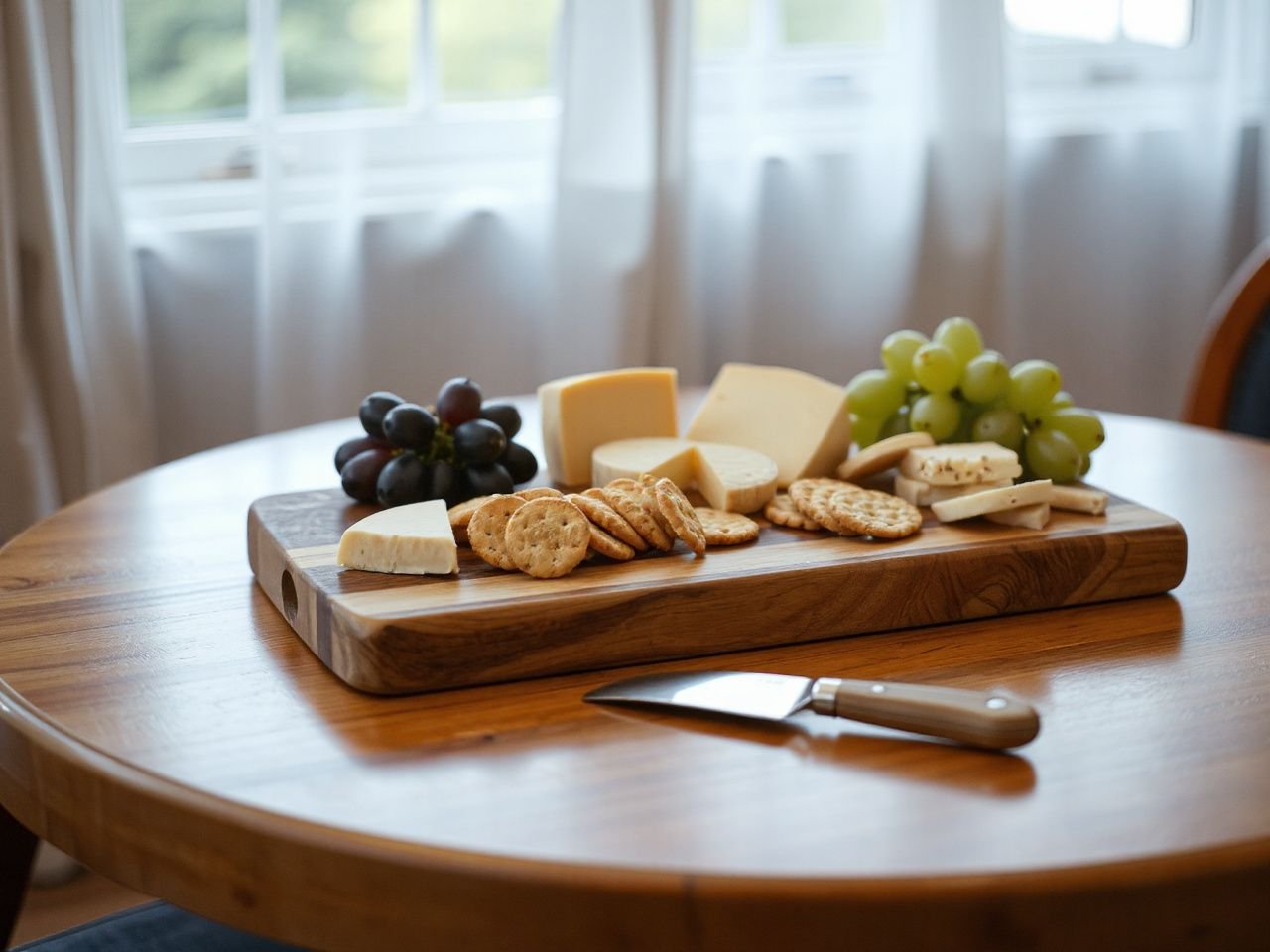
Cheese boards have shifted from occasional serving pieces to regular parts of table settings, snack spreads, and casual entertaining. The useful distinction is between a board that presents cheese attractively and one that supports the full serving routine: cutting, separating varieties, containing crumbs, cleaning, drying, and storing. Material and construction matter because soft cheese, hard cheese, moisture, oils, and sharp knives place different demands on the surface; a visually appealing board can be impractical if it stains, absorbs odors, damages knives, or is difficult to clean. This cheese board buying guide focuses on the board you will actually use, not the one that looks impressive for a single photograph.
Key Takeaways
- Choose the surface according to the cheese, knife, and cleaning routine.
- Wood suits many serving situations, but it needs prompt hand washing and thorough drying.
- Slate, marble, and glass serve neatly but can be hard on knife edges and require careful handling.
- Separate cheese service from raw-meat preparation unless the board can be cleaned and sanitized appropriately.
Cheese Board Buying Guide: Start With the Serving Routine
A cheese board should support the way cheese reaches the table. A board used for a few wedges and a serving knife has different demands from one used for several varieties, crackers, fruit, chutney, and small bowls. Decide what happens on the board before judging its appearance.
Choose for the cheese you serve
Soft cheese needs a surface that can be wiped clean around creamy smears. Hard cheese creates firmer crumbs and may require a knife with enough room for controlled cutting. Crumbly cheese benefits from a surface that does not hide fragments in deep grooves, while a washed-rind cheese makes odor control especially important.
A cheese board used for soft cheese should have a smooth, accessible surface that does not trap residue. A board used for crumbly cheese should contain crumbs without forcing them into decorative recesses. These are simple requirements, yet ornate details often receive more attention than cleanup.
Choose for the number of people
For an appetizer board, allot between one and one and a half ounces of each cheese for every guest. A broader serving plan can use 1–2 ounces of cheese for each guest, depending on how much other food is present.
Those amounts help determine the working surface without pretending that every gathering needs the same format. If cheese is one part of a larger spread, serving bowls and ramekins can keep wet accompaniments away from the cutting area. If cheese is the central food, leave enough clear space for cutting and portioning rather than filling every visible inch.
Plan the tools before the layout
Cheese knives work best when the board gives them room to move and rest without crossing into another variety. A soft cheese knife, a firmer cutting tool, and a small spreader may be useful for different textures, but the board should not become a crowded tool tray.
Serving bowls can hold olives, preserves, nuts, or other wet foods so their oils and moisture do not spread across the cheese surface. Small bowls also create a clear boundary between food that is cut directly on the board and food that is spooned or picked up.
For planning the cutting surface itself, the Cutting Board Buying Guide: Getting It Right at Home provides useful context about choosing a board around preparation habits rather than decoration. Cheese service has its own needs, but the same basic discipline applies: surface, tools, cleanup, and storage must agree.
Beginner Choices: How Materials Change Cheese Service
Material determines how a board responds to moisture, oil, crumbs, knives, and cleaning. No surface handles every task equally well, so the useful comparison is practical rather than decorative.
Hardwood and bamboo
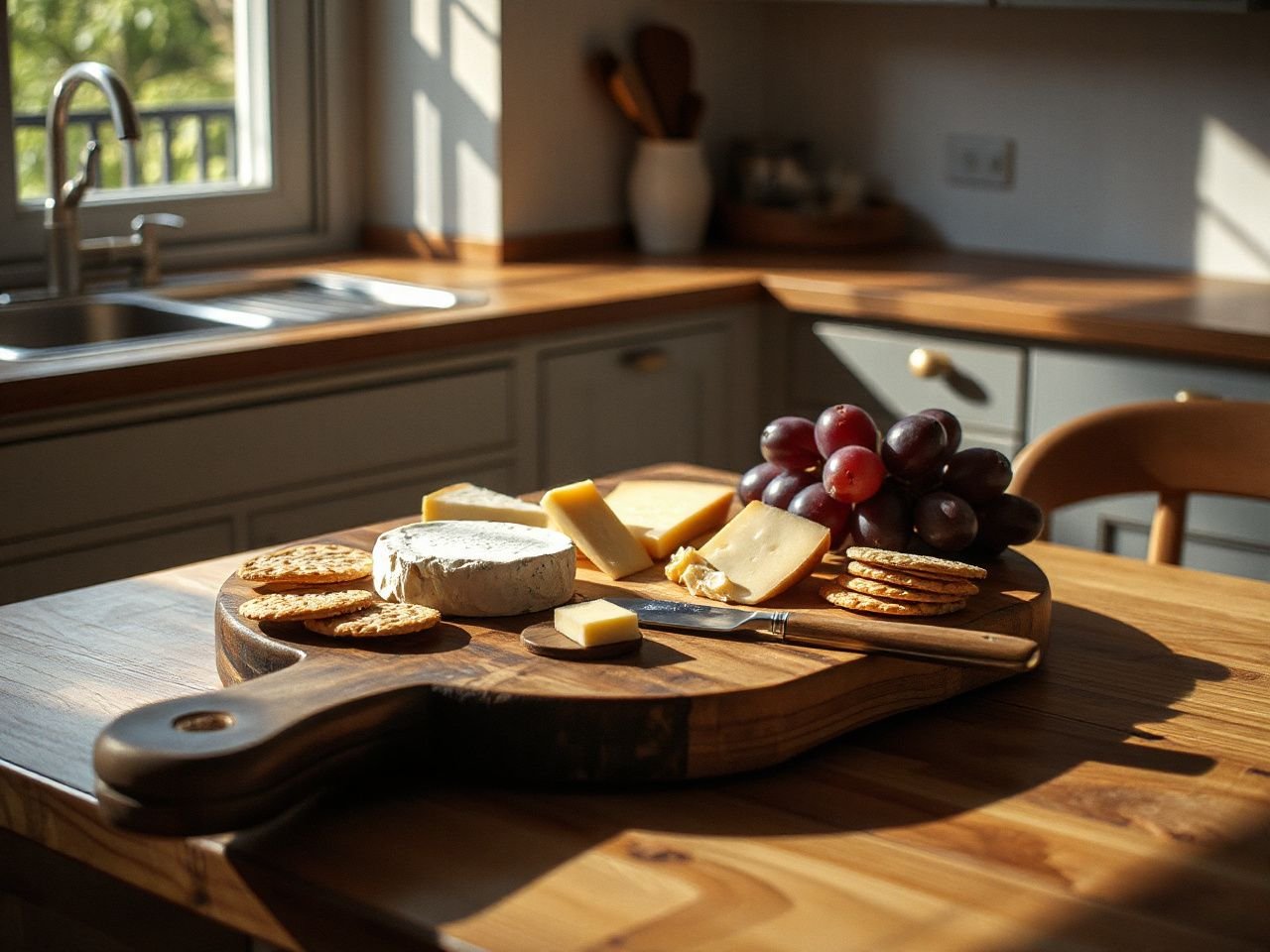
Hardwood gives a cheese board a warm serving appearance and a surface suited to direct cutting. Bamboo is also commonly used for serving boards and can offer a light, simple look. Both should be treated as materials that need care rather than as disposable trays.
Wood can absorb moisture, oils, and odors, so a wooden board generally needs prompt hand washing, thorough drying, and protection from prolonged soaking. A wood board left damp or stored before it is fully dry is more likely to become unpleasant to use, regardless of how attractive it looked at the table.
A food-safe finish can help protect the surface, but a finish does not remove the need for cleaning. Look for clear care instructions from the maker, especially if the board has a coating, painted detail, or glued construction.
Wooden boards should generally stay out of the dishwasher unless the manufacturer explicitly says otherwise. Heat, water exposure, and strong washing action can place stress on wood and joined parts. The safe routine is straightforward: remove food promptly, wash by hand, rinse without soaking, dry all faces and edges, and store the board where air can circulate.
Wood is not automatically the right choice for every food-service situation. A porous or difficult-to-clean surface should not be treated as interchangeable with a nonporous surface when the food or cleaning demands differ.
Slate
Slate gives a cheese board a dark, spare presentation that makes pale cheeses and bright accompaniments stand out. Its surface can also make crumbs and residue easy to see, which is useful during cleanup.
Slate can be hard on knife edges, and a careless impact may chip the material. Use cheese knives with control rather than pressing a sharp blade aggressively into the board. Check the edges before serving, since a chipped area can complicate wiping and may create a rough place for food to collect.
Slate is not a substitute for a cutting board in every situation. If the surface is being used mainly for presentation, cut larger portions elsewhere and transfer them to the slate. That approach reduces direct knife contact and keeps the board focused on serving.
Marble
Marble has a cool, formal appearance and can be useful as a presentation surface. Its weight may make it feel stable on the table, but a heavy board still needs careful handling and a suitable storage place.
Marble can be hard on knife edges, and the surface may scratch or chip if handled carelessly. Moisture and oily foods also make cleaning part of the design decision. A board that cannot be lifted, wiped, dried, and stored comfortably will become a nuisance after the event.
Use marble as a serving surface when its care requirements suit the household. Keep the knife work controlled, use serving bowls for wet accompaniments, and follow the manufacturer’s instructions for cleaning and sealing if those instructions apply.
Tempered glass
Tempered glass offers a smooth, nonporous surface that is easy to wipe. That can make it appealing for foods that leave soft residue or oil behind, but the material is unforgiving toward sharp knives.
Glass can dull knife edges, scratch, chip, or break if handled carelessly. A glass board should therefore serve as a presentation surface rather than a place for forceful chopping. Inspect it for damage before use and stop using it if the surface has a crack or a chipped working area.
Intermediate Guidance: Match Surface, Cheese, and Accessories
The board material is only one part of the system. Construction details affect how food is separated, how crumbs are contained, and how much work follows the meal.
Grooves, compartments, and attached pieces
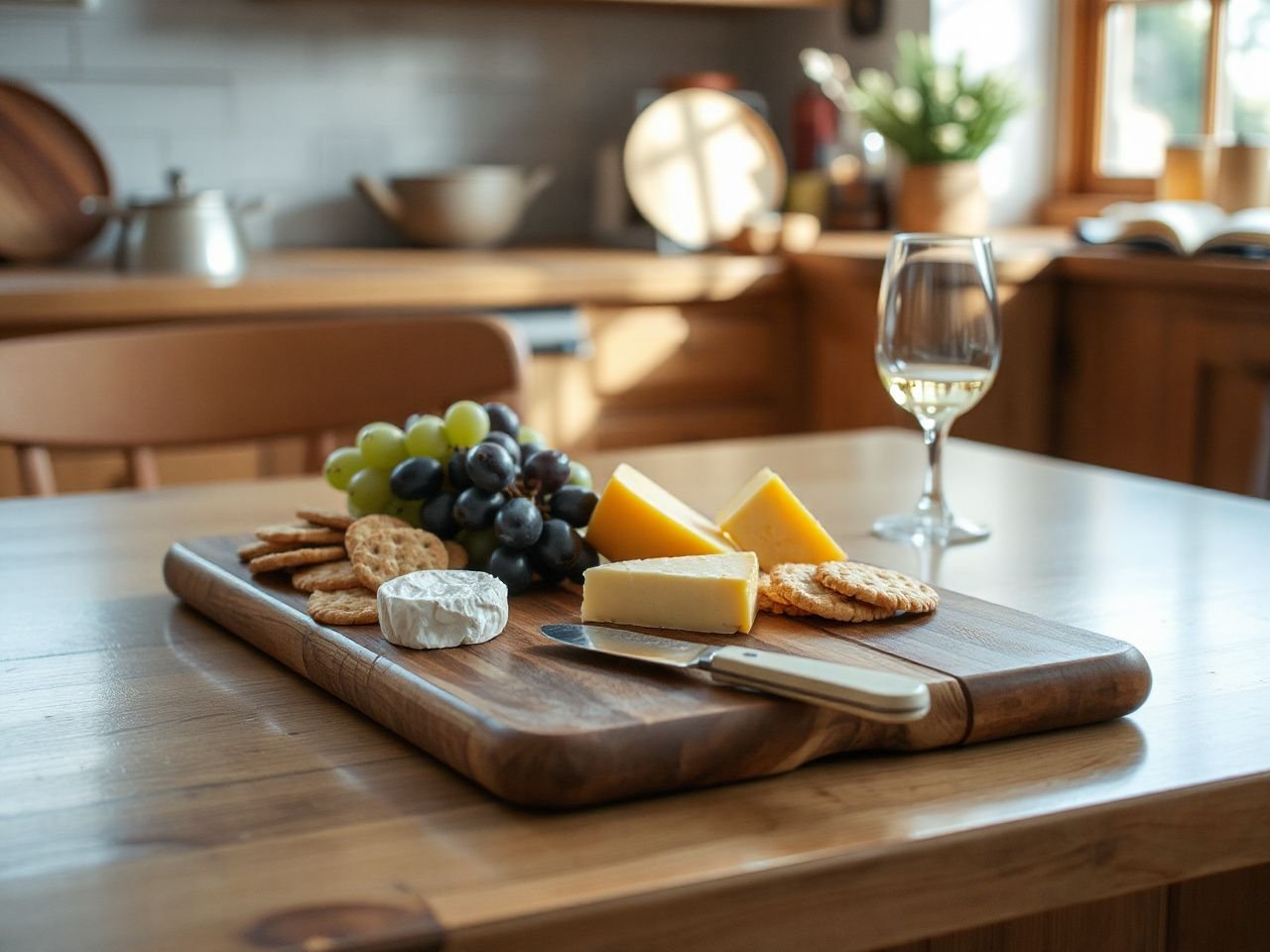
Grooves can collect crumbs and make a board look organized. Compartments can separate crackers from cheese, while attached serving pieces can reduce the number of loose items on the table. Every added detail also creates another area that requires cleaning.
Deep grooves are awkward around soft cheese because creamy residue can remain below the wiping surface. Small compartments can collect crumbs, oils, or bits of rind. Attached knives and bowls are convenient only if they can be removed, washed, dried, and stored without hidden contact points being overlooked.
A board with grooves or compartments should be judged by the cleaning tool it accepts. If a cloth cannot reach a corner or a brush cannot clear a recess, the feature is a maintenance problem disguised as organization.
Edges, handles, and stability
Handles make carrying easier, but they also add places where oil and crumbs may collect. Recessed handles can be difficult to wipe, while cutout handles may reduce the usable surface. Choose a shape that leaves enough clear area for the cheese and tools you plan to serve.
A board should sit securely on the table without forcing guests to hold it while cutting. Examine the underside for feet, pads, or uneven contact points, but do not assume that an attached part is maintenance-free. Small underside details can trap moisture during drying.
A stable cheese board makes portioning safer because the cutting motion is easier to control. Stability does not justify forceful cutting on slate, marble, or glass; those materials still need gentle handling.
Separate cheese from raw-meat preparation
A board used for cheese should be kept separate from surfaces used for raw meat unless it can be cleaned and sanitized appropriately. This separation reduces confusion between serving and preparation tasks and makes the board’s intended use clear to everyone handling it.
The U.S. Food and Drug Administration publishes food-safety guidance, so consult its current information when a board will be used in a setting with higher sanitation demands. General appearance is not proof that a surface has been cleaned or sanitized properly.
The NSF develops standards and certification programs related to public health and food equipment, so its information can help explain what independent sanitation-related review means when such a mark appears on a product. A mark should not be treated as permission to ignore the manufacturer’s care instructions.
Serving temperature and storage
Cheese should reach room temperature by removing it from the refrigerator a minimum of 30 minutes before service. Some guidance also calls for unwrapping cheeses one hour before serving, so follow the cheese’s specific needs and the serving plan rather than applying one routine to every variety.
Keep cheese inside a refrigerator, ideally within 35°–40°F, until the planned serving period. Wax paper or cheese paper helps limit outside odors and dehydration during storage. Do not use the board as a refrigerator storage surface unless the maker specifically describes that use.
Cheese storage and board service should remain separate tasks. Wrap and refrigerate leftover cheese, then clean the empty board instead of leaving food on it until the next gathering.
Advanced Care: Cleaning, Drying, and Storage
Care determines whether a board remains pleasant to use. The best-looking material becomes a poor serving choice if its routine is too demanding for the household.
Cleaning a wooden board
Remove rinds, crumbs, and soft residue soon after serving. Wash a wooden board by hand with the cleaning method stated by the manufacturer, rinse it without prolonged soaking, and dry the top, underside, sides, and handle area before putting it away.
Wood can absorb moisture, oils, and odors, so prompt hand washing and thorough drying are central to its care. A board that still feels damp should not be stacked in a cupboard or placed against another surface.
Do not assume that a food-safe finish makes a wooden board waterproof. Finishes can wear, scratch, or respond differently to washing, and the care label is more reliable than a generic promise attached to the material.
Cleaning slate, marble, and glass
Wipe slate, marble, and glass soon after use so soft cheese and oily accompaniments do not dry onto the surface. Use the cleaning method recommended for the specific material, then dry the board before storage.
Do not drag a marble or glass board across a hard table, and do not stack damaged pieces with other serveware. Slate, marble, and glass can be hard on knife edges or prone to chipping, scratching, or breaking if handled carelessly.
Nonporous does not mean indestructible. A smooth surface may be easier to wipe, yet impact, abrasive cleaning, or careless storage can still damage it. Store rigid boards so they cannot slide into one another.
Dishwasher and soaking questions
A cheese board should not go in the dishwasher simply because it is flat. Wood, bamboo, glued joints, finishes, and attached pieces may respond poorly to heat and extended water exposure. Slate, marble, and glass may have their own care limits, so check the maker’s instructions.
Soaking is especially unsuitable as a default routine for wood. Prolonged water exposure can contribute to swelling, warping, finish damage, or difficult drying. For any material, remove residue with a method that reaches the surface without turning cleanup into a long bath.
Storage and odor control
Store a clean, dry board away from strong odors and standing moisture. A board that is put away before drying can transfer dampness to nearby serveware, while a board stored beside strongly scented foods may pick up odors over time.
Keep knives, bowls, and loose accessories from scraping the board during storage. Attached accessories deserve special attention because their contact points can hide crumbs and moisture.
Practical Buying Decisions for Different Serving Styles
The right board depends on the routine it must support. Use the following categories to narrow the choice without turning the decision into a contest over appearance.
For a simple cheese platter
Choose a smooth board with enough open area for cheese, a small knife, and a bowl for anything wet. Simple cheese platter ideas work better when the serving surface is easy to read and easy to wipe. A crowded arrangement creates more handling and makes it harder to keep varieties separate.
A small spread does not need elaborate compartments. Place each cheese with its serving tool, add bowls only where they prevent moisture or crumbs from spreading, and leave a clear area for portioning.
For charcuterie and accompaniments
Charcuterie introduces more oils, wrappers, crumbs, and wet accompaniments, so the board needs a deliberate separation plan. Use serving bowls or ramekins for preserves and other moist foods, and keep cutting areas distinct from foods that are picked up directly.
A board for mixed service should be selected with cleanup in mind. Grooves, corners, and attached pieces may look useful at the table but become less appealing after oily foods settle into them.
For frequent entertaining
Frequent use favors a board whose care instructions fit the available routine. A material that needs prompt drying is reasonable only if prompt drying will actually happen. A surface that cannot tolerate direct knife work should be paired with a separate preparation board.
Readers comparing general serveware habits may also find the discussion in our guide to choosing cookware around real serving and cleanup routines useful. The subject is different, but the underlying test is the same: a piece earns its place by working through the entire meal, not merely by looking right before service.
For limited storage
Measure the storage space visually before choosing a board, especially if the piece has a handle, feet, attached knife, or raised rim. A board that cannot be stored flat or securely will be left out, and an item left out is more likely to gather dust, moisture, or kitchen odors.
Consider whether the board can be dried without leaning against a wall or another piece of serveware. Airflow matters for any surface that has been washed, particularly wood and bamboo.
Common Problems and Their Causes
Stains, odors, warping, and cracks are usually connected to the material and care routine rather than to presentation style.
Stains and lingering odors
Soft cheese, oils, preserves, and washed-rind cheeses can leave visible marks or smells. Porous materials are more likely to absorb moisture, oils, and odors, while grooves and joints can hold residue after the main surface appears clean.
Reduce the problem by using serving bowls for wet foods, cleaning promptly, and drying completely. If a board continues to retain strong odors or has damage that prevents proper cleaning, stop treating it as a food-serving surface.
Warping
Wood and bamboo can warp when moisture exposure, drying, or storage is uneven. Prolonged soaking and dishwasher cleaning create avoidable stress, while storing a damp board prevents the surface from drying evenly.
Use the manufacturer’s care instructions, dry both faces and the edges, and store the board flat or in the position the maker specifies. Do not place a visibly warped board where it can rock during cutting.
Cracks, chips, and scratches
Slate, marble, and glass can chip, scratch, or break if dropped, struck, dragged, or cut aggressively. A crack or chip is not merely cosmetic if it makes the surface harder to clean or changes how the board sits on the table.
Inspect the surface before use, handle rigid boards with both hands when needed, and keep them separated during storage. Replace the serving role with another clean surface if damage creates a food-contact concern.
Final Checklist Before Choosing a Cheese Board
A useful cheese board is a working piece of serveware. Before choosing one, run through the following checks.
- Surface: Can the material handle the cheese textures and knife contact you expect?
- Cleaning: Can every groove, compartment, underside, and attached part be reached?
- Drying: Can the board dry fully before storage?
- Separation: Can cheese stay apart from wet accompaniments and raw-meat preparation?
- Tools: Can cheese knives sit beside their varieties without crowding the board?
- Storage: Does the board fit securely where it will actually be kept?
- Damage: Are there cracks, chips, rough edges, loose pieces, or areas that trap food?
- Care label: Does the manufacturer’s guidance match the cleaning routine you can maintain?
Those checks remove much of the guesswork. A board does not need to be precious to be useful, and a plain surface that cleans, dries, stores, and serves well will usually contribute more to a meal than an elaborate piece that demands special handling.
Frequently Asked Questions About a Cheese Board Buying Guide
Is a wooden cheese board better than slate, marble, or glass?
Wood is often the more forgiving choice for direct serving and controlled cutting, but it needs prompt hand washing, thorough drying, and protection from soaking. Slate, marble, and glass provide distinct presentation surfaces, yet they can be hard on knife edges and may chip, scratch, or break. Choose according to the cleaning routine and knife use rather than appearance alone.
Can a cheese board go in the dishwasher or be soaked?
Do not assume that a cheese board is dishwasher-safe or soak-safe. Wood and bamboo generally need hand washing and thorough drying, while finishes, glued joints, attached pieces, slate, marble, and glass may have specific limits. Check the maker’s instructions. A board that cannot be cleaned without prolonged water exposure may be a poor fit for regular service.
How should I arrange cheese knives and serving bowls?
Place each cheese beside the knife intended for it, and use serving bowls or ramekins for wet accompaniments such as preserves or olives. Leave a clear portioning area rather than covering every part of the board. This arrangement limits cross-contact between varieties, keeps oils contained, and gives guests a clear way to serve themselves.
How much cheese should I plan for each guest?
For an appetizer board, plan between one and one and a half ounces of each cheese for every guest. A broader estimate is 1–2 ounces per guest, depending on the amount of other food being served. Remove cheese from refrigeration at least 30 minutes before service so it can reach room temperature, while keeping stored cheese wrapped and refrigerated beforehand.
What makes a cheese board unsafe or difficult to use?
Problems include using a damaged surface, leaving moisture or residue in grooves, confusing a cheese board with a raw-meat preparation surface, and storing wood before it dries. A board used for cheese should remain separate from raw-meat surfaces unless it can be cleaned and sanitized appropriately. Check current guidance from the U.S. Food and Drug Administration when sanitation requirements are more demanding than ordinary home serving.