A cake stand can look right on the table and still fail at the moments that matter: the cake board overhangs, the pedestal slides, the dome presses into icing, or the base will not fit the refrigerator shelf. The important distinction is between a stand that merely displays a cake and a serving system that supports, protects, moves, and cleans up around it. Selection depends on the relationship between the cake board, pedestal geometry, base grip, cover clearance, food-contact surface, and storage method rather than appearance alone. That is the practical purpose of cake stand buying guides: start with the rim before the pattern.
Key Takeaways
- Match the stand to the cake board, decorated height, cover, table, and storage space.
- A wide, stable base and suitable contact surface help limit sliding and tipping.
- Food-contact materials must suit buttercream, fondant, icing, and acidic fruit decorations.
- Cleaning, replacement boards, detachable parts, and storage can matter as much as presentation.
Beginner: Start with the cake, not the pattern
Step 1: Identify the cake shape and support needs
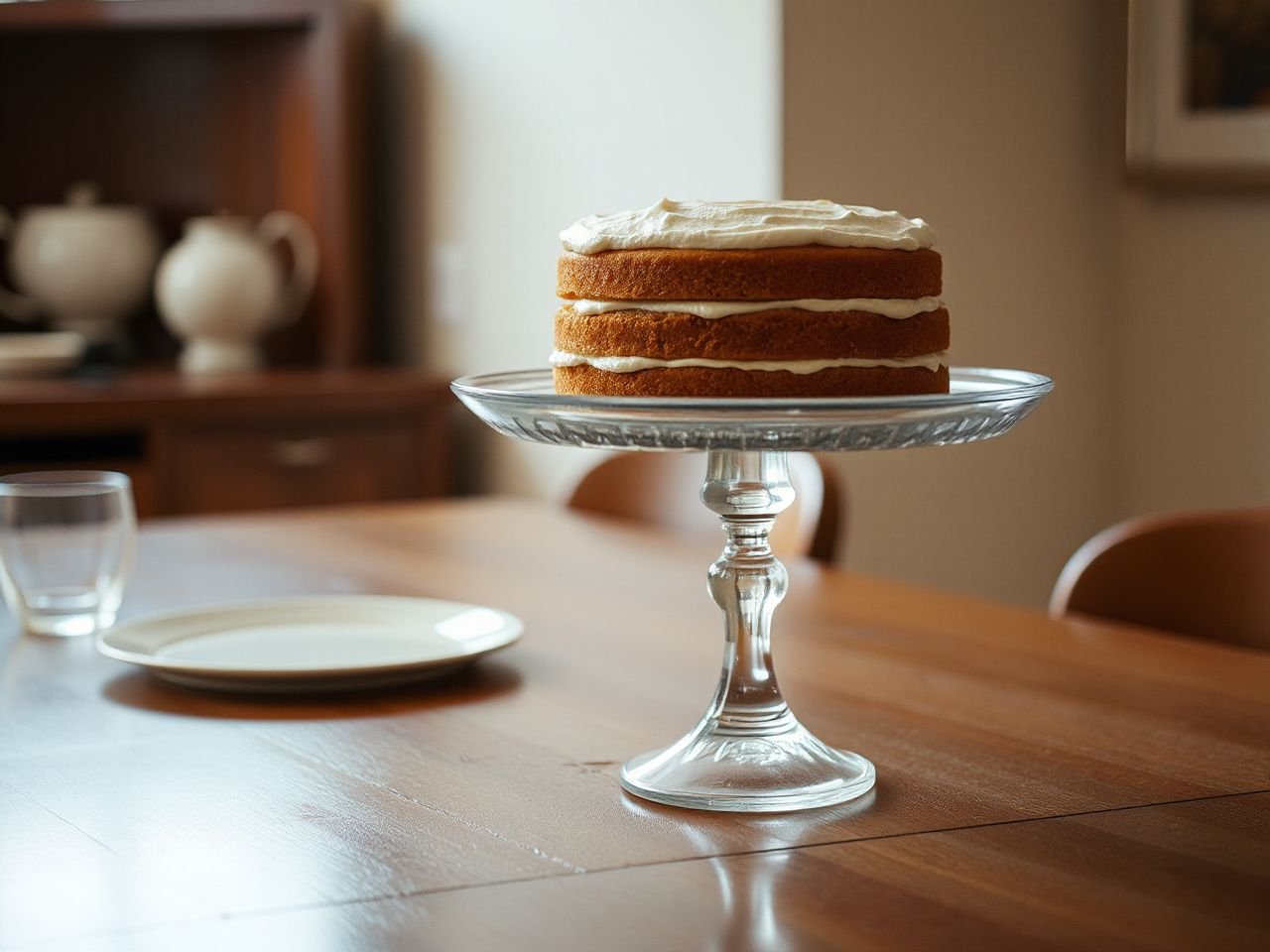
A layer cake places its load above the table, so the stand must support the combined weight of the cake, cake board, decorations, and any cover without flexing or tipping. A pedestal cake stand raises the cake on a central support, which concentrates the relationship between the upper plate, stem, and base. That arrangement can present a decorated cake clearly, but the lower base must remain broad and secure enough for the whole assembly.
A sheet cake usually benefits from a flat serving platter or tray with enough surrounding area for the board and a server. Its low profile makes cover clearance easier, although the board can still slide if the upper surface is very smooth. Small pastries may suit a low platter, tiered arrangement, or compact stand because their weight is distributed across several pieces rather than one tall centre of mass.
A cake board is part of the support system, not disposable scenery. Check that the board sits fully on the upper plate and does not rock, overhang in a way that makes the assembly unstable, or interfere with the rim. A rim can help contain a board, but a raised edge may also catch a cake server or make a clean slice harder to lift.
- Layer cake: check vertical clearance, pedestal stability, board support, and the space needed for a dome.
- Sheet cake: prioritise a flat, well-supported surface and room for serving utensils.
- Small pastries: consider easy access around the perimeter and a surface that does not crowd individual pieces.
The manufacturer does not always list a stand’s safe capacity, so do not infer one from appearance. Read the stated care and load information, then compare the stand with the actual cake board and decorations you intend to use.
Step 2: Inspect the rim before the decoration
The rim determines how a cake board meets the stand. I would check the rim first because a decorative pattern cannot correct a board that sits partly on an edge or a server that cannot pass cleanly beneath a slice. A smooth upper plate may make movement easier, while a rimmed plate can help keep a board centred; the right choice depends on the board shape and how the cake will be served.
A rimmed plate and a wide base are defining features of the Libbey Selene Glass Footed Covered Cake Stand, but the broader lesson applies to any covered stand: the upper plate and lower footprint need to work together. A raised cake can be visually appealing, yet a tall centre of mass gives careless placement more consequence. Set the board in the centre, check that the stand rests evenly, and avoid placing serving pressure on the outer edge.
A pedestal cake stand distributes weight through the upper plate into the central support and then into the base. A stand with a broad, level base gives that downward load a steadier platform than a narrow or uneven one. The base does not need to be visually dominant, but it must make firm contact with the table.
Step 3: Check the complete footprint
Measure the relationship between the cake board, stand, dome, refrigerator shelf, and serving table rather than judging the visible plate alone. The stand must fit where it will be used after the cake is assembled. A dome may need more space than the uncovered stand, and a broad base can require more shelf room than the upper plate suggests.
Do not assume that a cake stand designed for display will fit inside available cake storage. Check the full assembled height and width against the refrigerator shelf or cupboard opening, including the dome if one is supplied separately. If the stand comes apart, confirm that the pieces can be stored without placing pressure on glass, decoration, or mechanical parts.
A disassemblable cake stand can be broken into separate components for storage and transport. That feature can reduce handling problems, but detachable construction also creates more joints to inspect. Make sure each part sits fully in place before carrying a loaded stand.
Intermediate: Compare materials by contact, stability, and care
Glass
Glass can give a cake stand a clear, light visual presence and may make the cake the main focus. A glass dome can protect the surface from contact and airborne debris while keeping the decoration visible. Its value depends on the fit: the dome must leave clearance around the tallest decorations and must not press against soft icing.
Glass also demands careful handling because chips, cracks, or an uneven foot can change how the stand contacts the table. Inspect the rim and base in good light. A tiny damaged area on a food-contact edge deserves more attention than a decorative mark away from the cake.
Porcelain
Porcelain offers a solid, opaque presentation and can suit a formal table or a decorated cake that needs a calm background. A porcelain surface may be less visually forgiving of crumbs, icing smears, or chips, so the rim and serving area deserve close inspection before use. Sharp knives and cake servers did not damage the porcelain in the verified example, but that observation should not be expanded into a promise for every porcelain stand.
Porcelain can be heavy, and weight alone does not guarantee stability. A smooth underside, uneven table, or narrow base can still let a stand slide. Examine the contact area rather than treating material identity as a safety test.
Acrylic
Acrylic can be useful where a lighter-looking display or easier handling matters, but its finish needs deliberate care. Avoid assuming that a clear surface is scratch-proof or suitable for every cleaning method. Read the maker’s instructions before using abrasive pads, heat, soaking, or a dishwasher.
Acrylic may show fine marks, clouding, fingerprints, and condensation more readily than a patterned opaque surface. A soft cloth and the stated care method are safer starting points than a rough sponge. The food-contact question remains central: the material and finish must be suitable for the cake covering and decorations touching it.
Stainless steel and other metal surfaces
Stainless steel can provide a clean, modern appearance and a hard serving surface, but its practical suitability depends on the exact finish, edges, joins, and care instructions. A metal surface is not automatically compatible with every acidic fruit decoration or every cleaning product. Check the manufacturer’s food-contact and care information instead of relying on the word stainless alone.
Surface texture affects both serving and cleaning. A heavily decorated or textured top may hide crumbs, while a smooth surface may make a cake board easier to centre but can also allow sliding. The contact surface under the base matters just as much as the visible upper plate.
Food-contact compatibility
Food-contact surfaces need to suit buttercream, fondant, icing, and acidic fruit decorations. A material that looks attractive may still have a finish, painted detail, adhesive, or porous area that the care instructions exclude from direct food contact. If the maker does not clearly describe the intended contact surface, keep a suitable cake board between the food and the stand.
The U.S. Food and Drug Administration provides food-contact information through its official FDA website, so use that resource for general regulatory context rather than guessing from appearance. Product instructions remain important because a stand can contain decorative finishes or joined parts that need different care from the base material.
Advanced: Build the serving and storage system
Stand, dome, or separate cover?
A cake stand and a cake dome perform different jobs. The stand supports and displays the cake; the dome covers it. A separate dome can be more practical when the stand will also serve uncovered cakes or pastries, but only if its clearance, weight, storage, and cleaning requirements fit the way you use the table.
A cake dome must leave clearance for the cake decorations and must not press against soft icing or transfer condensation onto the surface. Check the highest decoration, the widest decoration, and the area near the rim. A dome that clears the centre but touches a side flourish is still unsuitable for that cake.
Condensation can appear when a covered cake moves between spaces with different temperatures or moisture levels. The visible result is what matters here: droplets can mark icing, soften decorations, or make a surface look dull. Follow the maker’s storage instructions and avoid sealing a warm or visibly damp cake under a cover.
A covered stand is not automatically a storage container. The dome may protect the cake during serving, but the complete assembly still needs to fit the refrigerator or other approved storage space without pressure on the cover.
Prevent wobbling, tipping, and sliding
A cake stand wobbles when its parts do not meet evenly, its base sits on an uneven surface, or the upper plate is not properly seated. A stand can tip when the cake’s weight is high above a narrow footprint, when the board overhangs, or when a person pushes against the outer edge while serving.
A smooth or elevated pedestal can slide on a table, so the base design and contact surface matter as much as the visible top. A non-slip base can help, but inspect whether the material is firmly attached and compatible with the table surface. Do not place a loose cloth under the stand and assume that friction will improve; a shifting layer can introduce another movement point.
- Place the empty stand on the serving table and check for rocking.
- Centre the cake board before adding the cake.
- Keep the cake, board, decorations, and dome within the supported footprint.
- Serve from the side with the strongest access rather than dragging a knife across the rim.
- Carry a loaded pedestal from its base and upper plate together, not by the dome alone.
The U.S. Consumer Product Safety Commission publishes consumer safety information at CPSC.gov; consult its guidance for general household product-safety context and follow the stand maker’s instructions for handling, cleaning, and use. A cracked, chipped, loose, or unstable serving piece should be removed from food service until its condition is resolved.
Rotating cake turntables are a different tool
A rotating cake turntable is designed to help with decorating or finishing, while a serving stand is designed to hold and present the finished cake. Some pieces may serve both purposes, but do not assume that a decorating mechanism is intended for long-term display or carrying.
Mechanical parts need special attention because crumbs, icing, moisture, or cleaning fluid can enter joints. Check whether the turntable is meant for food contact, whether the top can be removed, and whether the maker permits washing around the rotating section. A stable serving stand remains the safer choice for presentation if the decorating mechanism is not described for that use.
Cleaning without damaging the finish
Cleaning instructions should cover the upper surface, underside, dome, joins, decorative elements, and any rotating mechanism. Decorative finishes, glued elements, porous materials, and mechanical parts may not tolerate soaking, abrasive cleaning, heat, or dishwasher use. A dishwasher symbol or a clear instruction is more reliable than a general assumption about glass, porcelain, acrylic, or metal.
Remove crumbs and icing before they dry hard, using the least aggressive method allowed by the care instructions. A soft cloth or non-abrasive sponge is a reasonable starting point when the maker gives no stronger direction, but the stated instructions take priority. Dry the piece fully before storing it so moisture does not remain around joins or decorative areas.
Do not scrub a painted rim as if it were plain metal, and do not soak a stand with glued feet or joined components unless the instructions permit it. Separate washable parts only when the construction allows removal. Forced disassembly can create a loose fit that changes stability.
Account for ongoing costs and replacement parts
The purchase price is only one part of ownership. Replacement cake boards, a damaged dome, missing feet, specialist cleaning, and storage equipment can affect the long-term practicality of a stand. A stand that needs a proprietary replacement component may be less convenient than one with simple, readily understood parts, even if the original display is attractive.
Check whether the dome, base, upper plate, feet, and rotating parts are separate pieces and whether replacement information is available. A disassemblable stand may store neatly, but small parts need a protected place where they will not be misplaced or scratched. Keep the dome from bearing weight on its rim during storage.
Storage space also has a cost in practical terms. A stand that fits the table but not the cupboard may be used less often, while a dome that cannot fit the refrigerator may force unnecessary transfers. Compare the complete assembled system with the spaces available in your home.
How to make the final selection
Use a written fit check
Before choosing a stand, write down the details that affect the complete setup. The list does not need invented measurements; it needs the actual objects and clearances you can inspect.
- Cake form: note whether the cake is a layer cake, sheet cake, bundt-style cake, or a collection of small pastries.
- Board contact: check that the cake board rests fully on the top and does not conflict with the rim.
- Decoration: identify the highest, widest, and most delicate parts of the finished cake.
- Base contact: inspect whether the stand sits level and whether its underside grips the serving surface.
- Cover clearance: test the dome around every decoration, not just the centre.
- Storage route: check the refrigerator shelf, cupboard, transport path, and carrying method.
- Care: read the instructions for soaking, abrasives, heat, dishwasher use, and detachable parts.
For readers still planning the baking setup, a practical guide to choosing baking pans can help clarify the relationship between cake shape and the serving surface. The pan determines the finished form, but the stand must still be selected around the completed cake board and decorations.
Match presentation to use
An uncovered pedestal can suit a cake that will be served promptly and needs a strong visual centre. A covered stand is more useful when protection and visible storage matter, provided the dome clears the decoration and fits the storage space. A flat tray may be more practical for a sheet cake or pastries that need easy access from several sides.
Choose glass when visibility and a clear cover matter, porcelain when a solid formal surface suits the table, acrylic when light handling and a clear display are priorities, and stainless steel when the finish and care instructions fit the intended use. These are starting points, not guarantees. The rim, base, food-contact surface, and cleaning method still decide whether the material works in practice.
A good cake stand supports the complete service rather than only the first photograph. That means the cake board stays centred, the base stays put, the dome clears the decoration, the surface suits the food, and the parts can be cleaned and stored without unnecessary damage.
For readers comparing other kitchen equipment alongside serveware, the stand mixer buying guide covers a separate purchasing decision. Keep that choice separate from the cake stand: a mixer prepares the cake, while the stand must protect, support, and present the finished result.
Frequently Asked Questions
What should I check first in a cake stand buying guide?
Start with the rim and the cake board. Confirm that the board sits fully on the upper plate, then inspect the pedestal, base contact, cover clearance, and storage space. Appearance comes later because a patterned stand cannot correct a board that overhangs, a base that slides, or a dome that touches icing.
What type of cake stand suits a layer cake, sheet cake, or small pastries?
A layer cake needs dependable support beneath a raised load, with enough clearance for decoration and a dome if used. A sheet cake generally suits a flat platter with room for serving. Small pastries can work on a low platter or tiered surface that allows access around each piece. The cake board and serving method should decide the shape.
Is a separate cake dome more practical than an uncovered stand?
A separate dome is more practical when the cake needs protection during display or short-term storage and the cover has enough clearance. An uncovered stand is simpler for immediate serving and avoids dome storage. Check the highest decoration, the widest decoration, condensation risk, refrigerator fit, and cleaning instructions before choosing a covered setup.
How can I stop a pedestal cake stand from wobbling or sliding?
Check that the upper plate, central support, and base are fully seated and that the stand rests on a level surface. Inspect the underside for a secure non-slip contact area, then centre the cake board within the rim. Do not rely on a loose cloth or an overhanging board to improve stability. Remove damaged or visibly unstable pieces from service.
How should a cake stand be cleaned?
Follow the maker’s instructions for the exact finish and construction. Decorative finishes, glued elements, porous areas, glass, acrylic, and rotating parts can have different limits for soaking, abrasives, heat, and dishwasher use. Remove crumbs promptly, use the least aggressive permitted method, rinse only as instructed, and dry joins and detachable parts fully before storage.