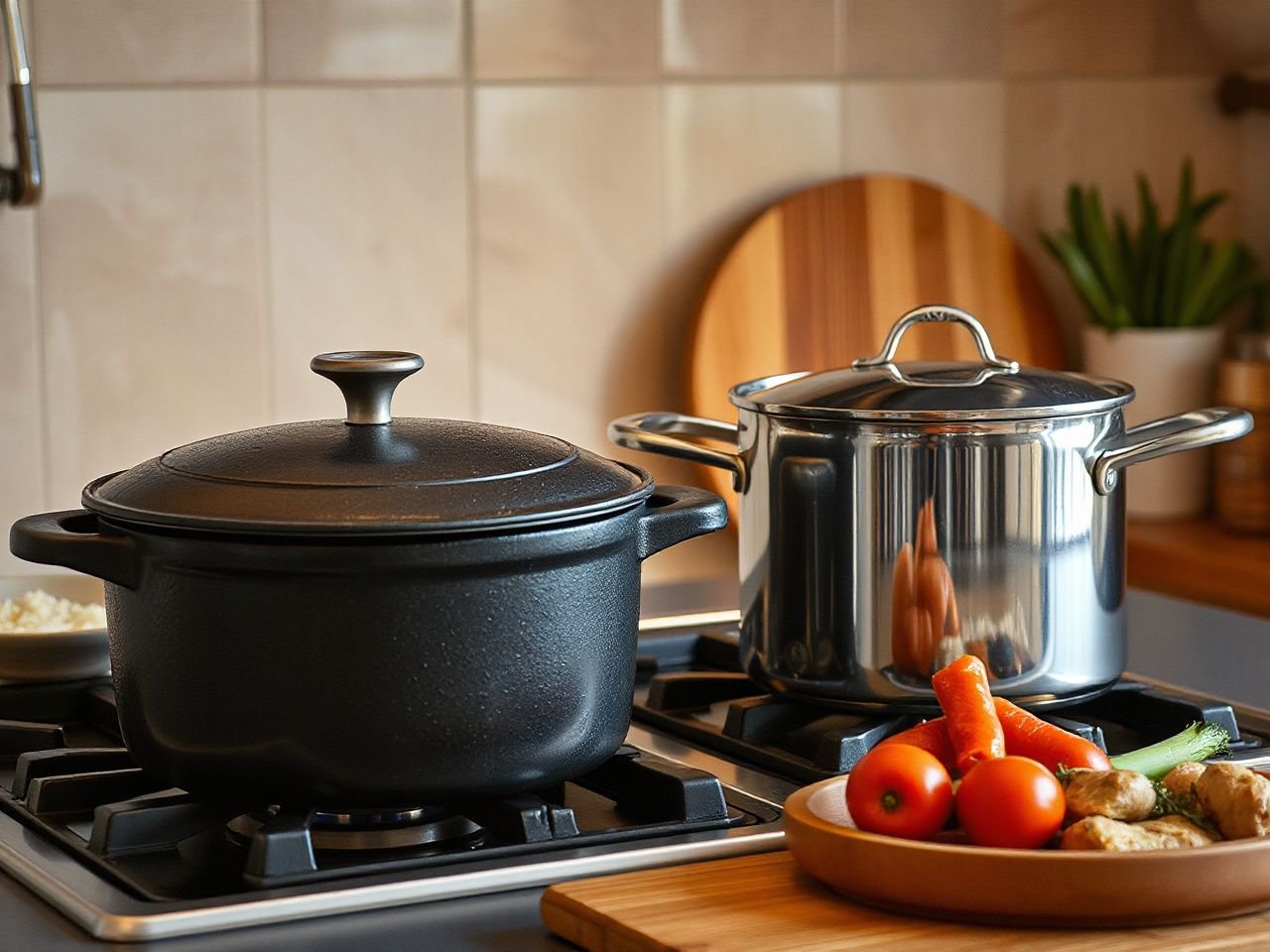
Does a covered pot count as a Dutch oven substitute simply because it has a lid? No. The useful distinction is not whether another vessel has a lid, but whether it reproduces the Dutch oven’s combined functions: strong heat retention, even heat distribution, a sealed moist environment, and safe movement from stovetop to oven.
I judge alternatives by hot-spot control first. The right choice depends on the cooking task—browning, braising, baking, or slow cooking—and on the trade-offs in evaporation, temperature response, capacity, and care. A stockpot may suit soup, while a cast-iron skillet may suit a small braise; neither is automatically a universal replacement.
Key Takeaways
- Match the vessel to the task: braising needs heat retention and a close lid, while bread baking needs strong heat and controlled moisture.
- Check every oven-exposed part, including the lid, handles, knob, and glaze, before moving cookware from the stovetop to the oven.
- Lighter aluminum, stainless steel, glass, and ceramic vessels respond differently from cast iron and may need changes in liquid, heat, or monitoring.
What a Dutch Oven Substitute Must Actually Replace
A Dutch oven is a heavy-duty cooking pot with a snug lid. Most are made from cast iron, with enameled cast iron and ceramic also common, and typical capacities range from 5 to 8 quarts. Its value comes from several jobs working together: the walls hold heat, the base spreads heat across the cooking surface, and the lid limits moisture loss during long cooking.
A substitute is suitable for stovetop-to-oven braising only if the entire vessel is rated for the intended oven temperature. That includes the lid, handles, knob, and any glazing; a pot can be stovetop-safe while one of its attached parts is not oven-safe.
The lid matters because a loose fit allows more steam to escape. A thinner vessel may also change temperature quickly after food or liquid is added. Those differences do not make an alternative useless, but they can produce a drier sauce, slower browning, or more pronounced hot spots.
Start by mapping the heat path
My first question is where heat enters and how quickly it travels. Bare cast iron stores substantial heat and spreads it gradually, while aluminum cookware responds quickly and can create a sharper contrast between the burner area and the outer cooking surface. Three-ply stainless steel usually places a heat-conductive layer between stainless surfaces, so its behavior depends on the construction rather than the steel label alone.
Cast iron retains heat strongly, but retention does not guarantee even distribution. A vessel can stay hot while still producing a hotter center or a hotter zone over the burner. That is why base construction and burner size matter as much as the material name.
Stainless steel and aluminum cookware change temperature more readily than cast iron, so food may brown quickly and then lose heat quickly after cold ingredients enter the pot. A cook using a lighter substitute should watch the food rather than copying a Dutch oven recipe mechanically.
Separate cooking jobs before choosing a vessel
For a soup or curry, capacity and a serviceable lid may matter more than oven performance. For a stew or braise, the vessel needs enough surface area for browning, walls that resist temperature swings, and a cover that limits evaporation.
No-knead bread baking is a different problem. The covered vessel helps hold a moist environment around the dough, while the hot walls and base support oven spring and crust formation. A substitute for bread therefore needs verified oven-safe parts and a lid that closes well; a tall stockpot with a loose cover may not reproduce the same conditions.
A Dutch oven combines heat retention with a tightly covered, moist environment, so a substitute with thinner walls or a loose lid may require more liquid, closer monitoring, or a different cooking time.
For a fuller explanation of the vessel itself, this practical introduction to Dutch oven cooking helps separate the pot’s material, shape, and covered-cooking functions.
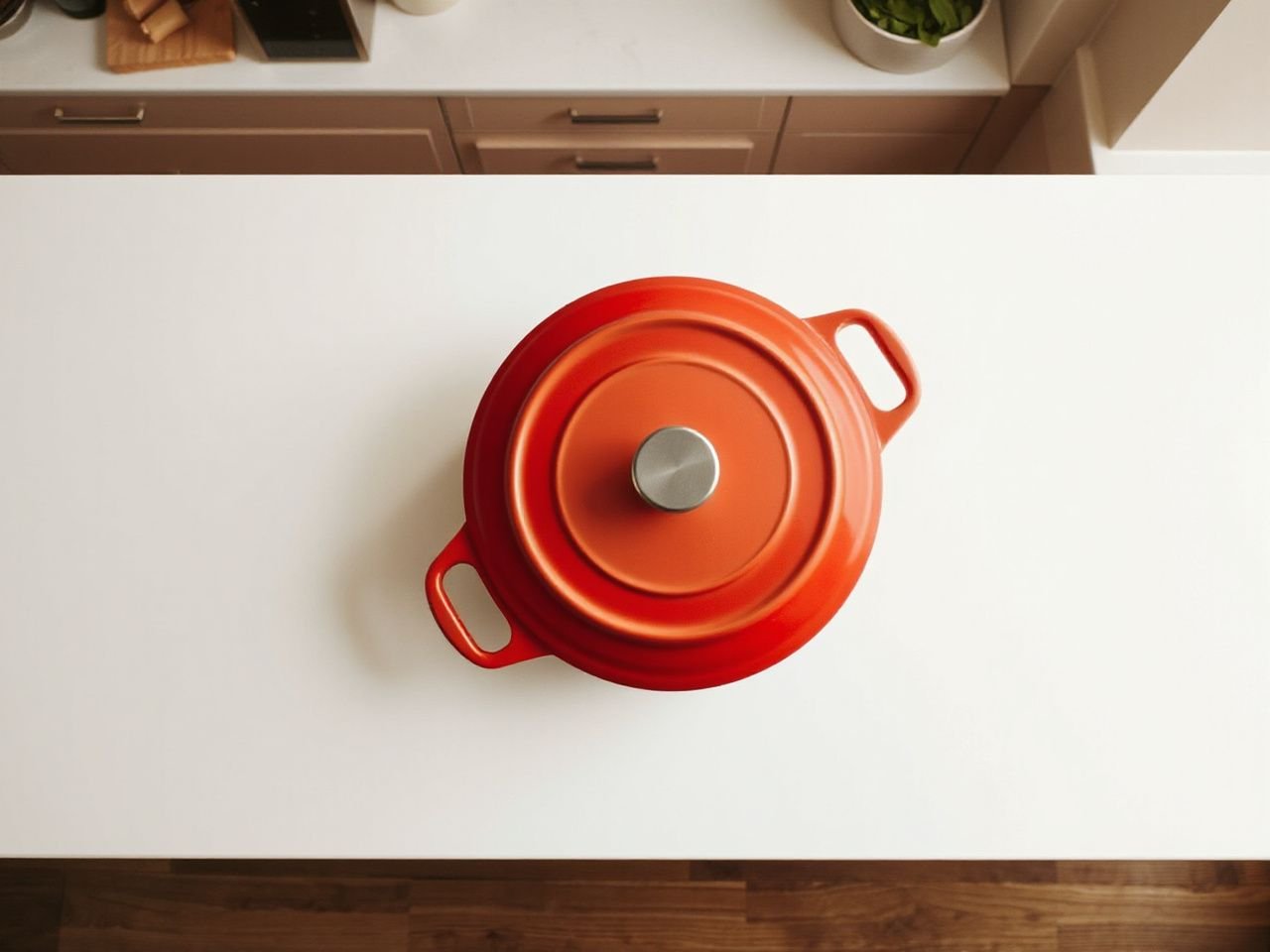
Beginner Choices: Match the Substitute to the Recipe
Stainless-steel stockpot for soup and stew
A stainless-steel stockpot is a sensible substitute for soup, stock, curry, or a large stew when the recipe does not depend on intense oven browning. Stockpots are generally deep, hold substantial liquid, and commonly use stainless steel or aluminum with a lid that fits tightly. Their depth is useful for volume, though it can make browning a crowded process.
Use the stockpot on the stovetop if its base is designed for that surface. If you plan to move it into the oven, confirm the oven rating for the pot, lid, handles, and knob. The listing does not always state every component’s limit, so missing information is a reason to keep the recipe on the stovetop rather than guess.
Stainless steel does not retain heat like cast iron, and aluminum stockpots respond faster still. Add food in batches if the recipe calls for browning, allow the cooking surface to recover between additions, and reduce the burner if the base begins to scorch while the upper liquid remains cool.
A stainless-steel stockpot is an oven substitute only when the complete assembled vessel is rated for the intended oven temperature.
Covered casserole dish for oven braises
A covered casserole dish can handle recipes that begin on the stovetop only if the manufacturer permits stovetop use. Many ceramic, glass, and earthenware vessels are intended for the oven but not direct burner heat. They can be useful for casserole and covered-baking dishes, yet their heating pattern differs from a cast-iron pot.
Borosilicate glass and Pyrex can be suitable for some oven recipes when the manufacturer allows that use, but the vessel should not be moved abruptly between a hot burner, hot oven, refrigerator, or cold countertop. Glass, ceramic, and earthenware can crack from thermal shock. The exact care instructions belong to the maker of the dish.
For a casserole dish, brown meat separately in a compatible skillet, transfer the browned ingredients, add enough liquid for the recipe, and cover before baking. This avoids treating an oven-only dish as a stovetop braiser.
Römertopf and other earthenware vessels
A Römertopf-style earthenware vessel uses a different cooking approach from a cast-iron Dutch oven. Its porous material and required handling instructions make the starting conditions important. Follow the manufacturer’s directions for soaking, loading, temperature changes, and cleaning rather than applying Dutch oven habits.
Earthenware can crack if exposed to abrupt temperature changes. A cold vessel should not be placed directly into a hot oven unless the manufacturer specifically allows that sequence.
Cast-iron skillet with a lid
A cast-iron skillet with a lid can replace a Dutch oven for a small braise, skillet stew, shallow bread, or covered stovetop cooking. The wide surface gives food more contact with the heat source, which helps browning but also makes evaporation more significant if the lid does not fit closely.
Depth is the main limitation. A skillet may not hold the same volume as a 5- to 8-quart Dutch oven, and a shallow layer of food can dry more quickly. Use less liquid only if the recipe and lid support that adjustment; otherwise, retain the recipe’s liquid and monitor the sauce.
Bare cast iron can react with acidic ingredients such as tomatoes and requires seasoning maintenance. Enameled cast iron avoids that reaction issue, although the enamel can chip if handled roughly. A cast-iron skillet with a lid works for the same recipes only when its capacity, lid fit, and oven rating match the job.
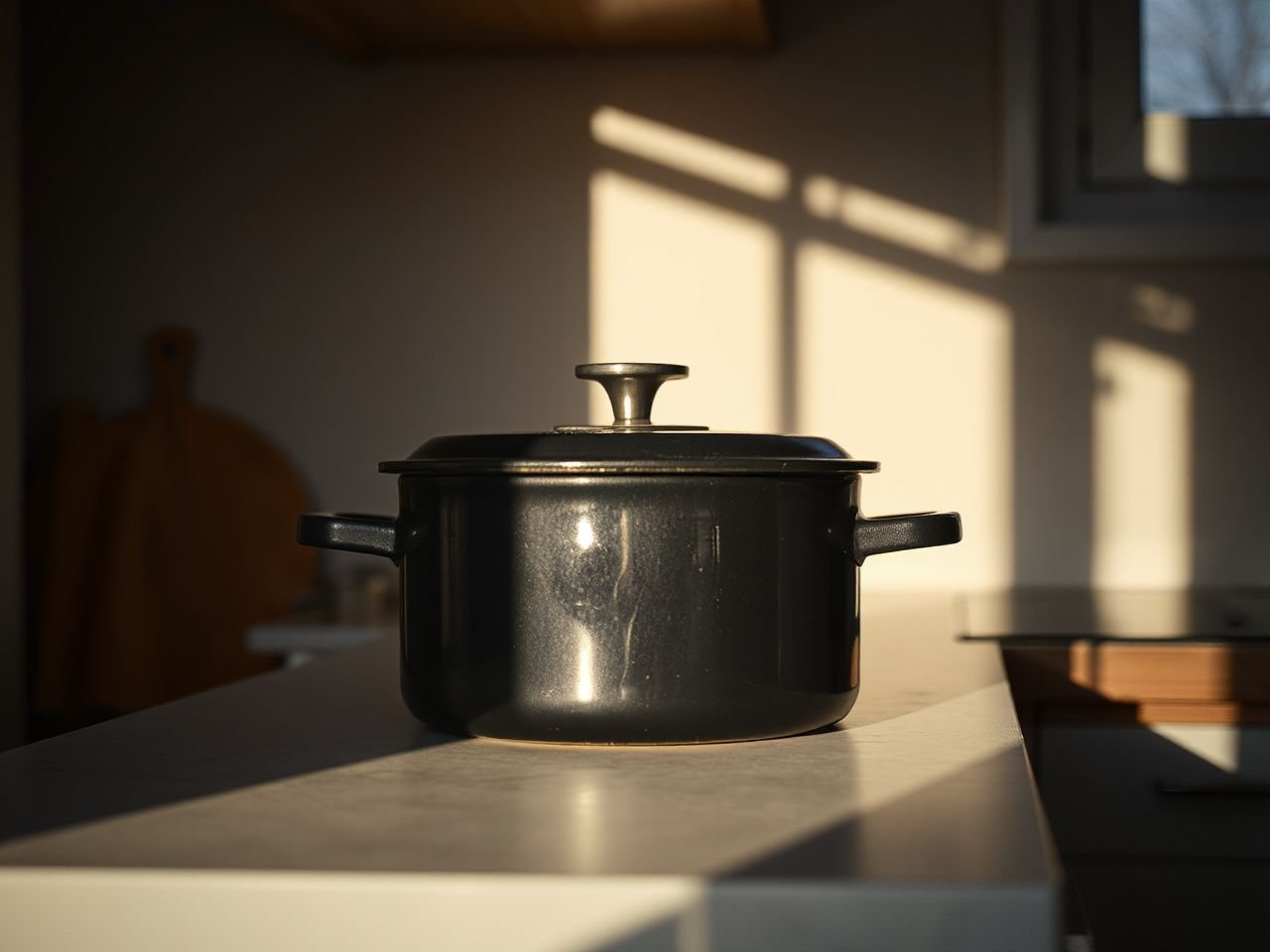
Intermediate Choices: Browning, Braising, and Baking
For braised meat and stews
A braiser, deep skillet, or heavy covered casserole is usually the closest shape match for a Dutch oven when the recipe starts with browning and finishes with covered cooking. The broad base lets meat sit in a more even layer, while the cover limits moisture loss. The substitute must still be oven-safe as a complete unit.
Use a stockpot for a stew when volume is the priority, but expect a different browning pattern. A tall pot gives less usable surface area relative to its height, so meat may need separate batches or separate browning in a skillet. Transfer the pieces and deglazing liquid afterward.
A braise depends on steady heat and controlled evaporation. If the lid is loose or the walls are thin, check the liquid during cooking and add more only when the recipe needs it; excessive added liquid can dilute the sauce.
For meat or vegetable braises, I would choose the vessel with the most stable base and closest lid, not the one with the most impressive capacity. Heat distribution controls the first stage, and moisture retention controls the second.
For soup, curry, and sauce
Aluminum cookware can work well for stovetop soup or curry because it changes temperature promptly, but that responsiveness demands attention near the base. Stainless steel offers a different balance, particularly in three-ply construction, where the internal conductive layer affects how heat spreads.
Neither material should be judged only by how hot the pot becomes. The useful question is whether the food heats evenly enough to avoid scorching before the liquid circulates. Stir thick curry or sauce across the full base, lower the heat when bubbling becomes aggressive, and use the lid according to the recipe’s evaporation needs.
A stockpot is a practical Dutch oven alternative for soup because its depth and lid support liquid cooking, but its hot spots and faster temperature response may require more active stirring.
For bread baking
A covered cast-iron pot is popular for no-knead bread because it supplies a strongly heated enclosure around the dough. A covered casserole, heavy oven-safe pot, or suitable clay vessel can serve a similar role only if its material, lid, and temperature rating support the recipe.
Many experienced bakers suggest preheating a Dutch oven at 500°F for 45 minutes for maximum heat retention. That figure should not be transferred to an alternative unless the manufacturer rates every part for that temperature and the recipe’s vessel instructions agree.
Pyrex or another glass casserole should not be assumed to tolerate the same preheating routine as cast iron. Thermal shock is the concern: abrupt movement between different temperatures can crack glass and ceramic. A covered baking dish may still work at a lower permitted temperature, but the recipe must follow the dish’s instructions.
For a roasting pan
A roasting pan can handle large covered or partially covered preparations when the recipe does not require deep liquid or a tightly sealed lid. Its broad base supports spreading food out, but the larger exposed surface may increase evaporation. Cover the pan securely if the recipe depends on braising moisture, and verify that the covering material and handles are oven-safe.
Roasting pans are better suited to open roasting or shallow covered cooking than to a small, tightly sealed stew. They can adapt to vegetables, larger cuts of meat, and casserole-style cooking, but the recipe may finish with less liquid than it would in a deep Dutch oven.
Advanced Adjustments: Liquid, Heat, and Care
Adjust evaporation before adjusting time
Liquid loss is often the first visible difference between vessels. A tight Dutch oven lid keeps more steam inside than a loose skillet cover or foil tent. If the substitute loses moisture faster, the sauce can reduce before the meat becomes tender.
Check the food at the recipe’s stated stage rather than relying only on the clock. Add liquid sparingly if the base is drying, keep the cover closed as much as the recipe allows, and avoid raising the heat to compensate for a vessel that is heating unevenly.
A lighter substitute may reach cooking temperature quickly but lose heat quickly after cold ingredients enter. A cast-iron vessel may take longer to respond while holding heat longer. Those are different temperature curves, so cooking time cannot be predicted from material alone.
Prevent scorching and warping
Scorching usually begins where heat enters the vessel faster than the food can distribute it. Thick sauces, grains, and reduced tomato mixtures need stirring across the base, particularly in aluminum or thin stainless steel. A low burner setting can still produce a hot center if the base does not spread heat well.
Warping can follow abrupt temperature changes or uneven heating in cookware not designed for the chosen heat source. Do not pour cold liquid into a very hot vessel unless the manufacturer’s instructions permit it, and do not place hot glass or ceramic on a cold or wet surface.
The safest adjustment is usually gentler heat and closer observation, not a higher flame. Heat distribution decides whether the bottom cooks at the same pace as the top.
Maintain each material correctly
Bare cast iron needs seasoning maintenance and deserves caution with acidic ingredients such as tomatoes. Enameled cast iron avoids that particular reactivity issue, but chipped enamel can affect the cooking surface and should be handled according to the manufacturer’s care guidance.
Stainless steel generally avoids seasoning work, while aluminum cookware should be cleaned according to its finish and construction. Glass and ceramic require careful temperature transitions, and earthenware may have special soaking or drying instructions. The easiest vessel to maintain is the one whose care rules fit your cooking habits.
For readers comparing enamel care and material trade-offs, the guide to choosing an enameled Dutch oven explains why enamel changes the maintenance conversation without removing the need for careful handling.
Slow cookers and Instant Pots use different methods
A slow cooker is not a direct oven substitute. It changes the heating pattern, evaporation, browning, and cooking time, and its insert may not be designed for a burner or oven. Brown ingredients separately when needed, then transfer them according to the appliance’s instructions.
An Instant Pot or other electric pressure cooker changes the method more dramatically. Pressure cooking uses a sealed pressurized environment and requires the appliance’s own safety procedures. It can prepare stews and braises, but the timing, liquid requirement, browning stage, and texture will not match a covered Dutch oven automatically.
A slow cooker or Instant Pot can replace the result of some Dutch oven recipes, but neither reproduces the same stovetop-to-oven heat path.
The U.S. Consumer Product Safety Commission provides consumer safety information for household products, while ASTM International develops voluntary consensus standards used across many product categories. Consult the cookware or appliance manufacturer for the specific oven, burner, pressure, and thermal-shock instructions that apply to your vessel.
A Practical Selection Process
Step 1: Identify the dominant cooking task
Write down whether the recipe needs browning, oven braising, soup volume, bread baking, or slow cooking. A vessel that excels at one task may create avoidable work in another.
- Browning and braising: Choose a broad, stable base with a close lid.
- Soup and curry: Choose sufficient capacity and a lid, then control hot spots with stirring.
- Bread: Choose a covered oven-safe vessel with verified temperature limits.
- Slow cooking: Use a slow cooker only if you accept a different heating method.
Step 2: Verify the complete safety rating
Check the vessel, lid, handles, knob, and glazing. Confirm the intended oven temperature, burner compatibility, and any restrictions on preheating or temperature changes. A missing rating is not permission to guess.
Step 3: Compare heat and moisture behavior
Ask how quickly the vessel responds, how broadly the base spreads heat, and how tightly the lid closes. Then decide whether the recipe needs extra monitoring, more liquid, a lower temperature, or a different cooking stage.
Step 4: Adapt one variable at a time
Keep the ingredients stable while changing the vessel. If the base scorches, reduce heat and stir more often. If the sauce reduces too quickly, improve the cover or add liquid carefully. If browning is weak, work in smaller batches rather than simply increasing heat.
The most reliable substitute is the one that matches the recipe’s heat path and moisture needs, not the one that merely resembles a Dutch oven in shape.
Frequently Asked Questions
What can I use instead of a Dutch oven if I do not have one?
A covered stainless-steel stockpot, braiser, cast-iron skillet with a lid, covered casserole, or oven-safe roasting pan can fill the role, depending on the recipe. Use a stockpot for soup, a broad covered vessel for braising, and a verified oven-safe covered dish for baking. Check every component’s rating before stovetop-to-oven use.
Which substitute works best for braising meat or making stews?
A broad, heavy covered vessel is the closest match because it supports browning and limits evaporation. A braiser or cast-iron skillet with a close lid suits smaller amounts, while a stockpot handles more liquid but may brown less evenly. Choose based on base coverage, lid fit, capacity, and oven safety rather than the vessel’s name.
Can I use a stainless-steel stockpot in the oven instead of a Dutch oven?
Yes, but only if the complete stockpot is oven-safe at the intended temperature. Verify the lid, handles, knob, and any attached parts. Stainless steel may respond differently from cast iron, so browning, heat recovery, and evaporation can change. A stockpot is especially useful for soup and stew, but a crowded base can hinder browning.
Will a cast-iron skillet with a lid work for the same recipes?
A cast-iron skillet with a lid can handle many small braises, stews, covered bakes, and stovetop dishes. Its shallow shape may increase evaporation and limit capacity, while its broad base can create a different browning pattern. Bare cast iron also needs seasoning maintenance and may react with acidic ingredients such as tomatoes.
Can I use a glass casserole dish or Pyrex for Dutch-oven recipes?
A glass casserole or Pyrex can work for oven recipes when the manufacturer permits the intended use, but it should not be treated like cast iron. Glass can crack from thermal shock, so avoid abrupt movement between a burner, hot oven, refrigerator, and cold countertop. A separate skillet may be needed for stovetop browning.
Why does food cook differently in aluminum or stainless steel than in cast iron?
Materials and construction change how quickly heat enters, spreads, and leaves the vessel. Aluminum cookware usually responds promptly, while cast iron retains heat more strongly; three-ply stainless steel depends on its conductive internal layer. These differences affect browning, recovery after ingredients are added, and the risk of scorching.
Can a slow cooker or Instant Pot replace a Dutch oven?
They can prepare related dishes, but they use different cooking methods. A slow cooker changes the heating pattern and evaporation, while an Instant Pot uses pressure and its own safety procedures. Neither automatically reproduces stovetop browning followed by oven braising. Adapt the recipe for the appliance instead of copying Dutch oven timing.
How much does the lid matter for heat retention and moisture loss?
The lid matters substantially because a close cover limits steam escape and helps maintain a moist cooking environment. A loose lid allows more evaporation, which can thicken or dry a dish before the food is tender. A lighter vessel may also lose heat more quickly, so monitor liquid and temperature instead of assuming identical results.
What mistakes cause a substitute to scorch, dry out, crack, or warp?
Common errors include using high heat to compensate for uneven browning, overcrowding a shallow base, copying a tight-lid recipe into a loose-lid vessel, and moving glass or ceramic abruptly between temperatures. Check compatibility first, brown in batches, monitor evaporation, and follow the manufacturer’s thermal-shock and oven instructions.
For prevention and repair-minded care, this guide to common Dutch oven cracking mistakes covers the temperature changes that deserve the most caution.
Which substitute is easiest to maintain over time?
Maintenance depends on the material and your routine. Stainless steel avoids seasoning work, while bare cast iron needs seasoning care and caution with acidic foods. Enameled cast iron avoids that particular reactivity issue but still needs careful handling, and glass, ceramic, and earthenware require attention to thermal shock. The simplest option is the one whose care instructions you will follow consistently.