Concern about hard anodized cookware health risks usually starts with a simple fear: aluminum is touching the food, so is the pan unsafe? The key distinction is between the aluminum substrate, its electrochemically formed aluminum oxide surface, and any separate nonstick coating placed over that surface; these layers have different chemistry, failure modes, and heat-related concerns. The risk analysis should compare ordinary food contact with damaged-surface, prolonged acidic-food, and overheating scenarios instead of treating all hard anodized cookware as one material or assuming that a marketing label answers the health question.
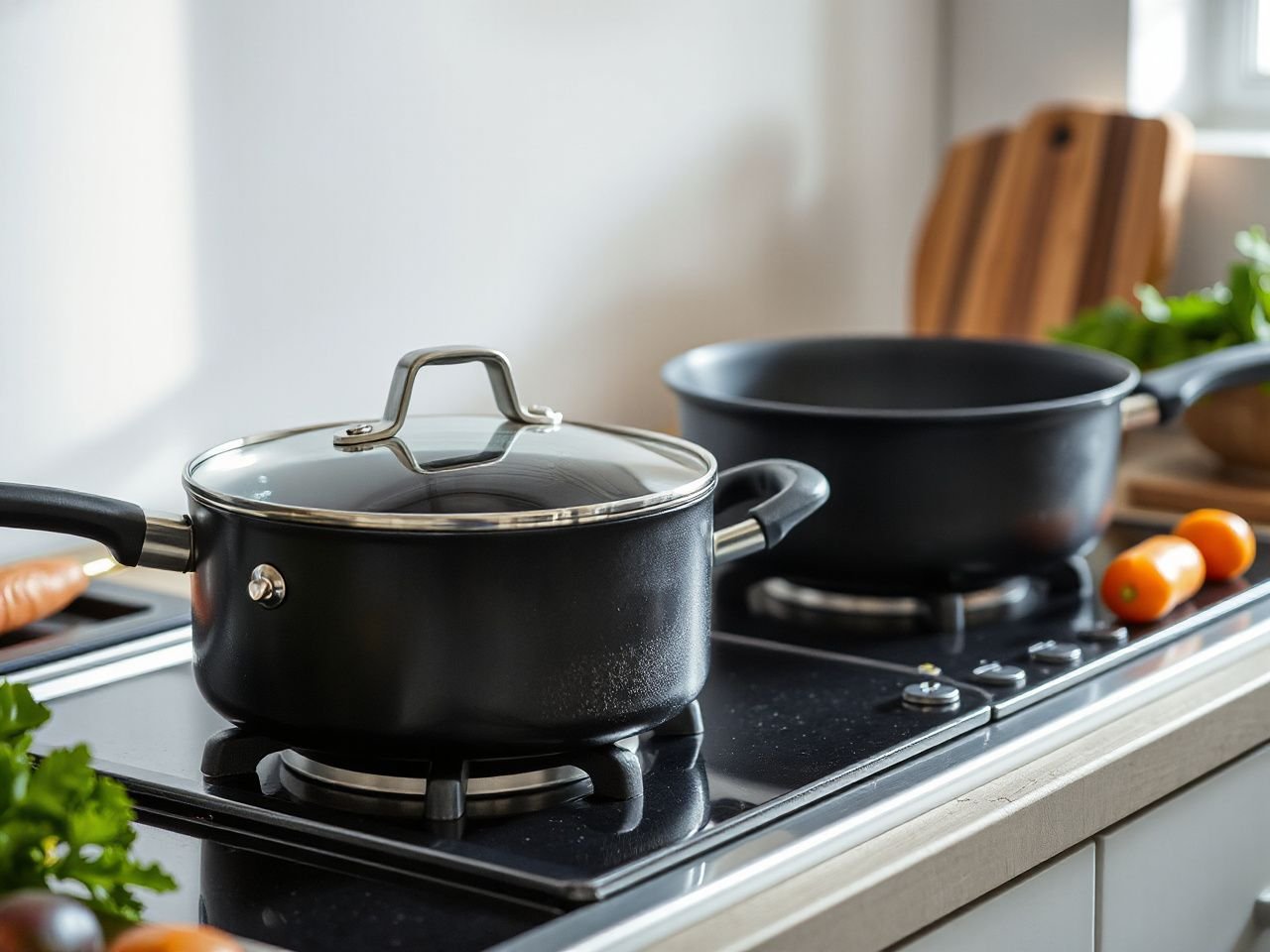
My first check is always the heat map. A pan that spreads heat predictably is easier to use gently, while a pan with concentrated hot spots encourages scorching, aggressive scraping, and overheating. Hard anodizing changes the surface, but it does not turn every pan into the same construction.
Key Takeaways
- Hard anodizing converts the outer aluminum surface into a harder aluminum oxide layer; the aluminum body remains underneath.
- Undamaged hard anodized cookware is generally considered suitable for routine cooking when the maker’s instructions are followed.
- A separate PTFE coating creates different concerns from the anodized aluminum surface, especially during severe overheating.
- Scratches, harsh cleaning, long acidic cooking, and food storage mainly signal surface damage and changing exposure conditions, not automatic proof of poisoning.
What hard anodized cookware actually contains
The aluminum body and the oxide surface
Aluminum cookware begins with an aluminum body. Hard anodizing uses an electrochemical treatment, commonly described as sulfuric acid anodizing, to convert the exterior aluminum into a harder aluminum oxide layer. Aluminum oxide, or Al2O3, is chemically different from the metallic aluminum below it.
Hard anodizing does not remove the aluminum body. It changes the surface of that body, creating a tougher barrier that is more resistant to ordinary scratching than untreated aluminum. Aluminum remains part of the pan’s construction even though the food-contact surface has been altered.
Hard anodizing changes aluminum’s outer surface into aluminum oxide without removing the aluminum substrate. That sentence explains both why the process can reduce direct contact with the underlying metal and why construction quality still matters.
Hard anodized does not automatically mean nonstick
The phrase hard anodized describes the treated aluminum surface, not necessarily the release properties of the pan. Some cookware has only the anodized surface. Other cookware adds a separate nonstick layer, commonly polytetrafluoroethylene, or PTFE, over the treated surface.
Read the material description carefully. Terms such as nonstick, coated, easy-release, PTFE, fluoropolymer, or a named coating indicate that another layer may be present. A listing that says only hard anodized does not, by itself, establish that the pan has PTFE.
PFOA and PTFE are not interchangeable terms. PFOA was a processing chemical associated with older nonstick manufacturing, while PTFE is a separate fluoropolymer used as a coating. A PFOA-free label does not mean PFAS-free, and it does not mean that the pan has no nonstick coating. A PFAS-free claim also needs careful reading because the exact scope of the claim depends on the manufacturer and the jurisdiction.
The U.S. Food and Drug Administration evaluates substances used in food-contact applications, and its consumer safety information is available at FDA.gov. A label should be read alongside the actual construction and care instructions rather than treated as a complete chemical description.
Why the heat map matters to the safety discussion
Aluminum is used in cookware partly because it transfers heat readily. That can help a pan respond to changes at the burner, but the result depends on the base, thickness, burner size, and cooktop setting. The listing for a pan does not always provide enough information to predict how evenly the base will heat.
Uneven heating creates practical trouble before it creates a health question. Food can scorch in one area while remaining undercooked elsewhere, and a cook may respond by increasing the burner or leaving an empty pan over heat. I judge the material layer and the heat pattern together because careless heat is more relevant to risk than the phrase hard anodized alone.
Causes: where health concerns can arise
Ordinary cooking on an intact surface
Undamaged hard anodized cookware used according to its instructions is widely regarded as suitable for daily cooking. The anodized layer is intended to separate food from the underlying aluminum surface during normal use. That does not mean every pan has identical performance or that every coating has identical care requirements.
Normal use is a different exposure scenario from a damaged surface or extreme overheating. A pan that is intact, cleaned as directed, and used at a controlled setting should not be assessed in the same way as a pan with deep chips, exposed substrate, or a deteriorating nonstick layer.
Daily cooking on an intact hard anodized surface is not the same exposure scenario as cooking in a damaged or overheated pan. This distinction prevents a broad material label from doing too much work in the safety analysis.
Acidic and salty foods
Acidic foods and salty foods can affect cookware surfaces, particularly during prolonged contact. Tomatoes, citrus-based preparations, vinegar-rich sauces, and heavily salted liquids deserve more care than a brief sauté followed by prompt serving. The effect depends on the condition of the anodized surface and the rest of the pan’s construction.
Prolonged storage matters too. Food left in a pan for hours or stored overnight keeps the cooking surface in contact with moisture, acids, and salts for far longer than a normal meal. Transfer from an intact hard anodized surface is not automatically dangerous, but repeated exposure can change surface condition and may increase the chance of metal transfer if the finish has already been damaged.
For that reason, transfer cooked food to a suitable storage container instead of using the pan as a refrigerator container. The step protects the finish and makes the exposure scenario easier to control.
Scratches, chips, and worn finishes
A scratch is not proof that a pan has poisoned anyone. Surface damage is first a performance and maintenance problem, although it can also change the contact between food and the underlying construction. A shallow mark in an otherwise intact surface is not equivalent to widespread flaking, exposed metal, or a separate nonstick layer that is peeling.
Metal utensils, knives used directly in the pan, abrasive pads, scouring powders, and gritty cleaners can damage the finish. Chipping or peeling is more concerning when it involves a nonstick coating because the coating has its own composition and failure mode.
A damaged hard anodized surface should be evaluated by the extent and type of damage rather than by the word scratch alone. Stop using a pan for food preparation if the surface is flaking, peeling, deeply gouged, or shedding visible material, and follow the manufacturer’s replacement guidance.
Overheating and PTFE
Hard anodized aluminum without PTFE does not create the same coating-related concern as hard anodized cookware with PTFE. Severe overheating is especially important for a PTFE-coated pan. An empty pan can heat much faster than a pan containing food or liquid, and a cooktop set too high can create a dangerous temperature rise before anyone notices.
Do not preheat a coated pan for a long period, do not leave it unattended on an active burner, and do not use it as a broiler pan unless the manufacturer expressly permits that use. If a pan begins smoking, turn off the heat, improve ventilation, and let the pan cool without adding water to a very hot surface.
Claims about PTFE, PFAS, and PFOA need precise wording. PFOA-free addresses PFOA, not every PFAS compound and not the presence or absence of PTFE. A pan described as PFAS-free may still require the reader to confirm whether the claim covers the entire coating system or only particular substances.
The European Food Safety Authority publishes food-safety assessments and scientific information at EFSA.europa.eu. Regulatory hazard assessments describe potential hazards under defined conditions; they do not automatically demonstrate harmful exposure during ordinary use of every pan carrying a similar label.
Solutions: how to assess a pan before and during use
Step 1: Identify every layer
Start with the manufacturer’s material statement. Look for aluminum, hard anodized aluminum, aluminum oxide, PTFE, nonstick, ceramic nonstick, or a statement that the cooking surface is uncoated. If the listing is vague, the missing information is meaningful: the phrase hard anodized alone does not tell you whether PTFE is present.
Marketing terms such as mineral-based, natural, or stone-derived do not replace a material declaration. Ceramic nonstick coatings are a separate category from anodized aluminum, and a ceramic claim does not establish that the pan contains no other materials.
If a lower-exposure kitchen is your priority, the Best Nontoxic Cookware: The Shortlist for Safer Kitchens gives you a broader way to compare disclosed materials and coating claims. Use that kind of roundup as a starting point, then verify the exact pan’s current care and construction information.
Step 2: Match food and method to the surface
Use moderate heat for routine cooking and avoid leaving an empty pan over an active burner. Acidic or salty foods can be cooked with care, but prolonged simmering and storage in the pan place more demand on the surface than brief cooking followed by prompt serving.
Use wood, silicone, or other utensils approved by the manufacturer. Do not cut food inside the pan. A fork or metal spatula can create a gouge even if the utensil appears harmless during a single use.
Prompt serving and gentle utensils reduce the time and force that can wear a hard anodized cooking surface. That is a practical control, not a promise that any finish will remain intact forever.
Step 3: Clean without attacking the finish
Follow the maker’s washing instructions instead of assuming that a pan labeled hard anodized is automatically dishwasher-safe. Dishwasher exposure can shorten the service life of some finishes through repeated heat, water, and detergent contact. The safe answer depends on the complete construction and the manufacturer’s directions.
Hand washing with a soft sponge and a mild dish detergent is the conservative approach when the care label is unclear. Avoid abrasive cleaners, steel wool, scouring powder, and aggressive scraping. Let stuck food soften in water rather than forcing a sharp tool under it.
Dishwasher use is mainly a finish-preservation question unless the maker warns of a specific safety limitation. Repeated washing can alter appearance or surface condition, so a dishwasher-safe claim should be tied to the particular pan rather than generalized to all hard anodized cookware.
Step 4: Inspect the cooking surface
Inspect the interior after cleaning and before cooking. Look for peeling, bubbling, exposed areas, deep grooves, or particles that can detach. A change in color alone does not establish that the pan is unsafe, but a deteriorating coating should not be ignored.
Replacement is usually a health decision only when the surface is shedding, severely damaged, or no longer identifiable. In many cases it is also a cost-of-ownership decision: poor release, sticking, uneven heating, and difficult cleaning can make an old pan impractical before they create a clear exposure concern.
Cookware with peeling or shedding surface material should be retired from food preparation. Do not try to restore a factory-applied nonstick coating with home sprays or improvised finishes.
Preventive measures and comparisons with other cookware
Is hard anodized safer than stainless steel?
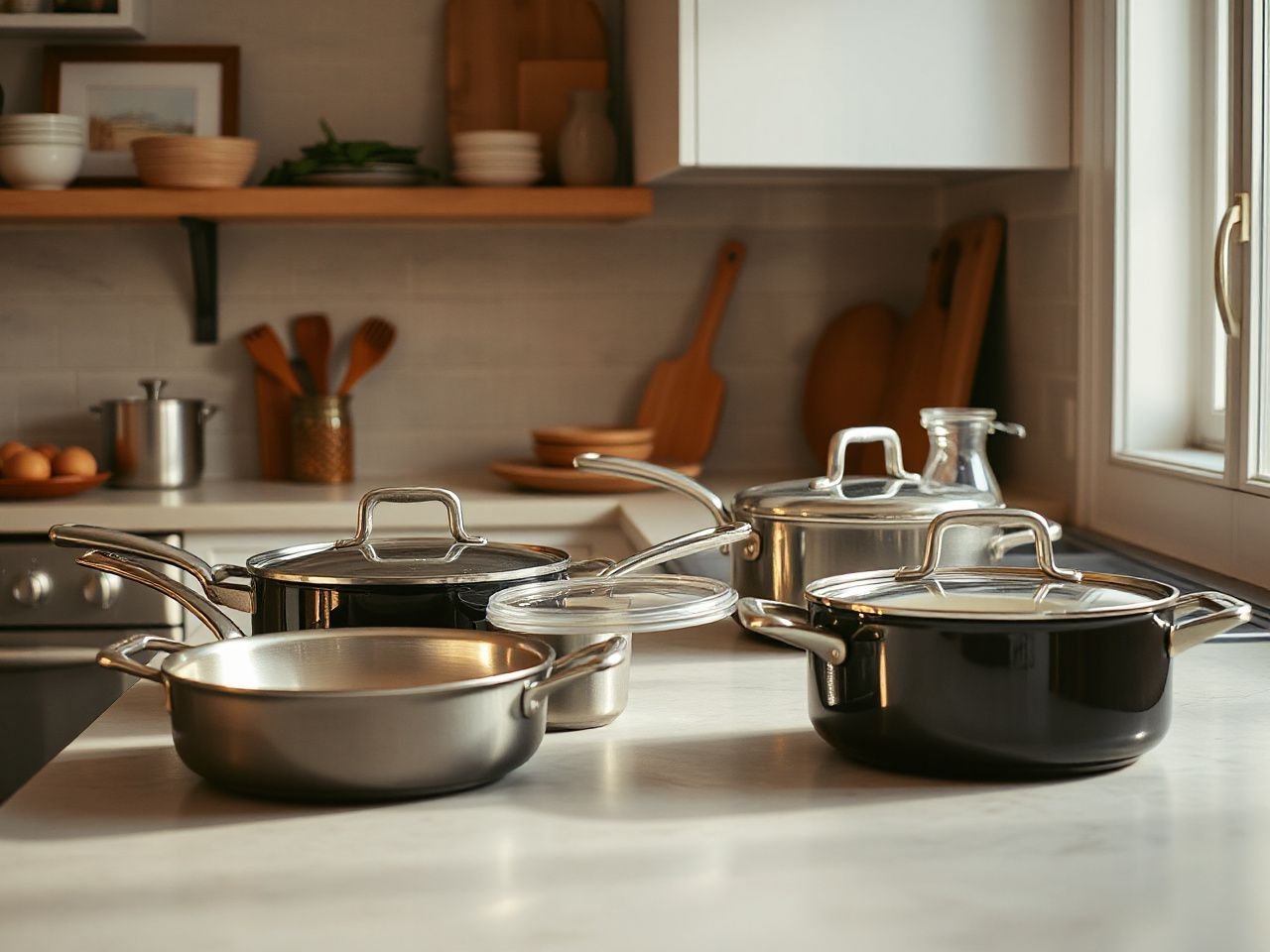
Neither label answers every safety question. Stainless steel has its own material profile, including the possibility of nickel or chromium release under some conditions, while hard anodized cookware has an aluminum substrate and a treated oxide surface. Construction, food acidity, contact time, surface condition, and cooking method all affect the comparison.
Stainless steel may be preferable for a cook who wants an uncoated metal surface and accepts the technique required to manage sticking. Hard anodized cookware may suit someone who values an aluminum body with a treated surface, provided the pan’s coating and care directions are clear.
Is it safer than uncoated aluminum?
Hard anodizing changes the food-contact surface compared with uncoated aluminum. That difference is the reason the treatment exists. It does not make the pan aluminum-free, and it does not erase the effect of scratches, prolonged acidic contact, or poor maintenance.
Uncoated aluminum cookware raises a more direct question about contact between food and aluminum. Hard anodized construction places an aluminum oxide layer between food and the metallic substrate, but the condition of that layer still matters.
How does it compare with cast iron and ceramic nonstick?
Cast iron can transfer iron into food, with acidic foods making that comparison especially relevant. Ceramic nonstick cookware uses a different coating system and should not be assumed to have the same wear or overheating behavior as PTFE-coated hard anodized cookware.
The useful comparison is not a universal ranking. Check the exact food-contact surface, whether a coating is separate from the substrate, what the care instructions permit, and how the pan behaves under your normal heat pattern.
Induction compatibility and health risk
Hard anodized aluminum cookware does not automatically work on induction. Induction compatibility depends on the base construction, usually a manufacturer-specified magnetic layer or other compatible design. The product listing must state compatibility; the anodized surface alone cannot establish it.
Cooktop compatibility does not change the basic chemistry of aluminum oxide or PTFE, but it can affect heating behavior. A compatible pan may heat differently from the same shape on gas or conventional electric equipment, so begin at a moderate setting and monitor the food rather than assuming the dial position transfers directly.
Does hard anodized cookware cause cancer?
There is no sound basis for treating every hard anodized pan as a cancer-causing object simply because it contains aluminum. That conclusion confuses the presence of a material with demonstrated exposure and ignores the difference between an intact anodized surface, a damaged surface, and an overheated separate coating.
Health warnings also vary by jurisdiction. Read the specific warning and the manufacturer’s material information together.
For readers comparing materials before replacing a pan, the shortlist for cookware with clearer safety and coating disclosures can help organize the questions. The decisive detail remains the individual pan’s construction, not a broad promise printed on a package.
A practical decision framework
Keep using the pan when
- The cooking surface is intact and clearly identified.
- The manufacturer provides care instructions that match your cooking method.
- The pan is not smoking or being left empty over high heat.
- Food is served rather than stored in the pan for prolonged periods.
- Utensils and cleaning tools are not gouging the surface.
Pause and investigate when
- The listing does not explain whether a separate nonstick coating is present.
- A PFOA-free claim is being used as though it means PFAS-free.
- The pan is labeled dishwasher-safe only in vague or incomplete language.
- Acidic or salty food repeatedly causes discoloration, sticking, or surface change.
- The cooktop creates concentrated hot spots that encourage excessive heat.
Replace the pan when
- The coating is peeling, bubbling, or shedding.
- Deep gouges expose lower layers or create loose fragments.
- The surface cannot be cleaned without aggressive abrasion.
- The maker’s instructions say the finish has deteriorated beyond service.
- Uneven heating has become severe enough that food burns in one area while remaining undercooked elsewhere.
Replacement is appropriate for a pan with a deteriorating food-contact surface, while a harmless color change alone is not proof of a health emergency. That distinction keeps the decision proportionate and prevents both careless use and unnecessary disposal.
Frequently Asked Questions
Is hard anodized cookware safe for daily cooking?
Undamaged hard anodized cookware is widely regarded as suitable for daily cooking when used according to the manufacturer’s instructions. The anodized surface is aluminum oxide, not bare metallic aluminum, but the aluminum body remains underneath. Confirm whether the pan also has PTFE or another nonstick coating, use moderate heat, avoid abrasive cleaning, and retire the pan if the food-contact surface peels or sheds.
Is hard anodized cookware safe if scratched?
A scratch does not automatically prove poisoning or make a pan immediately dangerous. The important details are depth, location, loose material, and whether the mark affects a separate nonstick coating. Stop using cookware with deep gouges, peeling, bubbling, or shedding. A superficial mark may be mainly a performance issue, but follow the maker’s replacement guidance when the surface condition is unclear.
Does PFOA-free hard anodized cookware contain PTFE?
It can. PFOA-free describes the presence or absence of PFOA, a processing chemical associated with older nonstick manufacturing; PTFE is a separate fluoropolymer coating. PFOA-free does not mean PFAS-free, and neither phrase automatically means that the cookware is uncoated. Read the full material statement and care instructions before judging overheating or utensil risks.