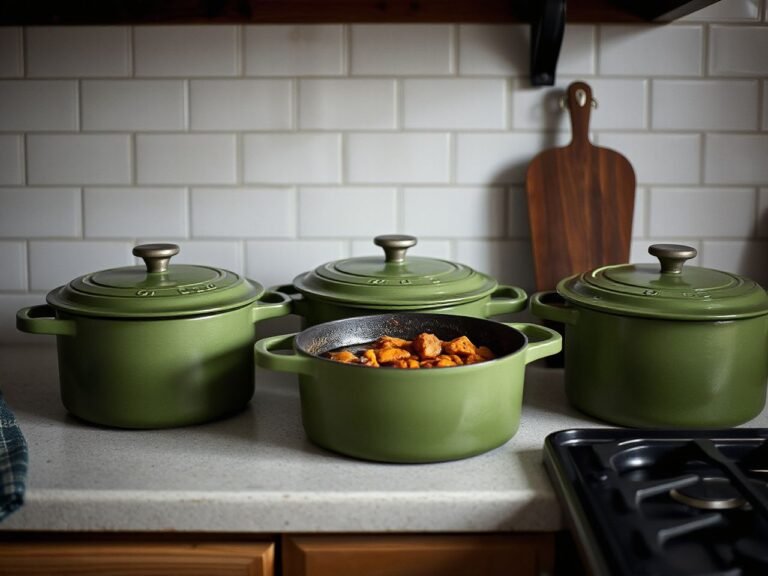
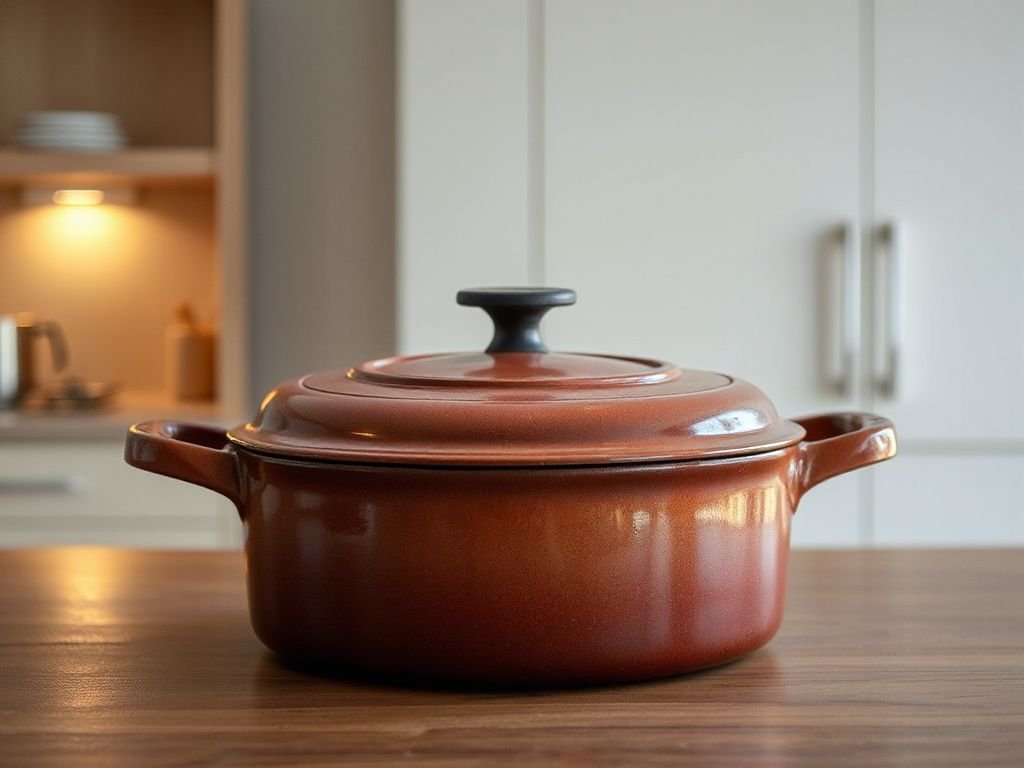
You slide a Dutch oven into a screaming-hot oven and ten minutes later, there’s a smell of burning plastic. Or you lift the lid and a hairline crack spiderwebs across the enamel. The question of what temperature a Dutch oven can handle has a more complicated answer than the marketing copy suggests, and getting it wrong ruins a $300 pot faster than any recipe mistake. Understanding what temperature a Dutch oven can actually handle means looking at two separate components and two different materials, because the pot body and the lid knob live in different thermal worlds.
The central distinction for Dutch oven temperature limits is between the pot body and the lid knob, and between enameled and bare cast iron. Beginners assume the whole pot is uniform, but a plastic knob can melt or smoke even though the cast iron is fine. The real rule is that thermal shock—not absolute max heat—is what causes most cracks, and the safe temperature is dictated by the weakest component, usually the knob or enamel.
Just as you’d check the heat tolerance of a cookie sheet before sliding it under a 450°F broiler—something we cover in our guide to baking sheets—you need to check both parts of a Dutch oven separately. The pot itself might be fine at 500°F, but the knob could be smoking at 400°F.
Key Takeaways
- Bare cast iron can withstand temperatures far beyond what a home oven reaches, well over 500°F.
- Enameled cast iron typically maxes out at 500°F, but the lid knob is often the real limiter—many phenolic knobs are only safe to 390°F.
- Thermal shock, not absolute heat, is what cracks most Dutch ovens. Always heat gradually from cold or room temperature.
- Check the manufacturer’s spec for your exact model—replacing a plastic knob with a metal one often raises the ceiling significantly.
The Weakest Link: Your Lid Knob Sets the Ceiling
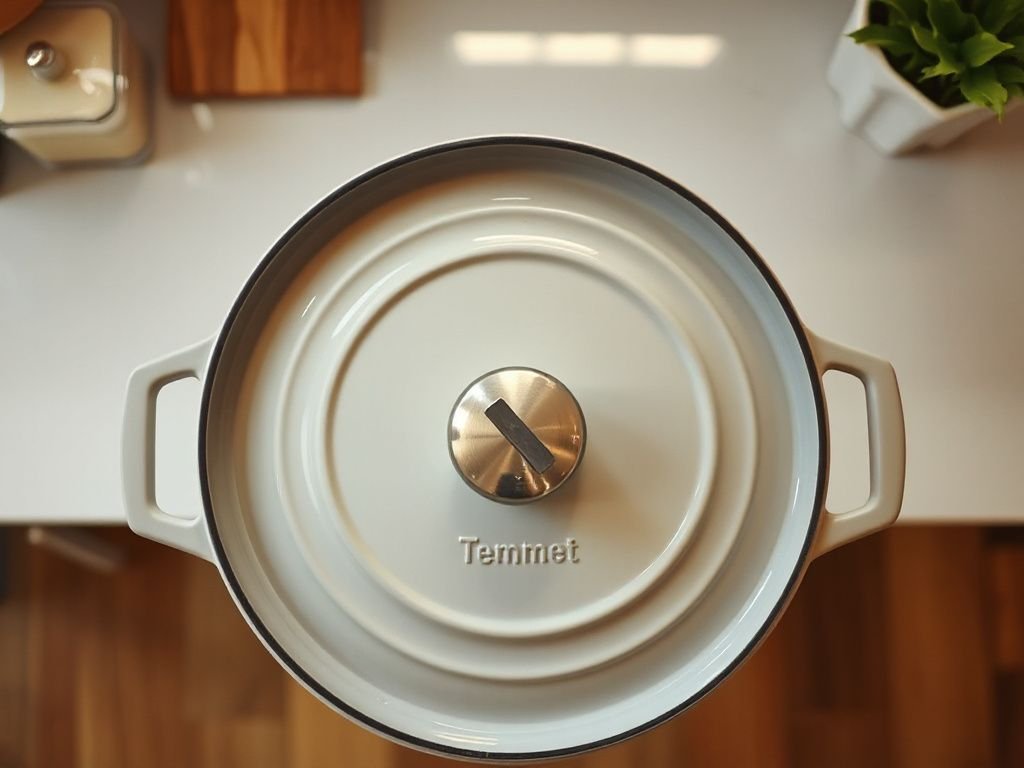
When a recipe calls for a high-heat sear or a bread bake at 500°F, the first thing to fail is rarely the cast iron. It’s the knob on the lid. Most entry-level and mid-range Dutch ovens come with a phenolic knob, which is a heat-resistant plastic. Phenolic knobs are generally rated to a maximum of 390°F (200°C), though some budget models are lower. That rating is printed on the knob or in the manual, but many home cooks never look.
Le Creuset’s product care guidelines specify that their classic phenolic knobs are oven-safe up to 390°F, while their stainless steel replacement knobs carry no upper temperature limit within normal oven ranges. You can find those specs on Le Creuset’s official site, and most brands follow similar numbers. Staub, by contrast, ships many of their Dutch ovens with a metal knob already attached, which removes that particular ceiling.
The fix is simple: replace the phenolic knob with a metal one from the same manufacturer. A stainless steel or brass knob is typically rated to at least 500°F, often beyond. That single swap can turn a “390°F pot” into a “500°F pot” for less than $20.
A standard phenolic knob is typically rated to a maximum of 390°F, while a stainless steel replacement knob can handle temperatures above 500°F. That single fact answers more questions about Dutch oven temperature limits than any blanket statement ever could.
Bare Cast Iron vs Enameled: Two Different Animals
If your Dutch oven is bare cast iron—seasoned, not coated—the temperature ceiling is effectively irrelevant for home use. Bare cast iron has a melting point above 2,000°F, so any oven temperature, grill, or even campfire coals are within its structural limits. The pan will not melt or warp at 550°F. What it can do is crack from thermal shock if you heat it too rapidly, but that’s a different failure mode than exceeding a rated temperature.
Enameled cast iron is a different story. The enamel coating is essentially glass fused to the iron, and glass expands and contracts at a different rate than iron. That mismatch is why enameled Dutch ovens carry a manufacturer-stated maximum oven temperature, usually 500°F (260°C). Some brands allow up to 550°F, but the safe floor is 500°F unless you’ve verified otherwise. Heating an enameled pot beyond its stated limit doesn’t cause immediate melting—it causes crazing, a network of fine cracks in the enamel that eventually chips away into your food.
The difference matters for technique. Bare cast iron can go from a cold stove to a ripping-hot campfire with relative impunity, as long as you don’t shock it with cold water. Enameled cast iron needs a gentler ramp-up, because the coating is the fragile part.
Why the Coating Changes Everything
The enamel on a Dutch oven is not indestructible. It’s a porcelain-like layer that can withstand high heat but not sudden changes in temperature. That’s why an enameled pot rated to 500°F can still crack if you take it from a cold fridge and place it directly into a preheated oven. The iron core heats up fast, but the enamel can’t expand at the same rate, and the stress cracks the glass coating.
Bare cast iron doesn’t have that problem because there’s no coating to crack. The iron itself is homogenous, so it expands and contracts uniformly. That’s why campfire cooking with bare cast iron has been a tradition for centuries, while enameled pots stay in the kitchen.
Thermal Shock: The Silent Killer of Dutch Ovens
Most cracked Dutch ovens don’t die from too much heat. They die from heat applied too quickly or unevenly. That’s thermal shock, and it’s the number one reason a perfectly good pot ends up in the trash. Cast iron is a poor conductor of heat, which means one spot can be 500°F while another spot an inch away is only 200°F. That temperature gradient creates stress, and stress in cast iron leads to cracks.
Enameled cast iron is even more vulnerable because the enamel layer can’t flex. When you put a cold enameled Dutch oven onto a hot burner set to high, the bottom iron expands rapidly while the enamel tries to hold its shape. The enamel then cracks or pops off. The same thing happens if you run cold water over a hot pot. Recipes that tell you to deglaze a hot Dutch oven with cold stock are asking for a ruined coating for exactly this reason: the liquid chills the enamel in an instant while the iron beneath it is still fully expanded, and the coating has nowhere to go but crack.
For bread baking, that means preheating the Dutch oven with the oven, not dropping a room-temperature pot into a hot one. The pot’s thermal mass will even out the temperature as the oven climbs, and you avoid any sudden shocks.
How to Heat a Dutch Oven Gradually
The safest method is to start everything cold. Put the Dutch oven in the oven, set the desired temperature, and turn it on. The oven and pot come up to temperature together over 20–30 minutes. That slow ramp eliminates almost all thermal shock risk.
On the stovetop, the rule is even more important. Always start a Dutch oven on low or medium-low heat with oil or liquid already in the pot. Give it a few minutes to warm through, then increase the heat gradually. Never put an empty enameled Dutch oven on a burner set to high—that’s a sure way to scorch the coating.
Reading the Manufacturer’s Spec: Your Real Ceiling
Every reputable Dutch oven has an official maximum oven temperature listed somewhere—on the box, in the manual, or on the brand’s website. That number is not a suggestion; it’s the tested safe limit for the enamel and knob combination. Lodge, for example, rates most of their enameled Dutch ovens to 500°F. So does Staub. Le Creuset’s cast iron is safe to 500°F, but their phenolic knob drops the overall assembly to 390°F. If you replace that knob with metal, the pot itself is good to 500°F.
Look for a temperature rating on the bottom of the pot or underside of the lid. Some brands stamp a maximum temperature directly into the iron. If you can’t find it, assume 400°F as a safe default for any enameled Dutch oven with a plastic knob, and 500°F for one with a metal knob. That’s conservative enough to prevent damage in almost every case.
Material performance standards for cast iron cookware are outlined by ASTM International, which helps ensure consistent heat tolerance across brands. These standards cover the composition and minimum wall thickness of cast iron, so a certified pot from any manufacturer will behave predictably under heat. The enamel coating itself is regulated as a food-contact surface by the U.S. Food and Drug Administration, which sets limits on how much lead and cadmium can leach out—a separate concern from temperature, but worth knowing if you’re buying a no-name pot from an online marketplace.
Most enameled Dutch ovens from major brands are rated to 500°F, but the lid knob may lower that ceiling to 390°F unless it is made of metal. That gap explains why two pots can look identical yet have very different safe operating ranges.
Special Cases: Campfire, Grill, and Bread Baking
Now for the scenarios that push Dutch ovens to the edge. Campfire cooking: bare cast iron is the traditional choice because it can sit directly on coals or hang from a tripod without issue. Enameled cast iron should never go over an open flame. The intense, uneven heat can cause the enamel to pop off in chunks, and once the coating is damaged, the pot becomes a rust magnet. If you want to use an enameled Dutch oven outdoors, stick to a charcoal grill with a diffuser or a camp stove with a moderate flame.
Grilling: a gas or charcoal grill can reach 600°F or more, which is above the rated limit for many enameled pots. Bare cast iron handles it fine, but enameled pots should stay below their maximum. Use the indirect heat zone for anything enameled, and keep the lid closed to maintain even temperature.
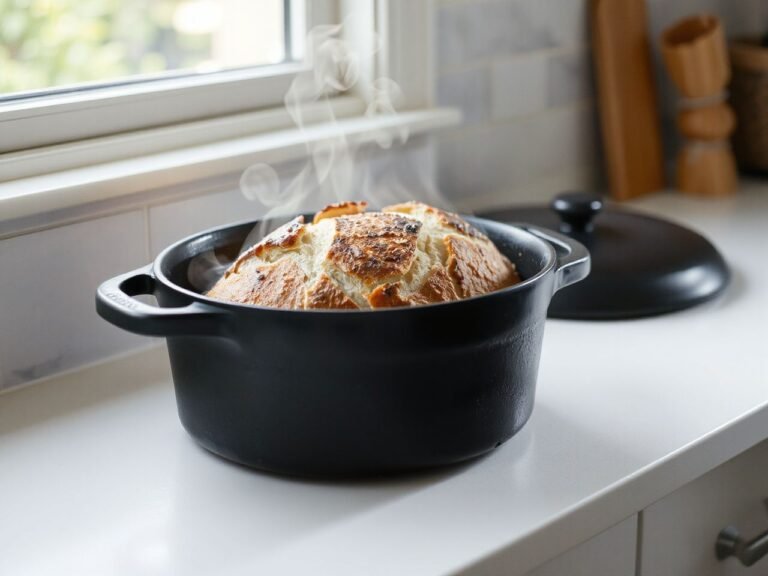
Bread baking is the most common high-heat use for a Dutch oven. Many artisan bread recipes call for preheating the pot at 450°F to 500°F for 30–45 minutes before adding the dough. That’s fine for a pot with a metal knob and an enameled or bare iron body, provided you preheat it in a cold oven or at least let the pot come up to temperature gradually. But if your pot has a phenolic knob, you either need to bake at 375°F and adjust the recipe, or swap the knob first. There’s no other way around it.
Just as you wouldn’t bake a delicate cookie at too high a temperature—like the ones in this brownie cookie dough sandwich cookie recipe—you need to respect your Dutch oven’s limits. The cookie recipe will still work if you dial the oven down slightly, but a cracked enamel pot is permanent.
One more thing: never heat an empty enameled Dutch oven on a stovetop burner set to high. Even a minute of dry high heat can scorch the enamel and create a permanent discoloration or crack. Always add oil or liquid before turning on the heat, and start on low or medium-low, increasing gradually.
Deep Frying and Slow Cooking: The Same Rules Apply
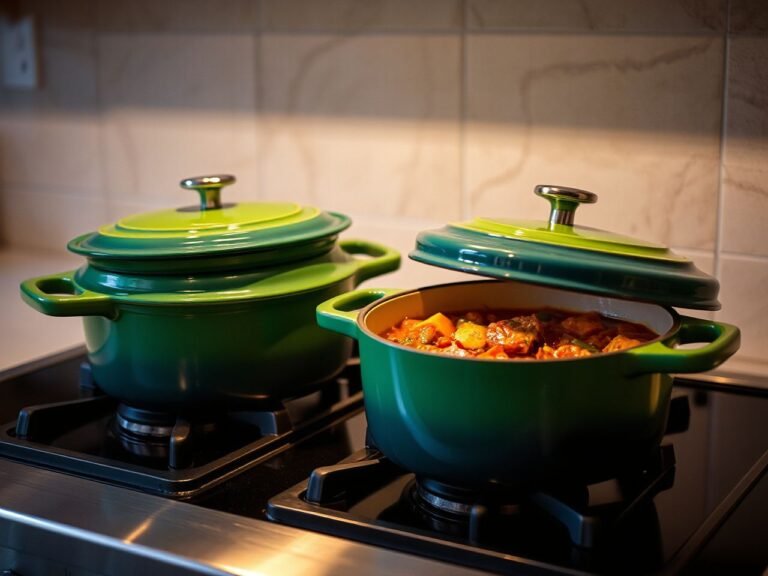
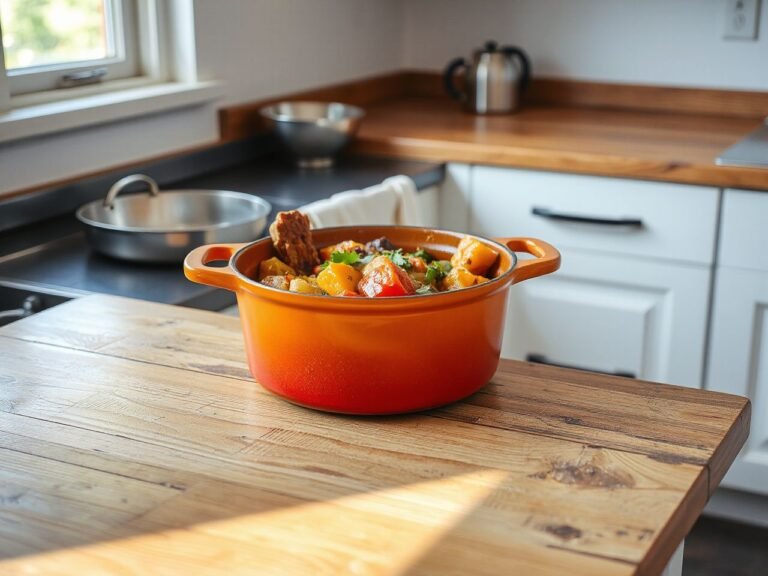
Deep frying in a Dutch oven usually means temperatures around 350°F to 375°F, which is well within the safe range for even a phenolic knob—but only if the knob isn’t directly over the heat source. The pot body can handle it, and the knob stays cool because it’s removed from the oil. Slow cooking, on the other hand, rarely exceeds 300°F, so temperature is never a concern. The danger in slow cooking is forgetting that enameled pots can still suffer thermal shock from a sudden cold liquid addition, so always add room-temperature broth or stock rather than ice-cold liquid.
Why Did My Dutch Oven Crack? The Autopsy
If your Dutch oven cracked, the answer is almost always one of three things: thermal shock, overheating above the rated limit, or a manufacturing defect. The first two are preventable; the third is rare but possible. Here’s how to tell the difference.
Thermal shock cracks usually appear as a single, clean split running from the rim down toward the base, or as a circular pattern around the bottom. They happen suddenly, often with a loud pop. Overheating cracks are accompanied by discoloration on the enamel—brown or black scorch marks—and the cracks tend to be finer and more numerous, like crazing. Manufacturing defects will usually show up within the first few uses, and a reputable brand will replace the pot under warranty.
If you’re not sure what happened, look at the pattern. A clean split through the iron itself points to thermal shock. A spiderweb of fine cracks only in the enamel points to overheating or a poor-quality coating. Either way, a cracked pot is no longer safe to use because bacteria can hide in the cracks, and the structural integrity is compromised.
Frequently Asked Questions
What is the absolute maximum temperature a cast iron Dutch oven can handle?
For bare cast iron, there is no practical maximum in a home kitchen—the iron itself melts above 2,000°F. However, rapid heating can still cause cracks. For enameled cast iron, the manufacturer’s stated limit is usually 500°F, but the lid knob may reduce that to 390°F if it’s phenolic. Always check both components separately.
Can I put a cold Dutch oven straight into a preheated oven?
No. That is the most common cause of thermal shock cracking. Let the pot come to room temperature, then place it in a cold oven and set the temperature. The oven and pot will heat together gradually, avoiding uneven expansion. For bread baking, this means preheating the pot inside the oven as it comes up to temperature.
What happens if I overheat an enameled Dutch oven?
Overheating—heating beyond the manufacturer’s limit or heating too quickly—can cause the enamel to craze, crack, or chip. The enamel may also discolor permanently, turning brown or black. Once the enamel is cracked, food can get trapped and the pot becomes unsafe for cooking. Replace the knob or adjust your technique before damage occurs.
How do I know my specific Dutch oven’s temperature limit?
Look for a rating on the pot’s bottom, the lid, or the original packaging. If it’s not visible, check the manufacturer’s website by entering your model number. Most brands list a maximum oven temperature for the pot body and a separate rating for the knob. If you can’t find it, assume 390°F with a plastic knob and 500°F with a metal knob.