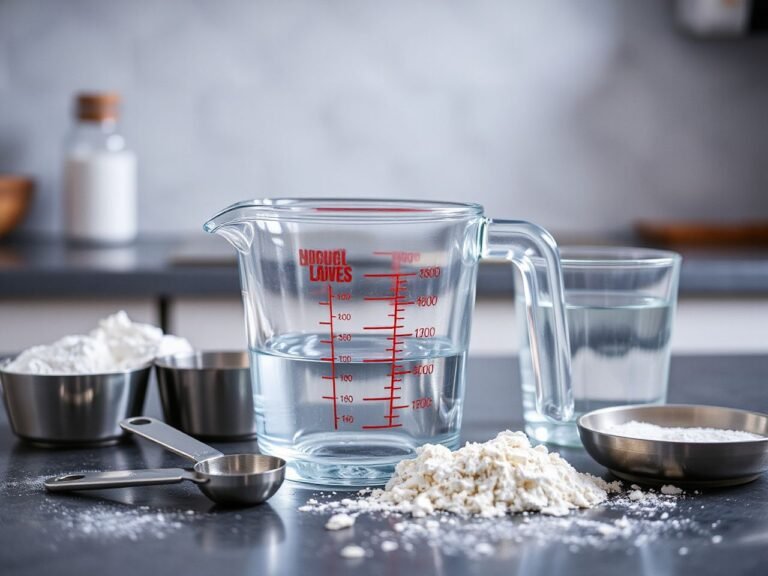
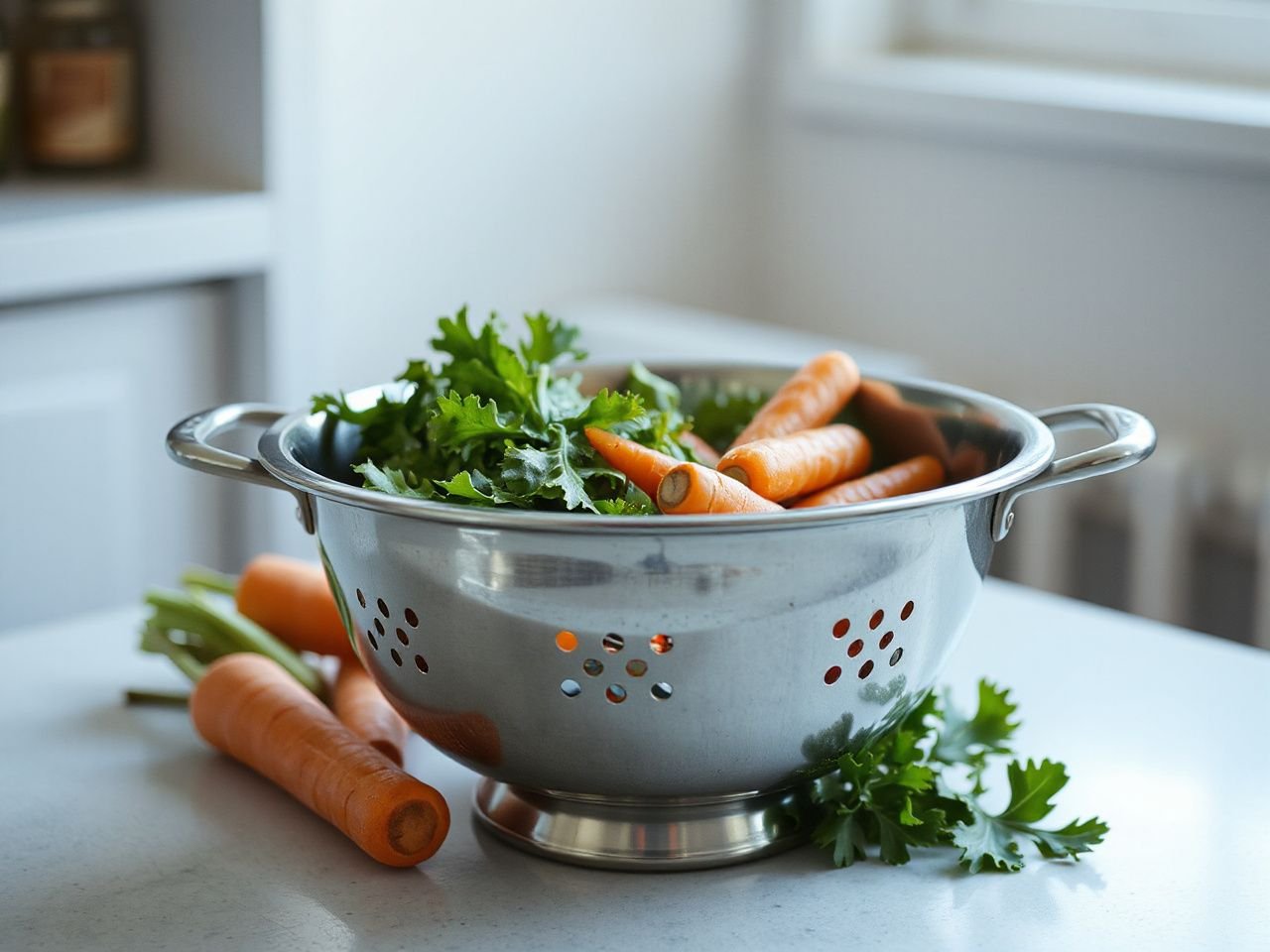
Does a colander drain food well, or does it simply contain water with a few holes in the sides? The useful distinction is between a colander that merely has many openings and one whose hole pattern, bowl shape, rim, and base let water escape without trapping food or creating an unstable load. Material choice also has to follow the task: heat handling, food retention, cleaning access, and sink clearance matter more than appearance alone.
I judge prep tools by what remains useful on the twentieth cut, not by how impressive the first use feels. The same standard applies here. A colander should remain easy to control, easy to rinse, and sensible for the food and cookware already in your kitchen. This colander buying guide focuses on those practical decisions rather than product rankings.
Key Takeaways
- Match the colander to the food, heat level, pot size, and sink clearance.
- Hole size and distribution control both drainage and food retention.
- A secure base and firm handles help control a heavy, wet load.
- Rims, folds, hollow sections, and bases need deliberate cleaning and drying.
Beginner: Start with the job, not the appearance
Choose capacity around the pot you already use
For standard culinary tasks, a medium-to-large colander should work with a 3–5 liter pot. That range gives the bowl enough room to receive pasta or vegetables without forcing the food over the rim during a pour. The right capacity is therefore tied to your existing cookware, not to a label such as “family size” or “large.”
A colander that is too small creates a crowded mass of food. Water has fewer open paths, the load becomes harder to shake gently, and hot ingredients may sit against one another while draining. A colander that is too large can be equally awkward if its rim cannot rest securely across the kitchen sink or if its base occupies more counter space than the task requires.
A colander should hold the food below the rim while leaving enough open surface for water to move away. Check the bowl against your usual cooking pot before deciding that a larger vessel is automatically more useful.
Think about shape and sink clearance
A rounded perforated bowl helps food collect toward the center as liquid leaves through the drain holes. A deeper shape can hold a substantial portion, but depth also changes how far you must reach into the bowl. A shallow shape is easier to access for rinsing berries or leafy produce, yet it may allow food to spill during a vigorous pour.
Sink clearance matters just as much as capacity. Set the empty colander in the sink and check three things:
- The footed base remains above the sink surface rather than sealing against it.
- The bowl does not block the drain or rest at an angle.
- The side handles remain reachable with wet hands.
A colander that fits the sink but leaves no room for the tap, drain, or your hands is poorly matched to the workspace. Countertop use requires the same check. The base should sit flat, and the rim should not wobble when the bowl is nudged.
Understand what the holes actually do
Large holes release water quickly, but they also allow small foods to escape. Rice, grains, small pasta shapes, chopped vegetables, and berries each place different demands on the pattern. Small holes retain more food, though they can slow drainage if the pattern is sparse or if residue blocks the openings.
Distribution matters as much as diameter. Holes concentrated in the lower bowl may leave water sitting around the upper food layer. Holes spread across the base and sides give liquid more routes out, provided the pattern does not create narrow pockets where food and residue collect.
A fine-mesh strainer serves a different purpose. Mesh is suited to retaining very small particles or filtering liquids, while a colander is built for draining and rinsing larger food portions. A sieve also belongs to a different task when dry ingredients need controlled separation.
Compare the working parts
Side handles are useful when the colander must be lifted, tilted, or held over a pot. They reduce the need to grip a hot or wet bowl directly. Their value depends on how securely they attach and whether the handles remain accessible after the colander is filled.
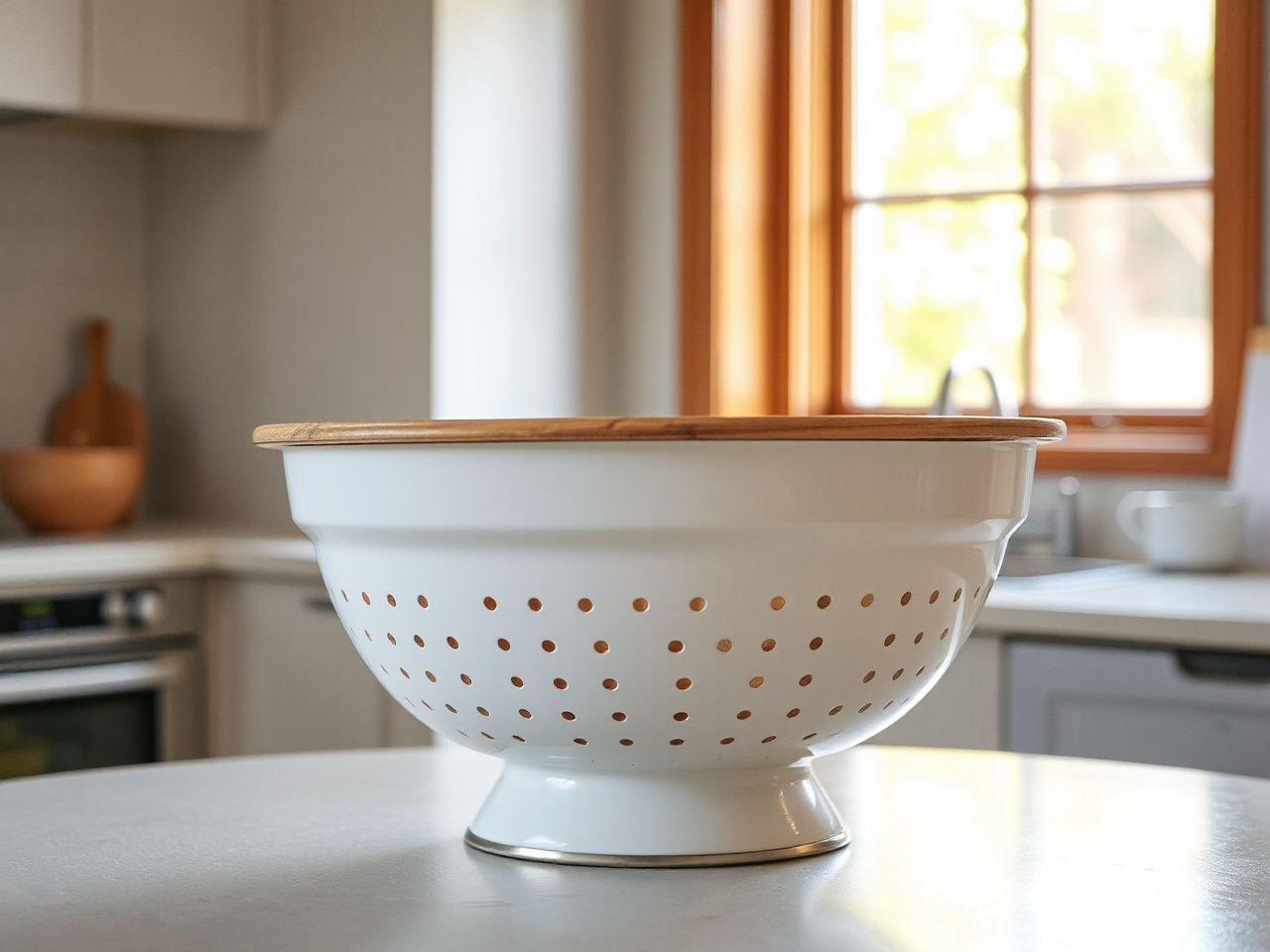
A footed base is more useful for hands-free draining on a countertop or inside a sink. Three rubber feet are included on the underside of the 5-quart OXO Good Grips Stainless Steel Colander, giving that design a clear separation point between the bowl and the surface. The general principle is easy to inspect on any colander: the base should stay stable while water can continue moving toward the drain.
A footed base supports stability by keeping the bowl above a wet surface. Handles and feet solve different problems, so one feature cannot automatically replace the other.
Intermediate: Match material to heat, food, and cleaning
Stainless steel for hot draining
Stainless steel makes practical sense for hot pasta and vegetables because the material is intended for a task where the colander may receive food directly after cooking. It also provides a firm bowl that does not depend on flexibility to hold its shape. The important checks are the quality of the rim, the smoothness around the openings, and the access available for cleaning.
A stainless-steel bowl still needs sensible handling. A hot load can be heavy, slippery, and difficult to redirect once water begins flowing. Hold the handles securely, keep the receiving sink or pot clear, and avoid filling beyond a level that you can control.
Stainless steel is not automatically easy to clean. Rolled rims, folded edges, pressed seams, and hollow handles can collect food particles and moisture. A smooth open construction gives a brush or sponge better access than a narrow enclosed channel.
Plastic and polypropylene for lighter prep
Plastic colanders can be convenient for rinsing fresh produce and draining foods that do not require high-heat handling. Polypropylene is one plastic used in kitchen prep tools, but the material name alone does not establish every limit of a specific design. The packaging or manufacturer instructions should determine whether a particular bowl is suitable for hot ingredients, dishwasher cleaning, or both.
Plastic can flex under a heavy load. That flexibility may help with storage, but it can also make the rim harder to control when the bowl is full. Inspect the handles and the base for movement before relying on the colander over a sink.
Plastic and polypropylene colanders should be matched to the stated heat and cleaning limits of the individual item. Do not pour hot food into an unlabeled plastic bowl simply because the bowl looks thick.
Silicone for storage flexibility
Silicone rubber can allow a colander to collapse for storage, which is useful in a crowded cupboard. The same flexibility can change how the bowl behaves during draining. A soft sidewall may bend inward under pressure, and a flexible base may need a firm, level surface to stay open.
Silicone also has heat limitations that vary by design. Read the care instructions before using a collapsible bowl with hot pasta or vegetables. Examine the folds closely after washing because those areas can hold moisture and food residue.
Useful life depends on more than the material name. Stainless steel may preserve a firm shape, plastic may reduce weight, and silicone may reduce storage space. The right choice follows the task and the care routine, not a general claim that one material is always superior.
Cleanability is part of the material decision
A colander can be dishwasher-safe by design, but that status must come from the product instructions. The Gulex Stainless Steel Colander is described as dishwasher-safe and has a 3-quart capacity. The OXO Good Grips Stainless Steel Colander is also described as safe to clean in a dishwasher. Those statements apply to the named products, not to every stainless-steel colander.
Before placing any colander in the dishwasher, inspect the care label and the construction. Silicone folds should be opened so water can reach the creases. Hollow bases and handles should be rinsed from every accessible direction. A rim that traps food needs a brush or focused stream of water rather than a quick wipe across the top.
The Types of Cookware Explained: A Practical Buying Guide offers a useful way to think about material selection across the kitchen: the surface, heat exposure, shape, and cleaning method all have to agree.
Advanced: Read the design before trusting the load
Assess stability under real working conditions
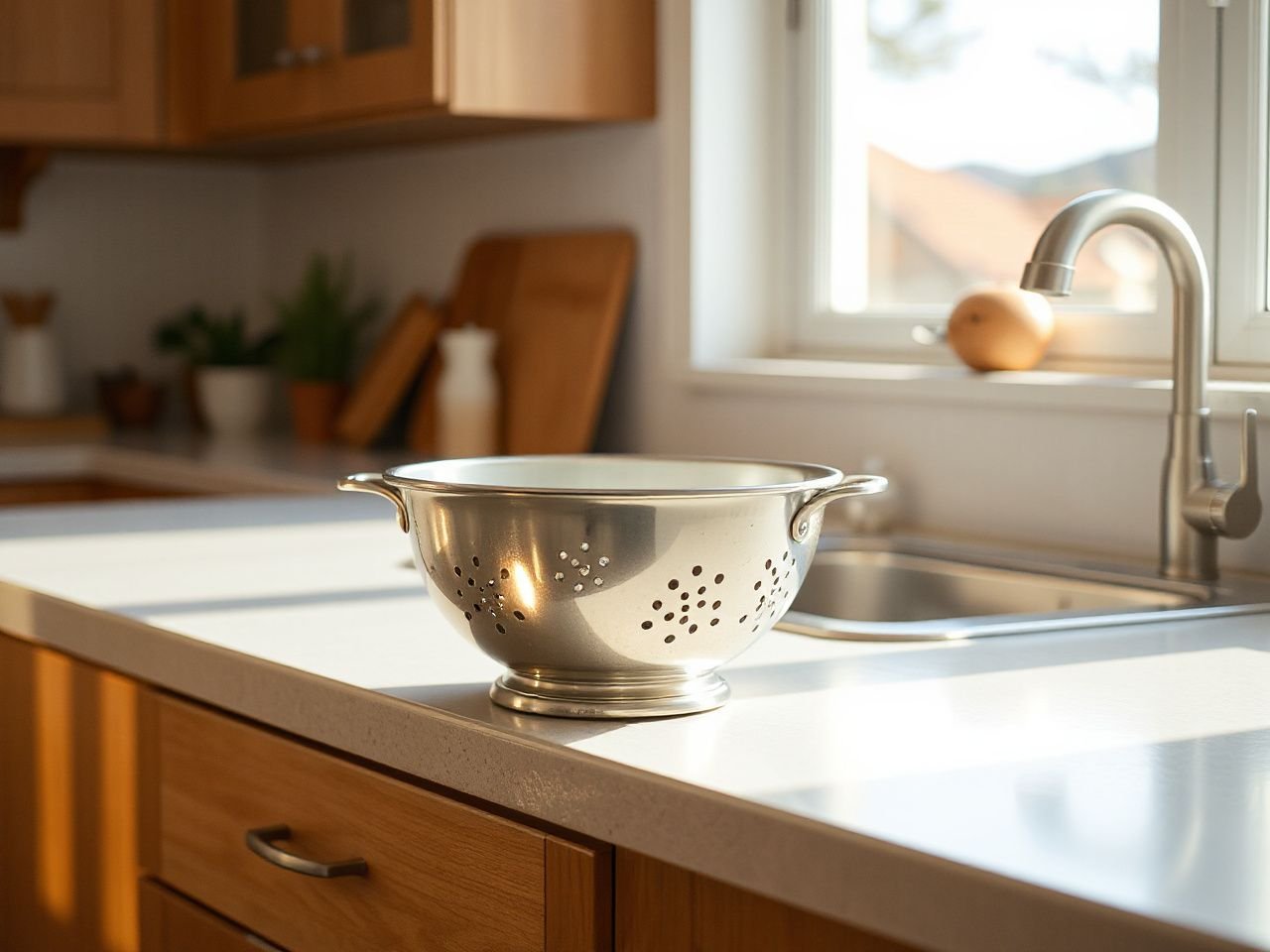
An empty colander can feel secure and still become difficult to control after it receives wet food. Weight shifts as water drains, and the bowl may tip if the base is narrow or the handles are positioned awkwardly. A stable design should remain predictable while it is lifted, tilted, and returned to the sink or counter.
Look for a footed base that contacts the surface evenly. Rubber feet can help reduce movement, but their usefulness depends on placement and the cleanliness of the surface. Handles should attach firmly and provide enough room for a practical grip without forcing your fingers against the bowl.
A loaded colander needs a stable base and secure handles because wet food changes the balance of the bowl. This is why stability deserves the same attention as hole size.
Check the relationship between bowl depth and food
Deep bowls can contain a large portion, but food at the bottom may remain surrounded by water if the lower openings are restricted by the sink or counter. Deep sides also make it harder to inspect the underside while washing. A shallow bowl offers easier access but may not contain loose food during rinsing or pouring.
The best shape for delicate produce is not necessarily the best shape for pasta. Berries and leafy greens benefit from room to move gently without being crushed under a tall mass. Pasta needs a bowl that can receive the entire portion without requiring a sudden, unstable transfer.
Use the food itself as the design test. Small grains call for retention. Delicate produce calls for gentle handling. Hot pasta calls for heat-appropriate material and a grip that remains secure during the pour.
Understand slow draining and trapped water
Slow drainage can come from holes that are too small for the food and water volume, a pattern concentrated away from the lowest point, or food covering the openings. A crowded bowl can drain slowly even when the hole pattern is sensible because the ingredients create a dense layer.
Water trapped in the rim usually points to a hollow or folded section that does not empty easily. Water can also remain beneath a footed base if the colander sits directly in a shallow pool. After washing, tilt the bowl in different directions and inspect the rim, feet, handles, and underside.
Slow drainage usually results from restricted openings, crowded food, or trapped water in the construction. Looking at the underside often explains more than looking at the number of holes on the interior.
Separate a colander from a fine-mesh strainer
A colander is for draining larger food portions and rinsing ingredients. A fine-mesh strainer is for retaining smaller particles and filtering liquids. Neither tool replaces the other.
Use a fine-mesh strainer when a liquid must pass through while fine solids remain behind. Use a colander for pasta, larger vegetables, and produce that needs washing under running water. A salad spinner addresses a different problem again: removing surface water from washed leaves through spinning rather than simply allowing liquid to fall through holes.
The distinction prevents a common mismatch. Choosing tiny holes for every task can make rinsing slower and cleaning more demanding, while choosing broad openings for every task can allow small food to escape.
Use sink and countertop clearance as a final filter
Measure the available space by placing the colander where you will use it, then checking the rim, base, tap, and drain together. A design advertised as fitting over a sink still needs enough clearance for your hands and enough support to stay level. A wide bowl may span the sink but be awkward to lift once full.
The verified dimensions for the OXO Good Grips Stainless Steel Colander are 12.6 inches by 12.6 inches by 10.94 inches. Dimensions like these matter because a listed capacity alone does not tell you whether the bowl will clear the sink or fit your storage space.
Storage also affects useful life. A bowl that must be wedged between other tools may be knocked onto its rim or left damp in a dark space. If cupboard space is tight, a collapsible silicone design may solve storage pressure, provided its folds can be opened, rinsed, and dried properly.
Preventive care: Keep the colander reliable after purchase
Rinse immediately after draining
Food residue becomes harder to remove when it dries inside small openings, under a rim, or around a handle joint. Rinse the bowl while residue is still loose, then inspect the underside rather than stopping after the interior looks clean.
Rice and grains deserve particular attention because small pieces can lodge in openings or under folded edges. Berries and leafy produce can leave fine particles that are easy to miss against a textured surface. A soft brush can reach spaces that a flat sponge skips.
Immediate rinsing reduces the chance that food residue will remain in holes, folds, rims, and hollow sections. The cleaning routine should follow the construction you can see.
Dry the places that hold moisture
Turn the colander upside down so water can leave the bowl, feet, and underside. Open silicone folds fully, and give hollow handles or enclosed sections extra attention. Storing a damp colander can leave moisture in places that are invisible from above.
Dishwasher cleaning does not remove the need for inspection. A cycle may wash the main bowl while residue remains in a narrow channel or under a foot. After the cycle, check the rim and base before putting the colander away.
For broader kitchen equipment decisions, the compact stand mixer buying guide uses the same practical principle: storage access and cleaning effort are part of daily performance, not afterthoughts.
Use the right tool for delicate foods
Delicate berries can bruise if they are shaken forcefully against a hard bowl or pressed beneath a heavy load. Rinse them with a controlled stream, keep the bowl from becoming crowded, and let water leave through the openings without aggressive tossing.
Leafy produce can be rinsed in a colander, but a salad spinner may remove surface water more effectively when dry leaves matter for the next preparation step. A colander remains useful for washing and initial draining; it is not a replacement for every produce tool.
Check food-contact and safety information carefully
Material labels do not answer every question about food contact, heat, or cleaning. For official food-safety information and consumer guidance, consult the U.S. Food and Drug Administration rather than relying on an unverified claim printed in a listing.
When a package displays a standards or testing mark, verify what the mark means through the NSF organization before treating it as evidence of a particular certification. The product instructions remain the proper source for dishwasher use, heat limits, and handling directions.
Make the decision with a short inspection
Before choosing, inspect the colander in this order:
- Match its capacity and footprint to the pot and sink you already use.
- Look at the hole size and distribution against the smallest food you plan to drain.
- Check whether the base sits level and whether the handles remain reachable when the bowl is full.
- Run a finger or brush along the rim, folds, seams, feet, and underside to identify cleaning traps.
- Read the material and care instructions before using the bowl with hot food or a dishwasher.
This process is more dependable than choosing by appearance. A colander earns its place through controlled draining, safe handling, and manageable cleaning on repeated use.
Frequently Asked Questions
What material makes the most sense for hot pasta and vegetables?
Stainless steel is the straightforward material to consider for hot pasta and vegetables because the bowl is firm and intended for direct draining after cooking. Plastic and silicone may have heat limitations, so their care instructions must be checked first. Material alone does not settle the decision; handles, base stability, rim construction, and sink clearance also determine how safely the hot load can be controlled.
Are side handles or a footed base more useful?
Side handles help you lift and tilt a loaded colander, while a footed base supports hands-free draining in a sink or on a counter. The better feature depends on how you work. A colander used mainly for pouring benefits from reachable handles. A bowl that rests while produce rinses benefits from a stable base. Many kitchens need both functions.
Why does a colander drain slowly or hold water in its rim?
Slow draining may result from small or poorly distributed holes, crowded food, or openings covered by ingredients. Water in the rim usually comes from a hollow or folded construction that does not empty easily. Inspect the underside, tilt the bowl after washing, and clean narrow channels with a brush. A high hole count does not guarantee good drainage.
Can a colander go in the dishwasher?
Some can, but the answer belongs to the individual product instructions rather than the material category. A listed dishwasher-safe design may still contain folds, hollow feet, or handle channels that need inspection afterward. Open silicone folds before washing, rinse trapped food from rims, and dry the underside before storage. Stainless steel also requires attention around seams and enclosed parts.
How does a colander buying guide differ from advice about a fine-mesh strainer?
A colander buying guide should focus on bowl capacity, drain-hole distribution, stability, handles, sink clearance, heat handling, and cleaning access. A fine-mesh strainer is selected for retaining very small particles while liquid passes through. Use the colander for pasta, larger vegetables, and produce. Choose mesh when the task requires filtering liquid or holding back fine solids.
A colander is a small prep tool, but its design affects control at several points in a meal. Start with the pot and sink, check the holes against the food, then inspect the base, handles, rim, and cleaning instructions. The useful choice is the one that still behaves predictably after the first impression has disappeared.