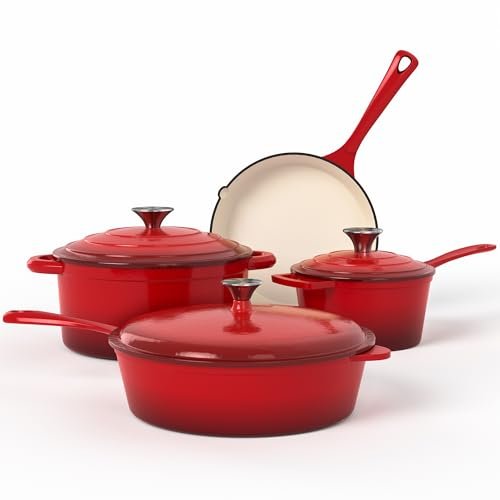
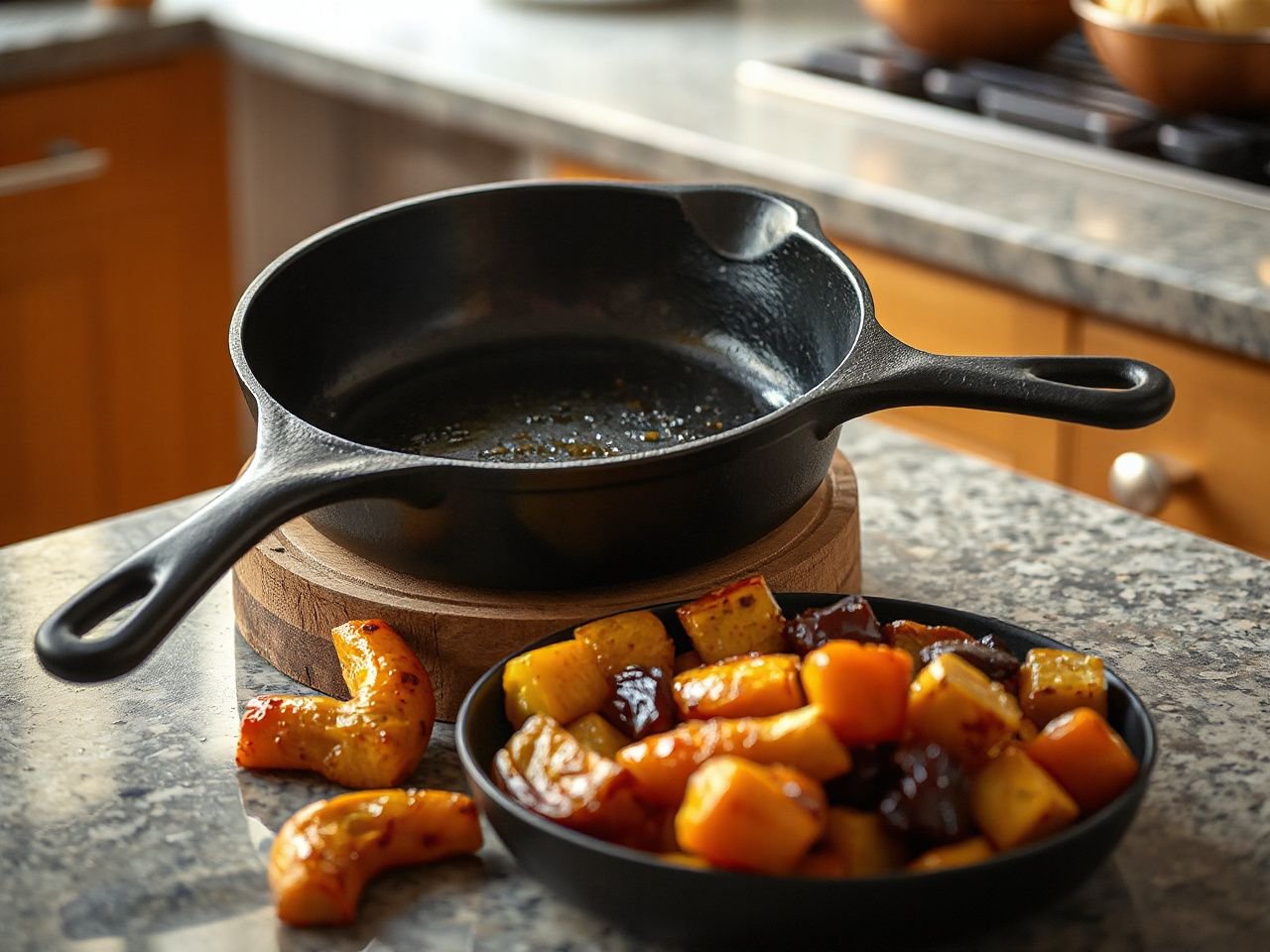
A skillet can have a cast iron body that tolerates severe oven heat while its handle, lid, knob, or coating reaches its limit much sooner. That is the frustration behind choosing a cast iron skillet for oven cooking: the pan may be safe, but the complete piece may not be.
The important distinction is between the heat tolerance of the cast iron body and the heat tolerance of the skillet’s weakest attached component; an oven-safe body does not make every handle, lid, knob, or coating oven-safe. Oven use also affects bare seasoning differently from enamel, so heat compatibility, thermal-shock risk, and post-use maintenance deserve separate attention.
Key Takeaways
- The lowest-rated component, not the iron body, sets the safe oven limit.
- Bare cast iron needs dry handling and seasoning care; vitreous enamel needs protection from impact and thermal shock.
- Check the manufacturer’s oven and broiler instructions, then protect every handle, lid, and surface from extreme temperature changes.
What makes cast iron skillets suitable for oven cooking?
Gray cast iron is a dense cooking material that holds heat and maintains high temperatures longer than many other pan materials. That behavior explains why a skillet can move from stovetop searing into roasting, baking, or a pan sauce without changing cookware. The iron body stores heat rather than shedding it quickly.
Cast iron also gives oven food a broad, stable cooking surface. Cornbread benefits from a thoroughly heated pan, while a steak benefits from contact with a surface that remains hot during searing. Those are material effects, not promises that every recipe will cook identically.
A classification describes the material category; it does not certify a complete skillet, its handle, its lid, or its oven limit.
The body is only one part of the oven question
A bare iron skillet with an integral iron handle has fewer attached parts to inspect than a pan with a phenolic resin handle, a borosilicate glass lid, or a removable silicone grip. Stainless steel handles and hardware can also have different instructions from the body, so the manufacturer’s care sheet takes precedence over assumptions based on appearance.
The complete skillet is safe only within the limit of its least heat-tolerant component. A phenolic resin handle may impose a lower limit than the iron body, while a glass lid may have separate rules for direct heat, preheating, and thermal shock.
Every part of a cast iron skillet becomes extremely hot in an oven, including the main handle and helper handle. The U.S. Consumer Product Safety Commission provides household safety information at CPSC.gov, and its consumer-safety remit includes burn hazards from hot household products; use oven mitts or other heat protection every time you remove cookware.
How to verify oven safety before cooking
- Read the manufacturer instructions. Look for separate limits for the body, handle, lid, knob, coating, and broiler. If the listing gives only a vague statement such as oven-safe, the missing component limit is a reason to seek the full care instructions.
- Identify attached materials. Check for bare iron, vitreous enamel, phenolic resin, glass, stainless steel, silicone, or another material. A detachable sleeve may protect a hand during stovetop use without being intended to stay on in the oven.
- Check the lid separately. A skillet and its lid may not share the same heat rating. Borosilicate glass is still glass, and a glass lid requires more careful handling during rapid temperature changes.
- Check broiler directions. Oven-safe does not automatically mean broiler-safe. Direct radiant heat can create a different load on a handle, knob, lid, or enamel surface than ordinary baking.
- Inspect before heating. A loose handle, damaged lid, chipped enamel, deep rust, or visible crack is a maintenance problem before it becomes an oven problem.
The manufacturer’s written instructions outrank general cast iron advice because the instructions cover the complete construction rather than the iron alone. If no limit is stated for an attached component, do not assume that the body specification answers the question.
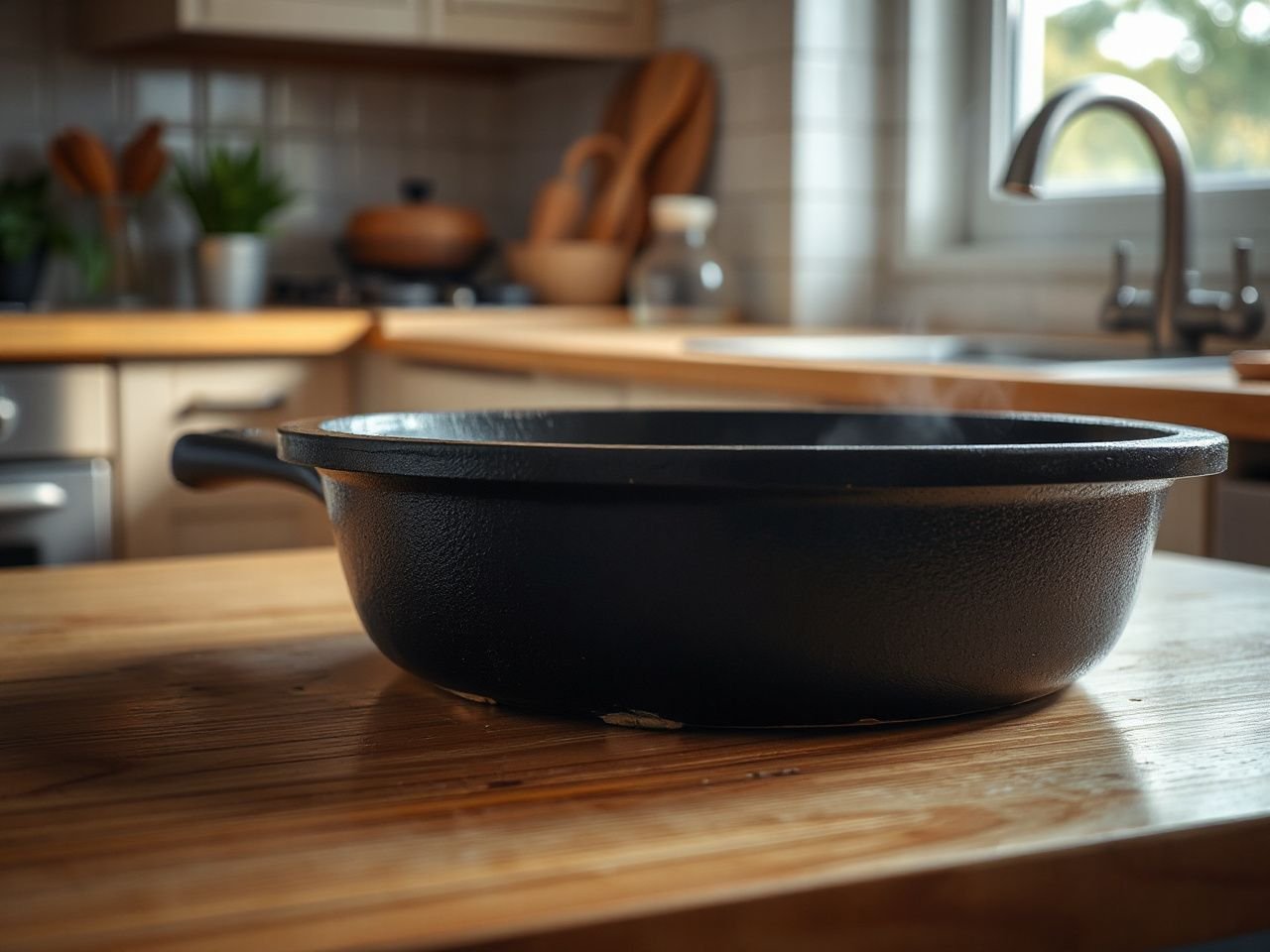
Beginner guide: bare iron versus enameled cast iron
Bare cast iron and enameled cast iron share the heat-holding body, but their cooking surfaces behave differently after heating. Bare iron carries a layer of polymerized cooking-oil seasoning, while enamel is a vitreous, porcelain-like coating fused to the iron.
Bare cast iron and polymerized seasoning
Seasoning is a durable protective layer formed by heating thin coatings of cooking oil on iron. Heat changes the oil through polymerization, creating a hardened, dark surface that helps reduce sticking and protects the metal from rust.
A properly seasoned surface has nonstick qualities, but seasoning is not a permanent plastic film that ignores misuse. Water left on bare iron can contribute to rust, and excessive oil during a seasoning cycle can leave a sticky surface rather than a hard one.
Bare cast iron can move from stovetop cooking into the oven, provided the complete skillet is rated for the intended use. The oven can also support a fresh seasoning cycle: apply a thin layer of cooking oil, bake the pan upside down at 450°F for one hour, let it cool fully, and repeat the procedure three additional times.
Enameled cast iron and porcelain enamel
Vitreous enamel, also called porcelain enamel, separates the iron from direct contact with food. The surface does not require bare-iron seasoning, so the maintenance routine differs from a traditional skillet’s routine.
Bare iron can rust if left wet, while enamel can chip or crack from impact, overheating, or thermal shock. A chipped area is not the same maintenance problem as surface seasoning that needs rebuilding, and scrubbing bare iron as if it were enamel can remove useful seasoning.
Enamel deserves controlled heating and careful handling. Do not drop an enameled skillet, strike its rim against a hard surface, or move a very hot piece onto a cold, wet counter. Thermal shock can stress the coating and the iron beneath it.
Choosing the maintenance path
- Choose bare-iron care if you accept drying, light oiling, rust prevention, and occasional reseasoning as part of ownership.
- Choose enamel care if you want a coated cooking surface and are prepared to protect it from impact, overheating, and sudden temperature changes.
- Do not combine the routines blindly. Bare iron benefits from polymerized oil; enamel does not need the same seasoning treatment, and aggressive scraping can damage its surface.
Long-term ownership costs cannot be reduced to purchase price alone because the two surfaces demand different forms of care. Bare cast iron may require more hands-on maintenance, while enameled cast iron makes damage to the coating a central concern and may not be repairable through ordinary seasoning.
Readers comparing shape, handle design, and stovetop needs can use our guide to cast iron skillets for beginners as a separate starting point; the oven-safety checks in this article still apply to any model they consider.
Intermediate guide: heat, preheating, and thermal shock
How hot can a cast iron skillet go?
The cast iron body may tolerate very high oven heat, but the safe limit is set by the lowest-rated component. That component might be a phenolic resin handle, a glass lid, a knob, a coating, or hardware with a separate instruction.
No universal oven temperature can be assigned to every cast iron skillet. The manufacturer’s stated limit controls, and the listing must be read for the complete skillet rather than the body material alone.
The same rule applies to broiling. A pan described as oven-safe may still have a handle, lid, or enamel restriction that rules out broiler use, so broiler approval must appear in the product instructions.
Should the skillet go into a cold oven?
For ordinary baking or roasting, follow the recipe and the cookware instructions rather than treating cold-oven placement as a universal rule. A cold skillet placed into a preheating oven warms gradually, while a preheated skillet creates a hot cooking surface immediately; each method changes the cooking process.
Seasoning has a specific procedure: apply a thin coat of cooking oil and bake the skillet upside down at 450°F for one hour, then let it cool fully before repeating the cycle. Food cooking is different, so the recipe’s timing and the manufacturer’s thermal guidance should control.
Gradual heating does not make careless cooling safe. Thermal shock can result from moving very hot cookware onto a cold, wet, or highly conductive surface, and pouring cold liquid into overheated cookware can also create a damaging temperature change.
Practical oven handling
- Place a dry skillet on a stable rack or heat-safe surface before heating.
- Keep oven mitts ready for both the long handle and the helper handle.
- Use a heat-safe trivet when bringing the skillet to the table; oven-to-table cookware remains hot after removal.
- Set the skillet on a dry, heat-safe surface rather than a wet counter or cold stone.
- Allow the pan to cool before washing or adding cold liquid.
Why roasting, baking, and searing suit cast iron
Cast iron’s heat retention helps a heated surface remain hot during contact with food. That quality supports browning and gives baked foods a stable pan environment, although recipe details, food moisture, and preheating still affect the result.
A skillet also offers one-pan movement from stovetop to oven when its complete construction permits that movement. A steak can begin with stovetop searing and finish with oven heat, while cornbread can bake in the same material that was heated before the batter arrived.
Cast iron’s heat retention is the central reason the material works well for oven roasting, baking, and searing. The advantage is controlled heat storage, not a guarantee that food will never stick or burn.
For recipe-specific pan shape, readers may find the cornbread skillet shortlist useful, while steak-focused cooks can review the steak skillet comparison without confusing a cooking-use comparison with an oven-safety certification.
Advanced guide: broilers, lids, surfaces, and daily care
Broiler use needs its own check
Broiler heat is directed intensely at the upper surface of the cookware and food. That condition is different from ordinary oven baking, so the words oven-safe do not settle the broiler question.
Inspect the handle, lid, knob, and coating before using a skillet under a broiler. A phenolic resin handle may have a separate limit, a borosilicate glass lid may require removal, and enamel may have manufacturer-specific restrictions.
Never assume a removable silicone or fabric handle protector can remain attached under direct broiler heat. Remove or position accessories exactly as the instructions state, and keep oven mitts available because the handle and helper handle will become hot.
Cleaning bare cast iron after oven use
Let the skillet cool enough for safe handling before cleaning. Remove food residue with a suitable utensil or brush, wash away residue, dry the iron thoroughly, and apply the maintenance layer specified for bare cast iron.
The seasoning surface is a polymerized oil layer, so maintenance should protect that layer rather than strip it after every use. If food has damaged or removed sections of seasoning, reseasoning restores protection through thin oil coatings and heat.
Do not leave bare iron wet. Rust prevention begins with complete drying, and a thin maintenance coat of cooking oil helps keep the exposed metal protected between uses.
Cleaning enameled cast iron after oven use
Allow an enameled skillet to cool before washing, because a sudden change from extreme heat to cold water can create thermal shock. Handle the pan carefully so the rim and cooking surface do not strike a hard sink or utensil.
Enamel is a glass-like coating over iron, not a seasoning layer that can simply be rebuilt after impact. Chipping, cracking, or abrasion calls for attention to the manufacturer’s care instructions rather than a bare-iron seasoning cycle.
Common causes of sticking, rust, chips, and warping
- Sticking: seasoning may be immature, food may have been moved before browning developed, or excess oil may have become sticky during a seasoning cycle.
- Rust: bare iron was left wet or was not dried thoroughly after washing.
- Chipped enamel: the coating experienced impact, overheating, or thermal shock.
- Thermal damage: hot cookware met a cold, wet, or highly conductive surface, or cold liquid was added to an overheated pan.
- Handle damage: a component was exposed to heat beyond its own rating even though the iron body remained suitable for oven use.
Cast iron can crack or warp under damaging conditions, and enamel can chip or crack from impact and thermal shock. Normal oven use within the manufacturer’s instructions is a different situation from rapid temperature change, direct impact, or exceeding the limit of an attached component.
Cast iron beside carbon steel and stainless steel
Cast iron holds heat strongly and pairs oven cooking with a seasoned or enameled surface. Carbon steel skillet cooking offers a different balance of weight and heat response, while stainless steel does not rely on polymerized seasoning for its cooking surface.
Material choice should follow the task. Cast iron suits cooks who value stored heat and accept maintenance; carbon steel suits cooks who want a similar seasoned approach with different handling characteristics; stainless steel suits cooks who prefer an unseasoned metal surface and a separate technique for browning.
Induction compatibility is a separate question from oven safety. A skillet can work on an induction cooktop yet still have a handle or lid restriction in the oven, so check both appliance instructions independently.
Preventive measures for safer oven use
A simple pre-cooking checklist
- Confirm the complete skillet’s oven limit.
- Confirm the lid and knob limit separately.
- Check whether the manufacturer’s instructions permit broiling.
- Inspect bare iron for rust and enamel for chips or cracks.
- Plan a dry, heat-safe landing place before the skillet enters the oven.
- Keep protection for every handle within reach.
- Do not pour cold liquid into overheated cookware.
A preheating decision should follow the recipe and the cookware instructions, not a blanket rule about all cast iron. The most important preventive measure is controlling temperature changes before, during, and after cooking.
When a lid changes the answer
A cast iron skillet body may be suitable for the oven while its lid is not. Glass, enamel, knobs, and handles can carry different limits, and a lid that is safe for covered baking may not be suitable under a broiler.
Remove the lid if its instructions require it, and never use a glass lid as a substitute for a broiler screen. The manufacturer’s written limit matters more than a general assumption about borosilicate glass or stainless steel.
How seasoning changes after oven use
Baking and roasting in bare iron do not automatically ruin seasoning. A properly maintained seasoning layer is intended to protect the metal and provide nonstick qualities, while acidic, wet, or abrasive conditions may require more care afterward.
The purist’s rule is simple: thin oil, controlled heat, complete cooling, and repetition when the surface needs rebuilding. If a pan becomes sticky, the first correction is not more oil; excessive oil is the cause of that specific seasoning problem.
Frequently Asked Questions
How do I know if a cast iron skillet is safe for oven cooking?
Read the manufacturer’s instructions for the complete skillet, not only the body material. Confirm the oven limit for the handle, helper handle, lid, knob, coating, and hardware. A bare gray cast iron body may tolerate high heat while a phenolic resin handle or glass lid sets a lower limit. Broiler approval must also be stated separately.
Can I use an enameled cast iron skillet under the broiler?
Do not assume so. Oven-safe and broiler-safe are separate claims, and the manufacturer must address the enamel, handle, lid, and knob. Direct radiant heat can impose different conditions from baking. Remove any lid or accessory only as the instructions direct, and use heat protection because every exposed handle becomes hot.
How should I reseason a bare skillet after oven cooking?
Clean and dry the bare skillet, then apply a thin layer of cooking oil. Bake it upside down at 450°F for one hour, let it cool fully, and repeat the procedure three additional times when rebuilding the surface. Excessive oil can leave seasoning sticky, so thin coverage matters more than a heavy coating.
For readers still deciding between a traditional surface and a coated one, this guide to cast iron on glass-top stoves addresses stovetop compatibility as a separate issue from oven safety.