At 250°C (482°F), all silicones release significant amounts of formaldehyde. That doesn’t mean a typical baking mat becomes dangerous every time you bake, but it does explain why heat limits need more attention than just a simple oven-safe label. Measure the opening first. The key question isn’t just whether silicone is safe; it’s if the finished mat is suitable for food contact and your oven’s conditions.
The safety difference lies between the silicone material itself and the complete finished mat, which might have reinforcement, coatings, pigments, or residues from manufacturing. Check the packaging or instructions to see if the product is meant for food contact. Don’t assume every silicone mat is interchangeable. That’s the practical way to decide if silicone baking mats are safe in your kitchen.
Key Takeaways
- Food-contact suitability depends on the finished mat and its labeling, not simply on the word silicone.
- Use a silicone baking mat on a suitable baking sheet within the maker’s stated limits, never over direct flame or an unapproved heating element.
- Discard a mat with persistent odor, unusual stickiness, bubbling, cracking, peeling, or exposed reinforcement.
- Clean silicone gently and follow the care instructions before using a dishwasher, freezer, or microwave.
Are silicone baking mats safe for food and ordinary baking?
Usually, a silicone baking mat can be food-safe and oven-friendly if the product is labeled for that purpose. It’s important to use it within the limits specified by the manufacturer. The word “silicone” alone doesn’t mean it’s suitable. A mat may also contain fiberglass mesh, pigments, surface treatments, or manufacturing residue, so check the label and the mat’s condition.
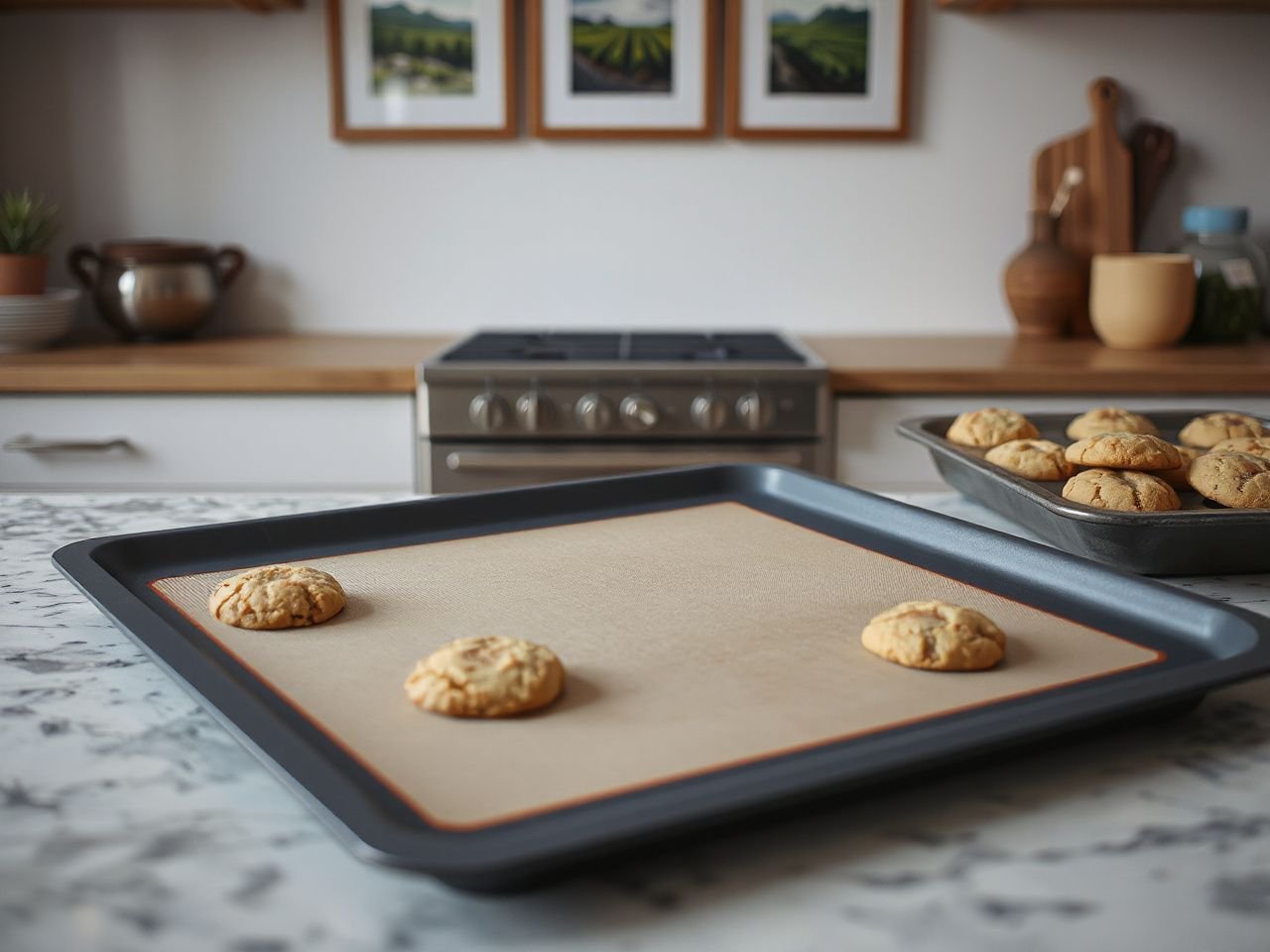
A silicone baking mat is a flexible surface that sits on a baking sheet. The sheet supports the mat, which provides the contact surface for food. This setup is important because a flexible mat isn’t a self-supporting pan. Don’t place it directly on a rack unless the instructions say it’s okay.
Food-contact suitability belongs to the finished silicone mat, not to the raw material name alone. Look at the packaging, printed instructions, or manufacturer info for wording that shows the mat is meant for food contact and baking. If the instructions don’t specify that, it’s safest not to assume it’s okay.
What to check on the label
- Look for a clear statement that the mat is intended for food contact or baking.
- Find the maker’s oven-use limits and warnings about broilers, heating elements, flame, and other heat sources.
- Read the cleaning instructions before using a dishwasher or abrasive cleaner.
- Check whether the mat includes reinforcement, such as fiberglass mesh, and inspect the edges for damage.
- Keep the packaging or written care instructions if the label contains the only available use guidance.
A certification mark can be useful, but a mark should be identifiable rather than treated as decoration. For general information about food-contact materials and related federal guidance, consult the U.S. Food and Drug Administration. The FDA’s presence as a public authority does not turn an unlabeled mat into an approved one, so the product’s own instructions still need to match the intended use.
Why the complete mat matters
Some silicone baking mats use fiberglass mesh inside the silicone. The reinforcement can help the flexible sheet keep its shape, but damage changes the safety question. A cut, tear, or peeled surface may expose material that should not touch food, even if the undamaged silicone surface was originally intended for food contact.
Silicone baking mats with exposed reinforcement should not be used for food. A mat that is swollen, bubbling, cracked, unusually sticky, or peeling also belongs in the discard pile because those changes show that the surface or structure is no longer in its expected condition.
The finish deserves the same attention I give any cookware surface. A cast-iron finish can sometimes be stripped and rebuilt through seasoning, but a damaged silicone mat is different: its layered structure cannot be safely restored by adding oil, washing harder, or trimming away a damaged section.
Heat safety: what happens when a silicone mat gets too hot?
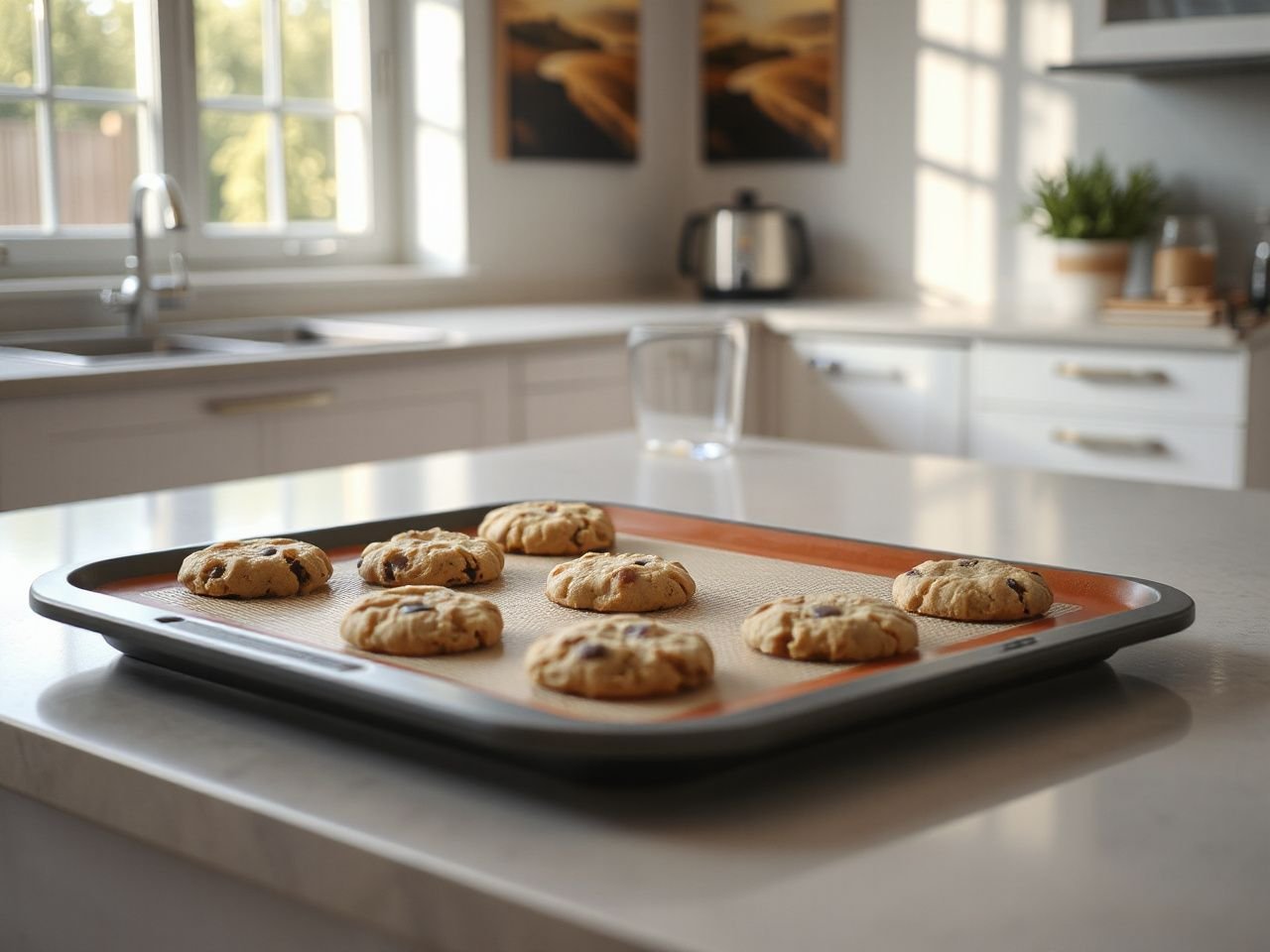
Silicone bakeware is meant for normal oven baking within the maker’s stated limits. Heat outside those limits can change the material, cause odor, affect the surface, or damage reinforcement. Seeing no immediate damage doesn’t mean the mat stayed within its safe operating range.
When polydimethylsiloxane is exposed to an oxygen-containing atmosphere near 200°C (392°F), it emits small amounts of formaldehyde. At 250°C (482°F), all silicones produce significant amounts of formaldehyde. That’s a major reason to follow the manufacturer’s heat instructions rather than treat silicone as harmless at any temperature.
A silicone baking mat should be used only within the maker’s stated heat limits. If the packaging is missing and the temperature range can’t be verified, don’t guess from how it looks or compare it with another mat’s instructions.
Broilers, heating elements, and open flames
A broiler exposes food and cookware to intense direct heat instead of the enclosed-oven conditions for which baking mats are usually made. Don’t use a silicone mat under a broiler unless the maker specifically allows it. The same applies to direct contact with an oven heating element.
Never place a silicone baking mat over an open flame. A gas burner, grill flame, or other direct flame presents a different heat exposure from baking in a regular oven. A mat that looks fine after such use might still have suffered damage on the surface or inside.
The U.S. Consumer Product Safety Commission provides public safety information about household products and fire hazards through its official website. Use that resource for broader oven and fire-safety guidance, while using the mat’s own instructions for its specific permitted applications.
Signs of excessive heat
Stop using the mat if it develops persistent odor, unusual stickiness, bubbling, cracking, swelling, discoloration accompanied by a changed surface, or peeling. A strange smell during an initial use may come from residue, but an odor that remains after careful cleaning should not be ignored.
- Persistent odor: remove the mat from food preparation until the cause is clear. If the odor remains, replace the mat.
- Unusual stickiness: treat a changed surface as deterioration rather than as extra nonstick performance.
- Bubbling or swelling: stop using the mat because the layers may no longer be behaving as intended.
- Cracks, cuts, or peeling: discard the mat, especially if reinforcement is visible.
How damage, odor, and cleaning affect safety
Cleaning is part of safe use because grease and residue can change how the surface feels and smells. Harsh handling can also damage the silicone or expose reinforcement. A clean but structurally damaged mat isn’t made safe by washing it again.
Why a mat may smell or affect food taste
A silicone baking mat that smells strongly or makes food taste strange may have retained grease, absorbed residue, or changed because of heat exposure. You can’t tell the source from smell alone. The best move is to remove the mat from food contact, wash it following the care instructions, and check the surface only after it’s clean and dry.
Don’t mask an odor with fragrance, cooking oil, or a stronger cleaner. Fragranced products can leave their own residue. Aggressive scrubbing can roughen or damage the surface. If the smell or taste still lingers, the mat probably shouldn’t be used for food anymore.
A persistent chemical smell or unusual taste is a valid reason to stop using a silicone baking mat. Just because it looks fine, doesn’t mean it doesn’t have a smell or flavor problem.
How to clean a silicone baking mat
- Let the mat cool before handling it.
- Remove loose food and grease with ordinary washing tools that the care instructions permit.
- Use the cleaning method named by the manufacturer instead of assuming that every silicone mat tolerates the same treatment.
- Rinse away soap and residue thoroughly.
- Dry the mat fully before storing it or placing it back on a baking sheet.
- Inspect the surface and edges for cuts, peeling, stickiness, or exposed reinforcement.
A dishwasher may be okay for one mat but not for another. Check the maker’s care instructions before putting it in the dishwasher. The same rule applies to the freezer and microwave: only use a silicone baking mat there if the instructions specifically say so.
Don’t fold, cut, puncture, or scrape a mat to fit a baking sheet. A cut or torn edge might expose fiberglass mesh, and a piece that doesn’t lie flat could move toward a heating element. It’s safer to replace a damaged sheet than to try fixing it with adhesive or extra coating.
How to use a silicone baking mat correctly
Place the mat on a suitable aluminum baking sheet or another support listed in the instructions. This keeps the flexible surface stable and makes it easier to move food in and out of the oven without pulling or folding the mat.
A silicone mat can perform differently on a light aluminum baking sheet than on a dark one because the pan underneath affects how heat reaches the food. For more details, see how dark and light baking sheets affect baking.
A silicone baking mat belongs on a suitable baking sheet unless the manufacturer gives different instructions. The flexible mat isn’t a replacement for a rigid pan when moving batter, hot food, or the mat itself.
Do silicone mats replace parchment paper?
Silicone mats and parchment paper both help prevent sticking, but they’re not exactly the same materials. They shouldn’t be used interchangeably in every recipe. A mat is reusable and sits against the baking sheet, while parchment is disposable paper that can also assist with lifting and cleanup.
Neither option removes the need to follow the oven and recipe instructions. A damaged mat should not be kept in service simply because it is reusable, and parchment should not be used in a way that places it against a heating element or open flame. For a focused discussion of the two surfaces, read Parchment Paper vs Silicone Baking Mat: How They Compare.
What foods work on a silicone baking mat?
Use the mat for the tasks specified by its instructions, like cookies, pastries, or other items normally placed on a lined baking sheet. Don’t assume that a mat made for dough is also safe for high heat, broiling, stovetop, or recipes that put food directly against an exposed surface for a long time.
The condition of the mat matters more than the recipe. A clean, undamaged surface is essential. If a mat has a worn finish, persistent smell, or exposed reinforcement, it shouldn’t be used for any food.
When should a silicone baking mat be replaced?
There’s no universal service life for every silicone baking mat because conditions, care, storage, and heat exposure vary. Replace the mat based on visible wear rather than a set schedule. If it stays intact, cleanable, and free from persistent odor, it may still be usable according to its instructions. But a visibly damaged mat should be removed immediately.
Replacement warning signs
- Fiberglass mesh or another internal reinforcement is visible.
- The silicone surface is cut, torn, cracked, peeling, or bubbling.
- The mat has become unusually sticky or swollen.
- A strong odor remains after the permitted cleaning process.
- Food repeatedly picks up a strange taste.
- The mat no longer lies flat on the baking sheet.
- The label or care instructions are missing and the mat’s intended use cannot be verified.
A silicone baking mat should be replaced when its surface or structure changes in a way that affects food contact. Don’t compare its lifespan with a cast-iron pan, which can sometimes be reseasoned after deterioration. A silicone mat with exposed layers has a different construction and repair limit.
Storage and handling
Follow the manufacturer’s storage instructions. Keep the mat away from sharp utensils and avoid dragging it over rough surfaces. Rolling or folding is okay only if the instructions say so, since repeated bending can affect how it sits on the baking sheet.
Don’t put heavy cookware on a stored mat if it causes deep creases or sharp folds. A flat surface makes inspection easier, especially for mats with fiberglass mesh. Regularly checking the mat helps ensure safety and performance.
Common mistakes that can make a silicone mat unsafe
Most avoidable problems start when someone treats a baking mat as a general-purpose heat pad. A mat meant for regular oven baking isn’t automatically safe for flame, broiling, stovetop cooking, or contact with an exposed heating element.
- Using the mat under a broiler: avoid this unless the maker expressly approves it.
- Placing it over an open flame: never use a silicone baking mat as a burner liner or flame barrier.
- Cutting it to fit: cutting can expose fiberglass mesh or other internal material.
- Ignoring a strange smell: persistent odor should end food use rather than become a reason to add more detergent.
- Using a knife on the surface: sharp tools can cut the silicone and expose reinforcement.
- Assuming every mat has identical limits: instructions vary, so one mat cannot establish the permitted use of another.
- Putting a damaged mat back into service: washing does not repair cracking, peeling, bubbling, or exposed mesh.
For those comparing the support pan itself, a guide to baking sheet construction and surface details can help tell the difference from the silicone liner on top. That’s useful because both the mat and baking sheet have their own care limits.
Frequently Asked Questions
Are silicone baking mats safe to use with food?
Silicone baking mats can be food-safe if they’re labeled for that use and kept within their stated limits. The material name alone isn’t enough since the mat might include reinforcement, pigments, coatings, or manufacturing residue. Check the surface before use, follow care instructions, and stop using any mat if it has persistent odor, stickiness, bubbling, cracking, peeling, or exposed mesh.
Can a silicone baking mat go under a broiler or over an open flame?
A silicone baking mat meant for oven baking shouldn’t go under a broiler, against a heating element, or over an open flame unless the manufacturer specifically approves it. Direct heat is different from regular baking conditions. Even if a mat looks undamaged afterward, it might have suffered some surface or structural damage.
Can I wash a silicone baking mat in the dishwasher?
Only use a dishwasher if the care instructions explicitly say it’s safe. Dishwasher guidance doesn’t determine whether the mat is safe for oven, broiler, microwave, or freezer use. Rinse away residue, dry the mat completely, and check for changed texture, odor, cracks, peeling, bubbling, or exposed reinforcement before reuse.
Are silicone baking mats safer than parchment paper?
Neither material is automatically safer in every case. A silicone mat for food contact must be labeled for that purpose, stay within its heat limits, and be discarded if damaged. Parchment also needs proper oven handling and should stay away from direct flame and heating elements. The safest choice depends on the instructions, the condition of the surface, and the heat involved.