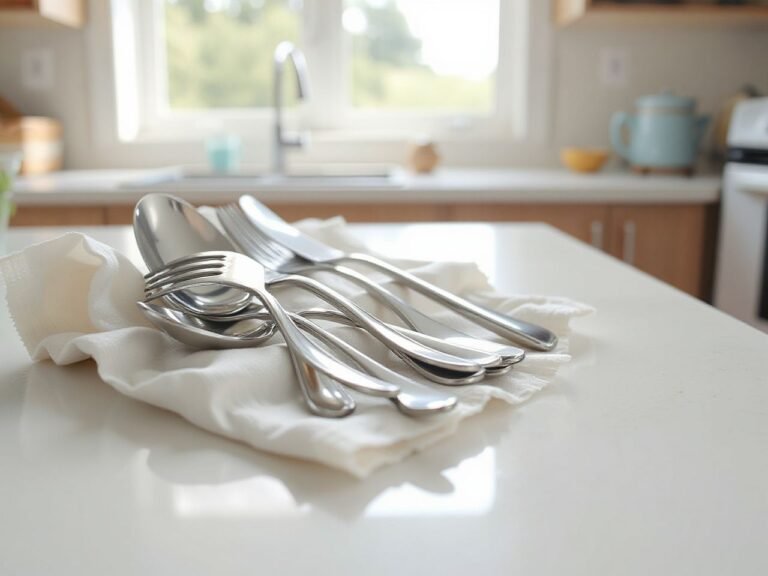
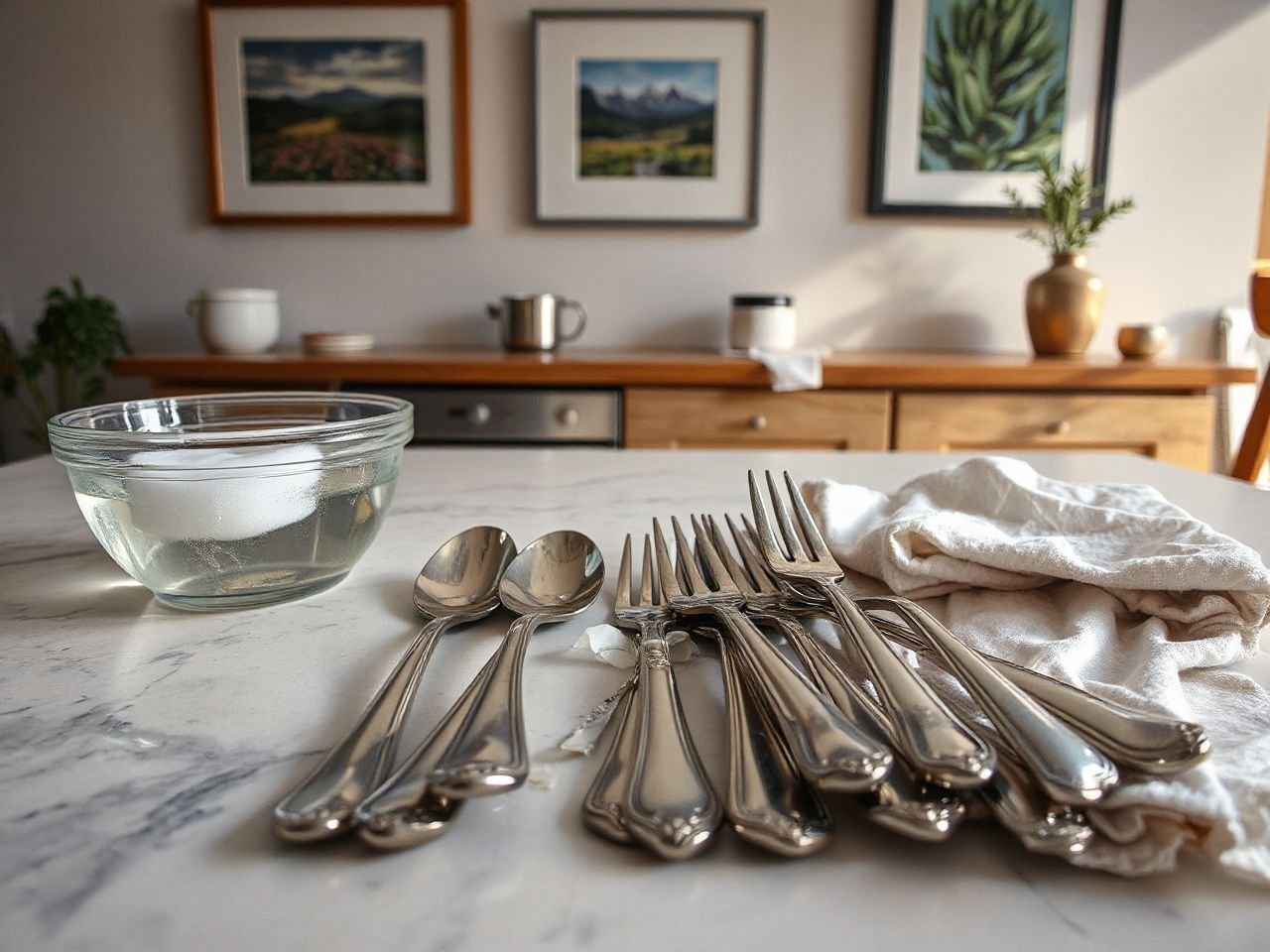
The easiest silverware cleaning method is not the strongest one. The key distinction is between ordinary soil, such as grease and dried food, and chemical tarnish: the easiest safe routine for soil is gentle washing followed by complete drying, while tarnish calls for controlled polishing suited to the metal. Silver-plated pieces need especially light treatment because a method that is harmless to stainless steel can gradually remove the thin silver surface. That distinction is the foundation of learning how to clean silverware easily without creating cloudy finishes or worn edges.
Before choosing baking soda, white vinegar, aluminum foil, or a polishing cloth, check the flatware material and inspect the finish. A finish that looks bright after one cleaning can still fade or cloud over time, especially after repeated dishwasher cycles. Judge a method by its long-term effect, not just the first result.
Key Takeaways
- Use mild dish soap, careful rinsing, and thorough drying for everyday food residue.
- Treat tarnish separately, with a gentle method suited to stainless steel, sterling silver, or silver plating.
- Avoid bleach, abrasive powders, steel wool, and aggressive scrubbing that can scratch metal or wear away plating.
Step 1: Identify the silverware before cleaning it
Material matters more than the cleaning recipe. Stainless steel, sterling silver, and silver-plated flatware can look alike in a drawer. Still, they don’t tolerate the same amount of abrasion, soaking, or polishing. A method that’s okay for a solid stainless-steel spoon might shorten the life of a thin silver surface.
Silverware should be cleaned based on its material and finish, not how dark or dull it looks. A dark surface could be leftover food, water spots, detergent film, or tarnish. Each condition needs a different approach.
Look for marks and construction clues
Check the back of handles, the bowl of spoons, and the inside of fork tines for readable marks. A sterling silver mark usually means a solid silver piece. If it says silver-plated or has a silver mark, it indicates a silver surface over another metal. Stainless steel might be identified by wording on its packaging or info with the set. But if a piece is unmarked and looks dull, don’t just polish it aggressively.
Silver-plated flatware has a thin outer layer that can become thinner with repeated polishing. Sterling silver can also get scratched, even though it doesn’t rely on a plating layer. Stainless steel is generally fine for routine cleaning, but abrasive powders and rough scrubbers can still damage its surface.
Handles need their own attention. Items with glued, wooden, porous, or decorative handles may need hand washing. They shouldn’t be soaked or put in the dishwasher unless the instructions say it’s okay. Water can seep into seams, soften adhesives, or harm materials that don’t behave like one-piece metal flatware.
Separate soil from tarnish
Ordinary soil feels greasy, sticky, crusted, or slippery, usually from food, sauces, or handling. Tarnish is a surface change that can develop over time when silver’s exposed to oxygen. Hydrogen sulfide also plays a role in tarnishing. Tarnish stays on the surface and doesn’t usually go deeper into the metal.
Cloudiness isn’t always tarnish. A pale film might come from minerals left by water or dishwasher detergent residue. A brown, gray, or black change on silver is more often tarnish. Check the piece under good light, rinse a small area, and feel the surface with clean fingers before grabbing a polishing compound.
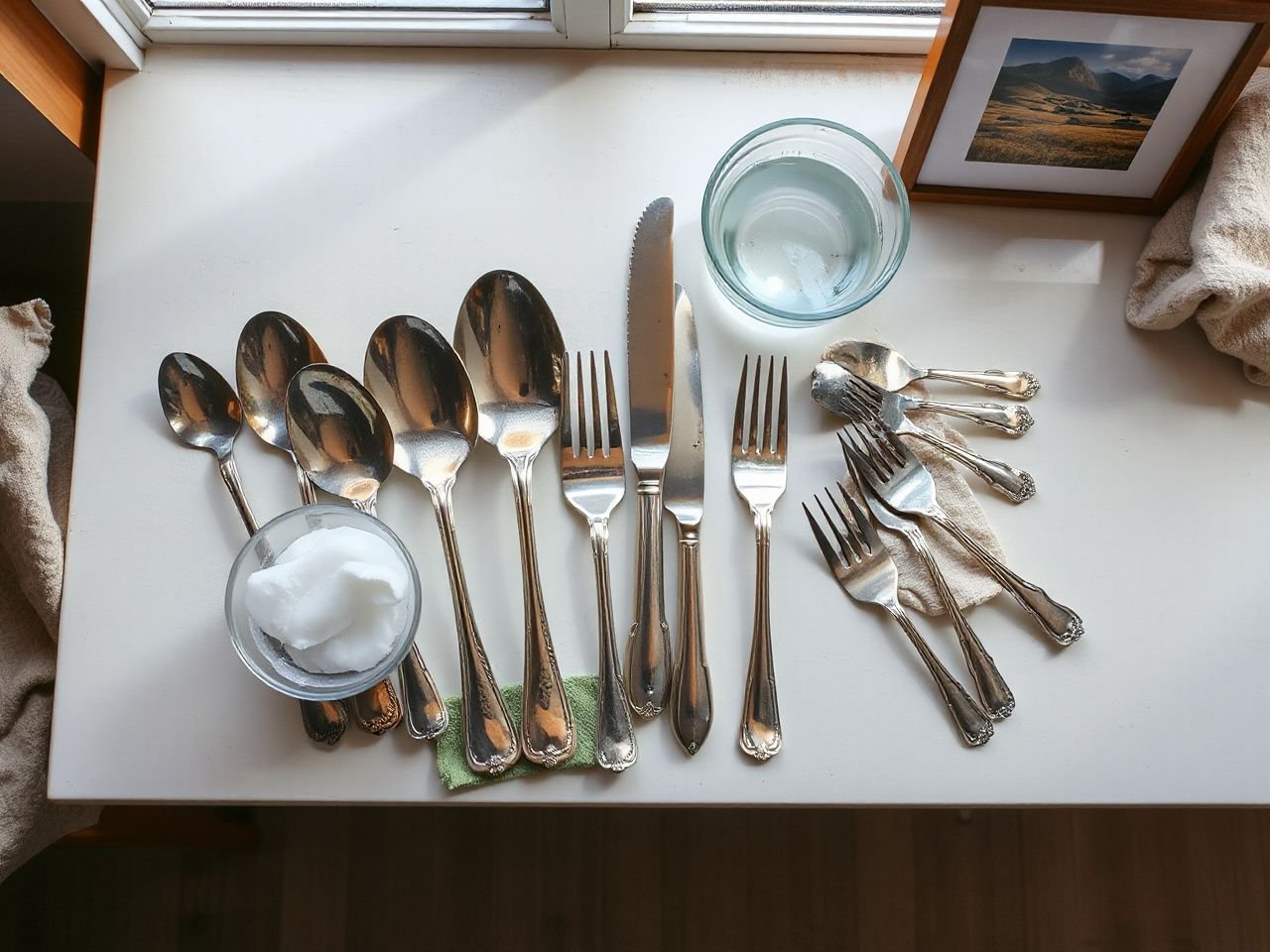
Step 2: Wash everyday residue with mild soap and water
For food residue, start with the least aggressive method. Mild dish soap, warm water, a soft cloth or sponge, and a thorough rinse often do the trick. The goal is to lift soil from the surface without grinding particles across the metal.
Use a simple hand-washing sequence
- Clear loose food first. Rinse or wipe away pieces of food before rubbing the surface. Dried particles can act like grit when dragged across a polished finish.
- Wash with mild dish soap. Work over the handle, neck, bowl, and tines with a soft sponge or cloth. A soft-bristled toothbrush can reach between fork tines and around handle details.
- Rinse completely. Soap left on the metal can dry into a hazy film. Hold each piece under clean running water or rinse it in fresh water until the slippery feel is gone.
- Dry straight away. Use a clean microfiber cloth and check the joints, undersides, and spaces between tines. Air-drying can leave water spots or allow moisture to remain around seams and decorative details.
Warm water helps soften dried food, but it doesn’t need to be special cleaning water. A soft cloth gives good control, and a microfiber cloth is useful for the final wipe because it can pick up remaining droplets without the harsh action of a rough pad.
Stuck-on residue takes patience, not force. Let the area sit in soapy water long enough to soften the residue, then lift it with a soft cloth or a soft-bristled toothbrush. If a crust remains, repeat the gentle wash instead of scraping it with a knife or metal tool.
Water spots on stainless steel are usually best treated by washing, rinsing, and drying immediately. If the spot stays, use a clean damp cloth and then dry the piece fully. White vinegar might help with mineral-like residue, but use it cautiously, rinse thoroughly, and avoid routine acidic treatments on silver-plated or sterling silver.
Can silverware go in the dishwasher?
Some stainless steel flatware is designed for dishwasher care, but not every cycle is safe for every finish. Heat, detergent, contact with other items, and extended moisture can affect shine or leave a film. Silver-plated and sterling pieces need more caution, and decorative or porous handles might not be dishwasher safe.
Always check the care instructions that come with the flatware before using a dishwasher. Place pieces so they don’t rub against sharp utensils, and remove them when the cycle ends to prevent moisture from drying on the surface. If the finish looks cloudy after repeated cycles, hand washing is the better choice.
The U.S. Consumer Product Safety Commission provides consumer guidance for products and household-use safety, while the NSF publishes information related to standards and public-health protection. These bodies do not replace the flatware maker’s care instructions; use the instructions for the specific construction and finish in front of you.
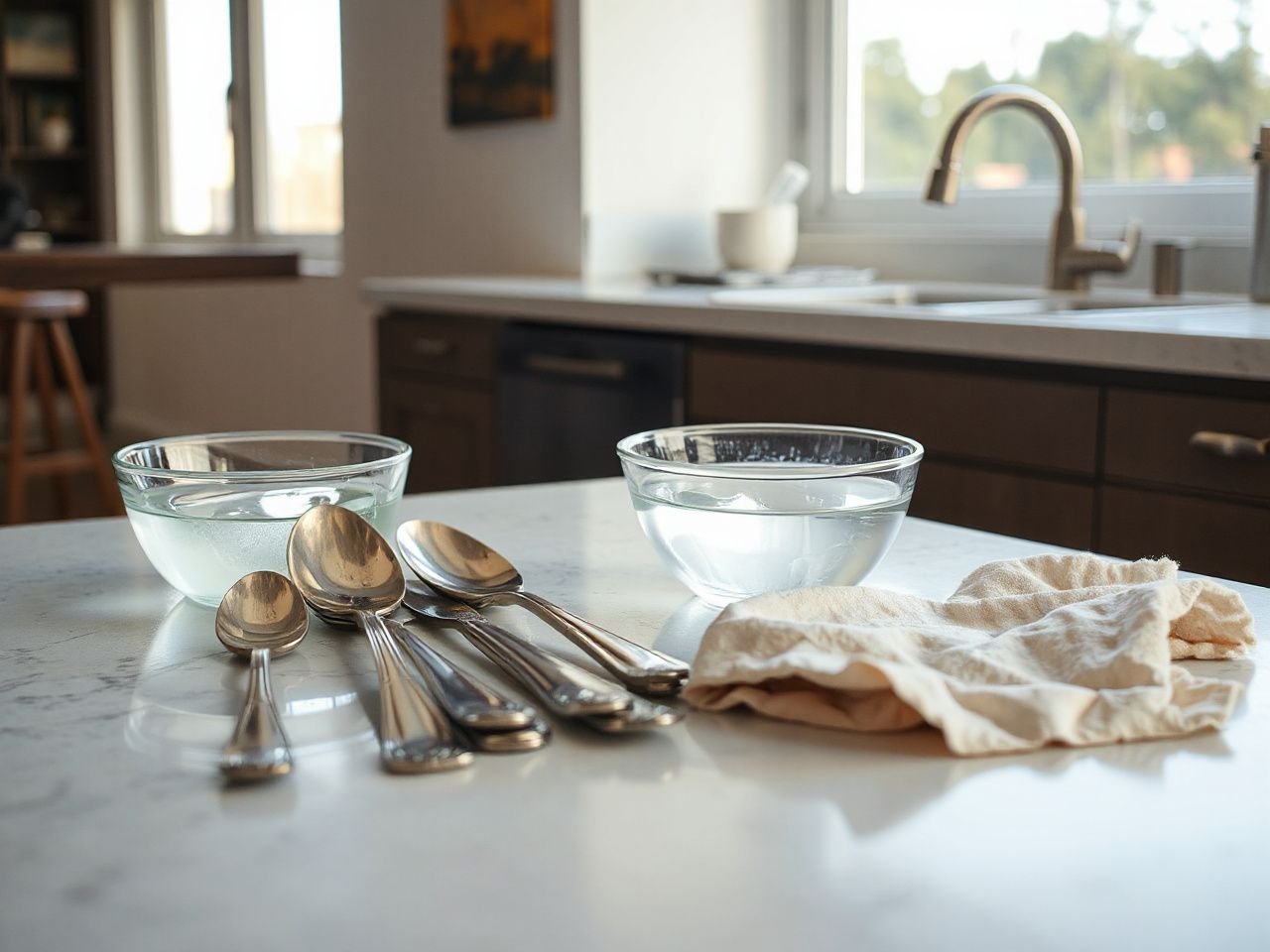
Step 3: Remove cloudy film, spots, and dried residue without scratches
A cloudy finish often needs residue removal, not metal polishing. Detergent film, hard-water deposits, grease, and incomplete rinsing can all dull the look of clean flatware. Polishing right away might just add more product to the film and make it harder to diagnose the problem.
Start with a clean-water check
Rinse one piece thoroughly and wipe it dry with a microfiber cloth. Examine it before and after drying. If the shine comes back when the surface is wet but disappears as it dries, minerals or detergent residue might cause the cloudy look. Always do a complete rinse and careful drying first before applying any stronger treatment.
For stainless steel, a small amount of baking soda mixed with water can be used as a mild cleaning paste. Use only a light touch. Baking soda can scratch a polished surface if rubbed firmly or repeatedly, so keep the motion gentle. Stop if the finish changes. Don’t treat baking soda as a universal silver polish.
White vinegar can be useful for some mineral residue, but acidity is not equally appropriate for all flatware. Silver-plated pieces need especially restrained treatment, and sterling silver should not be subjected to repeated acidic cleaning simply because a water spot remains. Rinse after any carefully controlled spot treatment and dry the surface fully.
Handle stuck food around details
Fork tines, knife serrations, handle seams, and decorative borders collect residue because those areas are harder for a cloth to reach. Use a soft-bristled toothbrush with mild dish soap and water, moving along the shape rather than pressing grit into it. Rinse the brush and flatware often so loosened residue doesn’t spread back over the surface.
Never use steel wool, a harsh scouring pad, or a sharp scraper on polished flatware. Those tools can leave visible marks. The damage might be more obvious after drying. Abrasive powders can scratch stainless steel and remove silver plating when used repeatedly.
For a broader preparation checklist, see Cleaning Silverware: What to Know Before You Start. The basic principle stays the same: identify the surface first, then pick the least abrasive way to fix the problem.
Step 4: Treat tarnish according to the metal
Cleaning and polishing are separate tasks. Cleaning takes away food, grease, and surface residue. Polishing or tarnish removal changes or lifts the dark layer that develops on silver. Mixing these up can lead to over-polishing, especially on silver-plated flatware.
Stainless steel: clean the surface, do not chase a silver shine
Stainless steel flatware usually only needs mild soap, rinsing, and drying. It doesn’t require a silver-tarnish treatment. Use a soft cloth and follow the existing finish instead of rubbing in random circles. If a piece has a decorative coating or a very reflective surface, test any polishing product in an inconspicuous spot first.
A stainless-steel piece can still get scratched by abrasive powders, steel wool, or aggressive scrubbing. A bright look after harsh cleaning doesn’t prove that the method was safe. This is especially true if the surface has been repeatedly abraded.
Sterling silver: polish lightly and only as needed
Sterling silver flatware may tarnish on its surface through exposure to oxygen over time. A silver polishing cloth is a controlled option for light tarnish because it allows you to work in a small area. Keep the cloth clean, use light pressure, and stop once the dark layer is gone.
Museums clean tarnished silver with milder abrasives like calcium carbonate. That suggests a useful rule for home care: a less aggressive material and a gentle hand are better than gritty powders or forceful scrubbing. Don’t polish just because the surface looks less mirror-like; unnecessary polishing can remove some surface material.
Silver-plated flatware: protect the thin outer layer
Silver-plated flatware needs the most conservative approach because the silver layer is thin. Start with mild dish soap, water, and dry thoroughly. For light tarnish, gently use a silver polishing cloth only where needed, avoiding repeated passes over edges, raised decoration, and high-contact spots.
Don’t use abrasive powders, steel wool, or a homemade paste on silver-plated pieces. A surface that looks clean after vigorous rubbing might have lost part of its plating. If a dark area doesn’t lift easily with light treatment, stop rather than increasing the pressure.
The foil, water, and baking soda method
A tarnish-removal method for silverware involves aluminum foil, boiling water, and a bit of salt or baking soda to support an electrochemical reaction. The silverware sits on the foil inside the water so the treatment can act on the tarnished surface. This is a chemical process, not a substitute for routine washing.
Use restraint with this method. It’s meant for suitable silver items, not everything labeled as silver-colored. Don’t casually use it on flatware with glued, wooden, porous, or decorative handles, and don’t assume a silver-plated piece can take repeated treatments. Check construction and finish first.
Rinse and dry silverware thoroughly after removing tarnish. Any residue can cloud the surface, and water left around joints or handles can cause other issues. A silver polishing cloth may be better for small, isolated areas because it offers more control over where material is removed.
Step 5: Avoid damage and protect the finish over time
The low-cost routine is usually the least demanding. Wash with mild dish soap, rinse completely, and dry immediately. It avoids unnecessary polishing compounds and reduces the need to correct films caused by incomplete rinsing or damp storage.
Products and habits to avoid
- Bleach and chlorine products: They can discolor or corrode metal and should not be treated as general-purpose silverware cleaners.
- Steel wool and harsh scrubbers: These can scratch polished stainless steel and wear away silver plating.
- Abrasive powders: A powder may remove residue while also dulling the surface, especially when rubbed with force.
- Repeated polishing: Polishing changes the surface and should be reserved for actual tarnish rather than ordinary cloudiness.
- Sharp scraping tools: Knives and metal scrapers can leave grooves that collect more residue later.
- Uncontrolled soaking: Water can affect glued, wooden, porous, or decorative handles and may enter seams.
The U.S. Food and Drug Administration provides information about food safety and consumer use, but its general guidance can’t determine if a decorative handle or plated finish is dishwasher-safe. For that, the flatware’s own care instructions and construction are the main factors.
Drying and storage habits
Dry each piece completely before storing it. Pay attention to the underside of knife blades, the spaces between fork tines, and where the handle meets the metal. Using a dry microfiber cloth for the final pass helps see if any spots remain.
Store stainless steel separately from tarnish-prone silver when practical. Keep silver and silver-plated flatware clean and dry, and avoid packing damp pieces tightly together. A drawer divider can prevent pieces from rubbing against one another, while soft storage material can reduce contact with finished surfaces.
Long-term dishwasher care for flatware is about the finish, not just cleaning. If a finish becomes less bright, hazy, or visibly different after several cycles, change the care routine before the change becomes more noticeable.
How to clean silverware easily: a practical decision guide
The simplest choice depends on what you can observe. Do not begin with the most powerful-sounding ingredient; begin with the condition on the surface.
- Grease or ordinary food: Use mild dish soap, warm water, a soft cloth, a complete rinse, and thorough drying.
- Dried food: Allow soapy water to soften the residue, then use a soft-bristled toothbrush or cloth instead of scraping.
- Water spots: Rinse thoroughly, wipe dry, and use a restrained spot treatment only after identifying the material.
- Cloudy dishwasher film: Wash and rinse again, then dry by hand; avoid jumping directly to abrasive polish.
- Light stainless-steel dullness: Use gentle cleaning and avoid steel wool, harsh powders, and forceful rubbing.
- Silver tarnish: Use a silver polishing cloth or a carefully controlled tarnish-removal method suited to the item.
- Silver-plated tarnish: Use the lightest effective treatment and stop if the surface does not respond easily.
- Unknown material: Treat the piece as delicate until its marks, instructions, and construction are clear.
If rust-like spots appear on another metal kitchen item, a separate guide on cleaning cast iron pan rust covers that surface issue. Silver tarnish isn’t the same as rust, and silverware shouldn’t be scrubbed with a cast-iron cleaning method.
For those comparing household cleaning tools, the article on silverware cleaning products for 2026 explains which cloths and cleaners suit different care tasks. The most important factor is material compatibility, not the strength of the label.
Frequently Asked Questions
How do I tell whether my silverware is stainless steel, sterling silver, or silver-plated?
Check the backs of handles, the spoon bowls, and other less visible parts for marks or care info. Sterling silver and silver-plated pieces may have wording or marks, while stainless steel info might be on packaging or instructions. If unsure about the material, avoid abrasive cleaning and handle the piece gently until its construction is clear.
Can I clean silverware with dish soap and warm water?
Yes, mild dish soap and warm water are the best starting points for cleaning everyday grease, food residue, and handling marks. Wash with a soft cloth or sponge, and use a soft-bristled toothbrush around fork tines. Rinse away all soap and dry immediately. This routine is also the safest first step for silver-plated pieces because it limits unnecessary polishing.
Does baking soda remove tarnish, and can it scratch the surface?
Baking soda can be part of a tarnish-removal method using aluminum foil and boiling water, salt or baking soda, and a suitable silver item. Used as a rubbed paste, baking soda can scratch a polished surface, especially when pressure is applied. Use it cautiously on stainless steel and avoid treating it as a universal cleaner for sterling or silver-plated flatware.
Can I put silverware in the dishwasher?
Follow the care instructions for each piece of flatware. Some stainless steel items may be dishwasher safe, but silver-plated and sterling silver pieces need more caution. Handles that are glued, wooden, porous, or decorative might require hand washing. Remove dishwasher-cleaned pieces when the cycle ends, check for film or clouding, and hand wash if the finish starts to change.
Why does silverware come out cloudy or covered in a film?
Cloudiness can come from detergent residue, minerals left by water, grease, incomplete rinsing, or a finish that’s changing through repeated dishwasher cycles. Wash one piece again with mild soap, rinse thoroughly, and dry by hand before polishing anything. If the haze stays, identify the material and use only a compatible spot treatment rather than an abrasive powder.