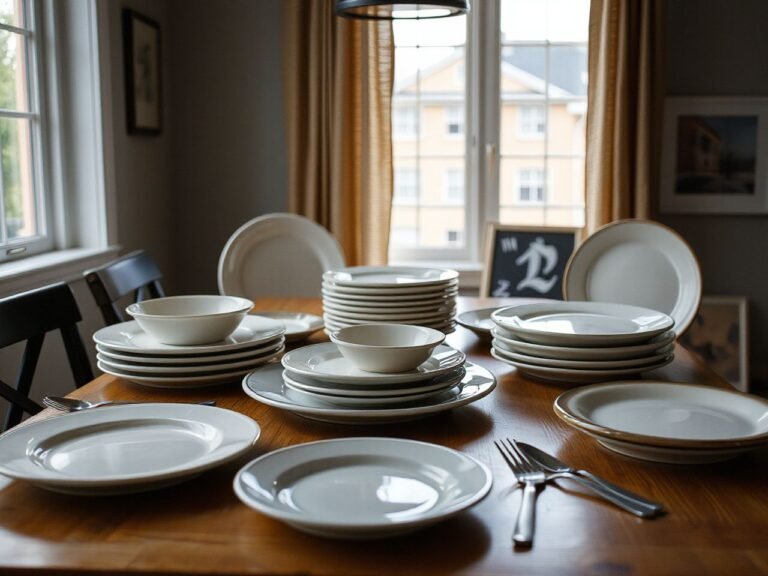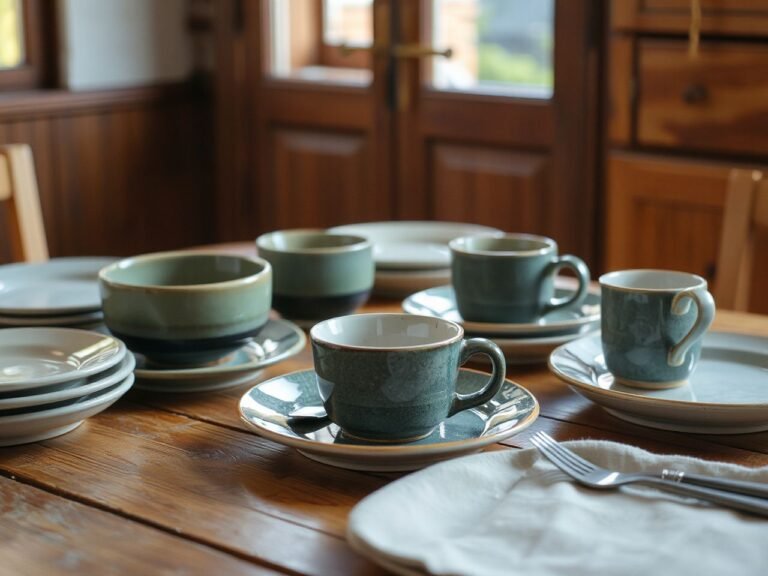
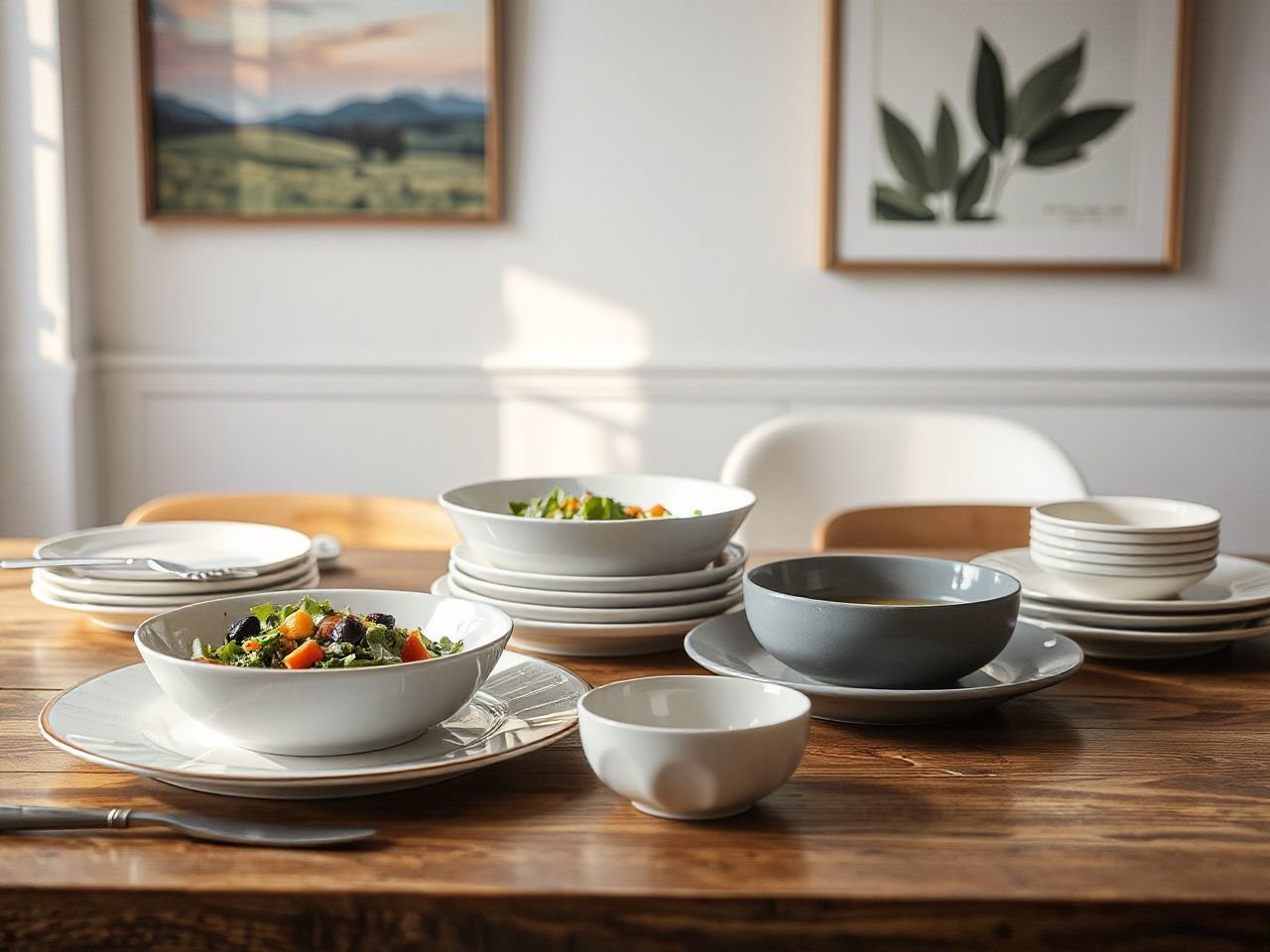
Are your plates chosen for the food they hold, or only because they look good in a cupboard? The useful distinction is between a plate’s service role, such as holding a main course, soup, bread, or decoration, and its material behavior during heating, washing, stacking, and impact. A clear guide should also separate shape from size: a deep rimmed plate controls liquid and sauces differently from a broad coupe plate even when both serve as dinner plates. That is the sensible way to sort through the many types of plates and dishes without ending up with pieces too precious to use.
Key Takeaways
- Plate shape and service role determine how well dinner, soup, sauces, bread, and desserts stay where they belong.
- Porcelain, stoneware, bone china, glass, and melamine behave differently during heating, washing, stacking, and impact.
- Chips, cracks, damaged glaze, and unclear food-contact labeling are practical reasons to remove a plate from service.
How to Read the Types of Plates and Dishes
A plate name usually describes a job, while a material name describes how the piece behaves. A dinner plate is intended for a main course; porcelain describes what the plate is made from. Mixing those two categories leads to muddled choices, especially when one shape appears in several materials.
Service role comes first
Start by asking what the plate must hold. A shallow plate suits food that stays in place, while a deeper form gives liquid, sauce, or loose grains more room. Decorative pieces belong to a separate category unless the maker clearly states that they are suitable for direct food contact.
A plate’s service role determines whether its rim, depth, and usable center fit the meal. That decision matters more than a fashionable color or an elaborate edge.
- Dinner plate: The main plate for a meal, commonly measuring between 10 and 12 inches across, with a usual diameter of 10 1/2 inches.
- Salad plate: A smaller plate for salads, side dishes, or modest portions, generally measuring 7 to 8.5 inches.
- Dessert plate: A compact plate for cake, fruit, pastries, or other sweets, typically within the 6 to 8 inch range.
- Bread-and-butter plate: Also called a quarter plate, this small plate is about 6 inches wide and sits beside the main place setting.
- Appetizer plate: A small serving surface for starters or finger foods, commonly falling within the 4 to 6 inch range.
- Luncheon plate: A middle-sized plate, typically about 9 inches, for a lighter meal or informal setting.
The labels overlap in real table layouts. A salad plate can carry dessert, and a dessert plate can hold a small appetizer. The useful question is whether the shape gives the food enough room without making the place setting awkward.
Shape changes the eating experience
A rimmed plate has a raised border that gives sauces and juices a boundary. A coupe plate has a broad, uninterrupted surface that suits food arranged across the plate, but liquid can spread farther when the rim does not create a clear well.
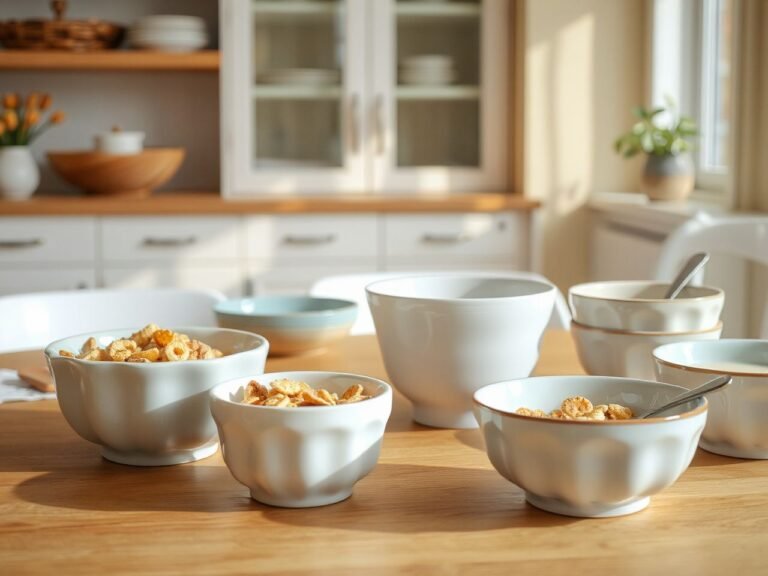
A soup plate sits between a flat plate and a bowl. Its lowered center and raised rim can hold soup, stew, or saucy food while still presenting the meal like a plated course. A pasta bowl usually offers a deeper center and curved sides, which helps contain noodles and sauce during serving.
Choose a soup plate when the food needs a shallow pool with an easy-to-reach rim. Choose a pasta bowl when the meal is loose, saucy, or likely to move as the plate is carried. Use a flat plate for food that benefits from separation rather than containment.
Chargers are a separate layer
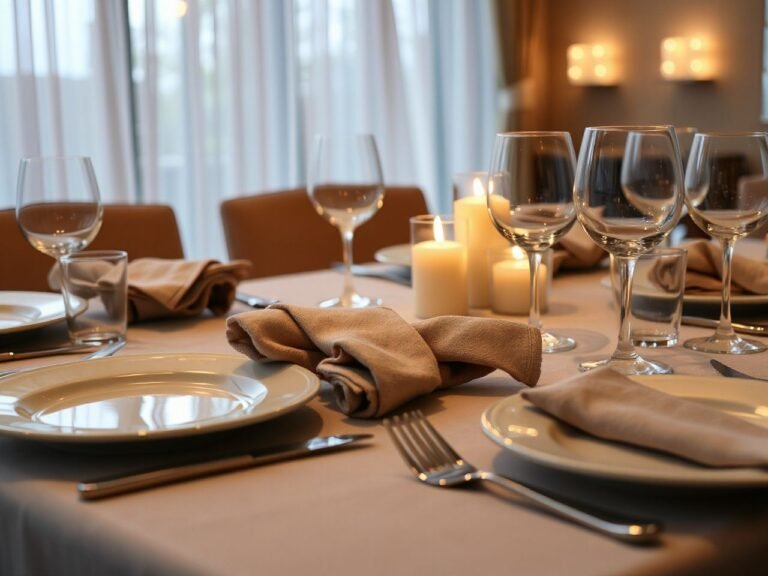
A charger plate is usually an underplate or decorative layer beneath the serving plate. It frames a place setting and protects the table from small spills, but it is not automatically intended to hold food.
Direct food contact depends on how the charger was made and labeled. Read the maker’s instructions, and look for a clear statement that the surface is suitable for food contact. The U.S. Food and Drug Administration sets food-contact requirements for materials used with food, but an unlabeled decorative plate should not be treated as dinnerware merely because it has the shape of a plate.
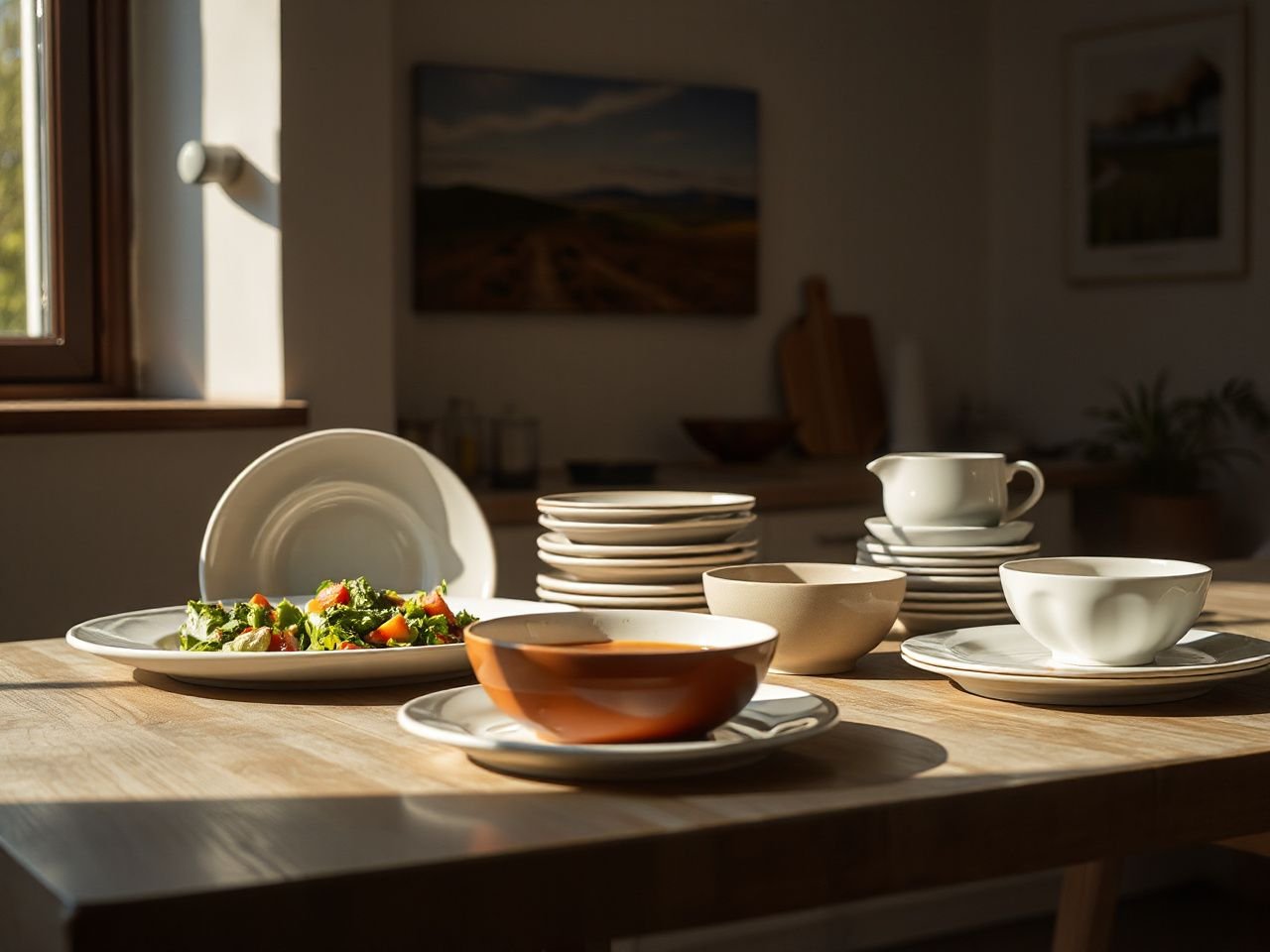
Plate Materials and What They Mean in Use
Ceramic is a broad category that includes materials such as stoneware and porcelain. Those terms should not be treated as interchangeable, because a plate’s material, glaze, thickness, and maker’s instructions all affect how it should be handled.
Porcelain
Porcelain is a ceramic material often used for plates with a smooth, refined surface. It can suit formal and casual tableware alike, but a polished appearance does not tell you whether a particular piece is suitable for every appliance or washing method.
Check the base, packaging, or care information for microwave, oven, freezer, and dishwasher guidance. Sudden temperature changes can damage some plates, so a plate moving directly between very different conditions should be handled according to the maker’s instructions.
Stoneware
Stoneware is also ceramic, but the term does not mean the same thing as porcelain. Stoneware often appears in casual dinnerware, bowls, and serving dishes, where a heavier visual presence suits relaxed meals.
Glaze condition matters more than a rustic appearance. A plate with an intact, clearly finished surface is easier to clean than one with chips, cracks, or damaged glaze. For a fuller discussion of the material and the myths that surround it, see this practical guide to stoneware dishes and their care.
Bone china
Bone china is a ceramic dinnerware material with a fine, formal character. Its appearance may suit a special table, but formal styling is not a care instruction. The maker’s directions still control whether a specific piece belongs in the microwave, oven, freezer, or dishwasher.
Thin-looking dinnerware should not be judged by appearance alone. Read the markings and instructions instead of assuming that a delicate profile means fragile use or that an expensive-looking finish can tolerate every condition.
Glass
Glass plates make the food visible and can work in casual or formal place settings. Clear glass also shows baked-on residue, scratches, and surface marks plainly, which makes condition easier to inspect.
Glass is a material category, not a universal appliance permission. Use only the heating, cooling, and washing settings identified by the maker for that particular plate.
Melamine
Melamine plates are useful in settings where a lightweight, break-resistant style is wanted, but they have an important heat restriction. Melamine plates should not be used in a microwave, and other heat-related uses should follow the maker’s instructions.
That restriction applies even when the plate looks like ceramic. Appearance cannot replace the material label, so keep melamine separate from microwave-safe dinnerware in storage and in household instructions.
Color, glaze, and decoration
Color changes the way food and table layouts read, but it does not establish performance. A pale glaze makes dark marks easier to notice, while a patterned plate can disguise residue or utensil marks until the surface is inspected closely.
Metallic decoration, painted details, and textured surfaces deserve a careful reading of the care label. If the maker does not state how the plate should be heated or washed, use the more cautious handling method and keep the piece away from conditions that the label does not address.
The NSF explains the role of independent standards and certification in products used around food and water, but a certification mark cannot be assumed from appearance alone. Look for the actual mark or written information on the plate or its packaging.
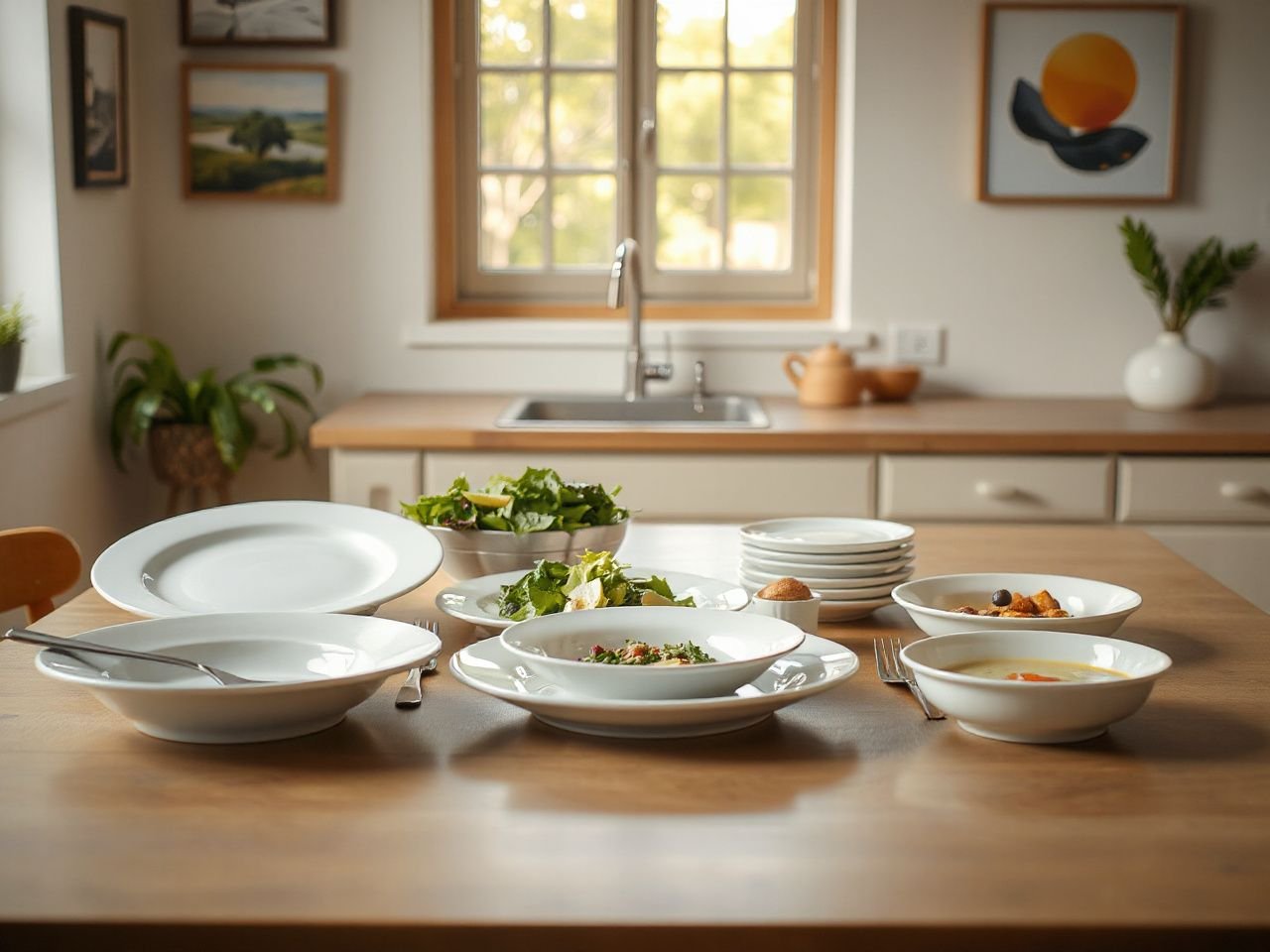
Choosing Plate Shapes for Different Foods
Food behaves differently on a broad flat surface, a shallow well, and a deep bowl. Plate shape should follow the meal’s movement, moisture, and serving style rather than a fixed place-setting rule.
Main courses and grains
A dinner plate with a defined rim gives a main course a visual boundary and helps keep juices from reaching the table. A coupe dinner plate offers more continuous surface area for arranging several foods, but loose grains and sauces need closer attention because there is less of a raised edge to stop them.
For a meal with separate components, a rimmed dinner plate can make serving cleaner. For a composed meal that benefits from open space, a coupe plate may feel less crowded.
Soup, pasta, and sauced food
Soup belongs in a soup plate or bowl-shaped dish rather than on a completely flat plate. The center depth gives the liquid somewhere to sit, while the rim provides a place to rest a spoon and a handhold for carrying.
Pasta can work in a soup plate or pasta bowl, particularly when sauce needs to gather around the food. A broad flat plate may suit a small portion of pasta, but it offers less containment when the dish has plenty of liquid sauce.
A deep rimmed plate controls liquid and sauces differently from a broad coupe plate even when both serve as dinner plates. That difference is a shape issue, not a diameter issue.
Bread, dessert, and small portions
A bread-and-butter plate keeps bread separate from the main course and gives the table a clear place for butter or a small accompaniment. Its compact size is useful because it does not compete with the dinner plate for the center of the setting.
Dessert plates suit cake, fruit, and pastries that need less room than a main course. Appetizer plates serve a similar space-saving role before the meal, while luncheon plates provide a middle ground for a lighter dish.
Care, Damage, and Everyday Storage
A practical plate must survive the routine that follows a meal. That includes scraping, soaking, washing, drying, stacking, and being lifted from a cupboard without forcing a delicate edge against another plate.
Why plates chip, crack, craze, stain, or show marks
Chips and cracks can start at edges, corners, or points that receive repeated contact. Damaged glaze can make the surface harder to clean, and continued use can worsen the damage. Remove chipped, cracked, or visibly damaged pieces from service rather than treating them as harmless imperfections.
Crazing refers to a network of fine lines in a glaze. Staining can become more noticeable on light-colored surfaces or textured decoration. Utensil marks may appear as gray or dark lines after contact with cutlery, but the visible mark should still be checked rather than dismissed.
A cracked plate is harder to clean because the damaged area interrupts the smooth finished surface. That is a practical reason to stop using it, even when the piece still looks attractive on the table.
Cleaning baked-on food
Do not attack baked-on food with a harsh tool simply because the residue is stubborn. Begin with the care instructions, loosen the food with soaking if the maker permits it, and use a cleaning method that does not scrape the glaze.
- Remove loose food before placing the plate in a dishwasher or sink.
- Use the maker’s dishwasher guidance rather than assuming every ceramic or glass plate has the same tolerance.
- Inspect the surface after cleaning for remaining residue, cracks, chips, or changes in the glaze.
- Avoid using a damaged piece for direct food service.
The glaze is part of the working surface, not merely decoration. Scrubbing that removes or roughens the finish can leave the plate less practical even if the original stain disappears.
Microwave, oven, freezer, and dishwasher use
Compatibility belongs to the individual plate, not just the broad material name. Look for the maker’s instructions on the base, packaging, or care sheet before using a plate in an appliance.
Melamine plates should not be used in a microwave. For porcelain, stoneware, bone china, glass, or any decorated plate, follow the maker’s guidance for microwave, oven, freezer, and dishwasher use.
Sudden temperature changes can damage some plates. Avoid moving a plate between sharply different conditions unless the instructions specifically allow that use, and do not assume that a plate safe for one appliance is safe for every other appliance.
Storage and replacement burden
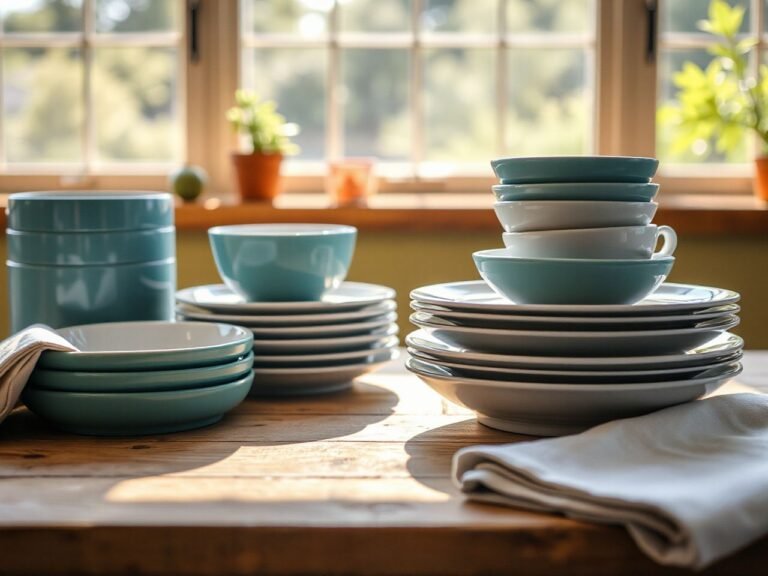
Large dinner plates take up more cupboard width than dessert, bread-and-butter, or appetizer plates. Deep soup plates and pasta bowls can also consume vertical space because their shape does not always stack as tightly as flat forms.
Storage becomes harder when every course uses a different diameter and profile. A restrained collection with a dependable dinner plate, a smaller plate, and a bowl-shaped option can cover many meals without turning the cupboard into a leaning tower of mismatched edges.
Replacement matters too. A plate that is difficult to match after one break creates more waste and makes mixed settings look accidental rather than deliberate. Before adding a special shape, check whether it can sit safely in the existing stack and whether the maker provides clear care information.
How to Build a Useful Place Setting
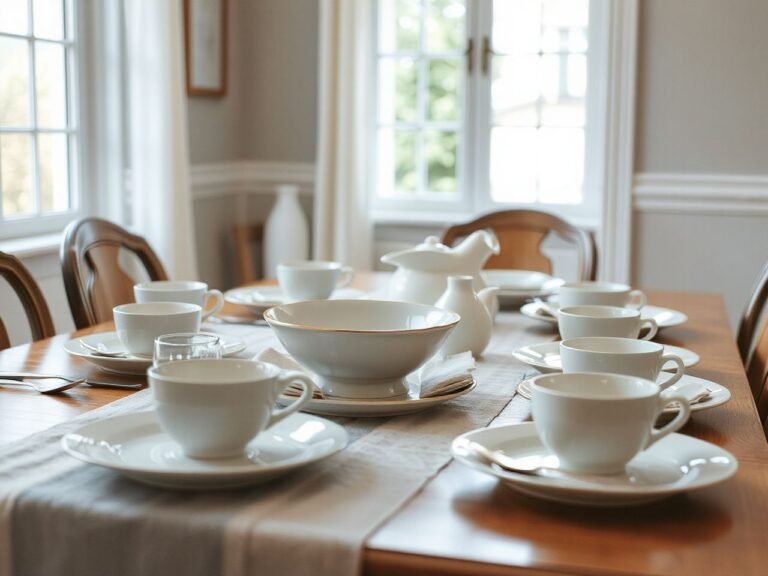
A workable place setting does not require every named plate type. It requires pieces that cover the meals served most often and tolerate the household’s actual care routine.
Start with the main plate
Choose the dinner plate role first, then consider whether a rimmed or coupe shape fits the food. A dinner plate should leave enough room for the main course without making the table feel crowded by its own diameter.
Use the dinner plate guide for the details worth checking first if the main plate is still unclear. The important checks are shape, stacking, care instructions, and whether the surface works for both dry foods and sauced meals.
Add smaller plates with a clear purpose
A salad plate can cover side dishes and salads. A dessert plate can cover sweets and small servings. A bread-and-butter plate has a specific place beside the main setting, while an appetizer plate is helpful when starters are served separately.
There is no value in owning several nearly identical small plates if they create confusion. Use names as a way to understand roles, not as a demand to fill every possible category.
Use chargers and decoration carefully
Chargers can give a table a finished appearance, but they are an extra layer rather than a substitute for a food-safe serving plate. Keep decorative pieces out of direct food service when their labeling is unclear.
Decorative plates should be treated as food-contact dinnerware only when the maker clearly identifies them as suitable for that use. A painted scene, unusual finish, or decorative rim does not provide that information by itself.
Keep the collection practical
It is better to have a small, coherent group of usable plates than a crowded cupboard full of pieces that cannot be heated, washed, stacked, or replaced easily. Practical dinnerware should be available for ordinary meals, not reserved so carefully that the household stops using it.
Consider bowls and serving dishes as part of the same system. A plate collection works better when soup, pasta, sauces, and shared food have a suitable destination instead of being forced onto a flat surface.
For adjacent material choices, the discussion of cookware materials and their everyday roles offers a useful reminder: labels describe a category, while care instructions describe the actual piece.
Common Questions About Types of Plates and Dishes
What is the difference between a dinner plate, salad plate, dessert plate, and bread-and-butter plate?
A dinner plate is the main meal surface and commonly measures between 10 and 12 inches across. A salad plate generally measures 7 to 8.5 inches, while a dessert plate is typically within the 6 to 8 inch range. A bread-and-butter plate, also called a quarter plate, is about 6 inches wide and is used for bread or small accompaniments.
Should soup go on a soup plate, pasta bowl, or flat plate?
Soup belongs in a soup plate or bowl-shaped dish because the lowered center contains liquid more effectively than a completely flat surface. A pasta bowl suits noodles and sauce because its deeper center gives the food room to gather. A flat plate works better for food that has little liquid or benefits from broad arrangement.
Can melamine plates go in the microwave?
No. Melamine plates should not be used in a microwave. Other heat-related uses should follow the maker’s instructions. Do not infer appliance compatibility from a plate’s appearance, weight, or decorative finish; read the care information for the specific piece.
How do porcelain, stoneware, bone china, glass, and melamine differ?
Porcelain, stoneware, and bone china are ceramic dinnerware materials, while glass and melamine are separate material categories. Ceramic is the broad category, so porcelain and stoneware should not be treated as identical. Glass makes the surface easy to inspect, and melamine has a specific microwave restriction. For all five, follow the maker’s care instructions.
Are chargers meant to hold food?
Chargers are often underplates or decorative layers beneath the main plate. Direct food contact depends on how the charger was made and labeled. Use a charger for food only when the maker clearly states that the surface is suitable for that purpose. Otherwise, place the food on a labeled food-contact plate.
Why do some plates chip, crack, craze, stain, or develop utensil marks?
Edges and glazed surfaces can show damage or marks from repeated contact, cleaning, stacking, and handling. Fine glaze lines may appear as crazing, while stains and utensil marks can become visible against the finish. Chips, cracks, and damaged glaze make plates harder to clean and may worsen with continued use, so damaged pieces should be removed from service.
Which type of plate works for everyday meals and repeated dishwasher use?
No single material label guarantees suitability for every household. Choose a plate whose maker clearly permits dishwasher use and whose shape suits the meals served most often. Check stacking, surface condition, and care instructions together. A practical everyday plate is one that can be used routinely without special handling that the household will not follow.
How can I tell whether a decorative plate is safe for direct food contact?
Look for the maker’s labeling or care information that identifies the plate as suitable for food contact. Decoration alone is not evidence. If the surface has no clear food-contact guidance, keep the piece decorative and serve food on a labeled plate instead.
What mistakes are common with plate sizes and mixed dinnerware?
Common mistakes include choosing every plate by diameter, ignoring depth and rim shape, mixing materials with conflicting care instructions, and adding chargers that are not labeled for food contact. Another error is keeping chipped or cracked pieces because they still match the table. Start with the main meal, check the care labels, and remove damaged pieces.