A blender that genuinely crushes ice and grinds seeds needs a motor rated for at least 1,500 watts of continuous output. That number never appears on the front of the box. Instead, you see peak horsepower claims that evaporate under load. This blender buying guide exists to close that gap.
Key Takeaways
- Continuous-duty wattage tells you what a blender can sustain; peak horsepower is a marketing number that inflates real performance.
- Jar geometry and a tamper matter more than raw motor power when you are blending thick mixtures like nut butter or frozen fruit.
- Check the pitcher material and the footprint against your counter and your actual recipes before you look at brand names.
The Motor: Continuous Duty vs Intermittent Duty
A blender motor is either built to run full speed for minutes at a time or built to pulse and rest. The first is continuous duty. The second is intermittent duty. The difference shows up the moment you ask for a thick green smoothie rather than a quick shake.
A continuous-duty motor can hold its top speed without overheating, while an intermittent-duty motor needs to cool down between bursts. The continuous-duty rating is usually hidden in the owner’s manual or spec sheet, stated as ‘rated for continuous operation’ or a time limit. On paper, you want a motor that lists continuous wattage, not just peak. For example, the Vitamix VX1 has a 1440 watt motor, and the Vitamix 5200 has a 1380 watt motor. Both are in the range that supports sustained blending. The 1,500 watt threshold for high-performance crushing is a good line: above that, you get ice and seeds; below that, you get smoothies but maybe not nut butter.
How to Spot an Intermittent Duty Motor
Signs include a short duty cycle printed on the base (‘3 minutes on, 1 minute off’), a motor housing that gets hot to the touch after a single smoothie, and a blender that struggles to start when the jar is full of frozen fruit. An intermittent-duty motor is often paired with a plastic drive socket that can strip under heavy load, another reason thick mixtures jam. If you see any of these signals on a spec sheet, the blender will frustrate you inside a month.
Why Wattage Beats Peak Horsepower
Peak horsepower is a calculated marketing number: torque times RPM divided by a constant, often measured at a spike. Sustained wattage is the actual electrical power the motor draws continuously. A 1,500 watt motor will crush ice repeatedly; a ‘2 peak HP’ blender that draws 600 watts will stall. The gap is why appliance manufacturers rarely print continuous wattage on the front of the box. If you’re comparing specific models in this power class, our Vitamix blender review shows how these numbers play out in daily use.
Blender Buying Guide: Jar Geometry, Material, and the Vortex
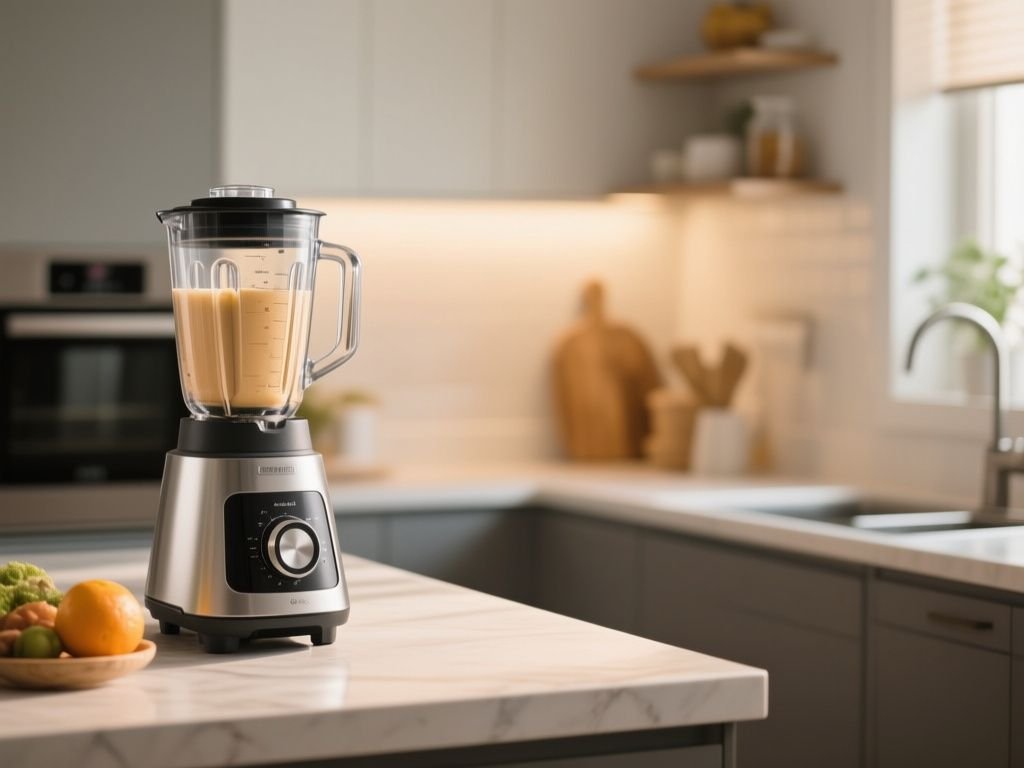
The motor spins the blade, but the jar decides whether the ingredients ever reach the blade. A poorly shaped jar creates a dead zone at the top where ingredients spin without falling. A well-designed jar pulls everything down into a vortex. Jar geometry drives the vortex that pulls ingredients down into the blade, not raw wattage.
Pitcher Shape and the Vortex
A jar that is too wide for the blade diameter leaves chunks stuck on the walls. A jar that is too narrow traps air and cavitates. The tamper is the manual fix for thick mixes that refuse to vortex on their own. Check whether a tamper is included, because nut butter and frozen desserts often require one. Some jars are designed specifically to be tampered, with a lid opening that guides the tamper straight down to the blade. If you want a recipe that tests the vortex, try this healthy pumpkin pie smoothie recipe.
Plastic, Glass, or Stainless Steel
BPA-free plastic is light, unlikely to shatter, but scratches over time and can absorb odors. Tempered glass is heavy, shows ingredients, resists scratches, but can crack if dropped or thermal shocked. Stainless steel is nearly indestructible, opaque, and often used in commercial settings, but you cannot see the blend progress. The NSF International standard covers food-contact materials, so look for the NSF certification mark on plastic pitchers and stainless blades. Without it, you are trusting a manufacturer’s claim about material safety.
The Tamper and Blade Design
Blendtec uses cold-forged stainless steel blades, which produce a denser edge than stamped blades. Cold-forged stainless steel blades hold their edge longer than stamped blades because the forging process aligns the metal’s grain structure. That matters for repeated ice crushing. A stamped blade can dull in months of heavy use; a forged blade can last years. Pair a forged blade with a tamper and you have a machine that can handle the thickest recipes without burning out the motor.
Matching a Blender to Your Kitchen and Cooking Style
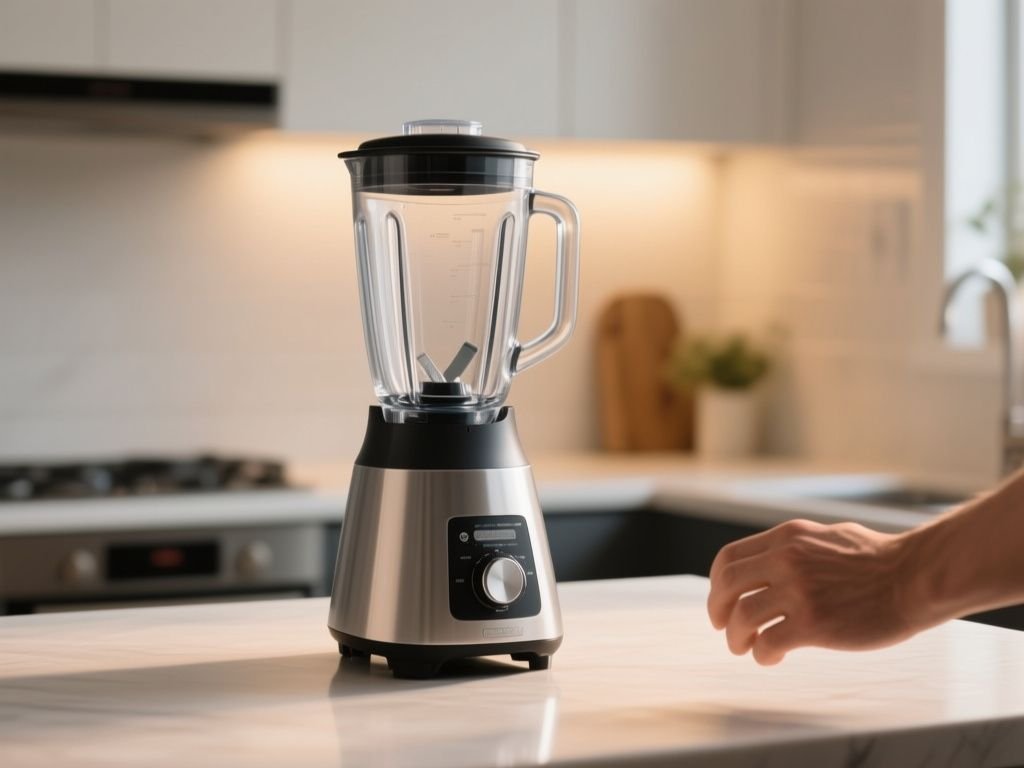
A blender earns its counter space only if you actually use it more than once a month. The size, weight, and height under cabinets decide that. A blender that is too tall to fit under an upper cabinet will live in a lower cupboard, and a blender in a lower cupboard gets used about half as often.
The Counter-Space Test
Measure the footprint and the height with the pitcher on. Many blenders exceed 17 inches tall. If your cabinet clearance is 15 inches, the blender must live elsewhere. Weight also matters for stability. A heavier base is less likely to walk across the counter during a thick blend. If you are also evaluating other small appliances against the same space test, our Bella air fryer review applies the same logic to a different counter hog.
What You Actually Blend Determines What You Need
Daily smoothies for one person? A personal blender with a smaller jar may work, but check if it can handle frozen fruit. Weekly nut butter? You need a continuous-duty motor, a tamper, and a jar that can handle thick mixtures. Occasional soups? You need a pitcher with a temperature rating for hot liquids, because some plastic pitchers warp or crack above a certain heat. The listing may state the maximum temperature, but if it does not, assume the pitcher is not meant for boiling liquid.
Countertop vs Immersion Blender
Immersion blenders, also called hand blenders, are a different tool for different jobs. They blend directly in the pot or cup, save counter space, but cannot crush ice or make a smooth vortex. For soups, an immersion blender can be more practical. For frozen drinks, a countertop blender is necessary. An immersion blender cannot replicate the vortex of a countertop jar because the blade is exposed and has no walls to contain the flow.
Hot Liquids and Temperature Ratings
If you pour near-boiling soup into a standard plastic pitcher, the thermal shock can crack the plastic or warp the base seal. Some blenders have a vented lid or a heat-resistant pitcher. Check the manufacturer’s stated maximum temperature before using a blender for hot soup. The answer to ‘can I use a blender to make hot soup?’ is only yes if the pitcher is rated for hot liquids, not because the motor can spin them.
Common Mistakes That Shorten a Blender’s Life
Most blender failures are user errors, not motor defects. The two biggest mistakes are adding dry ingredients first and ignoring the tamper.
Buying Based on Peak Horsepower Alone
We covered this above, but it bears repeating: a high peak horsepower number means nothing if the continuous wattage is low. The motor will stall on ice, the drive socket will strip, and the blender will end up in a landfill. Check the wattage before you check the horsepower.
Skipping the Tamper for Thick Mixtures
Thick mixtures like nut butter or frozen dessert require a tamper to push ingredients into the blades. Without one, the motor spins freely and heats the mixture instead of blending it. Some blenders include a tamper; others sell it separately. If a blender cannot accept a tamper, it cannot make nut butter, period.
Ignoring Leak Points at the Base
A blender’s base seal fails when it is repeatedly exposed to hot liquids or when the jar is over-tightened onto the base. Over-tightening can crack the drive socket; under-tightening allows liquid to seep into the motor housing. The fix is a hand-tight quarter turn, not a wrench. If you see liquid pooling around the base after blending, check the gasket under the blade assembly first.
Cleaning, Maintenance, and Replacement Cycles
A blender that is hard to clean gets used less. The easiest way to clean a blender is to fill the jar halfway with warm water, add a drop of dish soap, and run it on high for 30 seconds. Then rinse. That cleans the blade and the jar walls without removing the gasket. But avoid running the blender empty or with only ice, as that can damage the blade bearings.
How Often to Replace Blades and Pitcher
Blades dull slowly. You notice when the blender starts leaving chunks, or the motor sounds strained. The pitcher should be replaced if cracks appear, especially in the base or threading. The gasket or seal may need replacement every one to two years depending on use, but there is no fixed schedule. For BPA-free plastic, replace the jar when it gets cloudy or deeply scratched, as bacteria can hide in scratches. Blade bearings fail when they are exposed to water repeatedly without drying, which is why you should not submerge the blade assembly in a sink full of dishes.
Recognizing a Failing Motor
A burning smell, slower startup, intermittent shutoffs, or a grinding noise from the drive socket are all signs the motor is on its way out. If the motor is failing, do not keep using it with thick mixtures. Unplug the blender, and before buying a replacement, check the CPSC recall database to see if the model you are replacing had any safety defects reported.
Frequently Asked Questions
How do I know how much power my blender needs?
Look for continuous wattage on the spec sheet. If you blend frozen fruit daily, aim for at least 1,000 watts continuous; for ice crushing and nut butter, 1,500 watts or more. Ignore peak horsepower entirely. The motor’s continuous output is the only power number that predicts whether the blender will stall or sail through a thick smoothie.
What’s the difference between wattage and peak horsepower?
Wattage is sustained electrical power draw, measured while the motor runs under load. Peak horsepower is a calculated spike at the moment the blade stalls, then instantly drops. A 1,500 watt motor will crush ice repeatedly; a ‘2 peak HP’ motor that draws 600 watts will stall on frozen fruit. Always read the wattage, not the horsepower.
Can I use a blender to make hot soup?
Only if the pitcher is rated for hot liquids. Standard plastic pitchers can crack or warp from thermal shock when you pour near-boiling liquid into them. Check the manufacturer’s maximum temperature rating before using a blender for soup. Many blenders are fine with warm liquid but not boiling, so heat the soup separately and blend in batches if needed.
How do I stop the blender from leaking from the base?
Check the gasket under the blade assembly for wear or misalignment. Hand-tighten the jar onto the base with a quarter turn, not a wrench, because over-tightening can crack the drive socket. If the leak persists, replace the gasket or the blade assembly. A torn gasket is the most common cause of base leaks, and it costs far less to replace than a whole blender.