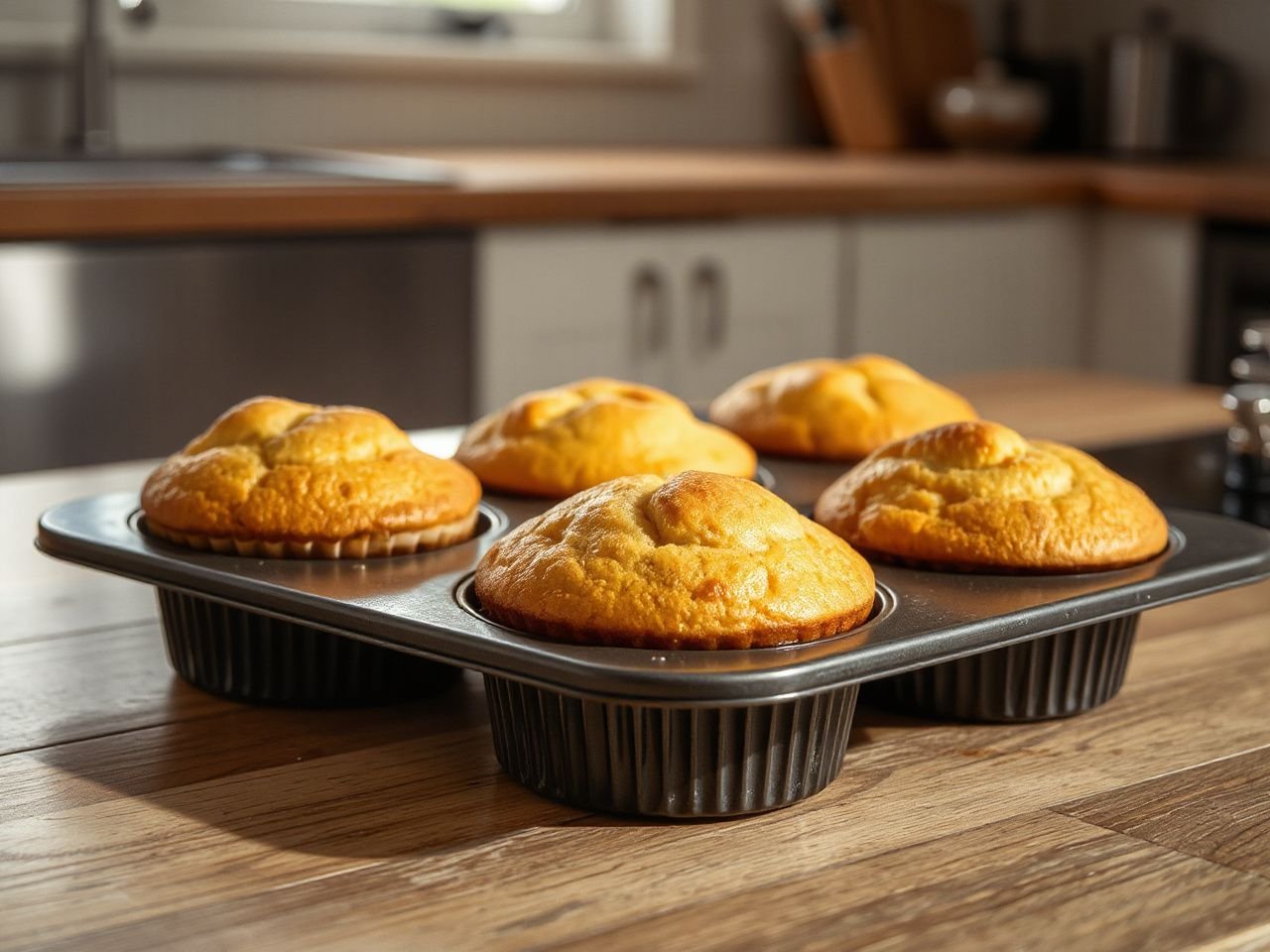
Start with the AOTASO 12+24 Cups Silicone Muffin Pan with Metal Frame and you skip the single mistake that ruins most first bakes: a limp pan that folds in your hands and dumps half the batter on the oven door. The metal frame is the whole point here, and for someone learning, it solves the problem before it happens. That is why it tops this list of the best muffin pans for beginners.
Out of all seven pans compared here, the AOTASO metal-frame set is the one I would hand a nervous first-time baker without a second thought — it stays flat and rigid when full, and it covers both a standard 12-cup batch and a 24-cup mini tray in one purchase.
Now, that pick is not right for everyone. A metal purist who wants crisp, deep-brown muffin sides will want the stainless option lower down, and a bare-bones budget buyer has a cheaper path too. Baking is really just controlled chemistry with butter, and the pan you cool your batter in decides as much as the recipe does — the same logic that makes a good reliable weeknight dinner recipe repeatable applies to muffins. Let’s break down all seven.
📌 This article contains affiliate links. As an Amazon Associate I earn from qualifying purchases, at no extra cost to you. Full disclosure.
CERTAIN CONTENT THAT APPEARS ON THIS SITE COMES FROM AMAZON. THIS CONTENT IS PROVIDED ‘AS IS’ AND IS SUBJECT TO CHANGE OR REMOVAL AT ANY TIME.
| Product | Best For | Buy Link |
|---|---|---|
| 12 Cups Silicone Muffin Pan (Nonstick) | Bare-bones budget | Check Price |
| AOTASO 12+24 Cups with Metal Frame | Overall beginner pick | Check Price |
| BAKE BOSS Silicone Muffin Pan | Built-in frame | Check Price |
| Ruinovate Silicone Muffin Pan | Wide temp range | Check Price |
| Silicone Muffin Pan Set (12 & 24) | Two sizes, one box | Check Price |
| Redfly 2 Pack Jumbo Silicone Pans | Big bakery-style muffins | Check Price |
| Blingco 12-Cup Stainless Steel Pan | Crisp browning, no coating | Check Price |
What Separated These Picks From The Rest
These seven come from reading the published listings — material, cup dimensions, weight, heat rating and stated features — against the two things that actually decide a beginner’s success: rigidity and release. A silicone pan without a metal frame or a supporting sheet buckles the moment you lift it full, and that is the number one reason first batches end up misshapen or spilled, so structural support carried the most weight in the ranking. Cup count came next, because a single 12-cup pan fits most standard recipes in one bake while a mini-only tray forces you into batches. Browning behavior is also important, since metal crisps and darkens while silicone stays pale and soft, and beginners are often surprised by that. Before you order, check one thing yourself: the manufacturer’s stated oven-safe temperature, and confirm the silicone is described as food-grade and BPA-free. Not every pan is rated for the same heat, and that number belongs on the listing.
AOTASO 12+24 Cups Silicone Muffin Pan (Metal-Frame Reinforced — Our Pick)


12 Cups Silicone Muffin Pan (Bare-Bones Budget Nonstick)

Quick take: A no-frills, single 12-cup silicone tray for someone who wants the cheapest honest way to try baking without committing.
This pan is light — 7.7 ounces — and that number tells you almost everything about how it behaves. There is no metal frame, so filled with batter it flexes like a rubber glove, which is exactly the wobble that makes beginners spill. The cups measure 2.75 inches across the top and 1.1 inches deep, slightly wider and shallower than a classic deep muffin well, so expect a flatter, more domed cupcake shape than a tall bakery muffin.
Where it earns its keep is the temperature spread. The listing rates it from -104°F up to 446°F and clears oven, microwave, freezer and dishwasher use, so the same tray freezes make-ahead egg bites and bakes muffins. The honest annoyance: you must slide a rigid baking sheet underneath every single time, because on its own this pan cannot travel to the oven without help.
Pros:
- Very light and packable — at 7.7 oz it stores flat in a crowded drawer, useful in a small kitchen.
- Wide heat range — the -104°F to 446°F rating covers freezing, baking and reheating in one mold.
- Impermeable nonstick surface — the listing describes easy release and cleanup, which is the point of silicone.
Cons:
- No structural support at all — with no frame, a full pan flexes and risks spilling unless you always use a supporting tray.
- Shallow 1.1-inch cups — you get flatter cupcakes, not tall domed muffins, which may disappoint if height is the goal.
Who Should Buy This
Ideal for: the curious first-timer testing whether baking sticks before spending more. Pass on this if: you hate juggling a separate baking sheet, or you want a pan that stands on its own when loaded.
AOTASO 12+24 Cups Silicone Muffin Pan (Metal-Frame Reinforced — Our Pick)
Why it made our list: the beginner who wants one purchase that stays rigid, moves safely, and handles both standard and mini muffins.
The frame is what sets this apart. A steel band runs the perimeter so the pan holds its shape when full, and that single design choice removes the spill risk that plagues the unsupported trays on this list. The set pairs a 12-cup regular pan with a 24-cup mini pan, which means a standard muffin recipe and a tray of bite-sized ones both fit your oven without buying twice.
Material-wise, the listing states 100% BPA-free food-grade silicone, described as odorless — worth noting because cheaper silicone can carry a rubbery smell into the first few bakes. Reading its spec sheet next to the frameless #1, the difference is obvious: you lift this one loaded and it does not fold. The catch is bulk. Two framed pans take real cabinet space, so this is not the pick if storage is tight.
Pros:
- Metal-frame rigidity — the reinforcing band keeps the pan flat and stable when carrying batter, the exact thing beginners need.
- Two sizes included — the 12-cup and 24-cup pans cover standard and mini muffins in a single box.
- Odorless food-grade silicone — BPA-free construction that the listing says resists picking up smells.
Cons:
- Storage footprint — two framed pans do not nest flat and eat drawer space.
- Still bakes pale like all silicone — the frame fixes rigidity, not browning, so muffin sides stay soft-colored.
Who Should Buy This
Great match for: a beginner who wants one set that just works and covers both muffin sizes. Think twice if: your cabinets are already jammed, or you specifically want crisp, browned edges only metal delivers.
BAKE BOSS Silicone Muffin Pan (Built-In Rust-Resistant Frame)
The real story: a single 12-cup pan for the buyer who wants frame rigidity but does not need a second mini tray.
BAKE BOSS builds a rust-resistant metal frame right into the pan, and the listing is clear that it is not removable — which is a good thing, because a removable frame is one more part to lose. The silicone is described as LFGB-approved, a European food-safety standard that is generally stricter than a basic pass, so the material claim here is stronger than most.
The company references a silicone pinch test — squeeze quality silicone and it should not turn white or show a chalky streak, which cheap plastic-filled silicone does. That is a genuinely useful check you can run at home on any silicone pan. Compared to the AOTASO set, you lose the bonus mini tray, and for a beginner wanting both sizes that is the trade.
Pros:
- Non-removable built-in frame — permanent rigidity with no loose parts to misplace.
- LFGB-approved silicone — meets a stricter European food-contact benchmark than a basic rating.
- 100% food-grade construction — the listing confirms no cheap plastic filler in the silicone.
Cons:
- Single 12-cup pan only — no mini tray included, so a mini-muffin batch means a second buy.
- Listing omits exact cup depth — you cannot confirm muffin height from the specs alone before ordering.
Our Take
Perfect for: a beginner who wants frame stability and a strong material certification in one standard pan. Not great if: you want two sizes out of the box or need the deepest possible cups.
Ruinovate Silicone Muffin Pan (Widest Temperature Range)
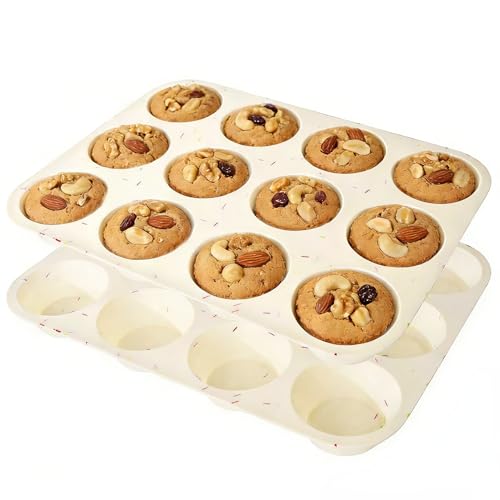
Here’s the deal: a flexible single silicone pan that leans on easy release and a broad heat rating rather than a frame.
The headline spec is the temperature spread: -40°F to 450°F, which covers freezer storage through a hot bake. Ruinovate makes the pan from 100% food-grade silicone and emphasizes flexibility for release — you push from the bottom and the muffin pops out, no knife needed.
That flexibility is a double edge. The same bend that frees a muffle cleanly is the bend that makes a full pan hard to carry, and this listing does not mention a frame or supporting structure. So you are back to the baking-sheet-underneath routine. Against the framed picks, Ruinovate is the more portable, drawer-friendly option, but it demands more care moving batter to the oven.
Pros:
- -40°F to 450°F rating — genuinely versatile from freezer to oven in one mold.
- High flexibility for release — push-from-below demolding that beginners find forgiving.
- Food-grade silicone build — the standard safe material spec for direct food contact.
Cons:
- No frame or support mentioned — a full pan flexes and needs a rigid sheet under it to move safely.
- Pale, soft muffin sides — as with all silicone, browning is minimal compared to metal.
Who Should Buy This
Ideal for: someone who values a wide freezer-to-oven range and easy release over maximum rigidity. Pass on this if: carrying a floppy full pan makes you nervous.
Silicone Muffin Pan Set (12 & 24 Cups, Two Sizes)
In a nutshell: a two-pan set that bundles a standard 12-cup regular pan and a 24-cup mini pan for bakers who want both formats cheaply.
The value pitch is the pairing. One box gives you a 12-cup regular pan for standard muffins and a 24-cup mini pan for bite-sized ones, so you can run full-size batches and party trays without a separate purchase. The listing stresses nonstick demolding — grease, fill, bake, pop out — a fair summary of how good silicone should behave.
What the spec sheet does not mention is any metal frame, and that is the gap. Both pans are described as flexible silicone, so the same spill risk applies when they are full. Set against the AOTASO metal-frame set, this pair is likely lighter on the wallet but lighter on rigidity too, which for a nervous beginner is the wrong direction on the one spec that matters most.
Pros:
- Two useful sizes bundled — 12-cup regular plus 24-cup mini covers most home baking needs.
- Genuine nonstick release — the listing describes a clean popover demold with minimal prep.
- Easy cleanup — flexible silicone rinses and wipes without scrubbing baked-on corners.
Cons:
- No metal frame on either pan — both flex when full and need a supporting sheet.
- Grease still recommended — the listing says to grease before filling, so it is not fully prep-free.
Final Thoughts
Great match for: a beginner who wants both muffin sizes and does not mind using a baking sheet for support. Skip if: rigidity is your top priority — a framed pan serves you better.
Redfly 2 Pack Jumbo Silicone Muffin Pans (Big Bakery-Style Muffins)

What stood out: a two-pack of jumbo-cup silicone pans for the baker chasing tall, wide, coffee-shop-style muffins.
Redfly goes big. The listing describes 12-cup jumbo pans, sized for the oversized muffins you see behind bakery glass rather than standard cupcakes. You get two pans in the pack, which matters more than it sounds — a single small pan forces you to bake in batches, and batching hurts rise consistency because your second round of batter sits and deflates while the first bakes.
The silicone is the usual BPA-free food-grade spec with a smooth release surface. The weakness is familiar by now: no frame is mentioned, and a jumbo cup holds more batter, so a full jumbo pan is heavier and floppier than a standard one. That makes the supporting-sheet step non-negotiable here, not optional.
Pros:
- Jumbo cup size — bakes the tall, wide muffins standard pans cannot.
- Two pans included — lets you bake a full batch at once instead of in rise-killing rounds.
- BPA-free food-grade silicone — smooth surface for effortless release.
Cons:
- Heavier when full, no frame — jumbo cups hold more batter, so an unsupported pan flexes badly.
- Jumbo muffins need recipe tweaks — bake times and fill levels differ from standard, tricky for a first-timer.
Who Should Buy This
Perfect for: a beginner specifically set on big bakery-style muffins who will use a support sheet. Think twice if: you want standard cupcakes or the simplest possible first bake.
Blingco 12-Cup Stainless Steel Muffin Pan (Crisp Browning, No Coating — Recommended)

The bottom line: the pan for a beginner who wants real browning and zero nonstick coating to worry about.
This is the outlier, and a good one. Blingco makes it from food-grade stainless steel with no toxic coating, so there is no PTFE or ceramic layer to scratch, flake or wear off — a genuine peace-of-mind spec for anyone wary of coated bakeware. The heavy-gauge, one-piece reinforced construction means it never flexes, never needs a support sheet, and will outlast every silicone pan here.
Metal browns, and that is the whole reason to choose this over silicone. Muffins bake with crisp, golden sides instead of the pale, soft edges silicone produces. The trade-off is release: bare stainless is not truly nonstick, so you will need cupcake liners or a good grease to get clean muffins out — the brushed surface helps, but it is not the push-and-pop experience of silicone. Round corners make cleaning easier, though this pan is the one that most needs liners for a beginner.
Pros:
- No coating to fail — food-grade stainless with nothing to scratch or flake off over time.
- Crisp, even browning — heavy-gauge steel darkens muffin sides the way silicone never will.
- One-piece reinforced build — rigid enough that it never needs a supporting sheet.
Cons:
- Not truly nonstick — you must grease well or use liners, unlike quality silicone.
- Can brown bottoms too fast — dark metal on a low rack may over-darken bases without rack adjustment.
Our Take
Great match for: a beginner who prioritizes browning, longevity and coating-free safety. Skip if: you want the easiest release and would rather never fuss with liners or greasing.
How to Choose the Best Muffin Pans for Beginners
The choice really comes down to three questions, and answering them honestly points you at the right pan. Get these right and your first batch behaves.
Silicone or metal — which is friendlier for a first-time baker?
Silicone wins on release and forgiveness; metal wins on browning and rigidity. A quality nonstick silicone pan lets muffins pop out with minimal prep, while stainless steel like the Blingco needs liners or grease but delivers crisp, golden sides. If you have never baked, silicone with a metal frame is the gentlest starting point. Just know your muffins will look paler than the bakery version — that is the material, not your recipe.
Is a metal frame around silicone actually worth it?
Yes, and it is the spec weighted above almost everything for beginners. An unsupported silicone pan flexes when full and spills batter on the trip to the oven — the frame on the AOTASO or the built-in band on the BAKE BOSS removes that failure mode entirely. Without a frame, you are committed to sliding a rigid baking sheet underneath every bake, which works but is one more thing to forget.
What about the best cupcake pans for beginners and material safety?
Cupcakes and muffins use the same pans, so the best cupcake pans for beginners are simply these same 12-cup formats with liners added. On safety, confirm the silicone is food-grade and BPA-free, or that steel is uncoated food-grade. Silicone rated for food contact and stainless steel bakeware are both recognized as safe cooking materials by the U.S. Food and Drug Administration, which regulates food-contact materials — and stricter European buyers can look for the LFGB mark the BAKE BOSS carries. For general food handling and safe storage of your baked goods afterward, the USDA publishes clear guidance worth a glance.
How many cups and pans do you actually need?
A single 12-cup pan fits most standard muffin recipes in one bake, which is why it is the format to start with. If your recipe yields more, a second pan or a bundled set like the AOTASO or the two-size set saves you from batching — and batching matters, because batter left sitting while the first tray bakes loses lift. Mini 24-cup pans are a bonus for parties, not a first purchase.
Our Final Recommendation
For the overall best muffin pan for beginners, the AOTASO 12+24 Cups metal-frame set fixes the floppy-pan spill problem and covers both muffin sizes in one box. On a tight budget, the basic 12-cup silicone pan gets you baking cheaply, provided you always use a support sheet. And if you want crisp browning with no coating to ever fail, the Blingco stainless steel pan is recommended, as long as you commit to liners. Match the pan to your priority — rigidity, price, or browning — and your first batch will not be your last. These pans handle egg bites and mini quiches too, so they pair naturally with quick meals like a fast rotisserie chicken soup on a busy night.
Frequently Asked Questions
Do I still need to grease a silicone muffin pan or use liners?
Quality nonstick silicone, like the food-grade pans here, usually releases muffins with a light grease or nothing at all. A thin brush of oil on the first few bakes is smart insurance while the surface seasons in. Stainless steel is different — the uncoated Blingco genuinely needs greasing or liners, since bare metal is not nonstick. Paper cupcake liners work in every pan on this list.
Can I put these pans in the dishwasher without ruining them?
Most silicone pans here, including the budget 12-cup, list dishwasher-safe ratings, and silicone tolerates it well since it has no coating to degrade. Food-grade stainless steel is also dishwasher-safe, though hand-washing preserves the brushed finish longer. The real enemy is baked-on grease, not the dishwasher — a soak in warm soapy water before the cycle handles residue that a spray alone leaves behind.
Why do my muffins bake unevenly or come out pale on the sides?
Pale, soft sides are normal with silicone — the material does not conduct and reflect heat the way metal does, so it browns far less. If you want golden, crisp edges, a stainless steel pan like the Blingco delivers them. Uneven baking usually traces to oven hot spots or a crowded rack; rotate the pan halfway through and keep it centered for consistent results.
Are silicone pans safe, and do they hold onto smells or stains?
Food-grade, BPA-free silicone is recognized as safe for baking, and the LFGB-rated BAKE BOSS meets an even stricter European standard. Cheaper silicone can pick up odors or stain over time, especially with greasy or strongly spiced batters. The AOTASO listing specifically calls its silicone odorless, which helps. A baking-soda paste and a hot rinse lift most staining and lingering smells.