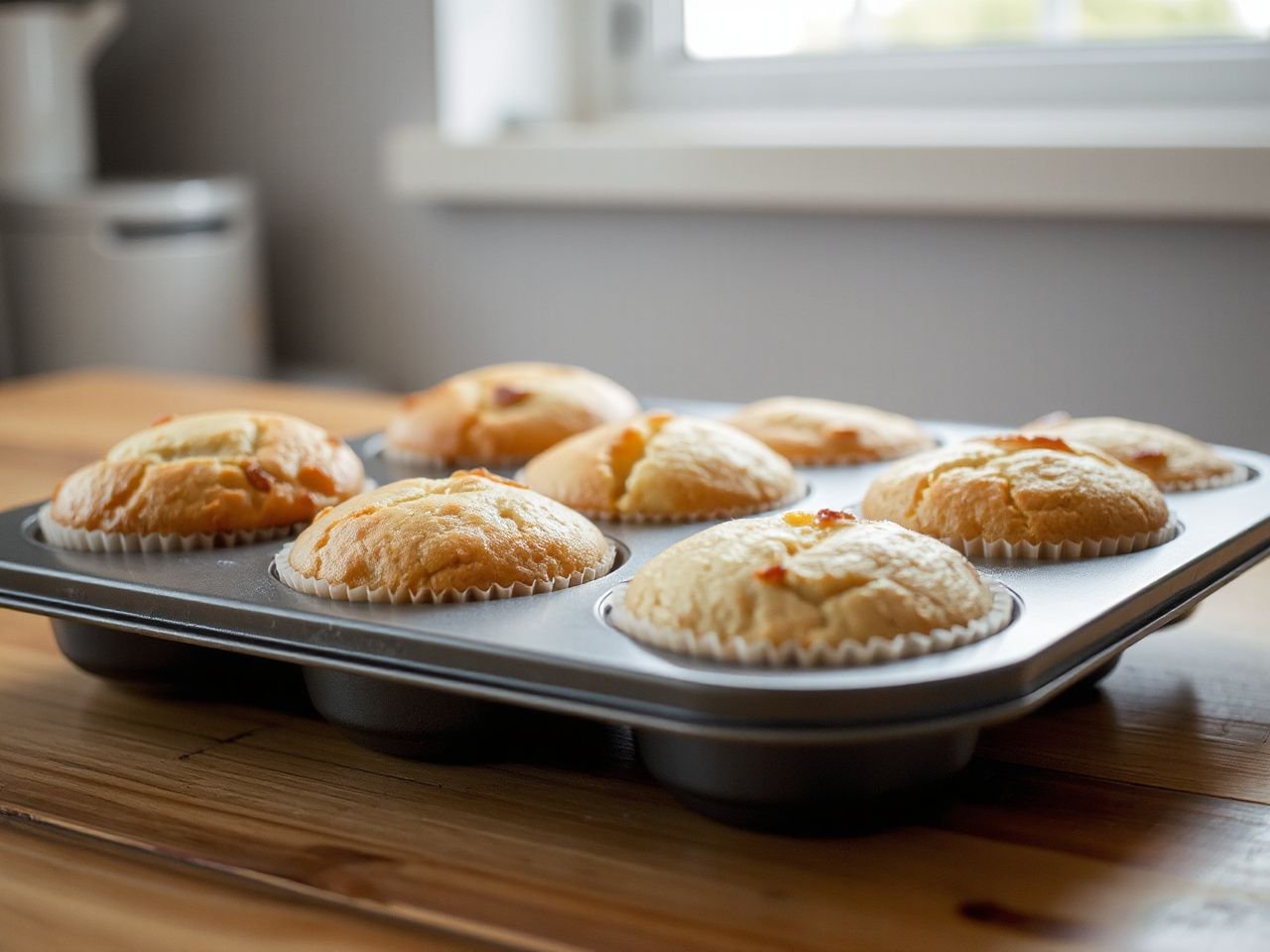
Most budget muffin pan failures come down to one overlooked spec: silicone wall thickness. A pan with thin, heavily filled silicone flexes under batter weight, tip over on the oven rack, and tears after a season of use. That single number decides whether you get years of clean releases or a floppy disappointment. So after comparing five of the best budget muffin pans on paper, I kept returning to one that solved the floppy-pan problem outright.
If you want to skip the research, grab the BAKE BOSS Silicone Muffin Pan. Its built-in, rust-resistant metal frame addresses the one weakness every all-silicone pan shares, and the LFGB certification tells you the silicone is pure enough to trust.
📌 This article contains affiliate links. As an Amazon Associate I earn from qualifying purchases, at no extra cost to you. Full disclosure.
CERTAIN CONTENT THAT APPEARS ON THIS SITE COMES FROM AMAZON. THIS CONTENT IS PROVIDED ‘AS IS’ AND IS SUBJECT TO CHANGE OR REMOVAL AT ANY TIME.


Comparison Table
| Product | Best For | Buy Link |
|---|---|---|
| 12 Cups Silicone Muffin Pans for Baking Cupcake Pan Nonstick Silicone Molds | Basic 12-cup baking | Check Price |
| AOTASO 2 Pcs Silicone Muffin Pans for Baking | Two-pan value | Check Price |
| BAKE BOSS Silicone Muffin Pans | Stability and purity | Check Price |
| Redfly 2 Pack Silicone Muffin Pans for Baking & Cupcake Pan – 12 Cup Regular Size | Jumbo muffins | Check Price |
| CAKETIME 12 Cups Silicone Muffin Pans for Baking – Regular Size Cupcake Pan Muff | Standard-size reliability | Check Price |
How We Chose These Muffin Pans
These five picks were narrowed down by comparing published specifications, materials, and documented features against what actually matters for a budget silicone muffin pan. The decisive factors are the purity and thickness of the silicone—thin or heavily filled silicone flexes too much, doesn’t hold its shape when filled, and may degrade faster. Equally critical is the pan’s design: a rim or handles that keep it stable on a sheet pan, and the flexibility of the mold itself to release muffins without tearing. A budget pan that sticks after a few uses, warps in the oven, or lacks a trustworthy food-safety certification fails the core value test. The thickness and purity claims are most important, along with frame or rim design for stability. Before you order any silicone muffin pan, check the manufacturer’s wording for phrases like “pure silicone” and look for a specific certification mark—not just the words “food grade.” That’s where cheap fillers hide.
12 Cups Silicone Muffin Pans (Basic 12-Cup Silicone Mold)
Quick take: This is a bare-bones 12-cup silicone muffin pan that covers the basics but leaves the stability question entirely up to you.
The listing gives the cup dimensions straight: 2.75-inch top diameter and 1.1-inch depth, which is standard for a regular muffin size. The pan itself weighs 7.7 ounces—light, but that’s not automatically a good thing. Silicone is naturally floppy, and a pan this light will definitely need a rigid baking sheet underneath once you pour in the batter. The listed heat range is -104°F to 446°F, so freezer-to-oven moves are fine, but I’d keep it under 425°F for real baking to avoid any edge softening over time.
On paper, the release should be effortless—nonstick surface, flexible mold, the usual silicone pitch. But without a frame or reinforced rim, the two-handed carry from counter to oven is where muffin batter ends up on the floor. No certification is named beyond “food grade,” and that vague term doesn’t tell me whether the silicone passed the pinch test for fillers. If you’re a casual baker who only makes muffins once a month on a sheet pan, this will do. If you value stability or have doubts about silicone purity, keep reading.
Pros:
- Standard cup size — fits regular muffin liners without squeezing.
- Wide temperature range — safe from freezer to oven at -104°F to 446°F.
- Lightweight — easy to store in a drawer or hang from a hook.
- Simple nonstick surface — baked goods should pop out with finger pressure from the bottom.
- Dishwasher-safe claim — no hand-washing required if you trust the listing.
Cons:
- No rim or frame — carrying a filled pan to the oven without a sheet pan underneath is a spill waiting to happen.
- Unspecified filler content — “food grade” alone doesn’t rule out cheap plastic fillers that degrade faster.
Our Take
Best for: Someone who already owns a half-sheet pan and just wants a second silicone mold for freezing or occasional baking. Skip if: You want a pan that holds its shape when full, or you need a documented safety certification.
AOTASO 2 Pcs Silicone Muffin Pans (Two-Pack Value)
The real story: AOTASO sells two 12-cup pans in one box, and the listing goes out of its way to address the floppy-pan complaint head-on.
The phrase “sturdy & stable – no more floppy pans” signals that AOTASO has built some rigidity into the design, though the listing never states whether that’s a thicker rim, an internal metal frame, or simply a denser silicone blend. That’s a meaningful gap on the spec sheet. What they do specify is 100% premium, BPA-free food-grade silicone—the word “premium” is doing some heavy lifting without a certification label like LFGB or FDA to back it up. The pan is also described as odorless, which matters because cheap silicone often smells like plastic even after washing.
The two-pack makes sense for batch bakers or anyone freezing muffin-sized portions. Since each pan is a standard 12-cup layout with the same 2.75-inch cup diameter implied, you can bake 24 muffins in one oven cycle if both fit on a single large sheet pan. But the lack of a named certification and the vague stability claim mean I’d still set both pans on a rigid cookie sheet before filling. For the price of two pans, that’s a reasonable trade-off.
Pros:
- Two pans included — bake a double batch without waiting for one pan to cool.
- BPA-free claim — addresses the most common chemical concern in silicone bakeware.
- Odorless description — a sign the silicone likely isn’t heavily filled with cheap additives.
- Stability-focused marketing — the manufacturer acknowledges the floppy problem and claims to fix it.
- Effortless nonstick release — no scrubbing burnt-on residue, per the listing.
Cons:
- No named certification — “premium” and “BPA-free” are not the same as LFGB or FDA approval.
- Stability mechanism unclear — the listing never explains how it becomes “sturdy,” so you still might need a sheet pan underneath.
Why It Made Our List
Perfect for: Bakers who want two identical pans for weekend muffin batches or meal-prep freezing, and who already use a sheet pan for support. Not great if: You insist on a documented safety certification or a truly self-supporting pan.
BAKE BOSS Silicone Muffin Pans (Built-In Metal Frame)
In a nutshell: This pan fixes the floppy-pan problem with an actual metal frame instead of just marketing words.
The listing states the frame is built-in and rust-resistant, which is a huge deal. A metal frame embedded around the rim or base keeps the pan rigid when you lift it full of batter—no sheet pan required, though I’d still use one for convection ovens. The silicone itself passes the LFGB approved test, which is a stricter German standard than the more common FDA mark, and the listing explicitly says they use pure, high-quality silicone with no cheap plastic fillers. That addresses the two biggest failure points in budget muffin pans: stability and silicone purity.
Heat distribution here is interesting. Silicone insulates, so muffin bottoms brown less than with metal—that’s true of every pan on this list. But with the BAKE BOSS, the metal frame adds a slight conductive edge around the rim, which can help set the muffin tops a touch faster. The frame also means the pan won’t twist when you hold it by one end. Just don’t put the whole thing in a screaming-hot oven over 450°F for long, because the frame’s rust-resistant coating has limits that the listing doesn’t specify.
Pros:
- Built-in metal frame — the pan stays flat and rigid when filled, even held by one corner.
- LFGB certification — a named, stricter standard than the generic “food grade” label.
- Pinch test passed — pure silicone without cheap plastic fillers, per the manufacturer.
- Rust-resistant frame — a common problem with metal-reinforced silicone pans is addressed.
- 12-cup standard size — same 2.75-inch cup diameter as the others, so liners fit normally.
Cons:
- Heavier than all-silicone pans — the frame adds weight, though that’s the trade-off for stability.
- No maximum oven temperature listed — the rust-resistant coating might have a ceiling below 446°F.
The Real Deal
Best for: Anyone who has ever dumped a full muffin pan in the oven and never wants to do it again. Think twice if: You only bake tiny batches and prefer the lightest possible pan to store.
Redfly 2 Pack Silicone Muffin Pans (Jumbo 12-Cup Size)

What stood out: Redfly pitches this as a two-pack of 12-cup jumbo muffin pans, which means the cups are larger than the standard 2.75-inch diameter on the other pans here.
The listing repeats the same “food grade material, BPA-free” line without a named certification, so I’m treating that with the same skepticism as the generic pan above. What’s different is the size claim. If these cups are genuinely jumbo—likely around 3 inches across or deeper—then standard muffin liners will swim inside, and baking times will need to go up. Unfortunately, the listing never gives exact cup dimensions, which is a glaring omission for a pan sold as a specific size. That lack of a number on the spec sheet is exactly the kind of thing that causes a buyer to order, then realize the pan is too big for their recipe.
The two-pack value is there if you want larger muffins or use the molds for other things like egg bites or frozen soup pucks. But the smooth nonstick release claim only works if the silicone is thick enough not to flex when you press from the bottom. With no thickness specification and no frame mentioned, you’ll need a solid baking sheet underneath, just like the floppy pans above.
Pros:
- Two pans in one order — makes sense for batch baking or gifting.
- Jumbo cup size — if you prefer bakery-style oversized muffins, this is a rare budget option.
- BPA-free claim — the baseline chemical concern is covered.
- Easy release promise — the smooth silicone surface should let muffins pop out.
- Versatile shape — jumbo molds work for frozen portions or small casseroles.
Cons:
- No exact cup dimensions listed — “jumbo” without a number means you might get cups too big for your recipes.
- No frame or reinforcement — the listing never addresses stability, so a sheet pan underneath is mandatory.
Why It Stands Out
Great match for: Bakers who specifically want oversized muffins and already have a large cookie sheet for support. Pass on this if: You need standard-size cups or a pan that holds its shape on its own.
CAKETIME 12 Cups Silicone Muffin Pans for Baking (Regular Size)
Here’s the deal: CAKETIME gives the clearest dimensions on this list—cup diameter top: 2.75 inches, cup depth: 1.1 inches—so you know exactly what you’re getting.
That specificity is refreshing after the Redfly’s vagueness. The pan is food-grade silicone, BPA-free, with the same wide heat range from -104°F to 446°F. It’s an all-silicone design with no frame, so the floppy-pan caveat applies: always lift it on a baking sheet. The listing touts easy release with a pressed finger from the bottom, which works when the silicone is thick enough to not tear—but no thickness measurement is provided. At a budget price, CAKETIME is known for consistent quality, though the absence of a named certification keeps it from matching BAKE BOSS.
The one advantage here over the generic 12 Cups Silicone Muffin Pans at the top is the brand reputation. CAKETIME has been selling silicone bakeware for years, and their standard 12-cup mold tends to hold up because the company uses a denser silicone than no-name generics. Still, that’s a claim, not a guarantee. For someone who wants a straightforward regular-size pan and doesn’t mind using a sheet pan, this is a solid, predictable choice.
Pros:
- Exact cup dimensions — 2.75-inch top diameter and 1.1-inch depth are stated clearly.
- Regular muffin size — standard liners fit without adjustment.
- Wide temperature range — freezer to oven at 446°F maximum.
- Established silicone brand — CAKETIME’s name carries some quality weight in this niche.
- Easy pop-out release — flexible mold design works with finger pressure from the bottom.
Cons:
- No frame or rim — same spill risk when carrying a full pan.
- No LFGB or FDA mark — food-grade and BPA-free are stated, but no third-party certification is named.
Our Take
Ideal for: Buyers who want a predictable regular-size silicone pan from a known brand and always use a sheet pan. Skip if: You need the stability of a metal frame or the reassurance of a documented safety standard.
What to Look For in Best Budget Cupcake Pans (Buying Guide)
These silicone muffin pans all work on the same principle, but the small differences in the spec sheet determine whether you’ll still like the pan in 2028. Here’s what I’d check before adding one to your cart.
Silicone Thickness and Purity
The pinch test exists for a reason. Pinch a flat, unstressed part of the pan between your fingers. If white shows through, the silicone is heavily filled with cheap plastic—that pan will crack and lose its nonstick surface within a year. Look for the words “pure silicone” and a named certification like LFGB or FDA. The BAKE BOSS is the only pan here that explicitly passes this test, which is a big reason it sits at the top.
Frame or Rim for Stability
Silicone is inherently floppy. Without a metal frame or a thick reinforced rim, a full 12-cup pan will wobble and spill when you carry it from counter to oven. Every pan on this list except the BAKE BOSS requires a rigid baking sheet underneath. If you forget that sheet, you’ll regret it. The AOTASO claims stability but doesn’t explain how, so treat that claim with caution.
Heat Distribution Quirks
My heat-map obsession kicks in here. Silicone is an insulator, not a conductor, so muffin bottoms and sides brown less than with a metal pan. That’s not a flaw—it means softer crusts, which some people like. But it also means baking times usually need 2-3 extra minutes, and the tops may brown before the centers set. If you want deeply golden bottoms, stick with metal. If you’re making moist muffins or cupcakes you’ll frost anyway, silicone is fine. For a great muffin recipe to test any new pan, try this one-pot marry me chicken pasta—no, that’s not a muffin, but it’s the kind of meal you’ll want after a baking session.
Cleaning and Care
Silicone is dishwasher-safe on paper, but the high heat of a drying cycle can slowly degrade the surface. Hand-washing with warm soapy water and a soft cloth keeps the nonstick properties longer. Never use abrasive scrubbers, and avoid cutting muffins directly in the pan. Storing the pan flat or hung, not folded or stuffed under heavy pans, prevents permanent creases.
Our Final Recommendation
For most home bakers, the BAKE BOSS Silicone Muffin Pan is the clear winner because it solves the floppy-pan problem with a built-in metal frame and backs up its silicone purity with an LFGB certification. If you want a two-pack value and don’t mind using a sheet pan, the AOTASO 2 Pcs is the budget pick. And for standard-size reliability with a known brand name, the CAKETIME 12 Cups earns the runner-up slot. Choose based on whether stability or price matters more to you.
Frequently Asked Questions
Are silicone muffin pans really nonstick, or do I still need to grease them?
Silicone is naturally nonstick enough for most batters, but high-sugar or sticky mixtures can cling. A light spray of oil or a butter film makes release foolproof. The pure silicone in the BAKE BOSS and the flexible mold design on all five pans help, but greasing is cheap insurance.
Do silicone muffin pans bake evenly or do I get uneven results?
Silicone insulates, so heat distribution is less intense than metal. You’ll get softer, lighter-colored bottoms and sides. Baking times may need 2-3 extra minutes, and the tops can overbrown before the centers set. If you want crunchy edges, this material isn’t for you; if you want moist cupcakes, it’s perfect.
Can I put silicone muffin pans in the freezer or microwave as well?
All five pans here list a wide temperature range from -104°F to 446°F, so freezer-to-oven moves and microwave use are technically safe. I’d stick to oven temperatures under 425°F for longevity, and avoid using the metal-framed BAKE BOSS in the microwave because metal and microwaves don’t mix.
How long do budget silicone muffin pans last before they stick or lose their shape?
With proper care—hand-washing, no abrasive scrubbers, storage flat—a pure silicone pan can last five years or more. Thin, filler-heavy pans degrade in one to two years, developing white creases and losing their nonstick surface. The LFGB-certified silicone in the BAKE BOSS is likely to outlast the uncertified generics.
Because the creamy rotisserie chicken mushroom soup is a 25-minute recipe, it makes the whole house smell like a bakery anyway.