Scrubbing harder is the single worst habit in this whole job. The dark crust on a pan bottom is almost never one substance — it is layered carbonized oil, mineral scale, and sometimes oxidation, and each of those responds to a completely different chemistry. So the skill in learning how to clean the bottom of a pan is reading which layer you are looking at, then choosing the method by the pan’s surface rather than by how ugly the grime looks.
The mistake beginners make is treating the crust as one enemy to be attacked with the roughest pad in the drawer. That instinct works on raw stainless and destroys everything else. Loosening buildup with dwell time and the right cleanser beats force every time, because abrasion that lifts carbon also scratches the metal and, on a seasoned or coated pan, strips the exact surface you are trying to protect.
Key Takeaways
- Identify the layer first: carbonized oil, hard-water scale, and rust each need a different chemistry, not more elbow grease.
- The surface picks the method: what safely restores stainless will wreck non-stick, ceramic, or cast-iron seasoning.
- Dwell time beats scrubbing: let a paste or soak sit 15 to 30 minutes so the crust releases instead of gouging it off.
- Never combine baking soda and vinegar and expect power — they cancel each other into salt water, so use each for the residue it actually dissolves.
What Is Actually Stuck to the Bottom of Your Pan
Before you reach for anything, name the buildup. A dark, hard, slightly greasy shell that flakes at the edges is carbonized cooking oil — polymerized fat baked past the point of no return. It forms even when you only cook clean food, because oil vapor and spatter drift down the sides, land on the hot exterior, and cook onto the metal cycle after cycle.
Carbonized oil versus mineral scale versus rust
Carbonized oil is organic and reacts to heat and alkaline or mild-abrasive cleaners. Hard-water mineral scale is a chalky white or gray film left when water evaporates and its dissolved calcium and magnesium stay behind — that one dissolves in acid, not abrasion. Rust is iron oxide, orange-brown and powdery, and it only appears on bare iron or steel that stayed wet.
Telling them apart takes ten seconds. Scale wipes to a smear under a drop of vinegar; carbon does not budge with acid alone; rust rubs off orange on a paper towel. Get this wrong and you will spend twenty minutes attacking scale with a scrubber that was never going to touch it.
Why a burnt ring forms where the pan meets the burner
That stubborn ring around the outside rim is grease and boil-over that carbonized right at the hottest contact zone. Oversized flames licking up the sides of a pan, or a burner set higher than the pan base needs, drive that buildup faster. Keeping the flame inside the diameter of the base is the cheapest prevention there is.
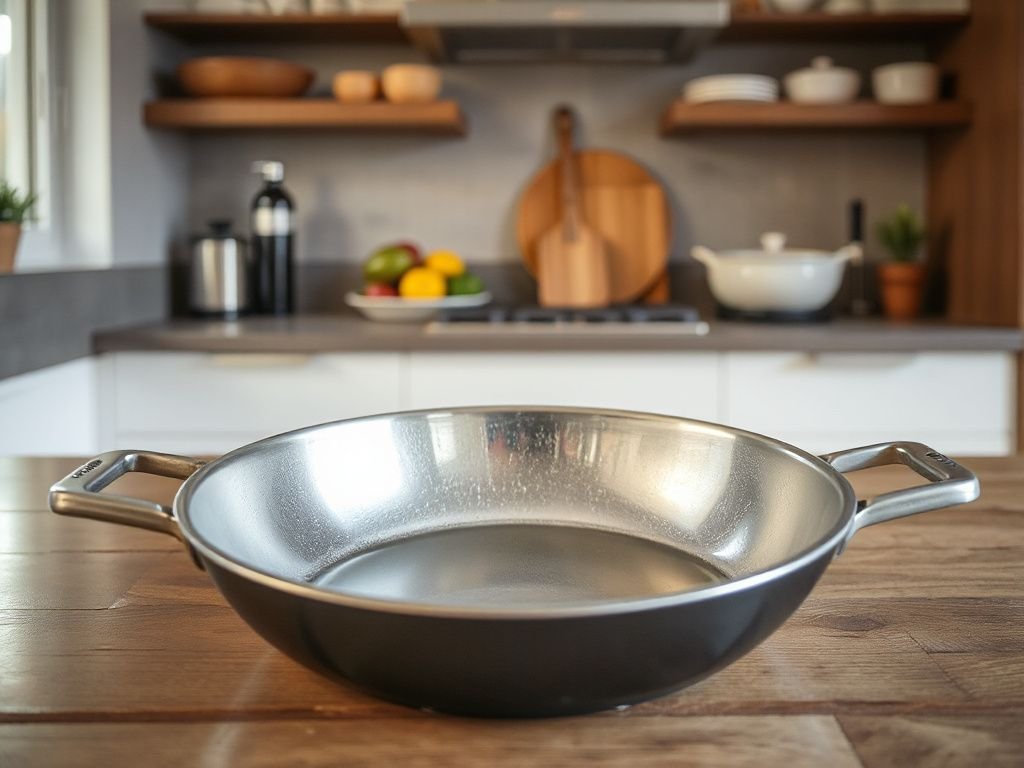
Match the Method to the Surface, Not the Grime
This is the part almost everyone skips, and it is the one that decides whether you restore a pan or ruin it. The correct cleaner is chosen by what the pan is made of.
Stainless steel: the forgiving one
Bare 18/10 or 304 stainless takes an oxalic-acid cleanser well. Bar Keepers Friend uses oxalic acid to lift both carbon and discoloration, and it is the right tool for a stainless exterior. Make a paste with a few drops of water, let it dwell one minute, then work it with a non-scratch pad.
Stainless also handles a baking-soda paste and, for that blue or rainbow heat tint, a wipe of white vinegar. Bar Keepers Friend on bare stainless is safe; the same cleanser on the wrong surface is a wrecking ball.
Non-stick and ceramic: hands off the abrasives
Do not put Bar Keepers Friend, Bon Ami, steel wool, or any scouring powder on a PTFE non-stick or ceramic coating — the oxalic acid and grit will scratch and thin the layer that makes the pan work. Warm, soapy water and a soft cloth are the ceiling here, plus a baking-soda-and-water soak for the exterior only. The coatings on modern pans are regulated as food-contact materials, and the U.S. FDA treats these surfaces under its food-contact substance rules, which is one more reason not to abrade them into your food.
Older PTFE cookware raised legitimate concerns about PFOA, a processing chemical the EPA pushed manufacturers to phase out of non-stick production. Scratching a coated bottom does not just look bad; it shortens the life of the pan you paid for.
Cast iron and carbon steel: protect the seasoning
The black patina on cast iron and carbon steel is polymerized oil — a bonded layer you built on purpose, not dirt. Scrubbing a cast-iron bottom to bare metal strips that seasoning and undoes months of cooking. Chainmail or a stiff brush plus hot water is as aggressive as you should get, and a long soak is off the table entirely.
Bare and anodized aluminum: keep it acidic
Bare aluminum darkens and reacts with alkaline products, so baking soda, washing soda, and oven cleaner are the wrong direction — they can leave a dull gray stain. Acidic approaches win here: cream of tartar (potassium bitartrate) mixed into a paste, or a simmer of water with a spoon of the powder, brightens aluminum without the alkaline reaction. Anodized aluminum has a hardened surface, but harsh abrasives and oxalic-acid cleansers still dull its finish, so treat it closer to a coated pan than to raw steel.
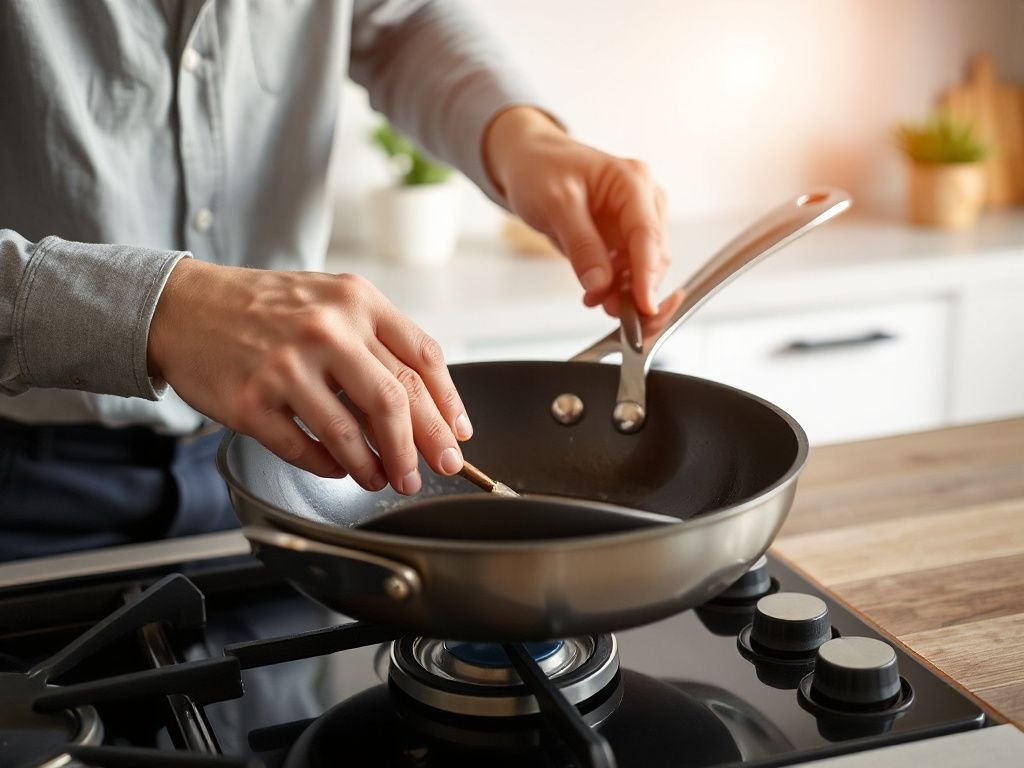
How to Clean the Bottom of a Pan, Step by Step
Once you know the surface and the layer, the routine is short. Work in this order and you will rarely need a second pass.
- Identify the residue and the surface. Test with a drop of vinegar and a paper-towel rub to separate scale, carbon, and rust before choosing a cleaner.
- Pick the cleanser by surface. Oxalic-acid cleanser or baking-soda paste for stainless; cream-of-tartar paste for aluminum; soap and a soft cloth for coated pans; hot water and a brush for seasoned iron.
- Apply and wait. Spread a thick paste over the crust and let it dwell 15 to 30 minutes. Dwell time is what loosens the bond so you scrub once, not three times.
- Work it with the mildest tool that succeeds. Start with a Scotch-Brite non-scratch pad or a nylon brush. Step up in aggression only if the surface allows it.
- Rinse every trace of cleanser. Leftover powder or paste bakes on at the next heating and can discolor the metal, so rinse fully and dry.
Boil-and-loosen for baked-on carbon
For a genuinely welded crust, heat does the loosening. Fill the pan with water plus a squirt of dish soap or a spoon of baking soda (stainless and steel only), bring it to a gentle simmer for 10 minutes, and the carbon on the interior lifts as it hydrates. For the outside bottom, invert the pan into a wider tray of hot soapy water so the crusted base soaks — you cannot boil the exterior, so you bring the soak to it instead.
The baking-soda-and-vinegar question, answered honestly
The famous fizz does almost nothing useful. Baking soda alone is a mild abrasive and a base; white distilled vinegar alone is dilute acetic acid that dissolves mineral scale. Mix them and they neutralize into salt water and carbon dioxide, spending their power on a satisfying foam instead of on your pan. Use baking soda for gentle scouring, use vinegar for scale, and keep them apart.
Cooktop Residue, Discoloration, and Keeping the Bottom Clean
A clean, flat pan bottom is not just cosmetic — it improves heat transfer and, on an induction cooktop, the flatness is what lets the pan couple with the element at all. Burnt-on residue on the base creates hot spots and poor contact, so the cleaning pays off in cooking, not just looks.
Glass and induction cooktop marks on the pan
Gray metal streaks transfer both ways between a pan bottom and a glass-ceramic cooktop. Clean them off the pan with a stainless-safe cleanser and a non-scratch pad, and off the cooktop with a dedicated cooktop cream and a plastic scraper — never steel wool, which scratches the glass. Wiping the pan base before it goes down stops the marks from starting.
Blue and rainbow heat tint on stainless
That iridescent stain is a harmless oxide layer from overheating, sometimes called heat tint. It is thin and cosmetic, and a wipe of white vinegar or a stainless cleanser removes it. Lower the heat setting and it stops coming back.
Prevention beats cleaning
Keep the flame or element sized to the base, wipe spatter off the exterior while the pan is still warm, and dry pans fully to stop hard-water scale — the same scale that builds up when a dishwasher’s drying cycle leaves minerals on the outside. A pan bottom that gets a quick wipe after every few uses never becomes the archaeology project people dread. And when the base is warped or deeply pitted rather than merely dirty, that is a restoration or replacement question, not a cleaning one.
All of this matters most for the cookware you actually reach for daily. If a well-kept stainless pot is what you simmer stock in, it is the same one you will use for a quick rotisserie chicken and mushroom soup on a weeknight, and a clean, flat base is what heats that broth evenly. A seasoned or spotless pan is worth the ten minutes.
Frequently Asked Questions
How do I clean the bottom of a pan without scratching a non-stick coating?
Stick to warm water, dish soap, and a soft cloth or the non-scratch side of a Scotch-Brite pad. For a stubborn exterior, soak the base in a baking-soda-and-water solution, then wipe. Keep oxalic-acid cleansers like Bar Keepers Friend, scouring powders, and steel wool away from any PTFE or ceramic surface, because the grit thins the coating and shortens the pan’s life.
Can I use Bar Keepers Friend on a ceramic or non-stick pan?
No. Bar Keepers Friend relies on oxalic acid and fine abrasive, which is ideal for bare stainless but will scratch and degrade ceramic and PTFE coatings. Save it for stainless steel exteriors and interiors. On coated pans, the strongest thing you should apply is dish soap, warm water, and a soft sponge, with a plain baking-soda soak reserved for the outside base only.
Is it safe to scrub the bottom of a cast iron pan hard?
Hard scrubbing strips the polymerized-oil seasoning you built, so keep it gentle. Use hot water with a stiff brush or chainmail, skip long soaks and harsh detergents, and never take it to bare metal unless you intend to re-season. Dry the pan on low heat immediately and wipe a thin film of oil over the whole surface, including the bottom, to block flash rust.
Does the baking soda and vinegar trick actually work?
Not the way most people use it. Combined, baking soda and vinegar neutralize into salt water and fizz, spending their cleaning power on foam. Use them separately: baking soda as a mild scouring paste for carbon, and white vinegar on its own to dissolve hard-water mineral scale. Matching each to its residue works far better than the popular fizzy mixture.
Why did the bottom of my stainless pan turn blue or rainbow-colored?
That is heat tint, a thin, harmless oxide layer that forms when stainless is heated too high or empty. It does not affect cooking and wipes off with white vinegar or a stainless-safe cleanser on a soft cloth. To stop it returning, lower your heat setting and avoid preheating an empty pan on high — a habit that also drives outside-bottom carbon buildup over time.
Keeping a set of well-maintained pots ready pays off on busy nights, whether you are searing or making a one-pot chicken and dumpling soup in about 40 minutes. Clean bottoms, even heat, and cookware that lasts.