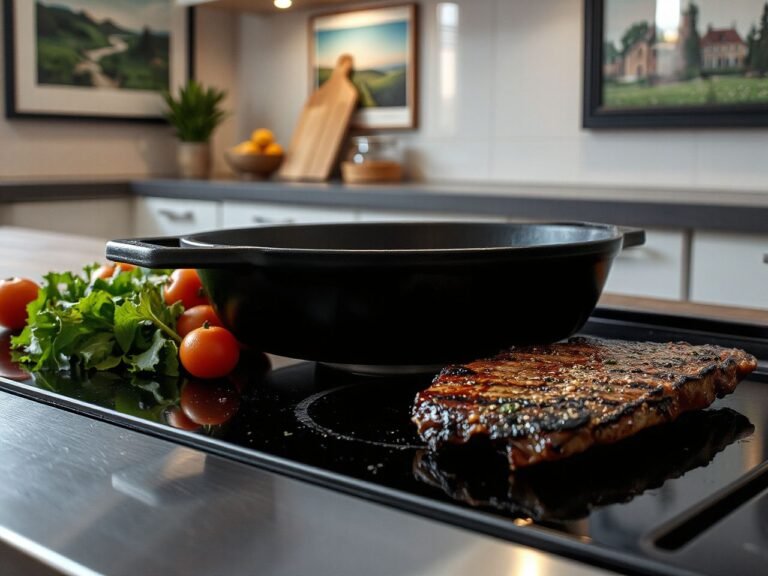
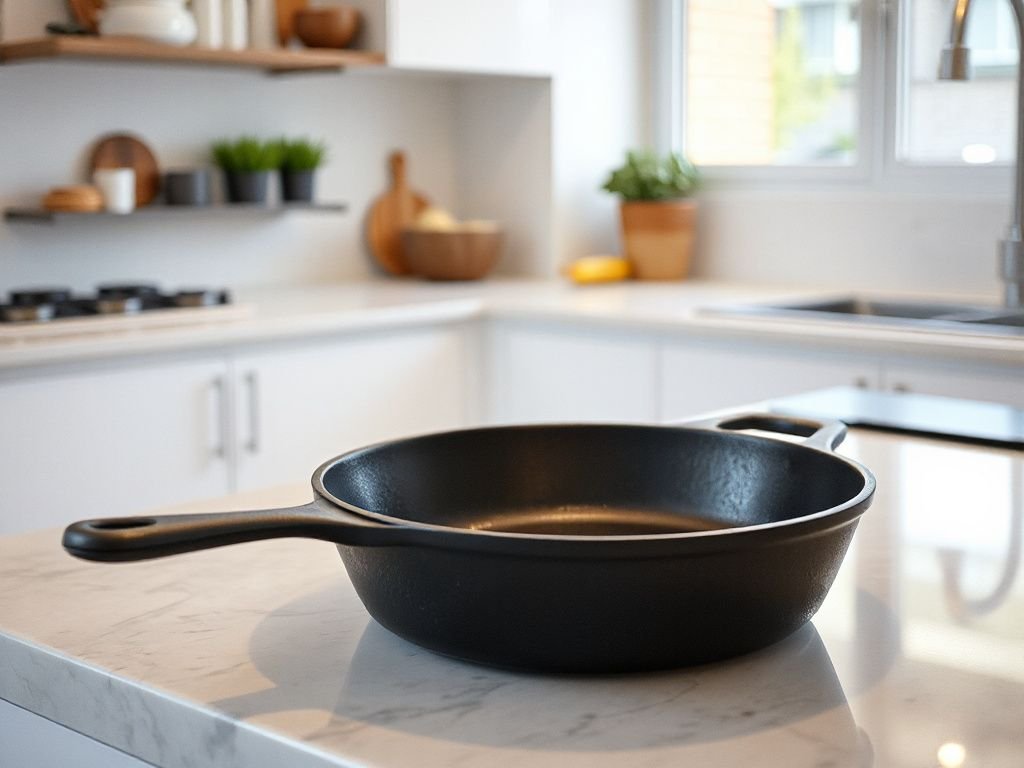
A properly seasoned cast iron pan develops a polymerized oil layer only a few thousandths of a millimetre thick—far thinner than a human hair—yet that microscopic coating is the entire difference between a pan that releases food and one that shreds every omelette you attempt. Most advice starts with brand name or price, but key factors to consider are handle length, pour spout size, and whether that “pre-seasoned” label means anything at all.
I have stood in too many cookware aisles hefting skillets, tipping them to see how they pour, and walking away from pans with handles that cramped my hand. The key practical distinction is that “pre-seasoned” usually means a light factory-applied oil, not a seasoned layer that will hold up without initial care. A buyer must know whether to trust that coating or plan to strip and re-season. Weight and balance—specifically the handle length and size of pour spouts—matter more than surface texture for everyday use. A guide should help you evaluate feel in the store, not just online specs.
Key Takeaways
- Pre-seasoned only means a light factory oil coat; expect to add your own seasoning within the first few months.
- Handle length, overall weight, and pour spout depth matter more for daily use than the pan’s surface texture.
- A $20 modern Lodge and a $200 vintage Griswold both cook well; the difference is maintenance tolerance and thermal mass.
Beginner: What You’re Actually Looking At
Pre-Seasoned vs. Unseasoned: Read the Label Honestly
Walk into any big-box store and you will see stacks of Lodge skillets labelled “pre-seasoned.” That phrase sounds like the pan is ready to go, but it is not. A factory pre-seasoning is a light spray of soy or canola oil baked on briefly to prevent rust during shipping. It does not build the hard, slick, polymerized surface that experienced cast iron cooks talk about. Fry an egg on that factory coat and it will stick, and the pan takes the blame for a finish that was never built to cook on. You were set up to fail.
An unseasoned pan, on the other hand, is raw iron with mill scale still on the surface. Mill scale is the dark, flaky oxide layer left from the casting process. Before you use an unseasoned pan, you must remove that mill scale with steel wool or a vinegar soak, then season from scratch. The Lodge use and care guide describes their pre-seasoning as a starting point, not a finish. That is honest. Treat it as such.
Bare Cast Iron vs. Enameled Cast Iron
The second split is between bare cast iron and enameled cast iron. Bare pans are the classic black iron—you season them, they darken with use, and they become nearly nonstick over time. Enameled pans, like those from Le Creuset or Staub, have a glass coating fused to the iron at high heat. That enamel never needs seasoning and will not react with acidic foods like tomato sauce, but it chips if you drop the pan or heat it empty too aggressively. A chip in enamel is permanent and exposes the iron beneath to rust.
For daily searing, frying, and baking, bare cast iron is recommended. For long-simmered tomato dishes or wine reductions, enameled is the better tool. The choice is not about quality—it is about what you cook most often. If only one pan is purchased, a bare 12-inch skillet handles the widest range of tasks.
Size: One Pan to Rule Your Kitchen
If you can only afford one, buy a 12-inch skillet. A 10-inch pan works for a single egg or a small steak, but it crowds a batch of cornbread or two chicken thighs. A 15-inch pan is a beast on the stovetop and often does not fit in a standard oven with the handle turned sideways. The 12-inch size gives you enough surface area to sear a pound of mushrooms without steaming them, and it still fits most burners.
Weight is the trade-off. A bare 12-inch cast iron skillet weighs 7 to 8 pounds empty. Add a pound of meat and a cup of liquid, and you are lifting 9 pounds one-handed while scraping with a spatula. That is why handle length matters so much, which we will get to. If you have wrist or shoulder issues, a 10-inch pan or a carbon steel alternative might be kinder.
Will It Work on Your Stove? Induction and Otherwise
Cast iron is ferromagnetic, so it works on every cooktop, including induction. The pan itself becomes the heating element when an induction coil activates. That is a real advantage over aluminium or copper nonstick pans. However, bare cast iron has a rough bottom on modern sand-cast pans, and that texture can scratch a glass or ceramic cooktop if you slide the pan instead of lifting it. Use a little care, lift straight up, and you will be fine.
Flatness also matters. A slightly warped pan will spin on a flat glass top and heat unevenly. In the store, set the pan on a flat shelf and press the edges; if it rocks, put it back. Warping happens from thermal shock—quenching a hot pan in cold water—so the pan was abused before you ever touched it.
Intermediate: Reading the Specs That Matter
Surface Texture: Rough vs. Smooth (and Why Both Work)
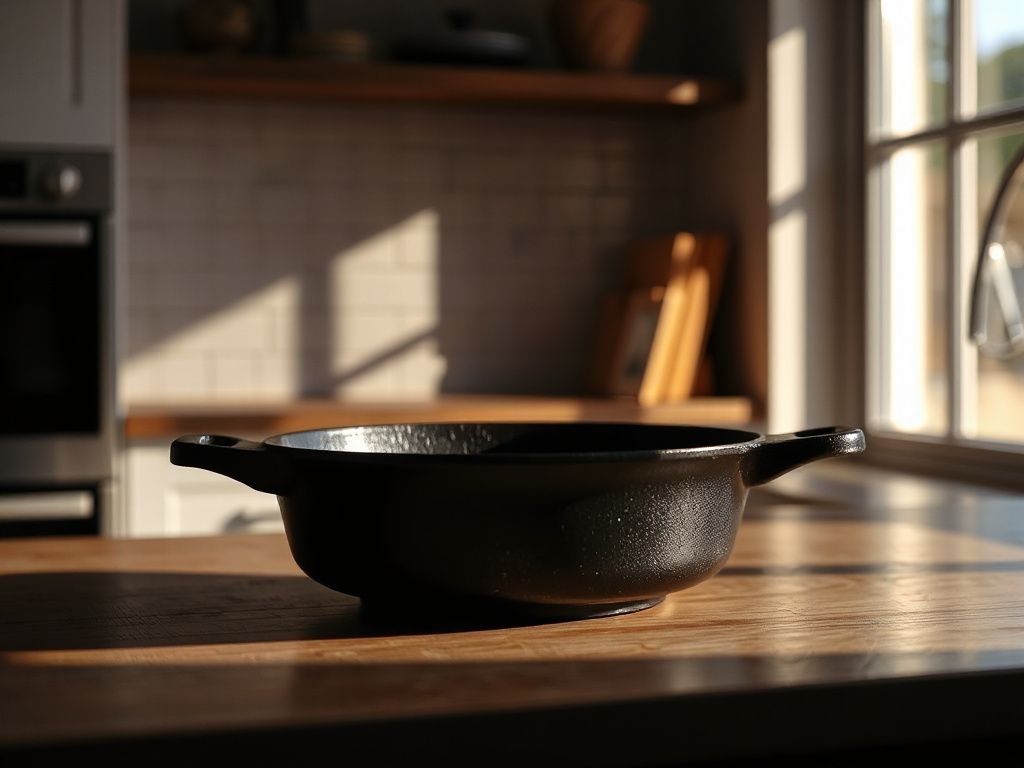
Modern Lodge pans have a rough, pebbled surface because the company uses sand casting and does not machine the interior smooth. That roughness is not a defect, but it does change how seasoning builds. Oil pools in the tiny valleys, and with repeated use, those valleys fill with polymerized oil until the surface becomes slicker. It takes longer than a machined-smooth pan, but it gets there.
Vintage Griswold and Wagner pans, along with modern premium brands like Field Company, machine the cooking surface smooth before seasoning. A smooth pan releases food more easily from the first cook, but it also shows every mistake. If you strip the seasoning and apply too thick a layer of oil, you get sticky patches that are harder to remove from a polished surface. Our Field Company cast iron skillet review goes deeper into the smooth-surface debate, but the short version is this: both surfaces cook well; the smooth one just forgives less sloppy seasoning technique.
Handle Length and Pour Spouts: The Spec No One Lists
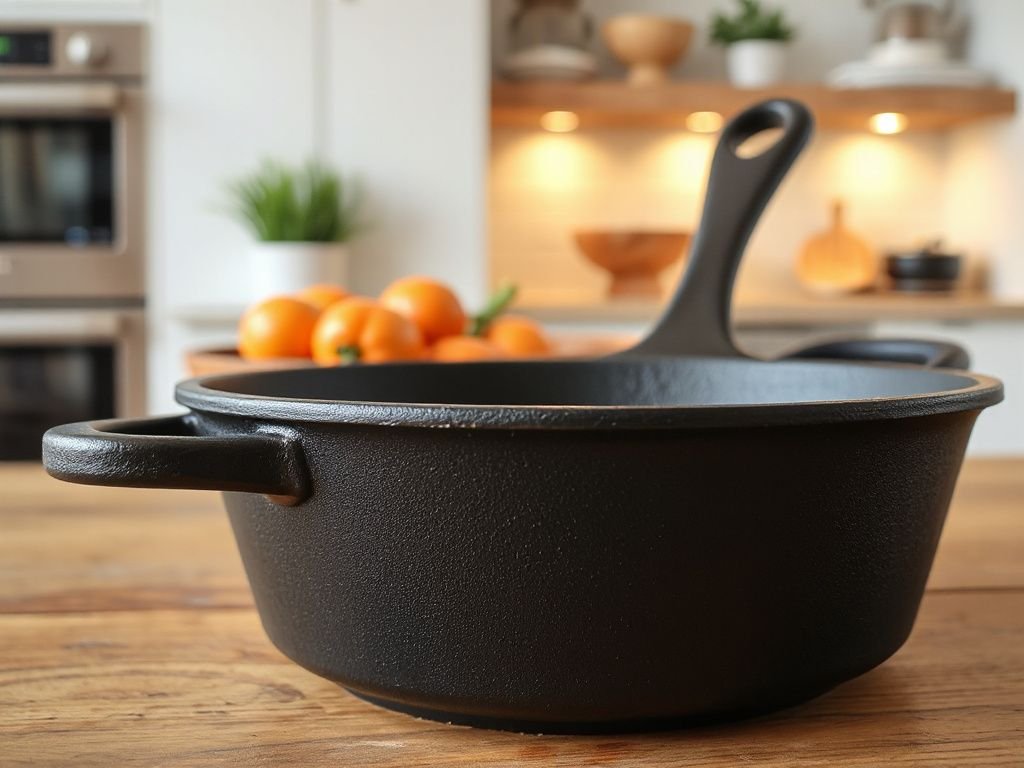
Here is the detail I care about more than any other. A short handle on a heavy skillet is an accident waiting to happen. When the pan is full of hot oil, you need a handle long enough to give you a two-handed grip or at least a secure one-handed lever. A typical 12-inch Lodge skillet has a handle about 5.5 inches long from the pan body. That is too short for my liking. I want at least 7 inches of handle, and I want it thick enough not to flex when I lift a full pan.
Pour spouts are the second spec that gets ignored online. Deep, wide spouts pour a clean stream of pan juices or melted butter without dribbling down the side of the pan. Shallow spouts send liquid down the outside, onto the burner, and into the flame. Next time you hold a skillet in a store, tilt it with a cup of water inside (ask a clerk first). Watch how the water leaves the rim. If it runs under the lip, that pan will annoy you every single time you make gravy.
Weight and Thermal Mass: Why Heavier Isn’t Always Better
Cast iron is loved for heat retention. A 12-inch pan holds enough thermal energy to sear a steak hard without the temperature crashing when you drop in cold meat. That same thermal mass means the pan takes longer to heat up and longer to cool down. A 7-pound skillet on a gas burner needs five to seven minutes to reach even medium heat. A carbon steel pan half the weight gets there in three minutes but loses heat faster when food hits it.
For baking cornbread or roasting vegetables, heavy cast iron is ideal because the pan holds oven heat and creates a crisp crust. For quick weeknight stir-fries, carbon steel is faster and lighter. If you are comparing a cast iron skillet to a carbon steel pan, know that the trade is heat retention versus responsiveness. Cast iron holds heat; carbon steel transfers it. Choose based on what you cook most.
Why Does Food Stick? It’s Usually You, Not the Pan
Food sticks to cast iron for two reasons: the pan was not hot enough when the food went in, or there was not enough oil. Seasoning is not a nonstick coating like Teflon; it is a hydrophobic layer that reduces sticking but does not eliminate it. Heat the pan dry until a drop of water beads and dances on the surface (the Leidenfrost effect), then add oil and let it shimmer. That is the real nonstick trick. The chemistry of cast iron seasoning explains why the polymerized oil layer repels water and food proteins, but only when the pan is hot enough for that layer to smooth out.
If you have a smooth, well-seasoned pan and still get sticking, check your heat. A pan that sizzles gently is too cold. A pan that smokes is too hot. You want a medium-high shimmer on the oil, not a smoke signal.
If you are considering a larger surface like a griddle, our cast iron griddle buying guide covers the same handle and weight issues on a bigger scale, because a griddle has two short handles and no pour spouts, which changes everything about how you lift and tilt it.
Advanced: Seasoning, Maintenance, and Rescue
How to Season From Scratch (Yes, the Oven Method Works)
If you buy an unseasoned pan or inherit a rusty one, you need to build seasoning from bare iron. Start by stripping the old coating: spray the pan with oven cleaner containing lye, seal it in a plastic bag overnight, then scrub with steel wool and rinse. For light rust, a 50/50 white vinegar and water soak for 30 minutes will dissolve the rust without eating the iron. Do not leave it longer—vinegar will pit the metal.
Once the pan is bare, dry it thoroughly, then rub a very thin layer of refined grapeseed oil, canola oil, or flaxseed oil over every surface, inside and out. Wipe off the excess with a clean paper towel; the pan should look almost dry. Place it upside down in a cold oven, set the oven to 450°F, and let it bake for one hour. Turn off the oven and leave the pan inside until it is completely cool. Repeat three to five times for a durable base layer. Polymerization—the process that turns liquid oil into a hard plastic-like coating—occurs when the oil is heated past its smoke point in the presence of oxygen. That is the science, plain and simple.
Soap Is Safe. The Old Warning Came From Lye.
Grandma said never use soap on cast iron. Grandma was right for her era, because soap used to contain lye, and lye strips seasoning. Modern dish soap is pH-neutral and will not dissolve polymerized oil. Wash your seasoned pan with a few drops of dish soap and a nylon scrub brush, rinse with hot water, then dry it completely on a warm burner for two minutes. That is it. No need to re-oil after every wash, though a light rub of oil before storage prevents rust in humid climates.
The real enemy is moisture. A wet pan left in a drying rack will rust within hours. Always dry with heat, not just a towel.
Oil Choice: Not All Oils Polymerize the Same
Flaxseed oil is often recommended for seasoning because it polymerizes into a hard, slick layer quickly. But that layer is brittle and will flake off over time. Grapeseed oil and canola oil produce a slightly softer but more durable seasoning that holds up to daily cooking. Olive oil is a poor choice for base seasoning because its lower smoke point means it will burn rather than polymerize, leaving a sticky, gummy mess. Use a neutral, high-smoke-point oil, and apply it whisper-thin.
Rust and Restoration: When Your Pan Looks Like a Relic
Rust appears when seasoning breaks down and bare iron is exposed to moisture. It is not the end of the pan; it is a scrape on the surface that you can fix. For light surface rust, scrub with a ball of aluminium foil dipped in water—the foil is softer than iron but harder than rust, so it removes the orange without scratching the metal. For heavy rust, the vinegar soak mentioned earlier works, followed by full re-seasoning.
Vintage pan restoration is its own hobby, and the process is identical: strip, scrub, season. If you find a rusty Griswold at a flea market, you are looking at a project, not a pan ready to cook. The Victoria cast iron skillet review on our site compares some modern budget options that come with longer handles and deeper pour spouts, which might matter more to you than the brand stamp on the bottom.
Frequently Asked Questions
What’s the difference between pre-seasoned and unseasoned skillets?
A pre-seasoned skillet has a thin factory-applied oil baked on to prevent rust during shipping and storage. It is a starting point, not a finished seasoning. An unseasoned skillet is bare iron with mill scale that must be removed and seasoned from scratch before use. Pre-seasoned is more convenient for beginners; unseasoned gives you full control over the final surface.
Can I use soap on a seasoned cast iron skillet?
Yes. Modern dish soap is pH-neutral and will not strip polymerized seasoning. The old warning against soap came from lye-based soaps, which are no longer common. Wash with a few drops of soap, rinse, and dry over low heat. Avoid soaking the pan and never put it in the dishwasher, which uses high heat and harsh detergents that damage seasoning.
What size cast iron skillet should I buy?
A 12-inch skillet is the most versatile for a household of two to four people. It sears, bakes, and roasts without crowding, and it fits most stovetops and ovens. A 10-inch pan is lighter and easier to handle for single servings or side dishes. A 15-inch pan is best left to outdoor cooking or very large families because of its weight and storage footprint.
Why does food stick to my cast iron skillet?
Sticking is usually a heat and oil problem, not a seasoning failure. The pan must be preheated until a drop of water beads and dances on the surface, then oil must be added and allowed to shimmer before food goes in. Too little oil or too low heat means proteins bond to the iron. A well-seasoned pan reduces sticking but does not eliminate it without proper preheating.
How do I restore a rusty cast iron skillet?
For light rust, scrub with aluminium foil and water, then dry and re-season. For heavier rust, soak in a 50/50 white vinegar and water solution for 30 minutes, scrub with steel wool, rinse, and dry completely. Then season from scratch by applying a thin layer of neutral oil and baking at 450°F upside down for one hour. Repeat the oil and bake cycle three to five times.