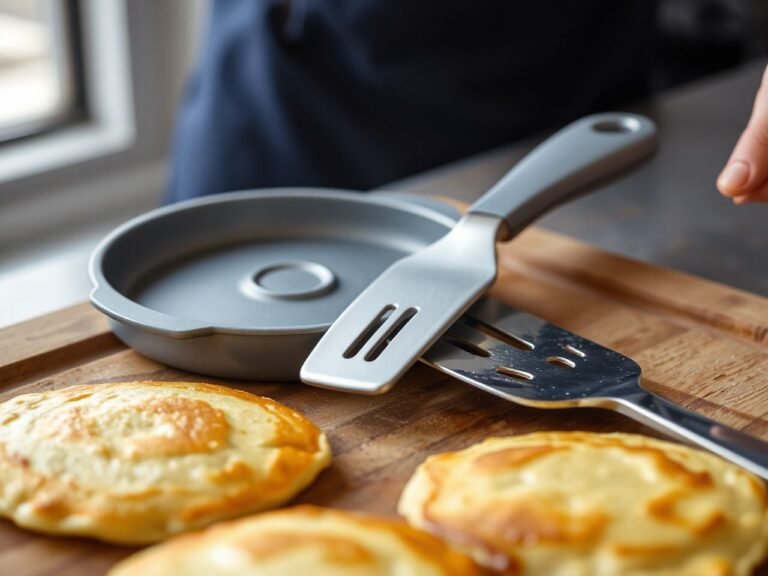
A silicone utensil may carry a heat rating as high as 600°F, while another standard stovetop tool may list a limit of 446°F. That difference matters, but the useful distinction is between the silicone cooking surface and the utensil’s underlying construction: flexibility, reinforcement, seams, and exposed edges often matter more than the word silicone alone. A sound guide also separates material compatibility from heat-use limits, because an utensil may be gentle on cookware while still being unsuitable for direct flame, broiling, or high-heat tasks. This silicone utensils buying guide focuses on the twentieth cut, scrape, fold, and lift rather than the first impression.
Key Takeaways
- Inspect the silicone surface, core, seams, handle, and exposed edges as one working tool.
- Match the manufacturer’s heat limit to the task; do not assume silicone permits direct flame or broiling.
- Soft spatulas suit scraping and folding, while firmer turners suit lifting and flipping.
- Replace utensils with cuts, tears, tackiness, persistent odors, or exposed reinforcement.
Beginner: Start with the Construction, Not the Label
The first buying decision is not silicone versus another material. It is how the utensil is built. Silicone rubber may form the food-contact surface, while a fiberglass core, stainless steel core, nylon section, bonded handle, or joint determines how the tool bends and carries force.
Read the food-contact information
Food-contact silicone should be identified clearly on the packaging, product page, or care information. Look for wording that identifies the cooking surface as intended for food contact, rather than relying on a general phrase such as kitchen grade. A manufacturer may also identify platinum-cured silicone or state that the material is BPA-free. Those statements help describe the material, but they do not replace instructions for heat, cleaning, or use.
The U.S. Food and Drug Administration publishes information about substances and materials that contact food, so its food-safety resources are a useful place to check general food-contact guidance. A label that gives no food-contact information deserves closer scrutiny before it is used for cooking.
Food-contact labeling identifies the intended surface, but it does not prove that every handle, adhesive, core, or seam has the same heat or cleaning limits.
Examine the cooking edge
Run a clean finger along the working edge and look at it under good light. The silicone should appear continuous, with no split, lifted section, exposed reinforcement, or sharp metal edge. A silicone coating does not guarantee that an exposed core, seam, or joint will remain suitable for every cooking task.
- A continuous edge: supports clean contact with a pan and gives fewer places for residue to collect.
- An exposed core: changes the tool’s contact with cookware and can create a scratch risk.
- A rough seam: can trap food and may become harder to clean as the utensil ages.
- A damaged coating: is a reason to remove the utensil from use rather than trim it and continue cooking.
Understand soft and firm silicone
A soft silicone spatula is useful for scraping bowls, folding mixtures, and following the curves of a pan. Its edge can conform to a surface that a stiff tool leaves partly untouched. The trade-off is control: a very flexible blade may fold when asked to lift a heavy portion.
A firmer silicone turner offers more support under food. That makes it more suitable for lifting, flipping, or sliding beneath food that needs a broad, stable surface. The best choice depends on the motion, not on a general claim that one style is superior.
Press the blade gently against a clean, flat surface. Observe how far the working edge bends and how quickly it returns when released. This simple check tells you more about flexibility than a vague phrase such as flexible design.
See how the core changes handling
A fiberglass core can add support while allowing a silicone utensil to retain some bend. A stainless steel core can provide a firmer feel and stronger resistance to bending, though the silicone covering still needs to remain intact over the reinforcement. Nylon may appear in handles or reinforced sections, while stainless steel may form a concealed support or an exposed part.
The core also changes how force travels through the handle. A soft, unreinforced spatula responds readily to scraping, whereas a reinforced turner transfers more pressure to the food. That is useful for lifting, but it can make a tool feel less forgiving during delicate folding.
Beginner: Match the Material to the Pan and Task
Silicone is generally gentle on nonstick cookware and enameled cookware because the working surface is softer than exposed metal. That protection depends on condition. Trapped grit, an exposed metal core, or a damaged edge can still scratch a pan.
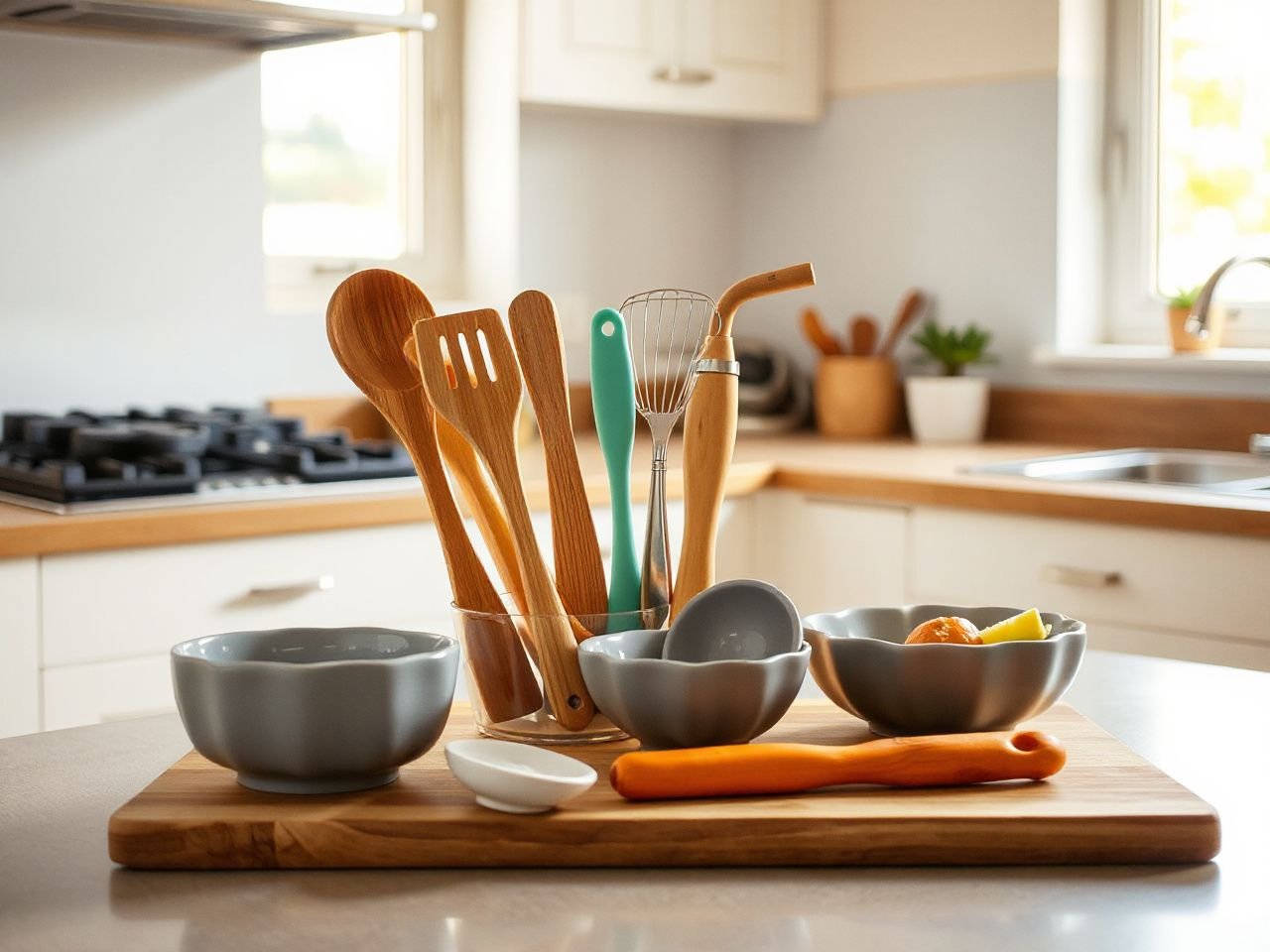
Silicone, nylon, and stainless steel compared by use
Silicone is useful where flexibility, a soft edge, and resistance to food sticking to the tool are helpful. It can follow the base and sides of a pan, scrape a bowl, and work around the finish of nonstick cookware. The exact heat limit still belongs to the manufacturer’s instructions.
Nylon utensils are often firmer than soft silicone tools and may provide a crisp edge for turning or scraping. Their suitability depends on the construction and stated heat limit. Nylon should not be treated as interchangeable with silicone simply because both can be used around cookware.
Stainless steel utensils provide a hard, firm working edge and suit tasks that call for direct pressure. That same hardness can damage nonstick or enameled surfaces if the edge is dragged, bent, or used after it becomes rough. Stainless steel is more naturally suited to stainless steel cookware than to a delicate coated surface, but the pan’s condition and the utensil’s condition still matter.
Silicone is gentle on cookware only while its working edge remains intact and free of trapped grit.
Choose the shape by motion
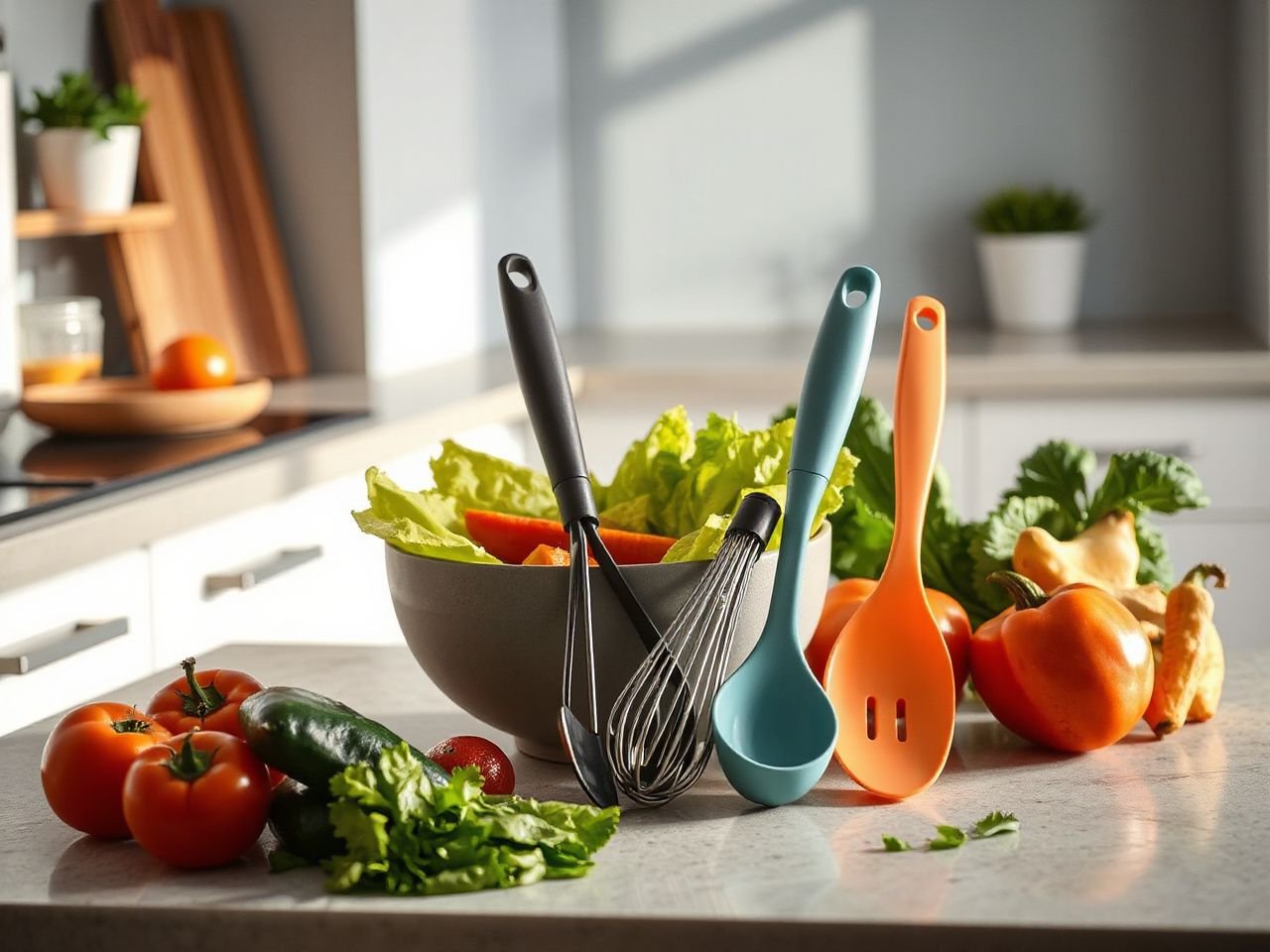
- Silicone spatula: useful for scraping, folding, spreading, and clearing a bowl or pan.
- Silicone turner: useful for lifting and flipping food that needs a supported blade.
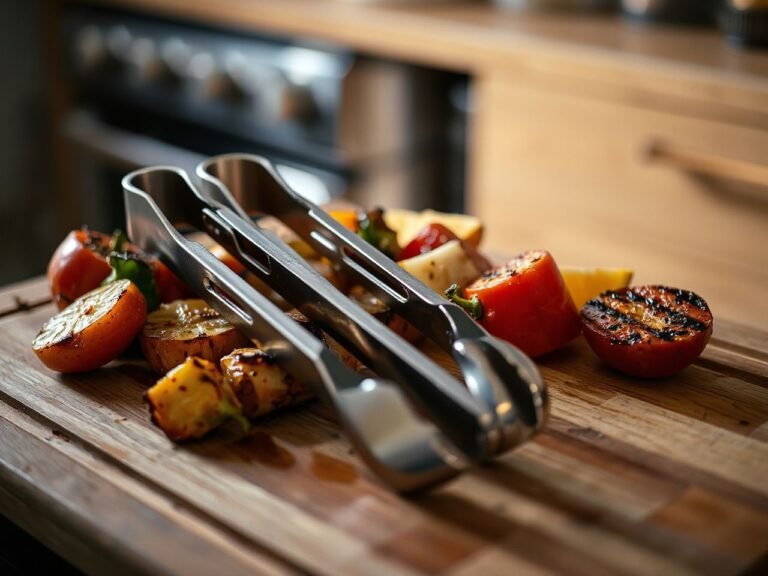
- Silicone tongs: useful for gripping food, provided the jaws close evenly and the silicone pads remain attached.
- Small scraper: useful for corners and narrow containers where a broad turner cannot make full contact.
Shape affects control as much as material. A wide turner may support food better, while a narrow edge may reach beneath a smaller portion. The reader can check the balance by holding the utensil at the handle and moving the blade through the air; a head that twists or lags may feel awkward during repeated work.
Consider cookware finishes
For nonstick cookware, choose an undamaged silicone edge and keep the pan free of grit. For enameled cookware, use the same inspection because chips, rough spots, or exposed reinforcement can create trouble even if the silicone itself is soft. Stainless steel cookware tolerates firmer tools better, but a rough or damaged utensil can still leave marks.
If the pan is the part of the setup causing uncertainty, the stainless steel pan buying guide explains how a harder cooking surface changes utensil choices. Enameled pans call for their own care approach, covered in this guide to choosing an enameled Dutch oven.

Intermediate: Read Heat Limits as Task Limits
Silicone heat resistance varies by construction and manufacturer. A listed limit of 446°F may accommodate standard stovetop work, while some tools are described as handling temperatures as high as 600°F. Neither figure gives permission for every kind of heat exposure.
Separate pan contact from flame exposure
A utensil touching food in a pan is exposed differently from a utensil placed over a burner flame. Direct flame can reach areas that the silicone coating, internal core, handle, or bond was not designed to protect. A broiler creates another high-heat situation, and a tool that works on the stovetop may still be unsuitable beneath it.
Silicone utensils should not be used over direct flame or under a broiler unless that use is explicitly permitted by the manufacturer. Read the care panel and manual rather than transferring a heat number from one part of the product to another.
A silicone heat rating does not automatically approve direct flame, broiling, or contact with a heating element.
Inspect the whole heat path
The silicone head may tolerate a listed temperature while the handle or joint has a different limit. Plastic cores, bonded handles, wood sections, and stainless steel cores can change the way heat reaches the hand. A utensil with a stainless steel core is not automatically safe for every high-heat task, because the surrounding silicone and handle construction still matter.
- Find the stated heat limit for the complete utensil.
- Check whether the instruction refers to stovetop contact, oven use, direct flame, or another condition.
- Inspect the handle transition for gaps, lifting, or exposed reinforcement.
- Stop using the utensil if the silicone changes shape, becomes tacky, cracks, or exposes its core.
Use visual and written checks
A missing heat instruction is not evidence of unlimited heat resistance. If the manufacturer does not list a limit or permitted cooking method, use the more cautious interpretation and keep the tool away from direct flame and broiling. A product description that says high heat without a defined use condition leaves an important question unanswered.
Intermediate: Judge Cleaning, Seams, and Ownership Cost
Dishwasher suitability is not universal, especially for utensils with bonded handles, seams, or internal cores. A seamless silicone utensil may have fewer places for food and water to collect, while a joined utensil asks more of the bond and the seam during washing.
Decide between dishwasher and hand washing
Use the manufacturer’s care instructions first. If the utensil is labeled dishwasher safe, follow the stated placement and cycle guidance. If no such instruction appears, hand washing is the safer default for a tool with a bonded handle, wood section, visible seam, or internal reinforcement.
Hand washing also makes inspection easier. Clean the working edge, handle transition, and any joint with a suitable dish brush, then look for residue that remains in a groove. Wooden utensils require separate attention because prolonged water exposure can affect wood even when the silicone head is unaffected.
Dishwasher suitability depends on the complete utensil, not on silicone alone.
Understand why surfaces change
Silicone utensils can become sticky, stained, cracked, or odorous for different reasons. Grease and food residue may remain on a textured surface or around a seam. Heat beyond the permitted use can change the material or damage nearby components. A cut, tear, or exposed reinforcement can make cleaning less reliable.
- Sticky surface: clean it carefully and compare the texture with an undamaged area; persistent tackiness is a replacement sign.
- Staining: inspect the surface for cracks or roughness rather than judging appearance alone.
- Persistent odor: wash and dry the utensil according to its instructions; an odor that remains is a reason to stop using it for food.
- Cracking or tearing: remove the utensil from service because the damage can grow during bending.
Compare ownership cost without a price claim
A seamless design can reduce the number of joints and exposed transitions that need inspection. That may lower ownership effort because there are fewer places for residue to collect or for a bond to separate. It does not guarantee a longer service life, and construction quality still matters.
An utensil with a separate handle or visible joint may be easier to replace in one part, but the joint can become the weak point. A reader can compare the number of transitions, the condition of the edges, and the clarity of the care instructions. Those observable features say more about long-term upkeep than a broad claim about durability.
Advanced: Build a Set Around Repeated Motions
A useful group of utensils covers different movements without forcing one tool to perform every job. The goal is not to collect every shape. The goal is to avoid using a soft scraper for lifting, a rigid turner for folding, or a damaged tool because no suitable alternative is available.
Assign each tool a job
- Scraping and folding: choose a silicone spatula with an edge that bends enough to follow the vessel.
- Lifting and flipping: choose a firmer silicone turner with a blade that does not fold under ordinary hand pressure.
- Gripping: choose silicone tongs whose pads meet evenly and remain secure at the jaws.
- Stirring: choose a handle that stays comfortable while the head provides enough support for the food being moved.
Repeated motion exposes weak construction faster than a single impressive use. A flexible edge may slowly develop a crease, while a joint may collect residue or begin to lift. The twentieth cut matters because the tool must still have a clean edge, stable connection, and predictable response after repeated handling.
Inspect before each demanding task
Before using a silicone utensil with heavy food or firm pressure, examine the blade and handle. Look for cuts, tears, tackiness, persistent odors, discoloration accompanied by surface damage, and any exposed fiberglass or stainless steel reinforcement. These signs justify replacement rather than repair with household adhesive.
Cuts, tears, tackiness, persistent odors, and exposed reinforcement are signs that a silicone utensil should be replaced.
Use the pan and utensil as one system
A utensil cannot compensate for a damaged pan, and a good pan cannot make a damaged utensil safe to use. Match the working edge to the cookware finish, keep grit away from the cooking surface, and store tools so that sharp metal edges do not press against silicone.
Readers comparing cookware alongside utensils may find the carbon steel pan buying guide useful because its care needs differ from those of nonstick and enameled cookware. A Dutch oven also changes the balance between a soft scraper and a firm turner; the Dutch oven comparison for soup cooking offers related cookware context.
Advanced: Prevent Premature Wear
Most avoidable damage begins with a mismatch between task and construction. A soft silicone head gets forced beneath heavy food, a turner is dragged across grit, or a high-heat rating is treated as a permission slip for flame. Prevention starts with choosing the right motion and continues with regular inspection.
Common failure patterns
- Using the wrong edge: a flexible spatula may buckle under lifting pressure, so use a supported turner for that motion.
- Ignoring the seam: a joint can collect residue or separate, so inspect the transition after cleaning.
- Assuming all silicone is equal: construction and manufacturer limits vary, so read the complete instructions.
- Using damaged tools: a small cut can widen during bending, so remove the utensil once damage appears.
- Storing against sharp tools: a knife edge can cut silicone, so keep utensils separated from blades.
Check independent safety information carefully
An independent mark can provide useful information about how a product was assessed, but the mark should be identifiable and supported by the organization named on the packaging. The NSF explains its role in standards and certification, while the U.S. Consumer Product Safety Commission provides consumer product safety information. Neither link replaces the manufacturer’s care instructions for a specific utensil.
Food-contact claims, heat claims, and dishwasher claims answer different questions. Read each one separately. A utensil may be suitable for food contact and gentle on a coated pan while still requiring hand washing and avoidance of direct flame.
Frequently Asked Questions
How can I tell if a silicone utensil is intended for food contact?
Look for explicit food-contact wording on the package, product page, or care information. A statement about food-contact silicone, platinum-cured silicone, or BPA-free construction may provide useful material detail, but the complete utensil still needs separate care and heat instructions. If the manufacturer gives no clear food-contact information, choose caution and do not assume a general kitchen label answers the question.
Are silicone utensils suitable for nonstick cookware and enameled pans?
Silicone is generally gentle on nonstick and enameled surfaces because its working edge is soft. Damage can still occur if grit becomes trapped, metal reinforcement is exposed, or the silicone edge develops a cut or rough section. Inspect the utensil before use and keep the pan clean. A soft material does not make a damaged edge harmless.
Can silicone utensils go in the dishwasher?
Some can, but dishwasher suitability belongs to the complete construction rather than the silicone surface alone. Bonded handles, seams, wood sections, and internal cores may have different care needs. Follow the manufacturer’s instructions. If those instructions are missing, hand washing is the more cautious choice, especially when the utensil has visible joints or mixed materials.
Why do silicone utensils become sticky, cracked, stained, or odorous?
Residue can collect on textured surfaces and around seams, while unsuitable heat can damage silicone or nearby components. Stains do not always mean failure, but tackiness, persistent odor, cracks, tears, or exposed reinforcement are more serious signs. Clean the utensil according to its instructions, inspect it closely, and remove it from food use if the problem remains.
Can silicone utensils be used over direct flame or beneath a broiler?
Do not assume so. Silicone heat resistance varies by construction and manufacturer, and a listed heat limit may describe ordinary stovetop contact rather than direct flame or broiling. Use those methods only when the manufacturer explicitly permits them. A utensil that works safely in a pan can still have a handle, seam, bond, or core that is unsuitable for intense radiant or direct heat.