Home Fresh Eats is funded by affiliate commission. Our picks come from comparing published specifications and documented features against what matters in the category — no brand pays for a place on this page. If you buy through a link here we may earn a commission at no extra cost to you, and it pays for the research behind the next guide. Full disclosure.
As an Amazon Associate we earn from qualifying purchases. This does not affect the price you pay.
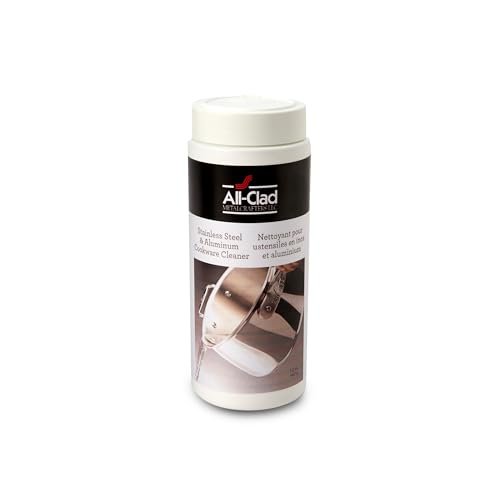
All-Clad Cookware Stainless Steel Cleaner for Pots & Pans (Best Overall)

FENQRU Stainless Steel Cookware Cleaner and Polish Paste (Best Value)

Weiman Stainless Steel Sink and Pots & Pans Cleaner and Polish (Best for Deposits)

The short answer
- Best overall: All-Clad Cookware Stainless Steel Cleaner — Versatile powder for stainless and aluminum cookware
- Best value: FENQRU Stainless Steel Cookware Cleaner — Paste format for bottoms, exteriors, and interiors
- Recommended: Weiman Stainless Steel Sink and Pots & Pans Cleaner — Liquid polish aimed at stains and deposits
- Best two-pack: Bar Keepers Friend Cookware Cleanser — Two 12-ounce containers for repeated cleaning
- Best premium option: Made In Stainless Steel Cleaner — Powder cleaner made for stainless-clad cookware
Burnt grease, brown stains, and rainbow heat tint can make a good stainless steel pan look beyond saving. The wrong abrasive can leave a more permanent problem than the food residue, which is why finding the best stainless steel pan cleaner means judging chemistry and abrasion together.
If I were choosing one for the widest stated cookware range, I would put my money on the All-Clad powder. Its listing covers stainless and aluminum cookware, plus brushed and polished exteriors, giving it the clearest compatibility case in this group.
How We Chose These Stainless Steel Pan Cleaners
These picks come from comparing published specifications, materials, and documented features against what matters in a pan cleaner. The main question is whether the formula appears suited to polymerized grease, burnt food, mineral deposits, or rust staining without encouraging unnecessary scratching or residue on a food-contact surface. Product format mattered because powders, pastes, and liquid polishes give different levels of application control. Ingredient disclosure mattered too, although none of these listings provides a complete formula; the presence of oxalic acid, for example, should never be assumed from a product name alone. We also weighed stated compatibility with aluminum and cookware exteriors, container size, and whether the product is designed for pans rather than only sinks or appliances. Before ordering, check the label for your exact finish and mixed materials, especially aluminum, copper, enamel, nonstick coatings, and bonded seams. The shortlist reflects specifications and manufacturer claims, not physical testing.
All-Clad Cookware Stainless Steel Cleaner for Pots & Pans (Best Overall)
- BrandAll-Clad
- Model11644011499
- Dimensions2.5 inches x 2.5 inches x 7.0 inches
- Weight1.2 pounds
- Size / capacity12 Ounce (Pack of 1)
- ColourWhite
Quick take: The All-Clad powder suits buyers who want one cleaner with a documented place on stainless and aluminum cookware.
The listing identifies a 12-ounce pack of one in a white container measuring 2.5 by 2.5 by 7.0 inches and weighing 1.2 pounds. All-Clad describes it as a powder cleanser for stainless and aluminum cookware that can be applied to brushed or polished exteriors. That combination matters because many kitchens contain both a working interior surface and an exterior finish that needs gentler control.
Powder gives the user more control over how much product reaches a stain, but the abrasive load is not listed, and the complete ingredient list is not supplied here. Compared with the 9.17-ounce FENQRU paste, this container offers more stated product; compared with the 12-ounce Made In powder, its documented compatibility is broader because aluminum and both brushed and polished exteriors are named. I would still keep it away from unconfirmed mixed-material areas until the label gives clear permission.
Pros:
- Stated cookware range — The manufacturer describes use on stainless and aluminum cookware.
- Exterior compatibility — Brushed and polished exteriors are both named in the listing.
- 12-ounce size — The pack contains 12 ounces of powder for repeated cleaning.
- Controlled format — A powder can be applied only where residue needs attention.
- Clear physical footprint — The 2.5-by-2.5-by-7.0-inch container is easy to identify in storage.
Cons:
- Ingredient detail is limited — The complete formula and abrasive type are not listed.
- No warranty information — The Amazon listing does not state a warranty.
- Rinsing remains essential — Powder residue must be removed thoroughly from food-contact surfaces.
Our Take
Best for: Cooks who want a versatile powder for stainless and aluminum cookware. Pass on this if: You need a fully disclosed ingredient list or explicit approval for nonstick, enamel, copper, or bonded components.
FENQRU Stainless Steel Cookware Cleaner and Polish Paste (Best Value)
- BrandFENQRU
- ModelFQ-BOT-01
- Weight0.57 Pounds
- Size / capacity9.17 Ounce (Pack of 1)
In a nutshell: FENQRU is the sensible format choice for targeted work on pan bottoms and visible exterior grime.
FENQRU is listed as a 9.17-ounce pack of one weighing 0.57 pounds, with model FQ-BOT-01. The maker specifically describes the paste for stainless steel pots, pans, cookware bottoms, exteriors, and interiors, and says it addresses greasy film, dull residue, water marks, and rainbow heat discoloration. That broad use language gives this paste a clear role in a kitchen where the pan bottom is as ugly as the cooking surface.
A paste generally offers more localized application than a loose powder, which is useful for a brown ring or a concentrated patch of burnt-on grease. The trade-off is a smaller stated quantity than the 12-ounce powder products, and the listing does not disclose dimensions, material, warranty, or the abrasive chemistry. FENQRU is therefore a strong candidate for controlled spot cleaning, but not the safest blind choice for a pan with aluminum, copper, enamel, or nonstick sections that the label does not expressly cover.
Pros:
- Paste application — The format is suited to focused work on a stain rather than broad polishing.
- Bottom-specific wording — Cookware bottoms are directly included in the manufacturer description.
- Interior and exterior use — The listing names both sides of the cookware.
- Discoloration target — Rainbow heat discoloration is among the stated concerns.
- Compact weight — The 0.57-pound package is lighter than the All-Clad and Bar Keepers Friend listings.
Cons:
- Smaller stated quantity — At 9.17 ounces, it contains less product than the 12-ounce options.
- Unlisted dimensions — Storage space cannot be judged from the published specifications.
- Compatibility gap — The listing does not specifically approve aluminum, copper, enamel, or nonstick parts.
Why It Stands Out
Ideal for: Buyers focused on cookware bottoms, water marks, and localized rainbow tint. Think twice if: Your pan has mixed materials or you prefer a powder with a stated stainless-and-aluminum range.
Weiman Stainless Steel Sink and Pots & Pans Cleaner and Polish (Best for Deposits)
- BrandWeiman
- Model68
- Dimensions1.5 inches x 2.88 inches x 7.88 Inches
- Weight0.63 Pounds
- Size / capacity8 Ounce (Pack of 1)
- ColourNo Color
Here’s the deal: Weiman is the most relevant pick for shoppers who want a liquid-style cleaner that also covers sink and hard-water residue.
The Weiman model 68 listing gives a 8-ounce pack of one, with dimensions of 1.5 by 2.88 by 7.88 inches and a weight of 0.63 pounds. The manufacturer says it is intended for stainless steel sinks and pots and pans, and claims it addresses stains, rust, lime, tarnish, soap scum, and hard-water deposits. That wording makes it particularly relevant to mineral residue and rust-colored marks rather than only cooked-on food.
Weiman’s listing also says the product is for food-contact surfaces with rinsing after use. That is useful guidance, not a reason to leave residue behind; all cleanser must be thoroughly rinsed and the pan dried. Compared with FENQRU’s paste, Weiman is positioned more clearly around deposits and sink crossover, but its 8-ounce capacity is the smallest stated amount in this group and the listing does not disclose the material, warranty, or full formula.
Pros:
- Food-contact direction — The manufacturer says to rinse after use on food-contact surfaces.
- Deposit coverage — Lime and hard-water deposits are named alongside stains and tarnish.
- Rust-stain relevance — Rust is included in the stated cleaning targets.
- Sink crossover — The product is described for both stainless sinks and cookware.
- Defined package size — The 8-ounce container has a listed 1.5-by-2.88-by-7.88-inch footprint.
Cons:
- Smallest capacity here — The package contains 8 ounces, less than every other listed option.
- Formula not fully disclosed — The listing does not identify the cleaning chemistry or abrasive content.
- Food residue still needs care — A sink-focused cleaner should not be assumed to handle polymerized grease better than a cookware-specific powder.
Who Should Buy This
Great match for: Kitchens dealing with hard-water spots, lime deposits, tarnish, or rust-colored staining on stainless surfaces. Not great if: Your main problem is thick, baked-on grease and you want the strongest cookware-specific positioning.
Bar Keepers Friend Cookware Cleanser & Polish (Best Two-Pack)

- BrandBar Keepers Friend
- ModelX1-0C7I-IPCY
- Dimensions2.92 inches x 5.84 Inches x 5.73 inches
- Weight1.72 pounds
- Size / capacity12 Ounce (Pack of 2)
Why it earns a spot: This two-pack makes the most sense for households that want a 12-ounce cookware powder on hand for recurring deep cleaning.
The Bar Keepers Friend listing contains two 12-ounce containers, for 24 ounces total, with listed dimensions of 2.92 by 5.84 by 5.73 inches and a weight of 1.72 pounds. The manufacturer describes it as a cookware cleanser and polish for aluminum or stainless steel pans, with claims about stains, tarnish, degreasing, and a streak-free shine. The larger package gives this product the strongest quantity position in the roundup.
Its stated aluminum and stainless compatibility is useful, but the phrase safe on all surfaces should not replace checking the exact label for nonstick coatings, enamel, copper, seams, or polished finishes. Powder cleansers can dull or scratch some surfaces if used with excessive pressure or a metal scrubber. I would choose this over a smaller pack for a busy kitchen, but I would not treat the two-pack as permission to scrub aggressively.
Pros:
- Two-container format — The pack includes two 12-ounce containers.
- Largest stated quantity — The combined 24 ounces exceed the single-container quantities listed for the other products.
- Aluminum and stainless wording — Both cookware materials are named by the manufacturer.
- Stain and tarnish focus — The listing targets common appearance problems on pans.
- Cookware-specific identity — The product is explicitly sold as a cookware cleanser and polish.
Cons:
- Powder abrasion needs restraint — Pressure and a metal scrubber can worsen scratching risk.
- Full ingredients are not listed — The abrasive and chemical profile cannot be judged completely here.
- Bulkiest package — The 1.72-pound listing weight is higher than the other products in this roundup.
The Real Deal
Perfect for: Families and frequent cooks who value a larger supply for stainless or aluminum cookware. Skip if: You have a delicate or mixed-material finish and the package label does not clearly cover it.
Made In Cookware Stainless Steel Cleaner (Best Premium Option)

- BrandMade In
- ModelACC-SITE-CLN-BOT
- Weight0.75 Pounds
- Size / capacity12 Ounce (Pack of 1)
Short version: Made In is the premium-leaning choice for owners of stainless-clad cookware who prefer a purpose-built powder.
Made In lists this product as a 12-ounce pack of one weighing 0.75 pounds, under model ACC-SITE-CLN-BOT. The manufacturer calls it a 12-ounce powder cleaner for stainless-clad pots and pans and says it removes stubborn buildup and restores shine on Made In stainless-clad cookware. That narrow positioning is a virtue for the matching cookware owner, since the product purpose is unusually clear.
The limitation is equally clear: the listing does not provide dimensions, material, warranty, or a full ingredient disclosure, and its cookware wording is narrower than All-Clad’s stated stainless-and-aluminum range. A cleaner cannot be judged only by how bright it promises to make a pan; preserving the passive stainless-steel surface matters more than a first-day shine.
Pros:
- Stainless-clad focus — The product is specifically described for stainless-clad pots and pans.
- 12-ounce capacity — The package matches the larger single-container size in this roundup.
- Powder format — Powder allows targeted application to stubborn buildup.
- Brand cookware match — Made In stainless-clad cookware is directly named in the product description.
- Moderate package weight — The listing gives a 0.75-pound weight for the container.
Cons:
- Narrower stated compatibility — Aluminum, copper, enamel, and nonstick components are not named.
- Dimensions are not listed — Buyers cannot plan storage from the specification page.
- Ingredient disclosure is limited — The listing does not identify whether oxalic acid or another active ingredient is present.
Final Thoughts
Best for: Owners of stainless-clad cookware who want a brand-matched powder. Pass on this if: You need explicit approval for several different cookware materials or want the broadest documented compatibility.
Here is the practical distinction: powder is the better fit for controlled deep cleaning, paste is useful for concentrated marks, and a liquid polish is more appealing for mineral deposits and surface appearance. None should be treated as a universal cleaner for stainless steel, aluminum, copper, enamel, and nonstick in one step.
For pan selection rather than pan care, our stainless steel pan buying guide explains why construction and surface finish matter before residue ever becomes a problem. Readers comparing bakeware materials can also use our guide to aluminum versus stainless steel baking sheets.
Comparison of the Best Stainless Steel Pan Cleaners
| Product | Best for | Capacity | Format or stated focus |
|---|---|---|---|
| All-Clad Cookware Stainless Steel Cleaner | Broad cookware use | 12 ounces | Powder for stainless and aluminum |
| FENQRU Stainless Steel Cookware Cleaner | Targeted pan-bottom cleaning | 9.17 ounces | Paste for interiors and exteriors |
| Weiman Stainless Steel Sink and Pots & Pans Cleaner | Mineral deposits | 8 ounces | Sink and cookware cleaner |
| Bar Keepers Friend Cookware Cleanser | Large household supply | Two 12-ounce containers | Powder for aluminum and stainless |
| Made In Stainless Steel Cleaner | Stainless-clad cookware | 12 ounces | Powder for stainless-clad pots and pans |
For another stubborn exterior problem, the method in our guide to cleaning the bottom of a pan is more relevant than treating every dark mark as a reason to increase abrasive pressure. A pan bottom and a polished cooking surface do not always need the same approach.
How to Choose the Best Stainless Steel Pan Cleaner
Match the format to the stain
Powders from All-Clad, Bar Keepers Friend, and Made In are the clearest choices for focused deep cleaning, especially where burnt-on food or polymerized grease is the concern. FENQRU’s paste gives more localized control for a pan bottom or a small discolored area. Weiman is the more natural fit for lime, hard-water deposits, tarnish, and rust-colored marks because those concerns are named in its listing.
For regular maintenance, a nonmetal scrubber on a cool pan followed by thorough rinsing and drying is the restrained starting point. Difficult stains commonly require a cleaning process lasting 15 to 30 minutes, so a product that needs repeated aggressive scrubbing is not automatically the better choice.
Check abrasion and finish compatibility
Abrasive powders and polishing agents can dull or scratch some brushed or polished finishes. Test a small inconspicuous area first, follow the label, and work with the finish rather than pressing harder. Grain direction matters most on a visibly brushed exterior; on cookware, the safe priority is controlled pressure and avoiding a metal scrubber.
Rust-colored marks can be surface contamination rather than damage to the steel, but aggressive scrubbing can compromise stainless steel’s passive protective layer and make the appearance worse.
Read the label before using mixed-material cookware
Compatibility varies by formula. Confirm whether the product is approved for aluminum, copper, enamel, nonstick coatings, seams, and exterior finishes before applying it broadly. The All-Clad listing has the clearest stated reach because it names stainless and aluminum plus brushed and polished exteriors; Made In is more narrowly described for stainless-clad cookware.
Cleaners containing acidic or reactive ingredients must not be mixed with bleach, ammonia, or other household chemicals. Rinse food-contact surfaces thoroughly, then dry them to reduce cloudy film, streaks, and water spots. The FDA provides the relevant food-contact framework, but a general framework does not replace the cleaner’s own label directions.
Think about amount required per cleaning
Capacity alone does not prove cost per use because powders and pastes may require different amounts. Bar Keepers Friend has two 12-ounce containers, while All-Clad and Made In each list 12 ounces in a single pack; FENQRU lists 9.17 ounces and Weiman lists 8 ounces. Buyers should compare the package size with the type of residue they expect to treat, not assume the largest container is the cheapest in practice.
Never use aluminum foil as a default stainless-steel pan scrubber. It adds an abrasive metal object to a surface where a nonmetal scrubber gives you more control. The same caution applies to cleaning a pan with vinegar and baking soda: avoid improvised mixtures when the cleaner label gives a specific application and rinsing method.
Those who are weighing carbon steel against stainless steel should also read our carbon steel pan buying guide, since seasoning care differs from stainless-steel passivation. Grill-pan shoppers may find our discussion of cast iron grill pans for steak more useful than applying a stainless cleaner to a different surface.
Before using any cleaner, remove loose food with normal washing and identify whether the mark is grease, mineral residue, rainbow heat tint, or rust-colored contamination. The right diagnosis prevents a buyer from using a harsh powder on a problem that only needed rinsing and drying. For sheet-pan cooks, our guide to baking sheets for sheet-pan dinners covers a related choice between cleaning ease and surface material.
Our Final Recommendation
The All-Clad Cookware Stainless Steel Cleaner is my overall winner because its published description covers stainless and aluminum cookware, brushed and polished exteriors, and a 12-ounce powder format. Bar Keepers Friend is the budget-friendly pick for buyers who want two 12-ounce containers. Made In is the premium pick for stainless-clad cookware, while FENQRU is the better targeted paste and Weiman the better deposit-focused option. None earns a blank check for mixed materials, so label compatibility and careful rinsing remain part of the purchase.
Frequently Asked Questions
How should I clean a burnt stainless steel pan without scratching it?
Start with a cool pan, a nonmetal scrubber, and the least abrasive cleaner suited to the residue. Powders such as All-Clad, Bar Keepers Friend, and Made In are positioned for cookware cleaning, while FENQRU is a paste suited to targeted areas. Apply only as directed, avoid metal scrubbers, rinse the food-contact surface thoroughly, and dry it. Difficult stains may require 15 to 30 minutes of cleaning work.
Will a cleaner remove rainbow discoloration, water spots, and rust stains?
FENQRU’s listing specifically mentions rainbow heat discoloration and water marks. Weiman’s listing names rust, lime, tarnish, and hard-water deposits. The other products may suit appearance cleaning based on their cookware or polish descriptions, but the listings do not guarantee every stain type. Rust-colored marks can be surface contamination, so aggressive abrasion is not automatically the right answer.
Is a powder, paste, or liquid polish better for stainless steel pans?
Powder offers a useful balance for deep cleaning and controlled application, making All-Clad the strongest general recommendation here. Paste can be easier to target on a pan bottom or isolated mark, which favors FENQRU. A liquid-style cleaner such as Weiman makes more sense for mineral deposits and sink crossover. The formula, label compatibility, and required amount matter more than format alone.
Can I use these cleaners on aluminum, copper, enamel, or nonstick cookware?
Do not assume universal compatibility. All-Clad’s listing names stainless and aluminum cookware, while Bar Keepers Friend’s description names aluminum and stainless steel. Made In is described for stainless-clad cookware, and the other listings do not provide the same material coverage. Check the product label before using any cleaner on copper, enamel, nonstick coatings, seams, or mixed-material cookware, and never mix a cleaner with bleach or ammonia.