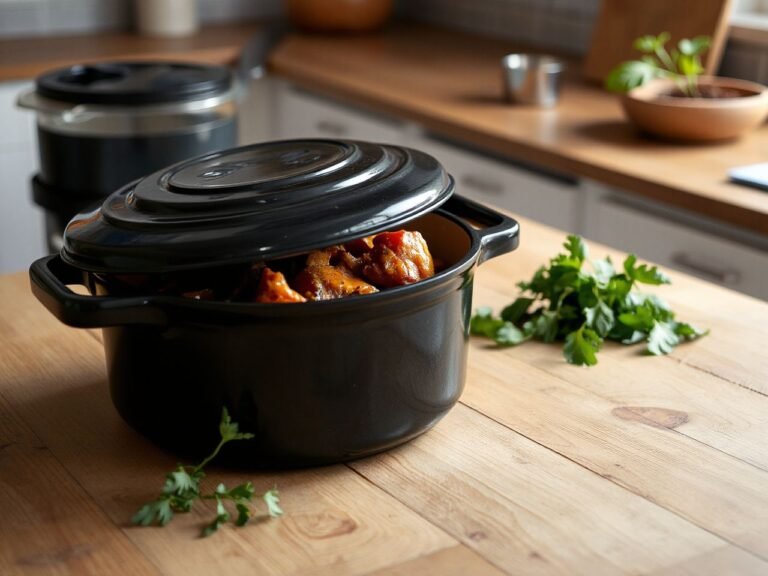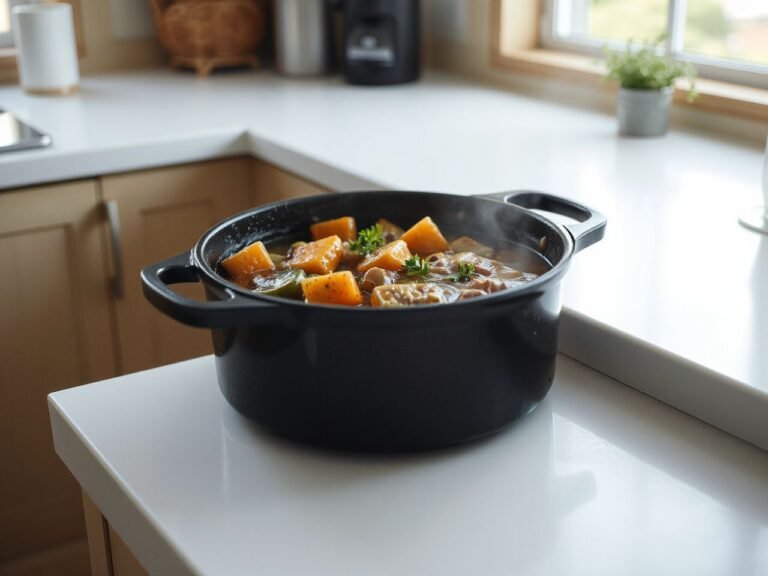
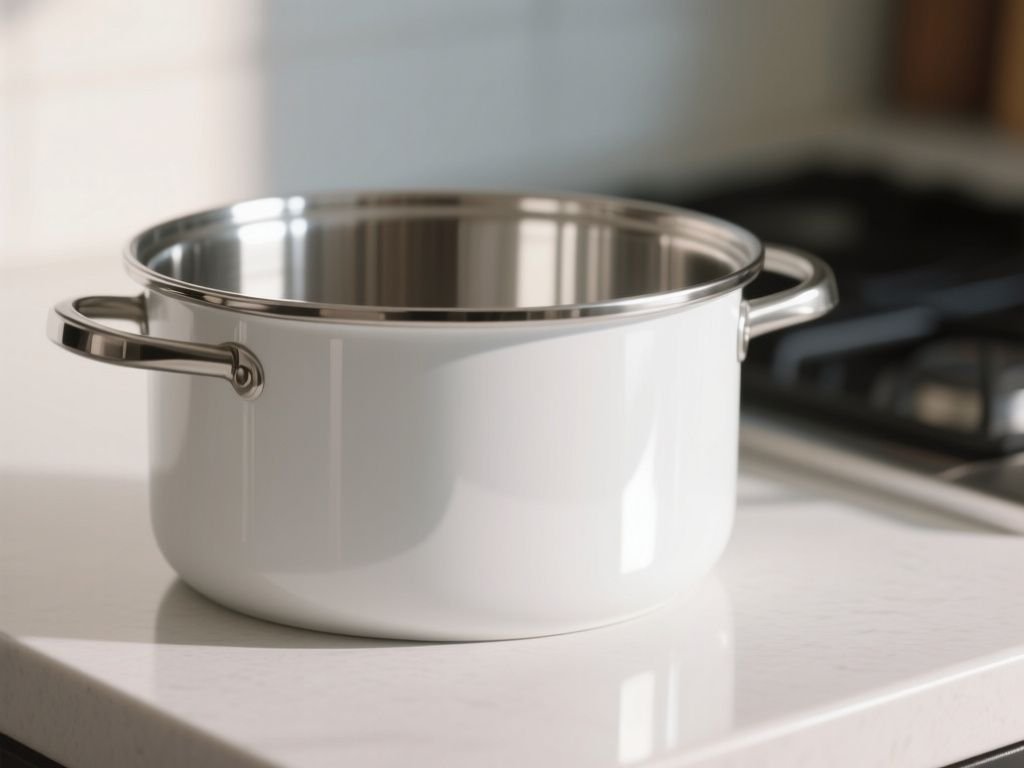
Vitreous enamel is fired at roughly 1,450°F, about 500 degrees hotter than a standard oven’s self-clean cycle. That heat turns the coating into actual glass, which is why learning how to remove stains from an enamel pot starts with a simple fact: glass does not absorb stains. Nearly every brown patch on your Dutch oven is polymerized oil sitting on the surface, not damage, and the right cleaning method depends entirely on which surface you are treating. A white interior tolerates mild abrasives like Bar Keepers Friend, while a glossy colored exterior should only meet a soft sponge and mild dish soap, and no enamel surface should ever go from hot to cold water without cracking.
Key Takeaways
- Cosmetic stains are harmless. Most discoloration is polymerized oil, tannin from tea or coffee, or metal transfer, and it sits on the glass, not in it.
- Surface type changes the method. White enamel interiors handle a baking soda paste and Bar Keepers Friend; glossy colored exteriors require only soft sponges and mild dish soap.
- Never use bleach, undiluted hydrogen peroxide, or steel wool. These attack the enamel or the cast iron beneath it and can turn a cleanable stain into permanent damage.
Diagnose First: Stain, Metal Transfer, or Actual Damage
Before reaching for a cleaner, run a fingertip over the discolored area. If the surface feels smooth and the color is brown, amber, or tea-like, you are almost certainly looking at a cosmetic stain. If the spot feels raised or has a gray streak, that is metal transfer from a utensil, which sits even more superficially and often wipes away with a paste. If you feel a groove, a chip, or exposed black iron, that is not a stain at all.
A scratch you can feel with a fingernail is enamel damage, not a stain, and no cleaning method will repair it. Chipped enamel on the interior exposes bare cast iron, which rusts and can leach iron into acidic food. At that point, cleaning stops being the answer and repair or replacement becomes the only safe option. The distinction matters because half the cleaning mistakes people make come from treating a harmless stain like a catastrophe or an actual chip like a smudge.
Why Brown Stains Form on the Inside
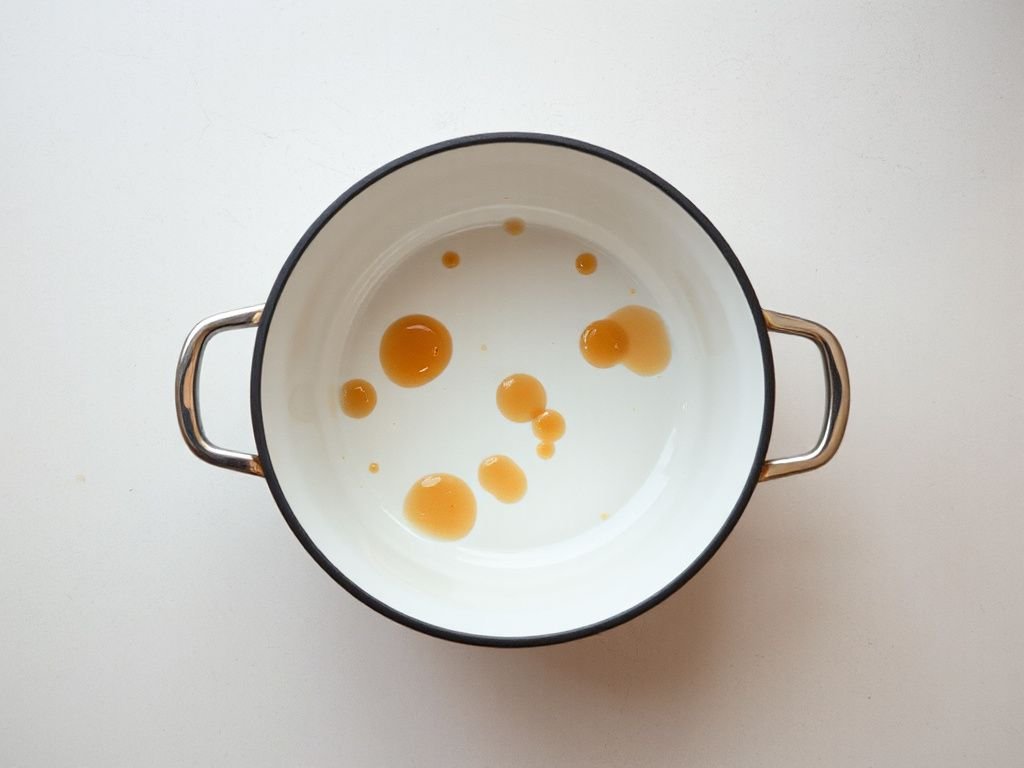
Brown patches inside an enamel pot are almost never burnt food. They are usually a microscopically thin layer of polymerized oil. When oil is heated past its smoke point, the molecules cross-link into a varnish-like film. Seasoning on bare cast iron is exactly this, which is why a brown film on enamel looks so much like seasoning. The difference is that enamel does not need seasoning, and the film should be removed before it builds up and holds odors or affects browning.
Yellow or Tea-Colored Stains
Yellow, tan, and tea-colored rings usually come from tannins in tea, coffee, red wine, or tomato sauces that have been simmered for a long time. These stains are also cosmetic. Because enamel is glass, tannins cannot penetrate the surface, but they can adhere stubbornly if a pot is put away without rinsing. The fix is usually a simple soak with warm water and a grease-cutting dish liquid like Dawn, followed by a baking soda paste if any tint remains.
Metal Transfer vs. Rust
Gray streaks that appear after stirring with a metal spoon are metal transfer, not enamel damage. They come from the utensil, not the pot, and they usually sit on top of the glass. A paste of baking soda and water removes most metal transfer within a few minutes. Rust, by contrast, comes from exposed iron under the enamel and appears as orange-brown spots that bleed. No cleaning method removes rust from under glass, because the source is beneath the coating.
Supplies You Need Before You Start
Most effective enamel cleaners are already in a pantry, and the few that are not cost less than a single replacement pot. Gather these before you begin so you do not improvise with something abrasive halfway through.
- Baking soda — mildly alkaline, breaks the bond between polymerized oil and glass.
- Dawn dish soap or any grease-cutting liquid soap — lifts fresh oil before it polymerizes.
- Bar Keepers Friend — the powdered version, for stubborn interior stains only.
- Hydrogen peroxide, 3% solution — diluted 1:1 with water, for tannin stains on white interiors only.
- White vinegar — diluted 1:1 with water, for hard water spots on the exterior.
- A nylon scrub brush or non-scratch scrub sponge — stiff enough to scrub, soft enough not to scratch glass.
- A wooden or silicone spatula — for lifting softened burnt food without marking the enamel.
Baking soda is mildly alkaline, which helps break the bond between polymerized oil and the glass surface without etching it. The product guidance from Bar Keepers Friend warns to test colored surfaces in an inconspicuous spot first, which is exactly why it belongs on a white interior and nowhere near a glossy exterior.
Step-by-Step: How to Remove Stains From an Enamel Pot
This sequence moves from the gentlest method to the most aggressive one a white interior can safely handle. Stop at the step that works; do not escalate out of impatience. Escalation is how a five-minute soak becomes a dulled finish.
Step 1: Cool the Pot Completely
Let the pot reach room temperature before any water touches it. A hot enamel pot plunged into cold water can crack the glass, and the crack may not appear until the next time the pot is heated. Thermal shock is the fastest way to ruin an enameled Dutch oven, and it is entirely preventable. If you are in a hurry, wait until the pot is warm to the touch, not steaming.
Step 2: Soak in Hot Water and Dish Soap
Fill the pot with hot tap water and add a few drops of Dawn or any grease-cutting liquid soap. Let the interior soak for 15 to 20 minutes. This loosens fresh oil, softens dried sauces, and makes the next steps far easier. Empty the water and wipe the interior with a soft sponge. Many light stains disappear at this stage without any scrubbing at all.
Step 3: Apply a Baking Soda Paste to the White Interior
Make a paste of three parts baking soda to one part water. Spread it over the stained areas with a soft cloth or your fingers, then let it sit for two to three hours. For overnight stains, cover the paste with a damp paper towel so it does not dry out completely.
A baking soda paste left on a stained interior for two to three hours loosens most polymerized oil without scratching the glass. After the wait, scrub gently with a nylon brush using circular motions, then rinse thoroughly with warm water. This is the single most reliable treatment for brown polymerized oil stains, and it works because the alkaline paste weakens the bond between the oil film and the glass.
Step 4: Use Bar Keepers Friend for Stubborn Interior Stains
If a tea stain or an especially dark oil film remains, a small amount of Bar Keepers Friend works on the white enamel interior. Wet the stained area, sprinkle on a thin layer of the powder, and scrub with a damp nylon sponge for 30 to 60 seconds. Do not let it sit for more than a minute, because the oxalic acid in Bar Keepers Friend is strong enough to dull enamel if left too long.
Rinse immediately and thoroughly. Bar Keepers Friend is mildly abrasive, which is why it belongs only on the interior and never on a glossy colored exterior. On a matte white or cream interior, that mild abrasion is usually safe and effective. On a pigmented exterior, the same abrasion removes the top layer of color and leaves a dull patch that cannot be fixed.
Step 5: Treat Yellow or Tea-Colored Stains With Diluted Hydrogen Peroxide
For tannin stains that resist baking soda, mix 3% hydrogen peroxide with an equal amount of water. Apply the solution to the stained areas on the white interior only, and let it sit for 10 to 15 minutes. Rinse thoroughly, then wash with dish soap and warm water. Undiluted hydrogen peroxide can damage enamel, so never pour it directly from the bottle onto the pot.
Step 6: Dry and Inspect
Dry the pot completely with a soft towel. Inspect the interior under good light. If a stain remains but the surface still feels completely smooth, the stain is cosmetic and safe to cook with. Stop cleaning at that point. Chasing the last faint shadow often does more harm than good, because every additional scrub session removes a microscopic layer of glass.
Cleaning a Glossy Colored Exterior Without Dulling the Finish
The outside of an enameled Dutch oven has a pigmented enamel layer that is thinner and often glossier than the interior. Glossy colored exteriors are coated with a pigmented enamel layer that dulls permanently when rubbed with even a mildly abrasive cleaner. That means no baking soda paste, no Bar Keepers Friend, and no melamine foam sponges like Magic Eraser on the outside.
To clean a colored exterior, fill a basin with warm water and a few drops of mild dish soap. Use a soft sponge or microfiber cloth, and wipe in the direction of any brushed metal, if present. For baked-on grease around the rim or handles, let a warm, soapy sponge sit on the spot for five minutes, then wipe again. For hard water spots, wipe with a 1:1 white vinegar and water solution, then rinse immediately and dry.
Removing Burnt-On Food and Blackened Bottom Residue
Burnt-on food is a different problem from staining, because the char sits on top of the enamel but is physically stuck to it. The safest method uses heat and water to soften the char before any scrubbing happens.
Fill the pot with enough water to cover the burnt area and add two tablespoons of baking soda. Bring the water to a gentle boil, then reduce the heat and let it bubble for 10 to 15 minutes. Boiling water with two tablespoons of baking soda for ten minutes softens burnt food enough to lift with a wooden spatula. Turn off the heat and let the water cool until it is safe to touch, then scrape gently with a wooden or silicone spatula. The burnt layer should slide off in sheets or soften into a paste that rinses away.
For blackened residue on the bottom exterior of the pot, do not use oven cleaner or a scouring pad. Soak the bottom in warm soapy water for 20 minutes, then use a paste of baking soda and water applied with a soft cloth. The residue is polymerized oil, the same film that forms inside, and the same principles apply. Avoid abrasive scrubbers on the bottom because they can wear through the exterior enamel to the iron underneath.
What Never Touches an Enamel Pot
Some cleaners are so damaging that a single use can shorten the life of an enameled pot by years. The biggest offenders are bleach, undiluted hydrogen peroxide, steel wool, metal scouring pads, and oven cleaner. Bleach attacks the metal beneath any micro-crack in the enamel and can cause rust blooms that spread under the glass, where no cleaner can reach them.
Do not use a Magic Eraser on enamel pots. Melamine foam acts like very fine sandpaper, and while a white interior may tolerate it once, a glossy colored exterior will show dulling after a single pass. A nylon scrub brush and baking soda achieve the same result without the risk. Steel wool, copper scrubbers, and metal scouring pads all leave gray streaks that are metal transfer, and they can scratch the glass deeply enough to expose the iron.
Also skip automatic dishwasher cycles for enameled cast iron, even though many manufacturers say it is technically safe. Dishwasher detergent is far more alkaline than dish soap, and repeated exposure dulls the gloss over time. Hand washing preserves the finish and gives you a chance to inspect for chips before they worsen.
Le Creuset vs. Staub: Why the Interior Color Changes Your Approach
Enameled cast iron from Le Creuset and Staub is made from the same basic material: glass fused to iron. The differences that matter for stain removal are the interior finishes. Le Creuset uses a sand or cream-colored interior on most Dutch ovens. Staub uses a matte black interior. Neither is stain-proof; the dark Staub interior simply hides light staining better than Le Creuset’s light interior.
Staub’s matte black interior hides light staining that would be obvious on Le Creuset’s sand-colored interior, but that does not mean the Staub surface is easier to keep clean. Dark interiors can accumulate a sticky polymerized oil film that goes unnoticed until food starts to stick or the surface feels tacky. The same baking soda paste and nylon brush routine works on both brands, but you will see the results far sooner on a light Le Creuset interior. Le Creuset’s own care guidance tells owners to avoid metal scouring pads and abrasive cleaners, which is sound advice for both brands.
Bar Keepers Friend is safer on Le Creuset’s light interior because the staining is visible and the mild abrasion has a specific target. On a black Staub interior, I would skip Bar Keepers Friend and stick with baking soda, nylon bristles, and boiling water. It is too easy to over-scrub a dark surface you cannot see clearly.
Preventing Stains Before They Set
The best stain treatment is the one you never need. Most enamel staining comes from oil that is heated past its smoke point, so controlling heat prevents most brown patches before they form. Use medium heat for browning and searing, and add oil only after the pot is warm, not when it is cold. A cold pot with oil added too early is exactly how a sticky polymerized layer starts.
Rinse the pot soon after cooking, even if you are not washing it immediately. A quick rinse with hot water removes loose oil and tannins before they have a chance to bond to the surface. Deep-clean the pot every one to two weeks, or after any long braise, tomato-heavy sauce, or tea-based poaching liquid. If you stack enameled pots, place a paper towel or pan protector between them so the rim of one does not chip the rim of another.
Sudden temperature shifts are the enemy of enamel, much like an overheated oven can sabotage delicate doughs — our guide to keeping cookies from spreading explains how temperature control affects results in baking, and the same principle applies to your pot. Let it cool before washing, and never fill a hot pot with cold water.
Frequently Asked Questions
Can I use bleach to remove stains from an enamel pot?
No. Bleach is too harsh for enamel and can cause pitting and rusting if it reaches the cast iron beneath any micro-crack. A diluted hydrogen peroxide solution or baking soda paste removes tannin and oil stains without damaging the glass. If you ever feel tempted to reach for bleach, stop and ask whether the stain is a stain at all.
Will baking soda and water remove stains from an enamel pot?
Yes, in most cases. A paste of three parts baking soda to one part water, left on the stained area for two to three hours, lifts polymerized oil and light tannin stains. Scrubbing with a nylon brush after soaking removes the loosened film. This is the gentlest effective method and works on both Le Creuset and Staub interiors.
Is it safe to use a Magic Eraser on enamel pots?
Skip it. Melamine foam acts like fine sandpaper and dulls glossy enamel, especially colored exteriors. A nylon scrub brush with baking soda removes the same stains without abrading the glass surface. Reserve the Magic Eraser for porcelain sinks and painted walls, not for your Dutch oven.
A clean pot matters most when you are making something delicate, like a slow-simmered sauce for homemade ravioli, where lingering oil could taint the finished dish. The same care that removes stains also preserves the non-reactive glass surface that makes enameled cast iron so useful.