More scrubbing is not always the answer. The key distinction is between removing loose iron oxide and preserving sound seasoning: aggressive abrasion or acid may solve the rust while unnecessarily stripping the pan. An effective guide should match the cleaning intensity to the extent of rust, then treat immediate drying and renewed oil seasoning as part of rust removal rather than as optional aftercare. That is the practical answer for anyone asking how to clean rust from a cast iron pan, especially when only a small patch has changed colour.
Key Takeaways
- Match the method to the rust: scrub a small patch, soak only affected areas when possible, and reserve brief vinegar use for heavier buildup.
- Rust must be removed before reseasoning because oil applied over loose rust will not form a sound seasoning surface.
- Rinse and dry the pan immediately; remaining moisture can cause flash rust before the pan is protected again.
- Bare cast iron and enameled cast iron need different treatment, especially around abrasive tools and acidic soaking.
How to clean rust from a cast iron pan without stripping sound seasoning
Always inspect the pan before choosing a cleaning tool. A cast iron skillet with a small orange mark doesn’t need the same treatment as one covered in flaky rust. The goal is controlled removal: take away loose iron oxide, keep any good seasoning that remains, and stop once the surface looks sound.
Rust is iron oxide, and its texture can tell you a lot. A dry orange film that lightly transfers to a paper towel usually indicates surface rust. A rough, powdery patch suggests loose oxide. Dark, smooth areas that stay attached are more likely to be seasoning, so treating every dark mark as damage can cause unnecessary stripping.
Rust has a rough, powdery texture, while intact seasoning usually feels more firmly bonded to the iron. Colour alone is not enough; run a clean fingertip over the cool, dry pan and look for flaking, raised areas, or orange residue on the towel.
Check the pan type first
Bare cast iron can be scrubbed and reseasoned because the cooking surface is just exposed iron covered by a seasoning layer. Enameled cast iron is different. The enamel is a glass-like coating over the iron, so abrasive scrubbing might damage it rather than improve the pan.
Look at the cooking surface and rim before starting. If the surface looks colored and textured like exposed iron, follow the bare-cast-iron process below. If it’s covered by a smooth, continuous enamel coating, don’t treat it like bare cast iron. Also, avoid using steel wool on the enamel.
The U.S. Consumer Product Safety Commission advises consumers to follow safe handling practices around hot cookware; waiting until the pan is completely cool before cleaning also gives you a reliable surface to inspect and protects your hands from heat.
Gather only what the condition requires
For small patches, start with a nylon scrub brush, coarse salt, a little dish soap, clean water, paper towels, and cooking oil. Steel wool can remove stubborn rust from bare cast iron, but it might also strip good seasoning. So, it’s better used later in the process, not at the beginning.
- Light rust: nylon scrub brush, coarse salt, or a restrained pass with steel wool on bare iron.
- Stuck residue with rust beneath it: dish soap and a scrub brush before any acid is considered.
- Heavy rust buildup: white vinegar diluted with an equal amount of water, used briefly and monitored.
- After cleaning: fresh water, paper towels, and cooking oil for immediate protection.
Focus on the affected area whenever possible. A small rusty spot might only need local scrubbing and spot seasoning. Larger rust problems usually mean removing the old seasoning and reseasoning the whole cooking surface.
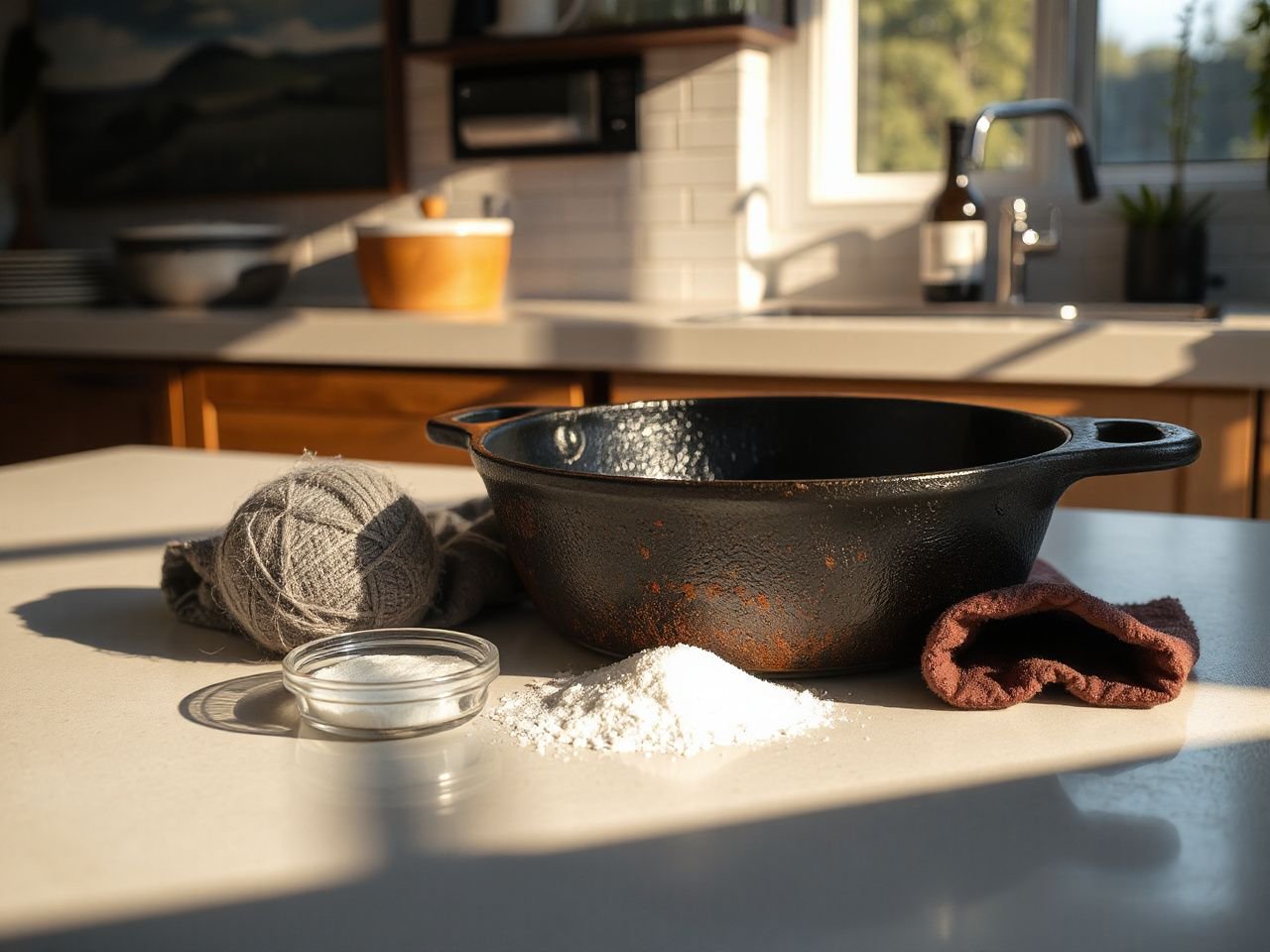
Step 1: Scrub a small rusty patch
A small patch is the easiest case and calls for restraint. Place the cool pan on a stable work surface. Apply coarse salt to the affected area and work it in with a nylon scrub brush. The salt adds texture while the brush gives you control over the exact spot.
Use dish soap if grease or stuck-on food is hiding the surface. Dish soap doesn’t make rust removal impossible, but you need to rinse it away and dry the cast iron promptly. A dishwasher isn’t suitable because cast iron should be cleaned by hand and not left in a prolonged wash cycle.
A nylon scrub brush is the right starting point for a small rusty patch because it removes loose material with less risk of stripping surrounding seasoning. Keep checking the surface instead of scrubbing by habit.
Know when to stop scrubbing
Pause and wipe the area with a paper towel. If the towel no longer picks up orange residue and the patch feels smooth rather than flaky, rinse the pan. Don’t continue until the entire cooking surface has the same appearance if only one area was affected.
If rust remains, repeat the local scrub instead of escalating automatically. A second controlled pass might remove material softened by the first pass. Steel wool is an option for bare iron when the nylon brush can’t shift firmly attached rust, but use it only on the affected area and check the surrounding seasoning afterward.
Rust removal should produce a clean, stable surface, not a perfectly uniform color. Dark seasoning next to a lighter iron patch is acceptable if the rust is gone and the surface is smooth. Color can become more even during reseasoning.
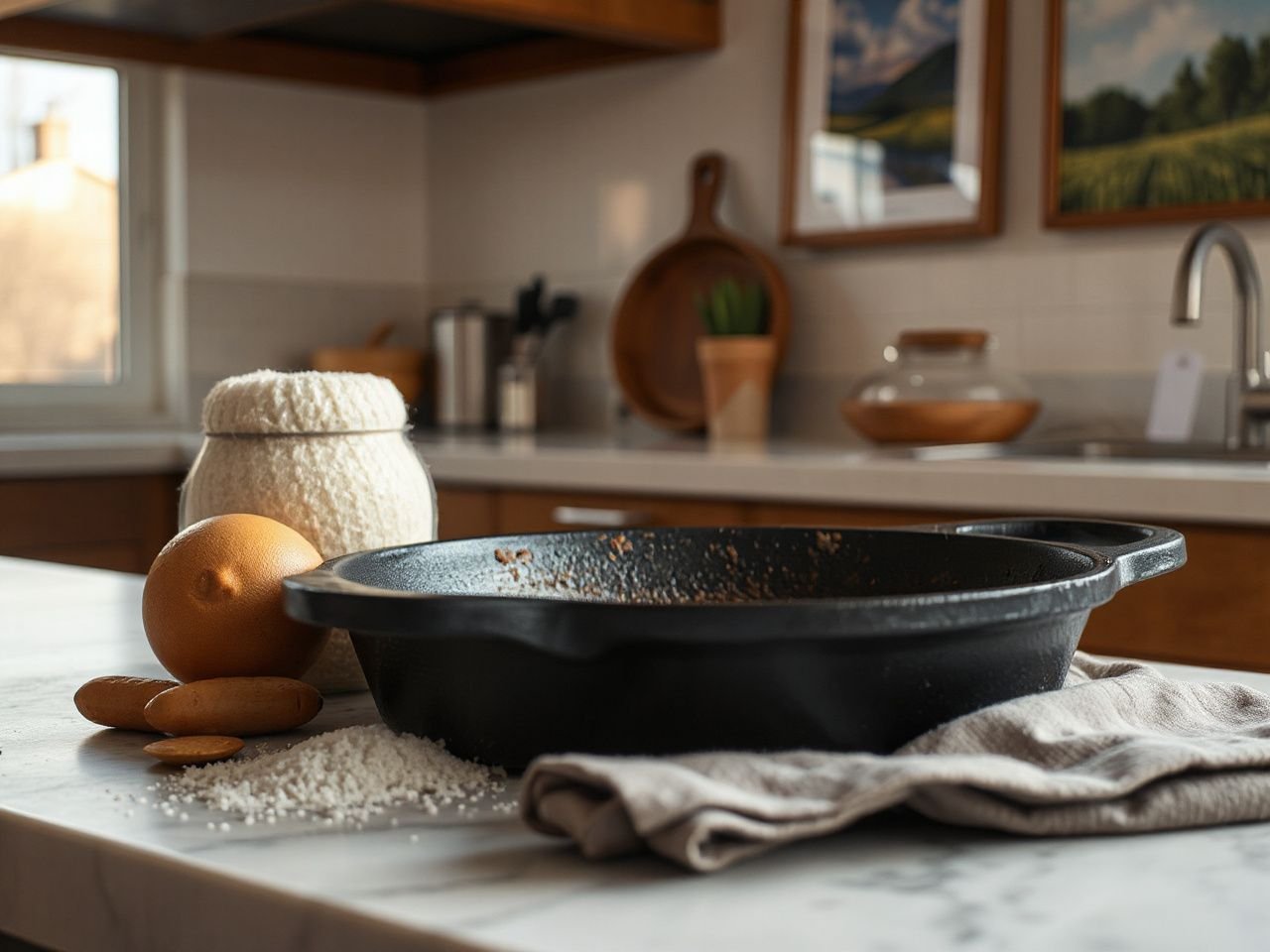
Step 2: Choose soaking only when scrubbing is not enough
Soaking is more aggressive because liquid reaches a broader area and may contact seasoning that doesn’t need removal. I’d avoid soaking a lightly rusted cast iron pan. For a broad or stubborn patch, keep the treatment as local as possible and watch the surface closely.
Using white vinegar for heavy rust
White vinegar is acidic, and that acidity helps loosen rust. The same action can affect the iron and sound seasoning if exposure continues too long. For heavy rust buildup, mix equal parts water and white vinegar inside the pan and leave it for a maximum of 30 minutes. Keep checking the surface instead of assuming longer exposure is better.
The rusted area can be kept submerged in vinegar for no more than 15 minutes sessions at a time. Shorter sessions let you lift the pan, rinse it, and check the result. This helps you decide if another session is needed.
Vinegar should be used briefly and monitored because prolonged acid exposure can etch cast iron. Do not leave vinegar inside the pan indefinitely, and do not allow it to remain for more than one hour.
Vinegar isn’t a regular cleaner for cast iron care. It’s mainly for heavy rust, not for removing stuck-on food after normal cooking. Baking soda and vinegar together also don’t work better because their reaction uses up the acidity that makes vinegar good against rust. Use one method with a clear goal instead of mixing household ingredients without reason.
What to do after each vinegar session
Remove the vinegar and rinse the pan right away with clean water. Check for any remaining orange spots or loose flakes. If rust still shows, scrub the area and try another short session only if needed.
Don’t put oil over rust that’s still loose. Oil can hide the color without forming a solid seasoning base, leaving the rough material underneath. Rust must be taken off before reseasoning because oil over loose rust won’t create a good surface.
Step 3: Rinse, dry, and stop flash rust
This step is part of rust removal, not optional aftercare. Cast iron can develop a new orange film soon after washing if water stays on the surface, so go straight from rinsing to drying.
Rinse away salt, soap, rust residue, and all vinegar traces. Wipe the pan with paper towels, turning them often so moisture is lifted, not spread. Check the cooking surface, rim, handle junction, and underside because water can hide in small crevices.
A cast iron pan must be rinsed and dried immediately after rust removal because even slight remaining moisture can cause flash rust. If an orange haze appears during drying, return to light scrubbing rather than oiling over it.
Use the pan’s appearance as the check. The surface should look dry rather than glossy with water. A fresh paper towel shouldn’t pick up dampness. If it comes away orange, it signals remaining rust or a new flash-rust film. Address that before seasoning.
Do not submerge cast iron in water during storage or leave it sitting in a sink. Hand cleaning gives you control over the contact time, and immediate towel drying limits the opportunity for rust to return. For broader oven-use guidance, the article Cast Iron Skillet for Oven: Common Mistakes to Avoid covers handling choices that can affect the pan before and after cooking.
Step 4: Reseason the cleaned area or the whole cooking surface
Reseasoning replaces protection that rust removal or abrasion has disturbed. The scope depends on the damage. A small rusty spot can get local seasoning, but widespread rust usually means the seasoning’s been removed across much of the surface.
Spot seasoning for a small rusty area
After the patch is clean and completely dry, spread a very thin coat of cooking oil over the bare area and nearby transition. Too much oil can leave a sticky finish, so use enough to cover the iron and wipe away excess with a clean paper towel.
The goal is not to create a thick wet layer. The goal is a thin, even coating that can bond during heating. If the surrounding seasoning is sound, there is no reason to strip the entire pan merely to make its colour uniform.
Reseasoning after widespread rust
Widespread rust usually means removing the affected seasoning from the cooking surface first. Once it’s clean, dry, and free of loose oxide, coat the surface with a thin layer of cooking oil and wipe away any excess.
Set the oven to 350 degrees. Position the skillet upside down in the oven and bake it for one hour to complete the seasoning process. Follow the oven and pan manufacturer’s handling instructions as well, especially if the pan includes a coating or component that is not bare iron.
A clean, dry surface is the foundation of a sound seasoning layer. If rust or moisture remains underneath the oil, the new layer cannot correct the underlying problem.
For a broader explanation of the restoration sequence, see How to Remove Rust from Cast Iron: A Complete Guide. The useful principle is the same: clean first, dry completely, then rebuild protection.
What not to do during cast iron rust removal
Many failed restorations begin with a reasonable goal but an oversized method. The pan needs enough force to release rust. It shouldn’t be so forceful that it erases every trace of its previous seasoning.
- Do not use steel wool first on a lightly rusted patch. Start with a nylon scrub brush and escalate only if the rust remains attached.
- Do not leave bare cast iron in vinegar indefinitely. Acid can loosen rust, but prolonged exposure can etch the iron and remove sound seasoning.
- Do not oil over loose rust. The coating may hide the orange colour while leaving a weak, rough base below it.
- Do not leave the pan wet. Rinse, towel-dry, inspect, and protect it straight away.
- Do not put cast iron in a dishwasher. Hand cleaning provides control over water exposure and drying.
- Do not use bare-cast-iron abrasion on enamel. Enameled cast iron should not be treated like bare cast iron, especially with abrasive scrubbing that can damage the enamel.
- Do not judge success by colour alone. A smooth, stable surface matters more than an identical shade across the pan.
Dish soap is suitable for removing greasy residue or food that prevents inspection. The concern isn’t just the presence of soap. It’s leaving the pan wet afterward or using a harsh method when a mild one would have sufficed.
How to prevent rust after restoration
Rust prevention starts with the final minutes of cleaning. After everyday cooking, remove stuck-on food by hand. Rinse away residue and dry the pan promptly. If needed, leave a light protective film of cooking oil on the surface.
Store the pan only after the surface is completely dry. Avoid closed, damp storage and don’t stack cookware in a way that traps moisture against the iron. If the pan won’t be used for a while, inspect the cooking surface before putting it away. A clean, dry surface is easier to protect than one showing orange residue.
Dry storage is a core part of preventing rust on cast iron. A pan that’s cleaned carefully but stored with moisture can return to the same problem.
Don’t confuse a slightly uneven seasoning layer with active rust. Seasoning can vary in colour and sheen, especially after a local repair. Rust is the material that needs removal. Seasoning is the protective surface that should stay intact where it’s sound.
Is restoration more practical than replacement?
A rusty bare cast iron pan is often a restoration issue, not a reason to throw out the cookware. Whether to keep it depends on how much rust there is, the condition of the iron underneath, and if it’s safe and usable after cleaning. Small patches are usually handled locally. Widespread rust requires a full strip and reseasoning.
Check whether the pan is bare or enameled before deciding what to do. Make sure the surface stays stable after cleaning. Enameled damage changes the repair process because abrasive methods can make it worse. For readers comparing grill-pan shapes for future cooking, this guide to cast iron grill pans for steak discusses the design differences without changing the rust-removal steps above.
Frequently Asked Questions
How do I clean a cast iron pan rust patch without removing all the seasoning?
Start with a cool, dry bare-iron pan and scrub only the orange area with coarse salt and a nylon scrub brush. Use dish soap if residue blocks the surface. Escalate to steel wool only if the rust remains attached. Rinse immediately, dry with paper towels, inspect for flash rust, and apply a thin coat of cooking oil to the repaired area.
Can white vinegar remove rust from cast iron safely?
White vinegar can loosen heavy rust because it’s acidic. It should be diluted with an equal amount of water and used briefly. Keep the affected area submerged for no more than 15 minutes per session. Never leave vinegar inside the pan beyond one hour. Rinse and dry immediately, since acid and moisture can both damage the pan if exposure continues.
How is cleaning rust from bare cast iron different from cleaning enameled cast iron?
Bare cast iron can be scrubbed carefully and then seasoned because its exposed iron needs a renewed protective layer. Enameled cast iron shouldn’t be treated the same way. Steel wool and abrasive tools can damage the enamel. Confirm the surface type first, then follow the cookware manufacturer’s care directions before using any acid or abrasive cleaner.
What should I do if rust remains after the first cleaning?
Rinse and dry the pan before inspecting it again. If rust is limited, repeat local scrubbing with a nylon brush and coarse salt. Heavy buildup might need another brief vinegar session, but don’t extend the exposure to save time. Remove all loose rust before applying oil. Seasoning over rust makes a weak foundation, not a repair.
Does a small rusty spot require reseasoning the entire cast iron pan?
If the rust is limited and the surrounding seasoning stays firmly attached, clean and season just the affected area. Widespread rust is different because much of the seasoning may be compromised. In that case, clean the affected surface thoroughly, dry it, apply a thin coat of cooking oil, and season the pan at 350 degrees for one hour.