
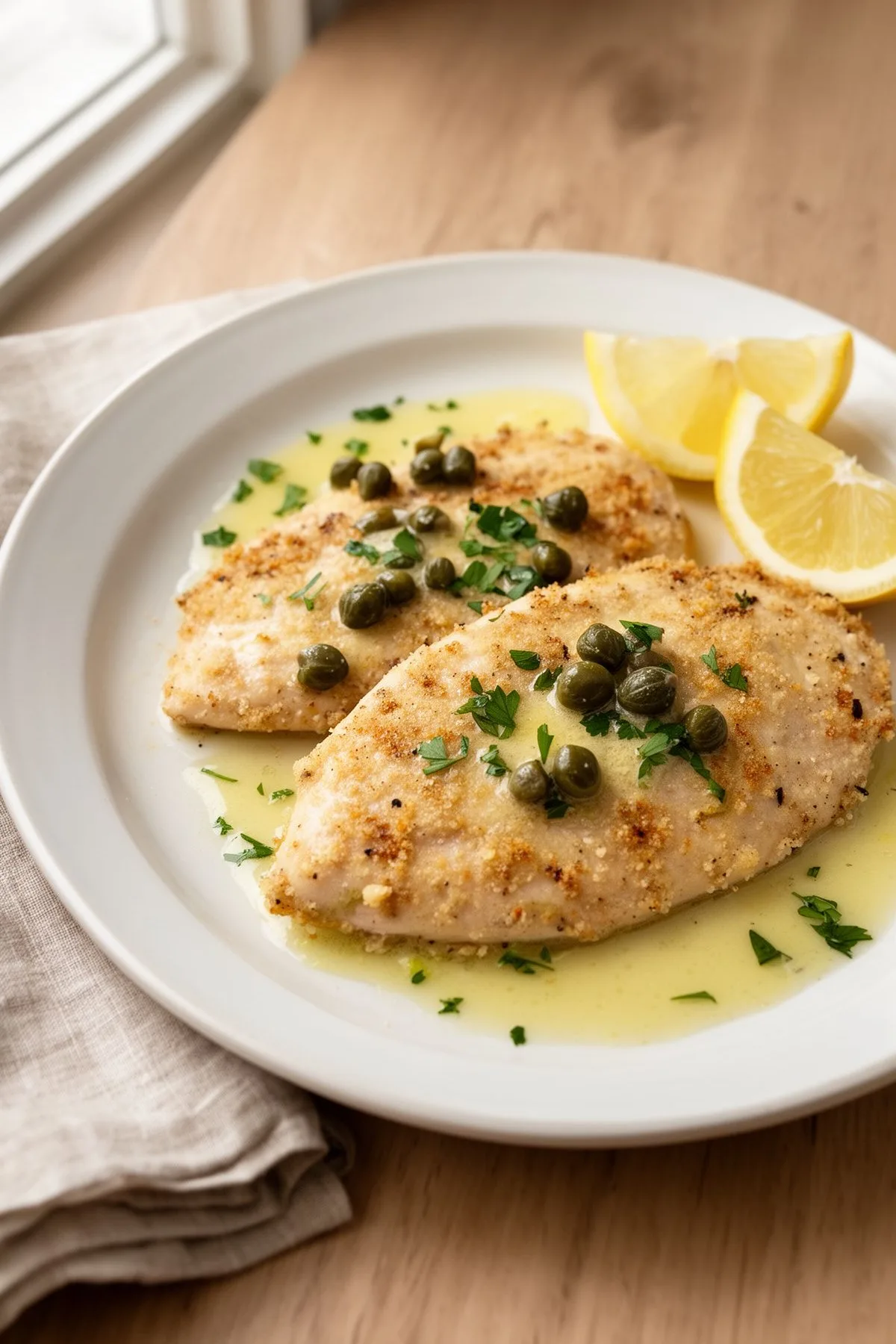
Chicken piccata is thin chicken cutlets dredged in flour, browned in a hot skillet, and served under a bright pan sauce of lemon juice, capers and butter. A good one has a golden coating that stays on the chicken, meat that is still juicy in the middle, and a sauce that tastes clearly of lemon without making your mouth pucker.
This easy chicken piccata serves 4 and takes about 27 minutes from start to finish. A little grated Parmesan goes into the flour, the cutlets brown in olive oil and butter, and the lemon caper sauce is made in the same skillet with chicken stock while the chicken stays warm in a low oven.
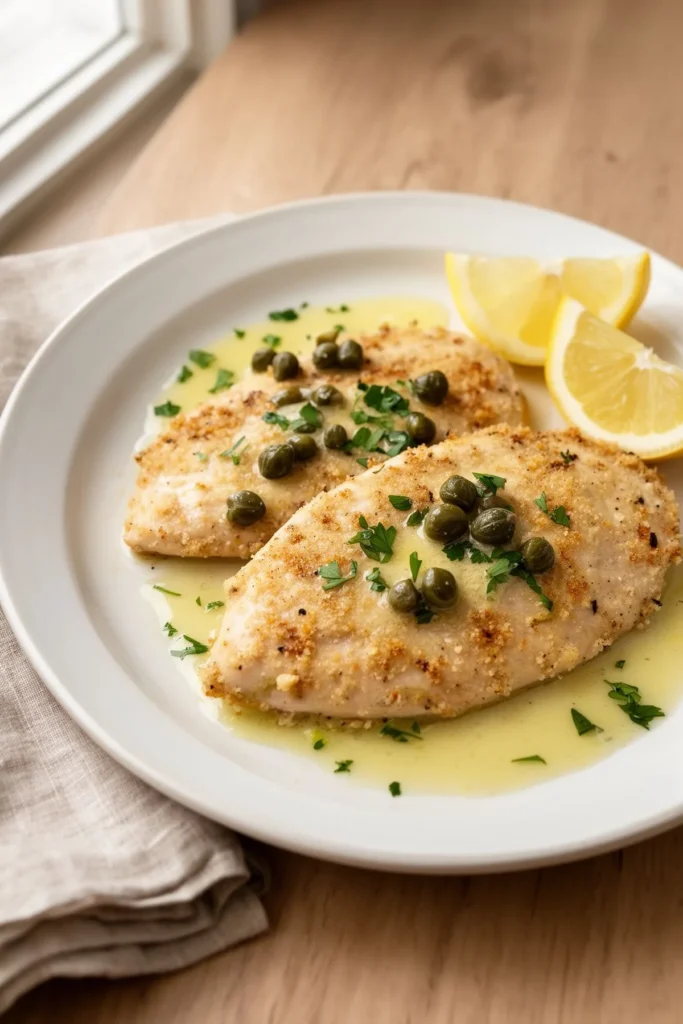
Why This Chicken Piccata Works
Most piccata problems come from the chicken, not the sauce. Thick breasts cook unevenly, the outside goes dry before the center is done, and the coating slides off the moment the sauce hits it. The method here follows Simply Recipes’ Chicken Piccata, and each step deals with one of those:
- The cutlets are an even 1/4 inch thick. Slicing each breast open like a book and pounding any thick spots means every piece cooks through in about 3 minutes per side, before the outside has a chance to dry out.
- Parmesan goes into the flour. Three tablespoons of grated Parmesan in the dredge help the coating brown and add a savory note under the sharp lemon.
- The pan is never crowded. The chicken browns in two batches. Too many cutlets at once drop the heat, and the chicken steams instead of turning golden.
- The sauce is built on the browned bits. Stock, lemon juice and capers go straight into the hot skillet and lift everything left behind by the chicken, so the sauce tastes like the chicken it is poured over.
- The last of the butter goes in off the heat. Whisked in at the end, it turns a thin, sharp liquid into a glossy sauce with a rounder flavor.
A note on the sauce
Many restaurant versions of this dish finish the sauce with something other than stock. This one does not. The piccata sauce here is chicken stock, fresh lemon juice, capers and butter, which Simply Recipes lists as one of its two ways to make it, so this is the source’s own recipe and not an untested change. Use halal chicken and a halal chicken stock, and the whole dish is halal. If you want the sauce a little sharper, add another squeeze of lemon at the end and taste as you go.
Recipe Overview
| Texture | Golden, lightly crisp cutlets with tender centers under a glossy lemon caper sauce |
| Skill level | Easy |
| Prep time | 10 minutes |
| Cook time | 17 minutes |
| Total time | 27 minutes |
| Serves | 4 |
| Pan | One large skillet |
| Oven | 225°F, only to keep the chicken warm |
| Calories | 468 per serving |
Ingredients
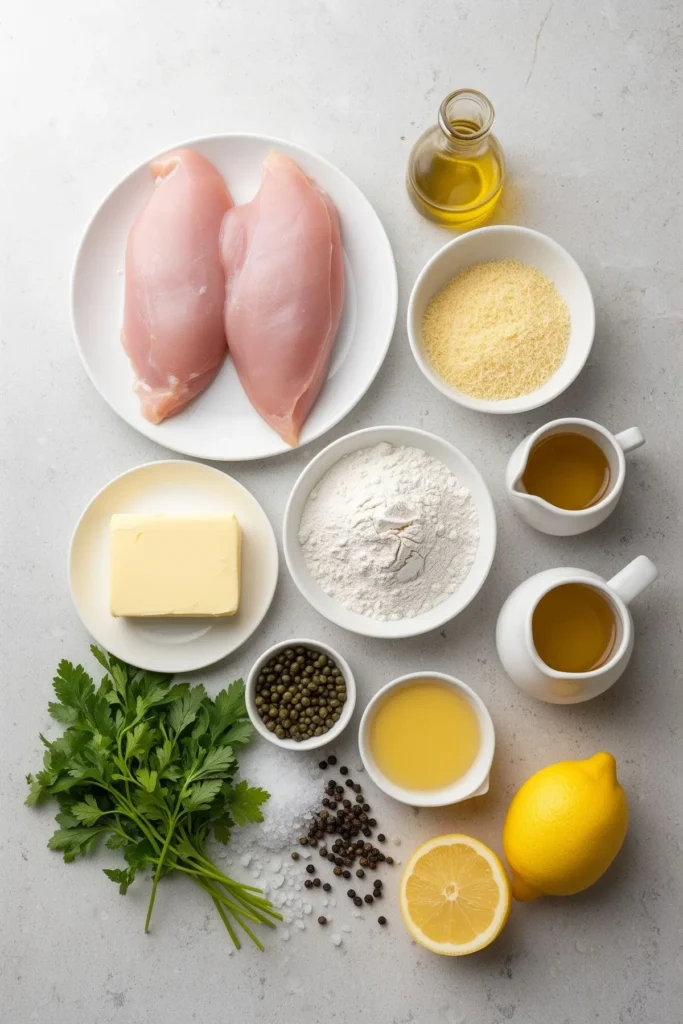
For the Chicken
| Ingredient | Amount |
|---|---|
| Boneless skinless chicken breast halves (2 to 4 pieces, or 4 to 8 cutlets) | 1 1/2 pounds |
| All-purpose flour | 1/2 cup |
| Salt | 1/4 teaspoon |
| Black pepper, ground | 1 pinch |
| Grated Parmesan cheese | 3 tablespoons |
| Extra virgin olive oil | 4 tablespoons |
| Butter, divided (2 for the pan, 2 for the sauce) | 4 tablespoons |
For the Lemon Caper Sauce
| Ingredient | Amount |
|---|---|
| Low-sodium chicken stock | 1/2 cup |
| Fresh lemon juice (about 1 lemon) | 2 tablespoons |
| Brined capers, drained | 1/4 cup |
| Fresh parsley, chopped | 2 tablespoons |
| Lemon wedges, to serve | Optional |
A few notes on the shopping list. Use low-sodium stock. The capers and Parmesan are already salty, and the sauce reduces by half, which concentrates whatever salt the stock brings. Squeeze the lemon yourself; bottled juice tastes flat in a sauce this simple. Brined capers are the common jarred kind. Drain them well so the liquid does not water down the sauce.
Recipe Timing
| Stage | Time |
|---|---|
| Prep: slice and pound the cutlets, mix the dredge, coat the chicken | 10 minutes |
| Brown the first batch | About 6 minutes |
| Brown the second batch | About 6 minutes |
| Reduce the sauce and whisk in the butter | About 5 minutes |
| Total | About 27 minutes |
How to Make Chicken Piccata
Step 1: Make the cutlets
Heat the oven to 225°F and set a wire rack over a baking sheet. This is only a warm place to hold the first batch while the second one cooks.
Lay a chicken breast half flat, keep your hand on top, and slice it horizontally almost all the way through, then open it out like a book. If the pieces are large, cut each into two. Anything still thicker than the rest goes between two sheets of plastic wrap and gets pounded with a meat mallet or rolling pin to an even 1/4 inch. Store-bought cutlets save this step; check them anyway, because packs are often uneven.
Step 2: Dredge the chicken
In a shallow dish, mix the flour, salt, pepper and grated Parmesan. Press each cutlet into the mixture on both sides until it is well coated, then shake off the excess. Loose flour burns in the pan and turns the sauce gritty.
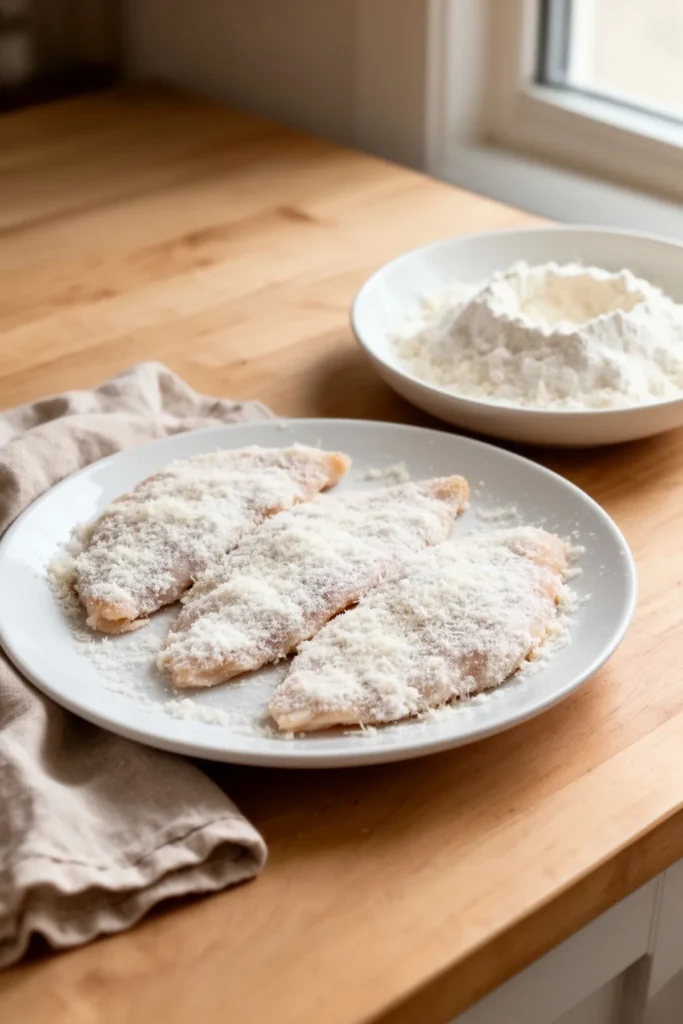
Step 3: Brown the cutlets in two batches
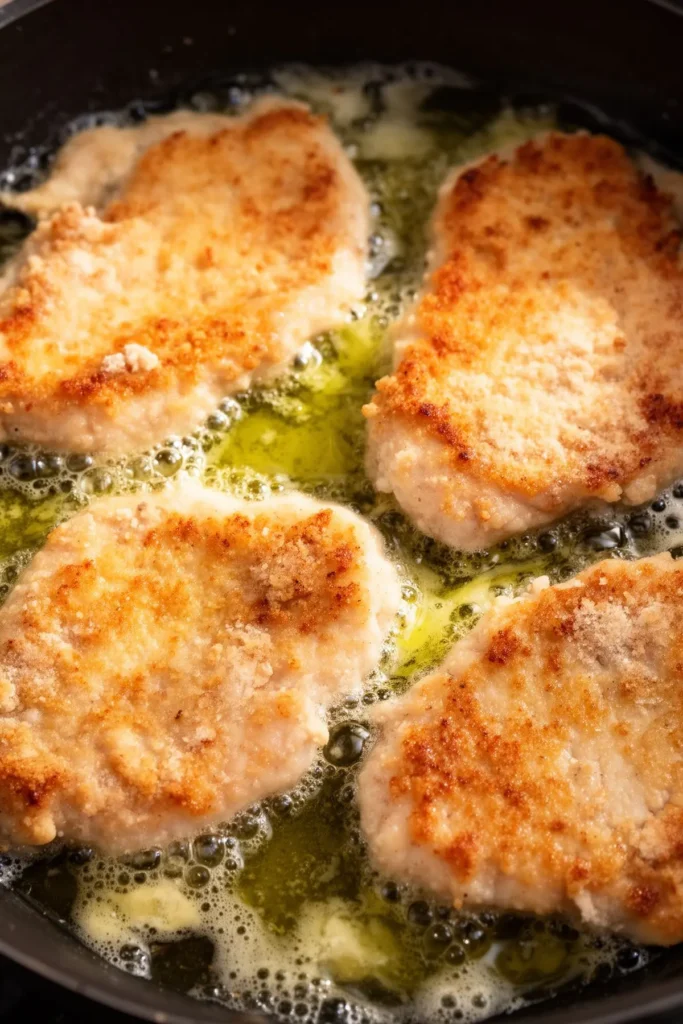
Heat the olive oil and 2 tablespoons of the butter in a large skillet over medium-high heat. When the butter stops foaming, add half of the cutlets with space between them. Leave them alone for about 3 minutes, until the underside is deep golden, then flip and cook about 3 minutes more. The thickest part should read 165°F on an instant-read thermometer.
Move the cooked cutlets to the rack in the oven and brown the second batch the same way. If the pan looks dry before the second batch goes in, tilt it so the remaining fat spreads out.
Step 4: Make the lemon caper sauce
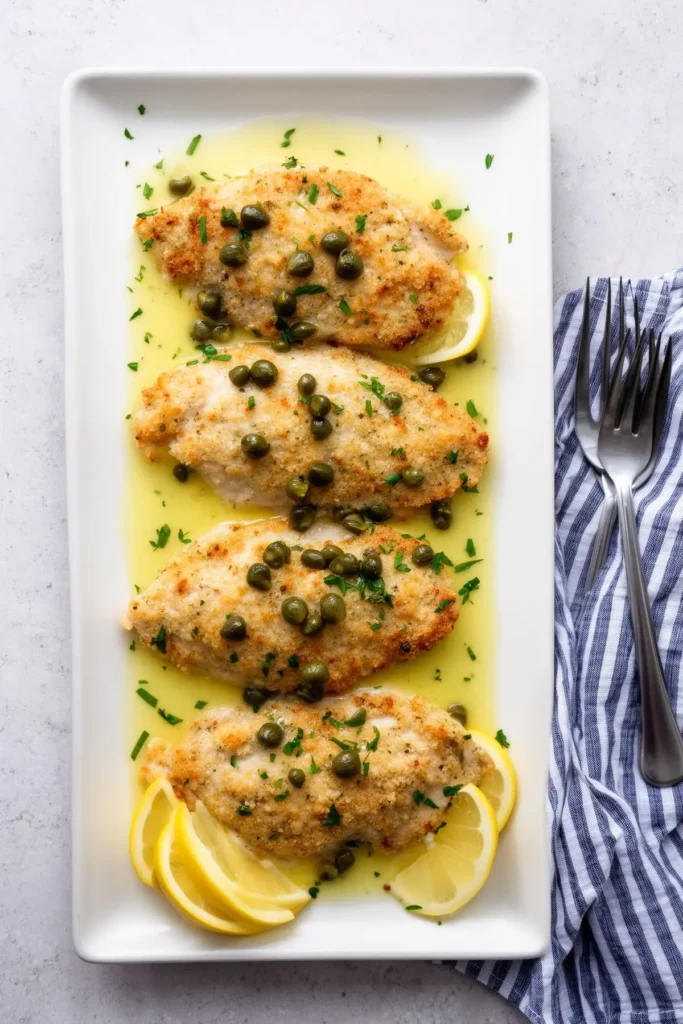
Keep the skillet on the heat and pour in the chicken stock, lemon juice and capers. It will hiss and steam. Scrape the browned bits off the bottom of the pan with a spatula, because that is where most of the flavor is, and let the sauce boil until it has reduced by half. In a large skillet this takes only a few minutes.
Take the pan off the heat and whisk in the remaining 2 tablespoons of butter until the sauce turns glossy and slightly thick.
Step 5: Serve
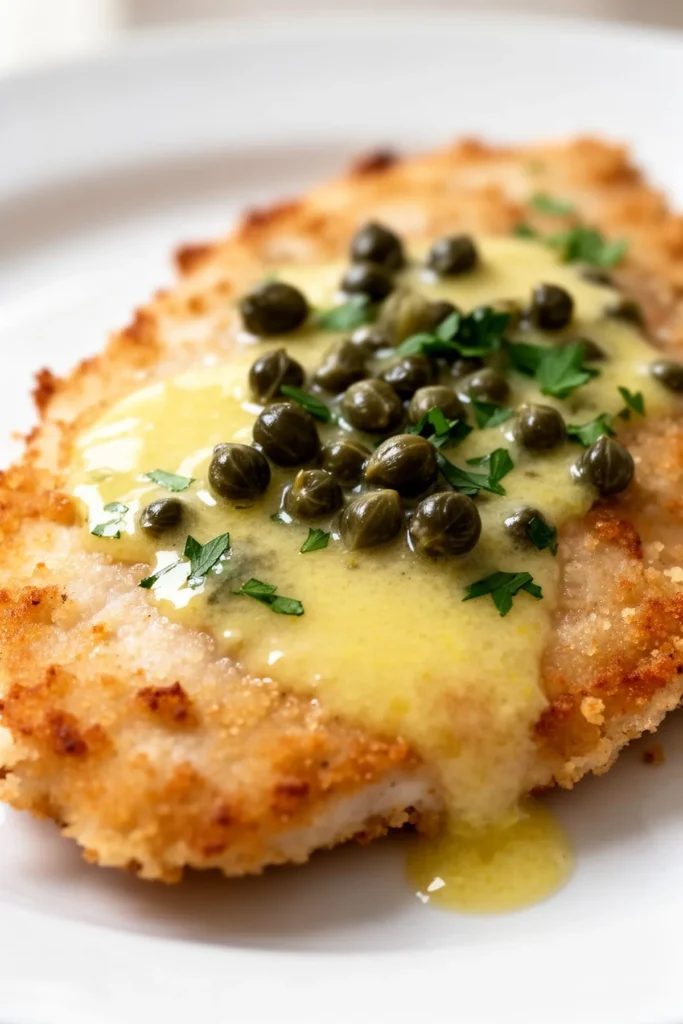
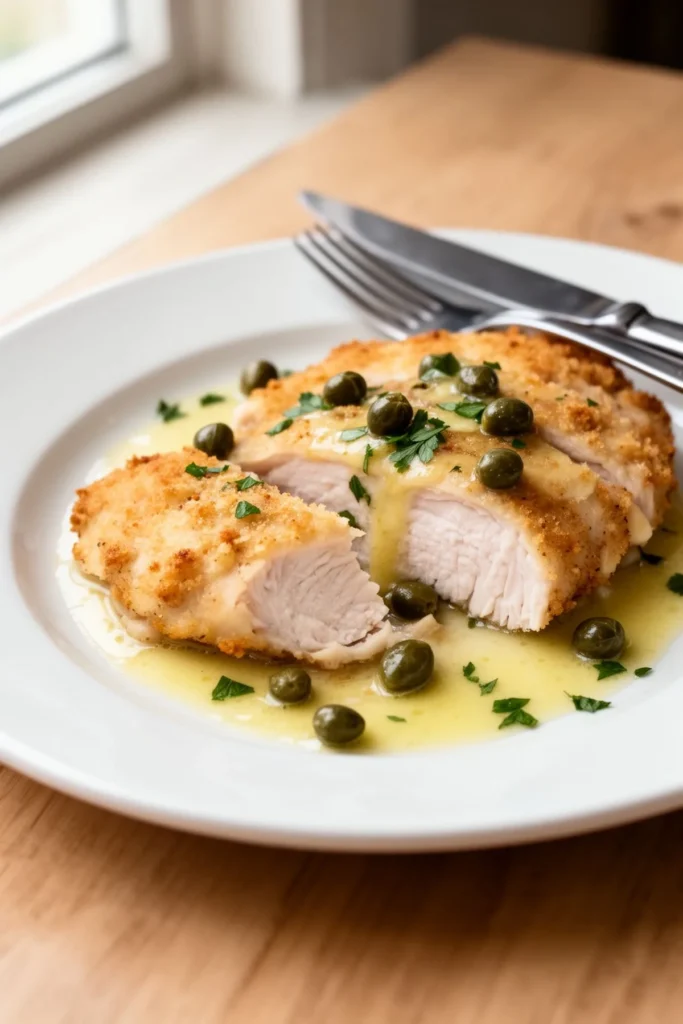
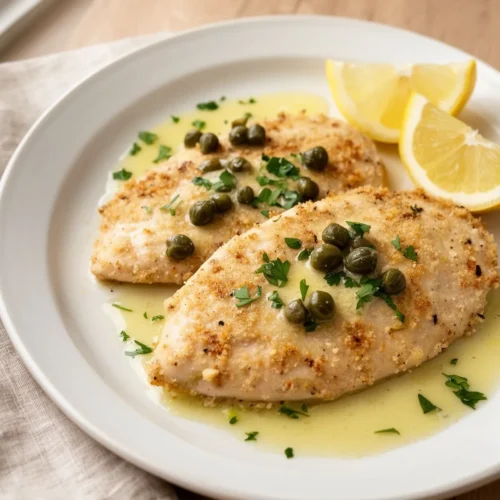
Plate the chicken, pour the sauce over it, and sprinkle with the chopped parsley. Serve it right away, with lemon wedges on the side if you like. The coating is at its best in the first few minutes, before it soaks up too much sauce.
Common Mistakes to Avoid
- Cooking whole breasts. A full chicken breast can be well over an inch thick at one end. By the time that end is cooked, the thin end is dry. Slice and pound first.
- A pan that is not hot enough. The cutlets should sizzle the moment they touch the fat. If they do not, wait. Pale cutlets mean pale sauce, because there are no browned bits to scrape up.
- Pouring the sauce on too early. Sauce the chicken just before it goes to the table. Left sitting in the sauce, the coating turns soft.
- Adding the last butter over high heat. It will melt into a greasy layer instead of thickening the sauce. Off the heat, whisking, every time.
Tips and Variations
- More sauce for pasta or rice. Simply Recipes recommends doubling the sauce ingredients if you plan to serve the chicken over pasta or a grain: 1 cup of stock, 1/4 cup of lemon juice, 1/2 cup of capers and 4 tablespoons of butter for the sauce. It will take a few minutes longer to reduce by half.
- A different cheese. Romano or Asiago can replace the Parmesan in the dredge.
- No capers. They are briny and not for everyone. Leave them out, or chop a few meaty green olives small and use those for the same salty bite.
- Chicken thighs. Spend With Pennies says chicken thighs can replace the breasts, with the cooking time adjusted. Expect them to need a little longer in the pan, and cook them to at least 165°F.
What to Serve with Chicken Piccata
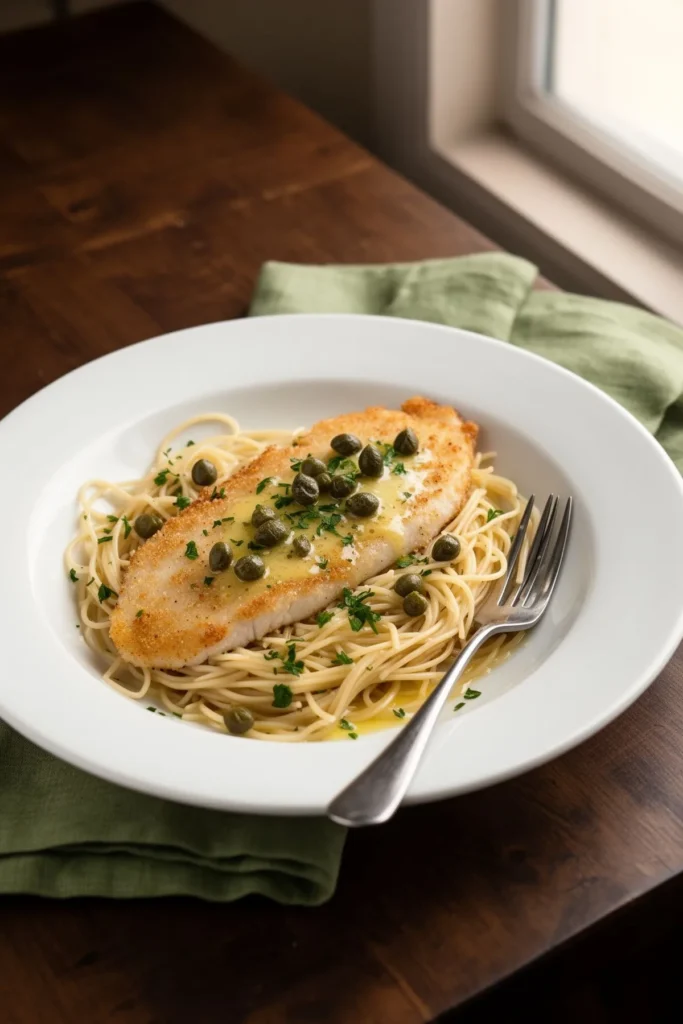
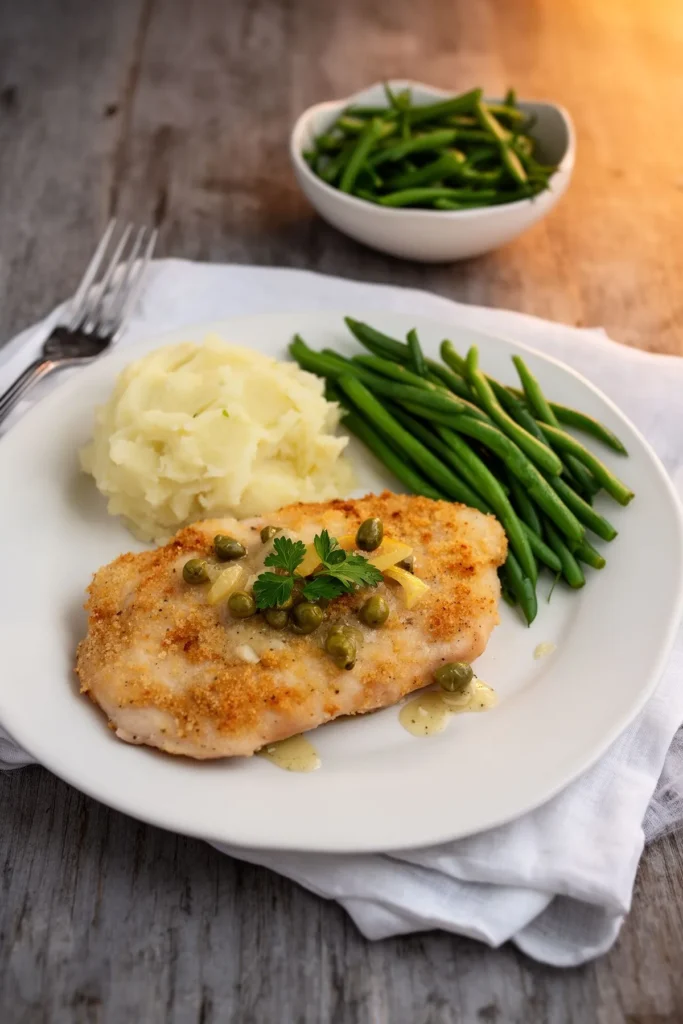
Piccata needs something to catch the sauce. Thin pasta such as angel hair or linguine is the classic choice, with the sauce doubled. Rice and mashed potatoes work just as well. For a vegetable, roasted asparagus, steamed broccoli or green beans keep the plate light, since the chicken and sauce already carry plenty of butter.
If you want another chicken and rice dinner for the same week, the creamy smothered chicken and rice is a cheesy casserole that comes together in about 25 minutes.
Storage and Reheating
Chicken piccata is best the day it is made, but leftovers keep. Natasha’s Kitchen gives these directions:
- Refrigerator: store the chicken and sauce in an airtight container for 3 to 4 days.
- Freezer: transfer to a freezer-safe container and freeze for up to 3 months.
- Reheating: thaw frozen piccata in the refrigerator, then reheat it in a 350°F oven for about 20 minutes. The oven treats the coating more kindly than the microwave does.
Expect the coating to be softer than when it was fresh. It sits in the sauce in the container, and Jessica Gavin notes the same thing about reheated piccata. The flavor holds up well.
Chicken Piccata FAQ
What is chicken piccata?
It is an Italian-American dish of thin, flour-dredged chicken cutlets browned in a skillet and served with a sauce of lemon juice, capers and butter. In Italy the same treatment is more often given to veal.
How do you keep the coating from falling off?
Shake off the excess flour, put the cutlets into fat that is already hot, and do not move them for the first 3 minutes. Pour the sauce over the chicken only when it is ready to serve.
Can I make chicken piccata ahead of time?
It is at its best fresh, since the whole dish takes under half an hour. You can slice and pound the cutlets earlier in the day and keep them covered in the refrigerator, then dredge and cook them just before dinner.
How many calories are in chicken piccata?
About 468 calories per serving, with 40.3 grams of protein and 7.4 grams of carbs, when the recipe is split four ways. That is calculated from USDA values. It counts half of the flour and Parmesan, because the excess is shaken off, and all of the oil and butter, because the sauce is made in the same pan.
More Easy Chicken Dinners
If chicken piccata goes over well, these are worth making next:
- Easy chicken parmesan: the same thin cutlets, breaded and baked under marinara and melted mozzarella.
- Spinach artichoke chicken: chicken breasts topped with a cottage cheese, spinach, artichoke and Parmesan mixture.
- Creamy sun-dried tomato chicken orzo: a one-pan chicken and orzo dinner.
- Homemade chicken pot pie: a creamy chicken and vegetable filling under a flaky double crust.
Easy Chicken Piccata
Equipment
- Large skillet
- Shallow dish
- Meat mallet or rolling pin
- Plastic wrap
- Wire rack set over a baking sheet
- Instant-read thermometer
Ingredients
For the Chicken
- 1 1/2 pounds boneless skinless chicken breast halves 2 to 4 pieces, or 4 to 8 chicken cutlets
- 1/2 cup all-purpose flour
- 1/4 teaspoon salt
- 1 pinch black pepper ground
- 3 tablespoons grated Parmesan cheese
- 4 tablespoons extra virgin olive oil
- 4 tablespoons butter divided: 2 for the pan, 2 for the sauce
For the Lemon Caper Sauce
- 1/2 cup low-sodium chicken stock
- 2 tablespoons fresh lemon juice from about 1 lemon
- 1/4 cup brined capers drained
- 2 tablespoons fresh parsley chopped
- lemon wedges to serve, optional
Instructions
Make the Cutlets
- Heat the oven to 225°F and set a wire rack over a baking sheet. Slice each chicken breast half horizontally and open it out like a book. If the pieces are large, cut each into two. If they are still thick, lay them between two sheets of plastic wrap and pound them to an even 1/4 inch.
- In a shallow dish, mix the flour, salt, pepper and grated Parmesan. Dredge each cutlet in the mixture until it is well coated, then shake off the excess.
Brown the Chicken
- Heat the olive oil and 2 tablespoons of the butter in a large skillet over medium-high heat. Add half of the cutlets without crowding the pan and brown them well, about 3 minutes per side, until the thickest part reads 165°F.
- Move the cooked cutlets to the rack and keep them warm in the oven. Brown the rest of the cutlets the same way and add them to the rack.
Make the Sauce and Serve
- Add the chicken stock, lemon juice and capers to the hot skillet. Scrape up the browned bits from the bottom with a spatula and let the sauce boil until it has reduced by half.
- Take the pan off the heat and whisk in the remaining 2 tablespoons of butter until the sauce looks glossy.
- Plate the chicken, pour the sauce over it and sprinkle with the parsley. Serve right away, with lemon wedges if you like.


