Why does your favorite recipe fail on a Tuesday but succeed on a Thursday? When a cake rises unevenly, nine times out of ten it is a failure of heat distribution in the pan, not the baking powder. The exact same physical laws govern your stovetop cooking. This comprehensive frying pan buying guide cuts through the marketing gloss to focus strictly on thermodynamics and metallurgical construction.
Evaluating a frying pan requires analyzing the core metal’s thermal properties and cladding thickness, as heat distribution is governed by physics rather than marketing claims. The critical distinction lies in matching a pan’s thermal responsiveness—how quickly it reacts to temperature changes—to specific culinary techniques, rather than treating all heat retention as equal. Proper assessment prioritizes the structural integrity of the handle connection and the flatness of the base over superficial surface coatings.
Key Takeaways
- Thermal Responsiveness Beats Heat Retention: Match your pan’s material to your cooking style, choosing highly responsive clad aluminum or copper for delicate sauces and high-retention cast iron or carbon steel for searing.
- Structural Integrity Over Coatings: Prioritize structural features like riveted handles and multi-ply cladding over non-stick coatings, which inevitably degrade within a few years.
- Base Flatness is Critical: A perfectly flat base is essential for efficient heat transfer, especially on glass-top and induction stoves where even minor warping ruins performance.
The Physics of Thermal Responsiveness and Pan Materials
Thermal Conductivity vs. Heat Retention
Cookware metals behave differently when exposed to a flame or an induction coil. Thermal conductivity refers to how quickly heat moves through a material. Heat retention is the material’s ability to hold onto that thermal energy once it is absorbed.
Copper and aluminum conduct heat rapidly but hold very little of it. Cast iron and stainless steel conduct heat slowly but retain it exceptionally well. Pure copper possesses a thermal conductivity of 401 Watts per meter-Kelvin, allowing it to distribute heat across a cooking surface almost instantly. If you need to lower the temperature of a delicate custard immediately, an aluminum or copper pan will react to the dial change in seconds. A heavy cast iron skillet will continue to cook the food for minutes after you turn off the burner.
Cladding Thickness and Multi-Ply Structures
Stainless steel is a poor conductor of heat. To fix this, manufacturers sandwich highly conductive aluminum or copper between layers of durable stainless steel. This process is called cladding.
Tri-ply construction features three layers: an aluminum core inside two outer layers of stainless steel. Multi-ply pans can have five or seven layers, alternating aluminum, aluminum alloys, and copper. However, more layers do not automatically mean better performance. The total thickness of the conductive core is what actually dictates heat distribution. A thick tri-ply pan often performs better than a paper-thin five-ply pan. When choosing a high-performing clad pan, examining the thickness of the aluminum core is more important than counting the individual layers. For details on how high-quality cladding translates to real-world performance, our All Clad frying pan review breaks down the thermal capabilities of premium multi-ply metals.
The Flatness Factor and Stove Interface
A frying pan must maintain direct contact with your stove to transfer heat efficiently. This is especially true for flat glass-top electric and induction burners.
According to the ASTM International standards for cookware flat bottoms, even a tiny 1-millimeter gap can drop heat transfer efficiency by over 50% on glass-topped stoves. Cheap pans made of thin, stamped aluminum warp easily when exposed to rapid temperature changes. Once a pan warps, it will spin on your stove and heat unevenly. High-quality pans are designed with a very slight concave bottom when cold. This allows the metal to expand flat when it reaches cooking temperatures.
Evaluating Pan Construction and Structural Integrity
Riveted vs. Welded Joints
The handle connection is a common point of mechanical failure. Manufacturers secure handles using either rivets or welds.
Rivets are metal pins smashed through the pan wall to lock the handle in place. They are incredibly strong and rarely fail. However, the rivet heads inside the cooking surface collect grease, food particles, and carbon buildup. Welded handles are fused directly to the exterior of the pan wall. This leaves a perfectly smooth interior that is incredibly easy to clean. The downside is that poor welds can snap under heavy loads or sudden physical impacts. For long-term durability, rivets remain the industry standard.
Metal Gauge and Edge Profiles
The thickness of a pan, or its gauge, directly influences its durability and weight. Thick-gauge cookware resisting deformation is essential for maintaining a flat base over years of thermal cycling.
A rolled rim is a common feature on cheaper, stamped pans. It reinforces the thin metal edge but can trap water and soap in the rolled lip. Flared rims are shaped to allow drip-free pouring of liquids and sauces. Cut rims show the raw layers of a clad pan. While functional, cut rims can expose the inner aluminum core to harsh dishwasher detergents, which corrodes the soft metal over time.
Handle Materials and Oven Temperature Safety
A frying pan often needs to transition from the stovetop to the oven. The material of the handle determines the maximum safe temperature for this transition.
A hollow-core stainless steel handle stays cool on a stovetop because stainless steel has low thermal conductivity and the air gap blocks direct heat transfer. These solid metal handles are usually safe in ovens up to 500°F (260°C). Handles wrapped in silicone or plastic offer a comfortable grip but limit oven safety. Silicone-wrapped handles are typically rated only up to 400°F (204°C). Pure plastic or phenolic handles should never enter an oven hotter than 350°F (177°C), as they will degrade or melt.
Demystifying Cooking Surfaces: Science Over Marketing
Stainless Steel and the Leidenfrost Effect
Many cooks complain that food sticks to stainless steel. This is not a failure of the pan, but a failure of temperature control.
When a pan is heated to the correct temperature, the Leidenfrost effect occurs. This physical phenomenon happens when a liquid droplet hits a surface significantly hotter than its boiling point. The bottom of the droplet vaporizes instantly, creating a temporary barrier of steam that suspends the liquid. To test this, drop a splash of water into your dry stainless steel pan. If the water sizzles and evaporates, the pan is too cold. If the water beads up into distinct spheres and glides across the metal like marbles, the surface has reached approximately 379°F (193°C) and is ready for oil and food.
The Chemistry of Non-Stick Coatings
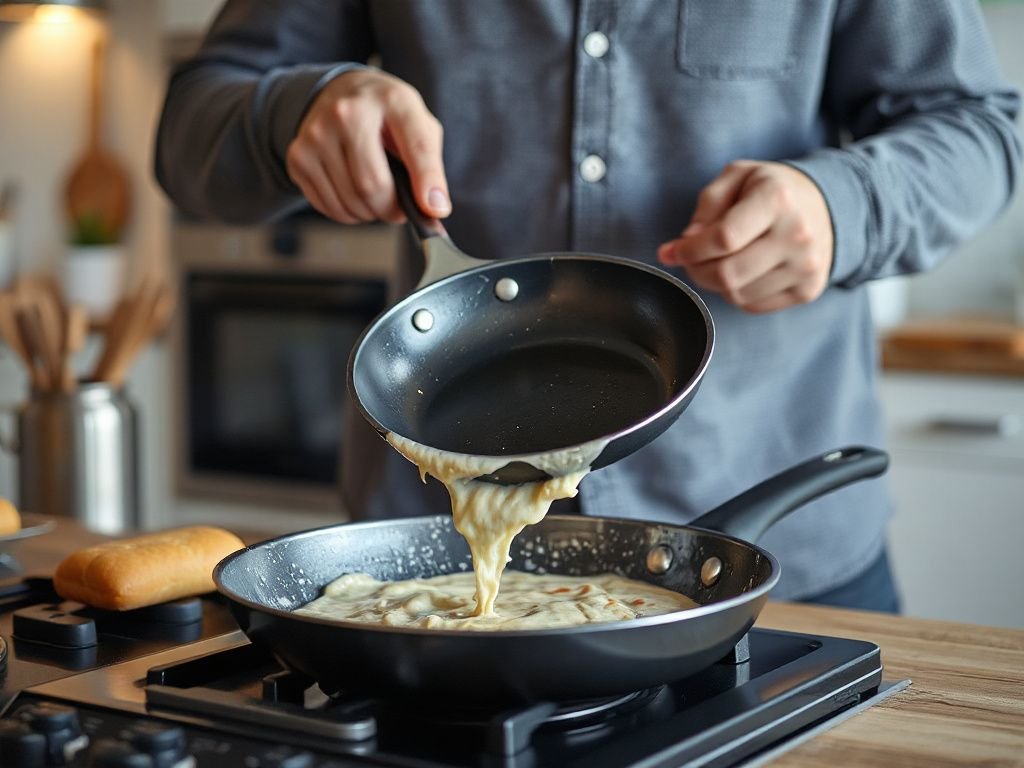
Non-stick coatings fall into two categories: PTFE (Polytetrafluoroethylene) and ceramic. Neither of these coatings lasts forever.
Polytetrafluoroethylene coatings begin to thermally degrade and release toxic polymer fumes when heated above 500 degrees Fahrenheit or 260 degrees Celsius. According to safety guidelines on food-contact materials managed by the U.S. Food and Drug Administration, PTFE is completely safe for daily use below this thermal threshold. Ceramic coatings are made from a silica-based gel that mimics the slickness of PTFE. Ceramic is harder and can withstand higher heat, but its non-stick properties degrade much faster than PTFE. Most ceramic pans lose their slick surface within one to two years of regular use. If you want to see how these coatings hold up in real-world scenarios, our Made In frying pan review provides a deep dive into the durability of high-grade coatings.
Cast Iron and Carbon Steel Polymerization
Cast iron and carbon steel pans are not naturally non-stick. They require seasoning to build a usable cooking surface.
Seasoning is the process of polymerizing oil onto the metal. When you heat an unsaturated fat to its smoke point, the fatty acids break down and cross-link with each other. This chemical reaction bonds a thin, plastic-like layer of hard polymer directly to the porous iron. This layer creates a natural barrier against food and moisture. However, this polymer bond is susceptible to chemical attack. Acidic ingredients like tomatoes, vinegar, or citrus juice will strip the seasoned polymer layer from cast iron and carbon steel pans, exposing raw metal that will rust.
Practical Assessment Rules for Buying a Frying Pan
The Magnet Test for Induction Compatibility
Induction cooktops require specific cookware materials to function. If you are upgrading your kitchen, you must verify your pans will work with this technology.
A standard induction cooktop relies on an alternating magnetic field to induce electrical currents directly within ferromagnetic cookware, leaving non-magnetic metals like pure copper completely cold. Pure aluminum and copper pans do not work on induction cooktops unless they feature an integrated magnetic stainless steel base plate. To test if a pan is compatible, simply hold a kitchen magnet to its bottom. If the magnet clings firmly to the base, the pan will work on an induction stove. If the magnet slides off or feels weak, the pan cannot be used on an induction cooktop.
Testing Balance and Ergonomics
A pan should feel like an extension of your arm, not a heavy weight you have to fight. Balance is determined by the weight distribution between the handle and the body.
- Handle Angle: A handle that angles upward too sharply is difficult to lift when the pan is full of heavy food.
- Handle Shape: Flat, concave, or contoured handles prevent the pan from rotating in your hand when you pour.
- Counterweight: Heavy cast iron pans require a helper handle on the opposite side to allow safe, two-handed lifting.
Sizing for Burner Matching
Buying a pan that is too large for your stove burners is a recipe for cold zones. Heat only transfers efficiently where the pan bottom directly meets the active heating element.
A 12-inch pan usually has a base diameter of only 9.5 inches. If you place this pan on an 8-inch burner, the outer edges of the pan will remain significantly cooler than the center. This temperature gap causes food at the perimeter to steam rather than sear. Measure your largest stovetop burner before purchasing a new pan. Match the flat contact surface of the pan base to that burner diameter within 1 inch for the most even heat distribution.
Frequently Asked Questions
How do I choose the right cookware using a frying pan buying guide?
To use a frying pan buying guide effectively, start by identifying your stovetop type and cooking habits. If you cook on induction, look for pans with a strong ferromagnetic base. If you cook delicate foods like eggs and fish, prioritize a highly responsive clad aluminum pan. For high-heat searing, choose cast iron or carbon steel.
What is the actual functional lifespan of a non-stick pan compared to stainless steel?
A non-stick pan has a functional lifespan of two to five years because the PTFE or ceramic coating inevitably wears down and loses its slickness. In contrast, a high-quality 18/10 stainless steel pan has no coating to degrade. With proper care, stainless steel pans can easily last for decades of daily cooking.
How can I check if a ceramic non-stick pan is more durable than PTFE?
Ceramic non-stick is harder and more scratch-resistant than traditional PTFE, but it loses its non-stick release properties much faster. While PTFE can maintain its release for several years with gentle use, ceramic coatings often begin sticking within twelve to eighteen months. Our Scanpan frying pan review offers a detailed look at how advanced non-stick technology balances durability and release performance.
Why does food stick to stainless steel pans even when I use cooking oil?
Food sticks when the pan is not preheated to the correct temperature before adding oil and food. If the metal is too cold, the hot protein bonds chemically with the microscopic pores of the stainless steel. Preheating the pan until water droplets bead up ensures a physical vapor barrier keeps food suspended above the metal.
What causes a frying pan to warp in the center and can it be repaired?
Warping is caused by thermal shock, which happens when a hot pan is exposed to cold water or rapid heating. The metal expands or contracts unevenly, stretching the base permanently. Once a pan is warped, it cannot be reliably repaired back to its original flat state and must be replaced.