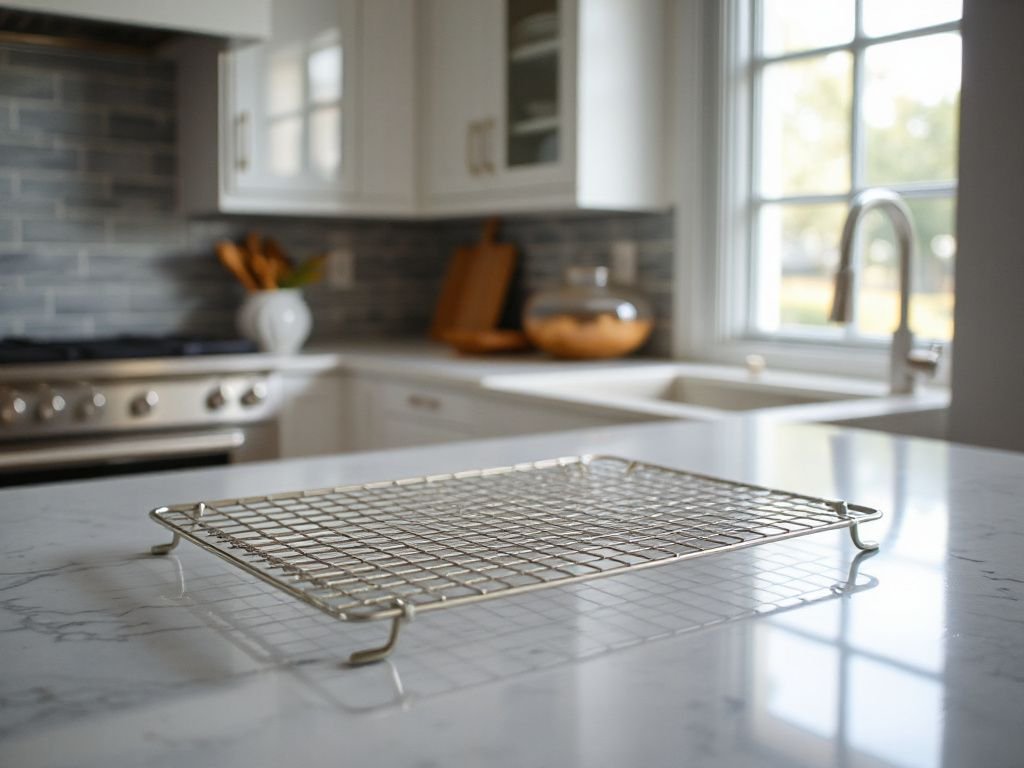
Most cooling rack advice you’ll read is wrong. People fixate on stainless steel versus chrome plating, but the real difference between a soggy cookie and a crisp one comes down to wire gauge and how high the feet lift your baked goods off the counter. Across the racks actually sold for home kitchens, the biggest factor beginners overlook isn’t material—it’s wire gauge and grid spacing. Thicker wire (around 8-gauge) supports heavy roasts without bending, and a tighter grid prevents cookie dough from sinking. Most guides obsess over stainless vs. chrome, but what matters more is structural rigidity and how easily you can clean it without warping. Also, the height of the feet is critical: if too low, air can’t circulate and baked goods steam instead of cool. This cooling rack buying guide will help you avoid the traps that lead to soggy bottoms and bent wires.
Key Takeaways
- 8-gauge wire resists bending under heavy roasts, while thinner gauges warp quickly.
- A tight grid spacing (3/8 inch or less) keeps delicate cookies from sinking between wires.
- 18/10 stainless steel is the most durable and rust-resistant option; chrome plating can flake and rust.
- Feet height of 1 inch or more allows air to circulate, preventing steamed, soggy bottoms.
Beginner Basics: What a Cooling Rack Actually Does
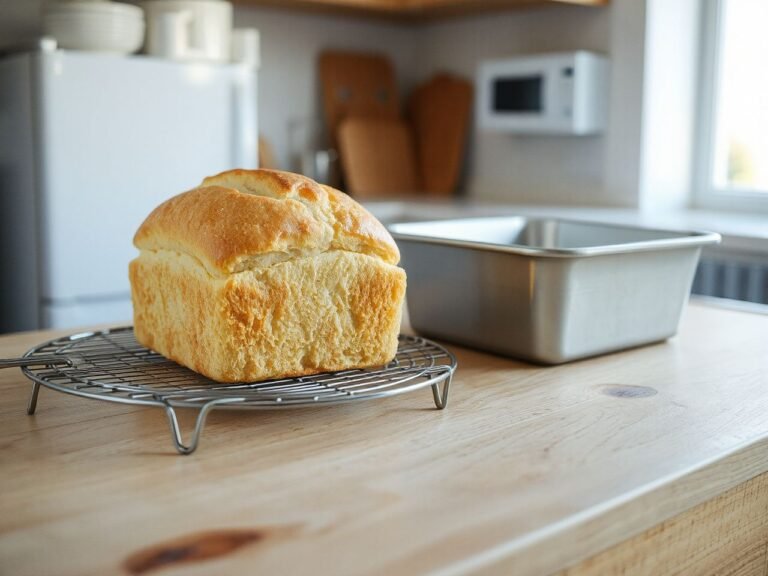
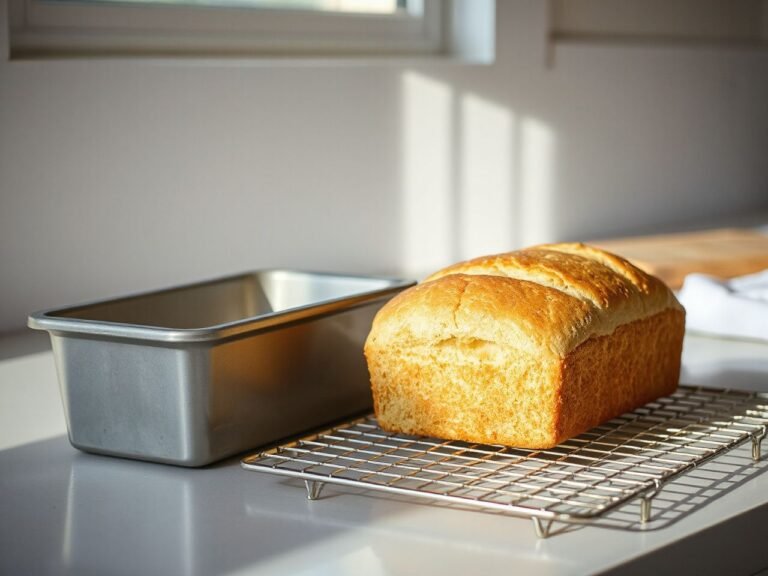
A cooling rack’s only job is to lift baked goods off a solid surface so air can move underneath. Without that airflow, steam escaping from hot cookies, bread, or pastries condenses on the bottom, turning a crisp crust into a damp mess. The rack itself has no moving parts, no coating that needs to be “active,” and no special technology. It is simply a grid of metal wires held above the countertop by small feet, and that elevation changes everything.
You can cool anything on a rack—cookies, bread, cakes, roasted vegetables, even fried foods. The question isn’t whether you can use a rack for bread; it’s whether the grid spacing and wire thickness support the item. A dense loaf of sourdough sits fine on almost any grid, but a thin lace cookie needs a much tighter pattern or it will sag through. A standard half sheet pan measures 18 by 13 inches, and the matching cooling rack should sit inside that footprint with at least half an inch of clearance on each side. Quarter sheet pans measure 13 by 9 inches and need a smaller rack, usually around 12.5 by 8.5 inches.
Cooling Rack vs. Wire Rack: Is There a Difference?
In most kitchens, the terms are used interchangeably, but there is a technical distinction. A wire rack can be any grid of metal wire, including flat racks that sit directly on a baking sheet. A true cooling rack has elevated feet that hold the grid off the surface. Those feet are not a minor feature—they are the entire point. A flat wire rack placed on a countertop blocks airflow just as thoroughly as the countertop itself do. If someone tells you a flat rack works fine for cooling, they have never checked the bottom of a cookie after ten minutes.
Sizing Your Rack to Your Baking Sheet
Most home bakers own a half sheet pan, even if they don’t know the name. It is the large rimmed pan that fits in a standard 30-inch oven. The cooling rack for that pan should measure about 16.5 by 11.5 inches, leaving a small gap so the rack drops in easily without scraping the sides. A rack that is too large will sit on the pan’s rim and wobble, which is dangerous when moving hot food. A rack that is too small leaves baked goods unsupported at the edges.

Intermediate Considerations: Wire Gauge, Grid Spacing, and Material Choices
This is where most cooling rack buying guides fail beginners. They list “stainless steel” and “chrome” without explaining that the wire gauge and grid spacing determine how the rack performs on a daily basis. You can buy a stainless rack with thin wire and wide spacing that bends under a roast and drops small cookies through the gaps. You can buy a chrome rack with thick wire and tight spacing that rusts after six months. Material matters, but geometry matters first.
Wire gauge is the diameter of the metal wire. A lower gauge number means thicker wire. An 8-gauge wire is approximately 0.1285 inches in diameter, which is substantial enough to hold a 15-pound turkey breast or a heavy cast iron pan without flexing. Many budget racks use 10-gauge or 12-gauge wire, which bends easily when you lift the rack with one hand. I have bent cheap racks just by setting a full Dutch oven on them. The structural rigidity of an 8-gauge rack is the difference between a tool that lasts a decade and one that needs replacement every two years.
Grid spacing refers to the distance between parallel wires. A tight grid of 1/4 inch to 3/8 inch square openings supports small cookies, biscotti, and macarons without any sinking. A wider grid of 1/2 inch or more is fine for bread, pizza, and large cuts of meat, but it will let smaller items fall through. When I make Moose Tracks Cookie Bars, I use a rack with a grid spacing no wider than 3/8 inch so the soft centers don’t sag through during cooling. Those bars are thick and gooey, and a wide-grid rack would leave permanent wire marks.
Material Breakdown: 18/10 Stainless, Chrome-Plated, and Non-Stick Coatings
18/10 stainless steel contains 18% chromium and 10% nickel, which gives it superior corrosion resistance compared to other stainless grades. It will not rust under normal kitchen conditions, does not flake, and can be scrubbed with reasonable force without damaging the surface. Stainless steel also has no coating to wear off. The downside is cost—an 18/10 rack typically costs two to three times more than a chrome-plated equivalent.
Chrome-plated steel is regular carbon steel with a thin layer of chrome electroplated onto the surface. That chrome layer is shiny and non-reactive, but it is also thin and brittle. A single scratch from a metal spatula or the edge of a baking sheet can expose the underlying steel, which then rusts on contact with moisture. The chrome can also flake off into food, which is not something you want to serve. According to the U.S. Food and Drug Administration, food-contact surfaces must be free of defects that could allow the base metal to leach into food, and scratched chrome plating violates that principle in practice. Chrome racks are fine for occasional light use, but they are not built for a busy kitchen.
PTFE (Teflon) non-stick coatings are occasionally applied to cooling racks to make cleanup easier. In theory, the slick surface releases stuck-on food. In reality, PTFE begins to degrade at temperatures above 400°F and can release fumes that are harmful to birds and irritating to humans. Most baking happens at 350°F to 425°F, which means a non-stick cooling rack used inside the oven is a bad idea. Even at room temperature, the coating can scratch off with normal use, and the tiny flakes end up in your food. The FDA regulates PTFE for food-contact use, but that does not mean the coating is durable enough for daily scraping and washing. I don’t recommend non-stick racks for anything other than very occasional room-temperature cooling of soft items.
Look for racks that meet NSF International certification for food-contact compliance. That certification means the materials and construction have been independently tested to be safe for repeated contact with food and withstand commercial cleaning processes. It is not a guarantee of performance, but it rules out questionable alloys and paints.
Advanced Details: Feet Height, Coatings, and Oven Use
The feet on a cooling rack are not decorative. They create the air gap that makes cooling possible. A rack with feet shorter than 1 inch (about 25 mm) sits too close to the counter, trapping moisture and heat underneath your baked goods. That trapped steam condenses on the bottom of cookies, turning them soggy from the underside up. Racks with feet of 1 inch or more allow a steady cross-flow of air, which cools food faster and more evenly. Some professional racks have feet as tall as 1.5 inches, which is excellent for thick items like roasts or stacked layers.
Feet or Flat: Which One Should You Buy?
Always choose a rack with feet. A flat wire rack placed on a solid surface is no better than the surface itself. The only exception is when you place a flat rack inside a rimmed baking sheet to roast meat or vegetables—the rack lifts food above the pan’s bottom while the pan catches drippings, and the pan’s rim raises everything off the oven rack. But for countertop cooling, feet are mandatory. If you already own a flat rack, you can improvise feet by setting it on four small ramekins or a trivet, but that is a workaround, not a solution.
Feet material matters too. Bare metal feet slide on smooth countertops, which is dangerous when you set a hot rack down and it skids toward the edge. Look for racks with silicone or rubber caps on the feet, or buy separate silicone feet that slip over the metal legs. A simple trick to prevent sliding is to place the rack on a dry kitchen towel or silicone baking mat during use.
Can You Put a Cooling Rack in the Oven?
Only if the manufacturer says it is oven-safe. An uncoated 18/10 stainless rack can usually tolerate oven temperatures up to 500°F or more, but a chrome-plated rack should not go into the oven because the chrome layer can oxidize and flake at high heat. Non-stick coated racks are almost never oven-safe above 400°F due to PTFE degradation, as I mentioned earlier. If you want a rack that doubles as a roasting rack, buy an uncoated heavy-gauge stainless model and check the packaging for a stated maximum temperature. For something like deboning salmon steaks and roasting them on a rack, a sturdy stainless rack can elevate the fish off the pan for even heat, but only if it has no coating and the feet are oven-safe too.
Stacking Racks and Preventing Sliding
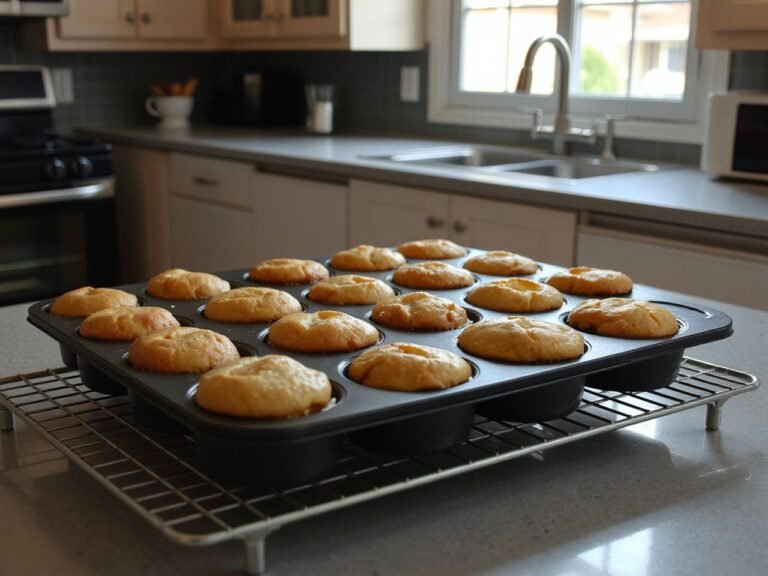
You can stack two cooling racks on top of each other, but only if the bottom rack has tall feet and the top rack has non-slip feet or a stable lip. The stack needs at least 2 inches of vertical clearance between the two grids so air can move between layers. Without that gap, the top rack blocks airflow to the bottom layer, and you might as well use a solid tray. Stacking is useful when cooling a large batch of cookies on limited counter space, but don’t stack more than two racks high because the bottom rack has to support all the weight above it.
Cleaning, Rust Prevention, and Long-Term Care
The most common reason cooling racks end up in the trash is rust. Rust forms when bare steel is exposed to water and oxygen, and that happens on chrome-plated racks as soon as the plating is scratched. Even stainless steel can develop surface rust if it is left soaking in water or washed with harsh chlorinated detergents. Dishwasher detergent is particularly aggressive—the combination of high heat, strong alkaline cleaners, and jostling against other dishes can damage coatings, strip chrome, and encourage pitting on stainless. Hand washing with mild dish soap and a soft sponge is the only way I clean my racks.
For burnt-on food, fill a sink or basin with hot water and a few drops of dish soap, then let the rack soak for 20 to 30 minutes. After soaking, scrub gently with a nylon brush or a non-abrasive sponge. For stubborn spots, make a paste of baking soda and a little water and rub it on with your fingers or a soft cloth. Baking soda is mildly abrasive and will lift baked-on sugars without scratching the metal. If you’ve made a batch of homemade lemonade, a dab of leftover lemon juice on a cloth can dissolve light rust spots on stainless steel, but avoid using acid on chrome—it will accelerate the plating damage.
Foldable cooling racks are convenient for storage in small kitchens, but they have a weak point at the hinge. Cheap foldable racks use thin metal hinges that bend or snap after repeated opening and closing. If you buy a foldable rack, look for one with reinforced hinge brackets and thick wire on the fold line. A foldable rack that wobbles when extended is worse than a fixed rack that you have to store upright behind a cabinet.
Always dry your cooling rack immediately after washing. Water left on chrome or stainless surfaces will eventually cause corrosion, especially in humid climates. Store the rack in a dry cabinet away from the stove, where steam and grease can settle on the wires. Grease left on a rack becomes sticky, then rancid, and then nearly impossible to remove without harsh chemicals.
Frequently Asked Questions
What’s the difference between a cooling rack and a wire rack?
A wire rack is any grid of metal wire, while a cooling rack specifically has elevated feet that hold the grid off the counter to promote air circulation. Many people use the terms interchangeably, but a flat wire rack without feet will not cool baked goods properly because the bottom remains in contact with the surface. When following a cooling rack buying guide, always verify that the rack has feet of at least 1 inch in height.
Can I use a cooling rack in the oven?
Only if the rack is labeled oven-safe by the manufacturer. Uncoated 18/10 stainless steel racks can typically handle oven temperatures up to 500°F, but chrome-plated racks should never go in the oven because the chrome layer can flake and contaminate food. Non-stick PTFE-coated racks should not be used above 400°F. Check the feet as well—plastic or silicone feet will melt if exposed to oven heat.
How do I stop my cooling rack from rusting?
Rust forms when bare steel is exposed to water and oxygen. For chrome-plated racks, avoid scratching the surface with metal utensils, because once the chrome layer is breached, the steel underneath will rust quickly. For stainless racks, hand wash with mild soap, dry immediately, and never leave the rack soaking in water. Avoid dishwasher use, as harsh detergents and high heat accelerate corrosion on any coated or plated rack.