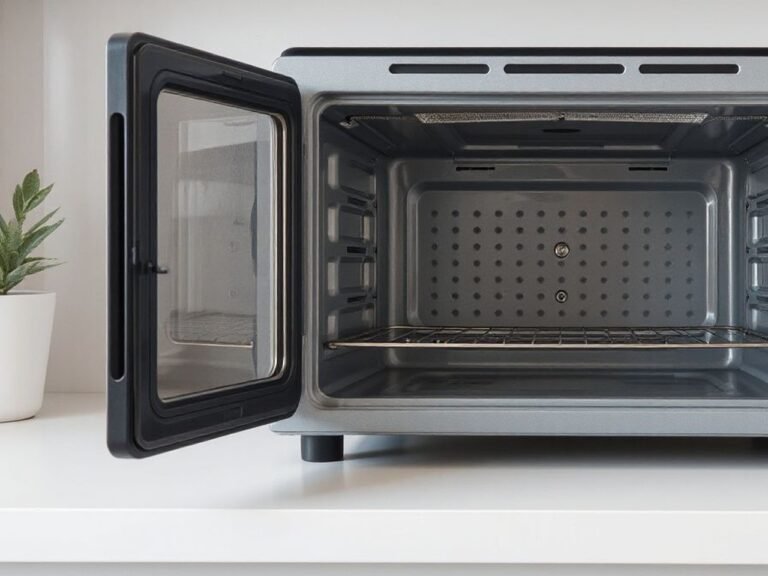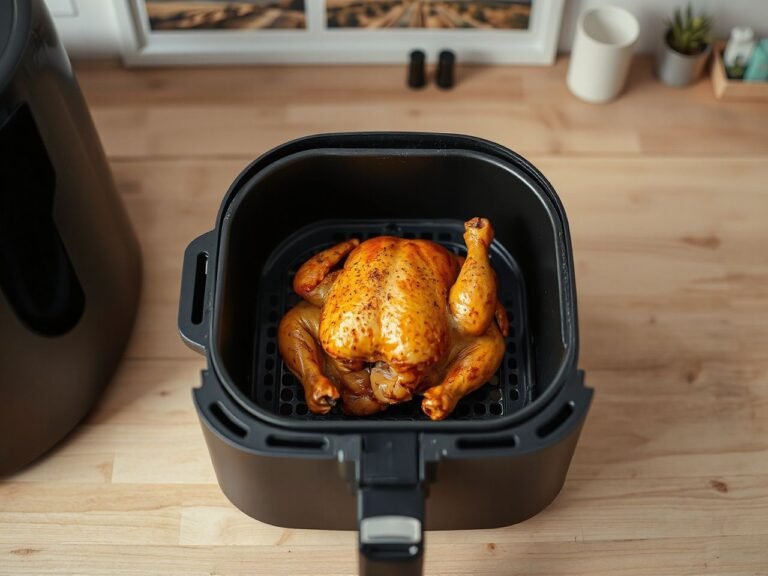
No. Not as a cooking medium. An air fryer is a small convection oven; it moves hot air around food, and that air does the cooking. Whether an air fryer needs oil depends on what you are putting in it, the machine’s wattage, the basket coating, and how much crisp you are willing to trade for dryness. A beginner might assume oil-free means dry food, but the real issue is that without a thin film of oil, the surface dehydrates before the interior cooks through, leaving you with a tough, chewy exterior. Understanding that oil quantity and smoke point matter more than the presence of oil itself is the key to successful air frying.
Key Takeaways
- Oil is not required to operate the machine, but it is required to trigger browning and prevent surface dehydration.
- A thin film—about 1 teaspoon per 500 g of food—is usually enough; more oil than that adds calories without adding crisp.
- Extra-virgin olive oil will smoke and taste acrid at air fryer temperatures; choose refined oils with high smoke points like avocado or light olive oil.
The Real Distinction: Oil as a Heat-Transfer Agent, Not a Cooking Medium
An air fryer does not fry in the traditional sense. There is no vat of bubbling fat. Instead, a heating element and a fan push hot air around food at speeds high enough to strip moisture from the surface. That is roasting with forced convection. The confusion around oil comes from the word “fry” in the name. You are not submerging anything. You are blowing dry heat over it.
Oil’s job in this machine is surface treatment. A thin coating does three things: it conducts heat from the air to the food’s surface more evenly, it slows moisture loss from the outer layer, and it provides a medium for the Maillard reaction—the browning that happens when amino acids and reducing sugars hit temperatures above roughly 140°C (284°F). Without any oil, that surface can dry out so fast that the Maillard reaction never gets a chance to run. You end up with pale, leathery food that is technically cooked but texturally wrong.
This is why the answer to “do air fryers need oil” is more nuanced than a yes or no. The machine runs fine with zero oil. The food often does not.
When Do You Truly Need Oil?
Some foods carry their own fat. Chicken thighs, pork shoulder, sausages, and bacon release enough rendered fat during cooking that adding oil just creates a greasy puddle at the bottom of the basket. Those items will brown and crisp on their own. But lean proteins, fresh vegetables, and raw starches have almost no surface fat. That is where oil stops being optional.
Lean chicken breast is the classic failure case. A skinless, boneless breast has roughly 3 g of fat per 100 g, and almost none of it sits on the surface. In a hot air fryer, the outer layer of muscle fibres dries into a stiff shell before the centre reaches a safe 74°C (165°F). A thin film of oil—about half a teaspoon brushed over the surface—changes the outcome. The oil holds moisture at the boundary, conducts heat inward, and allows the surface to brown instead of desiccate. The same principle applies to air fryer Greek chicken recipes, where a marinade with a small amount of oil keeps lean breast meat tender through high heat.
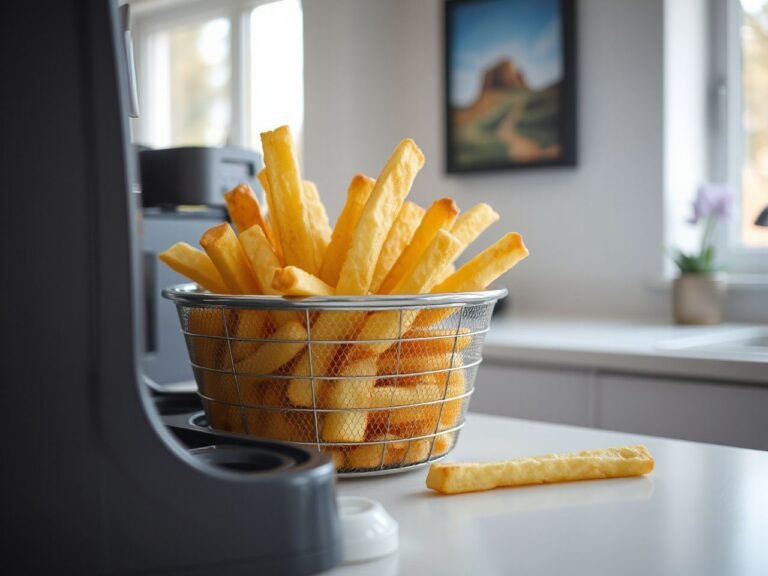
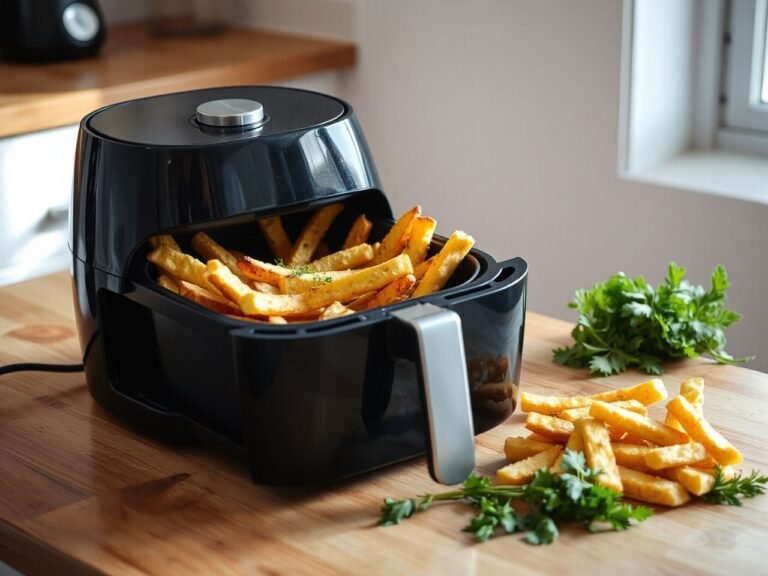
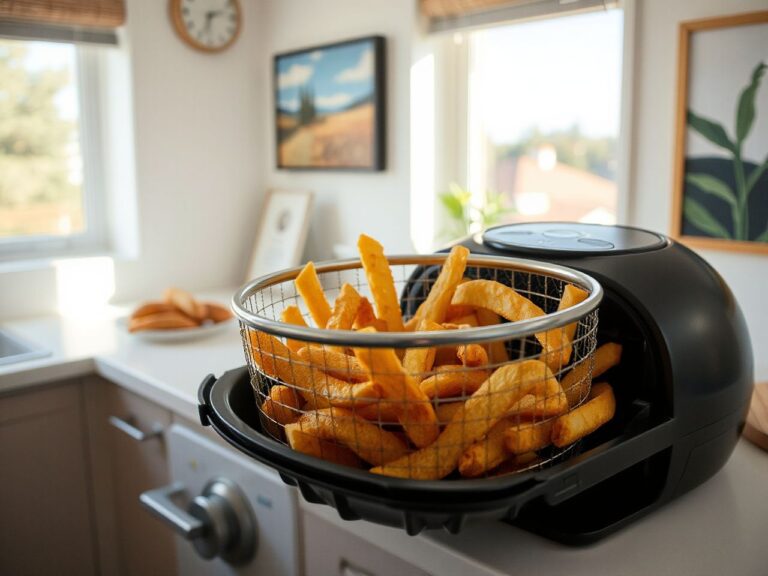
Fresh-cut potatoes are another one. A 500-gram batch of hand-cut fries tossed dry into a basket will emerge as pale, wrinkled sticks. Toss the same batch with one teaspoon of neutral oil and the starch granules on the surface absorb the fat, puff slightly, and brown into a crisp shell. Frozen fries usually do not need extra oil because manufacturers pre-coat them with a thin layer of oil or a starch-oil blend during processing.
Breaded foods follow the same rule. A dry breadcrumb coating has no fat to conduct heat, so it toasts unevenly and often falls off. A light spray of oil over the breading turns it golden and crunchy. The same logic applies to any coating made from flour, cornmeal, or panko.
So the real question is not “do air fryers need oil” but “does this food already have enough surface fat to brown itself?” If the answer is no, use a little oil. If the answer is yes, skip it.

How Much Oil? The One-Tablespoon Myth, Tested on Paper
You will see a lot of recipes that say “use one tablespoon of oil for any air fryer recipe.” That is not wrong for a full basket, but it is wildly imprecise. A tablespoon of oil is 15 ml and about 120 calories. For a single chicken breast, that is overkill. For a full basket of fries, it is about right.
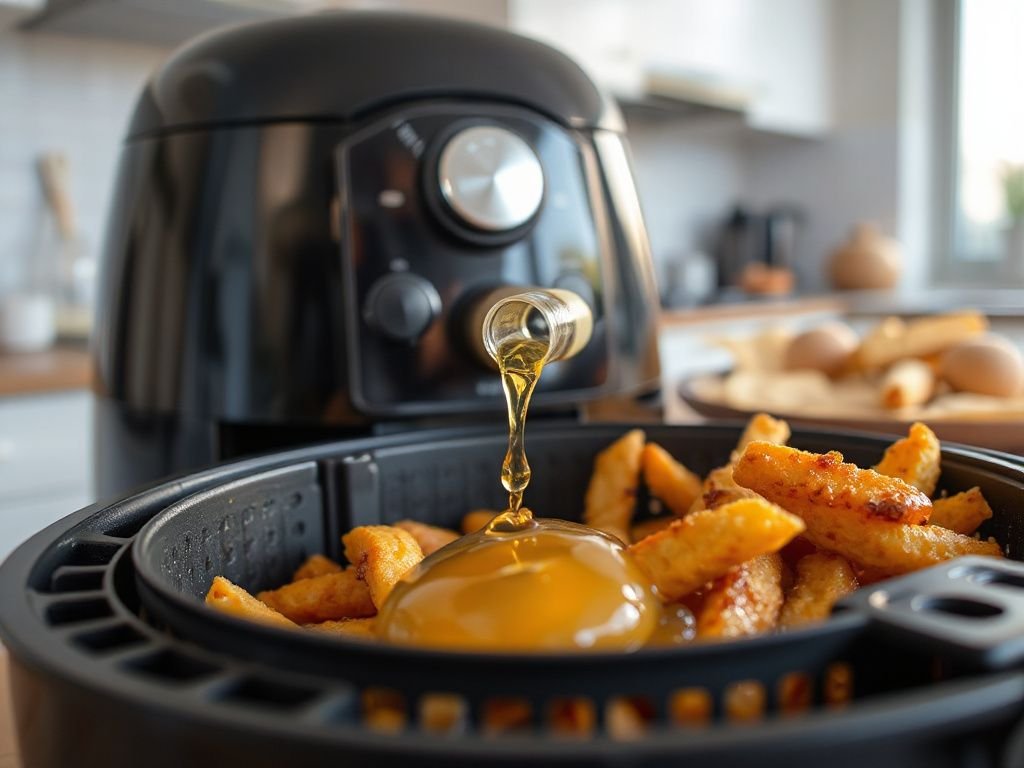
The useful rule of thumb is 1 teaspoon (5 ml) of oil per 500 grams of food. That is enough to coat every piece with a thin film if you toss it properly. More than that pools at the bottom, where it smokes and creates steam, which actually works against crispness. Less than that is better than nothing, but you will see uneven browning on any food with a high surface area.
Distribution matters more than total volume. A teaspoon of oil drizzled directly onto a pile of broccoli florets in the basket will coat the top pieces and leave the lower ones dry. A teaspoon of oil tossed with the broccoli in a large bowl before loading will coat every floret evenly. The same amount of oil, two completely different results.
Choosing Oil for an Air Fryer: Smoke Point Matters More Than Brand
An air fryer runs hot. Most models hold temperatures between 180°C and 200°C (356°F to 392°F), and the heating element itself gets even hotter. That is why the oil’s smoke point is the single most important quality to check.
Extra-virgin olive oil has a smoke point between 160°C and 190°C (320°F to 374°F), depending on quality and filtration. In a 200°C air fryer, that oil will smoke, break down, and produce acrid compounds that taste bitter and smell like burnt plastic. The same problem applies to unrefined walnut oil, flaxseed oil, and most unrefined nut oils.
What works instead: avocado oil (smoke point about 271°C / 520°F), light or refined olive oil (not extra-virgin; smoke point about 240°C / 465°F), refined peanut oil (232°C / 450°F), canola oil (204°C / 400°F), and grapeseed oil (216°C / 421°F). Neutral flavour is a bonus because high heat can amplify grassy or peppery notes in unrefined oils.
Some air fryer manuals from brands like Philips Airfryer, Ninja Foodi, and Cosori explicitly recommend avoiding extra-virgin olive oil above certain temperatures and instead suggest refined oils. That advice is not about brand loyalty; it is about not setting off your smoke alarm. The FDA regulates food contact materials and has worked with manufacturers to phase out PFOA from nonstick coatings, so modern baskets are generally safe for cooking with any food-grade oil, but the oil itself still needs to survive the temperature.
If you want one oil that covers almost every air fryer scenario, pick a refined avocado oil. High smoke point, neutral taste, and widely available. If you want a cheaper alternative, refined light olive oil does the same job at a lower price.
Do Air Fryers Require Oiling the Basket?
Most modern air fryers ship with a nonstick basket coated in PTFE, ceramic, or a similar release surface. Those coatings are designed to work without added fat. Oiling the basket on a nonstick model is usually unnecessary and sometimes counterproductive: the oil pools, smokes, and leaves a sticky residue that is annoying to clean.
However, not all baskets are equal. Some Philips Airfryer models use a stainless steel mesh basket, which is not nonstick. A thin rub of oil on that mesh helps prevent delicate items like fish fillets or breaded chicken from sticking and tearing apart. The same principle applies to air fryer accessories like wire racks and perforated trays. The logic is identical to the question of whether you need to grease a baking sheet; nonstick surfaces rarely need extra fat, but uncoated metal does.
Aerosol cooking sprays deserve a special warning. Many commercial sprays contain lecithin, alcohol, or silicone-based propellants that can degrade nonstick coatings over time, causing them to flake or lose their release. If you want to spray oil, use a refillable oil mister filled with your own oil. That gives you the same convenience without the coating damage.
The short answer: check the basket material. If it is nonstick, skip the oiling step. If it is bare metal, rub on a teaspoon of neutral oil with a paper towel before cooking.
Foods That Should Never Go Without Oil
Some foods are simply not built for dry convection. They need a film of fat to survive the hot air without turning into jerky or dust. The list includes:
- Fresh-cut raw potatoes – no surface fat, high starch. They need oil to crisp and brown.
- Lean proteins – chicken breast, turkey cutlets, lean pork chops. Without oil, the surface dries out.
- Breaded or battered items – coatings need fat to toast and adhere.
- Dense vegetables – broccoli, Brussels sprouts, cauliflower, green beans. They dehydrate into leather without a fat film.
On the other side, foods that should never get extra oil include bacon, fatty sausages, chicken wings with skin, and anything already coated in a fatty marinade. Those release enough fat during cooking that extra oil just makes the basket greasy and the food heavy.
One self-contained fact worth remembering: A 500-gram batch of fresh-cut fries tossed with one teaspoon of neutral oil will brown more evenly than the same batch cooked dry, because the thin film conducts heat from the hot air to the starch surface. That single sentence explains why oil quantity matters less than oil presence.
Motor Noise, Fan Strength, and Why Your Air Fryer Might Need More Oil Than Someone Else’s
Stiff dough and heavy batches are where a machine’s weak points show up, which is why they make a useful benchmark. An air fryer with a weak fan or a noisy motor under load does not circulate air as effectively. The result is uneven temperatures: hot spots near the heating element, cooler zones at the edges. Food in the hot spots dries out faster, which means you need more oil to compensate, or you accept uneven browning.
On paper, a 1,700-watt air fryer with a 5.8-quart basket has a higher wattage-to-volume ratio than a 1,400-watt model of the same size. More wattage usually means the heating element recovers faster after you open the basket or add cold food. That reduces the window where surface moisture pools and steams instead of browning. A machine with tight wattage and a strong fan can get away with less oil because the air is doing more of the work. A cheap machine with a whiny fan and a long recovery time will need a slightly heavier oil film to bridge the gaps.
You can hear the difference. A loud rattle or a screech when the basket is full usually means the fan is cavitating or the motor is bogging down. That is a sign the machine is not moving enough air to dehydrate the surface quickly, which makes oil more important as a heat conductor. Look for UL certification on any air fryer before loading it with a heavy batch, because sustained high-heat operation with a weak motor is a fire risk, not just a texture risk.
Brands like Ninja Foodi and Cosori publish their wattage and basket sizes clearly, which makes it easier to judge whether the fan is appropriately sized. A small basket with high wattage cooks faster and needs less oil than a large basket with the same wattage. If the listing never states the motor wattage, that is a red flag for anyone who plans to cook dense dough or heavy batches.
Frequently Asked Questions
Do air fryers need oil to prevent sticking?
Only if the basket is uncoated metal. Most modern air fryers have PTFE or ceramic nonstick baskets that release food without added fat. For a stainless steel mesh basket or a damaged nonstick surface, rub on about half a teaspoon of neutral oil before cooking. Avoid aerosol sprays with propellants because they degrade nonstick coatings over time; use a refillable oil mister instead.
Can I cook french fries without any oil in an air fryer?
You can, but the result will be pale, wrinkled, and tough. Fresh-cut potatoes have no surface fat, so they depend on a thin film of oil to conduct heat and trigger browning. Toss 500 g of fresh-cut fries with one teaspoon of neutral oil before air frying at 200°C for 18–22 minutes, shaking halfway. Frozen fries usually already have a thin oil coating, so no extra oil is needed.
What kind of oil is best to use in an air fryer?
Choose a refined oil with a smoke point above 200°C. Avocado oil (271°C), light olive oil (240°C), refined peanut oil (232°C), and canola oil (204°C) all work well. Avoid extra-virgin olive oil because its smoke point around 160–190°C is lower than typical air fryer temperatures, causing it to smoke and develop bitter, acrid flavours. The oil’s smoke point matters more than the brand name.