A grill pan can give steak attractive ridges while keeping cooking indoors, but uneven heating turns that promise into dark stripes and a gray center. The best cast iron grill pans for steak need more than deep grooves: they need a sensible cooking surface, useful heat retention, and a finish you can realistically maintain.
If you want the shortest answer, NutriChef’s 11-inch enameled grill pan is my overall pick because its documented 500°F heat rating, 7.34-pound weight, ridged surface, and one-year warranty make the buying case clearer than the others. Our shortlist also includes lighter alternatives. For a second perspective on avoiding poor fits, our guide to skipping the bad ones is a useful companion.
Home Fresh Eats is funded by affiliate commission. Our picks come from comparing published specifications and documented features against what matters in the category — no brand pays for a place on this page. If you buy through a link here we may earn a commission at no extra cost to you, and it pays for the research behind the next guide. Full disclosure.
As an Amazon Associate we earn from qualifying purchases. This does not affect the price you pay.
CERTAIN CONTENT THAT APPEARS ON THIS SITE COMES FROM AMAZON. THIS CONTENT IS PROVIDED ‘AS IS’ AND IS SUBJECT TO CHANGE OR REMOVAL AT ANY TIME.


The short answer
- Best overall: Northriver Casting Grill Pan — glass lid and substantial cast-iron format
- Best value: YYJINGYOU Cast Iron Grill Pan — compact square pan with grease spouts
- Recommended: NutriChef Enameled Grill Pan — clearest heat and warranty details
- Best simple option: Firequince Square Grill Pan — straightforward ridged steak surface
- Best enameled alternative: Maldira Enameled Grill Pan — low listed weight and slick finish claim
- Best lightweight pan: S·KITCHN Cast Aluminum Griddle — lighter construction with lid
How We Chose These Cast Iron Grill Pans for Steak
These picks come from comparing published specifications, listed materials, and documented features against what matters most in this category. For a skillet, hot spots on a dry medium burner decide whether the pan heats evenly or scorches in rings; eggs with no oil reveal the first point where the surface quits releasing. Early center failure ruins delicate food before the edge sets, so construction, stated weight, surface design, dimensions, coating claims, and any clear heat limit are weighted more heavily than color or marketing language. A heavy pan may retain heat well on paper, but weight alone does not prove an even cooking surface. The buyer should check the exact material description, cooktop compatibility, lid details, and care instructions before ordering. Product listings also leave gaps: several here do not state material or warranty details even though their names use cast-iron language. That missing information matters, and seller claims are not treated as independently verified specifications.
| Product | Best for | Key spec for this category | Second decisive spec |
|---|---|---|---|
| Northriver Casting Grill Pan | Covered steak cooking | 5.89 pounds | 10.5-inch size |
| YYJINGYOU Cast Iron Grill Pan | Compact grease draining | 10.0 by 10.0 inches | 1.0-inch depth |
| NutriChef Enameled Grill Pan | Heat-focused cooking | 7.34 pounds | 500°F heat limit |
| Firequince Square Grill Pan | Broad open grilling | 15.7 by 10.6 inches | 1.5-inch depth |
| Maldira Enameled Grill Pan | Lightweight enameled cooking | 1.0 pound | 9.5-inch size |
| S·KITCHN Cast Aluminum Griddle | Light covered griddling | 4.0 pounds | 12-inch size |
Northriver Casting Grill Pan (with Tempered Glass Lid)

Quick take: This is the most appealing choice for a buyer who wants a square steak pan plus a lid, provided the incomplete specification sheet doesn’t bother you.
The Northriver Casting pan is listed at 17.0 by 10.5 by 1.8 inches and 5.89 pounds, with a black finish and a 10.5-inch size designation. The listing markets it as fully made from cast iron, but Amazon does not list the material in the verified specification field. Its 5.8-inch handle and tempered glass lid are documented features, giving the pan a more covered-cooking role than the open designs here.
That weight gives the Northriver a stronger heat-retention argument than the 4-pound S·KITCHN griddle, though it does not prove that the cooking surface heats evenly. The lid can retain moisture and limit splashing according to the manufacturer, which is useful for covered cooking but less helpful when the goal is a dry, aggressively marked steak. The listing does not state a warranty, so long-term purchase protection is unclear.
Pros:
- Substantial listed weight — 5.89 pounds gives the pan more thermal mass on paper than several lighter alternatives.
- Tempered glass lid — the documented cover helps retain moisture and prevent splashing.
- 10.5-inch format — the square cooking area suits a single large steak or several smaller portions.
- Extended handle — the manufacturer lists a 5.8-inch handle with a curved design.
Cons:
- Material field is not listed — the product name and marketing describe cast iron, but the verified specification field does not state material.
- No warranty listed — buyers have no published warranty term to use for comparison.
- Lid may work against dry searing — covering the pan is better suited to moisture retention than keeping the surface open.
Why It Stands Out
Ideal for: Home cooks who want a covered square grill pan with a documented 5.89-pound weight. Pass on this if: You require a clearly stated material specification or warranty before buying.
YYJINGYOU Cast Iron Grill Pan (compact square design)

In a nutshell: YYJINGYOU is a sensible budget-friendly pick for buyers who value grease drainage and a compact footprint over detailed product documentation.
The YYJINGYOU GR-PSNG628 measures 10.0 by 10.0 by 1.0 inches and is listed in black as a 10-by-10-by-1-inch pan. Amazon does not list its weight or warranty, although the title and seller description call it a cast iron grill pan. Built-in side spouts are among the documented design features, and the manufacturer describes the ridges as lifting food away from fats.
The listing states the pan is cast iron.
The one-inch listed depth keeps the design visually simple, but the missing weight makes heat-distribution judgment harder. A square 10-inch surface can suit smaller cooking areas, while the side spouts give rendered fat somewhere to go instead of leaving it across the cooking surface. The manufacturer says the pan works on electric, gas, and induction cooktops and in ovens, but the listing supplies no oven temperature limit. That omission matters for anyone planning high-heat finishing.
Pros:
- Compact square footprint — the 10.0-by-10.0-inch dimensions are easier to plan around than a larger rectangular pan.
- Built-in side spouts — documented spouts support draining grease without tilting the whole pan.
- Raised grill ridges — the seller says the ridges lift food away from fats and create sear marks.
- Broad stated compatibility — the manufacturer lists electric, gas, induction, and oven use.
Cons:
- Weight is not listed — heat-retention expectations cannot be compared directly with the 5.89-pound Northriver or 7.34-pound NutriChef.
- Material is not listed in the verified specs — cast-iron wording appears in the title and marketing rather than the specification field.
- No stated oven limit — the oven-use claim lacks a documented temperature boundary.
The Real Deal
Great match for: Smaller kitchens and cooks who want side spouts with gas, electric, or induction compatibility stated by the manufacturer. Think twice if: You need a published weight, warranty, or oven temperature limit to judge the purchase.
NutriChef Enameled Grill Pan (500°F heat rating)

Why it earns a spot: NutriChef is the strongest all-round recommendation here for a buyer who wants enameled cast-iron-style cooking, a clear heat limit, and the only listed warranty in this group.
NutriChef’s NCCIES47 is an 11-inch enameled cast iron steak grill pan listed in red, with dimensions of 17.09 by 11.46 by 1.81 inches and a weight of 7.34 pounds. Amazon lists the size as medium and the warranty as one year; the material field itself is not listed. The manufacturer describes a smooth cooking surface, raised ridges, drip spouts, and a heat rating up to 500°F.
The 7.34-pound listing makes this the heaviest conventional pan in the roundup, which gives it a credible heat-retention case but also makes it less attractive for anyone who wants quick, easy handling. Its ridges are intended to drain excess oil away from food, while the smooth surface is marketed for easier release. Compared with the unlidded Firequince, NutriChef offers more explicit information about heat limits and warranty coverage. Still, a published 500°F ceiling is not permission to assume every component or cooking method is suitable beyond that limit.
Pros:
- Documented 500°F heat limit — buyers get a clear boundary rather than a vague high-heat claim.
- 7.34-pound listed weight — the substantial body should appeal to cooks prioritizing heat retention.
- Enameled surface claim — the manufacturer describes a smooth surface designed for food release and easier cleanup.
- One-year warranty — NutriChef provides the clearest warranty information in this comparison.
Cons:
- Heaviest pan listed — 7.34 pounds may be excessive for cooks who prefer a nimble skillet.
- Material field is not listed — the title identifies enameled cast iron, but Amazon’s verified material field is blank.
- Red finish is not neutral — the listed color may not suit kitchens where black cookware is preferred.
Our Take
Best for: Steak cooks who put heat retention, a clear 500°F limit, and warranty coverage ahead of low weight. Skip if: You want the lightest option or insist on a fully completed material specification.
Firequince Square Grill Pan (straightforward ridged surface)

Here’s the deal: Firequince keeps the proposition simple: a black square pan with raised ridges for searing and no lid to complicate the format.
The Firequince GR-PSNW325 is listed at 15.7 by 10.6 by 1.5 inches, with a black finish and a stated size of 15.7 by 10.6 by 1.5 inches. Amazon does not list the weight or warranty. The seller describes the construction as heavy-duty cast iron and says the ridges lift food away from fats while creating grill marks.
The listing states the pan is heavy-duty cast iron.
Its longer 15.7-inch dimension makes this more of a broad rectangular cooking format than the 10-by-10-inch YYJINGYOU. That can help a buyer who wants more room, but the absent weight leaves a major heat-distribution question unanswered. The manufacturer emphasizes even heat distribution and retention, yet those are claims rather than independently verified results. This ranks behind NutriChef because Firequince supplies less information about heat limits and warranty support.
Pros:
- Broad listed dimensions — the 15.7-by-10.6-inch footprint gives the pan a generous rectangular profile.
- Raised ridges — the documented surface design lifts food above fats and creates grill marks.
- Black finish — the neutral listed color fits a conventional grill-pan look.
- Simple open design — no lid is listed, so the pan is focused on exposed grilling rather than covered cooking.
Cons:
- Weight is not listed — the heat-retention comparison remains incomplete.
- Material is not listed in the verified field — the cast-iron description comes from the title and seller copy.
- No warranty information — Firequince gives no stated coverage period in the supplied listing.
Who Should Buy This
Perfect for: Buyers seeking a broad, open square grill pan with pronounced ridges and a black finish. Not great if: You need published weight or warranty details before judging long-term value.
Maldira Enameled Grill Pan (blue compact option)

What sets it apart: Maldira offers an enameled steak-pan format in peacock blue, with a listed weight far below the heavier conventional pans.
The Maldira GR-PANS852 measures 16.4 by 9.5 by 1.5 inches and is listed at 1.0 pound, in a peacock blue finish with a 9.5-inch size designation. Amazon does not list the warranty, although the product title and manufacturer copy describe an enameled cast-iron steak grill pan. The seller also describes a three-layer enamel coating, ridged cooking surface, and naturally slick surface.
The listing states the pan is enameled cast iron.
The one-pound listing is the decisive detail, especially beside NutriChef’s 7.34 pounds and Northriver’s 5.89 pounds. Lower listed weight may appeal to buyers who dislike heavy cookware, but it also gives less reason to expect the same heat-retention behavior as a much heavier pan. The listing’s enamel claims support an easier-care argument, yet the missing material and warranty fields limit confidence. This is an attractive option on paper, not the safest choice for a heat-distribution obsessive.
Pros:
- Low listed weight — at 1.0 pound, Maldira is much lighter on paper than the conventional heavy pans here.
- 9.5-inch size — the smaller stated size suits buyers who don’t need a broad cooking surface.
- Three-layer enamel claim — the manufacturer presents the coating as a durability and heat-retention feature.
- Ridged surface — the seller says the grooves keep excess oil away from food.
Cons:
- Very low listed weight for this category — buyers prioritizing thermal mass should look harder at NutriChef or Northriver.
- Material is not listed — the verified specification field does not confirm the material.
- No warranty listed — Maldira supplies no stated warranty term in the available product data.
Final Thoughts
Ideal for: Cooks who want a smaller, visually distinctive enameled pan and care about a 1.0-pound listed weight. Pass on this if: Even heating and substantial heat retention outrank easy handling.
S·KITCHN Cast Aluminum Griddle (with lid)
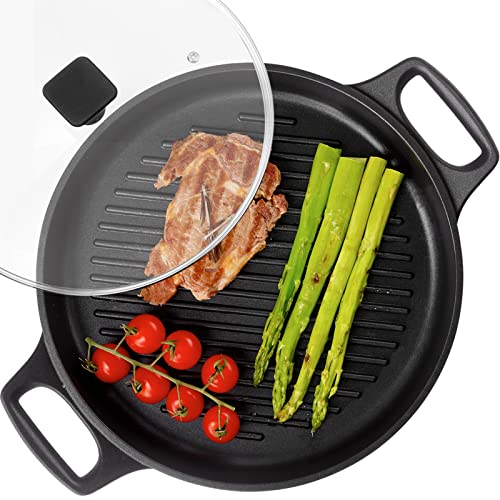
In a nutshell: S·KITCHN is the practical lightweight alternative for cooks who would rather avoid cast iron’s listed weights and want a lid included.
The S·KITCHN griddle is listed as cast aluminum, with dimensions of 16.0 by 12.0 by 1.6 inches, a 4.0-pound weight, a 12-inch size, and a black finish. Its ceramic nonstick coating is described as PFOA free, and the listing includes a lid. The manufacturer says the pan heats fast and evenly, but that performance statement is marketing copy rather than a verified test result.
Cast aluminum makes this a clear category departure from the cast-iron-named pans, and the 4-pound listing makes it lighter than Northriver, NutriChef, and the claimed cast-iron formats whose weights are available. That may suit everyday stovetop cooking, but buyers choosing cast iron specifically for heat retention should not treat this as an equivalent substitute. The soft-sponge care instruction also signals that the ceramic nonstick coating needs gentler handling than bare cast iron; metal utensils are suitable for cast iron, but that general durability point should not be transferred to this coated pan.
Pros:
- Cast aluminum construction — the material gives buyers a lighter alternative to the heavier listed cast-iron-style pans.
- 4.0-pound listed weight — substantially easier to justify for routine stovetop use than a 7.34-pound pan.
- Ceramic nonstick coating — the manufacturer describes the surface as nonstick and PFOA free.
- Lid included — the documented cover broadens the pan’s use beyond open griddling.
Cons:
- Not cast iron — buyers specifically seeking cast-iron heat retention should choose a different product.
- Coating needs gentle care — the manufacturer recommends a soft sponge to protect the ceramic surface.
- Even-heating claim is unverified — the listing says it heats fast and evenly, but provides no supporting measurement.
Who Should Buy This
Best for: Buyers who want a 12-inch, 4-pound covered griddle with a ceramic nonstick surface and lighter construction. Skip if: Your priority is a genuine cast-iron pan with maximum thermal mass.
How to Choose Among the Best Cast Iron Grill Pans for Steak
Best grill pans for steak: start with heat behavior
Heat distribution matters more than dramatic grill marks. A pan with heavy thermal mass may recover more convincingly on paper, but weight is not proof against hot spots. The Northriver lists 5.89 pounds and NutriChef lists 7.34 pounds, while Maldira lists only 1.0 pound. Those figures help frame expectations, yet the listing does not provide a heat map for any product. Buyers should treat claims of even heating as claims, not measured results.
Choose ridges with a purpose
Raised ridges lift food away from fats and create grill marks, a feature documented for YYJINGYOU, Firequince, NutriChef, and Maldira. That design also reduces the flat contact area between steak and pan, so ridges alone cannot guarantee a better sear. Side spouts on YYJINGYOU are useful if draining grease is a priority; a lid, as supplied with Northriver and S·KITCHN, is more relevant to covered cooking and splash control.
Coating and care
Repeated cooking causes thin layers of oil to polymerize onto a cast-iron pan, so maintenance is part of the ownership decision rather than an afterthought. Enameled models such as NutriChef and Maldira are marketed around easier release and cleanup, while S·KITCHN specifically calls for a soft sponge to protect its ceramic nonstick surface. Metal utensils can be used on cast-iron pans because of their durability, but that general point should not be applied to ceramic nonstick coating. Food-contact questions should be checked against guidance from the U.S. Food and Drug Administration rather than inferred from phrases such as food-grade or nontoxic.
Gas, electric, induction, and outdoor use
YYJINGYOU is the only listing here that explicitly names electric, gas, induction, and oven compatibility. That makes it the clearest candidate for a buyer comparing the best grill pan for a gas stove with an electric or induction setup, although the listing does not give an oven temperature limit. S·KITCHN is described for indoor and outdoor use, but it is cast aluminum rather than cast iron. Before ordering, verify the cooktop statement and check whether the exact pan size leaves enough room around other burners or grill grates.
Our broader guide on what actually matters in a steak grill pan takes the same practical approach: judge the cooking surface and missing specifications before being distracted by color or lifestyle photography.
Our Final Recommendation
NutriChef is my overall winner because it combines the clearest heat limit, the only listed warranty, a substantial 7.34-pound weight, and a documented ridged surface. For a budget-friendly choice, YYJINGYOU is the better value if side spouts and broad cooktop claims matter more than a complete spec sheet. Premium shoppers should consider Northriver for its lid and 5.89-pound listed weight, though it lacks a listed warranty. Maldira is the lightest enameled alternative, while S·KITCHN is the sensible non-cast-iron option.
Frequently Asked Questions
How should I clean a cast iron grill pan?
Follow the exact care instructions supplied with the pan, especially when a coating is involved. Repeated cooking can build thin polymerized oil layers on cast iron, while S·KITCHN’s ceramic nonstick listing calls for a soft sponge. Do not assume care for bare cast iron applies to enameled or ceramic surfaces. A lid or spout does not change the need to check the manufacturer’s instructions.
Are the best grill pans for steak suitable for a gas stove?
YYJINGYOU’s manufacturer explicitly lists gas, electric, induction, and oven compatibility, making it the clearest match for a buyer comparing cooktops. The other listings do not provide the same complete compatibility statement in the supplied data. S·KITCHN is described for stovetop use and is cast aluminum, but buyers should still confirm the exact cooktop guidance before ordering.
Is a heavier grill pan always better for steak?
No. Weight can suggest greater thermal mass, but it does not prove that a pan heats evenly or avoids hot spots. NutriChef lists 7.34 pounds, Northriver lists 5.89 pounds, and Maldira lists 1.0 pound, so the contrast is useful for setting expectations. None of those figures is a substitute for a verified heat-distribution measurement.
Should I choose an enameled grill pan or an uncoated one?
Enameled pans may appeal to buyers who prioritize the manufacturer’s easy-release and cleanup claims, as with NutriChef and Maldira. Uncoated cast iron may better suit someone who accepts ongoing oil maintenance, including the gradual buildup of polymerized layers. The available listings do not confirm every material detail, so read the exact product page and care directions before deciding.