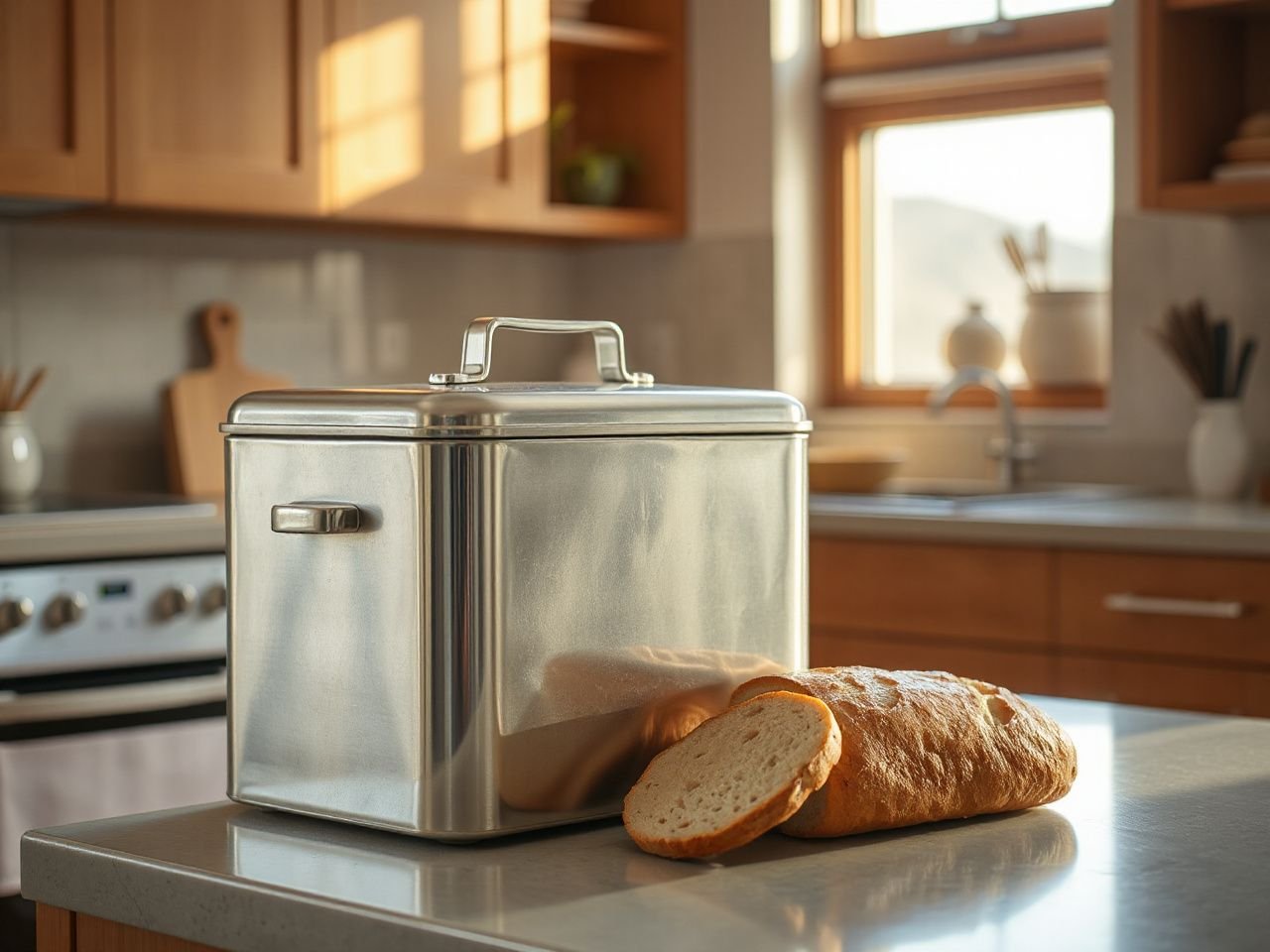
Could the container meant to keep bread fresh actually be holding too much moisture around it? The key distinction is between controlling moisture and sealing bread away: a bread box works by moderating the storage environment, not by creating an airtight preservation chamber. A useful bread box buying guide therefore compares ventilation, material, lid design, cleaning access, and loaf compatibility against the type of bread being stored rather than treating every bread box as interchangeable.
Key Takeaways
- A bread box should moderate airflow rather than seal bread in an airtight chamber.
- Crusty loaves and soft sliced bread need different balances of ventilation and protection.
- Choose interior space around the loaf shape, with room for airflow and no lid contact.
- Dry crumbs, cleanable surfaces, and sensible placement matter as much as the box material.
Beginner: Understand What a Bread Box Actually Does
Moisture control is the central job
Bread naturally changes after baking because moisture moves through its crumb and crust. A bread box does not stop that process. It places the loaf in a darker, room-temperature environment where the lid and openings help balance drying against trapped moisture.
A completely airtight container can hold moisture close to the bread, while excessive ventilation can dry the loaf and soften a crisp crust. Bread boxes therefore use a lid that closes securely enough to discourage drying and keep away flies, ants, and mice, yet remains loose enough to permit airflow and reduce condensation.
A bread box manages moisture and airflow; it does not make bread shelf-stable or prevent mold indefinitely. That sentence should guide the whole choice. The aim is a more suitable storage environment, not permanent preservation.
Why bread becomes stale or moldy inside a box
Staling and mold are separate problems. Staling is a quality change associated with moisture migration and the texture of the crumb. Mold is a spoilage problem encouraged by damp conditions, crumbs, and time. A bread box may slow unpleasant changes, but it cannot remove moisture from wet bread or make a contaminated loaf safe to keep.
Warm bread needs particular care before storage. If a loaf goes into a closed box while it is still releasing substantial warmth and moisture, condensation may collect on the interior or around the bread. The practical sign is a damp surface, a softened crust, or moisture on the box. Leave the bread exposed long enough for the visible warmth and surface moisture to subside before closing the lid.
Mold-contaminated bread should not remain beside fresh bread. Remove the affected loaf, empty loose crumbs, clean the interior according to the material and maker’s instructions, and allow the box to become fully dry before using it again. A box with a lingering damp smell or visible residue needs more attention than a quick crumb wipe.
Why the refrigerator is usually a poor storage location
Chillier conditions, including those inside a refrigerator, accelerate how quickly bread stales. A bread box keeps its contents at room temperature instead. That does not mean every loaf belongs on the counter indefinitely; freezing and thawing can be useful for longer storage, while refrigeration may suit particular household needs. The box itself is intended for room-temperature storage.
A bread box also creates a barrier against kitchen conditions that can harm quality. A closed, well-placed box can shield bread from direct sunlight, nearby heat, kitchen odors, and ordinary pest access, although the box cannot compensate for a hot, damp, or dirty location.
Beginner: Match the Box to the Bread
Crusty artisan loaves
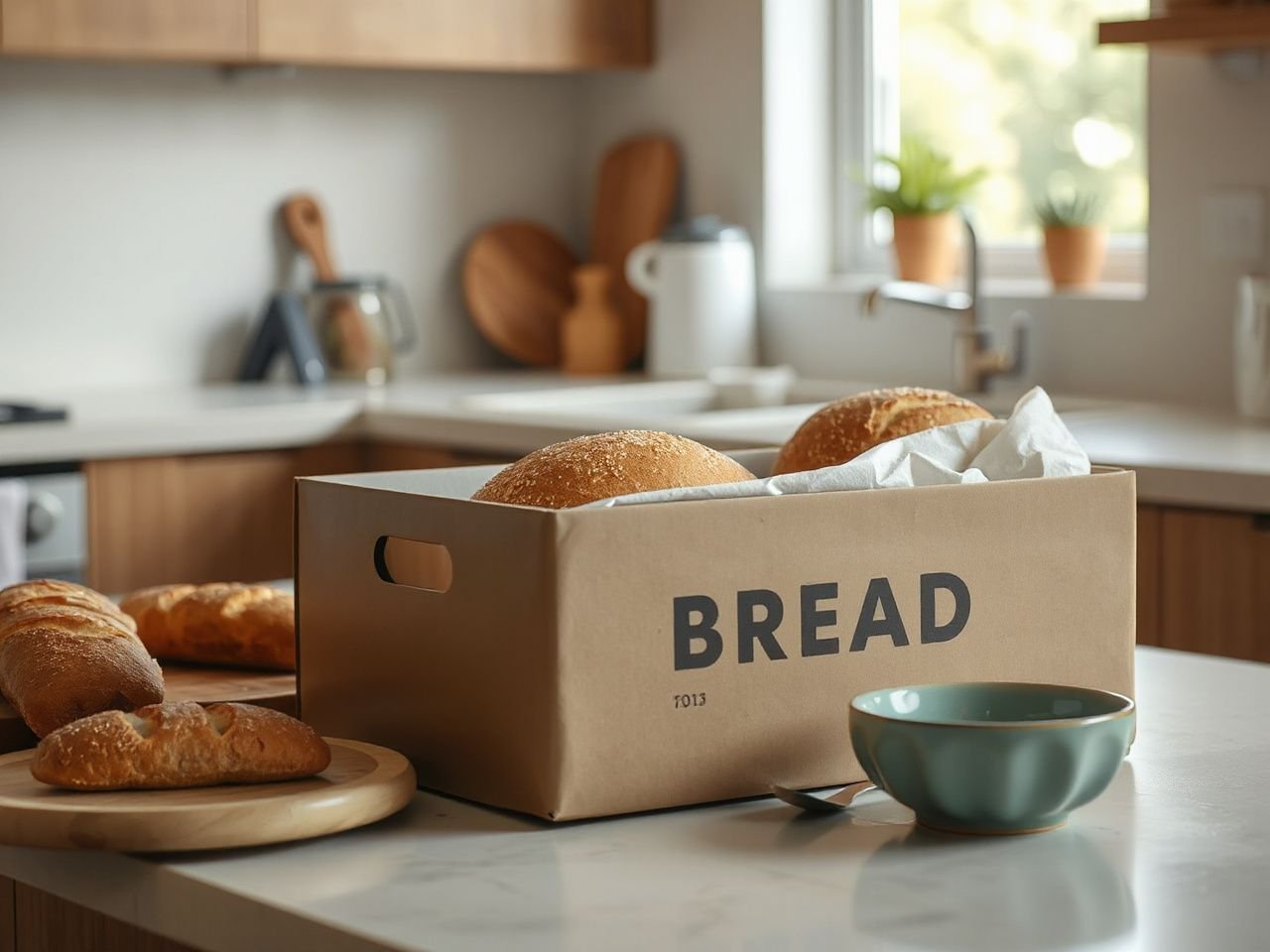
Crusty bread needs a chance to retain some of its firm exterior without sitting in a damp enclosure. A box with modest ventilation and a lid that is secure but not airtight is generally more compatible with a crusty loaf than a tightly sealed chamber. The bread should have room around its upper surface, because a lid pressing against the crust can soften or damage it.
A wooden bread box, including one made from bamboo, can suit a reader who wants a less severe enclosure around a rustic loaf, provided the interior stays dry and the lid does not trap visible condensation. Wood and bamboo require particular attention to crumbs and moisture because a neglected interior is harder to judge than a smooth metal surface.
Crusty bread needs airflow around its crust because a sealed, damp enclosure can soften the texture that makes the loaf distinctive. That is a storage principle, not a promise that any one material will preserve a crust forever.
Soft sliced bread
Soft sliced bread has a different priority. It benefits from protection against drying, crushing, and exposure to the counter. A bread box with a closer-fitting lid can help retain a comfortable storage environment, but the lid still should not be airtight if moisture is collecting inside.
Keep soft bread in its bread bag when the bag fits without crowding, then place the bag inside the box if the arrangement leaves room for airflow and does not press the loaf against the lid. A reusable bread wrap can serve a similar role. The box supplies a protective outer environment; the bag or wrap can reduce direct exposure to the surrounding air.
Original packaging is not automatically inferior. It may protect sliced bread from drying, while the box protects the package from sunlight, pests, odors, and accidental pressure. The useful question is whether the combined arrangement is dry, spacious, and easy to inspect.
Irregular loaves and baked goods
Round loaves, tall boules, sandwich bread, rolls, and pastry-like baked goods do not occupy space in the same way. A box that fits a flat sliced loaf may press against a high-domed loaf. A long box may leave unused height while failing to provide enough depth for a broad loaf.
Measure the bread you actually store, not an imagined standard loaf. If the manufacturer does not list capacity, judge the interior from the stated dimensions or visible layout. Leave enough clearance for the lid to close without touching the bread, and avoid filling every corner with rolls or bags.
Intermediate: Compare Materials and Lid Designs
Wooden bread boxes and bamboo
Wooden bread boxes bring a warm, solid appearance and can make a counter feel less dominated by metal or glossy surfaces. Bamboo is commonly used in this category and may appear as the main body, a lid, or a combination with another material. The important storage question is not appearance alone. Look for an interior that can be reached and wiped, a lid that aligns cleanly, and surfaces that can dry after cleaning.
Wood and bamboo should not be treated as permanently moisture-proof storage chambers. Crumbs can lodge along joins, and dampness may be less obvious than it is on stainless steel or enamel-coated steel. Use a dry-to-damp cleaning approach suited to the maker’s instructions, then leave the box open until the interior is dry.
A wooden or bamboo bread box needs a dry interior because trapped crumbs and moisture can make cleaning harder. That requirement matters more than a decorative finish.
Stainless steel and enamel-coated steel
Stainless steel and enamel-coated steel offer smooth surfaces that are generally easy to inspect. A reader can see crumbs, flour, or moisture on the interior more readily than on a textured or dark surface. That visibility supports regular maintenance.
Metal can also make a box feel firm and protective on a busy counter. Check the edges, seams, and lid movement rather than assuming the material alone determines performance. A metal box still needs airflow, and a metal box can still trap moisture if its lid closes too tightly or warm bread is stored inside.
Ceramic and pottery
Ceramic or pottery bread boxes can provide a substantial enclosure and may suit a calm counter where the container will not be moved often. Their weight and shape affect placement. Leave enough clearance around the box so the lid can open fully without striking a wall, appliance, or cupboard door.
Inspect the interior for smooth, reachable surfaces and consider how crumbs will be removed from corners. The material does not replace good storage practice. A ceramic box with a damp interior still presents a moisture problem.
Roll-top lids
A roll-top lid moves along a track or curved path instead of swinging outward. That can help in a tight counter position because the lid does not need the same open arc as a hinged design. The trade-off is access: crumbs can collect near the track, and the opening may not expose the entire interior at once.
Check whether the roll-top movement leaves enough opening to lift out the largest loaf without dragging it across the edge. The track should also be accessible for cleaning. A lid that is difficult to inspect can turn a small crumb problem into a persistent one.
Hinged lids
A hinged lid gives a familiar opening motion and can expose the interior quickly. It needs overhead clearance, however. A box may fit beneath a cabinet when closed but become awkward when the lid is raised.
Inspect the hinge area for crumbs and make sure the lid can rest open without tipping the box. The hinge should not force the box to sit at the very front of the counter, where it may reduce workspace or interfere with a fridge door.
Intermediate: Plan Counter Space, Capacity, and Access
Think in stack height and fridge-door clearance
Counter storage is a small floor plan. A box may fit beside a wall yet prevent a fridge door from opening fully. It may sit beneath a cabinet yet block the cabinet handle when its lid rises. These conflicts are easy to miss if the only question is whether the box fits on the counter.
Map the lid’s movement before purchase. For a hinged lid, check the upward arc. For a roll-top, check the rear and upper path. If the box sits close to the refrigerator, open the fridge door and consider the space swept by the door edge. A container that must be moved every time the refrigerator opens will become an obstacle rather than useful storage.
A bread box needs clearance for its lid and nearby appliance doors, not merely a footprint that fits on the counter. This is why stack height and fridge-door clearance belong in the first inspection.
Allow usable capacity instead of maximum packing
Capacity is useful only if the bread can enter and leave without being squeezed. A crowded box restricts airflow around the loaf and makes crumbs harder to remove. A nearly empty box may take more counter space than necessary, but a box packed to the lid creates a different problem.
- Place the largest regular loaf in the center of your planning.
- Check the loaf’s height, width, and shape against the interior, not the outside shell.
- Allow the lid to close without contacting bread, bags, or wraps.
- Leave enough room to lift the loaf out without scraping the sides.
- Store smaller rolls or slices only if they do not block inspection and cleaning.
If a box holds several items, separate the question of capacity from the question of compatibility. Two soft loaves may fit by volume yet crowd each other in practice. A tall loaf and a flat loaf may occupy space differently again.
Use a bread bag without creating a damp pocket
A bread bag can protect sliced bread and reduce direct air exposure, while the box supplies a darker and more orderly home. The bag should be dry before it goes into the box. If condensation appears inside the bag or on the box, open the arrangement and let the moisture disperse before closing it again.
Do not stack a warm loaf inside a bag inside a closed box. That arrangement adds layers without solving the underlying moisture issue. Bread should enter storage in a condition that does not visibly release dampness into the enclosed space.
Place the box away from heat and odors
Keep the box away from direct sunlight, strong heat, and sources of steam. A dark, dry environment helps protect bread from rapid spoilage, but the box is not a heat shield. A location beside a cooker, kettle, dishwasher vent, or frequently opened window may expose the interior to changing heat or moisture.
Kitchen odors can also move into porous materials and packaging. Choose a position where the box is protected from strong smells while remaining easy to open and inspect. Do not hide it so deeply that crumbs and dampness go unnoticed.
For readers planning a larger bread-making setup, the storage decision begins before the loaf reaches the counter. Our bread knife buying guide explains how slice thickness and loaf shape affect serving and storage, while a suitable oven can change the size and crust of the bread that needs to fit inside the box.
Advanced: Maintain the Storage Environment
Cleaning after ordinary crumbs
Crumbs are normal, but they should not become permanent contents. Empty the box before cleaning so crumbs do not remain beneath a liner, in a hinge, or along a roll-top track. Wipe the interior using a method appropriate to its material, then leave the lid open until no dampness remains.
Do not return fresh bread to a box that still feels wet or smells stale. A dry interior is part of the storage system. Liners can make crumb removal easier, but they also need cleaning or replacement when they collect flour, moisture, or residue.
Cleaning after mold appears
Mold-contaminated bread should be removed rather than stored beside fresh bread. Examine the box interior, lid, corners, tracks, and liner for visible residue or dampness. Follow the care instructions for the material, and replace a liner that cannot be cleaned adequately.
Do not use a strong cleaning method merely because it is convenient. Wood, bamboo, metal, enamel, and ceramic can respond differently to moisture and cleaners. The safe practical sequence is simple: remove affected food, remove crumbs, clean in a material-appropriate way, rinse or wipe as directed, and dry the box fully before reuse.
A bread box should be completely dry before fresh bread returns after cleaning. This prevents a cleaning step from becoming a new source of trapped moisture.
Maintenance and replacement
A bread box does not need replacement on a calendar alone. Inspect the lid, hinges or tracks, interior finish, liner, and closure. Replace a removable liner or part when it is damaged, persistently stained, or impossible to clean according to the maker’s instructions.
A box may remain useful when its appearance changes, provided the interior is sound, dry, and accessible. Replacement becomes more practical when the lid no longer closes in the intended way, the interior cannot be cleaned, the material has damage that holds crumbs, or the box no longer fits the bread you actually store.
Ongoing costs usually come from cleaning supplies, liners, bread bags, reusable wraps, and replacement parts where those parts exist. The manufacturer may not list a long-term maintenance cost, so inspect the included care information before choosing a design that depends on a replaceable component.
When a bread box is better than the original bag
A bread box is useful when the bag alone leaves bread exposed to counter clutter, sunlight, pests, odors, or accidental pressure. The original bag may still be the better inner layer for soft sliced bread if it is dry and not overcrowded. These options are not mutually exclusive.
Crusty loaves often benefit from less enclosure than soft sliced bread. A bag that keeps soft bread comfortable may soften a crust. Conversely, a highly ventilated box that protects a crust may allow sliced bread to dry more quickly. Match the arrangement to the bread, then check the result by feel and by the condition of the interior.
Advanced: Make a Clear Choice Without Chasing Myths
Should a bread box have ventilation holes?
Ventilation holes can support airflow and reduce the chance of condensation, but more openings are not automatically better. Excessive airflow can dry bread and soften crusts as the loaf loses moisture to the surrounding air. A lid with a controlled gap or modest ventilation may provide a more balanced environment than either a sealed container or a very open basket.
Look for evidence that the design supports inspection and cleaning. Holes should not be blocked by a liner, wall, or tightly packed bread. The exact opening pattern matters less than the observable result: bread should not sit in a damp pocket, and the interior should not become excessively dry.
Can one box suit every loaf?
No single shape suits every bread equally well. A box sized around a standard sliced loaf may not accept a tall artisan boule. A wide container may fit a round loaf but waste counter space and make a single small loaf harder to position.
Choose for the bread that appears most often in your kitchen, then consider occasional loaves. If storage needs vary widely, use the box for the type that benefits most from protected room-temperature storage and use a bread bag, wrap, or freezing for the rest.
How the box fits into a broader kitchen system
Bread storage connects to preparation and appliance placement. A knife needs a clear cutting area, while a bread oven may produce loaves with greater height or a firmer crust. Readers comparing baking setups can review a short guide to bread ovens and the storage space their loaves may require before settling on a box footprint.
Keep the storage path simple: cool the loaf appropriately, place it in a dry bag or box arrangement, close the lid without pressure, and inspect the interior as crumbs accumulate. A complicated system is more likely to be neglected.
The FDA publishes food-safety information for consumers at fda.gov, so readers with questions about spoiled food or household food handling should use that government guidance rather than relying on a bread box as a safety measure. The NSF also develops standards and certification information for products and materials, which can help readers understand manufacturer claims about food-contact suitability.
Frequently Asked Questions
What type of bread box suits crusty loaves versus soft sliced bread?
Crusty loaves generally need enough airflow to avoid a damp, softened exterior, while soft sliced bread benefits from stronger protection against drying. A wooden bread box, bamboo box, or ventilated metal design may suit a crusty loaf if the interior stays dry. Soft bread can remain in a dry bread bag inside the box, provided the bag and loaf are not crowded.
Should a bread box be airtight to prevent mold?
No. An airtight container can trap moisture, and trapped moisture can encourage a damp interior. A bread box should moderate airflow while keeping away pests, strong odors, direct light, and ordinary counter exposure. Mold-contaminated bread must not remain with fresh bread, and a box should be cleaned and dried before fresh bread returns.
How much space should a bread box have?
Choose interior space that accommodates the tallest and broadest loaf you regularly store without touching the lid. The bread should lift out without scraping the sides, and bags or wraps should not fill the remaining space so tightly that airflow is blocked. Check the lid movement, stack height, and nearby fridge-door clearance as well as the box footprint.